Sydney Photography Spots: Where to Point Your Camera
Sydney is one of the most photographed cities on earth, and most visitors leave with the same three frames. This guide covers the classic shots, the angles locals use, and the light and timing that separate a postcard from a phone snapshot.
Short answer
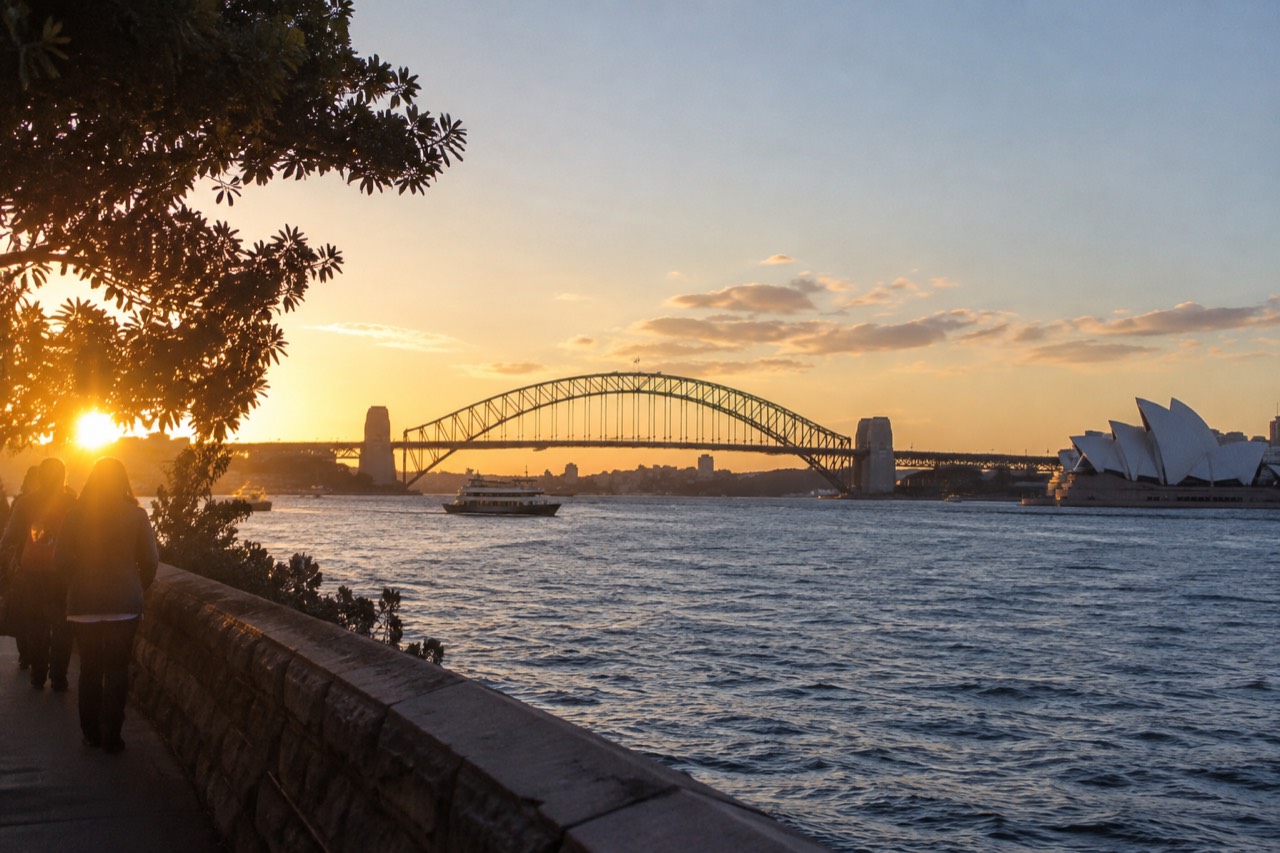
Sydney's best photography spots cluster around the harbour: Mrs Macquarie's Chair for the Opera House and Bridge together, Kirribilli for the Opera House across the water, and Barangaroo or Observatory Hill for skyline work. The Bureau of Meteorology's long-run records show August averages 13.4 clear days, the most of any month, while February averages just 5.3.
Sydney rewards a camera like few cities. The harbour bends so constantly that the same two buildings, the Sydney Opera House and the Sydney Harbour Bridge, can be framed from dozens of completely different angles within a half-hour walk. The light does the rest: the Bureau of Meteorology's 162-year record for Observatory Hill shows a long-run average of 103.9 clear days a year, and the distribution of those days is not what visitors expect. Peak summer is the cloudiest stretch of the calendar, while late winter delivers the cleanest skies.
This guide walks through the spots that consistently produce strong frames, the times of day that make them work, and the practical details, access, walking distances, and seasonal light, that a first page of search results rarely mentions. Everything here is street-level knowledge you can reach on foot or with an Opal card.
Where Are the Best Photography Spots in Sydney?
The best photography spots in Sydney are Mrs Macquarie's Chair, Kirribilli on the North Shore, Observatory Hill, Barangaroo, and the coastal cliff line between Bondi and Coogee. Mrs Macquarie's Chair is the single most productive frame in the city because it lines up the Opera House and the Harbour Bridge in one composition, a short walk from the Opera House forecourt through the Royal Botanic Garden Sydney. Kirribilli gives you the Opera House straight across the water with the city skyline stacked behind it.
The reason Sydney photographs so well is geometry. Circular Quay sits in a bend of the harbour, so the Opera House faces one way and the Bridge another, and moving a few hundred metres along the foreshore completely changes the relationship between them. A photographer in The Rocks looks up at the Bridge's steel; a photographer in Kirribilli, one ferry ride away, sees the whole skyline compressed behind the sails.
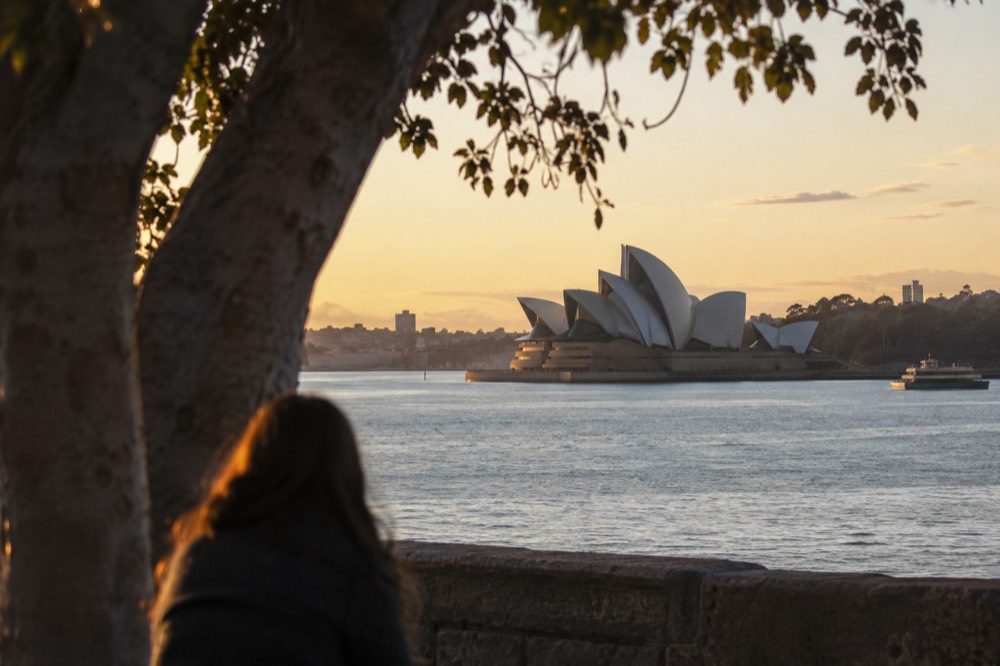
The Royal Botanic Garden Sydney is the connective tissue between most of these frames. Entry is free, it opens at 7am daily and closes at sunset, which means early risers get the Farm Cove foreshore almost to themselves. The garden's shoreline path is where the Mrs Macquarie's Chair angle is reached, and the water in Farm Cove is usually calm enough at dawn for clean reflections of the Opera House.
Plan around the sun rather than the crowds. The Opera House's sails face roughly west toward the Bridge, so afternoon and sunset light hit them from the front when you shoot from the east, from Mrs Macquarie's Chair or the garden path. Morning light backlights the sails but gives you pink sky behind the Bridge from Kirribilli instead. This site, Sydney Travel Guide, covers each of these areas in its own depth if you want to build a full day around one frame.
Which Harbour Viewpoints Give the Classic Opera House Shot?
The classic Opera House shot comes from Mrs Macquarie's Chair, on the eastern point of the Royal Botanic Garden Sydney, where a sandstone ledge lines up the Opera House in the foreground and the Harbour Bridge behind it. The second essential frame is from Kirribilli on the North Shore, near Luna Park Sydney, where the Opera House sits across the water with the CBD skyline rising behind it. Both are free and reachable on foot or by ferry.
Mrs Macquarie's Chair is a carved sandstone bench on the garden's peninsula, about a 15 minute walk from Circular Quay. The chair itself is the postcard angle: shoot from around the point and the Bridge fills the gap behind the sails. Arrive early, because by mid-morning tour groups occupy the ledge. The walk in passes the garden's shoreline, which gives a second, lower angle with water in the foreground.
Kirribilli works in the opposite direction. Take the F1 ferry from Circular Quay to Milsons Point or Kirribilli wharf, a trip that is itself one of the best-value photo opportunities in the city, and shoot back toward the city from along the Kirribilli foreshore or from the north end of the Sydney Harbour Bridge walkway. The Pylon Lookout guide covers the mid-bridge option if you want height without a climb.
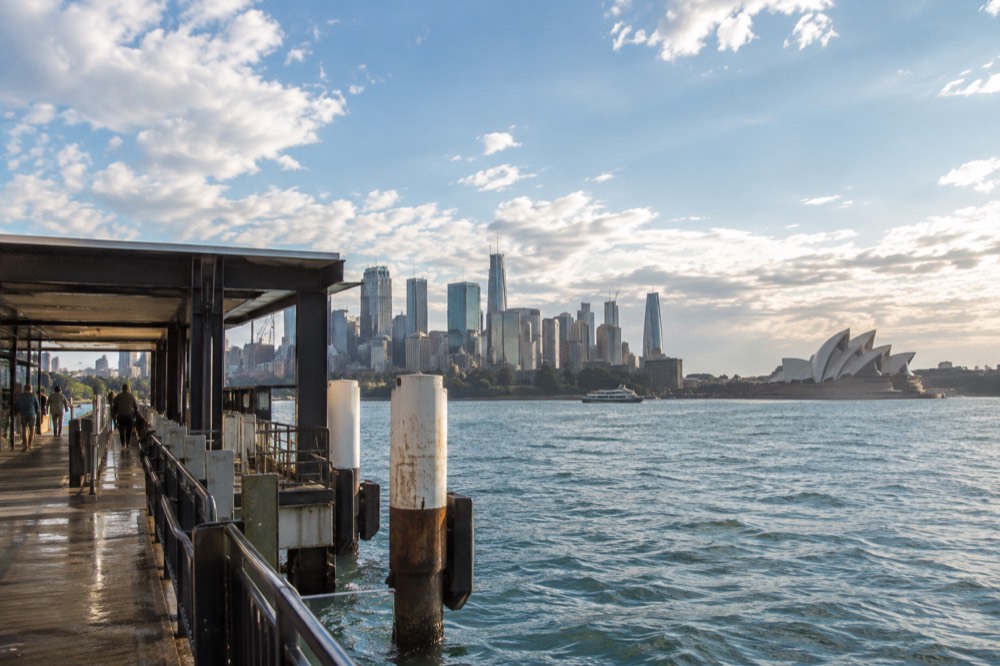
A few other harbour frames earn their place on any list. Barangaroo delivers a modern skyline with the Crown tower as an anchor, and its western boardwalk faces the sunset. The Rocks gives you sandstone laneways and the Bridge's underbelly from Argyle Cut. Circular Quay at first ferry, around 6am, is empty of crowds and full of low, warm light on the Quay's colonnades.
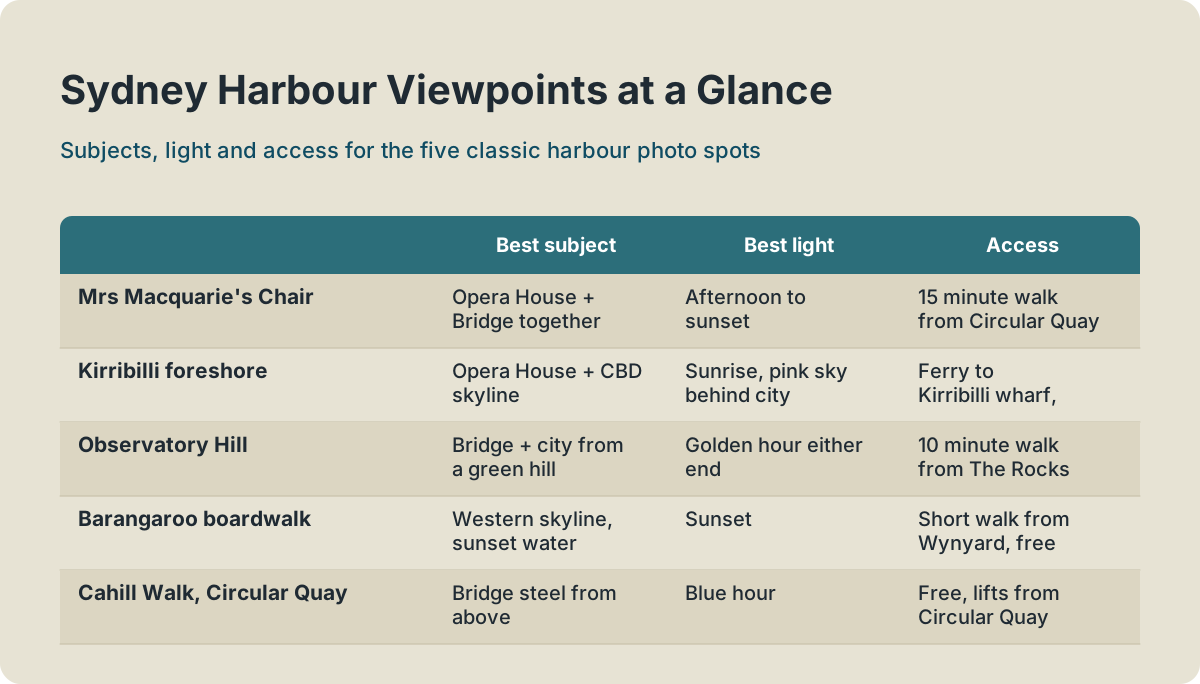
| Viewpoint | Best subject | Best light | Access |
|---|---|---|---|
| Mrs Macquarie's Chair | Opera House + Bridge together | Afternoon to sunset | 15 minute walk from Circular Quay, free |
| Kirribilli foreshore | Opera House + CBD skyline | Sunrise, pink sky behind city | Ferry to Kirribilli wharf, free |
| Observatory Hill | Bridge + city from a green hill | Golden hour either end | 10 minute walk from The Rocks, free |
| Barangaroo boardwalk | Western skyline, sunset water | Sunset | Short walk from Wynyard, free |
| Cahill Walk, Circular Quay | Bridge steel from above | Blue hour | Free, lifts from Circular Quay |
If you only have one afternoon, do this: start at Barangaroo for the western light, walk east through the Sydney Opera House forecourt as the sun drops, then finish at Mrs Macquarie's Chair for the last colour on the sails. The whole route is a flat, easy walk along the foreshore.
Where Can You Photograph Sydney from Above?
The best elevated photography spots in Sydney are the Sydney Tower Eye observation deck, the Harbour Bridge Pylon Lookout, the BridgeClimb summit, and a scenic helicopter flight over the harbour. The Tower Eye deck is the only one that puts the entire harbour, Bridge and Opera House in a single frame, while the Pylon Lookout is the cheapest way to shoot the Bridge's structure from high on the southern pylon. A helicopter flight is the only option that frames the city from seaward.
Height changes what Sydney looks like more than in most cities, because the harbour's fingers only read as a pattern from above. The Sydney Tower Eye deck sits above the CBD and, on a clear day, takes in the Blue Mountains on the western horizon. Shooting through observation glass is the main challenge: press the lens hood flat against the pane, switch off flash, and wear dark clothing to kill reflections.
The deck's own operator publishes the hours and they shift with season and events, so check the opening hours page before you commit to a sunset slot. Advance booking is the other practical detail: the on-the-day counter price is materially higher than booking ahead, and weekend capacity sells out first.
For a different kind of elevation, BridgeClimb takes you to the summit arch, high above the water, on a guided climb of about 3 hours total with around 2 hours on the bridge itself. You cannot carry your own camera on the climb, the operator supplies the photos, so treat it as an experience that produces images rather than a photography outing. Twilight and night departures give you the city lights without the harsh midday contrast. The BridgeClimb Sydney guide covers fitness requirements and booking lead times in detail.
A scenic helicopter flight is the one perspective no viewpoint on land can copy: the harbour's drowned river valley, with the Heads opening to the Pacific, reads as a single composition from the air. Flights run around 20 minutes and depart from the eastern suburbs. Book the golden-hour departures and ask for a door-side seat.
What Are the Best Coastal Photography Spots in Sydney?
Sydney's best coastal photography runs along the cliff line between Bondi and Coogee, where sandstone cliffs, ocean pools and surf meet in a continuous stretch, plus the sandstone platforms at Manly's Shelly Beach and the headlands of the Northern Beaches. Bondi Icebergs, the 50 metre ocean pool at the south end of Bondi, is the single most photographed coastal structure in the city, and the Bondi to Coogee walk strings together a dozen more frames.
The Bondi to Coogee coastal walk is effectively a photography trail. Bondi Icebergs comes first, its white lane lines geometric against blue water, best shot from the cliff above the south end of the beach. Tamarama, a small beach hemmed by dark rock, is the most dramatic of the intermediate stops. Bronte's ocean pool and its grassy headland give you a family-scale frame, and the walk finishes at Coogee with wide sandstone terraces.
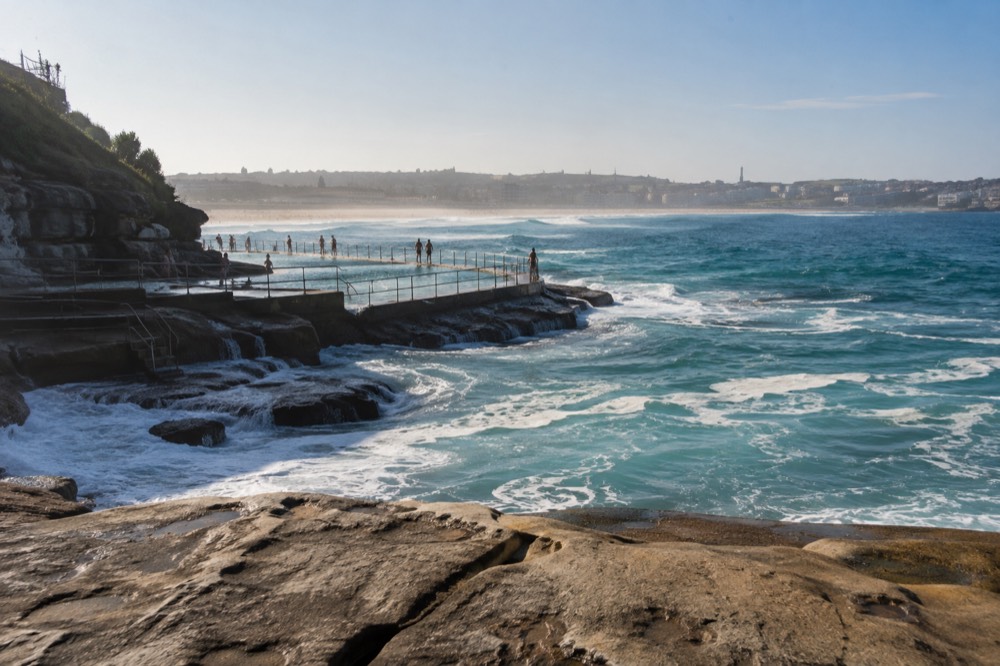
Light matters more here than in the harbour. The coast faces east, so sunrise is the golden window: the cliffs glow, the water is often glassy before the sea breeze arrives, and the crowds have not. By 10am in summer the beaches are full and the light is flat and harsh. The sea breeze is a real photographic factor too, typically building from late morning in warm months and kicking spray and sand across your lens.
The Manly side of the harbour offers a softer palette. Shelly Beach, a short walk from Manly's surf beach, faces west into a sheltered cove, which makes it one of the few Sydney beaches where sunset, not sunrise, is the right time. The Spit to Manly walk adds harbour-side sandstone and views back to the city across Middle Harbour. Further north, the Northern Beaches deliver cliff frames at Dee Why and the long sweep of Palm Beach.
| Coastal spot | Signature frame | Best time | Notes |
|---|---|---|---|
| Bondi Icebergs | Ocean pool geometry | Sunrise, low crowds | Club-managed pool, fees apply to swim |
| Tamarama | Dark rock, small beach | Sunrise | Steep access path |
| Bronte Ocean Pool | Free ocean pool, headland | Sunrise | Free, council-run |
| Shelly Beach | Sheltered west-facing cove | Sunset | Calm water, good reflections |
| Palm Beach | Barrenjoey Lighthouse | Golden hour | Ferry and bus access, lighthouse walk uphill |
| Wedding Cake Island, Coogee | Offshore island silhouette | Sunset | Shoot from Coogee's southern headland |
One safety note that belongs in any coastal photography guide: never turn your back on the water while shooting from rock platforms. Surf Life Saving Australia's own safety messaging is blunt that rips are the number one hazard on this coast, and rock platforms take occasional rogue waves. Shoot from established lookouts and marked paths, and if a beach is patrolled, the red and yellow flags mark the safe swimming zone, not the photo spot.
When Is the Best Light for Photographing Sydney?
The best light for photographing Sydney falls in two windows: the hour after sunrise and the hour before sunset, with late winter, July and August, statistically the clearest months in the Bureau of Meteorology's long-run record. August averages 13.4 clear days, the most of any month, while February, peak tourist season, averages just 5.3, the fewest. June is the wettest month at 133.1 mm of rain on average, wetter than any summer month.
That climate record is this guide's most useful piece of information gain, because it inverts what visitors assume. Sydney's reputation is endless summer sun, but the long-run averages from Observatory Hill, 162 years of observations, show the clearest skies arriving in late winter and the cloudiest in high summer. A photographer visiting in August gets crisp, dry air and the cleanest skyline of the year. A photographer visiting in February gets humidity haze and the highest chance of a grey frame.
Daylight saving reshapes every timing plan. NSW moves its clocks forward on the first Sunday of October and back on the first Sunday of April, per the official NSW Government daylight saving page. In January that pushes sunset past 8pm and gives you a long, workable evening; in July sunset lands before 5pm and the golden hour collides with peak commuter light on the Bridge.
| Month | Mean clear days | Mean daily sunshine | Photographic note |
|---|---|---|---|
| January | 6.8 | 7.1 h | Long days, humid haze |
| February | 5.3 | 6.7 h | Cloudiest month, dramatic skies |
| April | 9.1 | 6.4 h | Settled autumn light |
| June | 9.1 | 5.5 h | Wettest month, 133.1 mm average rain |
| July | 12.0 | 6.4 h | Second-clear skies, short days |
| August | 13.4 | 7.1 h | Clearest month, crisp air |
| October | 8.1 | 7.2 h | Spring haze, wildflower coast |
The full normals table, including every month's rainfall and temperature averages, sits on the Bureau of Meteorology's climate averages page for station 066062. One honest caveat: these are long-run averages, not forecasts, so treat them as odds, not promises. And one UV note that matters for photographers standing still outdoors for hours: Sydney's UV index passes the protection threshold of 3 for most of the year and reaches extreme levels of 11 or more in summer, so sunscreen belongs in the camera bag.
Where Are Sydney's Best Sunrise and Sunset Spots?
Sydney's best sunrise spots are Mrs Macquarie's Chair for Opera House reflections, Shelly Beach for a west-facing cove, and any east-facing cliff on the Bondi to Coogee walk. Its best sunset spots are Observatory Hill, Barangaroo, Kirribilli for the city turning gold, and the western shore of Balmain or the Anzac Bridge approaches. The Manly ferry at golden hour is the single best moving vantage point in the city.
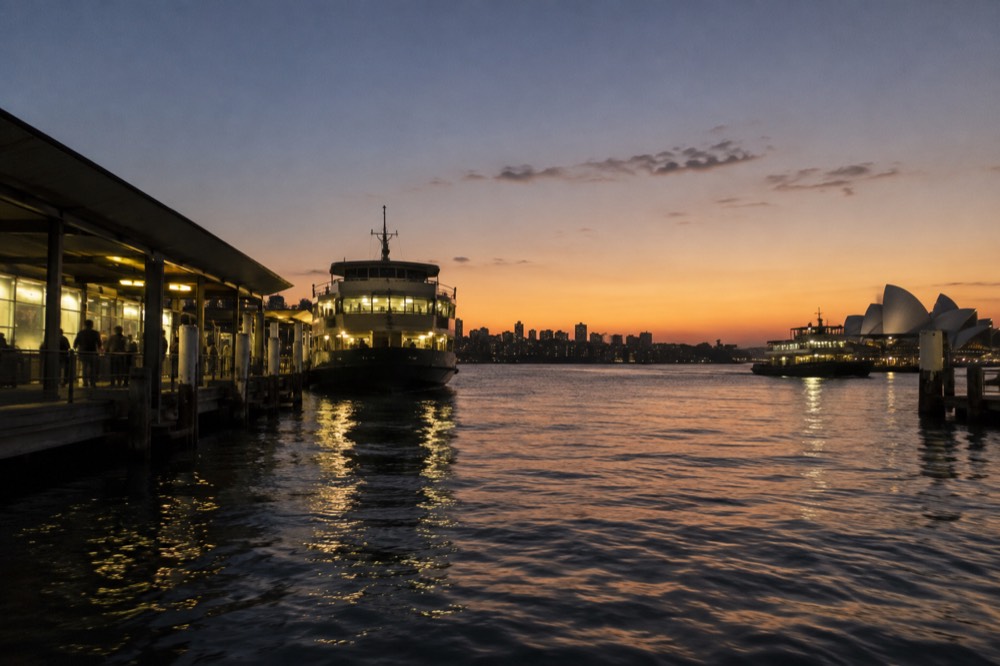
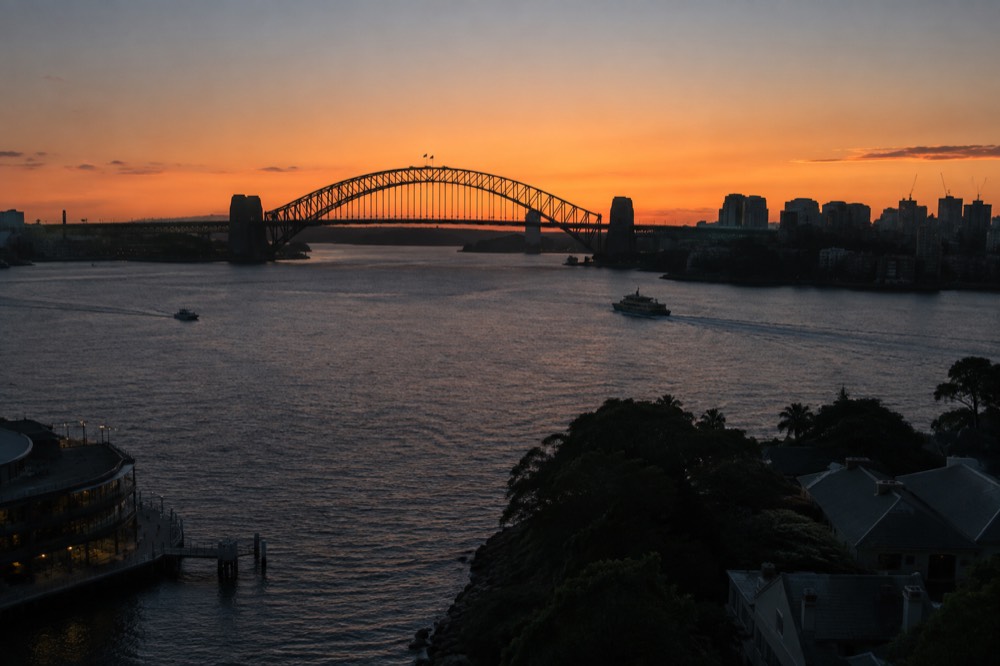
Sunrise on the harbour is a calm-water event. Farm Cove and Circular Quay are frequently glassy before 7am, which is when the Opera House reflections work. By mid-morning the ferry wash and breeze break the surface. Sunset works from the opposite shore: Kirribilli and Milsons Point give you the western sun lighting the CBD's glass faces, and Observatory Hill, a green rise just north of The Rocks, frames the Bridge against colour.
A sunset cruise is the lazy version of the same frame: a one-hour catamaran loop puts the western skyline in front of you while the boat does the positioning. It will not replace a tripod on shore, but for a single evening in the city it is the highest-yield hour of photography per unit of effort.
The sunrise kayak tour is the water-level version of the same idea, paddling the harbour's edge in the calm of first light. Water-level frames of the Harbour Bridge's underside are something no shore viewpoint can produce, and the early start puts you on the water before the first ferries churn it. The Sydney sunrise and sunset spots guide maps the shore-based alternatives, including the walk to Bradley's Head, where a gun emplacement frames the Harbour Bridge between two sandstone walls.
What Gear and Settings Work for Sydney Photography?
A standard zoom in the 24-70 mm range covers most Sydney frames, with a telephoto to 200 mm for compressing the Bridge against the skyline from Kirribilli. For night work, a tripod and a fast wide lens are the two essentials, because Sydney's blue hour fades fast at this latitude. A polarising filter earns its place on the coastal walk, cutting glare off ocean pools and deepening the harbour's water colour.
Sydney does not demand exotic glass. The classic compositions are wide: Opera House and Bridge together at 35 mm from Mrs Macquarie's Chair, the Bridge filling the frame at 24 mm from Observatory Hill. The telephoto end is for compression, shooting from Kirribilli or Bradley's Head to stack the Opera House against the CBD towers, and for isolating ferry detail on the water.
| Subject | Focal length | Suggested approach |
|---|---|---|
| Opera House + Bridge, Mrs Macquarie's Chair | 35-50 mm | f/8, tripod at dusk for blue hour blend |
| Skyline from Kirribilli | 70-200 mm | Compress sails against towers, shoot after sunset |
| Bondi Icebergs | 24-70 mm | Polariser, high cliff angle for geometry |
| Bridge steel, The Rocks | 16-35 mm | Look up from Argyle Cut, morning side light |
| Night skyline, Barangaroo | 14-24 mm | Tripod, 10-20 s exposures, f/8-f/11 |
| Ferries and water detail | 200 mm | Fast shutter from shore, 1/500 s or better |
The harbour's air is not always clean. Summer humidity puts a visible haze on telephoto shots across the water, which is when the August-and-July logic from the climate section pays off. If you are shooting long exposures at night, note that Circular Quay's boards vibrate under foot traffic: the eastern side of the Cahill Walk and Observatory Hill are steadier platforms.
Which Sydney Photography Spots Work at Night?
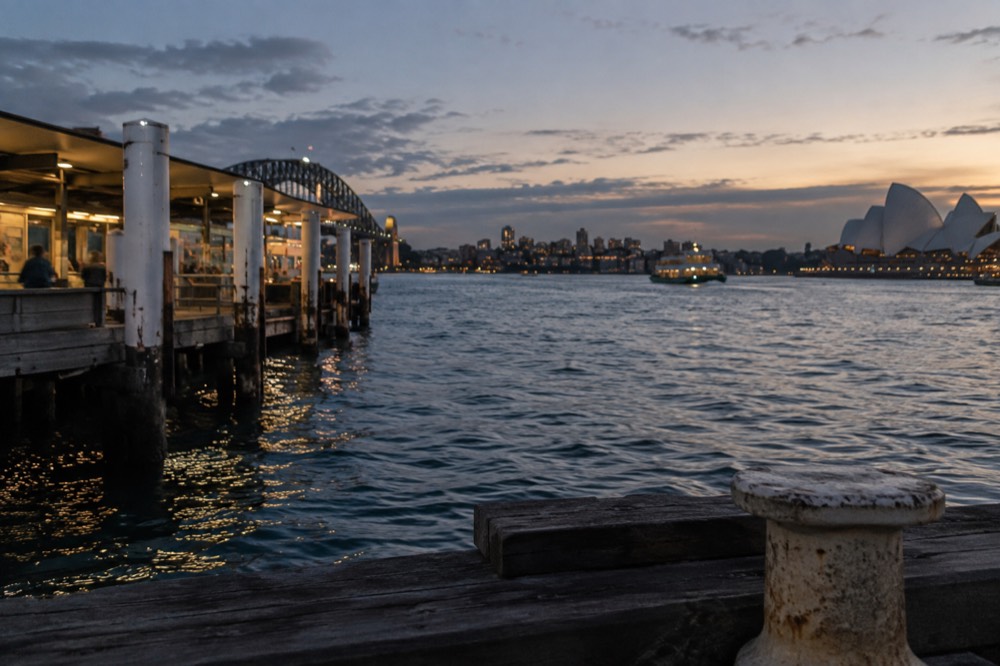
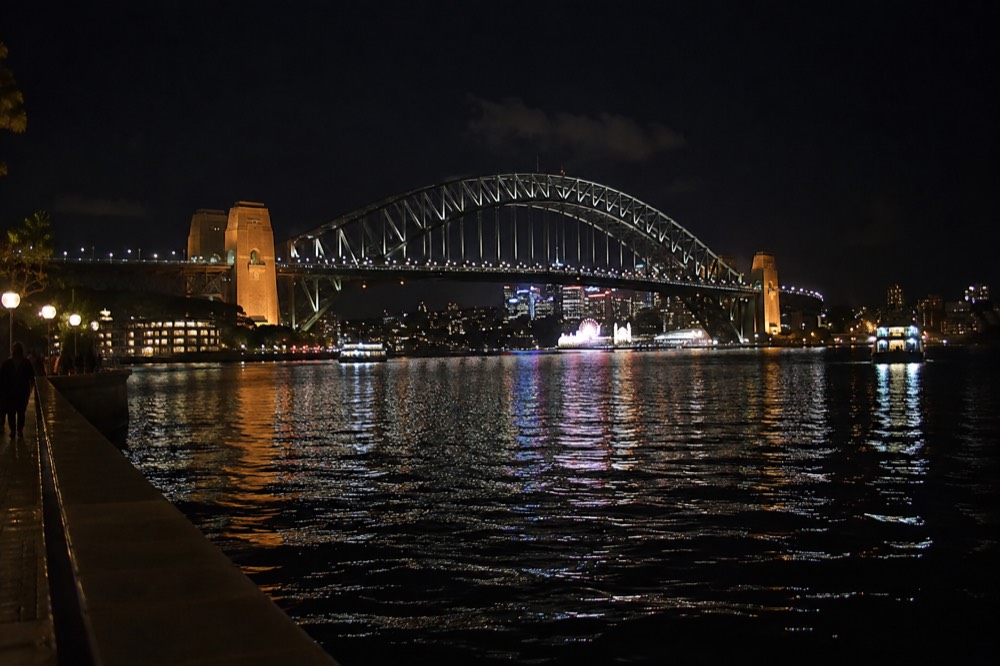
Sydney's best night photography spots are Circular Quay and the Cahill Walk for the lit Opera House sails, Kirribilli for the city skyline at blue hour, Luna Park Sydney's lit face at Milsons Point, and Barangaroo for the western towers. The blue hour window is short, roughly 30 to 45 minutes after sunset, when the sky's ambient blue balances the building lights. Vivid Sydney, in late May and June, turns the whole harbour into a light installation.
Blue hour is the whole game at this latitude. Once the sky goes fully black, the contrast between lit buildings and dark harbour becomes harsh and the frames lose depth. Arrive 20 minutes before sunset, shoot the sunset, then work the blue window as it falls. The Cahill Walk, the elevated walkway running from Circular Quay toward the Botanic Garden, gives you the Opera House sails lit against the sky with the Quay's ferry lights below.
Luna Park Sydney's grinning entrance face, lit in changing colours, is the most distinctive night frame on the North Shore, and it sits a short stroll from the Kirribilli skyline angles, so the two pair naturally. Across the harbour, Darling Harbour gives reflected light on flat water and the Sydney at night guide covers the non-photographic half of the evening.
| Night spot | Signature frame | Practical note |
|---|---|---|
| Cahill Walk | Lit Opera House sails, elevated | Vibration from foot traffic, use steady posts |
| Kirribilli / Milsons Point | Skyline at blue hour | Pair with Luna Park face, a short stroll apart |
| Luna Park Sydney entrance | Lit Art Deco face | Colours cycle, wait for the one you want |
| Barangaroo boardwalk | Tower reflections on water | Flat boardwalk, safe tripod footing |
| Observatory Hill | Bridge against city lights | Dark green space, watch footing after dusk |
Vivid Sydney deserves a planning note of its own. The 2026 festival ran 22 May to 13 June, and the 2027 edition is scheduled for 28 May to 19 June, with more than 80 percent of the program, including the 6.5 km Light Walk around the harbour, free to see. For two-plus weeks the Opera House sails, the Bridge and the whole Circular Quay foreshore become projection surfaces, and the festival's own attendance figures, 2.53 million visitors in 2025, tell you how busy the prime vantage points get. Go on a weeknight, and go early.
How Do You Photograph Sydney Without the Crowds?
To photograph Sydney without crowds, shoot between 6am and 8am, when the harbour foreshore is nearly empty, use weekdays rather than weekends for Bondi and the coastal walk, and pick shoulder-season months: August averages 13.4 clear days yet sits outside peak visitor season. Mrs Macquarie's Chair before 8am, Shelly Beach at sunrise and Barangaroo on a weeknight are the three most reliable quiet frames.
The arithmetic of Sydney's visitor economy supports this. Destination NSW counted 67.5 million visitors to Sydney in the year ending March 2026, and international visitors, 3.9 million of them, were under 6 percent of that headcount. The crowds you are photographing around are overwhelmingly domestic, and domestic travel peaks in the December-January school holidays and Easter. A weekday in August gives you the year's clearest skies and the year's thinnest crowds at the same time.
The other crowd-dodging tool is height and water. The Tower Eye deck, a BridgeClimb summit or a helicopter flight all remove you from the foreshore crush entirely, and the ferry network is itself a moving viewpoint most visitors only use as transport. The Sydney ferries guide covers which routes give the best water-level angles.
Common Questions About Photographing Sydney
Where are the best photography spots in Sydney?
Mrs Macquarie's Chair for the Opera House and Bridge together, Kirribilli for the Opera House against the skyline, Observatory Hill for the Bridge from a green hill, Barangaroo for the western skyline at sunset, and the Bondi to Coogee cliff line for coastal work. All are free to reach on foot or by ferry.
When is the best light for photographing Sydney?
The hour after sunrise and the hour before sunset, with July and August the statistically clearest months: 12.0 and 13.4 mean clear days respectively in the Bureau of Meteorology's long-run record. February is the cloudiest at 5.3 clear days, and June the wettest at 133.1 mm of average rain.
Can you photograph the Sydney Opera House from the water?
Yes, and it is one of the best angles. The F1 ferry to Manly passes the Opera House's western side, and water-level options include the sunrise kayak tour and sunset cruises. Farm Cove reflections at dawn also give a water-level frame from shore.
Do you need a tripod for night photography in Sydney?
For blue hour skyline work, yes. The window when ambient sky balances the building lights lasts roughly 30 to 45 minutes after sunset, and exposures run into multi-second territory. Avoid the middle of Circular Quay's boards, which vibrate under foot traffic; Observatory Hill and Barangaroo are steadier.
Is Bondi Icebergs worth photographing?
Yes, it is the most geometric coastal frame in Sydney: a 50 metre ocean pool with white lane lines set against blue water, best shot from the cliff above the south end of Bondi at sunrise. It is a club-managed pool with access fees, but photographing it from the headland is free.
When is Vivid Sydney good for photography?
During the festival's late May to mid June run, when the harbour's buildings become projection surfaces. The 2027 edition is scheduled for 28 May to 19 June and more than 80 percent of the program is free. Go on a weeknight and arrive early, because the 2025 edition drew 2.53 million visitors.