Sydney Harbour Bridge: Walk, Climb or Look Up
The Sydney Harbour Bridge carries trains, cars, cyclists and pedestrians across the harbour, and you can experience it free on foot, from the Pylon Lookout, or roped up on a guided climb.
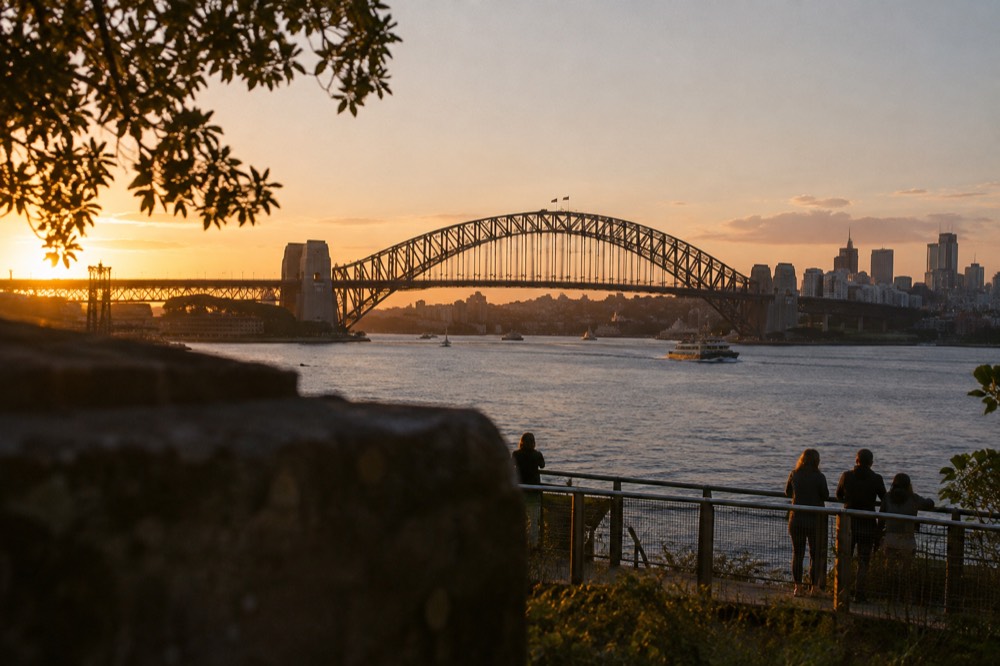
Short answer
You can walk across the Sydney Harbour Bridge free on its eastern pedestrian walkway, about 1.2 km each way, in 15 to 25 minutes. The Pylon Lookout sits inside the south-east pier. The BridgeClimb Summit runs about 3 hours from US$237.74, with a night departure option. The bridge is open to walkers at all hours, though the stairs close at night for safety.
The Sydney Harbour Bridge has carried traffic across the harbour for the better part of a century, eight lanes of it plus two rail lines, a bike path and a pedestrian walkway. Locals call it the Coathanger, for the arch, and it is one of very few bridges in the world you can pay to climb legally. What surprises most first-time visitors is how much of it is free: the walkway costs nothing, the view from either end costs nothing, and the ferry crossing underneath costs a few dollars on an Opal card.
This guide covers every way to do the bridge: the free walk, the Pylon Lookout inside the southern pier, the guided climbs, the history worth knowing before you go, and the best places to photograph it from. For the wider picture of the city around it, start with our Sydney first-timers orientation.
Can You Walk Across the Sydney Harbour Bridge for Free?
Yes, walking across the Sydney Harbour Bridge is completely free and takes most people 15 to 25 minutes each way. The pedestrian walkway runs along the eastern side of the deck, reached by stairs from The Rocks on the south side and near Milsons Point on the north. You cannot walk through the pylons themselves, and the approach stairs are closed overnight for safety, so plan a daylight walk.
The walkway sits slightly below road level on the eastern flank, which means you look east across the harbour toward the Opera House, Circular Quay and the Royal Botanic Garden Sydney. The western side carries cyclists. Entry from the south is via the stairs on Cumberland Street in The Rocks, a five-minute walk from Circular Quay; entry from the north is near Milsons Point station, a short stroll from Luna Park Sydney and the Kirribilli dining strip.
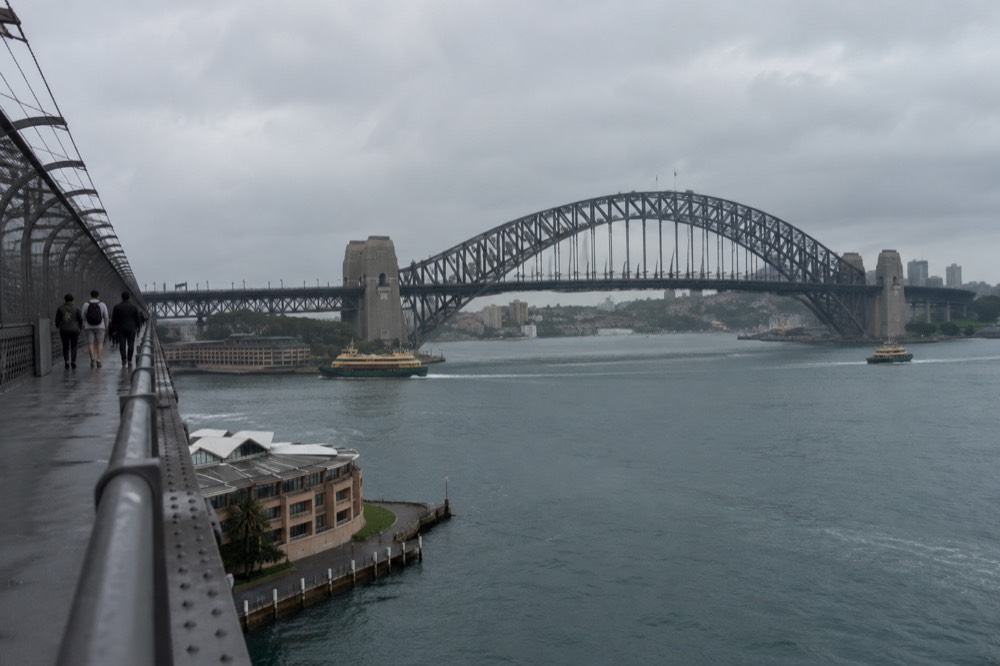
A few practical notes make the walk better. The surface is concrete and exposed, so in summer, December through February, the deck is hot and glare-heavy by mid-morning; go early or near sunset. There is no shade on the bridge at all. The walkway is fully paved and step-free along the deck itself, though the access stairs from Cumberland Street rule out wheelchairs; the northern approach is the gentler one, and we cover accessible routes in our accessible Sydney guide.
The walk pairs naturally with a loop. Cross to the north side, come down at Milsons Point, walk the Kirribilli foreshore past the harbour pool and the olde-worlde streets, then catch the ferry back from Kirribilli or Milsons Point wharf to Circular Quay. That loop, bridge plus Kirribilli plus ferry, is arguably the best free half-day in the city, and it is the core of several of our one day in Sydney itineraries.
Is the Pylon Lookout Worth the Money?
The Pylon Lookout sits inside the south-east pylon, reached from the pedestrian walkway, and rewards you with a glassed-in viewing level above the deck. It stands well below the climb's summit but far above the roadway, and the pylon also houses a small museum on the bridge's construction. Prices are dynamic and not published in a fixed public list, so check the official site for the current figure.
The lookout's real advantage is access. No harness, no booking weeks ahead, no age or fitness screening beyond stairs: you climb about 200 steps inside the pylon and step out to a view that takes in the Opera House, the harbour and the northern shore. The museum inside covers the bridge's Depression-era construction, the workers who built it and the famous photographs of men balanced on the arch. It is a genuine museum, not a gift shop with panels, and it is the only place in Sydney where the bridge explains itself.
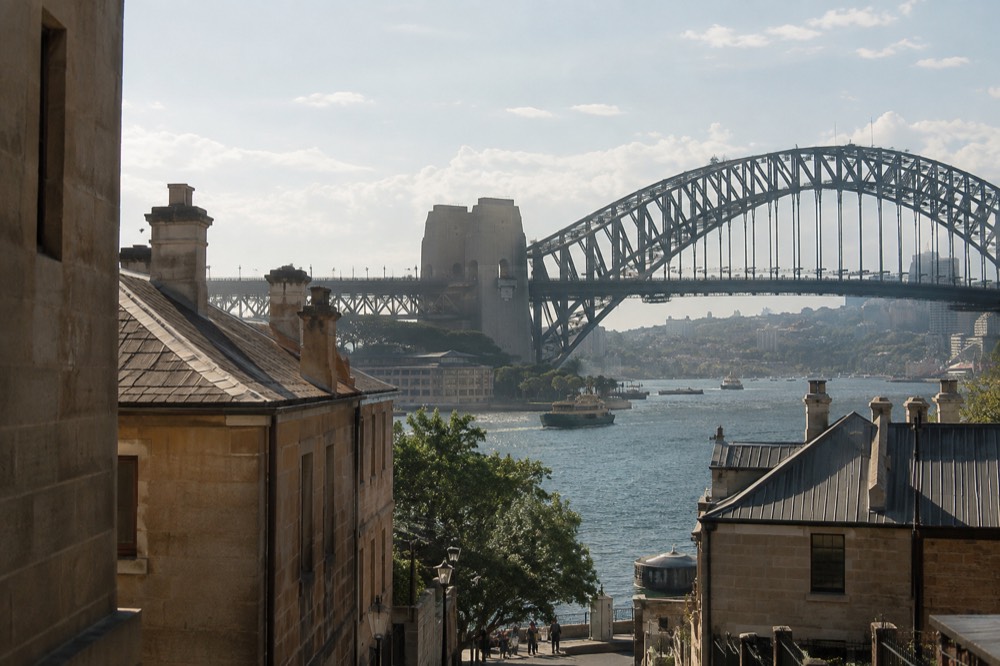
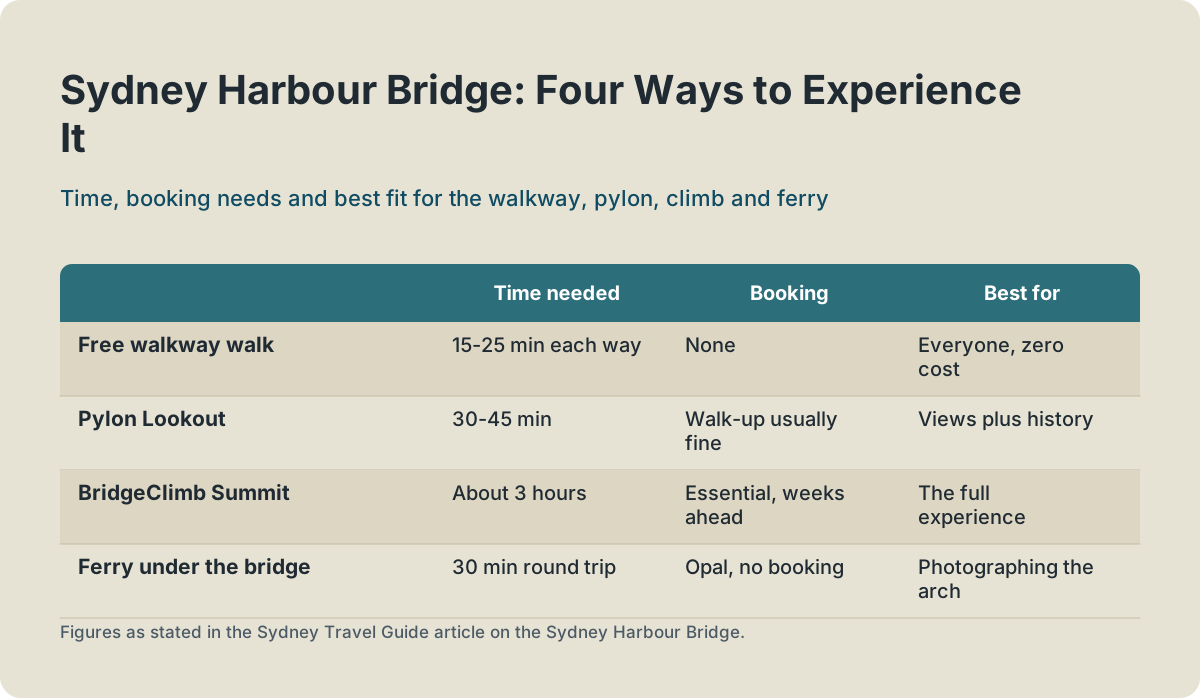
How you see the bridge depends on what you want from it, and the honest comparison looks like this:
| Experience | Height | Time needed | Booking | Best for |
|---|---|---|---|---|
| Free walkway walk | Deck level | 15-25 min each way | None | Everyone, zero cost |
| Pylon Lookout | Above the deck, below the summit | 30-45 min | Walk-up usually fine | Views plus history |
| BridgeClimb Summit | Top of the arch | About 3 hours | Essential, weeks ahead | The full experience |
| Ferry under the bridge | Water level | 30 min round trip | Opal, no booking | Photographing the arch |
The ferry row is the underrated one. From the water, the bridge reads as a single object, arch and pylons together, in a way it never does from the deck. The Sydney Harbour sightseeing cruise passes under it on its circuit, and the regular F1 Manly ferry gives you the same angle for the standard ferry fare. Our Sydney ferries guide covers the routes and fares in detail.
If the deck walk and the pylon are the budget options and the climb is the splurge, the middle of the market is the guided experience on the water. Here are the three most-booked ways travellers combine the bridge with the rest of the harbour:
How Does the BridgeClimb Actually Work?
The BridgeClimb Summit takes about 3 hours end to end, roughly 2 of them on the bridge itself, and runs departures from dawn through night. Climbers wear a provided suit and harness, are clipped to a fixed line the whole way, and reach the summit at the very top of the arch. The operator's indicative rates put the Summit Day climb from around A$375 adult weekday, with a peak surcharge from late December to early January.
The climb is run by the operator that holds the exclusive licence, and it is a tightly managed operation: a breath test, a full-body suit over your clothes, a harness clipped to a permanent cable, and a climb leader for every group. There is no way to climb freehand, no way to climb without a booking, and no upper age limit. Children need to be at least 8 years old for the Summit. The whole thing feels closer to a guided tour than an adventure activity, which is deliberate: the risk controls are industrial, and the operator's safety record reflects that.
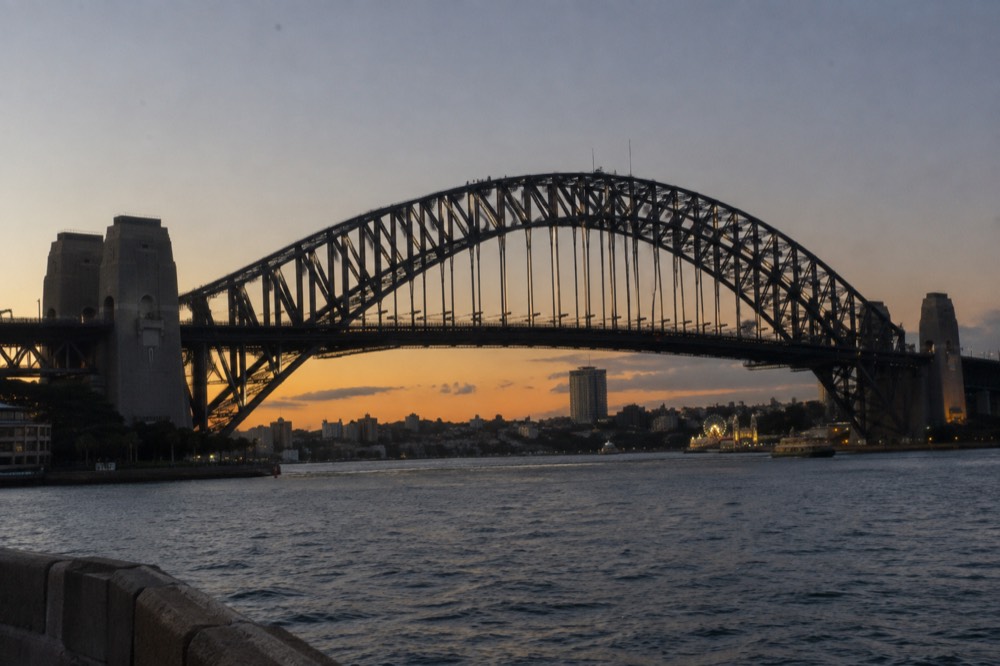
The departure times matter more than most people realise. Dawn climbs are limited and the light is spectacular but the summit is cold; day climbs get the clearest long views west to the Blue Mountains on a good day; twilight climbs catch the transition; night climbs get the city lit up and the deck to yourself, since traffic noise drops after the evening peak. Our BridgeClimb guide compares every climb type, the fitness requirements and the booking windows in detail.
The night Summit is the one most climbers describe as the standout, and it is the product we point people to when they ask which to book:
If the Summit price is beyond the budget, the same operator runs cheaper experiences that still put you on the bridge structure, including a walk beneath the deck. The standard 3-hour climb is the flagship and carries the deepest review base:
Whichever climb type you lean toward, the booking window matters as much as the departure time: Summit places in school holidays and around New Year's Eve go weeks ahead, while off-peak weekdays can often be booked a few days out. Checking availability early costs nothing, and the live listing shows the free-cancellation terms before you commit.
Why Is the Bridge Called the Coathanger, and What Is Its History?
Sydney locals nicknamed the bridge the Coathanger for the shape of its steel arch, one of the widest steel-arch spans on earth when it was built. Construction ran through the Great Depression, and the bridge was built by a workforce whose safety record, by the standards of the day, was remarkably good: far fewer deaths than comparable steel projects of the era. The arch was assembled from each shore and joined in the middle.
The numbers that matter to the story are these: about 6 million rivets hold the structure together, and the pylons, which look structural, are mostly decorative. They were added partly for aesthetics and partly because the public of the day doubted a pure arch could carry rail traffic. The bridge's chief engineer never saw it finished; he died months before the opening, and his ashes were reportedly carried to the summit by his descendants decades later. That last detail is the kind of story the Pylon Lookout museum tells well, and it is why the pylon is worth more than its view alone.
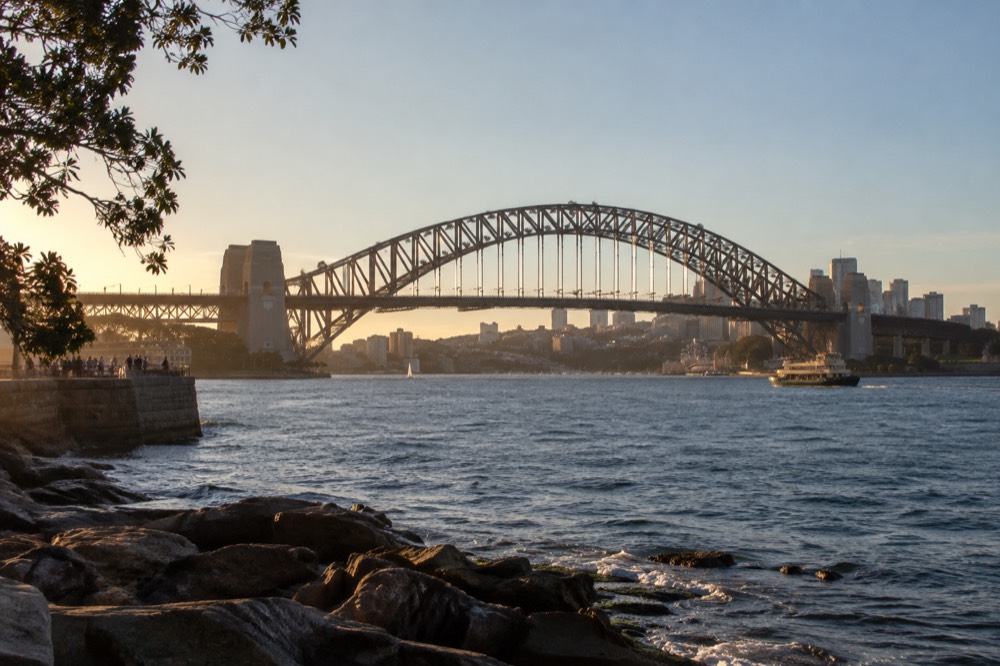
The opening itself produced one of Australian history's famous scenes: a right-wing veteran on horseback slashed the ribbon with a sword before the premier could cut it, in protest at the "royal" ceremony. The protester was arrested, fined and later forgiven by public opinion, and the incident is now a fixture of every telling of the bridge's story. The bridge went on to define the city's postcard image, alongside the Opera House that followed four decades later; our Sydney Opera House guide covers that half of the pair.
| Bridge fact | Figure |
|---|---|
| Total length | About 1,149 m |
| Pylon height | About 89 m |
| Rivets | Around 6 million |
| Rail lines | 2 |
| Traffic lanes | 8 |
Where Are the Best Places to Photograph the Bridge?
The best free viewpoints are Mrs Macquarie's Point in the Royal Botanic Garden Sydney for the classic bridge-and-Opera-House frame, Kirribilli on the north shore for the head-on arch view from water level, and Observatory Hill in The Rocks for an elevated city angle. The ferry deck between Circular Quay and Manly delivers a moving view from underneath the deck. All four cost nothing beyond an Opal fare.
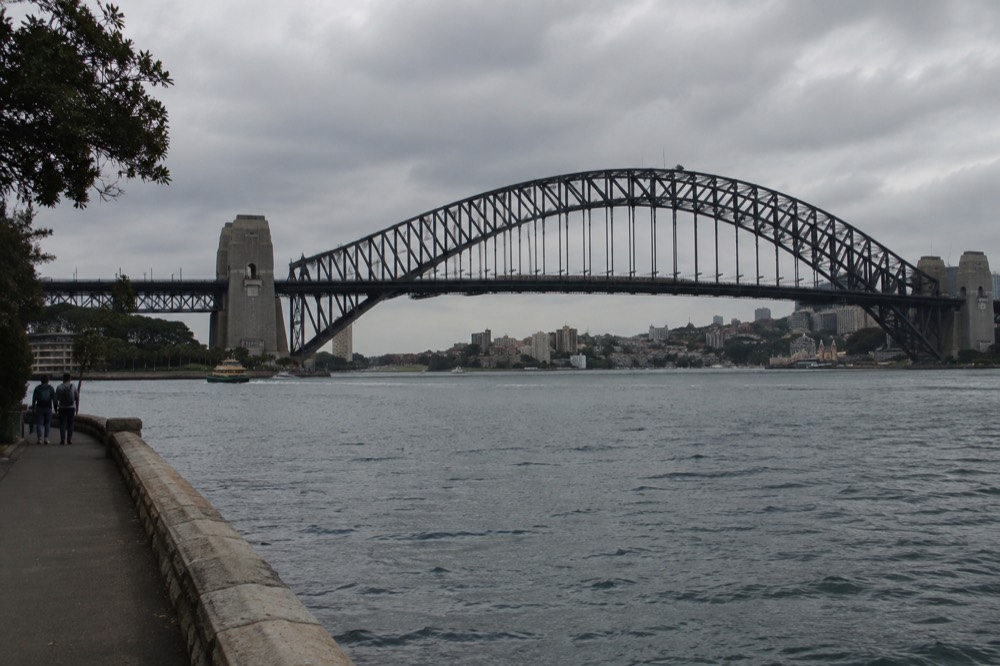
Mrs Macquarie's Point is the postcard: the bridge on the left, the Opera House on the right, both in one frame from a sandstone ledge at the end of the garden's foreshore. It is a 20-minute walk from the bridge itself, and it is best at sunrise, when the light comes from behind you and hits both structures evenly. Kirribilli is the opposite shot: stand near the Kirribilli ferry wharf or on the harbour pool's edge and the arch fills the frame from below, with the city behind it. That angle is best late in the day. The wider set of guides lives on Sydney Travel Guide.
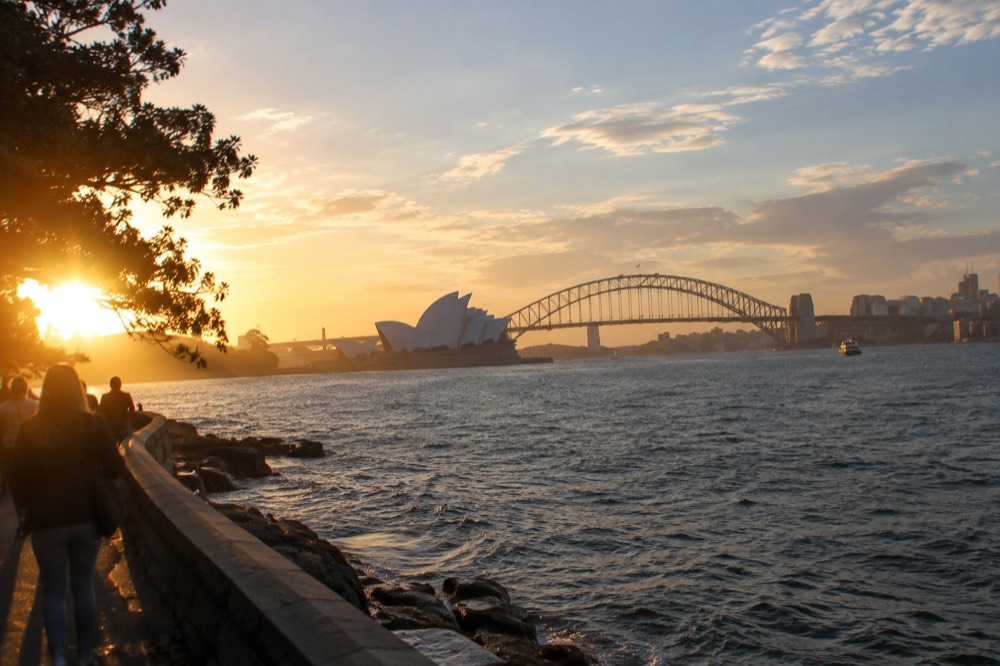
The elevated options are Observatory Hill, a short climb from The Rocks with the bridge in profile, and the balconies and rooftop bars of the CBD's western edge. Our Sydney photography spots guide maps all of them, plus the sunrise and sunset timings for each. For a different register entirely, the helicopter flights over the harbour put the whole arch in a single frame from above; the 20-minute harbour helicopter flight is the shortest one that includes the bridge.
| Viewpoint | What you get | Best time | Cost |
|---|---|---|---|
| Mrs Macquarie's Point | Bridge plus Opera House in one frame | Sunrise | Free |
| Kirribilli foreshore | Head-on arch from water level | Late afternoon | Free |
| Observatory Hill | Elevated city-and-bridge profile | Any daylight hour | Free |
| Ferry deck (F1 or cruise) | The arch from underneath | Midday or sunset sail | Opal fare |
| Pylon Lookout | Deck-level view, museum included | Morning | Ticket |
When Is the Best Time of Day to Visit the Bridge?
Early morning and the hour around sunset are the best times to walk the bridge: the deck is quiet before 9am, the light is soft, and in summer the concrete has not yet heated up. Night is the best time to climb it, when the city is lit and the climb operators run their night Summit departures. Avoid midday in December through February, when the walkway is exposed, hot and glare-heavy.
The seasonal angle matters too, and it runs opposite to what northern-hemisphere visitors expect. Sydney's summer is December through February, and that is peak cloud season: February averages just 5.3 clear days, the fewest of any month, while August averages 13.4, the most. Winter skies here are clearer than summer skies; the days are simply shorter. June is the wettest month of the year, 133.1 mm on average, wetter than any summer month, so a June visit is more likely to give you a grey deck walk than a postcard one. Our Sydney weather month by month guide has the full table.
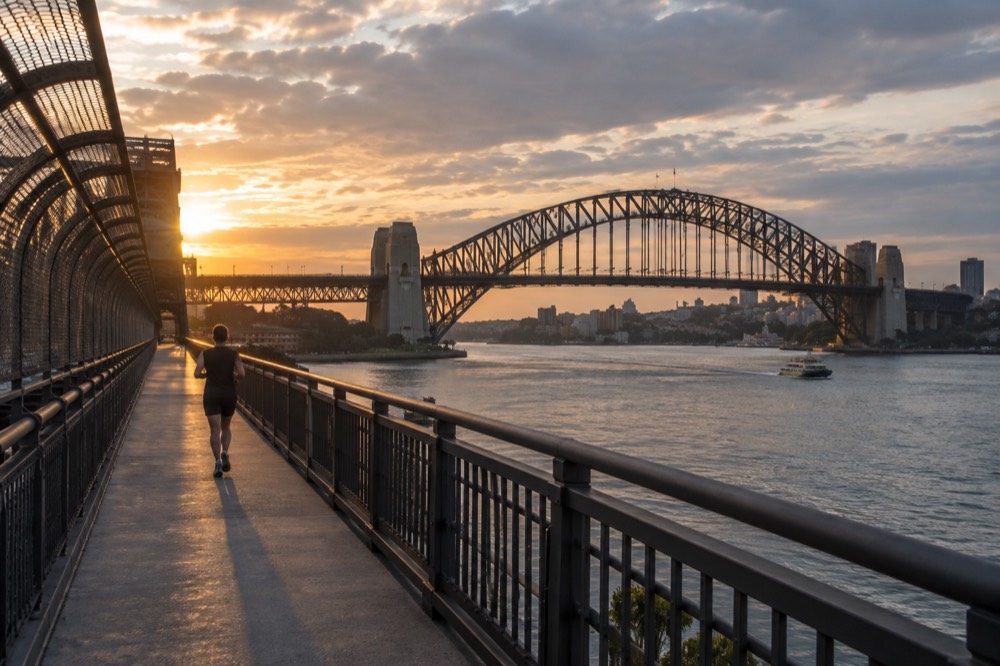
One more timing note that catches visitors out: the deck walkway itself never closes, but the stair access points do close overnight, generally re-opening around dawn, so a 3am walk is not possible. The climb operator, by contrast, runs departures through the evening, which is one reason the night climb exists at all.
How Do You Get to the Sydney Harbour Bridge?
The southern end is a five-minute walk from Circular Quay station and ferry wharves, up through The Rocks to the Cumberland Street stairs. The northern end is at Milsons Point station, one stop across the harbour on the North Shore line, next to Luna Park Sydney. A ferry from Circular Quay to Kirribilli or Milsons Point delivers you to the northern side with the bridge in view the whole way.
Public transport beats driving here, plainly. The bridge's southern approaches are a one-way road maze, parking in The Rocks is expensive and scarce, and the walkway entrances have no car parks. Milsons Point station is the elegant option: the train crosses the bridge itself, so you ride over the structure you came to see, then walk back across it on foot. The Manly ferry guide covers the ferry network's flagship route, and the Opal card guide explains the caps: a Friday, weekend or public holiday travel day caps at A$9.65, versus A$19.30 Monday to Thursday, per Transport for NSW's published fare tables.
| Approach | From | Time to walkway | Notes |
|---|---|---|---|
| Circular Quay station/ferries | South side | 5-8 min | Best combined with The Rocks |
| Milsons Point station | North side | 3-5 min | Train crosses the bridge itself |
| Kirribilli or Milsons Point ferry | North side | 5 min | Scenic arrival from Circular Quay |
| Wynyard station | South side | 10-12 min | Exit via the historic bridge stairs on Kent Street |
The Wynyard option is a local secret of sorts: the heritage-listed bridge stairs on Kent Street once carried commuters up to the road deck and still deliver you into the southern approach, a block from the Cumberland Street walkway stairs. The NSW Government's daylight saving page is worth checking before you plan a sunset walk, because the clocks shift in early October and early April and sunset moves with them.
What Else Should You Know Before You Go?
Take water and sunscreen, since the deck has no shade and Sydney's UV index passes the protection threshold almost year-round. Wear flat shoes for the walkway stairs. The climb operator provides everything for climbers, including suits and weather gear, so climbers need only bring enclosed shoes. Allow two to three hours total for a visit that includes the walk and the Pylon Lookout, and half a day if you add Kirribilli and a ferry.
A few honest caveats. The bridge is a working transport corridor: it thunders with traffic, and the climb, for all its safety systems, is genuinely exposed to wind and weather, so the operator reschedules in electrical storms and high winds. The walkway has no toilets or water; the nearest facilities are in The Rocks and at Milsons Point. And the bridge is at its most crowded at New Year's Eve, when the whole harbour becomes a viewing platform; our Sydney New Year's Eve guide covers where to stand if that is your night.
For most visitors, though, the plan is simple and cheap: walk it south to north, come down at Milsons Point, loop Kirribilli, ferry back. If your Sydney time is short and you want the bridge plus the city's other headline sights handled for you, the all-inclusive Blue Mountains and Opera House options below are the two tours most often paired with a bridge visit:
For the deeper comparisons, whether the climb is worth its price, the cheapest ways up, and how the bridge stacks up against the city's other paid experiences, see our Sydney attraction passes compared and is Sydney expensive guides. The short version of the money question lives in our Sydney trip cost breakdown.
Common Questions About the Sydney Harbour Bridge
Can you walk across the Sydney Harbour Bridge for free?
Yes. The eastern pedestrian walkway is free and takes 15 to 25 minutes each way, with stair access from Cumberland Street in The Rocks on the south side and near Milsons Point station on the north. The stair approaches close overnight for safety.
How much does it cost to climb the Sydney Harbour Bridge?
The BridgeClimb Summit is the flagship climb, about 3 hours, and the operator's indicative rates put the Summit Day climb from around A$375 adult weekday, with a peak surcharge from late December to early January. Cheaper experiences exist, including a walk beneath the deck. The live listing shows the current price for each departure.
Is the Pylon Lookout worth visiting?
Yes, if you want the view without the climb price. The pylon sits above the deck, houses a genuine museum on the bridge's construction, and is usually bookable on the day. Its price is dynamic, so check the official site for the current figure.
What is the best time of day to walk the bridge?
Early morning before 9am, or the hour around sunset. The deck has no shade, so midday in December through February is hot and glare-heavy. February averages just 5.3 clear days, while August averages 13.4, so winter walks often get better skies than summer ones.
How long does the BridgeClimb take?
About 3 hours total for the Summit, roughly 2 of them on the bridge structure itself. Allow extra time for check-in, the breath test, suiting up and the safety briefing before you step out.
Where is the best place to photograph the bridge?
Mrs Macquarie's Point in the Royal Botanic Garden Sydney for the bridge-and-Opera-House frame, Kirribilli for the head-on arch from water level, and the ferry deck for the view from underneath. All are free beyond an Opal fare.