One Perfect Day in Sydney: A 24-Hour Itinerary
One day is enough to see Sydney's headline sights if you plan the geography properly. This itinerary runs west to east along the harbour, then out to the coast, with real fares and timing so nothing is guesswork.
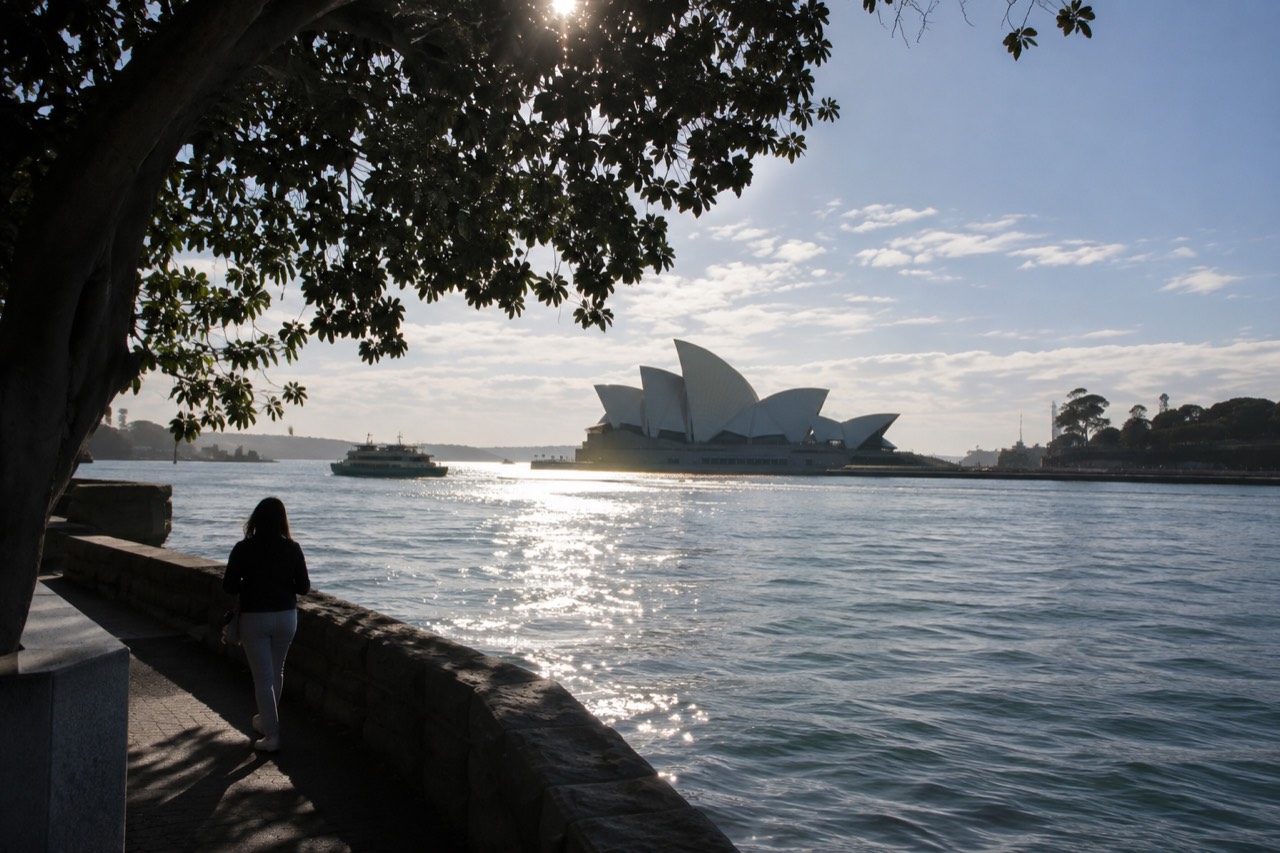
Short answer
Yes, one day covers Sydney's core: the Opera House and Royal Botanic Garden in the morning, a ferry to Manly or Watsons Bay at midday, Bondi by bus in the afternoon, and the harbour at sunset. Budget roughly A$50-100 per person for transport, food and one paid tour. Start at Circular Quay by 8am, because every key stop sits within 30 minutes of it.
One Perfect Day in Sydney: A 24-Hour Itinerary
Sydney spreads its best material along kilometres of harbour frontage, and the single biggest mistake a one-day visitor makes is treating it like a compact European old town. It is not. The Opera House, Bondi, Manly and The Rocks each sit in a different corner of a large, watery geography, and the ferry network is the only thing that stitches them together quickly. The good news: that ferry network is cheap, scenic and runs on Opal, the same card that runs the trains and buses, so a single day can genuinely cover the harbour, the coast and the city centre if you sequence it west to east and let the water do the commuting.
This itinerary is built around that logic. It starts at Circular Quay at sunrise, works east through the Royal Botanic Garden and the Opera House, crosses the harbour by ferry at midday, finishes the afternoon at Bondi, and returns to the harbour for sunset. Every fare, cap and price below comes from official sources, and the timing assumes a single day without a car, because a car is a liability in this city. For a slower pace, our three days in Sydney guide stretches this same route across a proper long weekend.
Can You Actually See Sydney's Best Bits in One Day?
Yes, if you accept two trade-offs. You can see the Opera House, the Harbour Bridge, the Royal Botanic Garden, The Rocks, the harbour from the water, and one ocean beach in a single day, but you cannot also fit Taronga Zoo, the Blue Mountains or a proper surf session into the same 24 hours. Pick one coastal add-on and one harbour crossing, and skip everything else without guilt. The city rewards depth over checklist sprinting.
The reason one day works at all is that Sydney's top sights cluster around its water. Circular Quay is the hinge: the Opera House stands on one side, The Rocks and the bridge on the other, the Royal Botanic Garden begins a five minute walk east, and every ferry in the network departs from the same wharves. A visitor who bases the day at Circular Quay never spends more than about 30 minutes getting anywhere on this list.
What one day cannot absorb is distance. The Blue Mountains sit far to the west and deserve 10 hours on their own, which is why this guide treats them as a swap rather than a stop, covered near the end. Taronga Zoo is a genuine half-day, and while the zoo-plus-ferry combo is one of the best family products in the city, bolting it onto an already full day leaves you racing the closing gates. If the zoo is your priority, our Taronga Zoo guide shows how to build a day around it instead.
Season matters more than most itineraries admit. Sydney's peak season, December through February, is statistically its cloudiest: the Bureau of Meteorology's long-run averages give February just 5.3 clear days, against 13.4 in August. If you are visiting in late winter, you will likely get sharper light and emptier ferries than a summer crowd ever sees, and the same itinerary runs comfortably in a jumper. In summer, start earlier, because the middle of the day belongs to shade and water.
What Does the Perfect One Day Sydney Itinerary Look Like?
Start at Circular Quay by 8am, walk the Opera House forecourt and into the Royal Botanic Garden before the crowds, tour the Opera House mid-morning, catch a ferry to Manly or Watsons Bay around 11am, return by early afternoon, bus out to Bondi for the late afternoon, and come back for sunset on the harbour. The whole day costs under A$30 in transport if you tap a contactless card, plus food and one tour. Total walking: roughly 8 kilometres.
Here is the skeleton, hour by hour. It assumes daylight saving timing, October to April, when sunset falls between 7:30pm and 8pm. Outside daylight saving, pull everything forward 30 to 60 minutes.
| Time | Where | What you are doing |
|---|---|---|
| 7:30-8:00am | Circular Quay | Coffee, Opera House forecourt, bridge views |
| 8:00-9:30am | Royal Botanic Garden | Free entry, harbour walk, Mrs Macquarie's Chair |
| 9:30-10:30am | Opera House | Guided tour, about 1 hour |
| 10:45-11:15am | The Rocks | Quick wander, heritage laneways |
| 11:30am-1:30pm | Manly or Watsons Bay | Ferry crossing, beach time, lunch |
| 2:00-3:00pm | Ferry back, Quay stop | Second crossing, rest on the water |
| 3:30-5:30pm | Bondi | Beach walk, Icebergs pool, gelato |
| 6:00-7:00pm | Back to the city | Bus or train, early dinner |
| 7:30pm | Harbour | Sunset cruise or Kirribilli lookout |
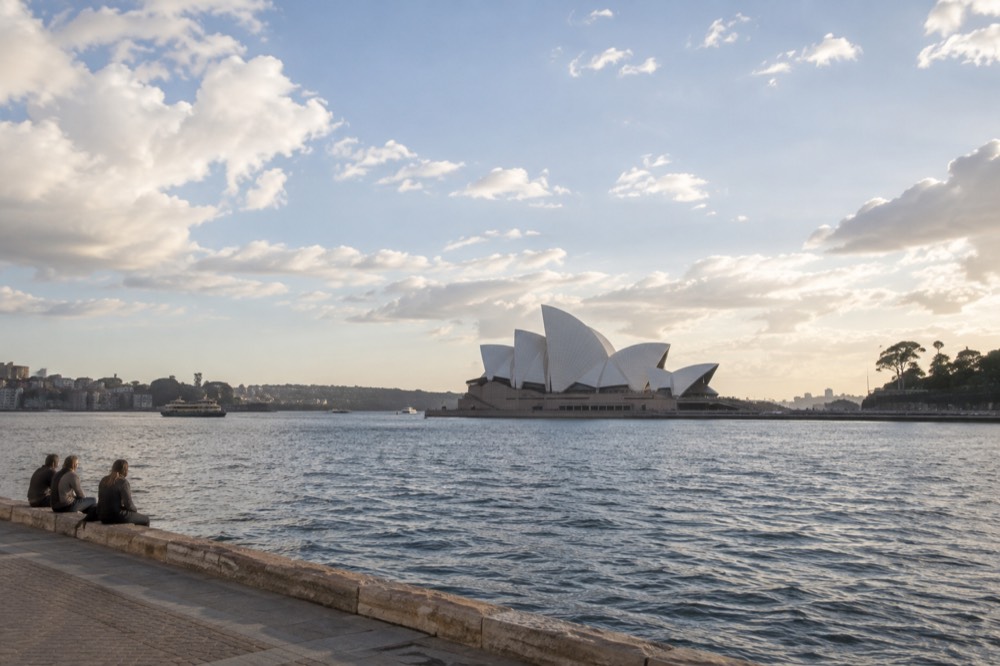
The morning block is the part worth protecting. The Royal Botanic Garden opens at 7am daily and entry is free, a detail that surprises visitors who assume the city's headline harbourside garden is ticketed. Walking east through it toward Mrs Macquarie's Chair delivers the single best free view in Sydney: the Opera House and the bridge framed together across Farm Cove, with almost nobody there before 9am. The official garden page confirms the free entry and daily 7am opening, and the walk from the Quay to the Chair and back takes about 45 unhurried minutes.
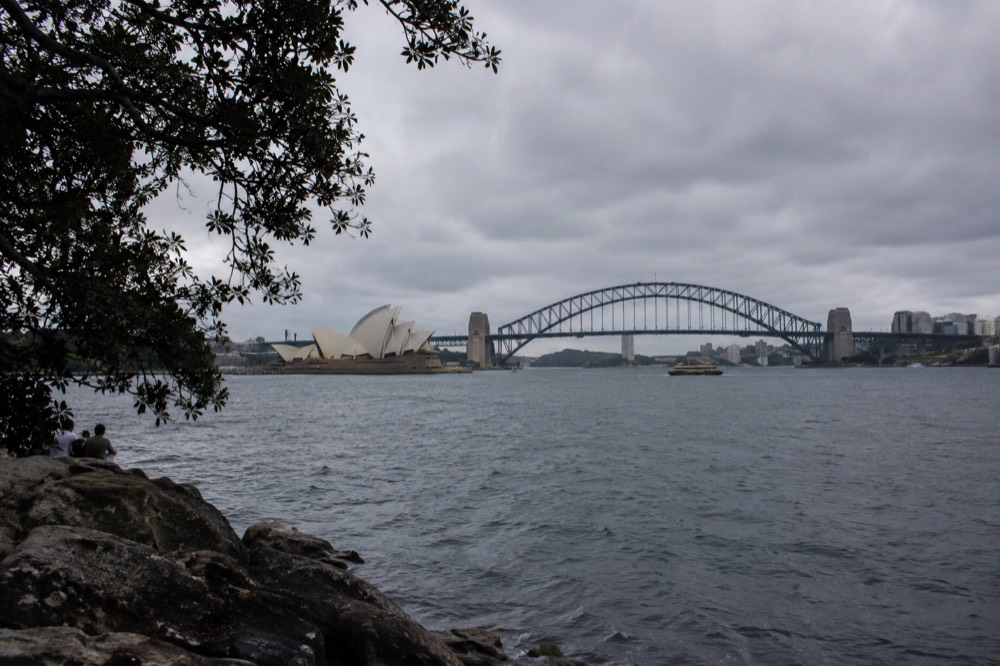
The Opera House stop deserves a tour, not just a photo. The standard guided tour runs about an hour, roughly 9am to 5pm daily, and takes you inside the theatres, which is the only way to understand the building rather than merely admire it. The Opera House does not publish a fixed public price for its standard tour, pricing is dynamic and set at booking, so treat the live listing as the source of truth for the day you want. Two solid options exist: the basic guided tour with entry, and an official walking tour of the same length.
If you would rather outsource the morning's structure, these three products each cover a different slice of the day, and the first one solves your transport and sightseeing in a single ticket:
The Rocks, between the Quay and the bridge, fills the gap before your ferry. It is the oldest European settlement area in Australia, sandstone laneways and converted warehouses, and a 30 minute wander is enough unless you commit to a proper guided walk. If dark history appeals more than heritage prettiness, the pub walking tour through The Rocks' old hotels runs about two and a half hours and doubles as an evening plan. Our The Rocks guide maps the lanes worth keeping and the ones you can skip.
After the tour, the Opera House stop earns its own card if you want the inside story rather than the outside photo:
How Do You Get Around Sydney in One Day?
Tap a contactless credit card or phone on every train, bus, ferry and light rail, and you are charged exactly what an Adult Opal card pays, with every cap and discount included. The daily cap is A$19.30 Monday to Thursday and A$9.65 on Friday, weekends and public holidays, with a A$50 weekly cap. Ferries are included, and the Manly ferry, the best sightseeing ride in the city, costs A$9.20 each way.
The contactless detail matters because it removes the single most common first-hour friction: hunting for an Opal card at an airport station or a convenience store. Transport for NSW charges contactless payments identically to an Adult Opal card, including the off-peak discount and the transfer discount, so for a one-day visitor there is no reason to buy a card at all. The only trap is the private Manly Fast Ferry, which accepts OpalPay but sits outside the caps and discounts, so stick to the public F1 ferry for the Manly crossing. Our Opal card guide for visitors unpacks the edge cases if you are staying longer.
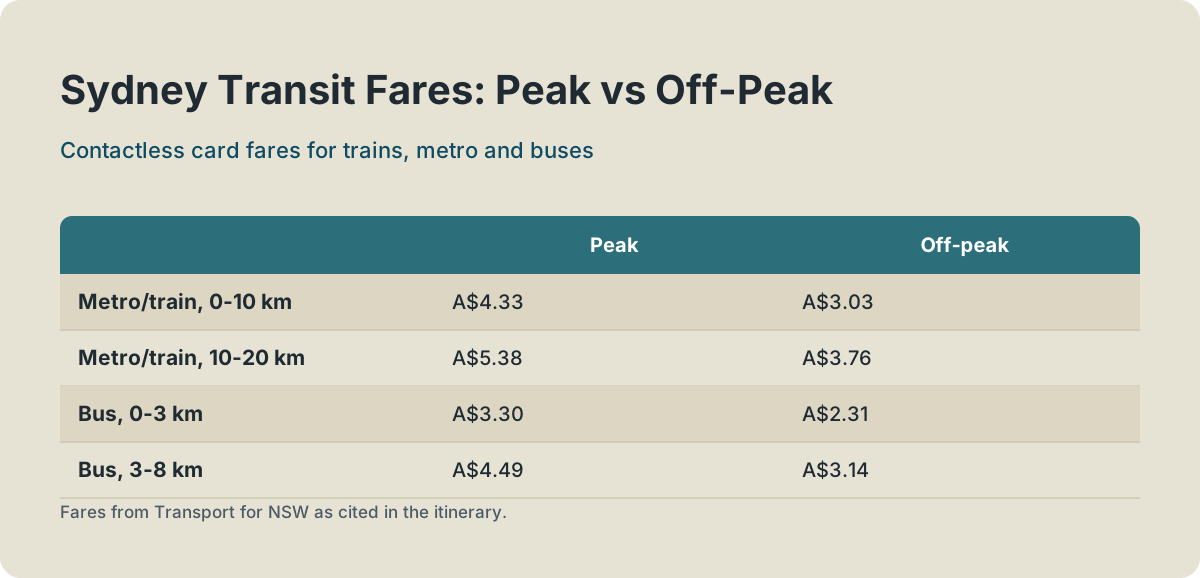
| Fare type | Peak | Off-peak |
|---|---|---|
| Metro/train, 0-10 km | A$4.33 | A$3.03 |
| Metro/train, 10-20 km | A$5.38 | A$3.76 |
| Bus, 0-3 km | A$3.30 | A$2.31 |
| Bus, 3-8 km | A$4.49 | A$3.14 |
| Ferry, 0-9 km | A$7.35 | no off-peak ferry discount |
| Ferry, 9+ km (incl. Manly) | A$9.20 | no off-peak ferry discount |
A 30% off-peak discount applies on metro, train, bus and light rail on Fridays, weekends, public holidays and outside weekday peak times, but not on ferries, which charge a flat fare by distance band. The practical consequence for this itinerary: your Friday, Saturday or Sunday one-day Sydney run is capped at A$9.65 no matter how many ferries and buses you stack, making a weekend the cheapest day to do this route. Public holidays get the same A$9.65 cap. The full fare tables live on the Transport for NSW adult fares page, which is where every figure in this section comes from.
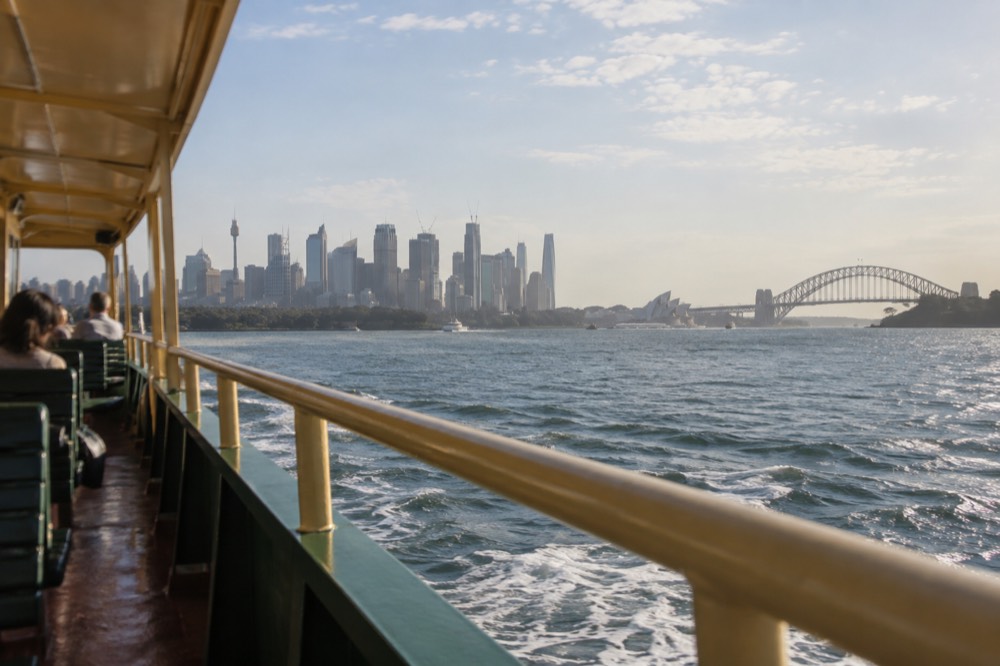
The ferry is not just transport here, it is the sightseeing. The 30 minute Manly crossing passes the harbour's northern headlands, and the eastern side of the upper deck gives you the Opera House receding, the bridge abeam and open water ahead, all for a commuter fare. If Manly feels like too much of a detour, Watsons Bay on the F9 is a shorter crossing with a beach, a famous fish and chip shop and the harbour's South Head at the end of the street. Our Manly ferry guide compares the two crossings stop by stop.
For a day built almost entirely on the water, the hop-on hop-off ferry pass turns the harbour's best viewpoints into a scheduled loop rather than a set of one-off fares, which suits a one-day visitor who wants the water without the route planning:
How Much Does One Day in Sydney Cost?
Transport for the full day is capped at A$19.30, or A$9.65 on weekends and public holidays. The Royal Botanic Garden, the Australian Museum's general entry, the Art Gallery of New South Wales and The Rocks are all free. Add one paid tour, from US$35.79 for an Opera House tour to US$43.38 for a sunset cruise, and food, and a realistic solo day lands between A$120 and A$250.
A couple doing a premium version, BridgeClimb included, can multiply that several times over.
The skeleton day is startlingly cheap because so much of it is free. Here is the honest breakdown, using official figures for fares and entry, and planning ranges for food, because a flat white varies with the suburb you drink it in.
| Item | Budget day | Comfortable day |
|---|---|---|
| Transport (capped) | A$9.65-19.30 | A$9.65-19.30 |
| Royal Botanic Garden | free | free |
| Opera House tour | from US$35.79 | tour plus a drink at Opera Bar |
| Ferry to Manly | A$9.20 each way | same, plus lunch in Manly |
| Bondi bus | included in cap | included in cap |
| Food | A$40 (breakfast, bakery, casual dinner) | A$90 (brunch, sit-down dinner) |
| Sunset harbour cruise | skip, watch from Kirribilli | from US$43.38 |
| Total per person | roughly A$120-150 | roughly A$250-300 |
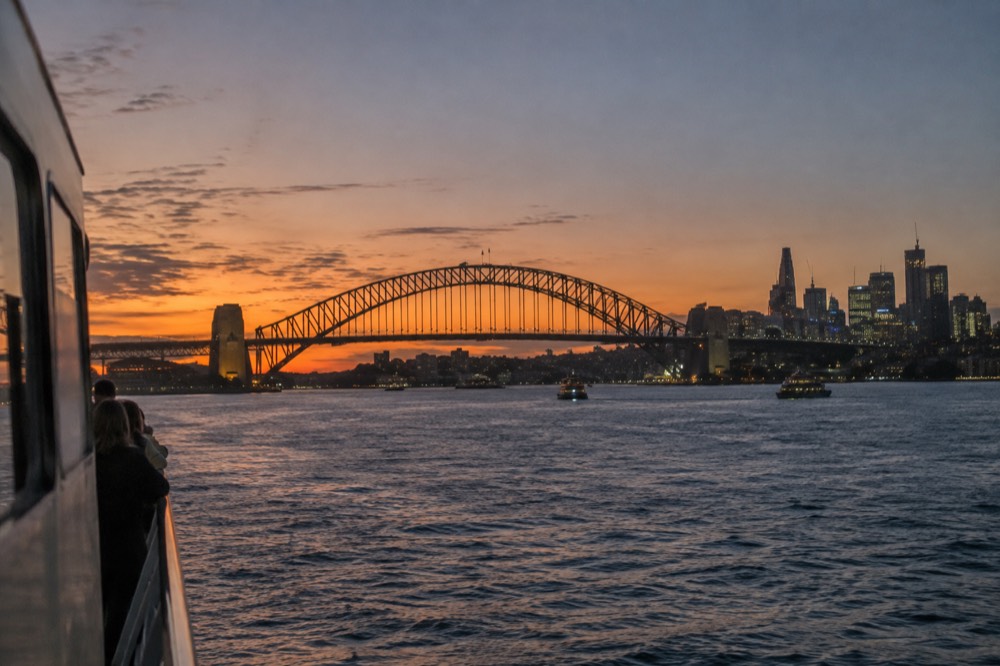
Two upgrades change the day's character more than its length. The first is the sunset cruise: one hour on the water at golden hour, from US$43.38, converts your last daylight hours from a bus ride into the best hour of the trip. The second is BridgeClimb, which is a different budget universe, indicative operator rates sit around A$375 for a weekday adult Summit climb, but it is the single most memorable paid experience in the city and takes about three hours. You cannot do both BridgeClimb and Bondi well in one day, so treat the climb as a replacement for the beach block, not an addition. Our BridgeClimb Sydney guide prices the variants honestly.
Museums fill a rainy stretch for free if the day turns wet. The Australian Museum opposite Hyde Park has free general entry, open daily 10am to 5pm, and the Art Gallery of New South Wales is also free, open daily 10am to 5pm and until 10pm on Wednesdays, a detail almost no itinerary publishes. Both sit within a 15 minute walk of Circular Quay's train connections, so a two-hour museum block slots into the middle of this route without rebuilding it.
Where Should You Eat with Only One Day in Sydney?
Anchor the day around three stops: breakfast near Circular Quay before 8am, lunch at the beach you ferry to, either Manly's beachfront corso or Watsons Bay's foreshore, and dinner back in the city at The Rocks, Chinatown or Surry Hills. Do not book a midday restaurant, because the midday slot belongs to a ferry. Sydney's coffee is genuinely excellent, so treat the morning flat white as a scheduled stop, not a takeaway.
Breakfast geography is simple: anything in the Circular Quay buildings is priced for the view, so walk one block south into the city's financial streets where the office queues are, and you will get better coffee for half the price. If the Royal Botanic Garden opens your day, the kiosks inside it are convenient rather than remarkable, and the smarter play is eating before you enter. Other pages covering the same trip are gathered on Sydney Travel Guide.
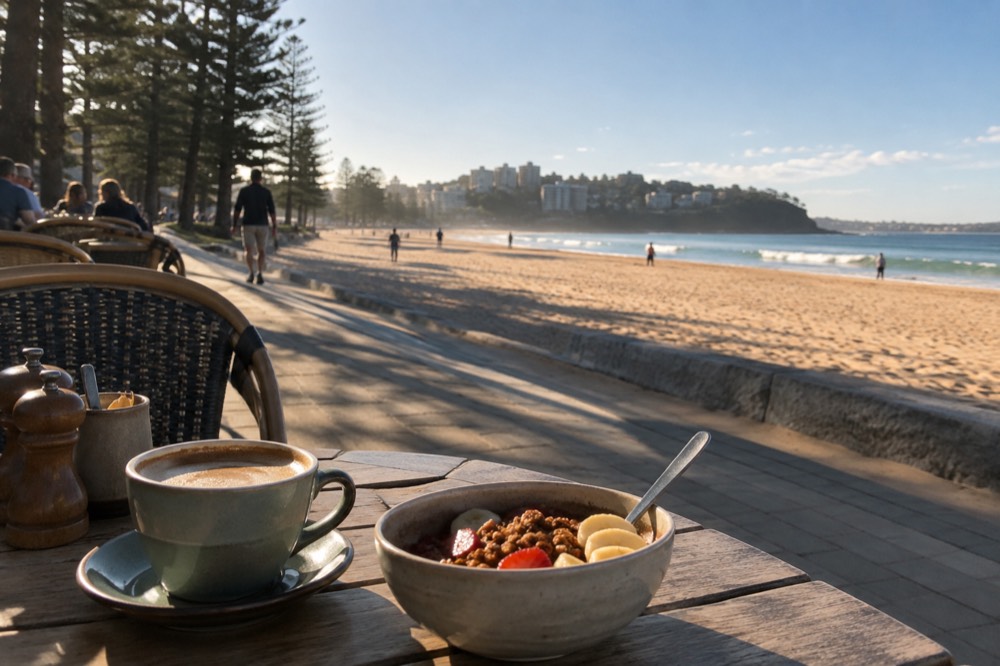
Lunch belongs to your ferry destination. In Manly, the corso running from the ferry wharf to the beach is lined with casual options, and the beach itself fronts a sheltered harbour cove on one side and surf on the other. In Watsons Bay, the foreshore around the wharf is famous for takeaway seafood eaten on the sand. Either way you are eating at the point of the day when the itinerary gives you the most time, so sit down properly.
Dinner is where Sydney's neighbourhoods earn their keep, and the choice depends on your last stop. If you return from Bondi around 6:30pm, Surry Hills and Darlinghurst, a short bus or train hop from the city, hold some of the best mid-range dining in the country. If you finish with a sunset cruise, The Rocks puts you within a 10 minute walk of your hotel area and feeds you in sandstone pubs. Chinatown's night markets sit between the two. Our Sydney food guide goes deep on all three, and the best restaurants in Sydney page handles the splurge tier.
For the evening, one product converts the sunset hour into the day's highlight rather than a commute home, and it pairs with any dinner plan that starts after dark:
What If You Only Have Half a Day, or It Rains?
With half a day, cut the coast entirely: do the Royal Botanic Garden, the Opera House, a single ferry loop to Manly and back without leaving the wharf area, and The Rocks. In rain, the free museums carry the day, the ferry is better in the rain than the beach, and a covered food tour or pub walk replaces the coastal walk. June is Sydney's wettest month, so keep a plan B ready.
The half-day version is a strict subset, not a squeeze. The mistake is trying to keep Bondi in a six-hour visit, because the Bondi bus from the city takes 30 to 45 minutes each way and the beach block needs two hours to feel like anything. Drop it. The harbour loop, garden, Opera House and The Rocks all sit within a 15 minute walk of Circular Quay, so a half day spent entirely on that peninsula is a genuinely complete Sydney visit, just an indoor-and-water flavoured one.
Rain changes the ordering rather than the substance. The two free museums absorb two to three hours each, the ferry crossing is atmospheric in wet weather and costs the same capped fare, and the Opera House tour is fully indoors. The Bondi to Coogee coastal walk, the usual rain casualty, should be skipped outright in anything beyond drizzle, both because the views vanish and because the sandstone path sections get slippery. Our Sydney rainy day itinerary was built for exactly this day.
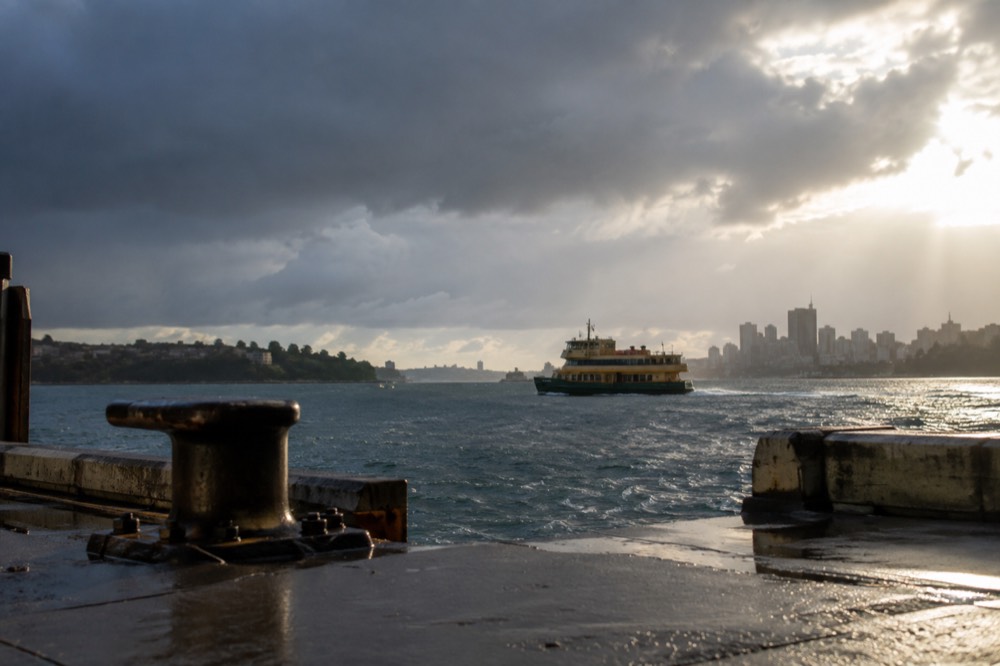
The one weather caveat worth internalising: Sydney's rainfall peaks in June, which is winter, not summer. The long-run averages give June 133.1 mm against February's 119.3 mm, and February, the middle of peak tourist season, is the cloudiest month of the year by clear-day count. A summer visitor is more likely to need the rain plan than a July one, which is the opposite of every assumption packed in a suitcase from the northern hemisphere.
Should You Swap the City for the Blue Mountains Instead?
Only if this is your sole day in Sydney and you will never return. The Blue Mountains need 10 hours door to door, the best all-inclusive day tours run from US$190.19, and you would see Katoomba and the Three Sisters instead of the harbour, the Opera House and Bondi. If Sydney itself is new to you, spend the day in the city and save the mountains for a second trip. If you have seen the harbour before, the swap is excellent.
The honest framing is that these are two different trips wearing the same date. A Blue Mountains day means a 7am pickup, roughly two hours of driving each way, and the middle six hours spent on lookouts, Scenic World and bush tracks. It is a superb day out, the all-inclusive small-group tour with a local guide is one of the highest-rated products in the entire Sydney roster, and the mountains are free to enter except at the Glenbrook edge of the national park, a detail most visitors get wrong. But it is a day with zero harbour in it.
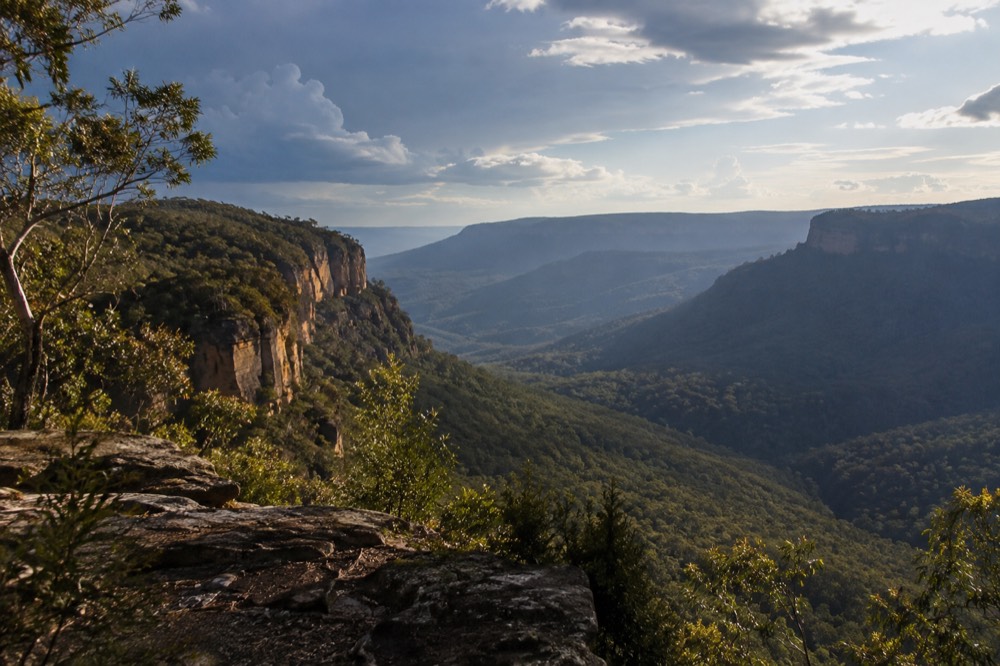
The geography decides it. Katoomba sits far west of Circular Quay, and even the train, which is a genuinely scenic option covered in our Blue Mountains day trip guide, commits you to a long ride each way. You cannot do the mountains in the morning and Bondi in the afternoon without spending the whole day in transit. Choose one, and if the choice is the mountains, book the guided version, because the lookouts are signposted but the stories, the Aboriginal heritage and the best short walks are not.
What Should You Skip If You Are Short on Time?
Skip the Sydney Tower Eye if the sky is hazy, skip Luna Park unless you are travelling with children who specifically want it, skip Darling Harbour's daytime attractions in favour of its evening restaurants, and skip any guided bus tour of the city, because the ferry does the same sightseeing for A$9.20. The Pylon Lookout is the budget-conscious bridge view if you want the height without BridgeClimb's price. Do not skip the water, ever.
Darling Harbour is the main casualty of honest triage. It is a pleasant redevelopment precinct with the aquarium, a convention centre and a maritime museum, but in the daytime it is the least Sydney-flavoured part of central Sydney, and every hour spent there is an hour not spent on the harbour itself. Its moment is the evening, when the restaurants fill and the western skyline lights up, which is why this itinerary routes dinner toward The Rocks or Surry Hills instead and leaves Darling Harbour for a longer trip. Our Darling Harbour guide makes the case for it properly.
The bus-tour skip is worth explaining, because hop-on hop-off buses are a reflex for one-day visitors. Sydney's geometry defeats them: the bus route between the city and Bondi crosses suburban streets with no view, while the ferry route between the same anchor points crosses the most photogenic harbour in the country at water level. You are choosing between the same two destinations with the transport experience inverted. The bus wins only on rainy days or for the recorded commentary, and the ferry wins every other time. If a bus day still appeals, the Sydney sightseeing buses page compares the operators.
If the day has gone well and you have 90 spare minutes before dinner, the strongest flex is the Kirribilli detour: a ferry or a walk across the bridge to the north shore, where the whole postcard, Opera House, city skyline and harbour together, sits across the water from you. It is the view the postcard photographer actually stood on, it costs a ferry fare inside your daily cap, and it closes the day the way it opened, on the water, with the city facing you.
If one day has convinced you the city deserves more, these are the three products that best extend this exact route:
Common Questions About One Day in Sydney
Is one day in Sydney enough?
One day is enough for the harbour core: the Opera House, the Royal Botanic Garden, The Rocks, a ferry crossing and one beach. It is not enough for Taronga Zoo, the Blue Mountains or the Northern Beaches, each of which is a half or full day on its own. Treat one day as a highlight reel and plan a return for the rest.
What is the best one day itinerary for Sydney?
Start at Circular Quay by 8am, walk the Royal Botanic Garden to Mrs Macquarie's Chair, tour the Opera House mid-morning, ferry to Manly or Watsons Bay for lunch, bus to Bondi for the late afternoon, and finish with sunset on the harbour or from Kirribilli. The sequence runs west to east and lets the ferry network replace all serious commuting.
How much does one day in Sydney cost?
Transport is capped at A$19.30 on weekdays and A$9.65 on weekends and public holidays. The garden, the Australian Museum and the Art Gallery of New South Wales are free. Add one tour and food, and a realistic day costs A$120 to A$250 per person, with BridgeClimb pushing a premium day far higher for two.
Can you do Bondi and Manly in the same day?
Yes, but it is tight. The ferry to Manly takes about 30 minutes each way and the bus to Bondi takes 30 to 45 minutes each way from the city. Do Manly as the lunch stop, return by 2pm, and give Bondi the late afternoon and early evening. Skip the coastal walk on a day like this, there is no time for it.
Do you need an Opal card for one day in Sydney?
No. A contactless credit card or phone is charged exactly what an Adult Opal card pays, including every cap and the off-peak discount. The only reason to buy a physical Opal card is a concession eligibility or a preference for a separate travel budget. Avoid the private Manly Fast Ferry, which sits outside the caps.
What is the best month for a one day visit?
August has the most clear days of any month in Sydney's long-run averages, 13.4, while February, the peak season, has the fewest at 5.3. For weather, late winter and early spring beat the summer crowd. For warm water and long evenings, December through February wins despite the cloud, and June is the wettest month of all.