Darling Harbour: What to See, Do and Eat on Sydney's Western Waterfront
Darling Harbour is the stretch of working waterfront west of the Sydney CBD that was rebuilt as a visitor precinct from its industrial past, and it still does that job: aquariums, museums, ferries, playgrounds and dinner cruises, all within a 15 minute walk of Town Hall.
Short answer
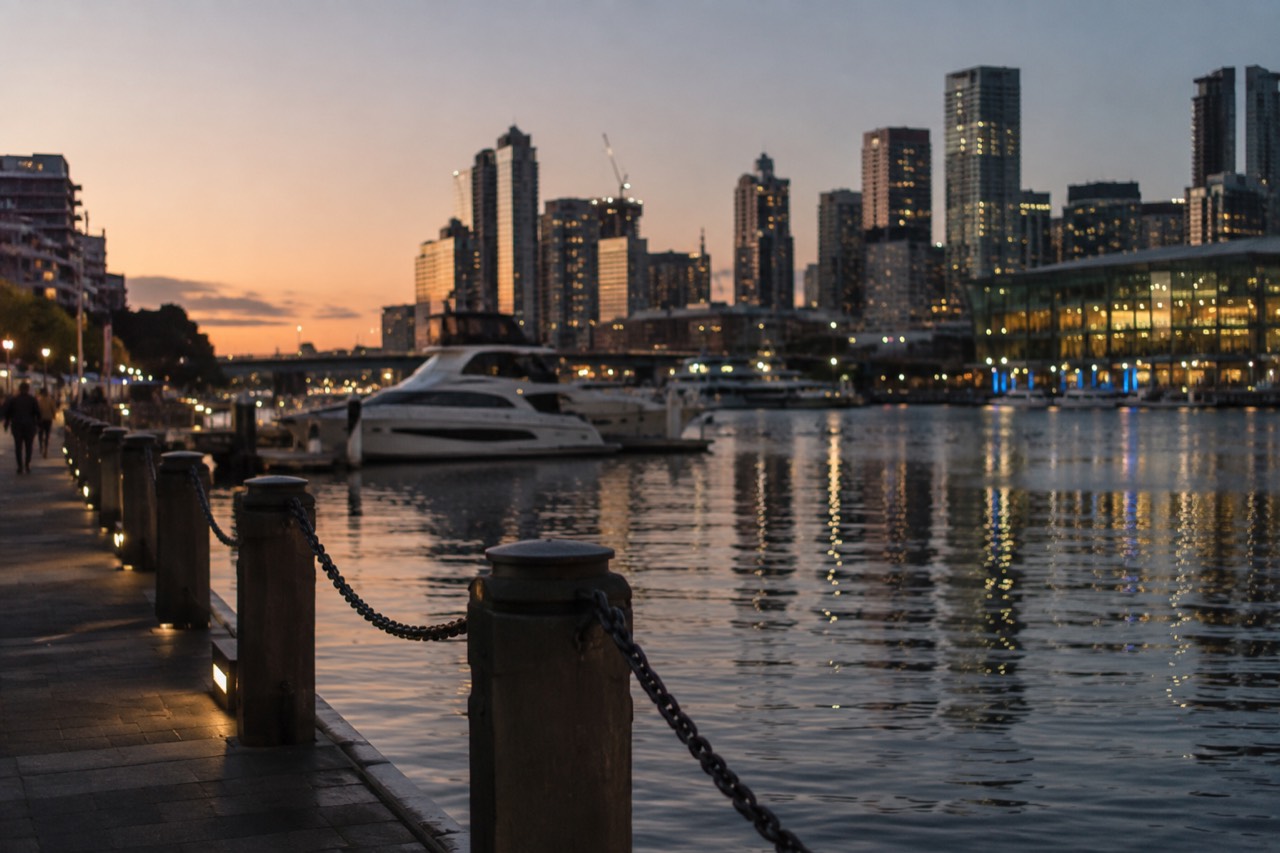
Darling Harbour is a pedestrian-friendly waterfront precinct on the western edge of the Sydney CBD, about a 15 minute walk from Town Hall station. Entry to the harbour itself costs nothing. An adult ferry ride from Circular Quay to Pyrmont Bay costs $7.35 with a contactless card, and most attractions are a 5 to 10 minute walk apart.
Darling Harbour began life as a working port named after Governor Ralph Darling, spent a century as the industrial dirty end of Sydney's waterfront, and was rebuilt as the precinct visitors see today. It sits directly west of the CBD, wrapped around Cockle Bay, with Pyrmont to the west and Barangaroo's new towers to the north. The Sydney Travel Guide covers the whole city, but this page sticks to the harbour itself: how to arrive, what is actually worth your time, what has closed, and what a day here costs in real dollars.
One thing worth knowing before anything else: the precinct is genuinely walkable. Once you are at the water, everything from the aquarium to the ferry wharves sits along a short, flat stretch of promenade, and the whole loop around Cockle Bay takes most people 20 to 25 minutes at a strolling pace.
How Do You Get to Darling Harbour?
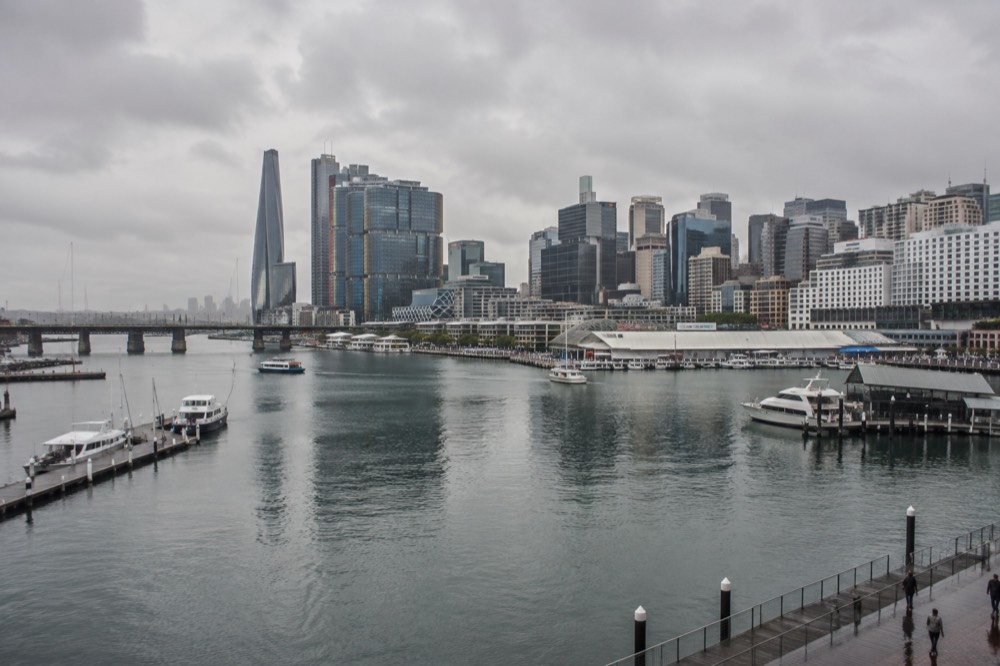
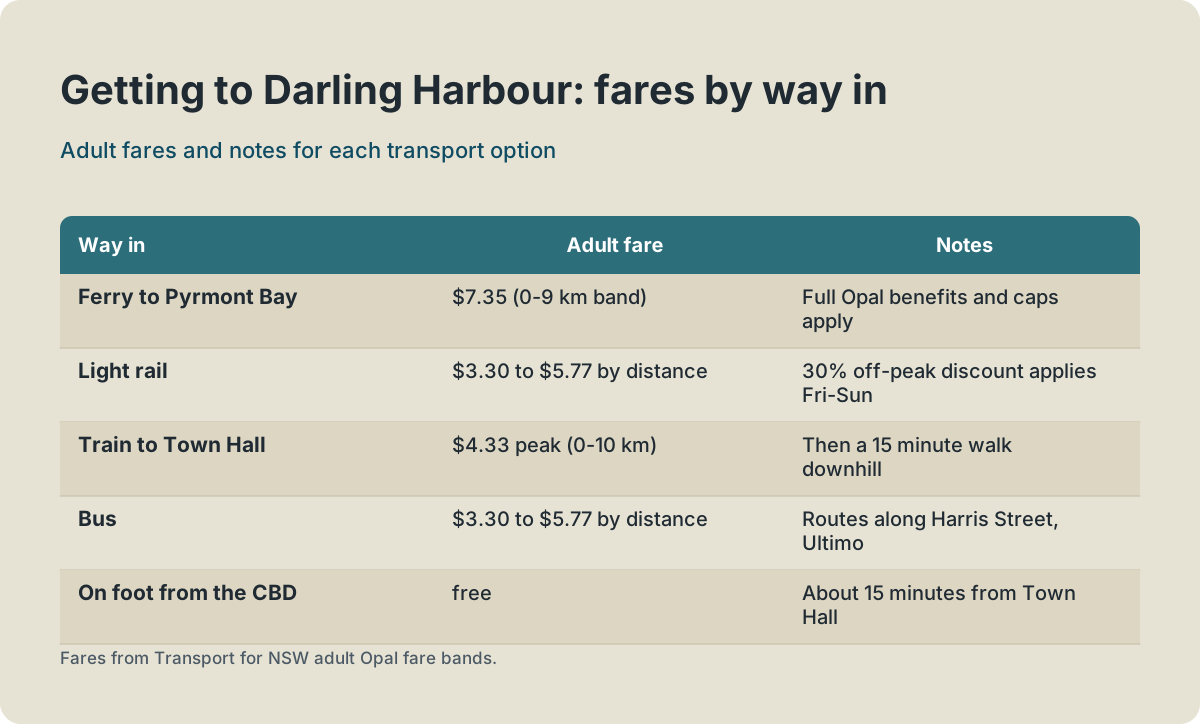
The fastest way in is the ferry to Pyrmont Bay, which costs $7.35 for an adult with a contactless card or Opal card and runs from Circular Quay. The light rail also stops right at the precinct, with the L1 Dulwich Hill line serving stops from Central through to the Star and Pyrmont, and the whole walk from Town Hall station takes about 15 minutes. Driving is the weakest option, since parking around the precinct is expensive and the area is busiest exactly when you want to be there.
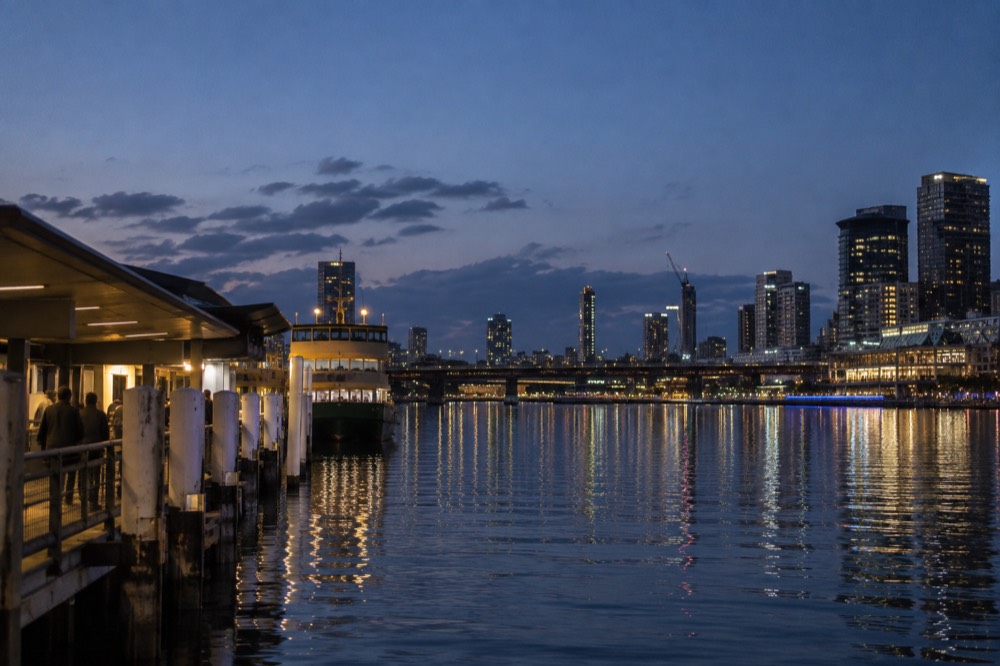
The ferry is the choice most visitors miss. Pyrmont Bay wharf sits at the western edge of the precinct, and the cross-harbour routes that serve it are part of the ordinary Opal network, which means the same fares, caps and transfer rules apply as anywhere else on Sydney Ferries. Public ferries run routes F1 to F10 and Opal is accepted with full benefits, as Transport for NSW's ferry payment page sets out plainly.
| Way in | Route | Adult fare | Notes |
|---|---|---|---|
| Ferry to Pyrmont Bay | Cross-harbour routes from Circular Quay | $7.35 (0-9 km band) | Full Opal benefits and caps apply |
| Light rail | L1 Dulwich Hill line, stops at the precinct edge | $3.30 to $5.77 by distance | 30% off-peak discount applies Fri-Sun |
| Train to Town Hall | Then a 15 minute walk downhill | $4.33 peak (0-10 km) | The walk is flat after the first block |
| Bus | Routes along Harris Street, Ultimo | $3.30 to $5.77 by distance | Tap on with contactless |
| On foot from the CBD | Down King Street or Druitt Street | free | About 15 minutes from Town Hall |
The fare table above uses the standard adult distance bands. A 30% off-peak discount applies on light rail, metro, train and bus on Fridays, weekends and public holidays, though not on ferries, and the adult fare page on Transport for NSW has the full band tables. Daily caps are $19.30 Monday to Thursday and $9.65 Friday to Sunday and public holidays, with a $50 weekly cap across the whole network.
If you are planning a broader harbour day rather than just a Darling Harbour visit, the guide to Sydney's ferries breaks down every route from Circular Quay, and the opal card guide for visitors explains the caps in more depth.
What Is There to Do in Darling Harbour?
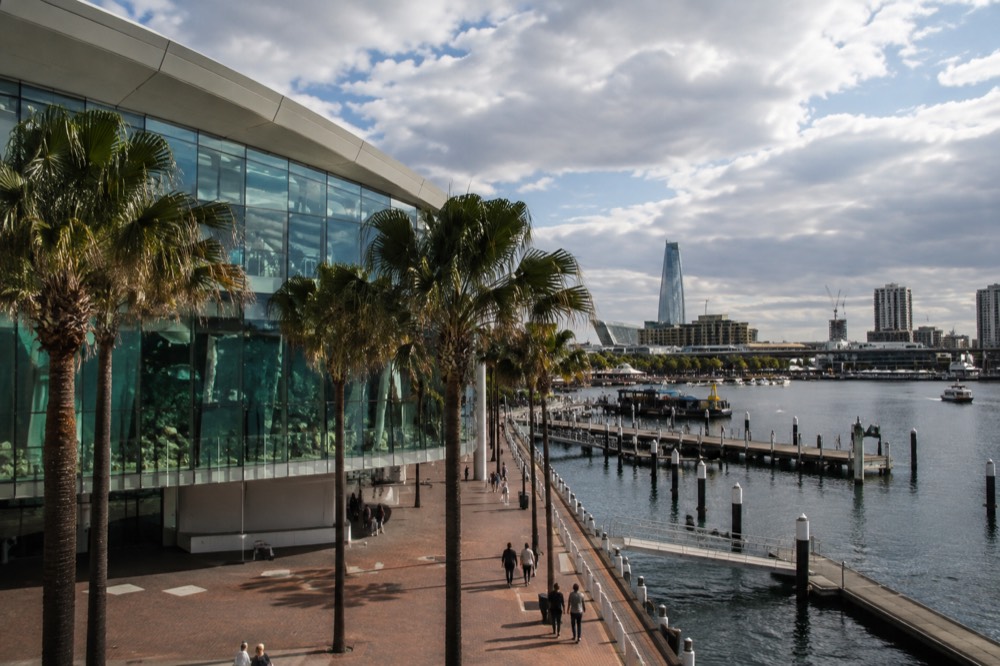
The precinct's core attractions are the aquarium, the wildlife zoo, the Madame Tussauds wax museum and the National Maritime Museum, all within a few hundred metres of each other. SEA LIFE Sydney Aquarium is the anchor, and a general entry ticket is bookable from US$31.49. The Chinese Garden of Friendship sits behind the aquarium, and the harbour's playgrounds and water-feature promenade are free to wander at any hour.
SEA LIFE Sydney Aquarium is the biggest single draw. It is a genuinely large site built into the old boiler house, with the shark tunnel and the penguin exhibit as the headline experiences. The full SEA LIFE Sydney Aquarium guide covers what is inside, ticket types and how the timed-entry system works, because pricing there is dynamic: it shifts by date and time slot, so the live listing is the only honest source of what you will pay on a given day.
The immediate neighbours are WILD LIFE Sydney Zoo and Madame Tussauds Sydney, both operated under the same roofline along the aquarium promenade. Neither publishes fixed public prices, so the same rule applies: check the live listing. The four attractions, including the Sydney Tower Eye in the CBD, are also bundled into a combo pass, which is worth comparing against individual tickets if you plan to visit two or more. The attraction passes compared page does that arithmetic properly.
| Attraction | What it is | Typical visit | Good for |
|---|---|---|---|
| SEA LIFE Sydney Aquarium | Large aquarium with shark tunnel and penguins | 1 to 2 hours | Families, rainy days |
| WILD LIFE Sydney Zoo | Native animals, including koalas and kangaroos | About an hour | Visitors wanting Australian wildlife |
| Madame Tussauds Sydney | Wax figure museum | 1 hour | Families with older kids |
| Australian National Maritime Museum | Historic vessels and maritime exhibits | 2 to 3 hours | History and ship lovers |
| Chinese Garden of Friendship | Walled Chinese garden with teahouse | 45 to 90 minutes | Quiet hour away from crowds |
| Harbour promenade and playgrounds | Free public space, water features | Any length | Everyone, at no cost |
The Australian National Maritime Museum sits at the northern end of the precinct and is the quiet overperformer here: historic vessels you can board, including a destroyer and a submarine, plus galleries that most visitors walk straight past. The Chinese Garden of Friendship, behind the aquarium, is the other underrated corner. It was built as a gift from Sydney's sister city of Guangzhou, and a walled garden with a teahouse in the middle of a tourist precinct is a genuinely useful reset when the crowds build up around midday.
For something on the water rather than beside it, the one-hour sightseeing cruises that depart from Circular Quay and Darling Harbour give you the precinct from the outside, which is the better angle for photographs anyway.
That cruise works as a midday plan, but the evening is when Darling Harbour earns its keep, and the dinner cruise that departs from the precinct itself is the natural way to close the day out on the water rather than watching it from the shore.
Where Should You Eat and Drink Around Darling Harbour?
The precinct divides into three eating zones: the Cockle Bay Wharf restaurant strip, the King Street Wharf row on the eastern side, and the new Sydney Fish Market a short walk south at Blackwattle Bay, which opened in January 2026 with more than 40 retailers. A three-course early dinner cruise from Darling Harbour itself costs from US$94.36 and turns the meal into the view, which is worth considering on a first visit.
Cockle Bay Wharf is the restaurant strip facing the water, and King Street Wharf, a few minutes east, is the after-work and pre-theatre row. Both are tourist-priced by Sydney standards, which is the honest assessment: convenient, pleasant, and rarely the best food within a kilometre. The Sydney food guide maps better-value eating a short walk inland in Chinatown and Haymarket, which begin about 10 minutes east of the aquarium.
The bigger change is the fish market. The old Sydney Fish Market at Pyrmont closed and the new Blackwattle Bay building opened to the public around 19 to 20 January 2026, with more than 40 retailers combining wholesale, retail and dining in one building. A guide sending you to the old site is out of date. The full Sydney Fish Market guide covers what is there and how to reach it, and the F10 Blackwattle Bay ferry route joined the Opal network in 2026, which connects the fish market to the harbour by water.
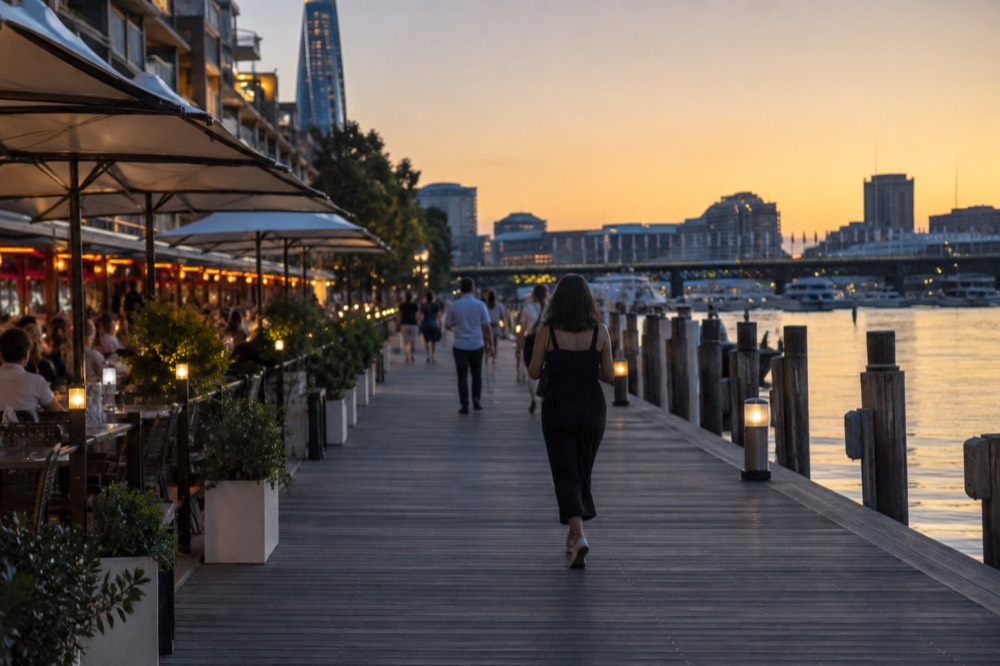
The dinner cruise is the third option, and it is the one that makes sense for a first visit. The three-course early dinner cruise departs from Darling Harbour and runs for an hour and 45 minutes, which is long enough to eat properly and short enough to leave the evening open afterwards.
For drinks, the precinct's bars cluster around King Street Wharf and the Star casino complex across the water in Pyrmont. The Sydney bars and pubs page has the better local options, including the Inner West and Surry Hills scenes if you are willing to travel 15 minutes for them.
Is Darling Harbour Good for Families with Kids?
Yes, it is one of the most family-friendly precincts in Sydney, and deliberately so. The attractions are all indoors or shaded, the promenade is flat and car-free, the water-feature playground near the convention centre is free, and the aquarium and wildlife zoo are built around short attention spans. The main caveat is cost: two adults and two children at the aquarium plus lunch adds up quickly, so a combo pass or the free outdoor options matter for budgets.
The free stuff is genuinely good here. The water playground near the exhibition centre is one of the better public play spaces in the city, with fountains and water jets that run through the warmer months, and the wide promenade means pushchairs and small bikes are easy to manage. The carousel and the periodic events on the open piazzas fill the gaps. The Sydney with kids itinerary places Darling Harbour in a full family day, and the Sydney on a budget page lists what else in the city costs nothing.
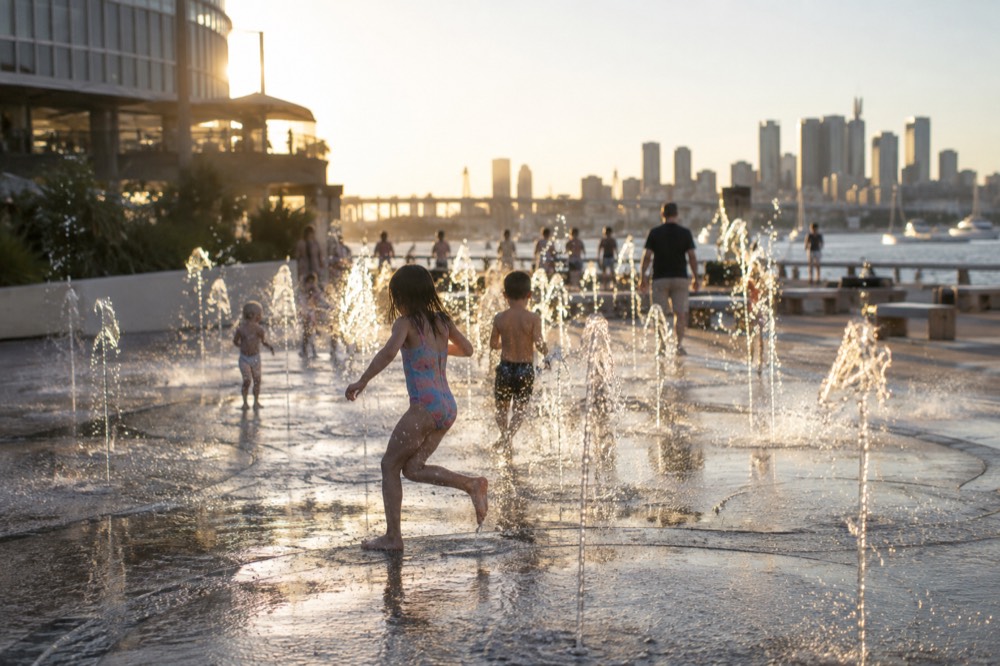
For the paid attractions, the practical advice is to pick one or two rather than trying all four. The aquarium is the strongest single choice for mixed ages, and the wildlife zoo works best for visitors who will not otherwise see Australian animals, since it is far more compact than a day trip to a larger wildlife park. If your children are old enough for a longer day, the Taronga Zoo guide compares the ferry-plus-entry options, where online tickets are roughly 10% cheaper than the gate price at every tier.
What Has Closed or Changed Near Darling Harbour Recently?
The Powerhouse Museum Ultimo, at the top of the precinct, has been closed to the public since 4 February 2024 and is not due to reopen until around early 2029, so any guide listing it as open is out of date. The Sydney Fish Market moved to its new Blackwattle Bay building in January 2026, and the F10 ferry route serving it joined the Opal network the same year. Nothing else in the precinct itself has closed.
The Powerhouse closure matters more than visitors expect, because the museum was one of the precinct's three big indoor anchors and its building sits right at the Darling Harbour edge of Ultimo. The $300 million redevelopment was delayed by contamination issues and cost overruns, and the current tracking is an early 2029 opening. The Powerhouse Museum page explains the full story, including the new Powerhouse Parramatta, which is scheduled to open on 7 November 2026 on the other side of the city.
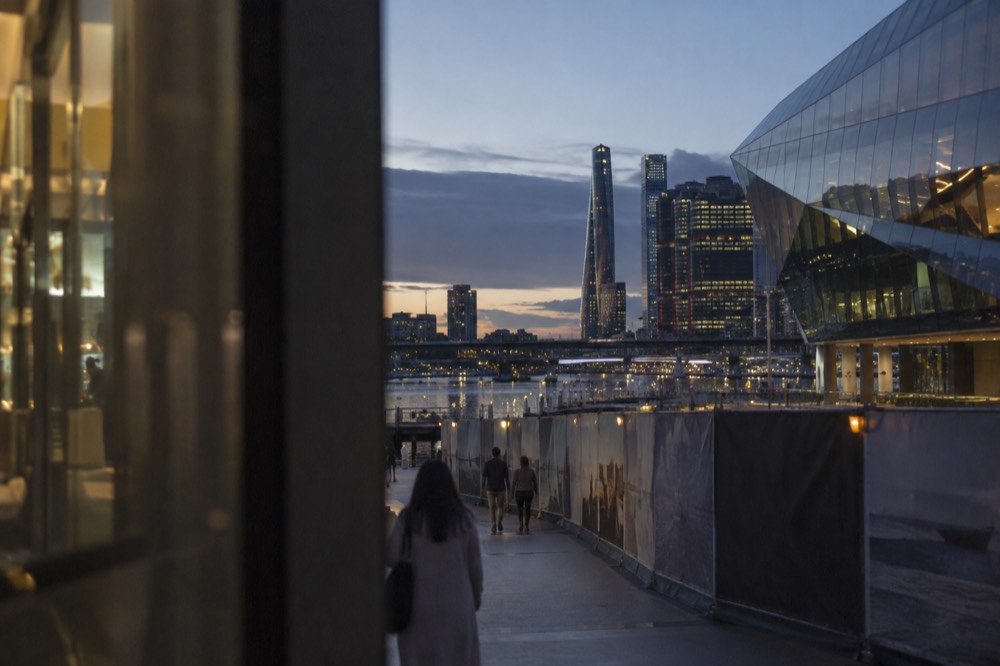
The other nearby change is Barangaroo, the former container terminal to the north that is now a finished precinct of towers, restaurants and the harbour park at its northern end. It is a 10 minute walk along the water from the maritime museum, and the Barangaroo guide covers the reserve and the headland park, which is one of the better free pieces of landscape design in the city.
When Is the Best Time to Visit Darling Harbour?
Weekday mornings are the quietest hours, and the precinct is at its most crowded on summer weekends and during school holidays. Statistically, Sydney's clearest skies arrive in August, with 13.4 mean clear days, and its cloudiest month is February, at 5.3, so peak tourist season is actually the cloudiest time of year. June is the wettest month, with a long-run average of 133.1 mm of rain.
Those figures come from the Bureau of Meteorology's long-term normals for Sydney and they cut against what most visitors assume. The city's rainfall peaks in autumn and early winter, not in summer, and the middle of peak season, February, is statistically the greyest month of all. The best time to visit Sydney page unpacks the full seasonal picture, and the Sydney weather month by month guide has the complete table.
| Month | Mean daily max | Mean rainfall | Mean clear days | What it means at Darling Harbour |
|---|---|---|---|---|
| January | 26.0 °C | 101.2 mm | 6.8 | Hot, crowded, school holidays |
| February | 25.8 °C | 119.3 mm | 5.3 | Cloudiest month of the year |
| April | 22.5 °C | 126.5 mm | 9.1 | Warm, fewer crowds |
| June | 17.0 °C | 133.1 mm | 9.1 | Wettest month, quietest precinct |
| August | 17.9 °C | 80.2 mm | 13.4 | Clearest skies of the year |
| December | 25.3 °C | 77.1 mm | 6.6 | Festive season, busy evenings |
For the precinct specifically, the indoor attractions make Darling Harbour a reliable wet-weather answer, which is exactly what it was designed to be. The Sydney rainy day itinerary uses it that way. On a clear evening, the promenade after sunset is the precinct at its best, and the Sydney sunrise and sunset spots page notes where the light lands across Cockle Bay.
How Much Does a Day in Darling Harbour Cost?
The floor is very low: the promenade, the playgrounds and the walk itself are free, and a full transport day using contactless caps at $9.65 on a Friday, weekend or public holiday. The realistic mid-range day, one paid attraction plus a ferry ride plus casual food, lands somewhere in the tens of dollars rather than the hundreds. The premium options, a dinner cruise or a BridgeClimb add-on, are the only line items that push past US$90 per person.
The transport maths is fixed and knowable in advance. The ferry from Circular Quay to Pyrmont Bay is $7.35 each way for an adult, the light rail is $3.30 to $5.77 by distance, and the daily cap of $9.65 on Fridays, weekends and public holidays means a day of hopping between the fish market, the precinct and the CBD by water and rail stops at that figure regardless of how many trips you take.
| Line item | Low-cost day | Mid-range day | Premium day |
|---|---|---|---|
| Getting there and around | Walk from the CBD, free | Ferry plus light rail, capped at $9.65 | Ferry, plus a cruise or tour transport |
| Attraction | Free promenade and playgrounds | One paid attraction, from US$31.49 | Multiple attractions or a combo pass |
| Meal | Fish and chips from the market | Casual restaurant at Cockle Bay | Early dinner cruise, from US$94.36 |
| Total per adult | Under US$20 | Roughly US$50 to US$80 | US$130 and up |
The figures in the paid rows are the live listing prices for the bookable products, which move with dates and demand, so treat them as from-prices rather than fixed costs. What does not move is the free layer: the promenade loop, the water playground, the maritime museum's exterior vessels at the wharf, and the walk north to Barangaroo all cost nothing and fill half a day comfortably.
If the day is going well and you want to trade up, the Sydney Tower Eye observation deck sits back in the CBD about 15 minutes' walk away, and the advance online price is cheaper than the on-the-day counter price at every tier, which the operator states plainly on its own pricing page. It makes a natural end to a Darling Harbour afternoon, since the walk back up through the Queen Victoria Building puts you at the tower's base.
What Is Within Walking Distance of Darling Harbour?
The answer is more than most visitors expect: Chinatown is 10 minutes east, the Queen Victoria Building is 15 minutes, Barangaroo is 10 minutes north along the water, and the Sydney Fish Market is 20 minutes south through Pyrmont. The Sydney Opera House and Circular Quay are the outliers at around 30 minutes on foot, which is exactly the distance the ferry covers better.
The walk east through Chinatown and into the Sydney CBD is the one most people underuse. Haymarket's eating is better and cheaper than anything on the wharves, and the Chinatown guide maps the best of it. Continuing north brings you to the Queen Victoria Building, Sydney's most beautiful shopping arcade, and from there Town Hall station and the whole train network.
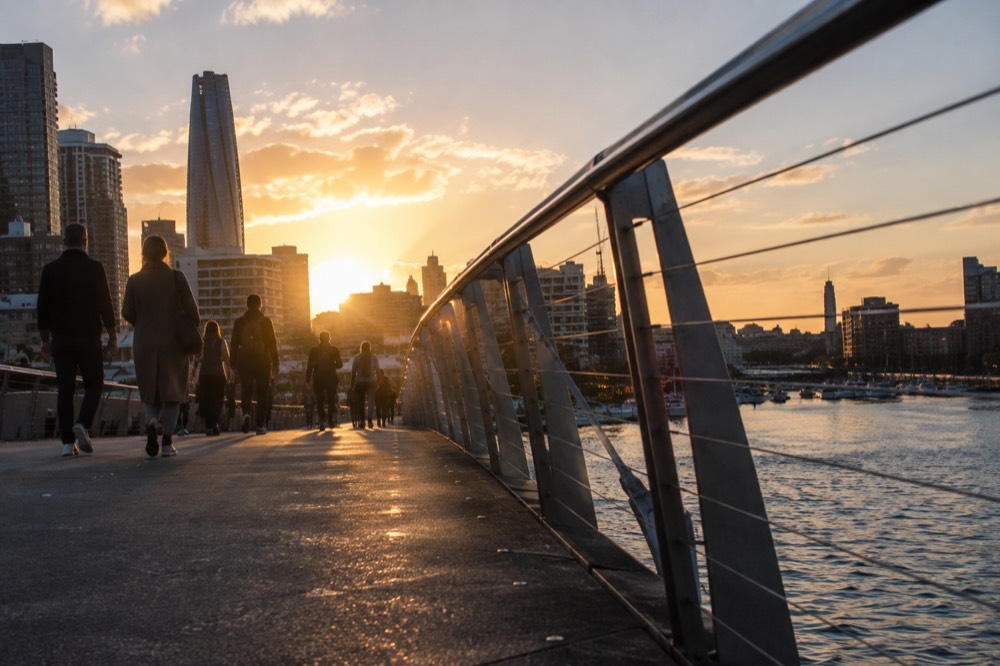
North along the water, Barangaroo Reserve's sandstone headland is a 10 minute walk from the maritime museum and is the best free landscape in the immediate area. South through Pyrmont, the fish market and the Star precinct fill the other direction. And if the whole day is going to be a harbour day rather than a Darling Harbour day, the things to do in Sydney page is the full city overview, with the Opera House and the harbour's northern shore laid out properly.
For a second day, the Blue Mountains all-inclusive day trip is the standard trade-up from a city precinct, and it departs from central Sydney with a local guide, which removes the entire question of how to reach Katoomba.
Common Questions About Darling Harbour
Is Darling Harbour worth visiting?
Yes, particularly for families, first-time visitors and wet days. The aquarium and wildlife zoo are strong attractions, the promenade and playgrounds are free, and the precinct is a 15 minute walk from Town Hall. For visitors with limited time who prefer atmosphere over attractions, The Rocks and Circular Quay deliver more per hour, but Darling Harbour is the easier place to spend half a day with children.
How do I get to Darling Harbour from Circular Quay?
The ferry to Pyrmont Bay costs $7.35 for an adult and takes a scenic cross-harbour route. Alternatively, the light rail from Circular Quay via the CBD reaches the precinct edge, or it is a flat 30 minute walk west through the city. The ferry is the best combination of speed and view.
Can you walk from Darling Harbour to the Sydney Opera House?
Yes, it is roughly a 30 minute walk along the harbour's southern shore, passing through Barangaroo, Walsh Bay and Circular Quay on the way. It is flat almost the entire distance and one of the better city walks in Sydney. The ferry from Pyrmont Bay to Circular Quay covers most of the same ground by water.
Is the Powerhouse Museum at Darling Harbour open?
No. Powerhouse Museum Ultimo has been closed to the public since 4 February 2024 for a major redevelopment and is tracking to reopen around early 2029. A new Powerhouse Parramatta is scheduled to open on 7 November 2026 on the other side of the city.
Is Darling Harbour free to visit?
The harbour, promenade, playgrounds and water features are all free public space, and there is no entry charge for the precinct itself. Only the indoor attractions, the museum galleries and any cruises or tours carry a cost. A full walk around Cockle Bay costs nothing.
What is the best time of day to visit Darling Harbour?
Mornings are quietest, and the precinct builds through the afternoon into its busiest period around early evening, when the restaurants and the promenade fill up. For photographs, the hour around sunset is the strongest light on the water. For families with small children, the morning water-play session avoids both the crowds and the peak UV hours.