Sydney CBD: The Complete Guide to the City Centre
The Sydney CBD is where the harbour, the money and the history all sit on one headland-connected grid. This guide covers what to see, what is free, where to eat, and what a day actually costs.
Short answer
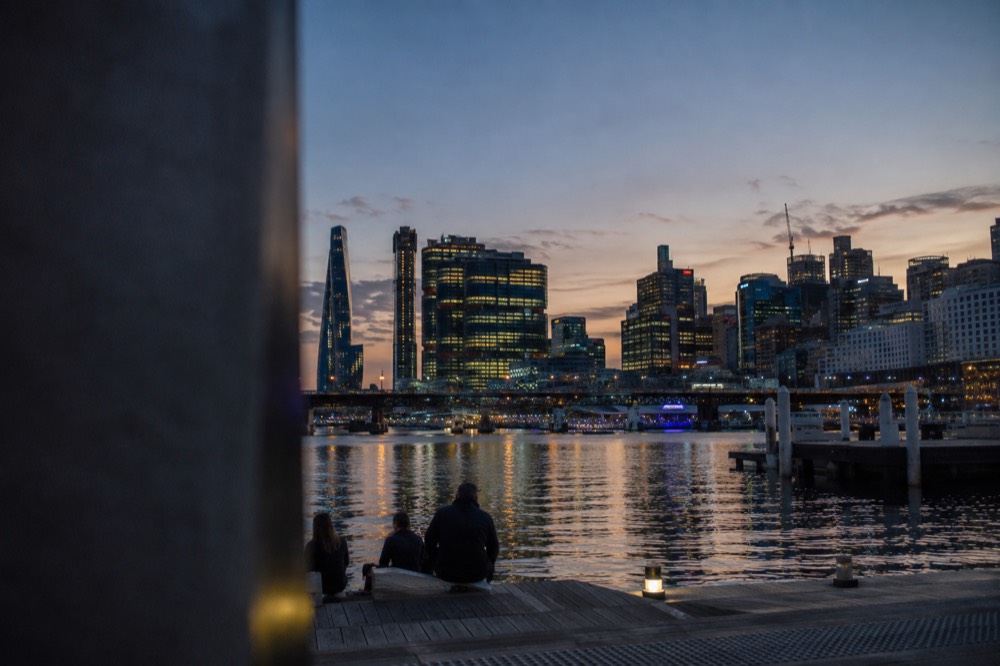
The Sydney CBD is the compact city centre bounded by Darling Harbour, The Rocks, Circular Quay and the Domain. Most landmarks are within a 2 km walk of each other, the Royal Botanic Garden and Australian Museum are free, and an Opal day of transport is capped at $19.30 Monday to Thursday and $9.65 Friday to Sunday.
Roughly 67.5 million visitors came to Sydney in the year ending March 2026, and almost every one of them spent at least a day inside the same two square kilometres of grid streets. The Sydney CBD, locals just call it "the city", is where the harbour meets the finance towers meets the oldest colonial streets in the country. It is small enough to walk end to end in 40 minutes and dense enough to fill a week.
This guide from Sydney Travel Guide covers what the CBD actually contains, what it costs, what is free, and how to move through it without wasting money or time.
What Exactly Is the Sydney CBD?
The Sydney CBD is the roughly rectangular grid of streets between Darling Harbour in the west, Circular Quay and The Rocks in the north, Woolloomooloo and the Domain in the east, and Central station in the south. Everything a first-time visitor names when they picture Sydney, the Opera House forecourt, the Harbour Bridge, the Queen Victoria Building, sits either inside it or on its immediate edge. You can walk its long axis, Circular Quay to Central, in about 35 minutes at an easy pace.
The grid is the oldest part of the city. George Street, the main spine, follows a track that was once a path from the cove at Circular Quay inland to the freshwater creek near today's Town Hall. The streets that cross it, Park, King, Market, are the surviving fragments of a plan drawn in the early colonial period, which is why the blocks feel irregular for a grid.
Three features define the modern CBD. First, the harbour edge: Circular Quay, the Opera House and the Royal Botanic Garden occupy the northern tip and are all walkable from each other. Second, the retail core: the Queen Victoria Building, the Strand Arcade and the Pitt Street Mall chain of shopping blocks sit in the centre. Third, the western waterfront at Darling Harbour and Barangaroo, rebuilt over decades into a promenade, museum and dining precinct.
Practically, this means the CBD rewards walking above every other mode. The distances are short, the pavement is good, and the two things most visitors want, the water and the sandstone, are both at street level. Our Sydney for first timers guide breaks the whole city into a sensible first-day plan if you want the wider picture.
Which CBD Landmarks Should You See First?
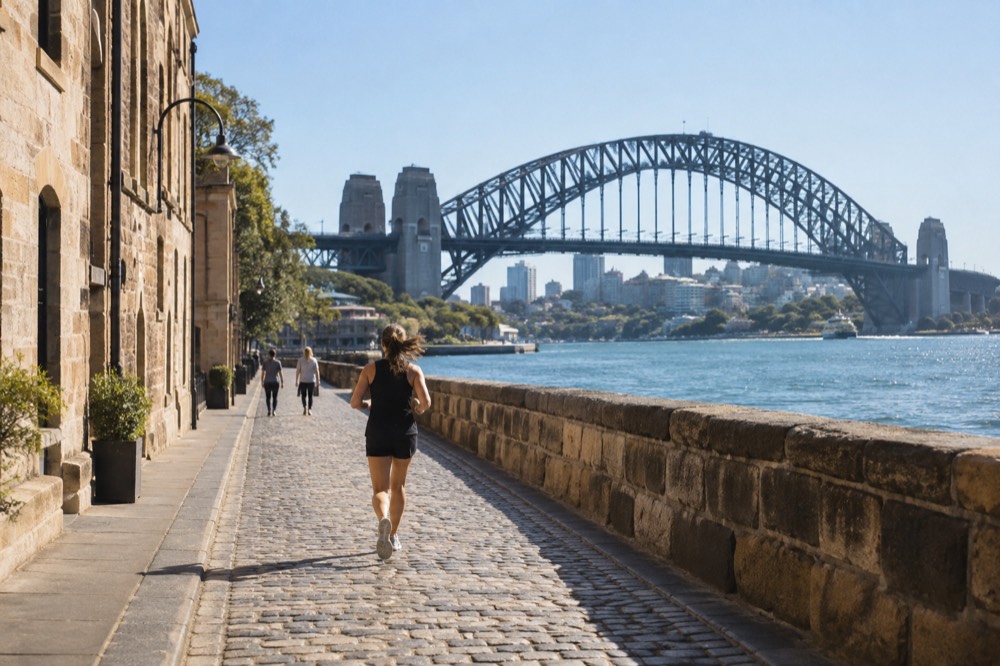
Start at Circular Quay, then work anti-clockwise: the Opera House forecourt, the Royal Botanic Garden, the Domain, then back through Macquarie Street to the Queen Victoria Building. That single loop is about 4 km, takes two to three unhurried hours, and passes the Opera House, the Harbour Bridge views, the State Library, Hyde Park Barracks and the QVB without a single fare or ticket needed for the walking itself. The Rocks sits just west of the Quay and makes the natural afternoon detour.
The Opera House is the obvious first stop, and the forecourt and outside boardwalk cost nothing. Inside is different: the standard guided tour runs about an hour, roughly 9am to 5pm daily, and the Opera House does not publish a fixed public price, so treat any figure you see as a snapshot of one date. Our Sydney Opera House guide covers what each tour variant includes.
The Royal Botanic Garden Sydney, singular "Garden", is the quiet surprise on this loop. Entry is free, it opens at 7am and closes at sunset, and Mrs Macquarie's Chair at its far point gives the single best framed view of the Opera House and Bridge together. The official garden page confirms the free entry, which many visitors wrongly assume is ticketed.
Macquarie Street carries the state's oldest public buildings: the State Library, Hyde Park Barracks and Parliament House line up within a few hundred metres. Hyde Park Barracks, a UNESCO World Heritage site, tells the convict story better than anywhere else in the city; our Hyde Park Barracks guide explains what the ticket covers.
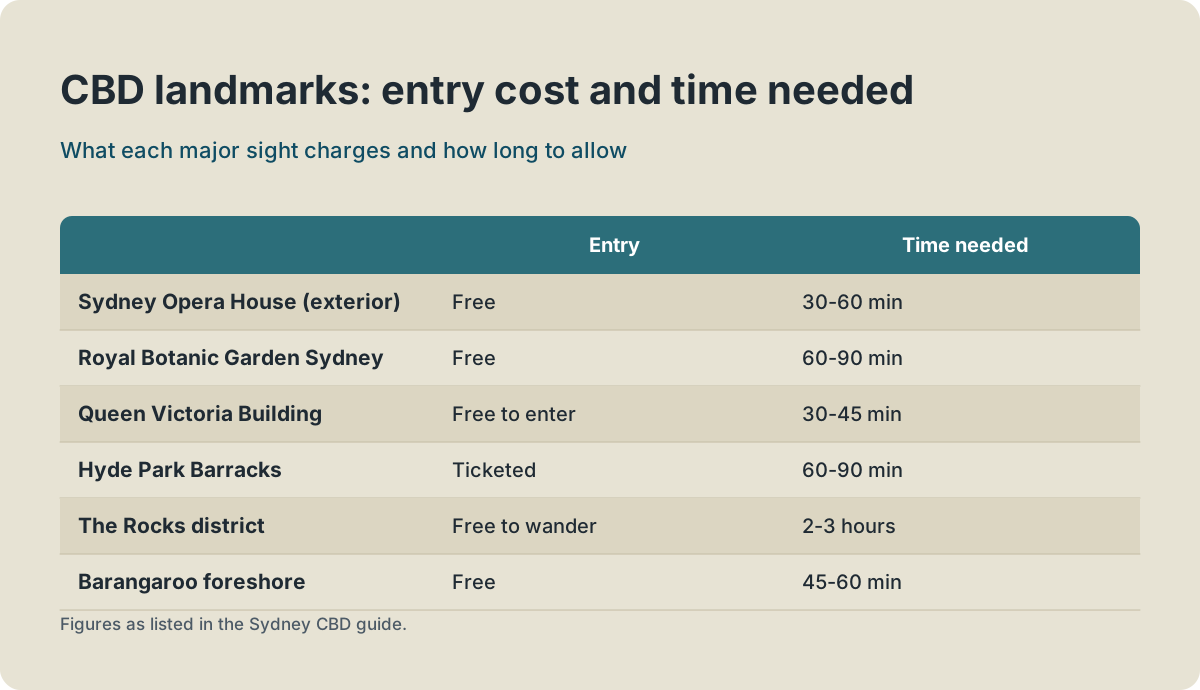
| Landmark | Location in CBD | Entry | Time needed |
|---|---|---|---|
| Sydney Opera House (exterior) | Circular Quay | Free | 30-60 min |
| Royal Botanic Garden Sydney | Farm Cove | Free | 60-90 min |
| Queen Victoria Building | George Street, centre | Free to enter | 30-45 min |
| Hyde Park Barracks | Macquarie Street | Ticketed | 60-90 min |
| The Rocks district | North-west edge | Free to wander | 2-3 hours |
| Barangaroo foreshore | Western harbour edge | Free | 45-60 min |
For structure, a guided walk compresses the history into 90 minutes. The Rocks Guided Walking Tour is the one most worth booking: it covers the oldest streets in the CBD's north-west corner, runs an hour and a half, and the guides handle the sandstone-and-convict context that is easy to miss on your own. You can check availability on the tour page or read our Rocks guide first.
What Can You Do in the CBD for Free?
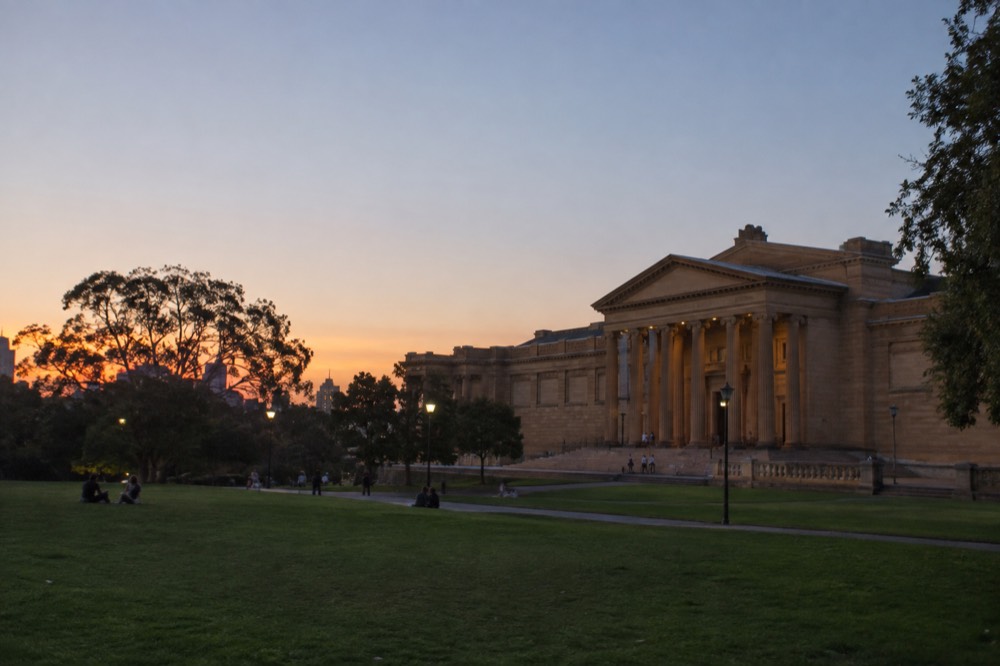
More than most visitors expect: the Royal Botanic Garden, the Australian Museum's general entry, the Art Gallery of New South Wales, the State Library, Hyde Park, the Barangaroo foreshore and the Opera House boardwalk are all free. The Art Gallery even stays open until 10pm every Wednesday. A full day of free sightseeing in the CBD is genuinely possible, and the only unavoidable costs are food and the Opal fare, capped at $9.65 on a Friday, weekend or public holiday.
The museums are the headline. The Australian Museum, opposite Hyde Park, charges nothing for general entry and opens daily 10am to 5pm. The Art Gallery of New South Wales, at the Domain's edge, is also free for general entry, open daily 10am to 5pm and until 10pm on Wednesdays, a detail almost no guide publishes. Both charge separately for major temporary exhibitions, so check what is showing before you plan around one. Our Australian Museum guide and Art Gallery guide list what general entry actually includes.
One closure to flag: the Powerhouse Museum in Ultimo, technically just outside the CBD grid, has been closed to the public since February 2024 and is not due back until around 2029. Any itinerary still listing it is out of date. Our Powerhouse Museum page tracks the redevelopment, and the new Powerhouse Parramatta is scheduled to open on 7 November 2026 for those willing to ride the train west.
| Free CBD sight | What it is | Hours |
|---|---|---|
| Royal Botanic Garden Sydney | Harbour-side botanic garden | Daily 7am to sunset |
| Australian Museum (general entry) | Natural history and culture | Daily 10am-5pm, closed Christmas Day |
| Art Gallery of New South Wales (general entry) | State art collection | Daily 10am-5pm, Wednesdays to 10pm |
| State Library of NSW | Historic reading rooms and exhibitions | Weekdays, some weekend hours |
| Hyde Park and the Domain | Open parkland | Always open |
| Barangaroo Reserve | Rebuilt harbour headland park | Always open |
The free list also includes the walks. The Barangaroo foreshore to the Anzac Bridge path, the loop through the Domain, and the Opera House to Circular Quay promenade cost nothing and deliver the postcard views. If the weather turns, our Sydney rainy day itinerary keeps the day going indoors.
Where Should You Eat in the City?
Eat by precinct rather than by single restaurant: Chinatown and the Dixon Street strip for late-night and cheap eats, the QVB and Strand Arcade surrounds for cafes, Barangaroo for harbourside dining, and the laneways off York and Clarence streets for small bars and modern Australian kitchens. A main course in an unremarkable CBD cafe runs roughly A$25-35, a good mid-range dinner A$40-60 a head before drinks, and Chinatown undercuts both.
The food tour option costs from US$123.62 for six tastings if you want the precincts decoded for you.
The CBD's eating strength is range, not one signature dish. Chinatown, a short walk south down George Street from Town Hall, is the reliable budget anchor; our Chinatown guide maps the blocks worth knowing. The new Sydney Fish Market at Blackwattle Bay, opened in its new building in January 2026, sits just beyond Darling Harbour and is worth the light rail trip for lunch. Our Sydney food guide covers the rest of the city's eating if you are staying longer.
For a structured introduction, the Six-Tasting Food Tour by Secret Food Tours runs about three and a half hours through the central eating precincts and costs from US$123.62. It suits a first evening when you want the neighbourhood context rather than a single booking.
| Precinct | Best for | Price feel |
|---|---|---|
| Chinatown / Dixon Street | Late night, Asian cuisines | Budget to mid |
| Barangaroo | Harbourside dining, groups | Mid to high |
| QVB and Strand Arcade surrounds | Cafes, bakeries, lunch | Mid |
| York and Clarence laneways | Small bars, modern Australian | Mid |
| The Rocks | Pubs, weekend markets | Mid |
| Darling Harbour | Family-friendly chains | Mid |
Drinking deserves its own sentence: the small-bar scene lives in the CBD's laneways and in Surry Hills just east, and the city's best bars are worth seeking out beyond the obvious waterfront venues.
How Do You Get Around the CBD?
Walk, and use the light rail only when your feet give out. The L2 and L3 lines run along George Street from Circular Quay to Randwick and Kingsford, and the L1 runs west to Dulwich Hill; an adult light rail trip costs $3.30 to $5.77 depending on distance, capped at $19.30 a day Monday to Thursday and $9.65 Friday to Sunday. A contactless credit card pays exactly the same as an Opal card and earns the same caps.
Tap off, always, or you are charged the default maximum fare.
The light rail is the CBD's most useful visitor line because it runs the full length of George Street, from Circular Quay past the QVB and Town Hall to Central, the exact spine a tourist walks. Trains matter mainly for arriving and leaving: Town Hall, Wynyard, Martin Place and Central sit under the grid, and the airport line lands you at either Domestic or International station with the train fare plus a separate airport station access fee of $18.61 for adults, which sits outside the daily caps and has its own weekly cap. Our Sydney airport to the city guide works through the options.
Ferries are technically at the CBD's edge rather than inside it, but Circular Quay is the terminal, and the F1 to Manly at $9.20 one way is the best-value harbour cruise in Sydney, a claim we test in the Manly ferry guide. The official Transport for NSW fares page carries the live fare tables and caps.
| Mode | Adult fare | Notes |
|---|---|---|
| Light rail, 0-3 km | $3.30 peak / $2.31 off-peak | George Street spine |
| Light rail, 8+ km | $5.77 peak / $4.03 off-peak | To Dulwich Hill |
| Train, 0-10 km | $4.33 peak / $3.03 off-peak | Covers most CBD trips |
| Ferry, 0-9 km | $7.35 | No off-peak discount |
| Ferry, 9+ km (Manly) | $9.20 | Best-value harbour trip |
| Daily cap | $19.30 Mon-Thu / $9.65 Fri-Sun | Contactless card earns it too |
One trap worth naming: the privately operated Manly Fast Ferry accepts the Opal card but runs on OpalPay, which means different fares and no Opal caps or transfer discounts. The public F1 ferry is the one the caps apply to. Our Opal card guide for visitors covers this in detail.
How Much Does a Day in the CBD Cost?
A realistic budget day, using free museums and the garden in the daytime, a Chinatown dinner at A$25-35 a head, and capped public transport, runs about A$60-90 per person before any paid tour or ticketed attraction. Add the Opera House tour, a BridgeClimb at from US$237.74, or a harbour cruise and the day jumps quickly. The Opal cap means transport stops costing you more after roughly three trips, so the variable costs are food and tickets, not movement.
The table below is a planning range, not a promise; prices move with seasons and demand.
| Item | Typical range (AUD) |
|---|---|
| Coffee and a pastry | A$10-16 |
| Cafe lunch in the CBD | A$20-35 |
| Chinatown dinner, one main | A$20-35 |
| Mid-range dinner, two courses | A$45-70 |
| Transport, capped day | A$9.65-19.30 |
| Paid museum exhibition | A$20-40 |
| Harbour sightseeing cruise | from US$28.53 |
The sightseeing cruise line is worth a comment: the one-hour harbour cruise from Circular Quay costs from US$28.53, which for a full circuit of the harbour is cheaper than most waterfront lunches. It runs morning and afternoon departures and pairs naturally with a morning in The Rocks.
What Is There to Do in the CBD at Night?
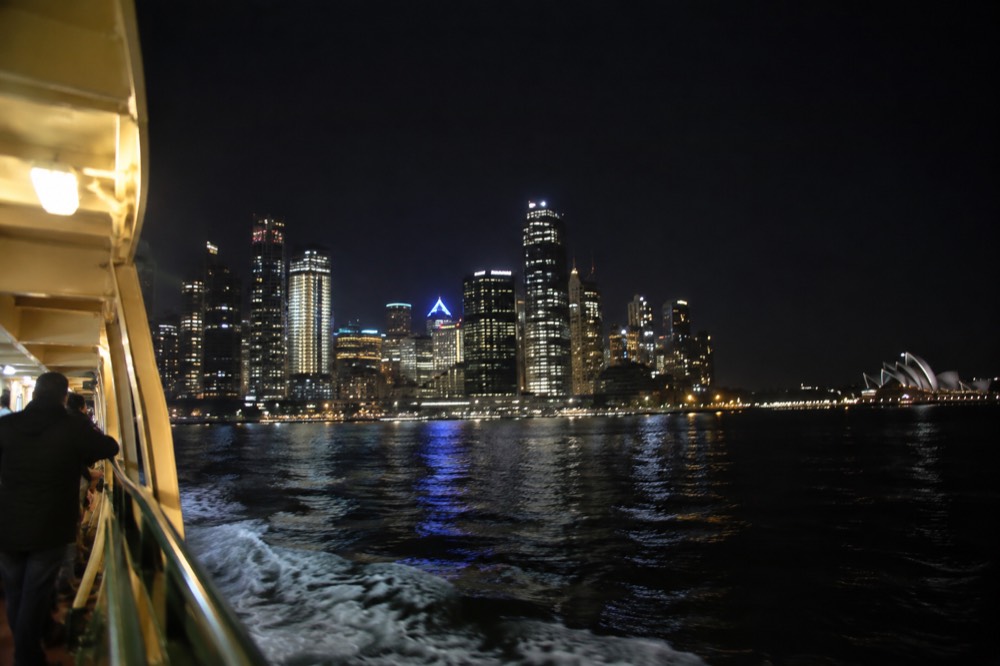
The CBD after dark splits into four scenes: the small bars of the York and Clarence laneways, the theatres and the Opera House's own venues around Macquarie Street, the late-night kitchens of Chinatown, and the harbour itself, where sunset and dinner cruises run most evenings. The sunset catamaran cruise costs from US$43.38 for one hour on the water, and The Rocks pub walk runs two and a half hours for from US$87.05. Night transport runs on the same capped fares.
Theatre is the underused option. The Opera House stages opera, theatre, symphony and contemporary music across its venues, and our Sydney theatre and shows guide explains how the cheap seats work. Booking a performance also gets you inside the building, which is a different experience from the daytime tour.
The harbour at night does a second trade. The sunset catamaran cruise, from US$43.38, is a one-hour circuit timed to the skyline lighting up, and the tall ship twilight dinner cruise adds a meal on a historic-style sailing vessel. For the darker end of the city's history, the true crime walking tour, from US$24.34 for 90 minutes, runs through the CBD's colonial lanes.
When Is the Best Time to Walk the City?
August, on the numbers: it is Sydney's clearest month by long-term average, with 13.4 mean clear days, versus just 5.3 in February, the cloudiest month of the year and the middle of peak season. June is actually Sydney's wettest month, averaging 133.1 mm, wetter than any summer month. Winter days in the CBD are mild, averaging a 16.4 to 17.9 degree maximum in July and August, and the walking loop between Circular Quay and the Domain is comfortable in a jacket.
That climate detail runs against every northern-hemisphere instinct visitors arrive with. The Bureau of Meteorology's long-term normals for Sydney show rainfall peaking in autumn and early winter, not summer, and the clearest skies arriving in late winter. Peak season, December and January, is statistically the cloudiest time to visit. None of this makes summer a bad choice, the harbour is at its liveliest, but it makes the "Sydney is always sunny" assumption a poor planning tool. Our best time to visit Sydney guide works through the whole year.
Two seasonal notes matter for the CBD specifically. Daylight saving runs from the first Sunday in October to the first Sunday in April, so summer evenings stay light until nearly 8pm, which extends the walking day considerably. And UV is extreme in summer and still reaches the protection threshold of 3 or above in winter, so sun protection is a year-round habit here, not a beach-only one.
Where Should You Shop in the City Centre?
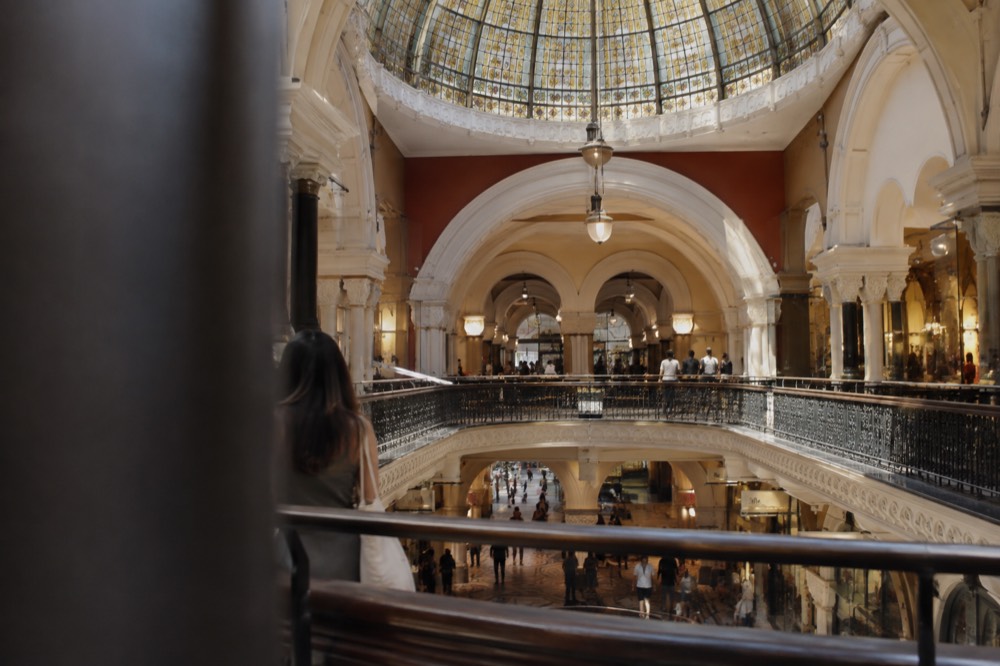
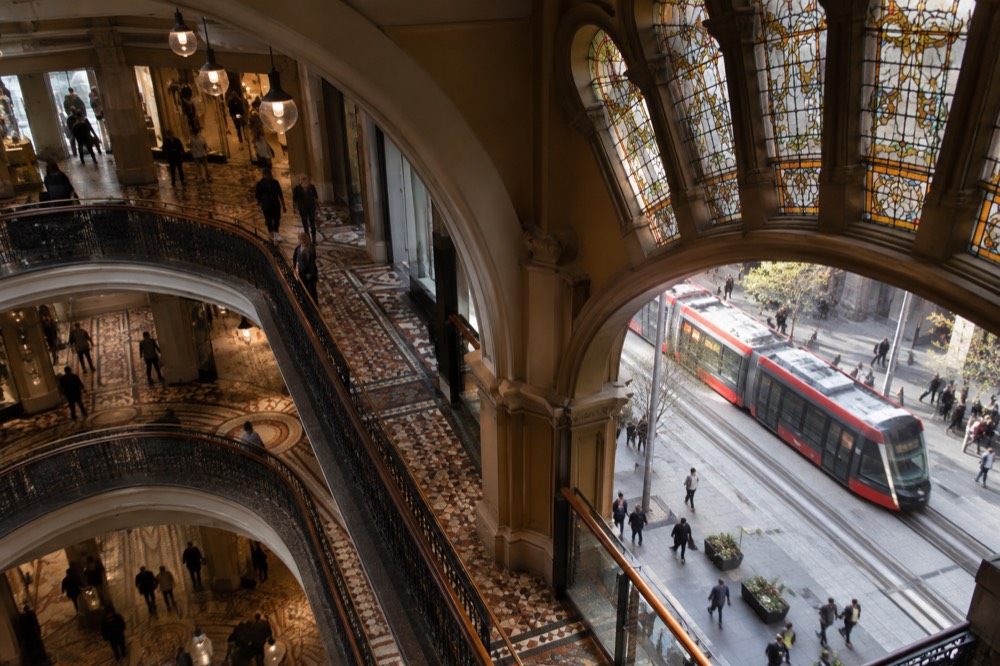
The Queen Victoria Building is the one shopping stop most worth a non-shopper's time: a grand nineteenth-century market building with a stained glass dome, a central tea room and high-end retail across its levels, and entry is free. The Strand Arcade, one block north, is its smaller, quieter sibling. Pitt Street Mall and the Westfield complex beside it carry the mainstream chains, while Darling Harbour's weekend markets and The Rocks weekend markets are where the locally made things actually are.
The QVB deserves the hour even if you buy nothing. Built as a market hall in the late nineteenth century and later fully restored, it is the closest thing the CBD has to a cathedral of shopping, and our Queen Victoria Building guide covers its history and what is inside. The Strand Arcade, with its original shopfronts and hanging balconies, is the more atmospheric of the two and holds jewellers, menswear and a proper old-school arcade tea room.
For market shopping, The Rocks weekend markets sit at the CBD's north-west corner. If you are staying outside the centre, weigh the CBD against the eastern suburbs and the North Shore before booking, since the centre trades convenience for space.
Is the CBD Safe and Walkable at All Hours?
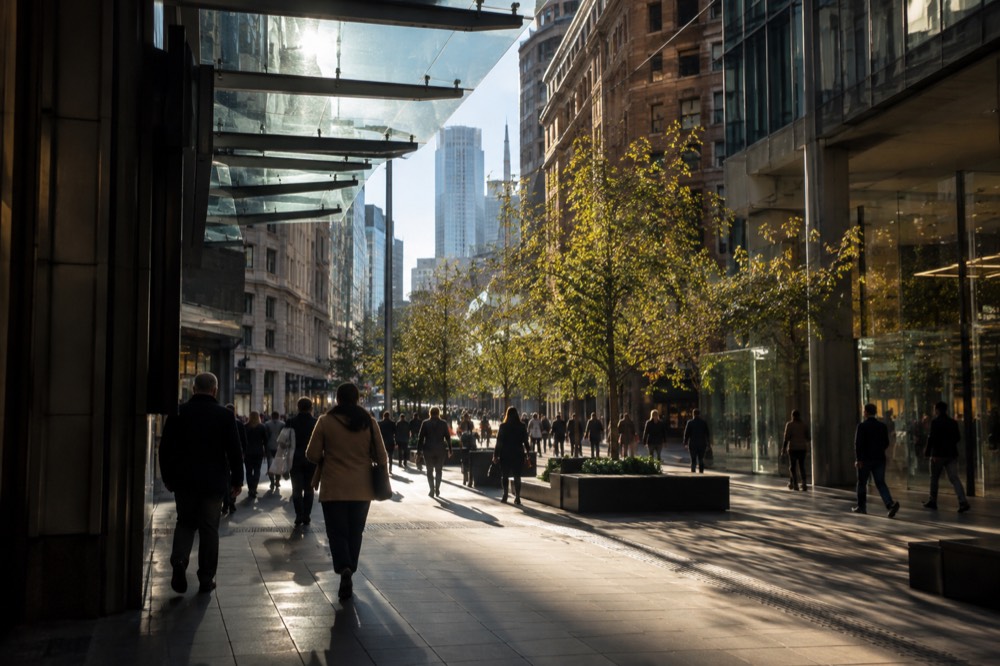
Yes on both counts by Australian city standards: the CBD is highly walkable, with its entire landmark loop under 4 km, and the central streets around Circular Quay, George Street and Darling Harbour stay busy and well-lit late into the night. Normal city caution applies around Kings Cross to the east and on quiet lanes after midnight, but the areas a visitor actually uses, the Quay, the Rocks, the shopping core, are among the busiest and most surveilled streets in the country.
The honest version is that Sydney rates as one of the safer major cities visitors encounter, and the CBD is its most policed and populated part. The risks worth planning for are mundane: pickpocketing risk rises at major events, the harbour's edge is unfenced in places, and the sun is a bigger hazard than crime for anyone walking the loop in summer. Swim only between the red and yellow flags at patrolled beaches, which the harbour-edge CBD does not really have, so the water safety rule here is simple: the harbour is for ferries and pools, not swimming, unless you are at a designated spot.
For the night hours, the whole-city safety picture, including the eastern and western suburbs, is covered in our safety coverage elsewhere on this site.
If you are assembling the CBD into a full trip, the walking tour of The Rocks remains the single best-value guided hour and a half in the centre, and the trio below covers the walk, the food and the harbour, the three ways most people actually spend a CBD day.
Common Questions About the Sydney CBD
How long do you need in the Sydney CBD?
Two full days covers the landmark loop, the free museums, one market and a harbour trip without rushing. One day is enough for Circular Quay, the Opera House, the Botanic Garden, the QVB and a Chinatown dinner, but you will skip the Art Gallery and the deeper Rocks exploring.
Is the Sydney CBD the same as downtown Sydney?
Effectively yes. Locals say "the city" and mean the CBD grid between Darling Harbour, Circular Quay, the Domain and Central station. There is no area called downtown in Sydney usage.
Can you walk everywhere in the Sydney CBD?
Yes. The grid is about 2 km north to south and roughly half that east to west, the landmark loop is under 4 km, and the light rail along George Street exists for tired feet, at $3.30 to $5.77 an adult trip.
What is free in the Sydney CBD?
The Royal Botanic Garden, the Australian Museum's general entry, the Art Gallery of New South Wales, the State Library, Hyde Park, Barangaroo Reserve and the Opera House boardwalk all cost nothing. The Art Gallery stays open until 10pm on Wednesdays.
Where do you catch the ferry from the CBD?
Circular Quay, at the CBD's north-east corner, is the main terminal for the F1 Manly ferry and most harbour routes. The F1 costs $9.20 one way for adults and counts toward the Opal daily cap.
Is the Powerhouse Museum open?
No. Powerhouse Ultimo has been closed to the public since February 2024 and is not due to reopen until around 2029. The new Powerhouse Parramatta is scheduled to open on 7 November 2026.