Sydney Rainy Day Itinerary: The Best Indoor Activities for a Wet Day
Sydney's rain is heavier than visitors expect, and it falls hardest in June, not summer. This itinerary reroutes a washout day into the city's best indoor activities without wasting a single booking.
Short answer
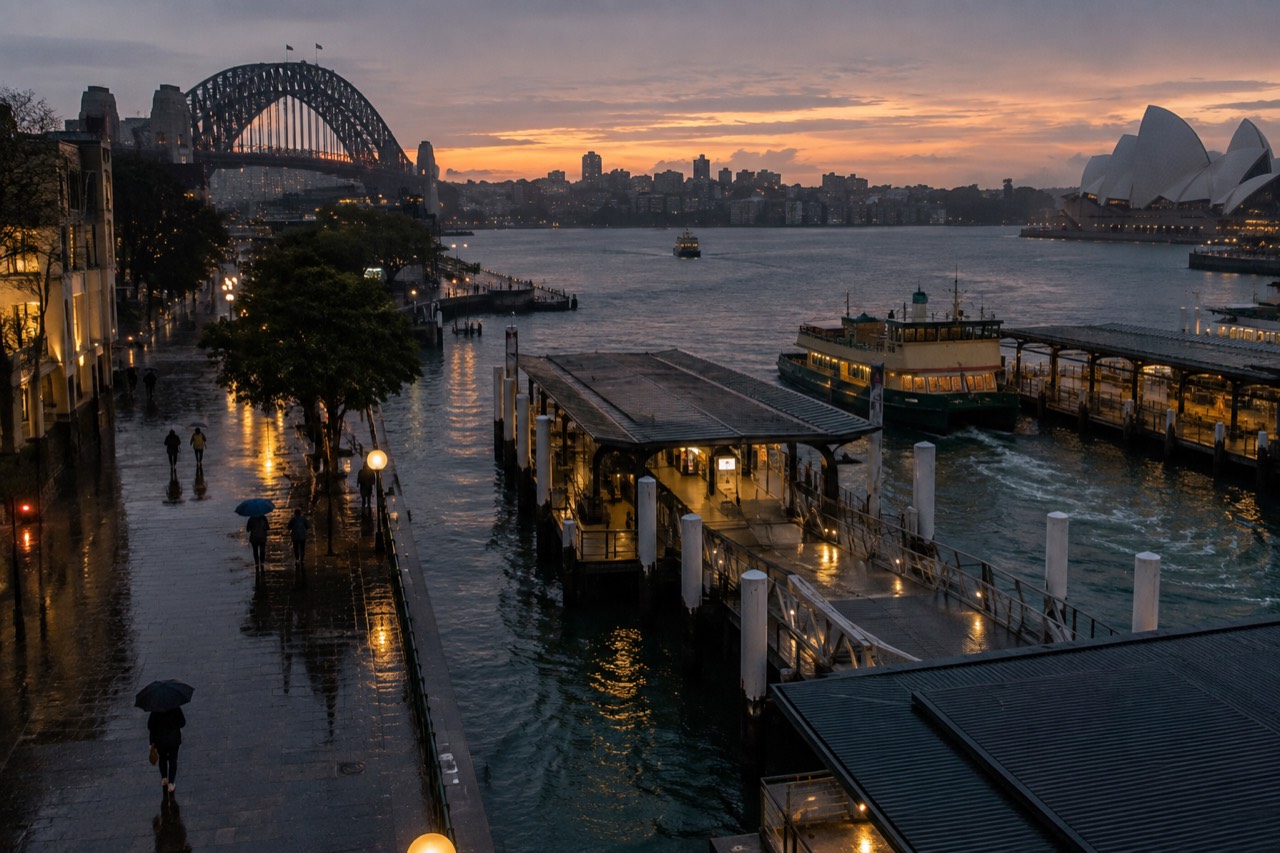
Sydney's best rainy-day plan pairs one anchor attraction, such as Taronga Zoo or the Sydney Tower Eye, with the free museums and galleries around the CBD. June is the wettest month at 133.1 mm on average, so a wet day is common. Ferries still run, most indoor attractions sit within a short walk of a metro or train station, and an Opal daily cap keeps the moving cheap.
Sydney averages 1,211.1 mm of rain a year, spread over about 99.5 rain days. That is roughly one day in every 3.7 with at least a millimetre falling, and the long-run pattern, recorded at Observatory Hill since 1858, puts the peak in June rather than in summer. Most visitors arrive expecting endless sun and discover that a washout day needs a plan. This itinerary is that plan: one anchor attraction, a cluster of free indoor activities within walking distance of each other, and honest advice about what rain actually cancels.
Why Is Rain in Sydney a Different Problem Than You Think?
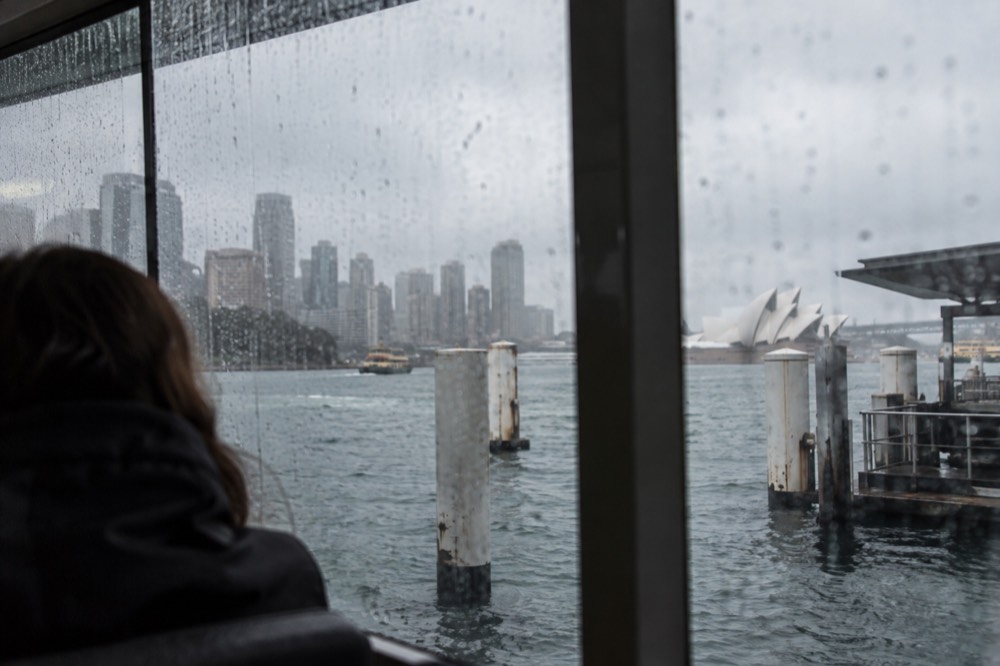
Sydney's rain is not a summer problem, it is a June problem. The long-run average for June is 133.1 mm, wetter than any summer month, while February, the middle of peak season, is actually the cloudiest month of the year with just 5.3 mean clear days. August, by contrast, is the clearest month at 13.4 clear days. A visitor planning around "sunny Australia" is planning around a picture the data does not support.
The Bureau of Meteorology's climate averages for Sydney tell a story most guides skip. Rainfall is spread across the year fairly evenly, with autumn and early winter the wettest stretch, and short sharp showers rather than all-day drizzle the usual pattern. A "rainy day" in Sydney often means two or three wet hours, not twelve.
That matters for planning. A wet morning often clears by early afternoon, so the smart structure is an indoor anchor before lunch and a flexible outdoor option after. It also means you should not write off a whole day at the first shower.
| Month | Mean rainfall (mm) | Rain days (1mm+) | Mean clear days |
|---|---|---|---|
| January | 101.2 | 8.6 | 6.8 |
| February | 119.3 | 9.0 | 5.3 |
| March | 131.6 | 9.9 | 7.1 |
| April | 126.5 | 8.9 | 9.1 |
| May | 117.4 | 8.6 | 9.5 |
| June | 133.1 | 8.8 | 9.1 |
| July | 96.3 | 7.4 | 12.0 |
| August | 80.2 | 7.1 | 13.4 |
| September | 68.1 | 7.1 | 10.9 |
| October | 76.7 | 7.9 | 8.1 |
| November | 83.8 | 8.3 | 6.0 |
| December | 77.1 | 7.9 | 6.6 |
Which Indoor Activities in Sydney Are Worth Your Time?
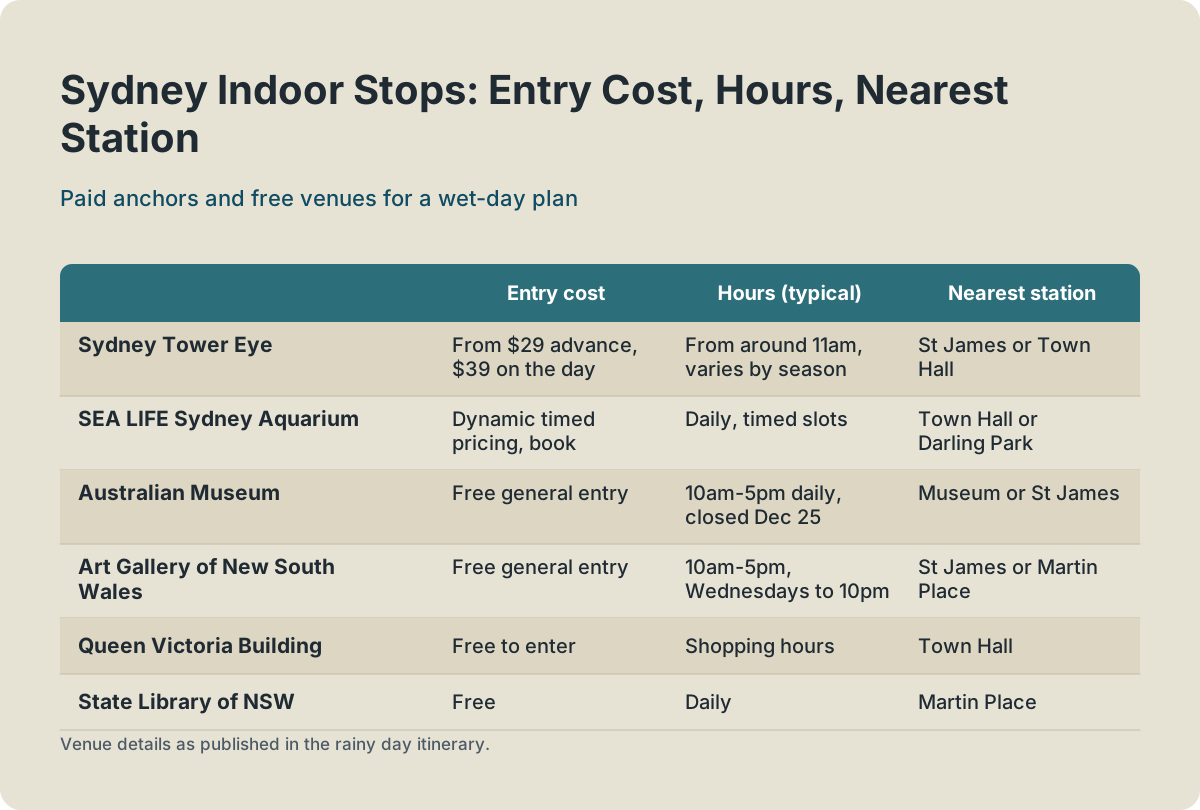
The strongest indoor anchors are the Sydney Tower Eye observation deck, the SEA LIFE Sydney Aquarium at Darling Harbour, and the museums and galleries clustered around the CBD, most of which are free. Taronga Zoo, while partly outdoor, works well in rain because most animal exhibits are covered and the ferry ride there is weatherproof. A single anchor plus two free museums fills a full wet day comfortably.
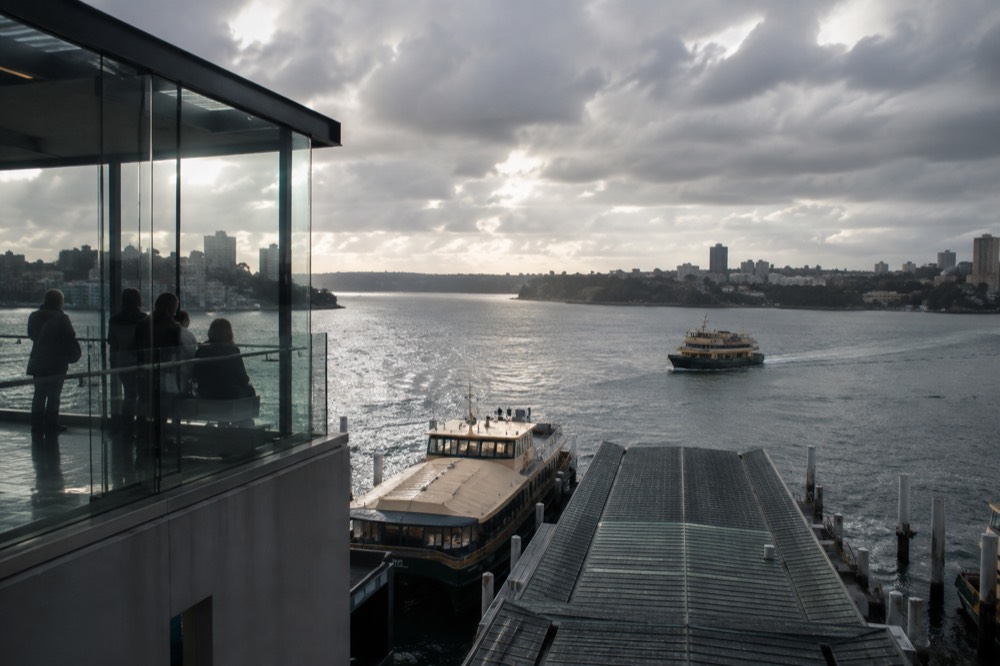
Start with the paid anchors. The Sydney Tower Eye sits 309 metres above the street, and on a wet day the deck gives you the strange pleasure of looking down on the weather. Advance tickets start at $29 for adults against $39 on the day, and pricing fluctuates with demand, so booking ahead is both cheaper and a hedge against a sellout on a school-holiday washout. The deck typically opens around 11am, which fits neatly after a morning museum. Our Sydney Tower Eye guide covers the optional Skywalk and how to time a visit.
SEA LIFE Sydney Aquarium uses dynamic timed-entry pricing with no fixed public price list, so the live listing is the only honest place to check the figure. What you get is fixed: a walk through the Great Barrier Reef display and the shark tunnels, dry, indoors, and right on the water at Darling Harbour. Pair it with the SEA LIFE Sydney Aquarium guide for opening details and crowd timing.
The free tier is where Sydney quietly excels. The Australian Museum on William Street has free general entry, open daily 10am to 5pm. The Art Gallery of New South Wales is also free for general entry and stays open until 10pm on Wednesdays, a detail almost nobody publishes. The Queen Victoria Building is a shopping arcade in a 19th-century Romanesque building, which makes it the most pleasant wet-weather walk in the city. The Queen Victoria Building guide maps the good corners.
One closure to plan around: Powerhouse Museum Ultimo has been closed since February 2024 for a major redevelopment and is tracking toward early 2029. Any older itinerary sending you there is out of date. Its replacement venue, Powerhouse Parramatta, is scheduled to open on 7 November 2026.
If you are doing two or more paid attractions, the four-attraction combo pass covering SEA LIFE, the Tower Eye, WILD LIFE Sydney Zoo and Madame Tussauds usually beats buying separately. The Sydney attraction passes compared page runs the maths against single tickets for different trip lengths.
| Indoor stop | Entry cost | Hours (typical) | Nearest station |
|---|---|---|---|
| Sydney Tower Eye | Adult $39 on the day, from $29 advance | From around 11am, varies by season | St James or Town Hall |
| SEA LIFE Sydney Aquarium | Dynamic timed pricing, book online | Daily, timed slots | Town Hall or Darling Park light rail |
| Australian Museum | Free general entry | 10am-5pm daily, closed Christmas Day | Museum or St James |
| Art Gallery of New South Wales | Free general entry | 10am-5pm, Wednesdays to 10pm | St James or Martin Place |
| Queen Victoria Building | Free to enter | Shopping hours | Town Hall |
| State Library of NSW | Free | Daily | Martin Place |
Is Taronga Zoo Worth It on a Rainy Day?
Yes, and it is arguably better in light rain than in summer heat. The zoo is open 365 days a year, most animal exhibits have covered viewing areas, and the included return ferry from Circular Quay is fully enclosed and runs in almost any weather. Online tickets start at $51.30 for adults against $57 at the gate, a saving of roughly 10 per cent at every tier, and the ferry crossing is 12 minutes of the best harbour view in the city, rain or shine.
The ferry is the reason this product belongs on a rainy-day list at all. The F2 Taronga Zoo service runs from Circular Quay whatever the sky is doing, and the zoo entry plus return ferry ticket bundles the crossing with admission so you are not standing at a wharf working out fares in the rain. On a wet weekday the crowds thin out noticeably, and the animals, particularly the ones native to rainforest habitats, are often more active than they are in the midday heat.
Taronga's hours shift with the seasons: 9:30am to 5pm from September to April, and 9:30am to 4:30pm from May to August. Rain jackets beat umbrellas on the cable car and the Sky Safari, which pauses only in genuinely severe wind. If the rain is heavy enough to close anything, the zoo posts it on its own visitor information page before opening time.
What Does a Full Rainy-day Itinerary in Sydney Look Like?
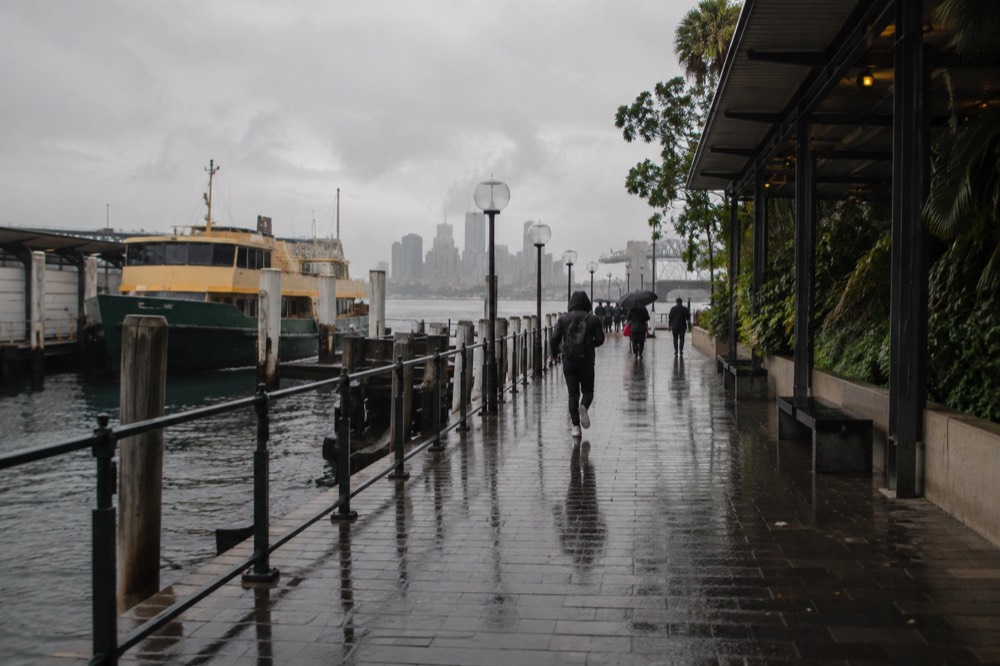
The structure that works is an indoor morning, a ferry or short-hop midday anchor, and a flexible afternoon. Start at the free Australian Museum at 10am, walk undercover through the Queen Victoria Building before lunch, take the Taronga ferry or the Tower Eye after midday, and finish in The Rocks or Darling Harbour for dinner. The whole day stays under the Opal daily cap, which is $19.30 Monday to Thursday and $9.65 Friday to Sunday.
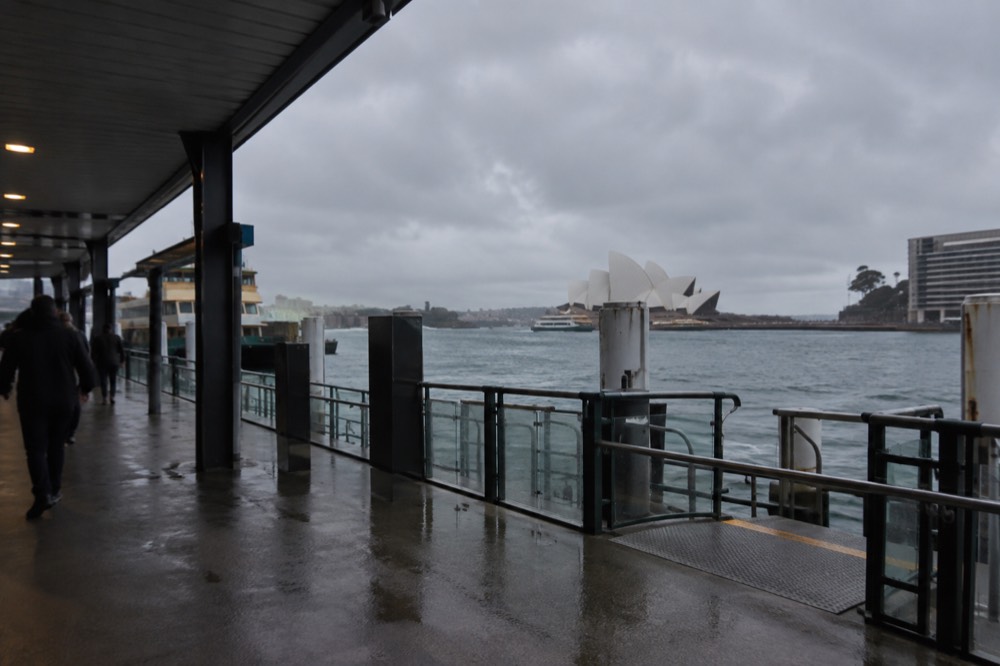
Here is the hour-by-hour version, built so each leg is short and mostly under cover.
| Time | Plan | Why it works in rain |
|---|---|---|
| 9:00-10:00 | Breakfast near Town Hall, under the QVB arches | Arcades and food courts are dry |
| 10:00-12:00 | Australian Museum, free general entry | Fully indoor, 2 hours is enough for the highlights |
| 12:00-13:00 | Lunch in the QVB or a covered food hall | Short walk from Museum station |
| 13:00-16:00 | Anchor attraction: Taronga Zoo ferry, or Sydney Tower Eye from 11am | Ferry is enclosed; deck is indoors |
| 16:00-17:30 | Art Gallery of New South Wales, free entry | Indoor, and until 10pm on Wednesdays |
| 17:30 onward | Dinner in The Rocks or Darling Harbour | Both have dense undercover laneways |
The pattern to notice is that every transition is under ten minutes in the open. Sydney's CBD arcades, the QVB, the Strand Arcade and the underground food halls around Town Hall, let you cross a surprising amount of the city without an umbrella. The Sydney CBD guide maps the covered routes.
Transport for NSW's adult fare pages confirm the caps apply network-wide across metro, train, bus, ferry and light rail, so a day of hopping between indoor stops costs no more than the cap. A contactless card is charged exactly the same as an Opal card and earns every benefit, so you do not need to buy a card for one wet day.
What Are the Best Free Indoor Activities in Sydney?
The free list is long: the Australian Museum and the Art Gallery of New South Wales for general entry, the State Library's reading rooms and exhibitions, the Queen Victoria Building and Strand Arcade as dry walking routes, and the Museum of Contemporary Art Australia at The Rocks. Add the Royal Botanic Garden for the gaps in the rain, since entry is free and the garden is at its most photogenic wet.
The Museum of Contemporary Art Australia sits directly on Circular Quay, free to enter, and its harbourfront position means the cafe windows turn bad weather into a view. The MCA guide covers what is showing and how long to allow.
The Royal Botanic Garden Sydney is free and open daily from 7am to sunset. In light rain it is worth a walk anyway: the garden closes only for extreme conditions, and wet foliage along the harbour edge is one of the city's better photographs. The Royal Botanic Garden Sydney guide has the entrance points nearest the CBD.
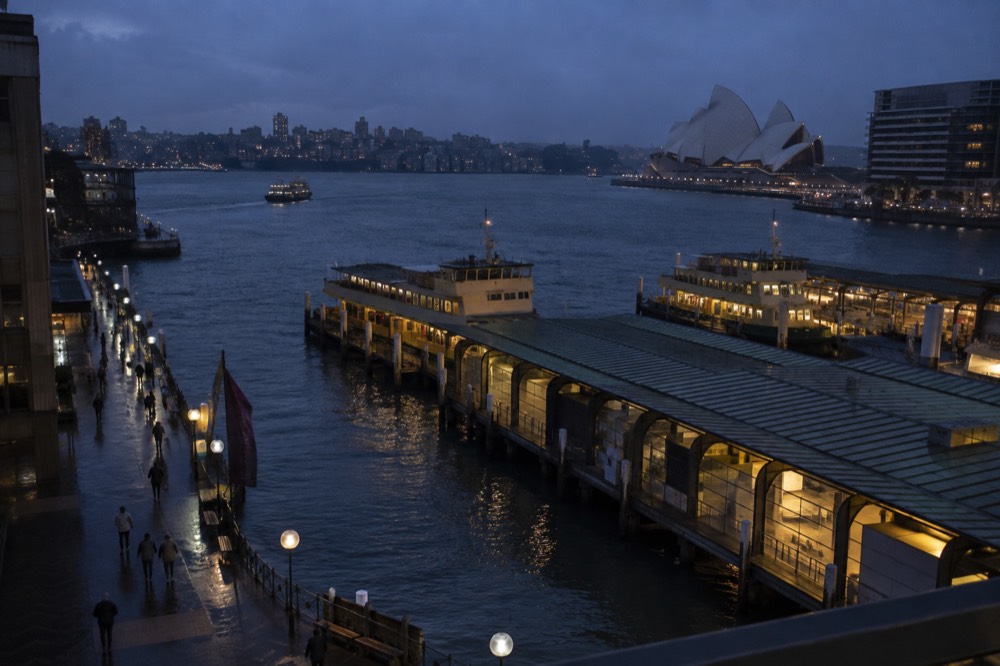
For something with a roof and a story, The Rocks has a cluster of historic interiors, from the Argyle Stores to the old laneway pubs, and the The Rocks walking tour guide lists which stops are under cover. A guided walk in The Rocks also runs in rain, since most of its stops are verandas and interiors.
Do Ferries, Tours and the BridgeClimb Still Run in the Rain?
Sydney's public ferries run in rain and only pause for severe wind, fog or lightning, so the Manly ferry and the Taronga ferry remain the best wet-weather sightseeing in the city. BridgeClimb also operates in rain, issuing climbers weather gear, and suspends only for electrical storms or extreme wind. Whale watching boats run May to November with rain not a factor, only swell. The one thing rain genuinely cancels is an unsheltered coastal walk in heavy conditions.
The distinction worth knowing is between weather and safety. A shower changes nothing about a ferry timetable. What stops services is wind above operational limits, and Transport for NSW posts those suspensions on its live alerts. A rainy day with ordinary wind is a ferry day.
The Bondi to Coogee coastal walk is the classic casualty of a wet forecast. The path itself stays open, but exposed sandstone sections are slippery when wet and the ocean pools close in big swell. If the rain is light and the swell small, a shortened version is still pleasant; in heavy rain, swap it for the indoor anchors above and keep the walk for a clearer morning, when the Bondi to Coogee coastal walk guide will serve you better.
Should You Change a Blue Mountains Day Trip If It Rains?
Usually yes. The Blue Mountains lookouts depend entirely on visibility, and the plateau's weather often runs wetter and foggier than Sydney's, so rain in the city frequently means cloud filling the Jamison Valley and no view at all. If the forecast is genuinely wet, keep the day in Sydney. If it is only showery, a Blue Mountains day trip can still work, because Scenic World's rides and the town centres of Katoomba and Leura are largely sheltered.
The honest test is the Three Sisters. If you would be standing at Echo Point looking at grey cloud where the valley should be, the trip is not worth the fare, and the Katoomba and the Three Sisters guide explains how to read the mountain forecast before committing. Note also that several Blue Mountains tracks and roads carry closures into late 2026, including Mount Hay Road and the Jenolan Karst Conservation Reserve, so check the National Parks alerts page the night before.
One cost fact most guides miss: Blue Mountains National Park charges no entry fee except in the Glenbrook area, where it is $8 per vehicle per day. Arriving by train, which is the sensible rainy-day choice anyway, avoids vehicle fees entirely at almost every Sydney park. The Blue Mountains day trip guide covers the train option in detail.
For a wet day that stays closer to the city, the Sydney rainy day answers page collects reader questions about specific stops, and the Sydney hidden gems guide includes several indoor surprises most itineraries skip.
What Should You Skip on a Rainy Day in Sydney?
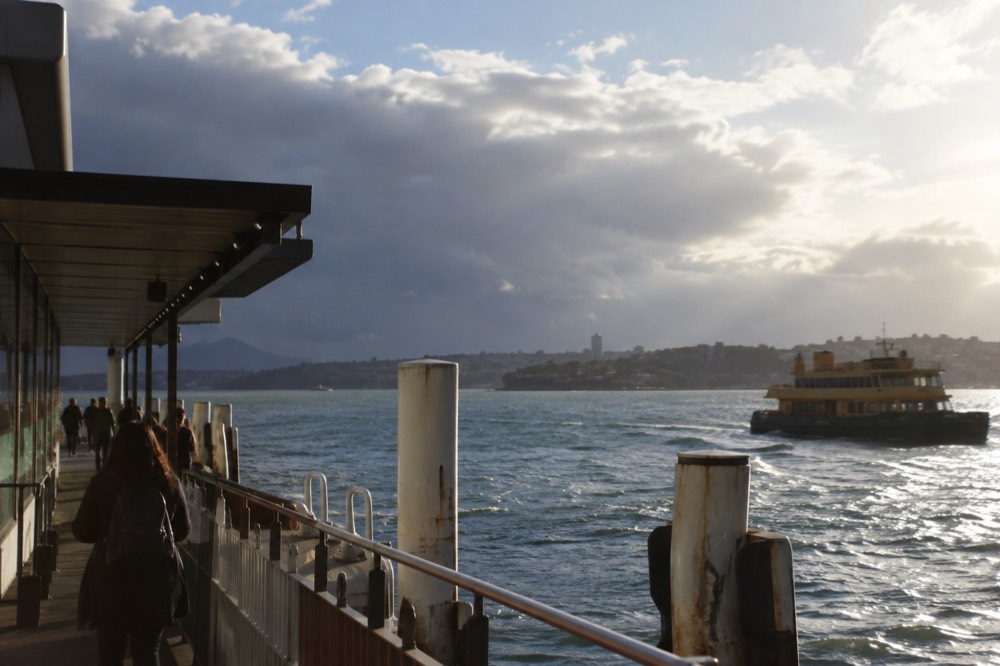
Skip anything whose entire value is a long unsheltered view: the Bondi to Coogee walk in heavy rain, an open-top sightseeing bus, a picnic in the Domain, and the Blue Mountains lookouts when the valley is clouded over. Also skip the Powerhouse Museum Ultimo, which is closed until around 2029, and any whale watching cruise outside the May to November season. Everything else on a Sydney list survives a shower.
The open-top bus deserves a specific mention because it is the product rain damages most. A covered ferry gives you the same sightseeing loop with a roof, and the public F1 Manly ferry costs a fraction of a hop-on hop-off ticket while being the best-value harbour cruise in Sydney by common consent. On a wet day, the ferry is the bus.
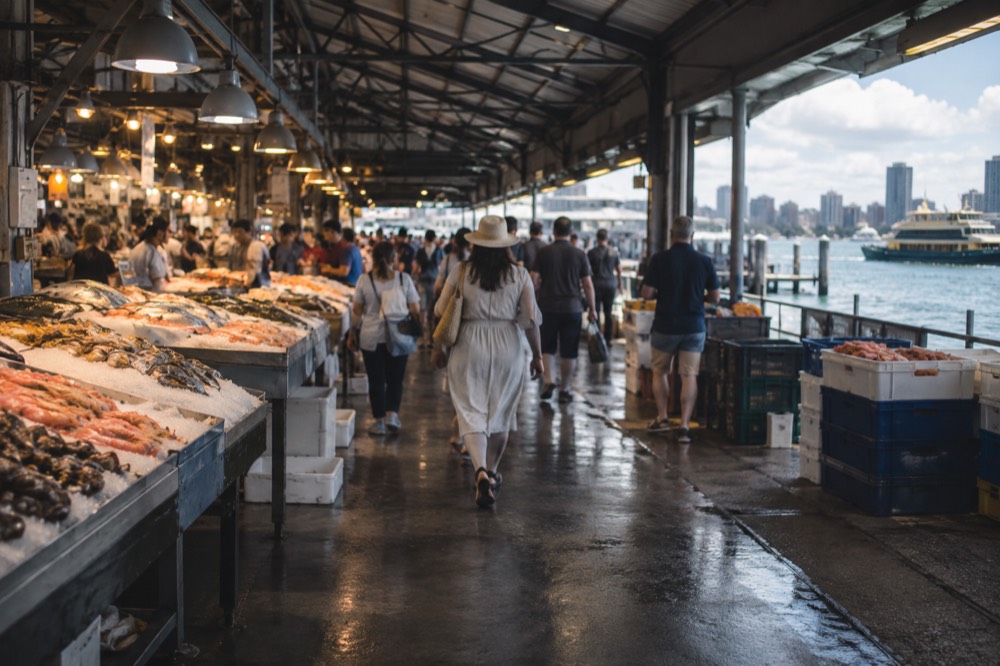
The Sydney Fish Market is a strong rainy-day swap for an outdoor lunch. It moved to its new Blackwattle Bay building in January 2026, and the new site is largely indoors, with more than 40 retailers under one roof. The Sydney Fish Market guide covers how to get there and what to order.
Finally, a word on the city's own character in rain, from the desk that puts this Sydney Travel Guide together: locals do not stop moving, they just move under verandas. The awnings along George Street, the arcades and the ferry network mean a wet day in Sydney is a slower day, not a lost one.
Common Questions About Rainy Days in Sydney
What are the best indoor activities in Sydney when it rains?
The strongest are the Sydney Tower Eye deck, SEA LIFE Sydney Aquarium, the free Australian Museum and Art Gallery of New South Wales, the Queen Victoria Building, and the State Library. Taronga Zoo also works in light rain because its ferry connection is enclosed and most exhibits have covered viewing.
Does it rain a lot in Sydney?
Sydney averages 1,211.1 mm a year over about 99.5 rain days, roughly one day in 3.7 with at least a millimetre. June is the wettest month at 133.1 mm on average, and February is the cloudiest, so rain is a year-round possibility rather than a seasonal one.
Do Sydney ferries run in the rain?
Yes. Public ferries run in ordinary rain and pause only for severe wind, fog or lightning, which Transport for NSW announces on its live alerts. A rainy day is actually a good ferry day, since the vessels are enclosed and the harbour views survive the weather.
Is Taronga Zoo open when it rains?
Taronga Zoo is open 365 days a year, 9:30am to 5pm from September to April and 9:30am to 4:30pm from May to August. Rain does not close it, and the ferry from Circular Quay runs in almost any weather. Online tickets from $51.30 for adults are about 10 per cent cheaper than the $57 gate price.
What is free to do in Sydney on a wet day?
The Australian Museum and the Art Gallery of New South Wales both offer free general entry, the State Library is free, the Museum of Contemporary Art Australia at Circular Quay is free, and the Queen Victoria Building and Strand Arcade cost nothing to wander. The Royal Botanic Garden is also free and open from 7am to sunset if the rain is only light.
Should I cancel the Blue Mountains day trip if it rains?
If the Sydney forecast is genuinely wet, yes. The lookouts depend on visibility, and cloud frequently fills the Jamison Valley on days the city only drizzles. In showery weather the trip can still work because Scenic World and the Katoomba and Leura town centres are sheltered, and the national park charges no entry fee outside the Glenbrook area.