Katoomba and the Three Sisters: The Blue Mountains Day Trip, Explained
The Three Sisters are the single most photographed sandstone formation in New South Wales, and Katoomba is the town built to show them to you. Here is how the day trip actually works: the train, the lookouts, the walks, the closures nobody warns you about, and when a guided tour is the smarter call.
Short answer
Katoomba sits in the Blue Mountains, roughly two hours from Central by train. The Three Sisters viewpoint at Echo Point is free to visit, Blue Mountains National Park charges no entry fee outside the Glenbrook area, and the off-peak train fare from Central sits in the 65-plus kilometre band at $7.46 each way.
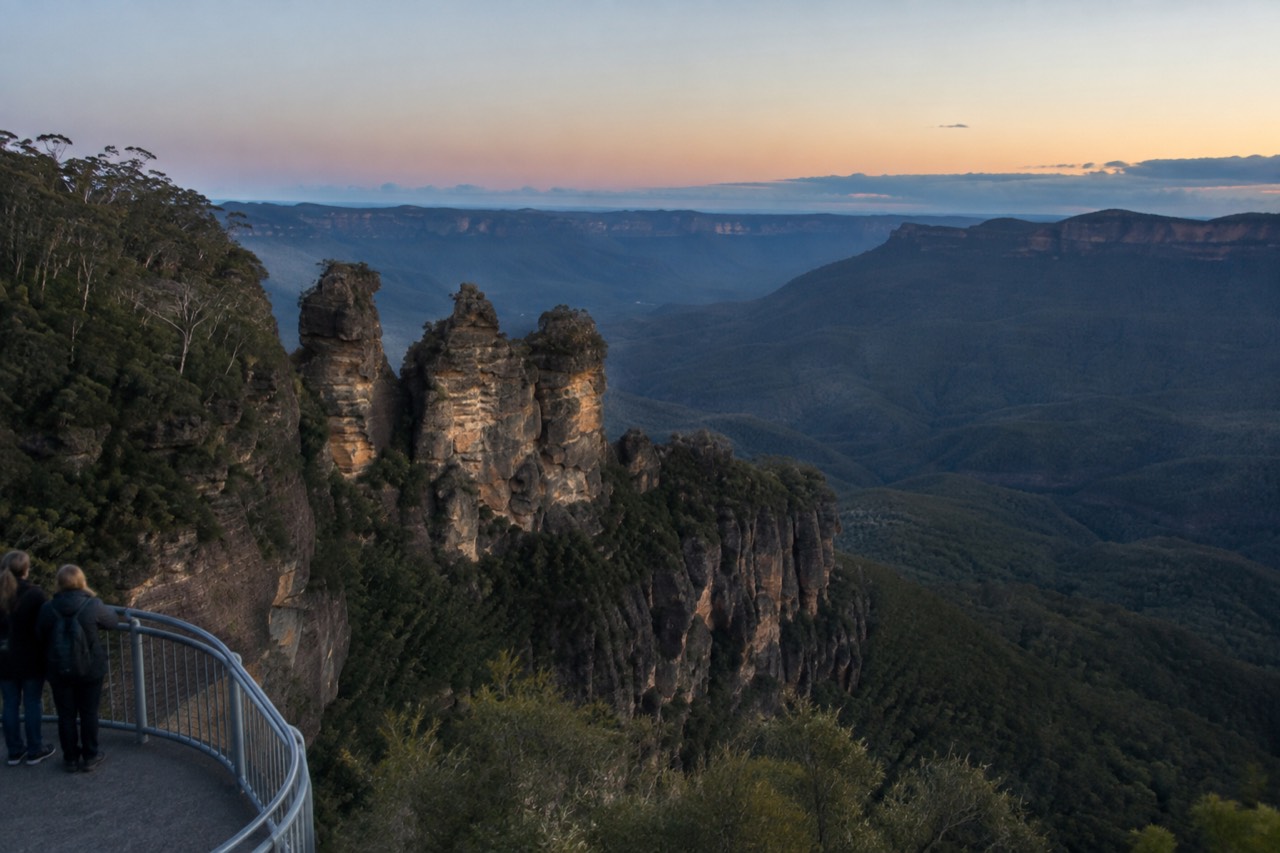
The Three Sisters are three sandstone peaks standing above the Jamison Valley at Katoomba, in the Blue Mountains, and they are the reason most people make this day trip at all. The lookout that frames them, Echo Point, is free, sits a short walk from Katoomba town centre, and on a clear afternoon draws crowds that rival anything in Sydney. What surprises first-time visitors is how much else is packed into the same small corner of the mountains: cliff-top walks, a scenic railway that drops through a cliff cut, waterfalls within walking distance of the station, and a national park that charges no entry fee to see any of it.
This guide covers the whole day: the train from Sydney, what to do in Katoomba once you arrive, whether Scenic World earns its ticket, and the track closures that have changed the walking options into late 2026. It sits alongside our broader Blue Mountains day trip guide, which covers Leura, Blackheath and Wentworth Falls, and our page on Scenic World in the Blue Mountains for a deeper look at the rides.
What Are the Three Sisters, and Why Is Katoomba the Base?
The Three Sisters are a formation of three sandstone peaks standing on the north edge of the Jamison Valley at Katoomba, and they are the most recognised landmark in the Blue Mountains. Almost every visit to the mountains anchors on them. Katoomba is the town directly behind the formation, about two hours west of central Sydney by rail, and it works as a base because the lookouts, the main street and the train station all sit within about a 20-minute walk of one another. You can see the formation from several free lookouts without paying for anything beyond the train fare that got you there.
The name comes from an Aboriginal story attached to the rocks, and the version told on the signage at Echo Point is the one most visitors encounter. The land of the Blue Mountains is that of the Darug and Gundungurra peoples, and the cultural sites in the national park are protected. Treat the formation as a viewpoint and a cultural site rather than a climb; the old stairway route onto the pillars is not the point of a visit.
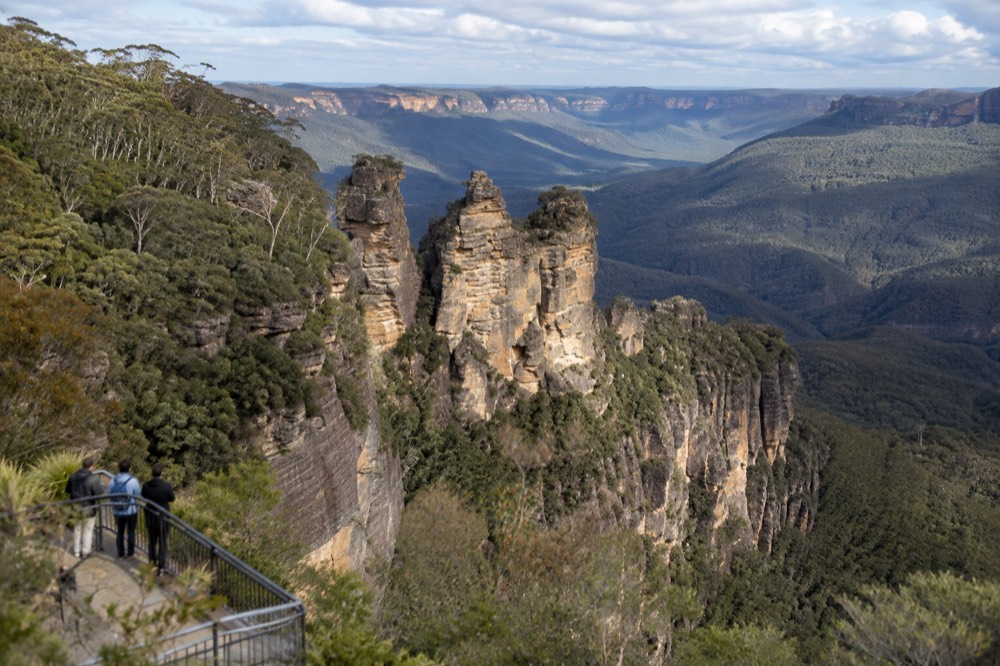
Katoomba itself is a genuine mountain town, not a theme-park staging post. It has a year-round population, a main street of cafes and bookshops, and a winter chill that surprises Sydneysiders used to the coast. Winter daytime averages in the mountains run well below Sydney's, so pack a layer even in the months when the city feels mild.
How Do You Get to Katoomba from Sydney Without a Car?
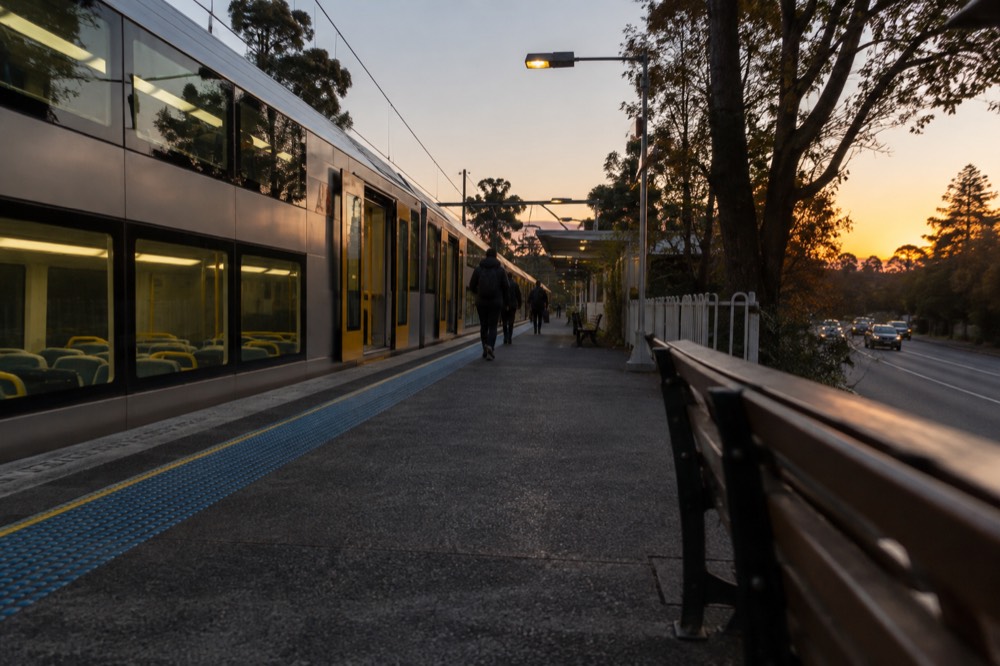
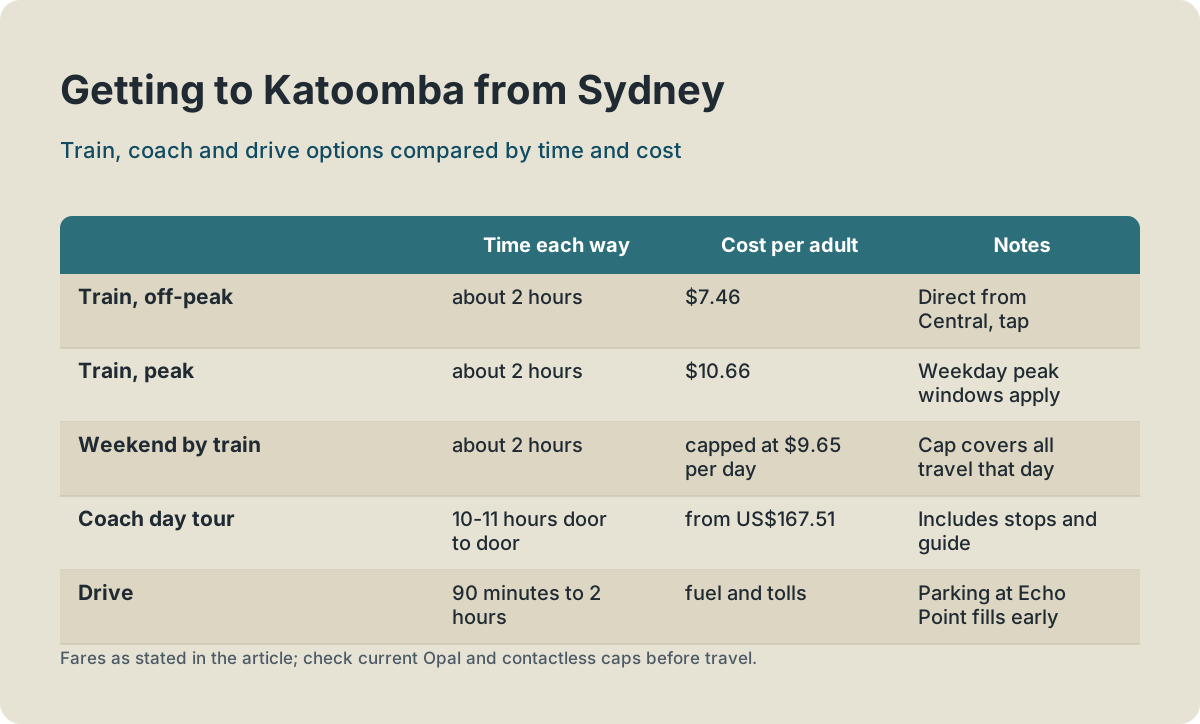
The train is the honest answer. Central Station to Katoomba takes about two hours on the Blue Mountains Line, with no transfers, and the adult off-peak fare sits in the 65-plus kilometre band at $7.46 each way, or $10.66 at peak times. A contactless card or Opal card pays the same fare and counts toward the same caps, and the weekend daily cap of $9.65 means a Saturday return trip to Katoomba can cost less than the two single fares would suggest. Katoomba station is a level 10-minute downhill walk to the town centre, and Echo Point is roughly 2.5 kilometres from the station, a 30-minute walk or a short bus.
Check the timetable before you commit to a day: the Blue Mountains Line runs less frequently than the suburban network, and missing a return service can add an hour to your day. Transport for NSW publishes the fares and the trip planner with current fares by distance band, and the off-peak discount applies outside weekday peak windows, which is why the return fare quoted here is the off-peak figure.
| Option | Time each way | Cost per adult | Notes |
|---|---|---|---|
| Train, off-peak | about 2 hours | $7.46 | Direct from Central, tap on and off |
| Train, peak | about 2 hours | $10.66 | Weekday peak windows apply |
| Weekend by train | about 2 hours | capped at $9.65 per day | Daily cap covers all travel that day |
| Coach day tour | 10-11 hours door to door | from US$167.51 | Includes stops and guide |
| Drive | 90 minutes to 2 hours | fuel and tolls | Parking near Echo Point is paid and fills early |
One trap worth naming: the daily caps apply to Opal and contactless alike, but a single-trip ticket bought at a machine earns no caps or discounts at all, so do not buy one for this trip. Tap a bank card and you are done.
If reading a mountain timetable on holiday sounds like work, the guided alternative is strong. These are the three tours most visitors compare for a Blue Mountains day out:
The all-inclusive Blue Mountains day trip handles the transport, the stops and lunch, and suits travellers who would rather not plan. The other two are Sydney picks, useful if you are building a wider trip around this one day out.
What Does a Good Day in Katoomba Actually Look Like?
A workable Katoomba day is Echo Point and the Three Sisters first, while the morning light is behind you, a cliff-top walk second, before the exposed sections get hot after midday, lunch in town, then Scenic World or a second lookout in the afternoon, allowing time for the steep walk up to the station and the train back by early evening. The order matters more than the content. Morning light comes from behind you at Echo Point, the cliff walks get hot on the exposed sections after midday, and the last thing you want is to be sprinting uphill to the station at 5pm. Two lookouts, one short walk and one paid attraction is a full day; three of each is a rushed one.
Here is a shape that works for the train timetable:
| Time | Where | What it involves |
|---|---|---|
| 8-9am | Central Station | Board the Blue Mountains Line, about 2 hours |
| 10:30am | Katoomba town | Coffee and a map stop, 10-minute walk from the station |
| 11am | Echo Point | The Three Sisters lookout, free, allow 45 minutes |
| 12pm | Prince Henry Cliff walk | Cliff-top track toward the Scenic World end |
| 1:30pm | Katoomba lunch | Main street cafes, most kitchens close 2:30-3pm |
| 3pm | Scenic World or a second lookout | Rides or Govetts Leap if you have a car |
| 4:45pm | Katoomba station | Walk back up, allow 15 minutes for the hill |
| 5-6pm | Return train | Check the last comfortable service, not the last one |
The walk back up from town to the station is genuinely steep; budget it into your afternoon, not your departure time. And if the day feels too full, the honest fix is a guided trip where someone else owns the clock:
The all-inclusive tour covers the transport, the main lookouts and lunch, which is the exact bundle of decisions the DIY day makes you own. It runs about 10 hours from Sydney.
Is Scenic World Worth the Ticket When You Came for the Three Sisters?
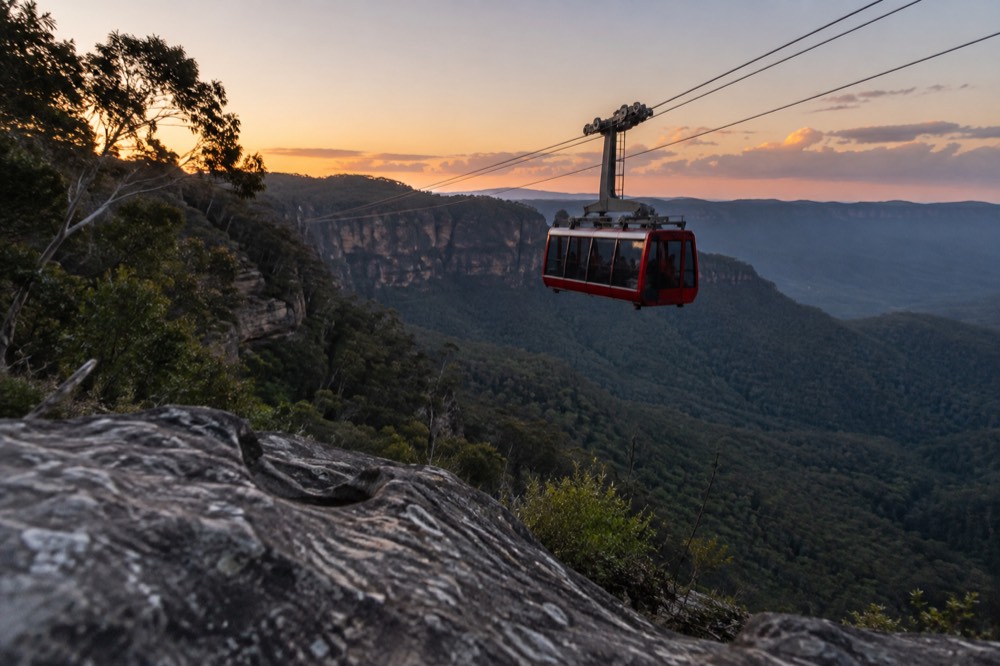
Scenic World is a privately run attraction at the south end of Katoomba, and its ticket buys the Scenic Railway, the Skyway, the Cableway and the boardwalk loop in the Jamison Valley, not the Three Sisters themselves. Echo Point remains the classic view and it is free, so the ticket is worth it mainly if you want to stand inside the valley. The formation is visible from the Skyway and from the valley floor, but Echo Point remains the classic view and it is free. Scenic World's pricing is dynamic and changes with demand, so the live price on the listing is the only reliable figure; what you can plan around is what each ride does. The Scenic Railway is the steepest passenger funicular of its kind in the world, dropping through a cliff cut at a steep incline.
| Ride or element | What it does | Time to allow |
|---|---|---|
| Scenic Railway | Descent through the cliff at a steep incline | 10 minutes plus queue |
| Scenic Skyway | Glide across the valley with a glass floor section | 10 minutes |
| Scenic Cableway | Fully enclosed cabin down to the valley floor | 10 minutes |
| Boardwalk | 2.4 kilometres of valley-floor walking trails | 30-60 minutes |
| Skyway east station | Short walk to a lookout over Katoomba Falls | 20 minutes |
The honest framing: if your day is about the view from the top, Echo Point and the cliff walk deliver it for nothing. If you want to stand inside the valley, on the floor of the Jamison among the tree ferns, Scenic World is the easiest legal way down, and the railway is a genuinely memorable piece of engineering. Families with children almost always get their money's worth; solo photographers often prefer the free lookouts at golden hour.
Which Lookouts and Short Walks Should You Actually Do?
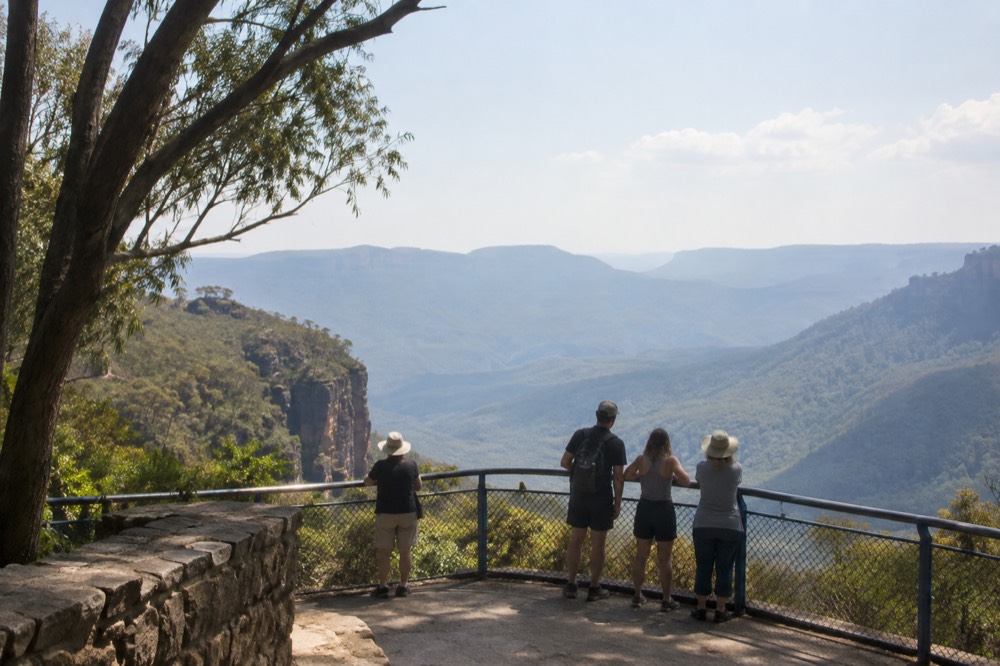
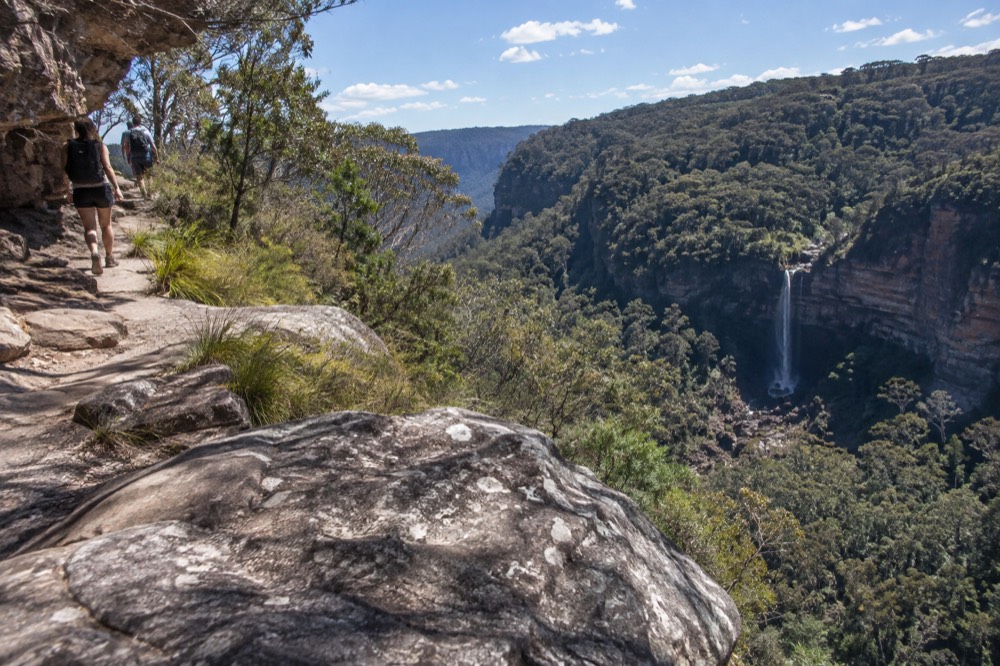
Echo Point is the headline, but the better walking is along the cliff line either side of it. The Prince Henry Cliff walk links Echo Point toward the Scenic World end of town past a chain of smaller lookouts, and it is the single best free hour in Katoomba. Most of it is flat, surfaced and fenced, with views that change every few hundred metres. Wentworth Falls and Govetts Leap, further along the ridge toward Blackheath, are the two lookouts worth a separate trip if you have a car or a full weekend; Govetts Leap in particular is the view many locals rate above Echo Point itself.
A few practical notes that first-time visitors miss:
- Echo Point has paid parking that fills by mid-morning on weekends; the train avoids the problem entirely.
- The cliff walk has unfenced sections; keep children close and stay behind the barriers at the lookouts.
- Katoomba Falls is visible from two lookouts on the walk, and the falls are at their best within a day or two of rain.
- Haze is real: the blue tint the mountains are named for comes from eucalypt oil in the air, and on hot still afternoons the valley can wash out. Morning is the sharper view.
For a wider sweep of the region's viewpoints, our guide to the best lookouts around Sydney covers coastal and harbour options too, and the Blue Mountains day trip guide extends this one toward Wentworth Falls and Blackheath.
If you would rather have a guide walk you through the ridge rather than reading track notes, the deluxe small-group tour includes Scenic World and Featherdale in one loop:
That tour suits travellers who want the rides and the wildlife park in a single day without self-driving, and it runs about 10 hours from Sydney.
When Is the Best Time of Year for the Three Sisters?
Any month works, but the experience differs sharply by season: summer brings heat, haze on the valley floor, the busiest lookouts, and the longest daylight; winter brings clear air, frost, crisp views, short days, and quiet lookouts; spring brings wildflowers and waterfalls still running; and autumn is the local favorite for color, stable walking weather, cooler nights, and the clearest walking weeks. The Bureau of Meteorology's long-run averages for Sydney show August as the city's clearest month and February its cloudiest, and the mountains follow a similar pattern, so the peak tourist season is statistically not the best viewing season. June is Sydney's wettest month on average at 133.1 mm, and the mountains run cooler and wetter than the coast at every point of the year, which makes the shoulder months the sweet spot for a clear view.
| Season | Months | What to expect at Katoomba |
|---|---|---|
| Summer | December-February | Warm days, haze risk, busiest lookouts, longest daylight |
| Autumn | March-May | Stable weather, cooler nights, the clearest walking weeks |
| Winter | June-August | Frost, crisp views, short days, quiet lookouts |
| Spring | September-November | Wildflowers, warming days, waterfalls still running |
Daylight saving runs from the first Sunday in October to the first Sunday in April in New South Wales, which shifts the useful afternoon window by an hour each way; check where it sits for your dates before you plan a golden-hour viewpoint. Bush fire danger periods in NSW run from 1 October to 31 March, and Total Fire Days can close national park tracks, so check alerts on hot summer days before you set out.
What Closures and Warnings Should You Check Before You Go?
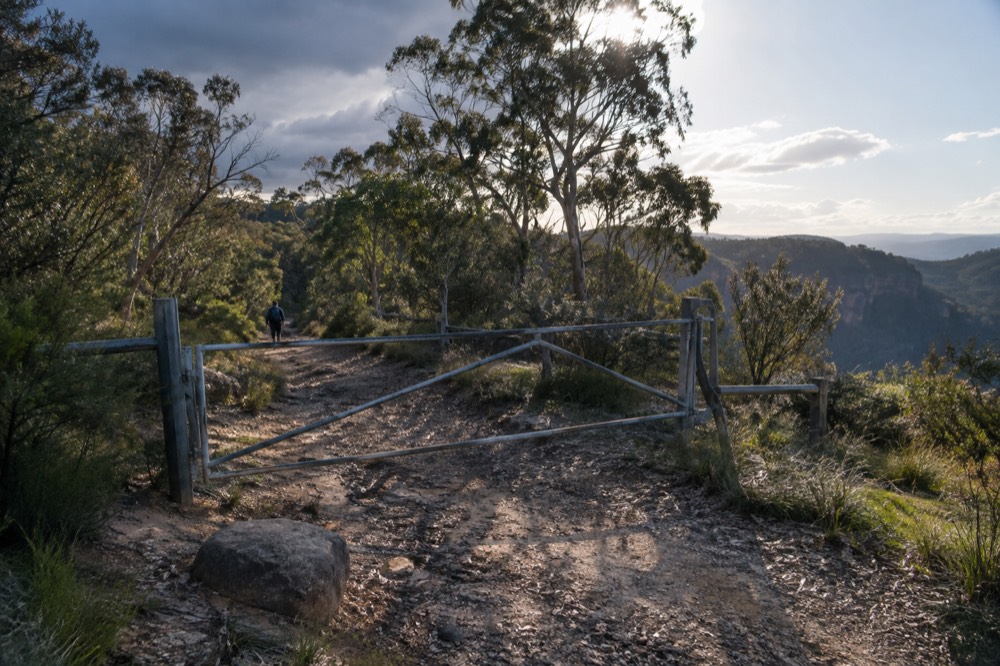
Blue Mountains National Park is free to enter outside the Glenbrook area, but track and road closures run into late 2026: Jenolan Karst Conservation Reserve is closed until 31 December 2026, Mount Hay Road until around 17 December 2026, Blue Pool track until late November 2026, and Fern Bower track partially into October 2026. Read the National Parks alerts pages the morning you travel. Jenolan Karst Conservation Reserve is closed until 31 December 2026, Mount Hay Road is shut for upgrades until around 17 December 2026, the Blue Pool track is closed until late November 2026, and Fern Bower track is partially closed into October 2026. None of these block Echo Point or the Prince Henry Cliff walk, but they do affect longer walking plans and any itinerary that assumes Jenolan Caves is open. National Parks publishes the current park entry fees, including the $8 Glenbrook charge, and its alerts pages carry the live closure list you should read the morning you travel.
Two more practical warnings. The cliff edges in this park are unfenced in places and the drops are vertical; the lookouts themselves are safe, the shortcuts are not. And mobile coverage in the valley floor is patchy, so download an offline map before you leave Katoomba town if you plan to walk beyond the surfaced tracks.
Is a Guided Tour Better Than Doing Katoomba Yourself?
Doing it yourself is cheaper and gives you the timetable; the lookouts are free. A guided tour is better when you want a guide who knows which lookout is in shadow at which hour, the driving removed, or several stops stitched into one day. With one day and no car, it is often the difference between three lookouts and one. The train gets you to Katoomba comfortably and the lookouts are free, so the DIY floor is genuinely low. What a tour adds is a guide who knows which lookout is in shadow at which hour, a vehicle that reaches Govetts Leap and Leura without the train's fixed stops, and, on the all-inclusive options, lunch and entry handled. For travellers with one day in the mountains and no car, the guided day is often the difference between three lookouts and one, and that gap is worth paying for.
The related tour on this page is the all-inclusive option, and it is the one we would point most first-time visitors toward:
It runs about 10 hours from Sydney with a local guide, covers the headline stops, and removes every transport decision from your day. Travellers who prefer a slower pace, or who want to add wineries or wildlife to the same loop, sometimes prefer a wider route:
That one runs about 11 hours and pairs the mountains' waterfalls with wildlife stops and a winery, which suits a birthday-day or a last-day-in-Australia brief better than a strict lookout crawl. Whichever way you go, book Blue Mountains day tours at least a few days ahead for weekends and school holidays; the small-group options in particular sell out.
If you are still weighing the whole region, these three picks are the ones our readers compare most often for a big day out of Sydney:
The Blue Mountains all-inclusive is the mountains pick; the Opera House tour and the BridgeClimb are the two Sydney experiences most visitors pair with it across a longer stay.
Common Questions About Katoomba and the Three Sisters
Can you see the Three Sisters for free?
Yes. Echo Point lookout is free, open at all hours, and is the classic view of the formation. Blue Mountains National Park charges no entry fee outside the Glenbrook area, so the only cost of a DIY visit is the train fare to Katoomba, from $7.46 each way off-peak.
How far is Katoomba from Sydney?
Katoomba sits in the Blue Mountains, roughly two hours west of central Sydney by rail. The train from Central takes about two hours with no transfers, and the drive takes 90 minutes to two hours depending on traffic and whether you take the M4 or the Bells Line of Road.
Can you climb the Three Sisters?
The old Giant Stairway route descends the cliff beside the formation, but the pillars themselves are a protected cultural site and not a climbing objective. The Honeymoon Bridge that once linked the first sister to the lookout has been closed for years. View them from Echo Point or the cliff walk.
Is one day enough for Katoomba?
One day covers Echo Point, a cliff-top walk and Scenic World comfortably if you take a morning train. It does not cover Wentworth Falls, Blackheath or Govetts Leap well; those need a second day or a car-based tour. If you only have one day, stay in Katoomba and resist the urge to race along the whole ridge.
Do you need a car in Katoomba?
No. The train, the town, Echo Point and the Prince Henry Cliff walk are all workable on foot and by the local bus. A car helps for Govetts Leap, Wentworth Falls and lookouts further afield, and it is the better choice for a weekend stay. For a single day, the train is simpler.
What is the best time of day to see the Three Sisters?
Morning, when the sun is behind the viewer and the valley haze has not built up. Late afternoon also works and is warmer in winter, but on hot days the valley can wash out by mid-afternoon. Sunrise from nearby lookouts is the photographers' window, and it needs a car or an overnight stay.
For everything the ridge offers beyond this one town, start with the Blue Mountains day trip guide, or see the wider set of day trips from Sydney by train. This page is part of the day-trip coverage at Sydney Travel Guide.