Museum of Contemporary Art Australia: What to Expect at Sydney's Waterfront Gallery
The Museum of Contemporary Art Australia sits on the western edge of Circular Quay, wedged between The Rocks and the water, and it is one of the few major Australian museums dedicated entirely to living artists. This guide covers how to get there, what a visit costs, and how to build a day around it.
Short answer
The MCA Australia stands at Circular Quay on Sydney Harbour, a short walk from The Rocks and the ferry wharves. Sydney ferries charge a flat $7.35 adult fare for trips under 9 km and $9.20 beyond that, with a $9.65 Opal cap on Fridays, weekends and public holidays, so reaching it by public transport is cheap and simple.
Museum of Contemporary Art Australia: What to Expect at Sydney's Waterfront Gallery
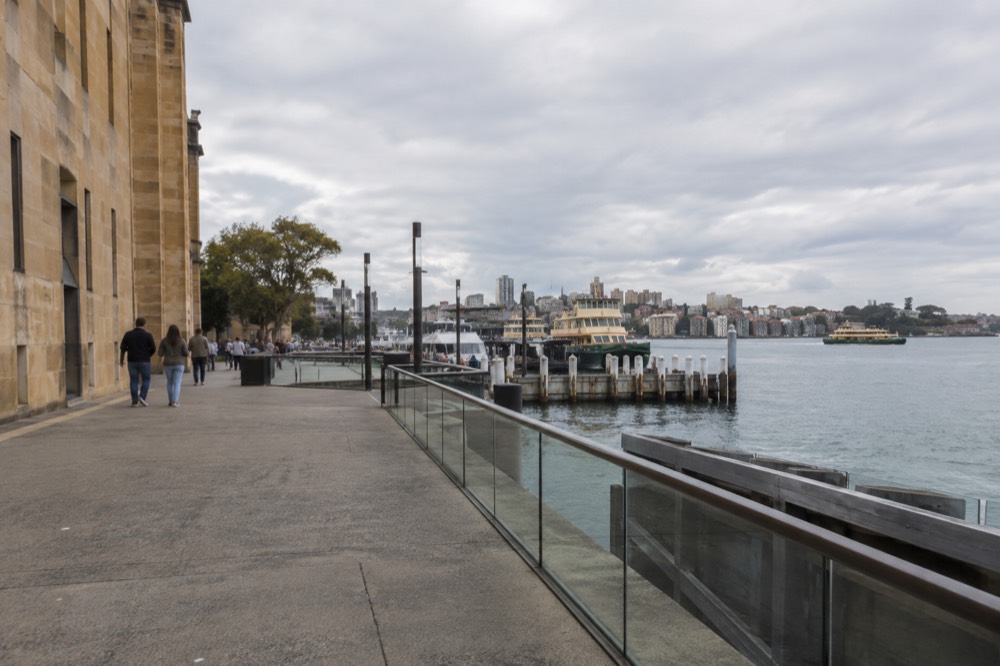
Sydney's art scene has a geographic centre of gravity, and it is the western side of Circular Quay. The Museum of Contemporary Art Australia, usually shortened to the MCA, occupies a prime strip of that foreshore: an art deco building that started life as a maritime services headquarters, later repurposed as a gallery, with a modern wing added on the water. It is the only major public museum in the country devoted specifically to contemporary art by living artists, with a particular focus on Australian and Aboriginal and Torres Strait Islander work.
That position matters for a visitor. The MCA is not a destination you travel across the city for and then leave. It sits inside the densest cluster of Sydney's walkable attractions: The Rocks to the south, the ferry wharves immediately east, the Sydney Opera House a 15 minute stroll around the cove, and the Royal Botanic Garden beyond that. This Sydney Travel Guide page covers the museum itself, then the practical layer around it: transport, costs, timing and the surrounding neighbourhood.
What Is the Museum of Contemporary Art Australia?
The MCA is Sydney's public museum dedicated to contemporary art, meaning work by living artists rather than historical collections. It collects and exhibits Australian and Aboriginal and Torres Strait Islander art alongside rotating international shows, and its building sits directly on the harbour at Circular Quay, on the edge of The Rocks. Most visitors spend between one and three hours inside.
The museum's identity is narrower and sharper than a general art museum. Where the Art Gallery of New South Wales spreads across centuries and continents, the MCA concentrates on art being made now, and on artists whose work speaks to current Australian life. Aboriginal and Torres Strait Islander artists hold a significant place in the collection and the exhibition program, which is one of the reasons the museum carries "Australia" in its name rather than "Sydney".
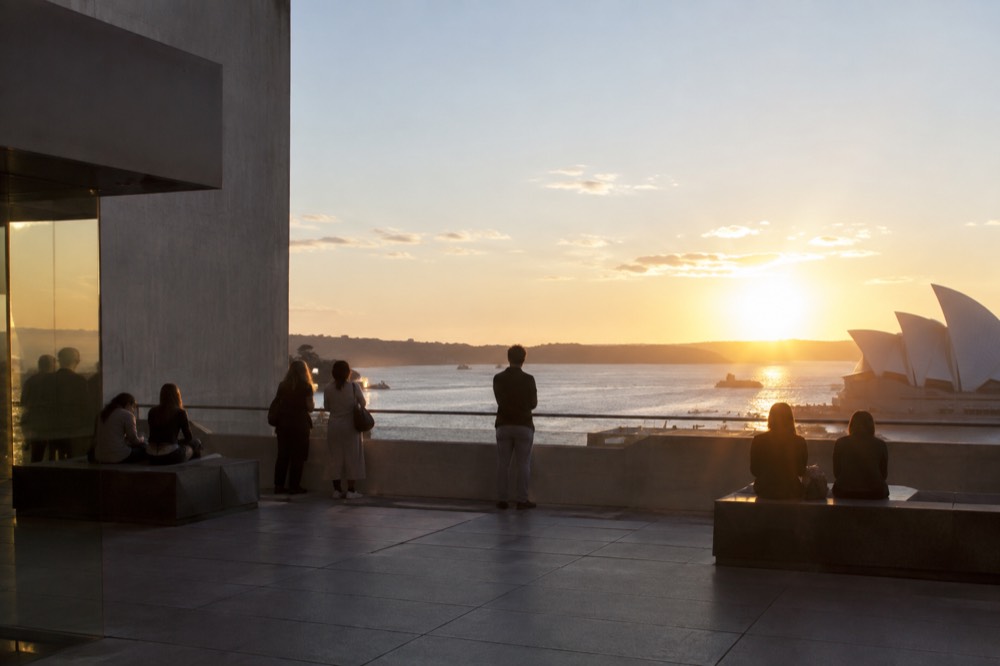
The building rewards a moment of attention before you go in. The older section is an art deco structure built for the Maritime Services Board, and the contemporary wing, with its rooftop sculpture terrace and harbour-facing windows, was added later and reoriented the museum toward the water. The contrast between the two halves is part of the experience: heavy stone civic architecture giving way to glass and light.
Practical details, including opening hours, current exhibitions and any ticketed shows, change often enough that the museum's own visit page is the reliable source. General planning advice in this guide sticks to what does not move: the location, the transport, the neighbourhood and the costs of getting there. For a broader look at the harbour precinct the museum anchors, see our Circular Quay visitor guide, and for the colonial-era laneways just behind it, The Rocks walking guide.
Where Is the MCA and How Do You Get There?
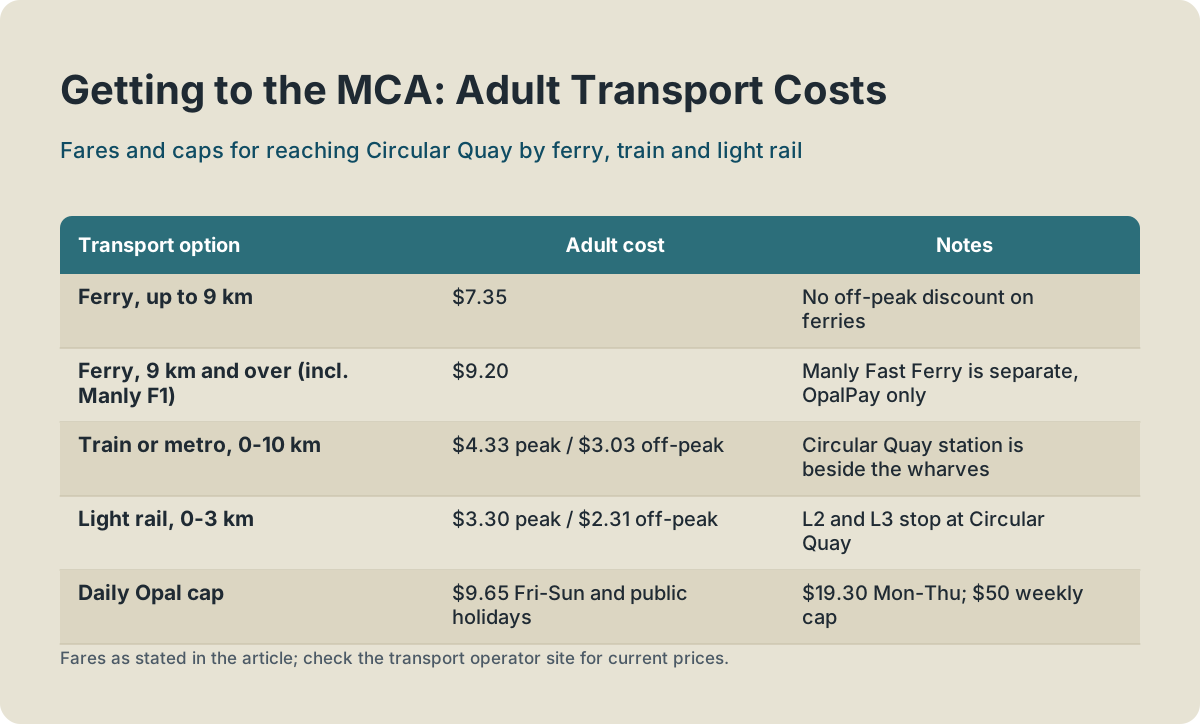
The museum sits at the western end of Circular Quay, roughly 200 metres from the ferry wharves and a two minute walk from the quay's train station and light rail stop. Ferries, trains, buses and light rail all converge on the same point, so almost any public transport route in Sydney delivers you within a short walk. An adult ferry fare under 9 km is $7.35, and the daily Opal cap is $9.65 on Fridays, weekends and public holidays.
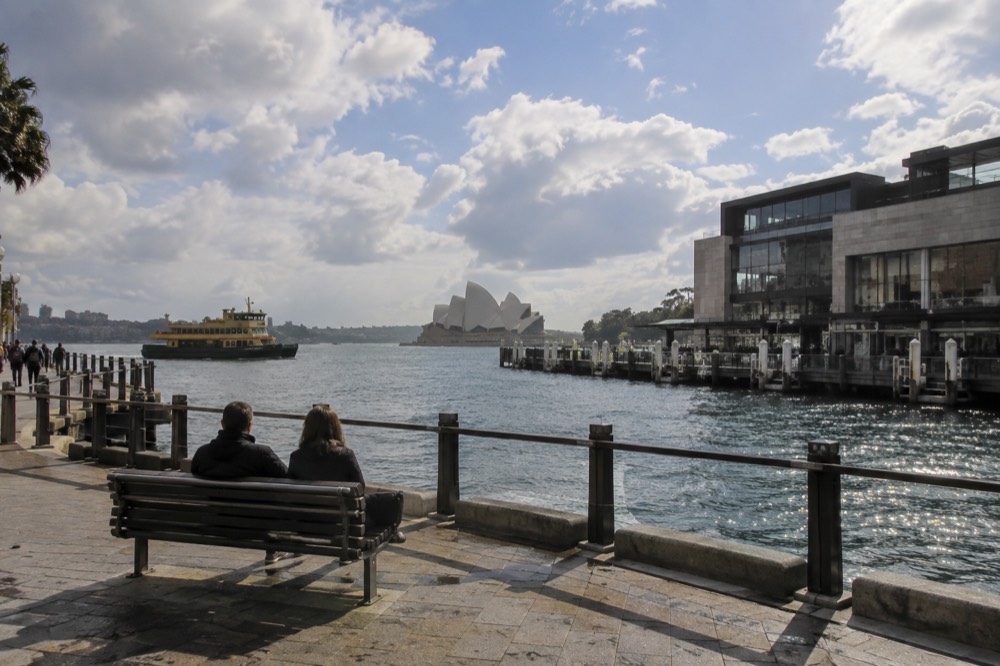
Arriving by water is the best version of this trip. Sydney's public ferries run routes F1 to F10 from Circular Quay, Opal is accepted with full benefits, and the approach to the quay gives you the Opera House, the Harbour Bridge and the MCA's stone facade in one sweeping arrival. Fares are distance-banded: $7.35 for an adult trip up to 9 km and $9.20 beyond, with no off-peak discount on ferries. The full fare and cap structure is published by Transport for NSW on its adult fares page, and the numbers are reset by an annual fare determination, so treat them as the current fare year rather than permanent prices.
One trap worth knowing: the privately operated Manly Fast Ferry accepts Opal cards through OpalPay, but its fares differ from the public ferries and the Opal caps and transfer discounts do not apply. The public F1 Manly ferry is the one that behaves like normal Sydney transport. Our Sydney ferries guide covers the routes in detail.
| Transport option | Adult cost | Notes |
|---|---|---|
| Ferry, up to 9 km | $7.35 | No off-peak discount on ferries |
| Ferry, 9 km and over (incl. Manly F1) | $9.20 | Manly Fast Ferry is separate, OpalPay only |
| Train or metro, 0-10 km | $4.33 peak / $3.03 off-peak | Circular Quay station is beside the wharves |
| Light rail, 0-3 km | $3.30 peak / $2.31 off-peak | L2 and L3 stop at Circular Quay |
| Daily Opal cap | $9.65 Fri-Sun and public holidays | $19.30 Mon-Thu; $50 weekly cap |
A 30 percent off-peak discount applies on trains, metro, buses and light rail on Fridays, weekends, public holidays and outside peak times, which makes a weekend visit the cheaper transit day. Contactless credit and debit cards are charged exactly the same as an Adult Opal card and earn the same caps, so there is no need to buy a card for a short stay. Tap off when you leave, or you are charged the default maximum fare.
If you are pairing the museum with a harbour outing, the sightseeing options cluster at the same wharves. A harbour sightseeing cruise from Circular Quay runs about 90 minutes and works well as the bookend to a gallery morning, with the quay's own attractions covered in our Sydney harbour cruises comparison.
What Does a Visit Cost, and Is an Attractions Pass Worth It?
Admission arrangements at the MCA vary by exhibition, with the museum's own site the authority on what is free and what is ticketed at any moment, so check before you go rather than budgeting from a third-party figure. If you are building a multi-attraction day, a bundled pass can undercut buying tickets one by one: the four-attraction combo covering the aquarium, the Sydney Tower Eye, WILD LIFE and Madame Tussauds starts from US$35.79.
The honest budgeting approach for this museum is to plan the costs around it, not inside it. Sydney's paid attractions are concentrated within a kilometre of the MCA's front door, and that is where the money goes. The Sydney Tower Eye, for example, charges $39 for an adult ticket bought on the day but from $29 in advance, and the operator states plainly that pricing fluctuates with demand. Taronga Zoo charges $57 at the gate but from $51.30 online, a roughly 10 percent saving at every tier including family tickets.
| Attraction near Circular Quay | Gate / on-the-day | Advance / online from |
|---|---|---|
| Sydney Tower Eye, adult | $39.00 | $29.00 |
| Sydney Tower Eye, child | $29.00 | $19.00 |
| Taronga Zoo, adult | $57.00 | $51.30 |
| Taronga Zoo, child 4-15 | $33.00 | $29.70 |
| Royal Botanic Garden Sydney | free | free |
| Art Gallery of New South Wales, general entry | free | free |
Note the pattern in that table: several of Sydney's headline cultural institutions cost nothing to enter. The Art Gallery of New South Wales is free for general entry and stays open until 10pm on Wednesdays, and the Australian Museum on the other side of Hyde Park is also free for general entry. The Royal Botanic Garden, which begins a short walk east of the Opera House, is free and opens at 7am daily. A culture-heavy Sydney day can be remarkably cheap if you mix the free institutions with one or two paid viewpoints.
The four-attraction pass is the arithmetic play here. Against the Tower Eye's $39 on-the-day adult price, a pass from US$35.79 that also includes SEA LIFE Sydney Aquarium, WILD LIFE Sydney Zoo and Madame Tussauds is cheaper than two single tickets bought at the door. It suits families and rainy-day itineraries more than a purist art trip, and our Sydney attraction passes compared page runs the numbers across pass types.
Before you commit to any pass, do one piece of arithmetic against your own plan. Count the attractions you would genuinely visit, price each one at the advance rate rather than the gate rate, and compare the total against the pass. If the pass wins, book it early; if it does not, the free institutions around Circular Quay will carry a culture day on their own.
How Long Should You Spend, and What Else Is Within Walking Distance?
Plan on one to three hours inside the museum, depending on how many floors and temporary shows are open, then treat the rest of the day as the reason you came to this part of town. The Rocks begins at the gallery's southern wall, the ferry wharves are two minutes east, the Queen Victoria Building is a 10 minute walk south, and the Opera House is about 15 minutes around the cove.
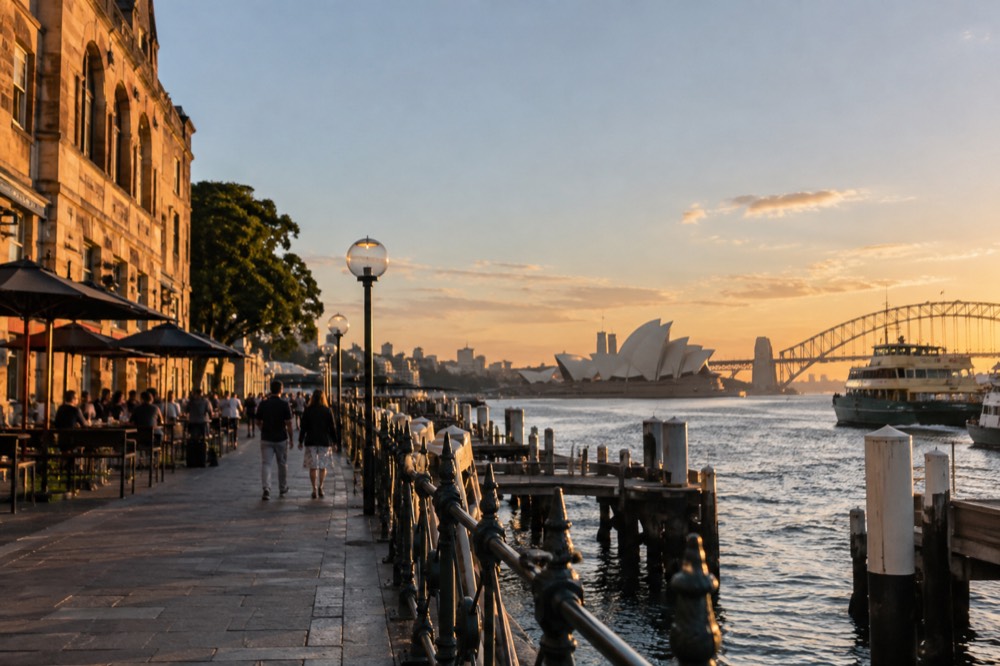
The museum's footprint is compact. It is a vertical building rather than a sprawling campus, so a full walk-through does not consume a whole day, and the rooftop terrace doubles as one of the quieter harbour viewpoints in the area. That makes it a natural half of a day rather than a whole one. A common and sensible shape is a morning in the gallery, lunch in The Rocks, and an afternoon on the water or up a tower.
The neighbourhood does the rest of the work. West and south of the museum, The Rocks is Sydney's oldest surviving urban streetscape, and its weekend markets, historic pubs and laneways fill an afternoon without any further planning; our The Rocks guide maps it. South of that, the Queen Victoria Building is a restored 19th century shopping arcade worth walking through even if you buy nothing. East, the Opera House and the harbour walk to Woolloomooloo stretch the day out along the water.
For an elevated finish, the Sydney Tower Eye observation deck sits about 15 minutes' walk inland, with the same advance-versus-on-the-day pricing noted above and a Skywalk option for anyone who wants the open-air version. Book the deck ahead if you want the cheaper rate, and read our Sydney Tower Eye guide for the timing logic, since the tower's hours shift with season and events.
When Is the Best Time to Visit?
The most pleasant months to combine the museum with its harbour setting are shoulder season: April, May, September and October, when mean daily maximums sit between 19.5 and 22.5 degrees Celsius and rain days drop below nine a month. August is Sydney's clearest month on the long-run average, with 13.4 mean clear days, while February, in the middle of peak season, is statistically its cloudiest at 5.3.
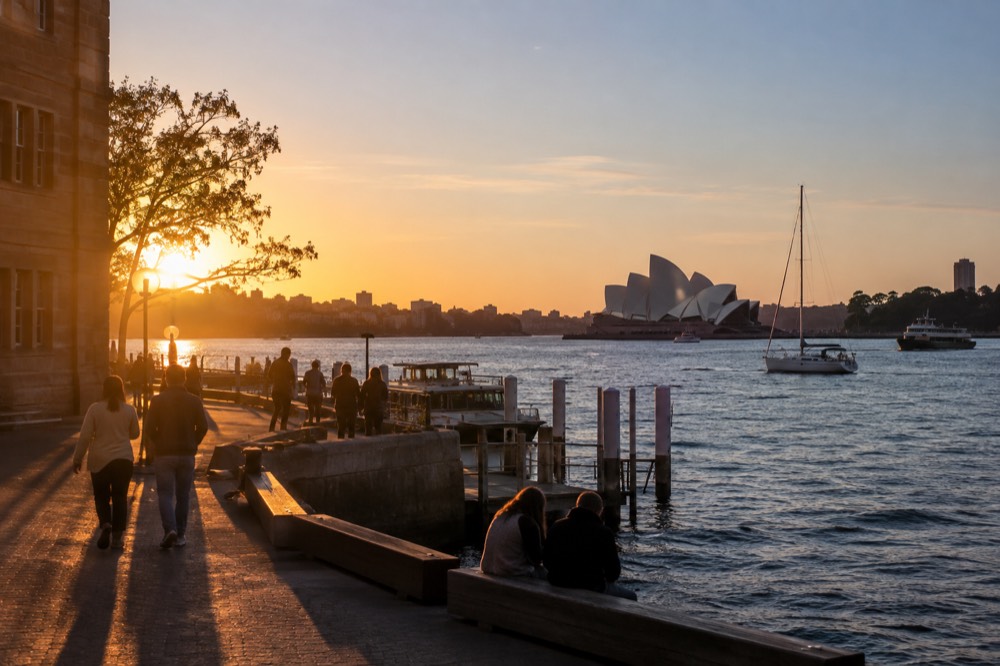
This is where Sydney's climate data undercuts the usual visitor assumption. People book December and January expecting endless sunshine, but the Bureau of Meteorology's long-term normals for Sydney tell a different story: June is the wettest month on average at 133.1 mm, and February has the fewest clear days of any month, while the late-winter months of July and August are among the clearest. The BOM climate averages for Sydney publish the full table, and these are long-run averages, not forecasts.
| Month | Mean max °C | Mean min °C | Mean rainfall mm | Mean clear days |
|---|---|---|---|---|
| January | 26.0 | 18.8 | 101.2 | 6.8 |
| February | 25.8 | 18.9 | 119.3 | 5.3 |
| April | 22.5 | 14.8 | 126.5 | 9.1 |
| June | 17.0 | 9.3 | 133.1 | 9.1 |
| August | 17.9 | 9.0 | 80.2 | 13.4 |
| October | 22.2 | 13.6 | 76.7 | 8.1 |
For a museum specifically, weather matters less than for a beach itinerary, which is the second argument for the MCA: it is one of the best rainy-day anchors in the city, and Sydney averages about 99.5 rain days a year, roughly one day in 3.7. Our Sydney rainy day itinerary builds a full wet-weather day around indoor stops like this one.
Timing within the week matters too. Weekends bring markets to The Rocks and crowds to the quay, while weekday mornings are the quietest window for the gallery and the surrounding laneways. Public holidays carry a bonus: the Opal daily cap drops to $9.65, making a holiday the cheapest day to travel widely, though attractions will be busier.
How Do You Build a Full Day Around the MCA?
A reliable shape is gallery in the morning, The Rocks for lunch, and the harbour in the afternoon: ferry, cruise or tower, in that order of cost. With the $9.65 weekend Opal cap, a ferry leg costs almost nothing once you have made one trip, and the free-entry institutions nearby let you spend on one paid viewpoint instead of four. Budget three to five hours for the museum and neighbourhood, plus two more for the water.
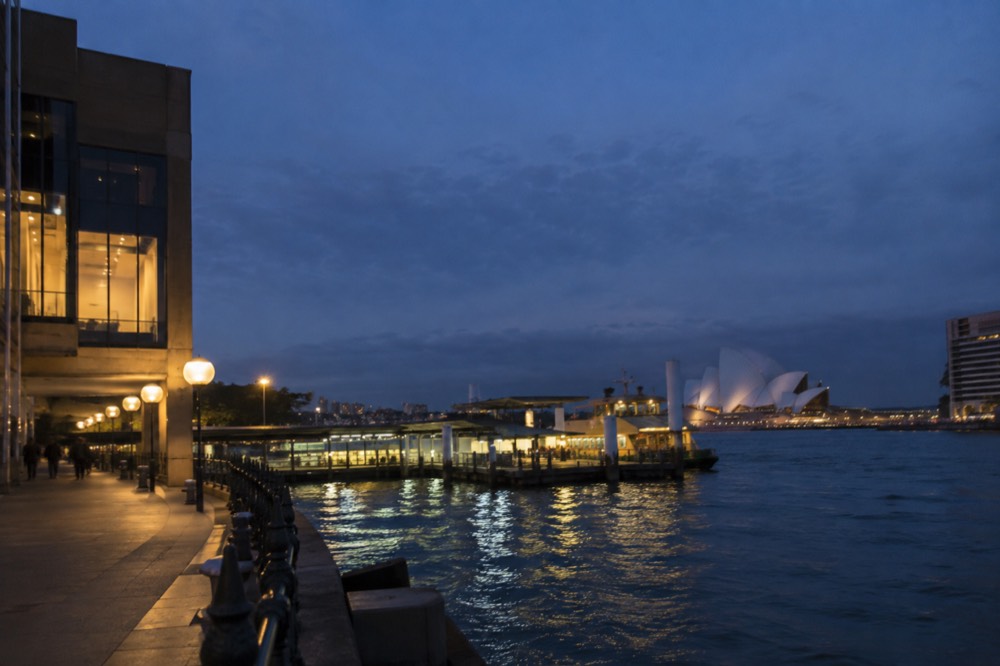
Start early. The quay is at its calmest before mid-morning, and the light on the water is at its best, which matters if photography is part of your plan; our Sydney photography spots page ranks the foreshore angles. Work the museum first while your attention is fresh, then let the afternoon drift: laneways, a pub with harbour views, and one paid attraction.
The afternoon fork has three branches. The cheapest is a ferry ride: tap on at Circular Quay, ride to Manly or Watsons Bay and back, and the cap absorbs most of the cost on a Friday or weekend. The middle option is the sightseeing cruise, which keeps you on the water with commentary instead of a destination. The most expensive is the tower or a bridge-adjacent viewpoint, and our Sydney Harbour Bridge guide covers the free pedestrian path if you would rather spend nothing at all.
Evenings around the quay are their own category. The nightlife options near Circular Quay run from the Opera House's staged programme to small bars in The Rocks, and in late autumn the Vivid light installations transform this exact stretch of foreshore. If your trip falls in the festival window, plan the gallery day and the light walk for the same evening and save yourself a second trip to the quay.
One last planning note: keep the museum's own visit page as your single source for hours, exhibition tickets and any closure notices, and treat everything in this guide as the stable layer underneath it, transport fares, climate averages and neighbourhood logistics. Sydney's cultural venues adjust their schedules seasonally, and a five minute check before you leave saves a wasted trip.
Common Questions About the Museum of Contemporary Art Australia
What is the Museum of Contemporary Art Australia?
It is Sydney's public museum dedicated to contemporary art, focused on living artists with significant holdings and exhibitions of Australian and Aboriginal and Torres Strait Islander work. It occupies a former maritime services building with a modern harbour-facing wing at the western end of Circular Quay.
Where is the MCA and how do I get there?
It sits at the western end of Circular Quay, about 200 metres from the ferry wharves and next to The Rocks. Trains and light rail stop at Circular Quay, ferries dock at the same wharves, and an adult ferry trip under 9 km costs $7.35 with a $9.65 daily Opal cap on Fridays, weekends and public holidays.
How long should I spend at the MCA?
Most visitors spend one to three hours inside, depending on which floors and temporary shows are open. The building is compact and vertical, so it pairs naturally with a half-day plan: gallery in the morning, The Rocks for lunch, and the harbour in the afternoon.
What else is within walking distance of the MCA?
The Rocks begins at the gallery's southern wall, the ferry wharves are two minutes east, the Queen Victoria Building is about 10 minutes south, and the Sydney Opera House is roughly a 15 minute walk around the cove. The Royal Botanic Garden, which is free to enter, begins beyond the Opera House.
When is the best time to visit the MCA?
April, May, September and October offer the best mix of mild temperatures and manageable crowds, and August is Sydney's clearest month on the long-run average with 13.4 mean clear days. As an indoor attraction the museum also works well on wet days, and Sydney averages about 99.5 rain days a year.
Is an attractions pass worth it around Circular Quay?
It can be. The four-attraction pass covering SEA LIFE Sydney Aquarium, the Sydney Tower Eye, WILD LIFE and Madame Tussauds starts from US$35.79, which is less than two on-the-day adult Tower Eye tickets at $39 each. It suits families and multi-stop days more than a single-museum visit.