Woolloomooloo: Sydney's Finger Wharf Neighbourhood on the Harbour
Woolloomooloo is the small horseshoe bay east of Sydney's CBD, framed by a long timber wharf, the Royal Botanic Garden's green edge and the terrace streets that climb toward Potts Point. It is a ten-minute walk from the city centre yet feels like a separate village, and it rewards travellers who slow down for a morning rather than racing past on the way to somewhere bigger.
Short answer
Woolloomooloo is a small harbourside neighbourhood east of Sydney's CBD, best known for its historic Finger Wharf, its working marina and its quiet position beside the Royal Botanic Garden, which is free to enter and open daily from 7am to sunset. Most visitors spend a relaxed half-day here, often paired with The Rocks or a harbour cruise.
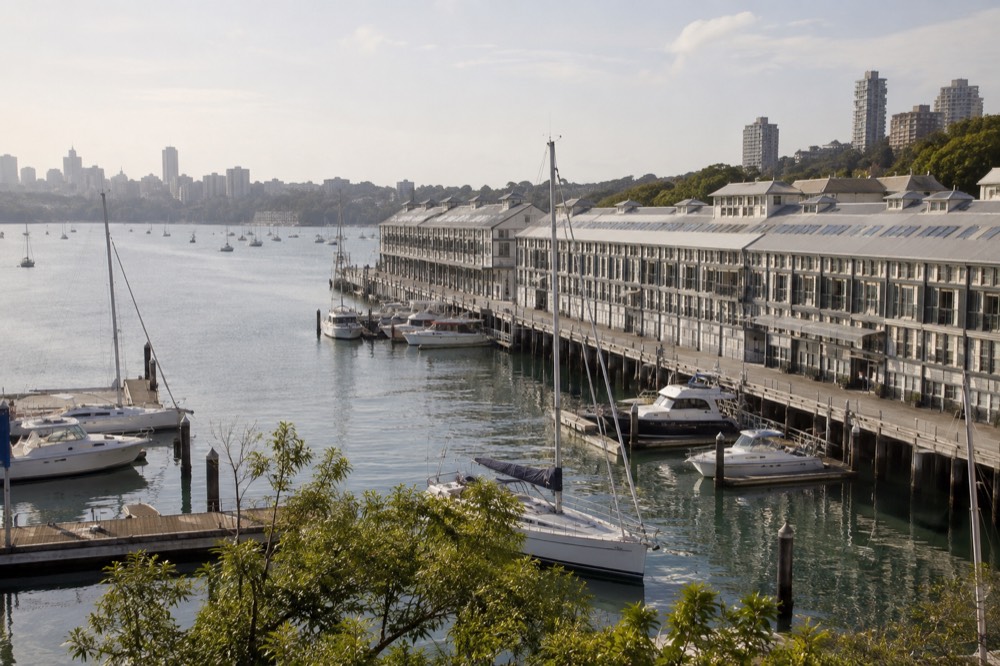
Sydney's most photographed buildings cluster around Circular Quay, but the city's most quietly interesting waterfront sits one bay east. Woolloomooloo wraps around a small horseshoe of harbour water, its long timber wharf reaching out over the bay like a pier from another century, because in a literal sense it is one. The neighbourhood that surrounds it is compact, residential and low-rise, a contrast with the towers a few hundred metres away, and it sits directly below the garden slopes that lead up to the Art Gallery of New South Wales. This page covers what Woolloomooloo actually offers a visitor: how to reach it, what to do once you are there, where to eat, when to come, and which bookable experiences pair well with a visit, all grounded in verified local facts rather than recycled brochure copy. For the wider city picture, start with the Sydney Travel Guide hub and work outward.
Where Is Woolloomooloo and What Is It Known For?
Woolloomooloo is a small harbourside neighbourhood on the eastern edge of the Sydney CBD, wrapping around a sheltered bay between the Royal Botanic Garden and the ridge of Potts Point. It is best known for its long historic Finger Wharf, one of the largest timber-piled wharf structures of its kind, which today houses a hotel, apartments, restaurants and a working marina. Most travellers reach it on foot from the city in roughly fifteen minutes.
The name itself is one of Sydney's Aboriginal place names, part of the heritage of the Gadigal people of the Eora Nation, whose land the whole city occupies. That matters here more than in most neighbourhoods, because Woolloomooloo's story runs from the Gadigal shoreline through colonial boatbuilding, decades as a naval and dockworkers' quarter, the famous mid-century protests that helped save the wharf from demolition, and finally the redevelopment that turned the structure into the hotel-and-marina landmark it is today. It is a place where Sydney's layers sit visible within a few hundred metres of each other.
The bay's geography explains its character. The water is calm and shallow, the moorings hold everything from naval vessels to small yachts, and the foreshore walk connects westward into the Royal Botanic Garden, which is free to enter and open daily from 7am to sunset, according to the Botanic Gardens of Sydney. That free garden access is one of the least-known facts about this part of town: visitors routinely assume the harbourside garden is ticketed, and it is not. The eastern side climbs steeply through terrace-lined streets toward Potts Point and Kings Cross, two neighbourhoods with their own distinct food and nightlife scenes, covered in our Kings Cross area guide and Potts Point guide.
What Are the Best Things to Do in and Around Woolloomooloo?
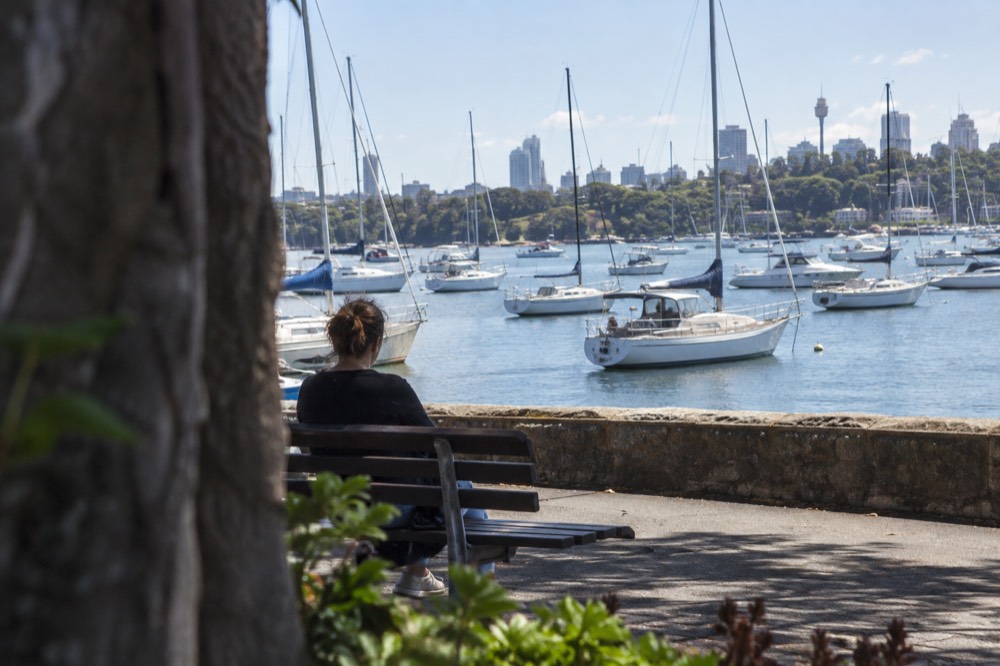
The core of a Woolloomooloo visit is the waterfront itself: a slow loop of the Finger Wharf and the bay's foreshore, then a walk west into the free Royal Botanic Garden toward the Sydney Opera House. Add the Art Gallery of New South Wales, free to enter and open until 10pm on Wednesdays, and a meal at one of the wharf-side eateries, and you have a full and inexpensive half-day.
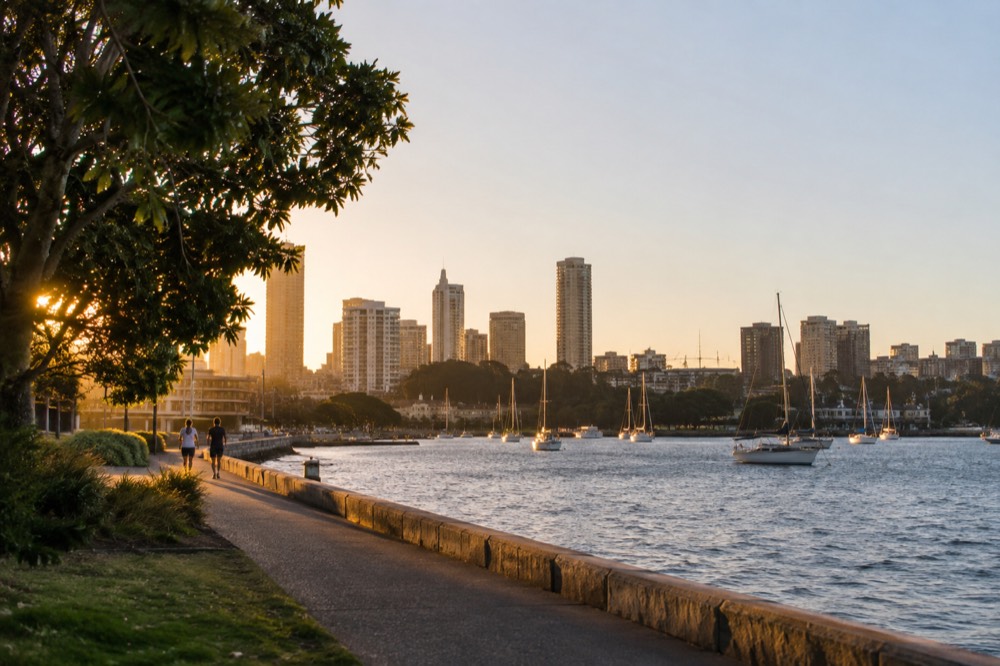
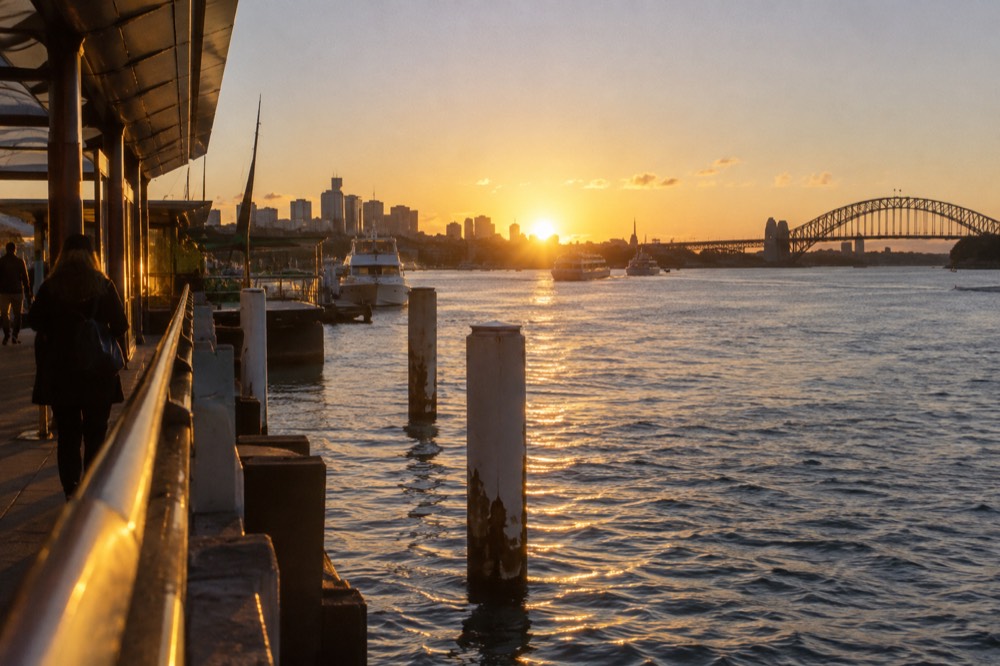
Start on the water's edge. The wharf walk gives you the marina, the naval presence that still defines part of the bay, and uninterrupted views back across the harbour toward the city skyline and the Harbour Bridge. Photographers rate this stretch among the city's better sunrise locations, since the bay faces the light, and our Sydney sunrise and sunset spots guide places it in context with other vantage points. The foreshore path then leads west along Farm Cove, the curved inlet in front of the Royal Botanic Garden, all the way to the Opera House forecourt. The garden's own visitor page confirms entry is free and hours run from 7am to sunset, with closing time shifting through the year, so in summer you get a long evening and in winter you should finish the walk by late afternoon.
The Art Gallery of New South Wales sits at the top of the garden's eastern slope, a short climb from the bay. Its visitor information confirms free general entry, daily hours of 10am to 5pm, and a late night every Wednesday until 10pm, which makes it one of the few major Sydney attractions usable after dinner. Some temporary exhibitions are ticketed separately, so check what is on before you plan a visit. The Australian Museum, also free for general entry and open 10am to 5pm daily except Christmas Day, lies a little further west opposite Hyde Park, and pairs naturally with a Woolloomooloo morning if the weather turns.
For travellers who want the neighbourhood's stories unpacked rather than simply walked, a guided option saves time and adds context. The Rocks, Sydney's oldest surviving streets, sit across the water, and a guided walk there covers the convict-era history that set the whole colonial city in motion. Food-focused travellers get more from Woolloomooloo and its neighbours with a local guide leading the tastings, and anyone wanting the harbour from the water can step onto a sightseeing cruise from the nearby quays.
Each of those three works as a half-day anchor, and all three depart from points within a short bus or ferry ride of Woolloomooloo. If you would rather stay on foot, the free-things-to-do angle is genuinely strong here: the garden, the gallery, the museum's general entry and the foreshore walk cost nothing at all, which our free things to do in Sydney guide breaks down across the whole city.
How Do You Get to Woolloomooloo Without a Car?
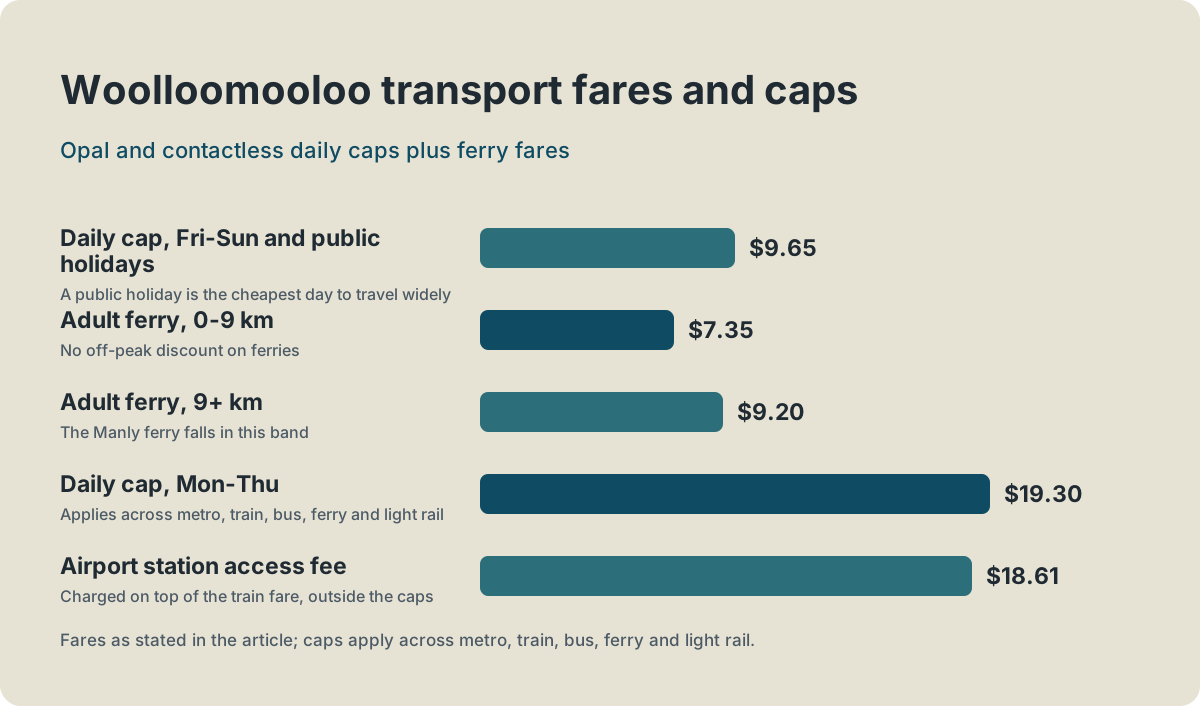
You walk, or you take a bus, and you pay with a contactless card or Opal card that is capped at $19.30 a day Monday to Thursday and $9.65 a day on Fridays, weekends and public holidays. Woolloomooloo has no train station of its own; the nearest stations sit in the CBD, and from there the neighbourhood is a downhill stroll of roughly fifteen minutes. Ferries depart from nearby Circular Quay, where an adult harbour ferry costs $7.35 for a trip under nine kilometres.
Sydney's public transport runs on distance-based fares with daily caps, and Transport for NSW's fare pages are the authoritative source for the numbers. The caps matter more than the individual fares for visitors: once you have spent the daily cap, further trips that day are free, and the cap is roughly halved on Fridays, weekends and public holidays. A contactless credit card, debit card or phone wallet is charged exactly the same as an Adult Opal card and receives every benefit, including the caps and the off-peak discount, so most short-stay visitors never need to buy a card at all. Our Opal card guide for visitors covers the details, and the getting around Sydney guide puts every mode in one place.
| Transport fact | Figure | Notes |
|---|---|---|
| Daily fare cap, Mon-Thu | $19.30 | Applies across metro, train, bus, ferry and light rail |
| Daily fare cap, Fri-Sun and public holidays | $9.65 | A public holiday is the cheapest day to travel widely |
| Weekly cap | $50 | The Opal week runs Monday to Sunday |
| Adult ferry, 0-9 km | $7.35 | No off-peak discount on ferries |
| Adult ferry, 9+ km | $9.20 | The Manly ferry falls in this band |
| Airport station access fee | $18.61 | Charged on top of the train fare, outside the caps |
Two cautions from the verified fare data are worth passing on. First, the airport station access fee sits outside the daily and weekly caps and carries its own separate weekly cap, so a train from the airport costs more than the fare table alone suggests. Second, the privately operated Manly Fast Ferry accepts the Opal card through OpalPay but charges different fares with no cap protection, which catches out visitors who assume their daily cap applies. The public ferries, by contrast, give you full Opal benefits, and the Sydney ferries guide explains the difference in full.
Where Should You Eat in Woolloomooloo?
Eat at the wharf. The Finger Wharf's ground level holds a cluster of restaurants and cafes looking directly over the marina, and the surrounding streets add cheap, unpretentious takeaway options that reflect the neighbourhood's working history. For a deeper dive into the area's food culture, a guided tasting tour with a local operator covers more ground than you would find alone, in about three and a half hours.
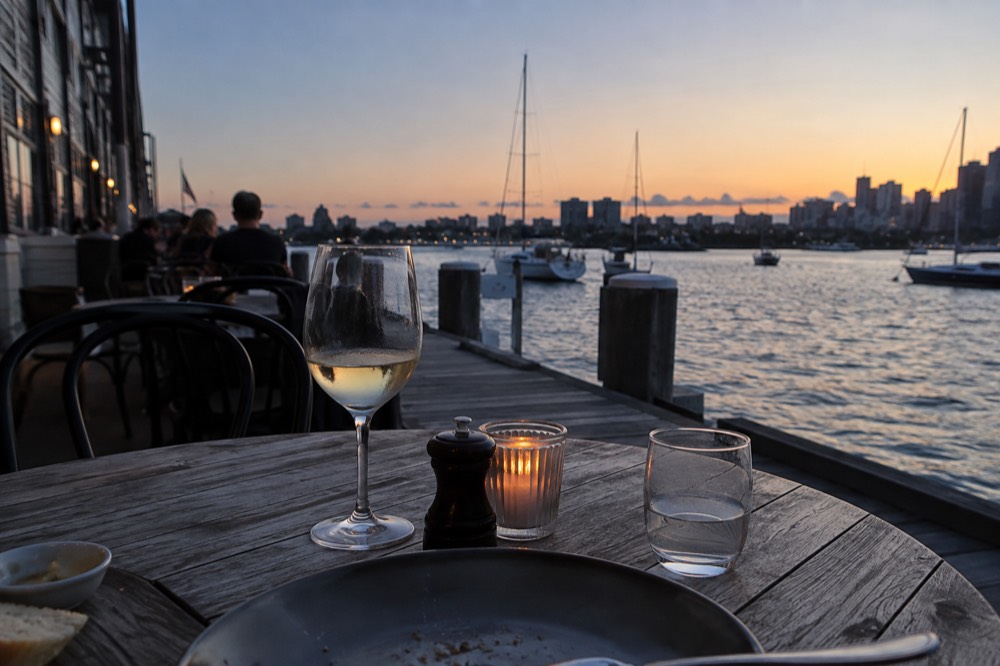
The wharf dining room is the headline experience: water-level tables, boats drifting past, and the odd naval vessel sharing the bay with superyachts, a contrast that is Woolloomooloo in a single view. Prices at the wharf sit at the premium end, which is what harbourside dining in Sydney generally costs, and our Sydney food guide and best restaurants in Sydney roundup place the area's options against the rest of the city. Away from the wharf, the streets climbing toward Potts Point and Darlinghurst carry a denser, cheaper mix of cafes and small restaurants, and the walk between the two is under ten minutes.
One Sydney institution belongs in any Woolloomooloo eating conversation: the pie cart that has served the bay's dockworkers, sailors and late-night crowds for generations. It operates from a small caravan on the waterfront, it is one of the city's most recognisable food landmarks, and the queue length tells you what locals think. For travellers who want a structured introduction to Sydney's food culture rather than a single stop, a guided tour does the route-finding and the ordering for you.
The six-tasting Secret Food Tours walk is the strongest option in this part of town, covering multiple venues with a guide who handles the ordering. It runs about three and a half hours, which pairs well with a morning at the garden or an afternoon at the gallery.
What Is the Best Time of Year to Visit Woolloomooloo?
Sydney's long-run averages favour the shoulder and winter months for clear skies: August is the city's clearest month with 13.4 mean clear days, while February, in the middle of peak season, is its cloudiest at 5.3. June is the wettest month at 133.1 mm of mean rainfall, wetter than any summer month. For a harbour walk with the best chance of blue sky, aim for August or September, though daylight saving from October extends the evenings.
Those numbers come from the Bureau of Meteorology's long-term normals for Sydney, and they upend the usual assumption that an Australian coastal city is sunniest in summer. Peak tourist season, December through February, delivers the warmest temperatures, with mean daily maxima of 25.3 to 26.0 °C, but also the cloudiest skies and heavy rain, with March the wettest of the warmer months at 131.6 mm on average. Winter, June through August, is cooler, with maxima of 16.4 to 17.9 °C and minima down to 8.1 °C, but the sky is more often clear, and the harbour light in August is famously crisp.
| Month | Mean max °C | Mean min °C | Mean rainfall mm | Mean clear days |
|---|---|---|---|---|
| Jan | 26.0 | 18.8 | 101.2 | 6.8 |
| Feb | 25.8 | 18.9 | 119.3 | 5.3 |
| Mar | 24.8 | 17.6 | 131.6 | 7.1 |
| Apr | 22.5 | 14.8 | 126.5 | 9.1 |
| May | 19.5 | 11.6 | 117.4 | 9.5 |
| Jun | 17.0 | 9.3 | 133.1 | 9.1 |
| Jul | 16.4 | 8.1 | 96.3 | 12.0 |
| Aug | 17.9 | 9.0 | 80.2 | 13.4 |
| Sep | 20.1 | 11.1 | 68.1 | 10.9 |
| Oct | 22.2 | 13.6 | 76.7 | 8.1 |
| Nov | 23.7 | 15.7 | 83.8 | 6.0 |
| Dec | 25.3 | 17.6 | 77.1 | 6.6 |
Two timing notes matter for planning. Daylight saving runs from early October to early April in NSW, so an October-to-March visit gives you long evenings for the foreshore walk, while a winter visit means finishing outdoor sightseeing by about 5pm. And whale season runs May to November along this coast, with the southward migration, when humpbacks travel closer to shore with calves, falling roughly August to November, so a winter or spring visit can combine a harbour morning with a whale-watching cruise. Our whale watching in Sydney guide and best time to visit Sydney page cover both angles in detail.
Is Woolloomooloo a Good Base for a Sydney Trip?
It is a good base for travellers who want a quiet, walkable, harbourside location within fifteen minutes of the CBD, and a less convenient one for anyone prioritising beach time or a train station at the door. There is no station in the suburb itself, but the walk to the city is short, buses run along the main road, and the free Royal Botanic Garden sits directly next door. Expect hotel pricing at the wharf to sit at the premium end of the city's range.
The trade-offs are honest ones. On the plus side: the wharf hotel occupies one of Sydney's most atmospheric buildings, the neighbourhood is quiet at night compared with Kings Cross one ridge over, and the garden, gallery and Opera House are all walkable without touching public transport. On the minus side: the nearest train stations are a fifteen-minute walk uphill on the return leg, Bondi and the eastern beaches require a bus change or a longer ride, and the immediate eating options thin out late at night outside the wharf itself. Our where to stay in Sydney guide compares Woolloomooloo against the CBD, The Rocks, Potts Point and Bondi on exactly these criteria.
| Base consideration | Woolloomooloo | Nearby alternative |
|---|---|---|
| Waterfront position | Direct, on a calm bay | The Rocks: harbour views, busier |
| Walk to the Opera House | Through the free Botanic Garden | CBD: about the same time, street route |
| Nightlife on the doorstep | Limited, quiet | Kings Cross: a short walk uphill |
| Nearest train station | None in the suburb | CBD stations about fifteen minutes on foot |
| Character | Village-scale, heritage, low-rise | Potts Point: denser, more cafes |
For first-time visitors weighing the whole city, our Sydney for first timers guide and the one day in Sydney itinerary both show how a Woolloomooloo base slots into a standard first visit, and the is Sydney expensive page sets realistic expectations for accommodation and food budgets.
Can You See Woolloomooloo from the Water?
Yes, and the water is arguably the best angle on it. Harbour sightseeing cruises and charter boats pass the bay's entrance regularly, showing the Finger Wharf's full length from the water, and the ferry network from Circular Quay connects Woolloomooloo's corner of the harbour with Manly, Taronga Zoo and the Parramatta River. A basic sightseeing cruise costs from US$28.53 and runs about ninety minutes.
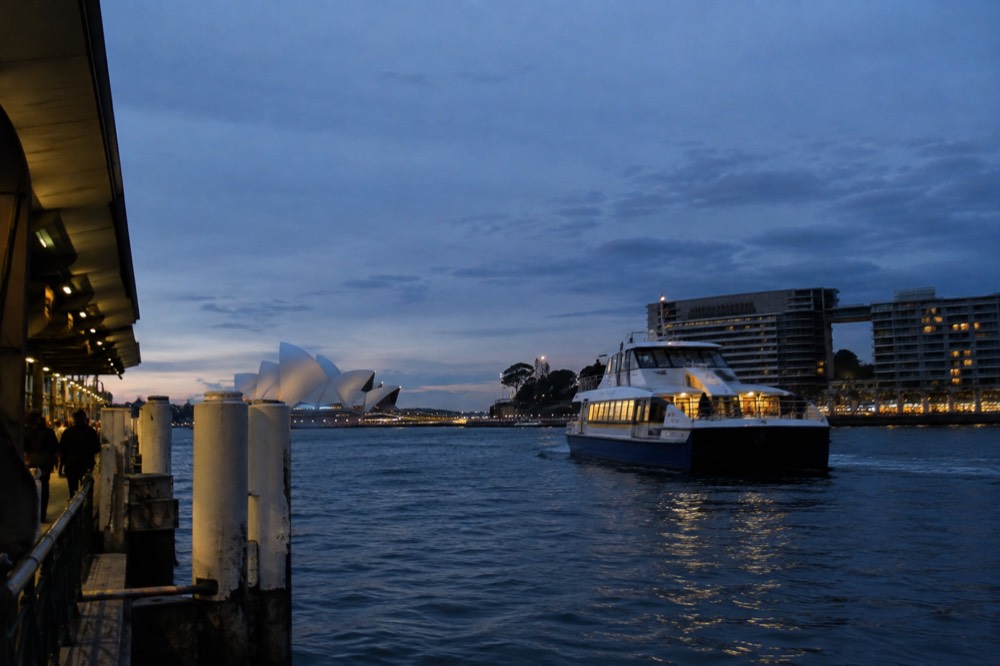
Seeing the wharf from a boat makes its scale legible in a way the street does not: the structure stretches hundreds of metres over the water, timber piles visible at the waterline, the hotel and marina stacked along its spine. Sightseeing cruises departing from the nearby quays pass close enough for photographs, and the morning and afternoon departures both work with a Woolloomooloo morning, since the boarding points sit within an easy walk or a short bus ride.
If you would rather be on the water under your own effort, the harbour also supports kayaking, and our kayaking in Sydney guide covers where guided paddles run, including a sunrise option that passes this stretch of the harbour. For a slower, food-oriented evening on the water, the Sydney harbour cruises guide compares sightseeing, dining and sailing options across every price point.
What Does a Good Half-day in Woolloomooloo Look Like?
A strong half-day runs like this: start early at the wharf for the harbour light, walk the foreshore west through the Royal Botanic Garden to the Opera House, loop back up through the Art Gallery of New South Wales, then descend to the bay for a late lunch at the wharf. It costs almost nothing until you eat, needs no transport, and finishes within about four hours at a relaxed pace.
The order matters more than the content. The garden is at its best in the morning, before the tour groups thicken along the Opera House approach, and the Foreshore Walk through Farm Cove is flat, shaded in stretches and free. The gallery climb is short from the garden's eastern side, and the free general entry means you can spend twenty minutes or two hours without any sunk cost. Coming back down to the bay, the wharf restaurants take late lunch bookings, and the afternoon can end with coffee on the water or, on a Wednesday, with the gallery's late night until 10pm.
Travellers with more time can extend in three directions. West leads deeper into the CBD and The Rocks, where the convict-era lanes and the Harbour Bridge await; our The Rocks guide and Sydney Harbour Bridge page cover both. East climbs into Potts Point and Darlinghurst for cafes and bars. And the water itself offers the cruise and kayak options already covered, or a ferry connection onward to Manly, where the Manly ferry guide explains the timetable and the fare bands.
The Rocks guided walking tour is the single best pairing for this half-day, since it covers the colonial history that frames Woolloomooloo's own story, and its ninety-minute length leaves the rest of the day free.
How Does Woolloomooloo Fit Into a Wider Sydney Itinerary?
Treat it as a morning or an afternoon inside a one-to-three-day city visit, not as a destination on its own. Its position beside the free Royal Botanic Garden makes it a natural first stop on any eastern-side itinerary, and it connects by foot to the Opera House, by bus to Bondi and by ferry to the northern shore. Travellers on a tight schedule can fold it into a single well-ordered day without adding any transport cost.
The itinerary pages on this site make the sequencing easy. The one day in Sydney and two days in Sydney plans both route through the garden and the eastern harbour, and Woolloomooloo slots in as the lunch or coffee stop between the Opera House and the eastern suburbs. Longer visits, covered in the three days, four days and five days in Sydney itineraries, can give the neighbourhood a slower morning, pairing it with a gallery visit and an evening cruise. If rain interrupts, the gallery, the Australian Museum and the wharf's covered dining make this one of the better wet-weather corners of the city, and our Sydney rainy day itinerary lists the indoor options in order.
For a final look at the three experiences that pair best with this neighbourhood, from its colonial-history walk to its food tour and its harbour cruise, here they are together.
Common Questions About Woolloomooloo
Where is Woolloomooloo in Sydney?
Woolloomooloo is a small harbourside neighbourhood on the eastern edge of the Sydney CBD, wrapping around a sheltered bay between the Royal Botanic Garden and the ridge up to Potts Point. It is roughly a fifteen-minute walk from the city centre, with no train station of its own.
How do you pronounce Woolloomooloo?
It rhymes roughly with "furry-mooloo": wool-uh-muh-LOO. The name is one of Sydney's Aboriginal place names, part of the heritage of the Gadigal people of the Eora Nation, whose land the city occupies.
Is Woolloomooloo worth visiting?
Yes, for a relaxed half-day. The Finger Wharf, the marina, the free Royal Botanic Garden next door and the nearby Art Gallery of New South Wales make it one of the city's better-value pockets, and most of it costs nothing to walk through.
Can you walk from Woolloomooloo to the Sydney Opera House?
Yes. The foreshore path runs west along Farm Cove through the Royal Botanic Garden, which is free to enter and open daily from 7am to sunset. The walk is flat and takes roughly twenty to twenty-five minutes at an easy pace.
What is the Finger Wharf at Woolloomooloo?
It is the long timber wharf structure reaching over Woolloomooloo Bay, one of the largest of its kind, redeveloped into a hotel, apartments, restaurants and a working marina. Today it is the neighbourhood's landmark and its main dining strip.
How much does transport cost around Woolloomooloo?
With a contactless card or Opal card, daily fares cap at $19.30 Monday to Thursday and $9.65 on Fridays, weekends and public holidays, across metro, train, bus, ferry and light rail. A contactless card is charged the same as an Adult Opal card and receives every benefit, so most visitors never need a separate card.