Sydney Sunrise and Sunset Spots: Where to Catch the Best Light
Sydney's light is the city's best free attraction. This guide covers the vantage points that actually deliver, the months with the clearest skies, and the tours worth booking when the sun does the work.
Short answer
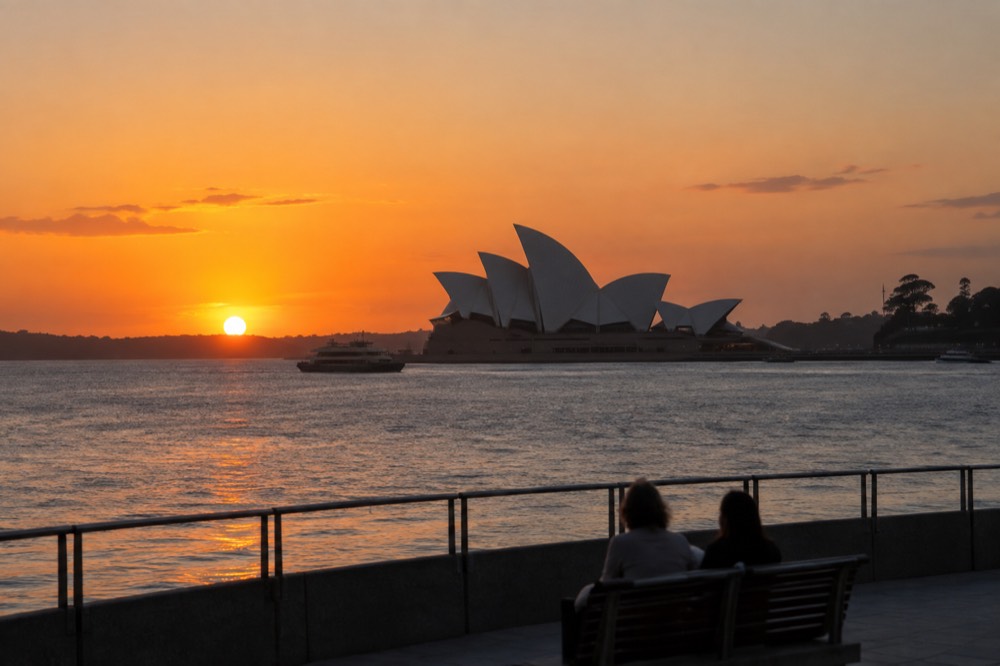
Sydney's best sunrise spots are Mrs Macquarie's Chair, Kirribilli and Bondi Icebergs; its best sunset spots are Barangaroo, Observatory Hill and Manly. June is the wettest month on average and August the clearest, so late winter delivers the most reliable golden light. Sunrise needs a 5:30am start in summer; sunset needs no alarm at all.
Sydney sells itself on its harbour, but the harbour is at its most photogenic for roughly ninety minutes a day: the window around sunrise, and the window around sunset. The rest of the time the light is flat, the water is glare, and the postcard shots everyone came for refuse to appear. The good news is that the city is unusually generous with free vantage points. The eastern shore, the North Shore and the coastal beaches all hand you the same view the paid tours trade on, and none of them charge a cent.
This guide covers where to stand, when to go, and what the statistics say about which month will actually give you the sky you want. It also flags the handful of bookable experiences that turn the golden hour into the main event, from a dawn kayak on the harbour to a sunset catamaran. For a broader orientation to the city, start with the Sydney Travel Guide homepage and work inward from there.
Why Sydney's Light Is Worth Planning Around
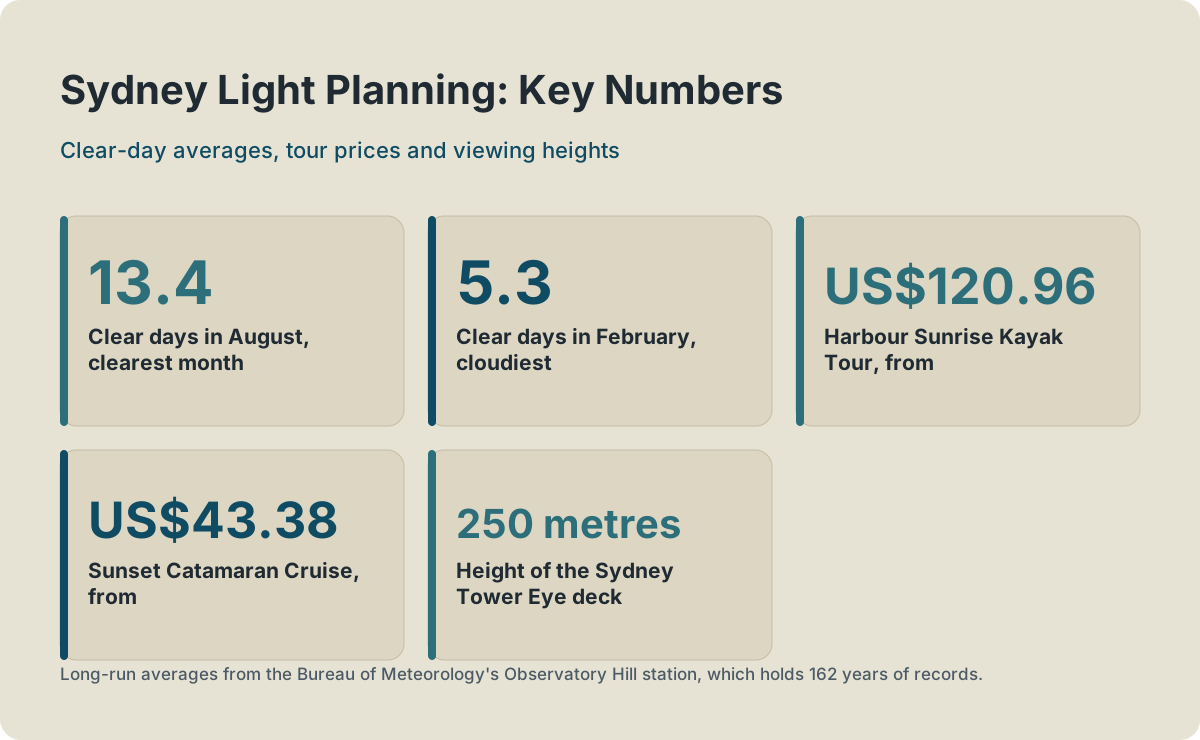
Sydney's sunrise and sunset are unusually reliable by world-city standards, and the statistics point somewhere unexpected: August is the city's clearest month, averaging 13.4 clear days, while February, the middle of peak tourist season, is its cloudiest at 5.3. The long-run averages from the Bureau of Meteorology's Observatory Hill station, which holds 162 years of records, show the city's best skies arrive in late winter, not summer. June is the wettest month on average at 133.1 mm, wetter than any summer month. A visitor chasing golden light in July or August has a better statistical shot than one who arrives in February.
That inverts what most travellers assume. The northern-hemisphere instinct says summer equals blue skies, and in Sydney that is roughly true for temperature: January averages a 26.0 °C maximum. But cloud behaves differently here. The Bureau's long-run climate normals for Sydney show February with the fewest clear days of any month and August with the most. Winter days are shorter, so the sunrise itself comes later and the air is colder, but the sky behind the sun is more often clean.
There is a second reason to plan around the light rather than the calendar. Sydney observes daylight saving, running from the first Sunday in October to the first Sunday in April, which shifts sunset as late as 8pm in high summer and as early as 4:50pm-ish in late June. The exact dates matter for photographers: the NSW Government publishes the official daylight saving dates each year, and in 2026 the clocks go forward on Sunday 4 October and back on Sunday 4 April 2027. A sunset plan made in Sydney in October is wrong by a full hour by December.
The Best Sydney Sunrise Spots, Ranked
The three sunrise spots that consistently deliver are Mrs Macquarie's Chair on the eastern shore, Kirribilli on the North Shore, and Bondi Icebergs on the coast, each for a different reason: Mrs Macquarie's frames the Opera House and Harbour Bridge together, Kirribilli catches the sun rising behind the city skyline, and Bondi gets the sun straight out of the Pacific. All three are free, all three are reachable by public transport before dawn, and all three put you facing east. The trade-off is simple: the harbour spots give you the icons, the coastal spots give you the colour.
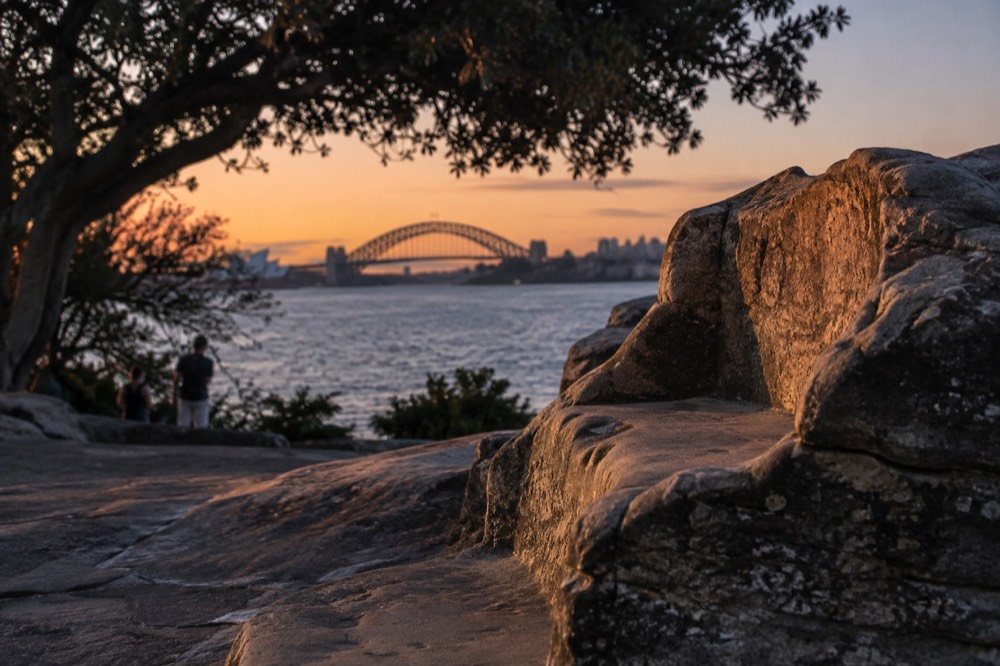
Mrs Macquarie's Chair, the sandstone bench carved into the Royal Botanic Garden's eastern point, is the classic answer and still the best one. From the Chair the sun comes up over the Pacific to your left and lights the Opera House sails and the Harbour Bridge in sequence, and because the garden opens at 7am year-round, in winter you may need to wait at the gates or enter via the Farm Gate on the harbour side. The walk from Circular Quay takes about 20 minutes along the foreshore, which is itself one of the city's better dawn strolls. Our full Royal Botanic Garden Sydney guide covers the layout, including the free entry that surprises many first-time visitors.
Kirribilli inverts the view. From the eastern edge of Kirribilli, near Jeffrey Street or Milsons Point, the sun rises behind the CBD skyline with the Harbour Bridge anchoring the left of frame. It is the shot of Sydney that locals consider the real one, and it is a short walk from Milsons Point ferry wharf or Milsons Point station. The Manly ferry guide covers the F1 route if you want to arrive across the water instead.
| Sunrise spot | What it frames | Getting there before dawn | Best season |
|---|---|---|---|
| Mrs Macquarie's Chair | Opera House and Harbour Bridge side by side | 20 min walk from Circular Quay | May-August for clear skies |
| Kirribilli | Sun rising behind the CBD skyline | Milsons Point station or ferry | Year-round |
| Bondi Icebergs | Sun straight out of the Pacific over the ocean pool | Bus 333 from the CBD, early services | October-April for warm mornings |
| Bronte Ocean Pool | Free ocean pool, quieter than Bondi | Bus 378 from Central | Winter for clean skies |
| Manly and Shelly Beach | Sunrise over the Pacific, snorkel after | F1 ferry, first services | Summer, when the ferry runs early |
| Observatory Hill | Elevated harbour view west of the Bridge | 10 min walk from Wynyard | Year-round |
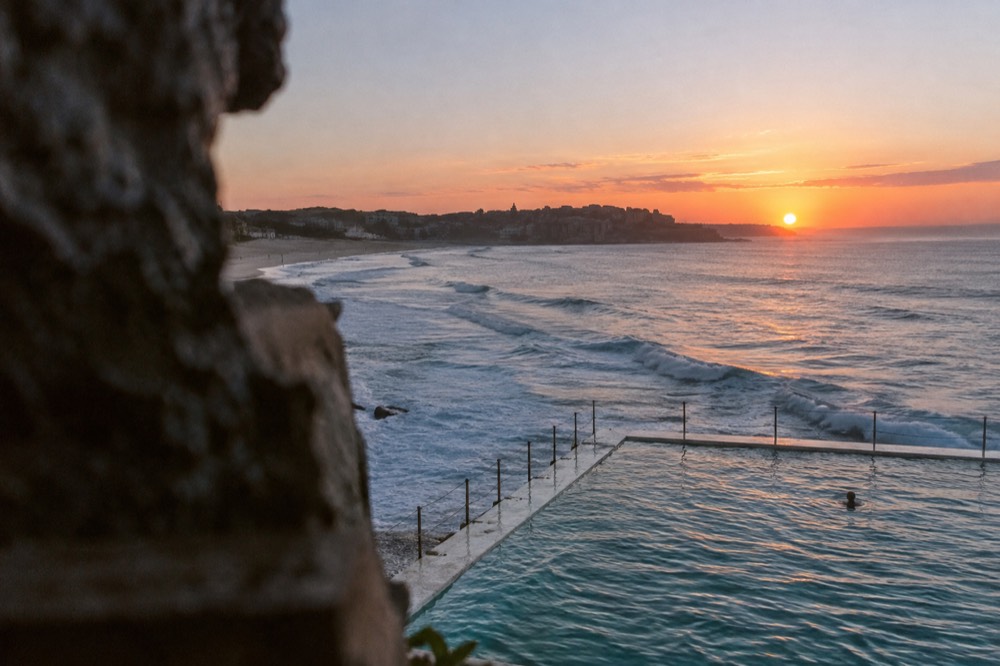
On the coast, Bondi Icebergs is the sunrise spot with a structure in the foreground: the 50-metre ocean pool sits at the south end of the beach and gives the rising sun something to bounce off. Note that Icebergs is a club-managed pool and charges an entry fee, unlike the free Bronte Ocean Pool a couple of beaches south, which Waverley Council maintains. The Bondi Beach guide covers the full picture, including the year-round lifeguard patrols that make an early swim a sane idea. If you want the dawn light without the crowd, Bronte is the better bet, and the bondi-to-coogee coastal walk links all of these beaches in one 6 km stretch you can walk after the sun is up.
One sunrise option stands apart from the free vantage points: a dawn kayak on the harbour itself. The Harbour Sunrise Kayak Tour runs before the ferries start, which means the water is glass and the city is still lit by the early light. It is the only way to be on the harbour at sunrise rather than beside it, and the listing shows a 4.95 rating across 2,606 reviews, from US$120.96. The kayaking in Sydney guide covers where else to paddle if a guided tour is not your pace.
The Best Sydney Sunset Spots, Ranked
The best sunset spots in Sydney are Barangaroo on the western side of the CBD, Observatory Hill above The Rocks, and the western shore of Manly, because all three face the sinking sun with water or skyline in the foreground. Barangaroo gives you the sun dropping over the harbour's western reaches, Observatory Hill gives you elevation and the Bridge in silhouette, and Manly gives you the last light on the water with the city behind you. Sunset in Sydney is a west-facing exercise, which is the opposite of sunrise and the reason the two lists barely overlap.
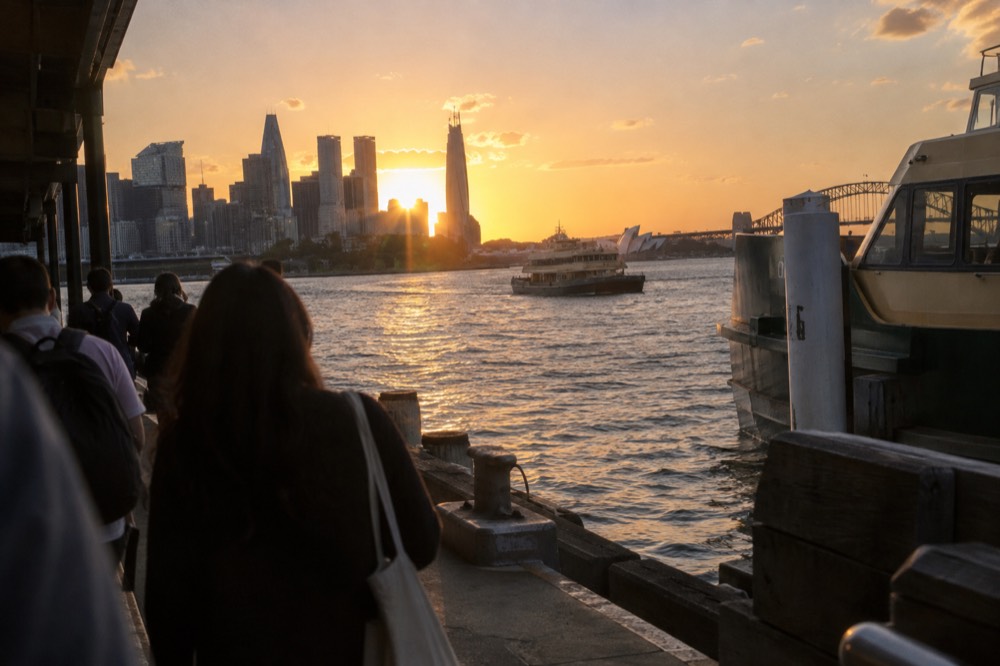
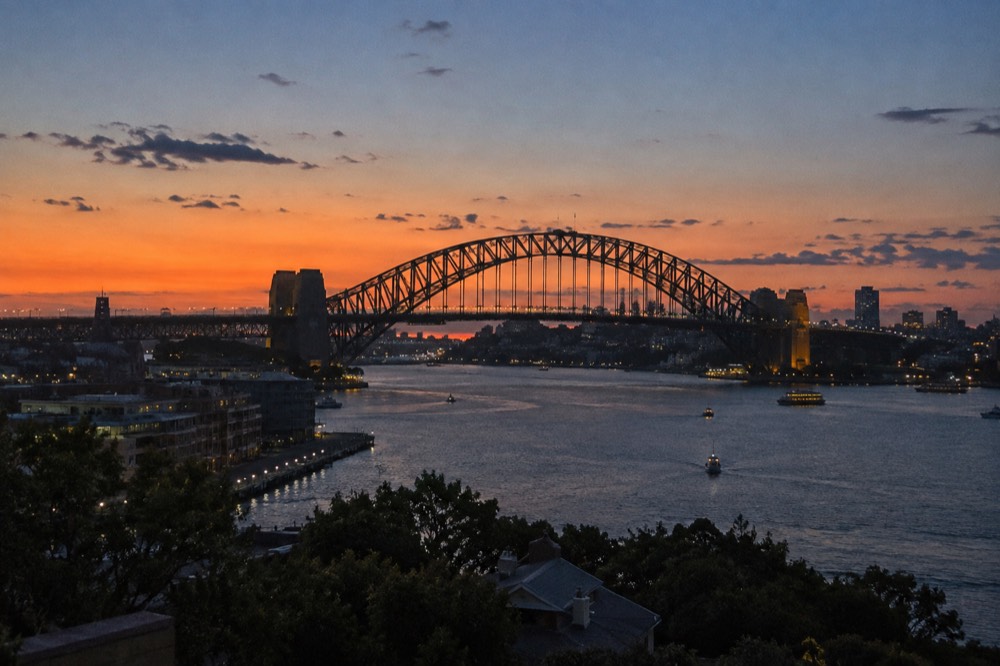
Barangaroo, the redeveloped western headland precinct, is the newest of the three and arguably the best designed for it: a sandstone promenade with an uninterrupted view down the harbour to the west. The Barangaroo guide maps the reserve, and the Sydney CBD guide places it relative to everything else. Observatory Hill, a ten-minute walk up from The Rocks, is the elevation play: the hill sits above the Bridge's southern approach, and the best lookouts in Sydney guide ranks it against the paid options.
| Sunset spot | Direction | What you get | Cost |
|---|---|---|---|
| Barangaroo Reserve | West | Sun over the western harbour, sandstone foreground | Free |
| Observatory Hill | West | Elevated view, Bridge in silhouette | Free |
| Manly west shore | West | Last light on the water, city skyline behind | Free, ferry fare to get there |
| Cremorne Point | West | Harbour sunset without the crowd | Free |
| Pylon Lookout | South-west | Bridge-level view from the structure itself | Ticketed |
| Sydney Tower Eye | All directions | 360-degree sunset from 250 metres up | Ticketed |
The two ticketed entries on that table earn their places. The Pylon Lookout, covered in our Pylon Lookout guide, sits partway up the Bridge's southern pylon and gives a sunset view most visitors never find. The Sydney Tower Eye is the blunt instrument of Sydney sunsets: an observation deck 250 metres up with glass all the way round, so you get the sunset over the Blue Mountains and the city lights coming on in the same visit. The deck's hours shift with the season, and the listing shows a 4.41 rating across 2,705 reviews, from US$20.76, which makes it one of the cheaper ways to buy a view in this city.
If you would rather the sunset come with a deck, a drink and someone else steering, the harbour cruise options split by mood. The Sunset Catamaran Cruise runs one hour in the golden window, from US$43.38 with a 4.83 rating across 310 reviews, and the Sydney Harbour cruises guide breaks down the full range from sightseeing ferries to dinner cruises. For a fuller evening plan, the things to do in Sydney at night guide picks up where the sunset leaves off.
What Time Is Sunrise and Sunset in Sydney?
Sydney's sunrise ranges from around 5:30am at the summer solstice to a little before 7am at the winter solstice, and sunset from around 8pm in late December to just after 5pm in late June, because the city sits at roughly 34 degrees south and observes daylight saving from October to April. The exact times shift every day, and the daylight saving transition moves them by a full hour twice a year. In 2026 the clocks go forward on Sunday 4 October and back on Sunday 4 April 2027, so a sunset time you memorise in September is wrong by October.
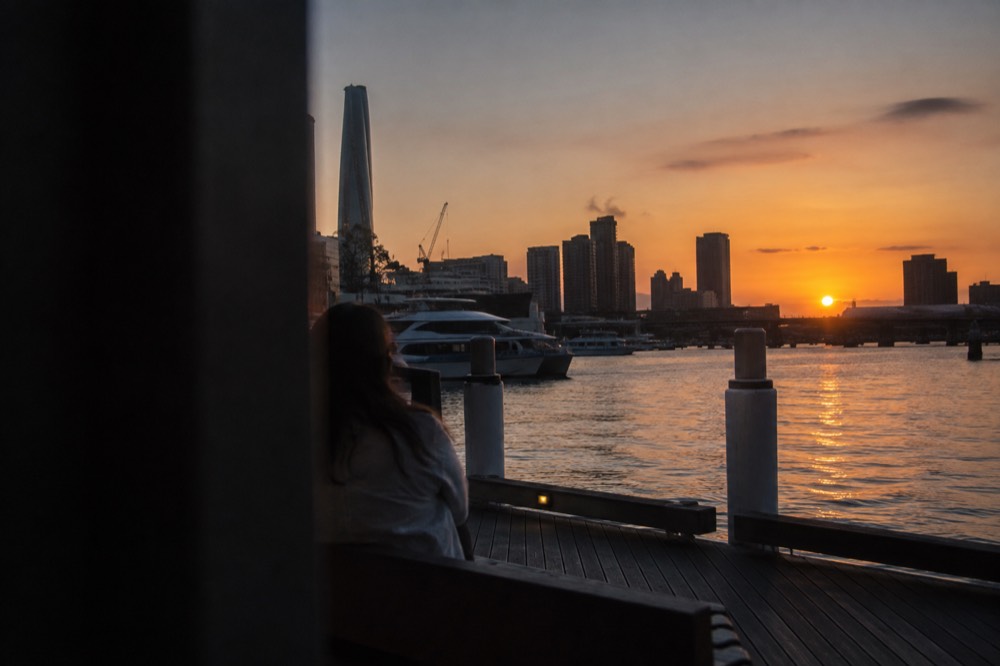
The practical consequence is that golden hour is a moving target. In January you have until 8pm to reach your sunset spot, which makes Barangaroo an easy after-dinner walk. In June the sun is gone by 5:30pm, which means the sunset has to be the plan for the afternoon, not an add-on to it. Sunrise flips the other way: a 5:30am summer sunrise means a 4:45am wake-up to be in position, while a winter sunrise near 7am is almost compatible with a normal breakfast.
| Period | Approximate sunrise | Approximate sunset | Daylight saving | Note |
|---|---|---|---|---|
| Early January | ~5:40am | ~8:10pm | Yes, AEDT | Latest sunsets of the year |
| Early April | ~6:00am | ~7:00pm | Yes, until 4 Apr 2027 | Clocks go back in early April |
| Early July | ~7:00am | ~4:55pm | No, AEST | Earliest sunsets, clearest skies |
| Early October | ~5:30am | ~6:00pm | No until 4 Oct 2026 | Clocks go forward in early October |
| Early December | ~5:40am | ~7:50pm | Yes, AEDT | Long evenings return |
Treat those figures as the shape of the year rather than a timetable. The Bureau of Meteorology publishes sunrise and sunset times for every day of the year, and the official NSW daylight saving page confirms the clock-change dates. If you are planning around a specific date, check the times for that date rather than the season.
Which Month Gives You the Best Golden Light?
August is statistically the best month for golden light in Sydney, with 13.4 mean clear days, followed by July at 12.0, while February is the worst at 5.3 and June brings the heaviest rain at 133.1 mm on average. If the sky matters more than the temperature, plan your sunrise mission for late winter. If warmth matters more, accept that summer skies are the least reliable of the year and build a backup plan, which the Sydney rainy day itinerary guide already does for you.
The full monthly picture, drawn from the Bureau's long-run normals, looks like this. The sunshine-hours column tells you how much daylight you get; the clear-days column tells you how much of it is likely to be usable.
| Month | Mean daily sunshine (hours) | Mean clear days | Mean rainfall (mm) | Golden-hour verdict |
|---|---|---|---|---|
| January | 7.1 | 6.8 | 101.2 | Warm, often hazy |
| February | 6.7 | 5.3 | 119.3 | Cloudiest month, peak crowds |
| March | 6.4 | 7.1 | 131.6 | Wet, when it rains it pours |
| April | 6.4 | 9.1 | 126.5 | Improving fast |
| May | 5.9 | 9.5 | 117.4 | Good skies, cold mornings |
| June | 5.5 | 9.1 | 133.1 | Wettest month, short days |
| July | 6.4 | 12.0 | 96.3 | Second clearest, very cold dawns |
| August | 7.1 | 13.4 | 80.2 | Clearest month, best odds |
| September | 7.2 | 10.9 | 68.1 | Excellent and warmer |
| October | 7.2 | 8.1 | 76.7 | Good, daylight saving returns |
| November | 7.8 | 6.0 | 83.8 | Long days, variable sky |
| December | 7.6 | 6.6 | 77.1 | Longest evenings, mixed skies |
September and October deserve a special mention for the sunrise chaser: the skies are nearly as clean as August's, the mornings are less brutal, and the daylight saving switch in early October suddenly pushes sunset back toward 7:30pm. The best time to visit Sydney guide weighs all of this against crowds and prices, and the Sydney weather month by month guide carries the full temperature tables.
Seeing Sunrise and Sunset from the Bridge, the Air and the Water
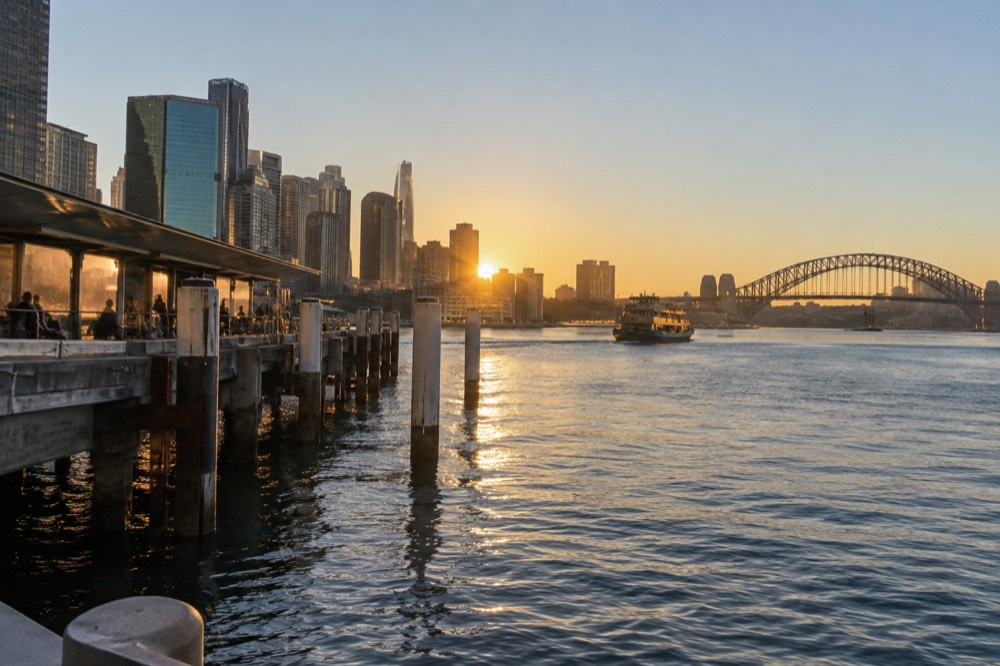
The paid ways to experience Sydney's golden hour are the BridgeClimb, a scenic helicopter flight and the harbour cruises, and they divide cleanly: the climb puts you inside the view, the helicopter puts you above it, and the boats put you on the water it reflects off. BridgeClimb runs about three hours total with roughly two hours on the structure, and its twilight and night departures are timed so the city lights come on while you are up there. The helicopter flight compresses the whole harbour into 20 minutes. The cruises run from a one-hour sunset catamaran to a full five-hour sailing trip with lunch.
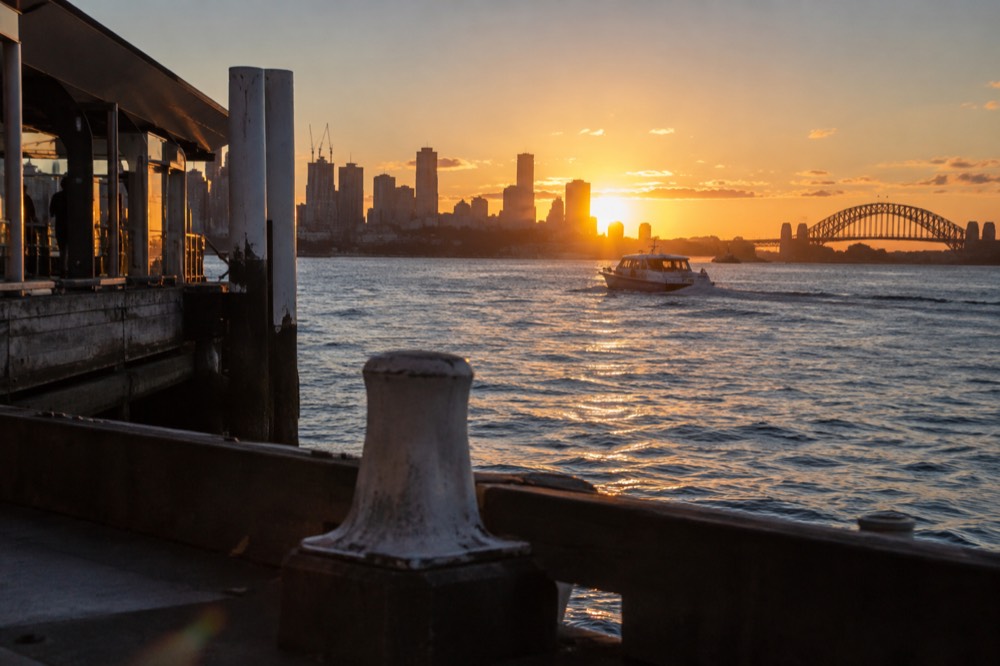
The BridgeClimb is the one most worth thinking about for golden hour specifically, because the summit sits 134 metres over the water and the operator offers dawn, twilight and night departures. Our BridgeClimb Sydney guide covers the full decision, including fitness requirements and the cheaper alternatives if the price is the problem. The climb carries a 4.8 rating across 2,858 reviews, from US$237.74, and the is it worth doing the BridgeClimb post answers the question directly.
The helicopter flight is the compression play: 20 minutes, the whole harbour, from US$197.50 with a 4.8 rating across 686 reviews. The flight path covers the Bridge, the Opera House and the coastlines in one loop, which at sunset is a lot of colour per minute. Check availability on the listing if the timing matters, because sunset slots book out first.
For the free version of the same experience, the Sydney Harbour Bridge guide covers the pedestrian walkway, which costs nothing and delivers the east-facing sunrise view from the middle of the harbour. The Sydney photography spots guide ranks every vantage point in the city for camera work specifically, including several that work better at dawn than at any other hour.
Practical Tips for Golden Hour in Sydney
Arrive 30 to 45 minutes before the published sunrise or sunset time, bring a layer even in summer, and use the Opal card caps to make a multi-spot morning affordable, because a Friday or weekend golden-hour chase is capped at $9.65 a day. The colour starts well before the sun clears the horizon and continues after it drops, so the published time is the middle of the show, not the start. Transport for NSW publishes the full adult fare and cap tables, and the Opal card guide for visitors translates them for travellers.
A few specifics worth knowing. The ferries do not run before dawn, so sunrise spots reached by ferry, like Manly, need a bus or a taxi for the arrival and the ferry for the scenic trip home. The Royal Botanic Garden opens at 7am, which in winter is after sunrise, so the Farm Gate entrance near the Opera House is the one to use for a pre-dawn Mrs Macquarie's Chair session. And the ocean pools, including the free Bronte pool, are cleaned on set weekdays, so check before you build a shot around one.
| Golden-hour plan | Start time | Transport | Cost | Backup if cloudy |
|---|---|---|---|---|
| Mrs Macquarie's Chair sunrise | 45 min before sunrise | Walk from the CBD | Free | Art Gallery of NSW, opens 10am |
| Bondi Icebergs sunrise | 40 min before sunrise | Bus 333 | Pool entry fee | Coastal walk after, any weather |
| Barangaroo sunset | 45 min before sunset | Walk or light rail | Free | Fish Market dining, indoor |
| Kirribilli sunrise | 30 min before sunrise | Train to Milsons Point | Free | Luna Park photos, overcast-friendly |
| Harbour sunset cruise | 30 min before departure | Ferry or walk to the wharf | From US$43.38 | Runs in most weather |
One safety note for the coastal sunrise spots: swim only between the red and yellow flags during patrol hours, and note that Waverley's beaches, Bondi, Bronte and Tamarama, are patrolled year-round, with high-season hours from 6am to 7pm and low-season hours from 7am to 5:30pm. An early-morning visit in June will likely be before the flags go up, so enjoy the light and save the swim for later. The best beaches in Sydney guide carries the full patrol picture.
Common Questions About Sydney Sunrise and Sunset Spots
Where is the best sunrise spot in Sydney?
Mrs Macquarie's Chair is the best single sunrise spot in Sydney because it frames the Opera House and the Harbour Bridge together with the sun rising over the Pacific to the east. Kirribilli is the best alternative, giving the sun rising behind the CBD skyline, and Bondi Icebergs is the best coastal option for sun straight off the ocean.
What time is sunrise in Sydney?
Sunrise in Sydney ranges from around 5:30am at the height of summer to just before 7am in late June. The exact time shifts daily, and the daylight saving change in early October and early April moves every sunrise by a full hour, so check the times for your specific date rather than the season.
Where is the best sunset spot in Sydney?
Barangaroo Reserve is the best sunset spot in Sydney, with an open western view down the harbour from a sandstone promenade. Observatory Hill is the best elevated option, and the Sydney Tower Eye is the best ticketed one, giving a 360-degree view that includes the sunset over the western suburbs.
What is the best month for clear skies in Sydney?
August is Sydney's clearest month on the long-run averages, with 13.4 mean clear days, followed by July at 12.0. February is the cloudiest at 5.3 clear days, and June is the wettest month at 133.1 mm of mean rainfall. Late winter is the statistically best time for golden light.
Can you watch sunrise from the Sydney Harbour Bridge?
Yes, in two ways. The pedestrian walkway is free and open around the clock, giving an east-facing sunrise view from the middle of the harbour. BridgeClimb also runs dawn departures on the summit, a roughly three-hour experience with about two hours on the structure.
Is the Sydney Tower Eye good for sunset?
Yes. The deck sits 250 metres up with glass all the way round, so you see the sunset over the western suburbs and the city lights coming on in the same visit. Hours shift with the season, so check the day's closing time before you go.