Bondi Beach: The Complete Visitor Guide
Bondi is the beach most international visitors can name before they can name a Sydney suburb, and it earns roughly 550,000 Australian searches a month on its name alone. Here is how to do it properly: when to go, what it costs to get there, where to swim safely and what the postcard views leave out.
Short answer
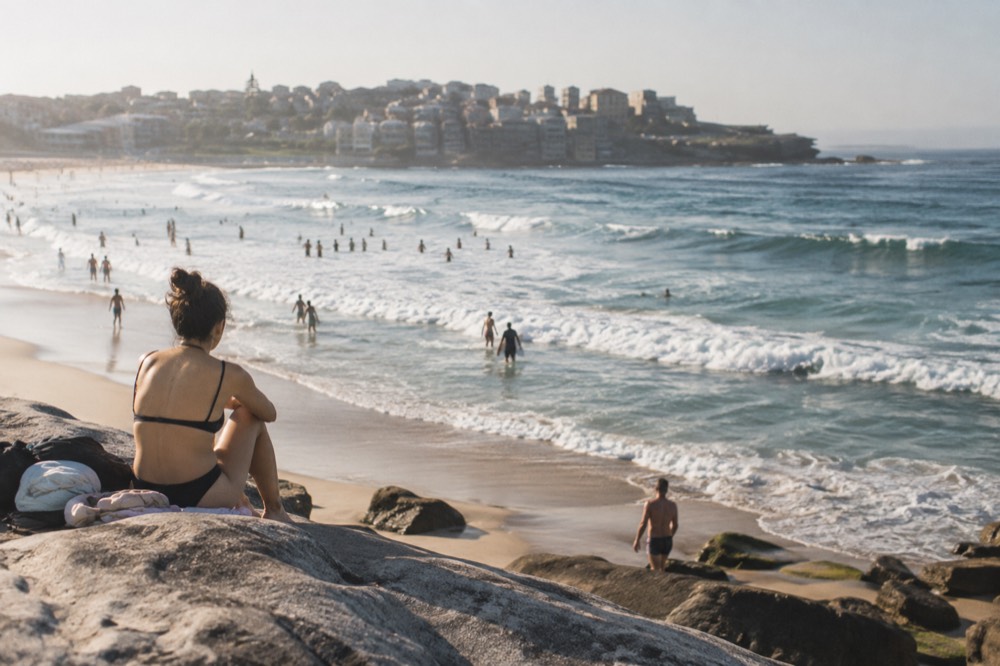
Bondi Beach sits 8 km east of the Sydney CBD, reached by a 30-40 minute bus or ferry-and-bus trip from Circular Quay. Entry is free, it is patrolled year-round by professional lifeguards, and the best months for reliable beach weather are August through November, when Sydney's skies are at their clearest.
Bondi is the beach most international visitors can name before they can name a single Sydney suburb, and the search numbers back that up: the phrase alone pulls roughly 550,000 searches a month in Australia. But the postcard version of Bondi, all golden sand and improbably clear water, tells you almost nothing about how the place actually works. When is it patrolled? What does the bus cost? Why is February, the height of the tourist season, statistically the cloudiest month of Sydney's year?
This guide answers those questions properly. It covers transport with real fares, patrol hours, ocean pools, surf lessons, the coastal walk and the food strip, all sourced from official NSW and council channels rather than recycled listicles. For the wider picture of where Bondi sits among the city's swimming spots, see our guide to the best beaches in Sydney, and for the rest of your planning, Sydney Travel Guide covers every corner of the city.
What Makes Bondi Beach Famous?
Bondi is a 1 kilometre crescent of sand backed by a sandstone amphitheatre of parks, pools and a low-rise beachfront strip, 8 kilometres east of the Sydney CBD. Its fame rests on three things: year-round professional lifeguard patrols, the Bondi to Coogee coastal walk that starts at its southern end, and Bondi Icebergs, the ocean pool photographed more than any other in Australia. Roughly 550,000 Australian searches a month happen on its name alone.
The name comes from the Aboriginal word for the area, and the land is that of the Gadigal people of the Eora Nation. Bondi became a municipal beach in the 1880s and has been Sydney's most recognisable stretch of sand ever since. What surprises most first-time visitors is the scale: it is a working suburban beach first and a tourist icon second, with a surf club culture, a genuinely local food scene and a resident population that treats the sand as a backyard.
The other surprise is how compact it all is. Everything a visitor needs, the sand, the pools, the bus interchange, the cafes on Campbell Parade and the start of the coastal walk, sits within a 15 minute walk of the beach itself. You do not need a car, and in fact a car is a liability here: parking is scarce, time-limited and expensive in summer. Our getting around Sydney guide covers the transport logic in depth, but the short version for Bondi is simple: bus in, bus out.
How Do You Get to Bondi Beach from the City?
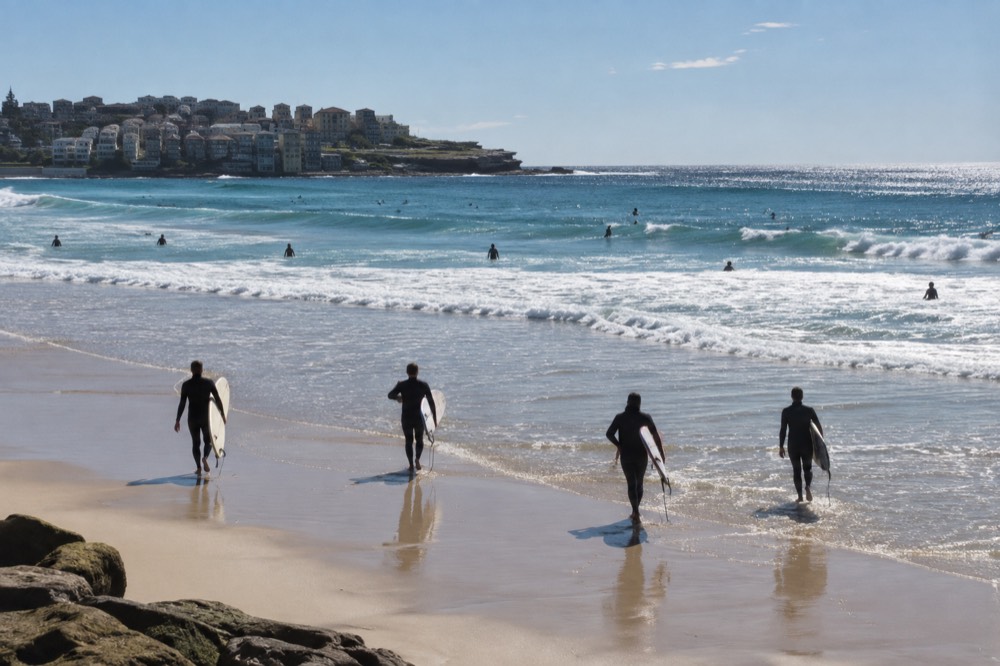
Bondi is reached by direct bus from the Sydney CBD in roughly 30 to 40 minutes, at an Opal fare of A$4.49 peak or A$3.14 off-peak for the 3-8 km band. There is no train station at Bondi Beach; the nearest rail is Bondi Junction, one stop from the city, with a connecting bus or a 2.5 km walk. A ferry does not serve Bondi directly either, so the bus is the practical answer for almost everyone.
The bus routes from the CBD stop right on Campbell Parade, the boulevard that runs the length of the beach, so the walk from stop to sand is under five minutes. Tap on with an Opal card or a contactless credit card; both are charged identically and both earn the same daily caps, A$19.30 Monday to Thursday and A$9.65 Friday to Sunday and on public holidays. The off-peak discount of 30 percent applies on weekends and outside commuter hours, which covers most visitor trips.
| Option | Route | Approx. time | Adult fare (Opal/contactless) |
|---|---|---|---|
| Direct bus from CBD | City to Bondi Beach via Bondi Junction | 30-40 min | A$4.49 peak / A$3.14 off-peak |
| Train + bus | Train to Bondi Junction, connecting bus | 25-35 min | Two fares, capped by the daily limit |
| Ferry + bus | Ferry to Rose Bay (from Circular Quay), bus onward | 45-55 min | A$7.35 ferry + bus fare |
| Taxi or rideshare | CBD to Bondi Beach | 20-30 min | Metered, varies with traffic |
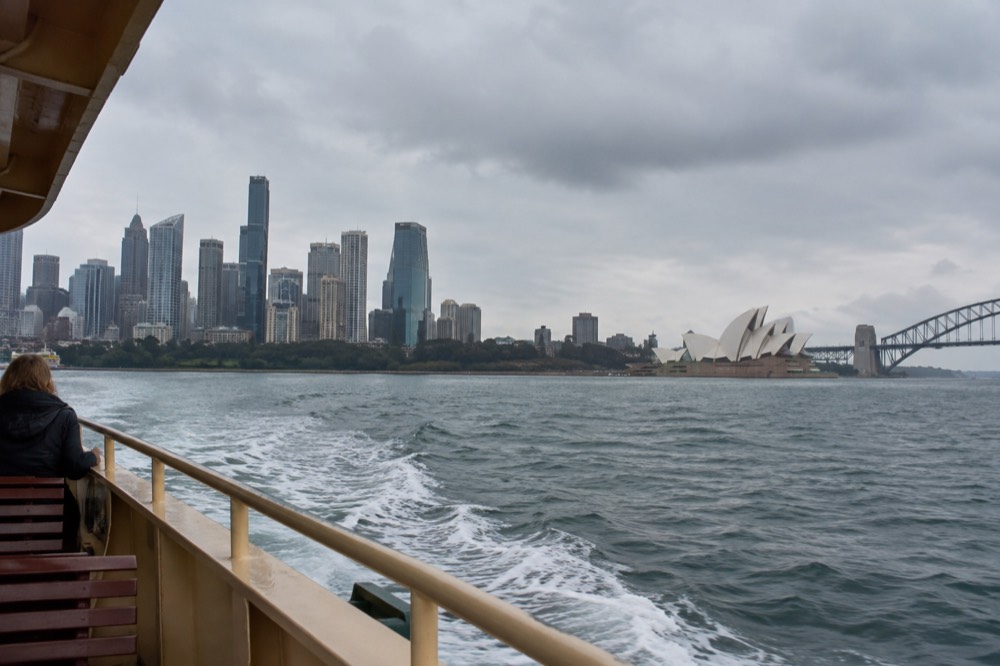
One planning note worth the detour: the ferry leg of that third option is one of Sydney's small pleasures. The Manly ferry guide explains the F1 route in detail, and a Rose Bay crossing gives you the harbour skyline from the water for the price of a regular Opal fare before you swing east to the beach. If you are stringing a full beach day together, the ferry-plus-bus combination turns a commute into a sightseeing leg.
If you are building a wider Sydney itinerary around the beach day, it is worth booking the big-ticket experiences early. The 3 days in Sydney itinerary slots Bondi into day two, with the Opera House and the Blue Mountains on the other days, and the selection above covers the three anchor bookings most visitors make: a surf lesson at Bondi itself, the Blue Mountains all-inclusive day trip, and the Opera House guided tour.
When Is the Best Time of Year to Visit Bondi?
The best months for a Bondi beach day are August through November. August is statistically Sydney's clearest month, with 13.4 mean clear days, and spring keeps the clear skies while the water and air warm up. February, despite being peak summer, is Sydney's cloudiest month at 5.3 mean clear days. June is the wettest month by rainfall, at 133.1 mm on average.
That ordering surprises almost everyone. The long-run averages from the Bureau of Meteorology's Observatory Hill station, a 162-year record, show that Sydney's rainfall peaks in autumn and early winter, not summer, and that its clearest skies arrive in late winter. Peak tourist season, December through February, is statistically the greyest time of year. A traveller who books Bondi for February on the assumption of endless sun is booking the cloudiest month on the calendar.
| Month | Mean max °C | Mean min °C | Mean rainfall mm | Mean clear days |
|---|---|---|---|---|
| Jan | 26.0 | 18.8 | 101.2 | 6.8 |
| Feb | 25.8 | 18.9 | 119.3 | 5.3 |
| Mar | 24.8 | 17.6 | 131.6 | 7.1 |
| Jun | 17.0 | 9.3 | 133.1 | 9.1 |
| Aug | 17.9 | 9.0 | 80.2 | 13.4 |
| Sep | 20.1 | 11.1 | 68.1 | 10.9 |
| Oct | 22.2 | 13.6 | 76.7 | 8.1 |
| Nov | 23.7 | 15.7 | 83.8 | 6.0 |
The full month-by-month picture, including the winter swimming question, is in our Sydney weather month by month guide. The short version for the beach: December through February is summer and the water is at its warmest, but crowds peak, cloud cover peaks and prices follow. Our best time to visit Sydney guide weighs the whole year.
Is It Safe to Swim at Bondi?
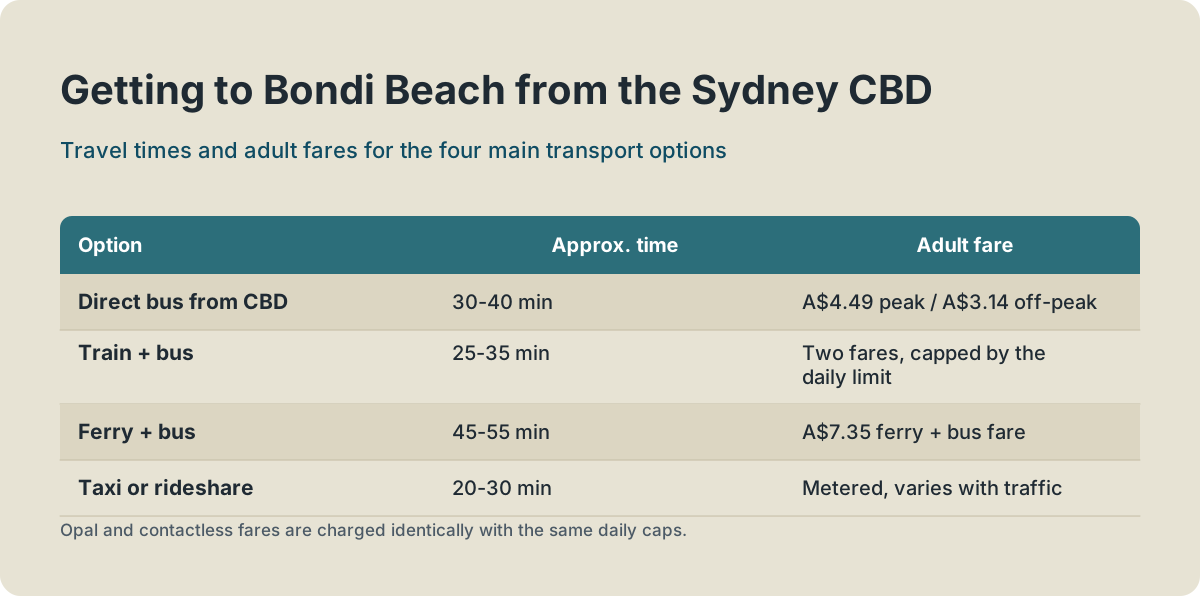
Yes, when you swim between the red and yellow flags during patrol hours, which at Bondi run year-round: 6am to 7pm daily from October to April, and 7am to 5:30pm daily from May to September. Bondi is one of only a handful of Sydney beaches patrolled 365 days a year by professional council lifeguards. Outside the flags, outside those hours, or at an unpatrolled beach, the rip current risk is real and people drown on this coast every year.
The rule is not negotiable and it is not conservative padding. Surf Life Saving Australia's National Coastal Safety Report 2025 recorded 154 coastal drowning deaths nationally, the highest figure ever reported, and every single incident occurred outside the flags, outside patrol times, or at an unpatrolled location. There have been no recorded coastal drowning deaths between the flags in recent seasons. Bondi's rips are strong, they move, and they do not care how confident a swimmer you are at home.
If you are caught in a rip, the official advice from Beachsafe, Surf Life Saving's own safety site, is to stay calm and conserve energy, raise an arm and call for help, float with the current which may return you to a sandbank, or swim parallel to the beach or toward breaking waves. The prevention framing is simpler: STOP, check for rips before entering, LOOK for other dangers, PLAN how you will stay safe.
| Beach | Professional patrol | High season hours (Oct-Apr) | Low season hours (May-Sep) |
|---|---|---|---|
| Bondi | Year-round | 6am-7pm daily | 7am-5:30pm daily |
| Bronte | Year-round | 6am-7pm daily | 7am-5:30pm daily |
| Tamarama | Year-round | 6am-7pm daily | 7am-5:30pm daily |
| Coogee | Year-round | Approx. 7am-7pm (daylight saving) | Approx. 7am-5pm |
| Manly | Year-round | Varies, check signage | Varies, check signage |
Waverley Council, which covers Bondi, Bronte and Tamarama, describes its patrol hours as the longest in Australia. The blue uniforms are council-employed professional lifeguards; the red-and-yellow uniforms you will also see are volunteer surf lifesavers who supplement patrols on weekends and public holidays through summer. For a wider survey of safe swimming options, see our Sydney coastal walks and beach guides.
What About Sharks, Bluebottles and Water Quality?
Shark risk at Bondi is low but not zero: the NSW shark meshing program runs 51 nets between Newcastle and Wollongong from 1 September to 31 March, and drones watch Sydney beaches, but nets reduce rather than eliminate risk. Bluebottles are the far more common sting, most often in warmer months. For water quality, the official advice is to stay out of the water while it rains and for up to one day after heavy rain at ocean beaches.
The bluebottle advice is worth having before you need it. Do not touch them on the sand or in the water; if stung, leave the water, remove any tentacles with seawater rather than bare hands, immerse the sting in hot water around 45 °C for up to 20 minutes, and find a lifeguard if the reaction is severe. They are painful, not usually dangerous, and they arrive in numbers after onshore winds, mostly in the warmer months.
Water quality is the least glamorous and most useful part of this section. NSW's Beachwatch program grades every swim site in the state from Very Good to Very Poor and publishes daily results at beachwatch.nsw.gov.au. The rule that matters after a storm: stay out while it is raining, for up to a day after heavy rain at an ocean beach like Bondi, and for up to three days after heavy rain at harbour and estuarine swim sites. Ocean beaches like Bondi flush and recover fastest, which is one real advantage over harbour beaches.
Can You Swim at Bondi in Winter?
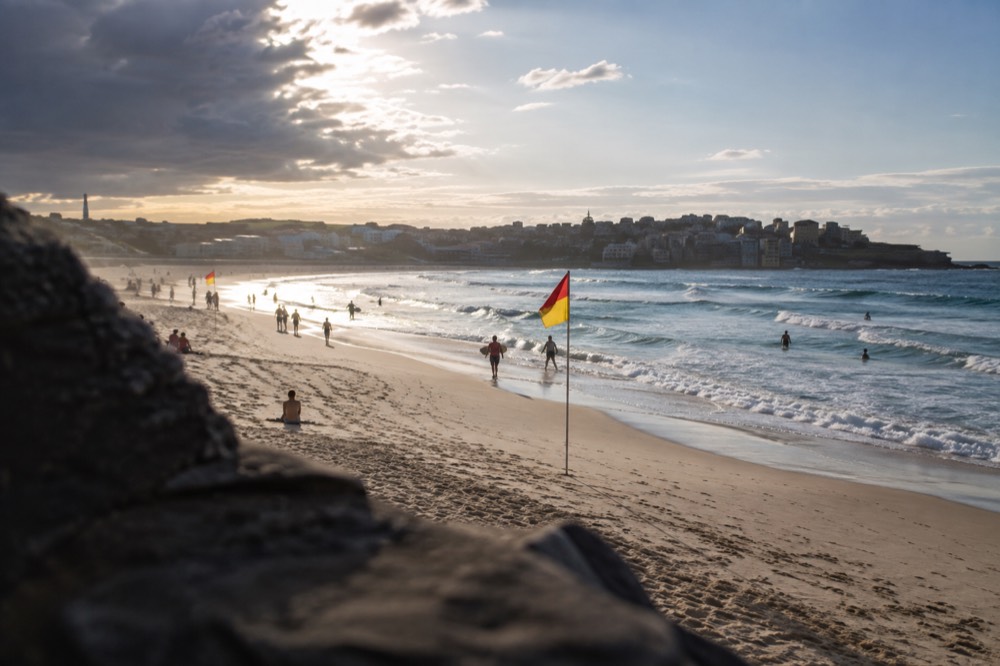
Yes, and locals do it daily, but with adjusted expectations. June to August is winter, with mean maximums of 16.4 to 17.9 °C and mean minimums down to 8.1 °C, so the water is genuinely cold and most swimmers wear a wetsuit for surfing. The compensations are real: August is Sydney's clearest month, crowds thin dramatically, and Bondi's patrol continues year-round, 7am to 5:30pm in the low season.
The winter beach is a different place, and arguably a better one. The sand is quiet on weekdays, the surf line-up shrinks to committed regulars, and the winter swim clubs come into their own. Bondi Icebergs, the famous 50-metre ocean pool at the south end, was built by a winter swimming club in 1929 and remains a winter institution; the club's members famously swim through the whole cold season. If sitting on the sand in a jumper watching surfers sounds like a poor substitute for summer, remember that a clear August day in Sydney often feels better than a grey February one.
For the full winter picture, including what is still worth doing when the water is cold, see our Sydney in winter guide, and for the opposite case, Sydney in summer covers the peak-season trade-offs.
What Are Bondi's Ocean Pools and Which Ones Are Free?
Bondi has two pool experiences at opposite ends of the beach: Bondi Icebergs, the club-managed 50-metre pool at the south end, which charges an access fee and is not free, and the North Bondi Children's Pool at the north end, which is council-run and free. Both can close in big swell or for cleaning, and the free pool closes weekly on scheduled cleaning days.
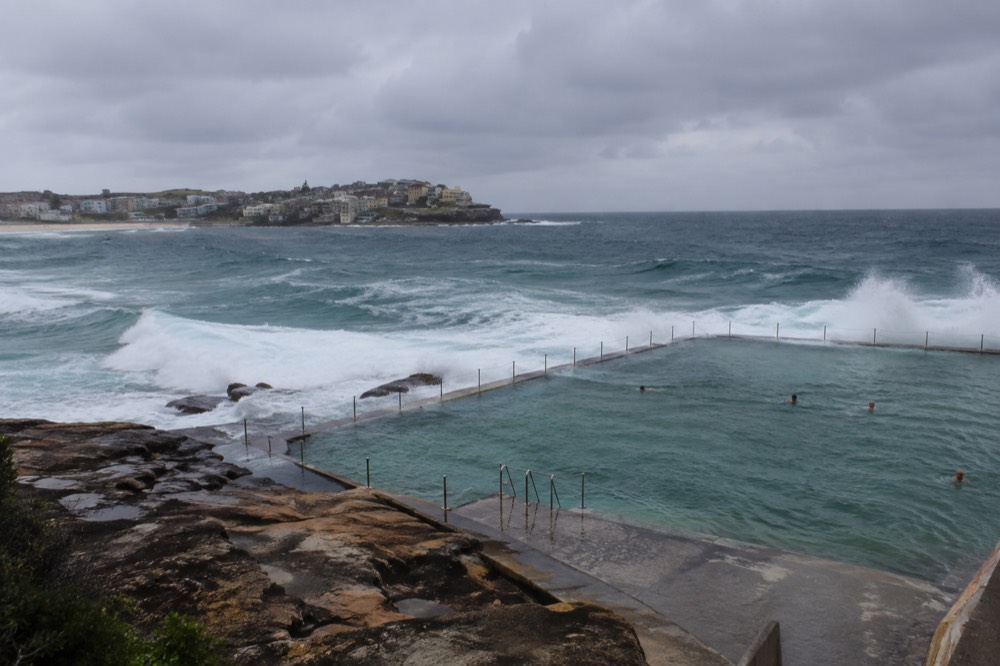
The Icebergs pool is the one on every photograph: it sits flush against the southern headland, waves breaking over its edge, and it is one of the most photographed ocean pools on Earth. It is a club, not a council facility, and casual swimmers pay for access, which is exactly the distinction most guides blur. The council's free pools, Bronte Ocean Pool and the North Bondi Children's Pool, are cleaned weekly and closed on cleaning days, typically Wednesdays or Thursdays. Ocean pools in general are a genuinely safer swimming option than the open beach for nervous swimmers, but none of them is a swimming pool in the chlorinated sense: they still close in big swell.
| Pool | Location | Managed by | Cost | Notes |
|---|---|---|---|---|
| Bondi Icebergs | South end, on the headland | Icebergs club | Paid access | 50 m pool, winter swimming club since 1929 |
| North Bondi Children's Pool | North end | Waverley Council | Free | Closed weekly for cleaning |
| Bronte Ocean Pool | Bronte, next beach south | Waverley Council | Free | 20 min walk along the coastal path |
| Wylie's | Coogee side of Bronte | Historic club pool | Check on site | Reached via the coastal walk |
Should You Take a Surf Lesson at Bondi?
Yes, if swimming at Bondi is on your list at all, a surf lesson is the single best-value way to get in the water, because Bondi's surf is real and its rips are real too. A two-hour lesson with a board and wetsuit included, open to any level, is the standard beginner format here, and instructors put you in the soft-sand inside section where the rip risk is managed. Booking ahead matters in summer, when slots fill days out.
The honest framing: Bondi is a learn-to-surf beach, not a big-wave destination. Its sandbanks produce consistent, manageable beginner waves most of the year, which is exactly why surf schools operate here and why the lineup is a mix of first-timers and long-term regulars. A lesson solves three problems at once: gear, rip knowledge and the awkward first hour of trying to stand up alone. Our surfing lessons in Sydney guide compares the options across the city's beaches.
The listing above is the standard two-hour Bondi lesson, suitable for complete beginners and returning intermediates alike. It is worth checking availability a few days ahead if you are travelling in the December-to-February window, when both the beach and the lesson schedule are at their busiest.
How Long Is the Bondi to Coogee Coastal Walk?
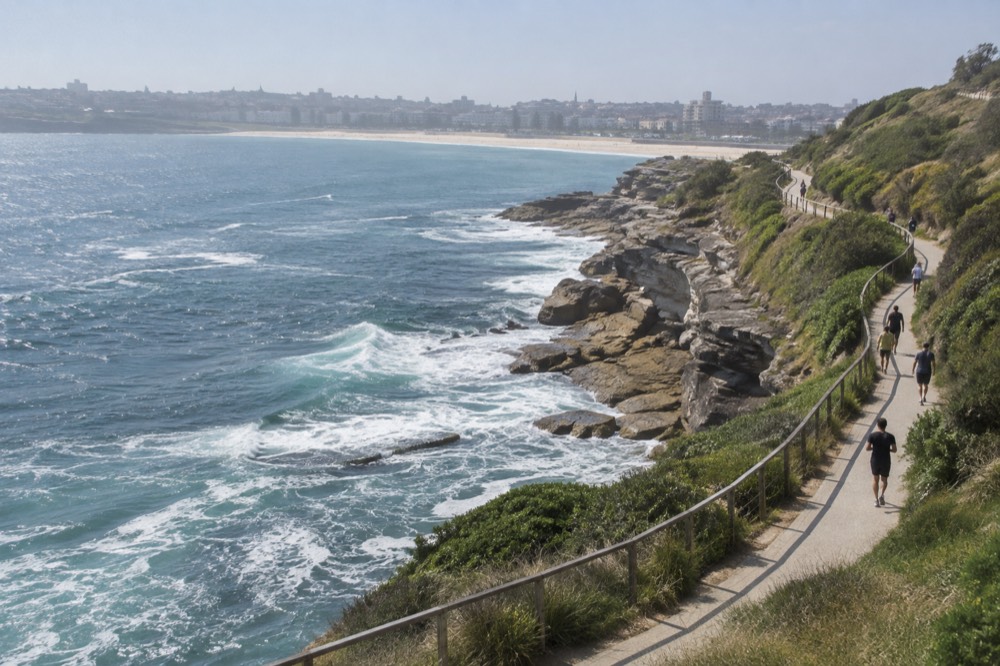
The Bondi to Coogee coastal walk is about 6 kilometres one way and takes most walkers two to three hours at a sightseeing pace. It starts at the Bondi Icebergs end of the beach, climbs over the headland past Tamarama and Bronte, and finishes at Coogee, passing four beaches, two ocean pools and the cemetery headland in between. It is free, paved almost throughout, and the single best free thing to do from Bondi.
The walk is the argument for visiting Bondi even on a day when you never intend to swim. Tamarama, the first beach you pass, is tiny and dramatically set; Bronte has its free ocean pool and a grassy picnic slope; Clovelly sits in a concrete-edged channel that is more snorkelling lagoon than beach; and the Waverley Cemetery section, with headstones running down to the cliff edge, is one of the most striking stretches of coastal path in the country. Our full Bondi to Coogee coastal walk guide covers the route in detail, and if you are deciding which direction to walk it, is it better to walk Bondi to Coogee or Coogee to Bondi settles that question directly.
| Section | Approx. distance | Approx. time | Highlights |
|---|---|---|---|
| Bondi to Tamarama | 1.5 km | 25-35 min | Icebergs, Mackenzies Point, Gould Street cliff |
| Tamarama to Bronte | 1 km | 15-20 min | Tamarama Beach, Bronte Ocean Pool |
| Bronte to Clovelly | 1.5 km | 25-30 min | Waverley Cemetery headland |
| Clovelly to Coogee | 2 km | 30-40 min | Clovelly Bay, Gordon's Bay, Wylie's |
| Total one way | 6 km | 2-3 hours | Four beaches, multiple pools |
Where Should You Eat Around Bondi?
Eat along Campbell Parade and the back streets of Hall Street and Curlewis Street, where the food scene runs well beyond beach-cafe cliches: serious brunch spots, a genuine local dinner scene and some of Sydney's best people-watching from a footpath table. Expect cafe prices at Sydney levels, with a typical main course well into the A$20-30 range and specialty coffee at A$5-6.
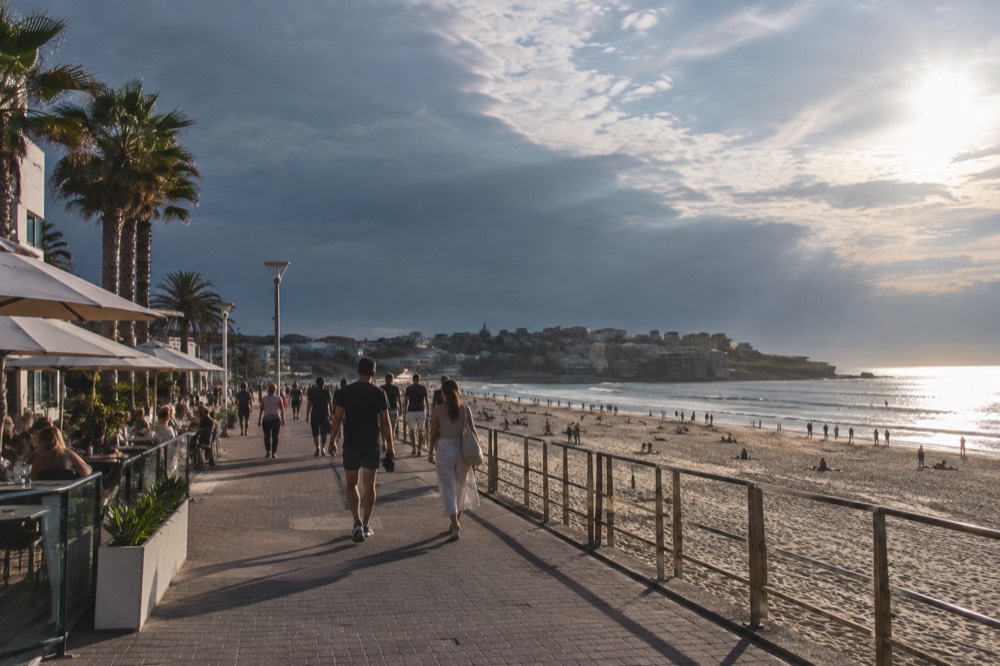
Bondi's food strip is a real neighbourhood dining scene, not a tourist monoculture, and the best of it sits one street back from the beach. Hall Street is the local's spine: coffee roasters, a bakery or two worth queuing at, and dinner options that range from casual to properly good. Campbell Parade itself holds the big-sky water-view venues, where you pay in view rather than in food. Brunch is a competitive sport here; our Sydney brunch spots guide places Bondi's cafes in their citywide context, and the Sydney coffee guide covers the roasters.
For a sense of how the numbers add up across a whole trip, the Sydney trip cost breakdown guide itemises meals, transport and attractions together, and is Sydney expensive tackles the headline question directly.
What Else Is There to Do Around Bondi When the Beach Is Done?
Plenty, because Bondi sits inside a 30-minute radius of most of Sydney's best water-based experiences: snorkelling at Shelly Beach near Manly, harbour sightseeing cruises from Circular Quay, and the eastern suburbs' own coastal walks and lookouts. A Bondi morning pairs naturally with a harbour afternoon, and the ferry network makes that combination a single capped-fare day.
The most natural pairing is a swap of coasts: Bondi in the morning, Manly in the afternoon. The Manly side offers Shelly Beach, a sheltered marine reserve where the snorkelling is genuinely calm and fish-filled, and a guided snorkelling tour there covers the gear and the safe spots in one booking. Our Manly Beach and Shelly Beach Manly guides cover the territory, and the best lookouts in Sydney guide covers the views in between.
Back on the harbour side, a sightseeing cruise is the low-effort way to see the Opera House, the Harbour Bridge and the waterfront mansions from the water, and it runs multiple departures a day from Circular Quay. The Sydney harbour cruises guide compares the formats, from one-hour sightseeing runs to sunset sailing.
If your Bondi day stretches into the evening, the things to do in Sydney at night guide picks up where the beach winds down, from the Rocks' laneway bars to harbour-view dining. And for the other end of the planning process, what not to miss in Sydney ranks the essentials across the whole city.
What Does a Day at Bondi Actually Cost?
A day at Bondi costs very little at its core: the beach, the coastal walk and the ocean pools at the free end are A$0, and transport is capped at A$9.65 for the whole day if you travel on a Friday, Saturday, Sunday or public holiday. The realistic budget for most visitors is A$50-100 per person once you add brunch, coffee, a drink on Campbell Parade and optional extras like a surf lesson or Icebergs entry.
The beach itself is the cheapest headline attraction in Sydney, and the transport maths is friendlier than most visitors expect. Because the Opal daily cap drops to A$9.65 on Fridays, weekends and public holidays, a beach day that also includes a ferry leg or a detour to Manly costs less in total transport than a single taxi ride from the airport. The table below breaks a realistic day into its parts.
| Item | Typical cost | Notes |
|---|---|---|
| Return bus from the CBD | A$6.28-8.98 | Capped lower on Fri-Sun and public holidays |
| Beach, flags, coastal walk | Free | Patrol included |
| North Bondi Children's Pool | Free | Closed weekly for cleaning |
| Bondi Icebergs casual swim | Paid entry | Club-managed, not free |
| Brunch main + coffee | A$25-40 | Campbell Parade and Hall Street |
| Two-hour surf lesson | See the live listing | Gear included, any level |
| Ferry add-on (Rose Bay or Manly) | A$7.35-9.20 | Counts toward the daily cap |
For the wider budget question, including [accommodation](https://booking.tpk.ro/ndznHj9h) and how Sydney compares with other Australian cities, the Sydney on a budget guide is the practical companion to this table.
Common Questions About Bondi Beach
Is Bondi Beach free to visit?
Yes. The beach, the patrol service, the coastal walk and the North Bondi Children's Pool are all free. The only paid elements are Bondi Icebergs pool entry, food and drink, and optional extras like surf lessons.
How do I get to Bondi Beach from Circular Quay?
Take a direct bus from the CBD toward Bondi Beach, about 30 to 40 minutes, or a ferry to Rose Bay followed by a connecting bus. There is no train station or ferry wharf at Bondi Beach itself; the nearest rail is Bondi Junction.
Is it safe to swim at Bondi Beach?
Yes, between the red and yellow flags during patrol hours. Bondi is patrolled year-round by professional lifeguards, 6am to 7pm from October to April and 7am to 5:30pm from May to September. Outside the flags or outside patrol hours, rip currents are a serious hazard.
What is the best month to visit Bondi?
August through November. August is Sydney's statistically clearest month, and spring keeps the clear skies while temperatures climb. February, despite being peak summer, is Sydney's cloudiest month, and June is its wettest.
Can you swim at Bondi in winter?
Yes, though the water is cold, with June to August mean maximums of 16.4 to 17.9 °C. Wetsuits are standard for winter surfing, the patrol continues year-round, and crowds are far thinner than in summer.
How long does the Bondi to Coogee walk take?
About two to three hours one way at a sightseeing pace, covering roughly 6 kilometres and four beaches. Most walkers turn around at Bronte for a shorter outing of about an hour.