Surfing Lessons in Sydney: Where to Learn and What to Expect
Sydney is one of the few major cities in the world where you can take a proper surf lesson before breakfast. This guide covers where to learn, what a first lesson involves, which season suits beginners, and the safety habits that matter on this coast.
Short answer
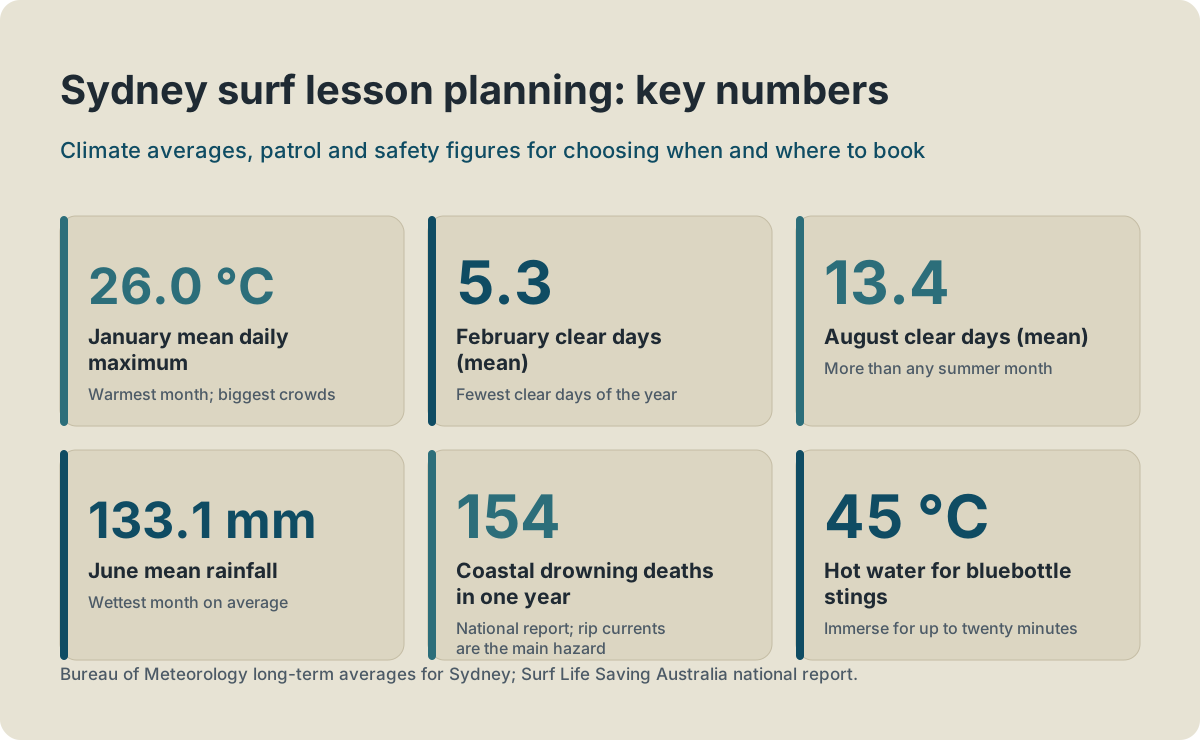
Bondi is Sydney's main surf school hub, with lessons running year-round on a beach patrolled every day of the year. Manly and Maroubra are the other strong options. Summer means warmer water and bigger crowds; winter brings the clearest skies of the year, with a mean maximum of 17.9 °C in August.
Sydney runs on salt water. The city sits between a harbour and a line of open-ocean beaches that face the Pacific, and surfing is woven into its daily life in a way few capitals can match. You can catch a ferry, a bus or a train from the centre of town and be standing on sand within forty minutes, with a surf school shed within sight of the waves.
Learning here is genuinely practical, not a holiday novelty. The beaches that suit first-timers are patrolled, reachable by public transport, and backed by established schools that run every month of the year. The catch is that this coast deserves respect: rips are the number one hazard on every Sydney beach, and the habits you build in your first lesson matter more than the waves you catch.
Where Are the Best Beaches for Surfing Lessons in Sydney?
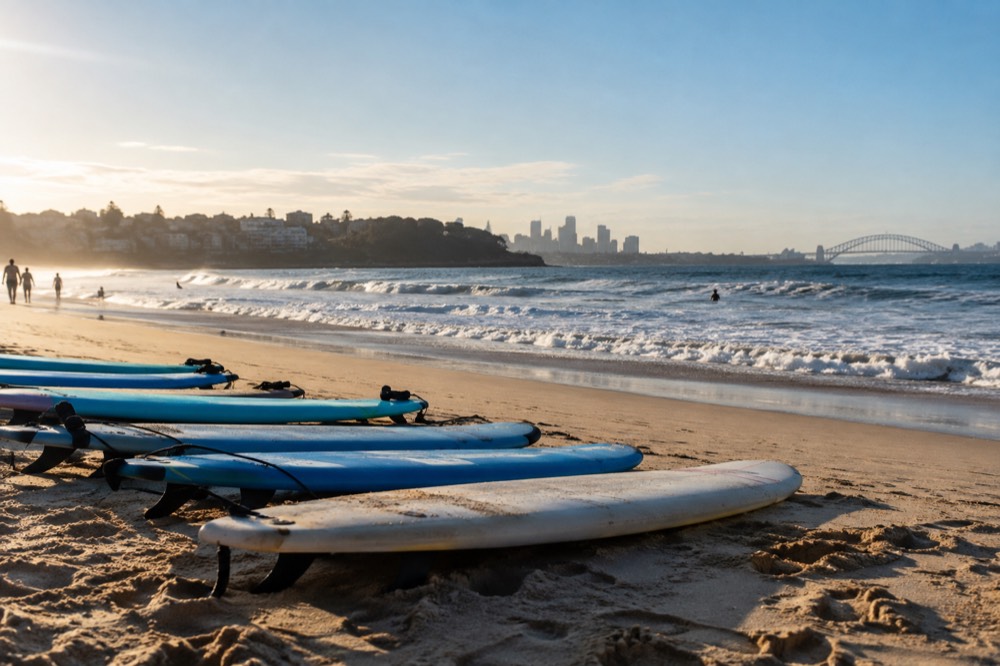
Bondi is the default answer and the best one for most visitors, because it combines year-round patrols, a sheltered northern corner for beginners, and the deepest pool of surf schools in the city. Manly suits learners staying on the northern side of the harbour, with gentle waves near the southern end of the beach. Maroubra is the local pick: less crowded, more consistent sandbanks, and a straightforward bus ride from the city centre.
Bondi's geography does a lot of work for beginners. The beach curves, and the northern end near North Bondi sits in the lee of the headland, which softens the swell and slows the waves down. That is where the surf schools congregate, and it is also where the North Bondi Children's Pool ocean pool sits, a useful landmark for finding the right stretch of sand. The beach is patrolled by professional council lifeguards every day of the year, which is rarer than it sounds: most Sydney beaches drop their patrols outside the warmer months.
Manly, reached by the famous ferry from Circular Quay, has a similar arrangement. The southern end near the surf club catches the smaller waves, and the whole beach is patrolled year-round by council lifeguards. Learners staying in Manly can walk to a lesson; the suburb is compact and oriented around the water, and the neighbouring Shelly Beach area gives calmer water for a recovery swim afterwards.
Maroubra is the connoisseur's choice. It faces south, picks up more swell, and hosts fewer tourists, but its long stretch of sand almost always has a workable bank somewhere. Cronulla, at the end of the train line in the Sutherland Shire, rounds out the list for anyone based in the city's south. Its patrols run roughly September to April, so check the season before booking a winter lesson there.
| Beach | Side of the harbour | Beginner-friendly spot | Patrol season | Best for |
|---|---|---|---|---|
| Bondi | Eastern suburbs | Northern end, near North Bondi | Year-round, professional lifeguards | First-timers, visitors short on time |
| Manly | Northern Beaches | Southern end near the surf club | Year-round, professional lifeguards | Ferry riders, northern-side stays |
| Maroubra | Eastern suburbs | Central banks, varies with sand | Year-round, professional lifeguards | Second and third lessons, fewer crowds |
| Cronulla | Sutherland Shire | South Cronulla corner | Roughly September to April | Visitors based in the south |
| Coogee | Eastern suburbs | Northern end | Year-round, council lifeguards | Combining a lesson with the coastal walk |
Coogee deserves a mention for a different reason: it sits at one end of the Bondi to Coogee coastal walk, so a morning lesson pairs naturally with an afternoon clifftop walk past three more beaches. Its waves are usually smaller and messier than Bondi's, which some beginners prefer and some find frustrating. The honest summary: if in doubt, book Bondi.
What Does a Beginner Surf Lesson in Sydney Actually Involve?
Almost every Sydney beginner lesson runs for about two hours, begins with fifteen to twenty minutes on the sand learning to pop up onto the board, and then moves into waist-deep water where you catch broken white-water waves. Board and wetsuit hire is almost always included in the advertised price, and instructors hold Surf Life Saving or ASI coaching qualifications. Group sizes are typically capped so each learner gets feedback on every wave.
The sand session matters more than newcomers expect. The pop-up, the motion of jumping from lying flat to standing on the board, is the single skill that determines whether your first hour in the water is joyful or exhausting. Instructors teach it as a repeated drill: hands under the chest, back foot first, front foot through. Do it badly twenty times on the sand and you will do it badly twenty times in the surf, so the good schools are strict about it.
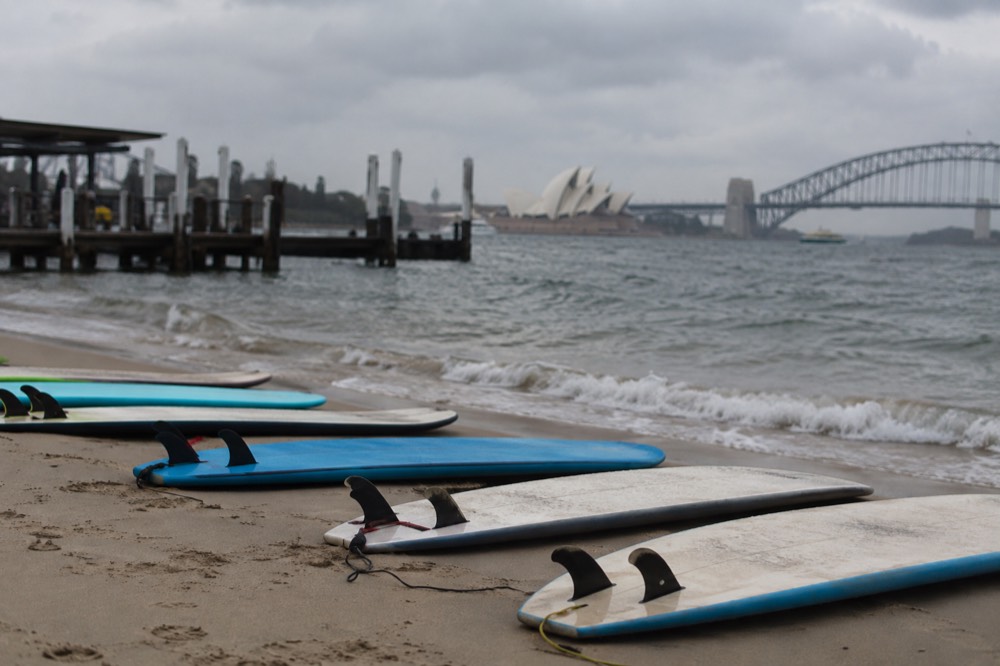
Then comes the water, and the honest part: your first session is about riding white water, not green waves. The instructor pushes you onto already-broken waves so you can practise standing without the timing problem of catching a wave as it forms. Most people stand within their first hour. Almost nobody paddles out the back in lesson one, and any school promising that is selling something other than teaching.
Sydney's strongest-reviewed beginner option is a small-group Bondi lesson that includes board and wetsuit hire, capped at a handful of learners per instructor. It runs at Bondi Beach daily and suits complete beginners and improvers alike; the small-group cap is the detail worth checking for, because it is the difference between feedback on every wave and feedback on every fifth wave.
A reasonable question is why a surf guide points at a Blue Mountains day trip and an Opera House tour. The answer is weather. Sydney's surf is at its least forgiving when a big swell arrives, and on those days, or on the days when the wind turns a beach into foam, the best move is to swap the beach for something inland. Keeping one flexible alternative in your plans is simply good sequencing, and most Sydney tour bookings can be moved or cancelled without penalty if you book the flexible option.
Which Sydney Surf Lesson Should You Book?
For most visitors, the small-group Bondi lesson is the right call: it balances price, coaching quality and convenience better than any alternative in the city. If you want maximum attention, book a private lesson on the same beach. If you are travelling with teenagers who tire of surfing quickly, or you want a calmer water day, the Manly snorkelling tour over the Shelly Beach reef is the better spend.
The two Bondi products on this site differ in shape rather than quality. One is a small-group lesson with a strict cap on learner numbers per instructor, which suits people who want to progress quickly. The other is a two-hour experience built for any level, from nervous first-timer to returning intermediate, and it is the one to pick if your group spans abilities: the instructors run different drills for different levels within the same session.
Private coaching is worth the premium in two cases: if you are genuinely afraid of the water, or if you have surfed before and want to fix a specific fault, usually the pop-up or the paddle technique. In a group setting an instructor simply cannot watch one learner for a full session. Solo travellers and couples who book privately also get a say on where the lesson happens, which matters on days when Bondi is blown out and Maroubra is clean.
The snorkelling alternative is not a consolation prize. Shelly Beach at Manly sits inside a marine reserve, the water is genuinely calm, and the reef sits in water shallow enough to stand in most of the time. For families with anxious swimmers it is a better first ocean experience than a surf lesson, and for confident surfers it makes a good rest-day activity between lessons.
When Is the Best Time of Year to Learn to Surf in Sydney?
December through February gives the warmest water and air, with mean daily maxima of 25.3 to 26.0 °C, but also the biggest crowds and the cloudiest skies: February averages just 5.3 clear days. Autumn and spring are the sweet spot for lessons, with warm water lingering into April and lighter beaches. Winter is the least crowded and, surprisingly, the clearest: August averages 13.4 clear days, more than any summer month, with a mean maximum of 17.9 °C.
That last point deserves emphasis because almost every visitor gets it backwards. The Bureau of Meteorology's long-run records for Sydney show that peak summer is statistically the cloudiest time of year here, while late winter delivers the clearest skies. A winter surf lesson in Sydney is cold on the hands and empty on the sand, and with a proper wetsuit, which every school provides, it is far more pleasant than most northern-hemisphere visitors expect.
| Month | Mean max °C | Mean min °C | Mean rainfall mm | Rain days ≥1 mm | Clear days (mean) |
|---|---|---|---|---|---|
| Jan | 26.0 | 18.8 | 101.2 | 8.6 | 6.8 |
| Feb | 25.8 | 18.9 | 119.3 | 9.0 | 5.3 |
| Mar | 24.8 | 17.6 | 131.6 | 9.9 | 7.1 |
| Apr | 22.5 | 14.8 | 126.5 | 8.9 | 9.1 |
| May | 19.5 | 11.6 | 117.4 | 8.6 | 9.5 |
| Jun | 17.0 | 9.3 | 133.1 | 8.8 | 9.1 |
| Jul | 16.4 | 8.1 | 96.3 | 7.4 | 12.0 |
| Aug | 17.9 | 9.0 | 80.2 | 7.1 | 13.4 |
| Sep | 20.1 | 11.1 | 68.1 | 7.1 | 10.9 |
| Oct | 22.2 | 13.6 | 76.7 | 7.9 | 8.1 |
| Nov | 23.7 | 15.7 | 83.8 | 8.3 | 6.0 |
| Dec | 25.3 | 17.6 | 77.1 | 7.9 | 6.6 |
These are long-term averages drawn from the Bureau of Meteorology's published climate statistics for Sydney, not a forecast for your dates. The pattern they show, wettest in June at 133.1 mm on average and clearest in August, is stable across decades of records. What the table cannot show is water temperature: no official monthly sea-surface normal exists for Sydney, so treat any figure you see quoted for ocean temperature with suspicion.
For lesson planning, the practical read is this. Book summer if warmth matters more than crowds, and go early: lessons starting around 7am beat both the heat and the beach traffic. Book March to May or September to November for the best overall balance. Book winter if you want empty sand and clear skies, and accept that you will be wearing a full wetsuit, which the school supplies.
Is It Safe to Learn to Surf in Sydney?
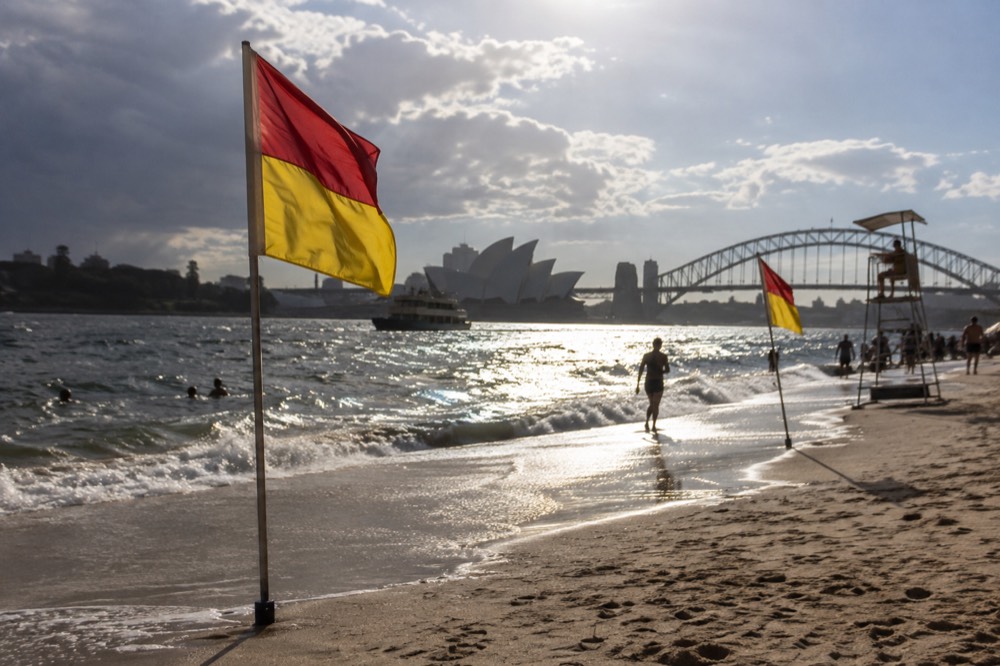
Yes, provided you swim and surf between the red and yellow flags at a patrolled beach during patrol hours, which is the rule every Sydney surf school teaches first. Bondi, Bronte, Tamarama, Coogee and Manly are patrolled year-round by professional council lifeguards. Rip currents are the number one hazard on this coast; Surf Life Saving Australia's national report recorded 154 coastal drowning deaths in the year it covers, and every one occurred outside the flags, outside patrol times, or at an unpatrolled beach.
That statistic is the reason the flags rule is non-negotiable, and it is worth understanding what it means. The flags mark where lifeguards have checked the sandbanks and judged the safest passage through the surf. A rip, a channel of fast water pulling away from the shore, can sit twenty metres from a safe swimming bank. Learners on foam boards are actually at an advantage: a big floaty board keeps you at the surface. But a board does not cancel a rip.
The official advice if you are caught in a rip, published by Surf Life Saving's public beach-safety service on its rip currents page, is to stay calm and conserve energy, raise an arm and call for help, float with the current, which may carry you back to a sandbank, or swim parallel to the beach toward breaking waves. The prevention framing is simpler still: STOP, check for rips; LOOK, for other dangers; PLAN, how to stay safe. Your instructor will walk you through reading the water before your first lesson, and that habit is the real skill you are paying to learn.
Bluebottles are the other honest nuisance. They drift in on onshore winds, mostly in the warmer months, and their stings hurt without being dangerous. The official advice is to leave the water, remove any tentacles with seawater rather than bare hands, and immerse the sting in hot water around 45 °C for up to twenty minutes, seeking a lifeguard if the reaction is severe. Every surf school keeps hot water and vinegar-free protocols on hand; ask the instructor rather than toughing it out.
| Beach | Who patrols | High-season hours | Low-season hours |
|---|---|---|---|
| Bondi, Bronte, Tamarama | Waverley Council professional lifeguards | 6am to 7pm, October to April | 7am to 5:30pm, May to September |
| Coogee | Randwick Council lifeguards, volunteer lifesavers in summer | Around 7am to 7pm in daylight saving | Around 7am to 5pm |
| Manly | Northern Beaches Council lifeguards | Extended summer hours | Year-round daily patrols |
| Most other Northern Beaches | Council lifeguards plus weekend volunteers | Roughly 9am to 5pm, late September to late April | Not patrolled |
| Cronulla area | Sutherland Shire professional lifeguards | Around 7am to 5pm or 6pm, September to April | Not patrolled |
The pattern to take away: the year-round beaches are year-round for a reason, and the seasonal ones are seasonal for the same reason. A winter lesson at Bondi or Manly happens with lifeguards on the sand. A June lesson at a smaller seasonal beach might not, and a surf school operating there out of season is a school taking its customers outside the flags. Check before you book.
What Should You Bring to a Surf Lesson?
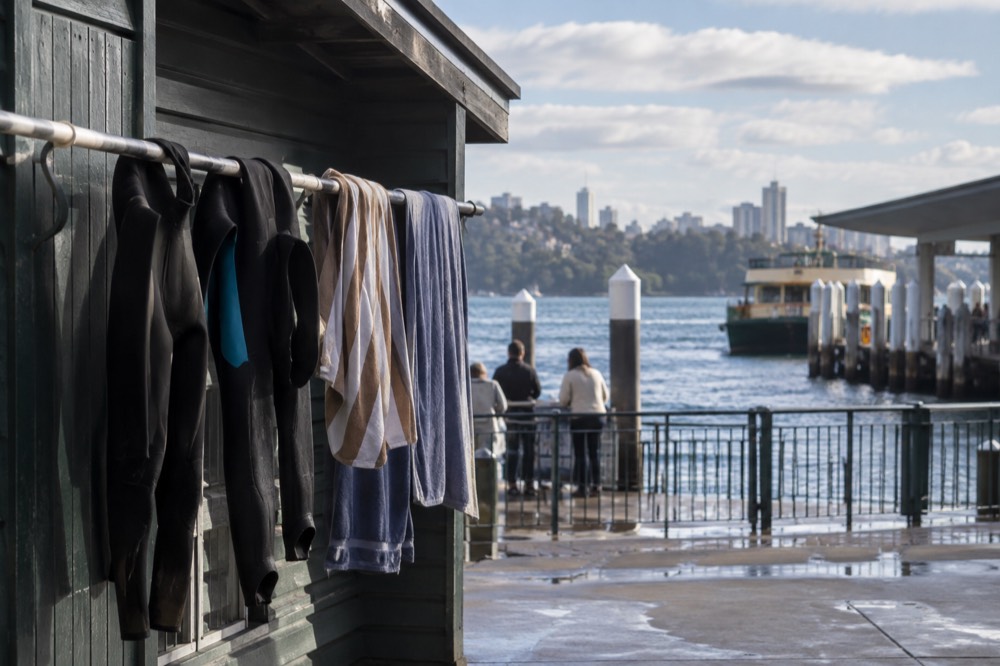
Bring a swimsuit worn under your clothes, a towel, sunscreen applied before you arrive, drinking water, and nothing else you would mind losing to the ocean. The school supplies the board, the wetsuit and the rash shirt, and every Sydney school will store your bag in the van or shed during the session. Leave jewellery, phones and hotel key cards out of your pockets; a leash keeps the board attached to you, not your belongings.
Sun protection is the item visitors underestimate. Sydney's UV index exceeds the protection threshold of 3 for most of the year and reaches extreme levels above 11 in summer, so a lesson at 10am in January is a sunburn event waiting to happen unless you apply a full sunscreen before the wetsuit goes on. Zinc on the face holds up better than lotion when it is being rinsed by salt water every few minutes. Sunglasses and a hat live in the bag for afterwards, not on your face in the water.
| Item | Supplied by the school? | Notes |
|---|---|---|
| Soft-top beginner board | Yes | Longer and more stable than a performance board |
| Wetsuit | Yes, all year | Full steamer in winter, springsuit or rash shirt in summer |
| Rash shirt | Yes in summer | Prevents chest chafe and adds sun protection |
| Swimsuit | No | Wear it under your clothes to change quickly |
| Towel | No | Beach showers exist at Bondi, Manly and Maroubra |
| Sunscreen | Bring your own | Apply 20 minutes before the wetsuit goes on |
| Water bottle | Bring your own | Two hours in the sun is dehydrating even in winter |
| Bag storage | Yes | Kept in the school's van or shed |
Footwear is a common question and the answer is usually no. Sydney's beginner beaches are sandy-bottomed with few rocks where the lessons happen, and bare feet give better grip on the board. Exceptions exist at beaches with rockier entries, and your instructor will say so. Thongs or sandals for the walk from the bus stop are enough.
How Do You Get to Sydney's Surf Beaches Without a Car?
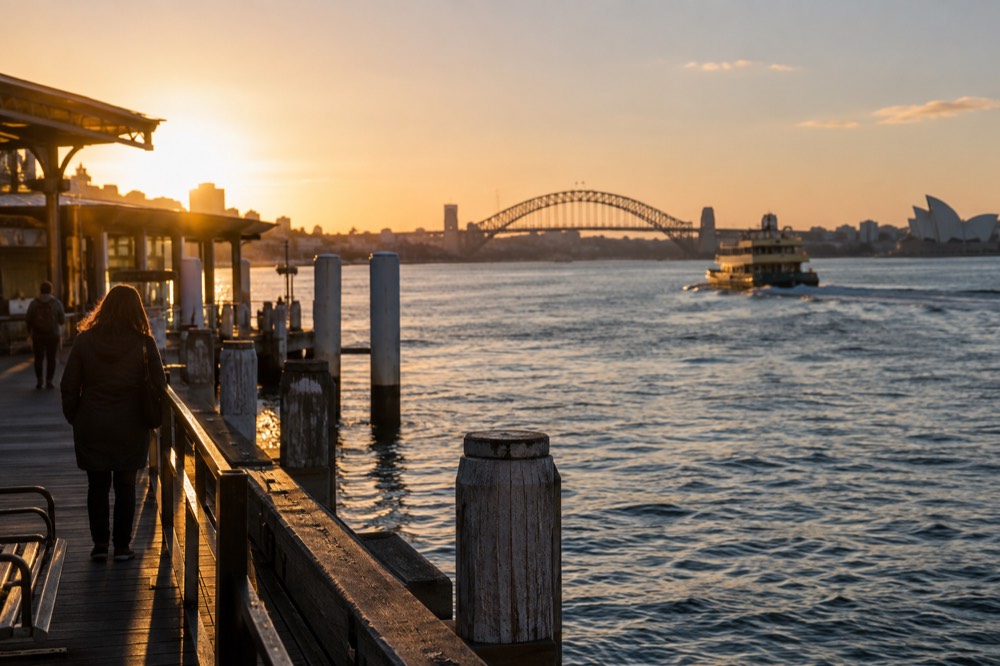
Bondi is a 30 to 40 minute bus ride from the city centre, Manly is a ferry ride from Circular Quay, and Maroubra is reached by bus or by light rail plus a short walk. None of the three needs a car, and the ferry to Manly, at $9.20 one way on an adult Opal or contactless card, is itself one of Sydney's best experiences.
Daily travel caps of $19.30 Monday to Thursday and $9.65 Friday to Sunday mean a lesson day rarely costs more than one capped day of fares.
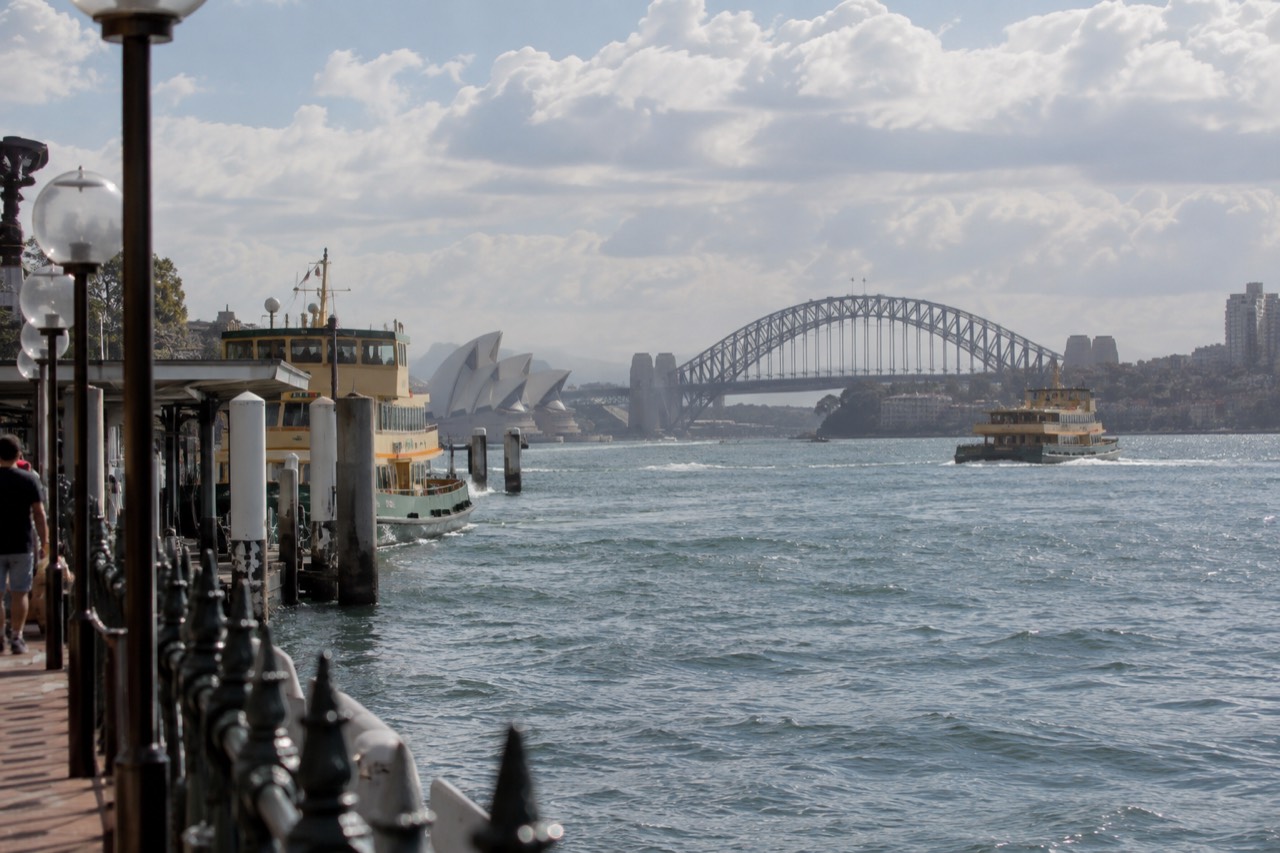
The bus to Bondi departs from the CBD regularly and drops you a few hundred metres' walk from the northern end where the schools operate. On summer weekends it fills early, so a 7am lesson conveniently dodges both the traffic and the crowd. The ferry to Manly is the more scenic option by far: the F1 crosses the harbour heads and gives you the Opera House and the Harbour Bridge from the water on the way out. It falls in the 9 km-plus ferry band, and ferries carry no off-peak discount, unlike trains, buses and light rail.
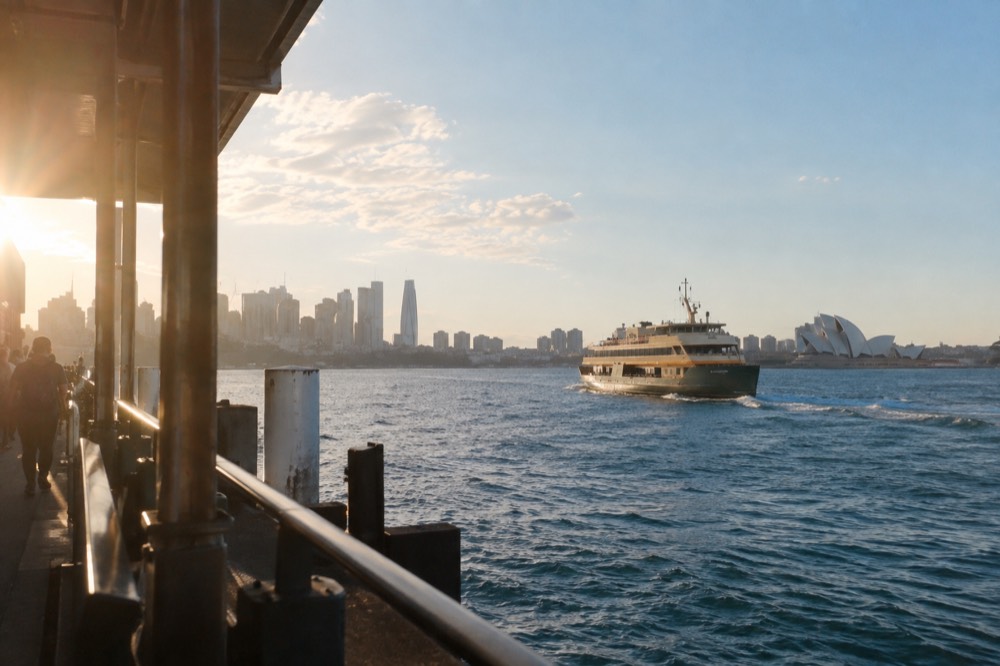
Maroubra is the sleeper option for transport. Buses run there from the city and from Bondi Junction, and the interchange at Bondi Junction also connects the beach circuit to the train network if you are staying further out. Full fare and cap details live on the Transport for NSW pages, and the practical rule for a lesson day is simple: tap on with the same card every time, tap off every time, and the daily cap does the rest. If you are weighing whether a car helps in Sydney at all, the surf beaches are a good test case, and the answer is usually that it does not.
What Comes After Your First Lesson?
Most people stand in lesson one, ride along the wave face in lesson two or three, and only then start learning to paddle out through broken waves and catch unbroken green waves. Progressing from beginner to confident intermediate typically takes five to ten lessons spread over a few weeks, or one intensive weekend. Sydney rewards the patient: the coastal walk between beaches builds ocean reading skills, and the city's surf clubs run board hire for practising between coached sessions.
The single best thing you can do after lesson one is book lesson two within a week. The pop-up is a motor skill, and it decays. Learners who leave it a month between sessions effectively restart; learners who go again within days consolidate. Schools in Bondi and Manly sell multi-lesson packages precisely for this reason, and they are the honest money-saver in a sport where the first three lessons otherwise cost the same as the next ten.
Between lessons, spend time in the water without a board. Bodysurfing and even just wading out to chest depth at a patrolled beach, between the flags, teaches you to read rips and banks in a way no classroom briefing can. The best beaches in Sydney for this practice are the patrolled ones, and the same reading skill transfers directly to your next lesson. Ocean pools make a calm alternative on days when the surf is too big for comfort: Bronte Ocean Pool and the North Bondi Children's Pool are free, while Bondi Icebergs is a club-run pool with an access fee.
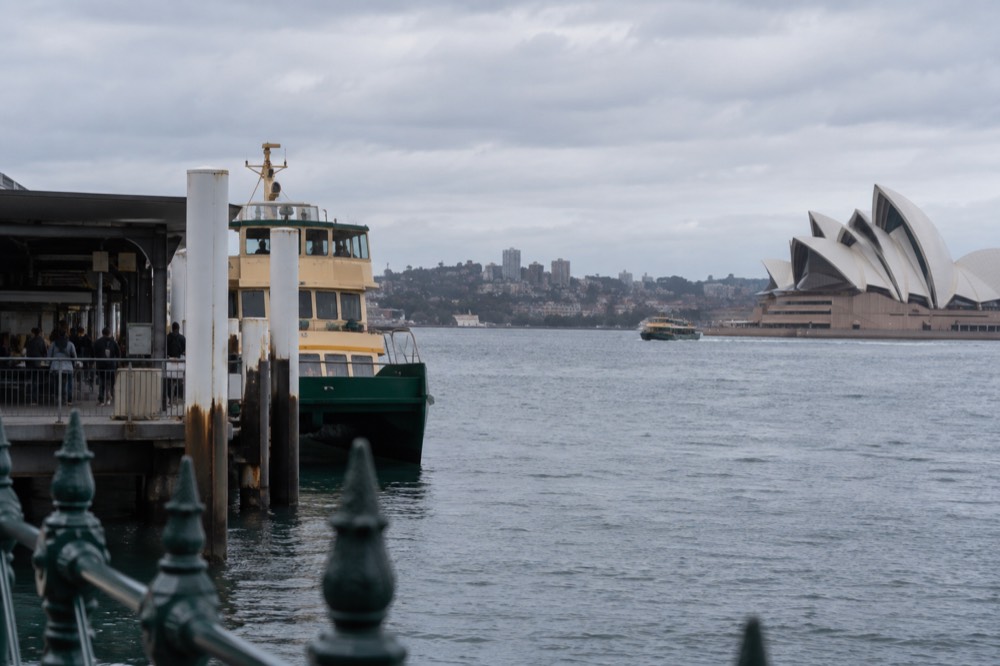
For travellers fitting surfing into a short visit, the realistic framing is this: one lesson gives you the experience and the photos, two or three give you the skill, and the surfers you admire on Sydney's beaches mostly started exactly where you are, on a foam board in the white water at Bondi or Manly. This guide is part of Sydney Travel Guide, where the beaches, the coastal walks and the ferry routes that connect them are covered in depth.
If a surf lesson turns out to be the highlight of your trip, the water options do not stop there. Sydney's harbour and coast support everything from sunrise kayak paddles to whale watching in season, and the same booking habits apply: pick the flexible option, check the season, and let the weather decide the day. The trio below covers the reliable classics, a surf lesson among them, for travellers building out the rest of a first-time itinerary.
Common Questions About Surfing Lessons in Sydney
Do I need to be a strong swimmer to take a surf lesson in Sydney?
Schools ask that you can swim 50 metres and are comfortable in water over your head, but your first lesson happens mostly in waist-deep water on broken waves. The board is a flotation aid and the instructor stays close. If deep water genuinely frightens you, say so when booking; some schools start absolute beginners in shallower, slower conditions.
Can children take surfing lessons in Sydney?
Yes. Most Bondi and Manly schools take children from around seven or eight years old in family or kids' groupings, with lower instructor-to-learner ratios than the adult sessions. The year-round professional patrols at both beaches are part of why they, rather than smaller seasonal beaches, are the standard venues for children's lessons.
What should I wear to a surf lesson in winter?
A full-length steamer wetsuit, supplied by the school, plus booties if your hands and feet run cold. Bring a warm layer and a hot drink for afterwards, since the coldest part of a winter lesson is the walk back. August, the clearest month of the Sydney year, is a popular time for locals to learn precisely because the beaches are empty.
How many surf lessons do I need before I can surf on my own?
Realistically five to ten lessons to paddle out, select a wave and stand up on green water without an instructor pushing you onto it. Two lessons get most people riding along the wave face confidently. Soft-top boards can be hired at Bondi and Manly for practising between coached sessions.
Is Bondi too crowded for a surf lesson?
Not at lesson times. Schools work the northern end early in the morning, before the beach fills, and the learner area is kept separate from the general surf zone. Summer weekends from mid-morning are a different story, which is one reason the 7am sessions are worth setting an alarm for.
What happens if the surf is too big on my lesson day?
Schools move the lesson to a sheltered corner of the same beach, shift to a nearby beach with smaller conditions, or reschedule you at no cost. Big-swell days are the one scenario where having a flexible booking matters, and most Sydney surf experiences can be cancelled or moved without penalty when booked that way.