Bondi to Coogee Coastal Walk: The Complete Guide
The Bondi to Coogee walk is the single best free experience in Sydney: six kilometres of cliffs, ocean pools and five beaches, doable in a morning and patrolled year-round at both ends.
Short answer
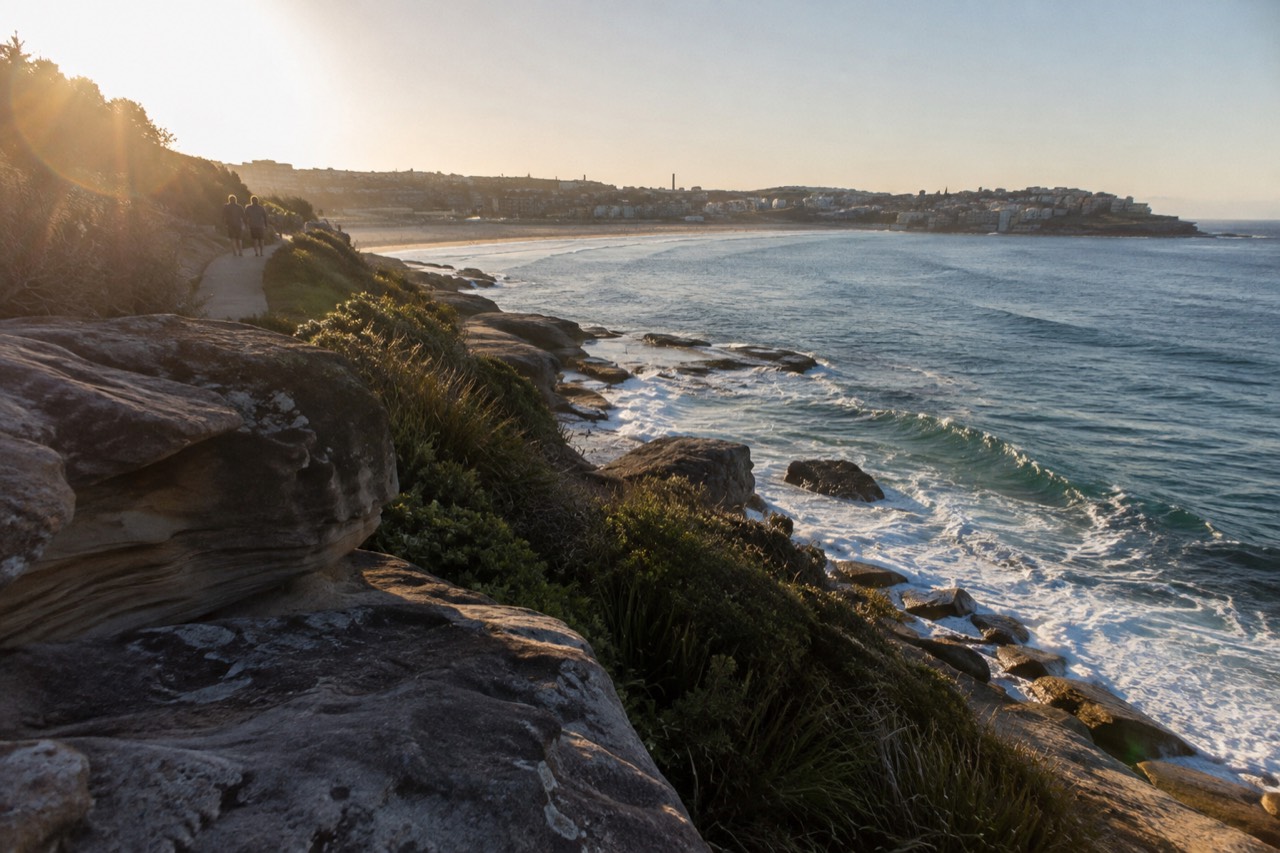
The Bondi to Coogee coastal walk runs about 6 km along Sydney's eastern beaches, linking Bondi, Tamarama, Bronte, Clovelly, Gordon's Bay and Coogee. Most walkers finish in two to three hours. It is free, open all year, and both Bondi and Coogee are patrolled by professional lifeguards year-round.
The Bondi to Coogee coastal walk is the one Sydney experience that costs nothing and delivers the most. Six kilometres of sandstone cliffs, ocean pools, cemeteries perched above the surf and five distinct beaches, all stitched together by a path that a reasonably fit walker covers in two to three hours. Locals run it before work. Visitors linger half a day. Both are doing it right.
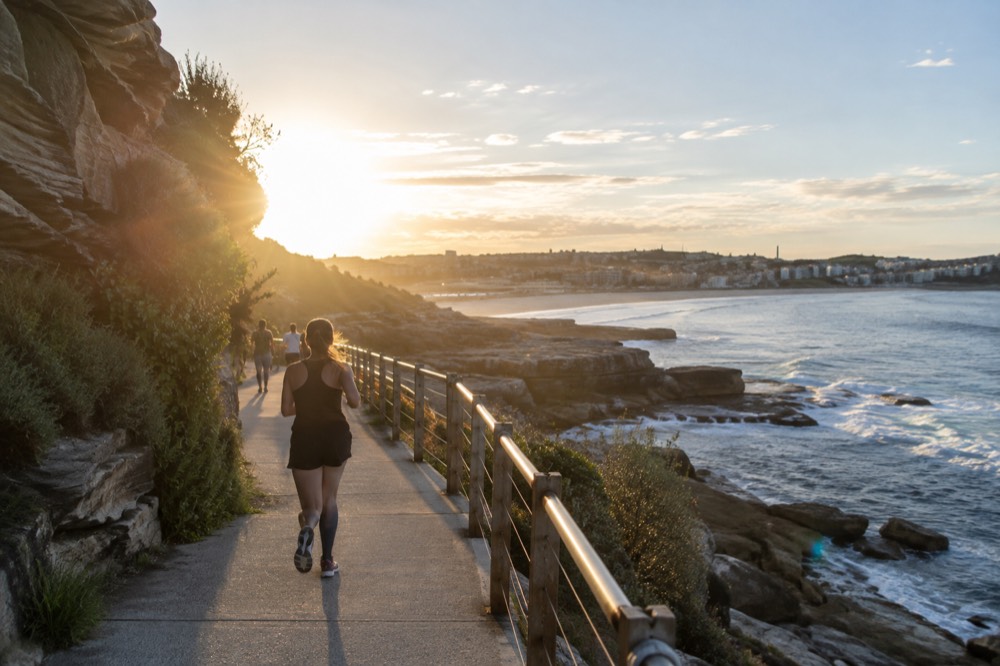
This guide from Sydney Travel Guide covers the practical questions: how long it takes, which beaches you pass, when to swim, where the ocean pools are, and what the weather actually does on this coast, which is not what most visitors expect. Sydney's eastern beaches are patrolled by professional lifeguards year-round, which is rarer than people assume, and there are free ocean pools at two points if the surf looks intimidating.
How Long Is the Bondi to Coogee Walk?
The Bondi to Coogee walk covers roughly 6 kilometres one way and takes most people two to three hours at a sightseeing pace. Fast walkers doing it purely for exercise finish in about 90 minutes, but that misses the point. The path runs continuously from the south end of Bondi Beach to Coogee, with no sections where you need to walk on the road, and you can exit at Bronte or Clovelly if 6 kilometres is more than your group wants.
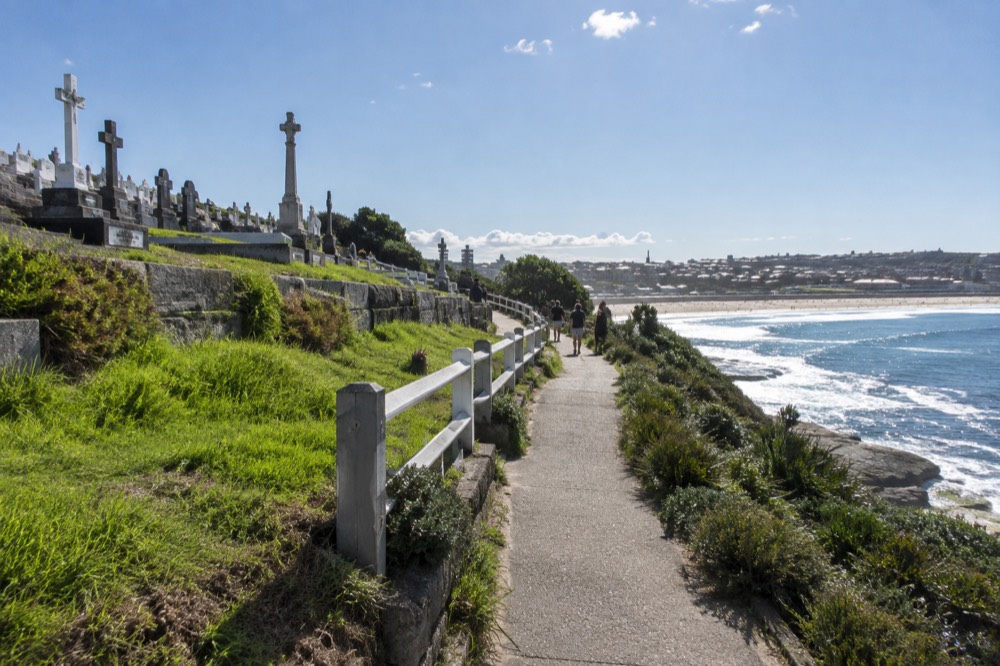
The distance is short but not flat. There are stairs, a climb around Mackenzies Point, and the long rise past Waverley Cemetery that catches plenty of people out on hot days. Allow more time than the raw distance suggests, especially in the December to February summer when the sun is at its most punishing and shade is scarce along the whole route.
Direction matters less than people think, but the traditional run is Bondi to Coogee, south to north being Coogee to Bondi. Starting at Bondi puts the famous beach behind you early and saves the quieter, prettier coves for the second half. Starting at Coogee means you finish at Bondi with its cafes, buses and the option to keep walking north. There is a dedicated guide to getting around Sydney's eastern beaches if you are working out transport at either end.
A practical middle option: take a bus to Bondi, walk to Bronte, swim, and catch a bus home from there. Bronte sits almost exactly halfway and has the best combination of park, pool and cafe of any stop on the route.
Which Beaches Does the Walk Pass Through?
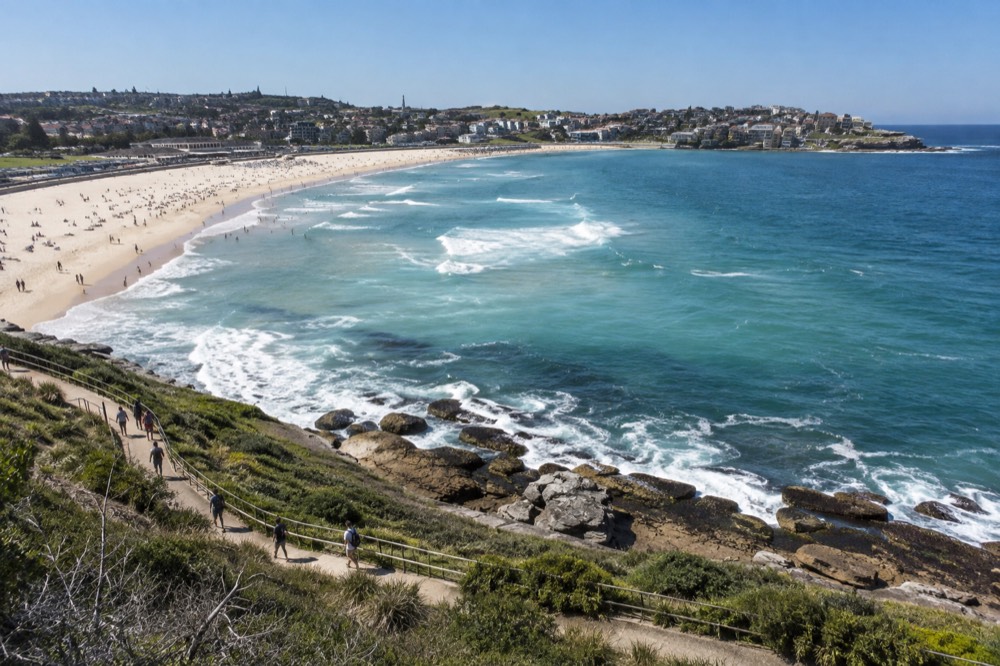
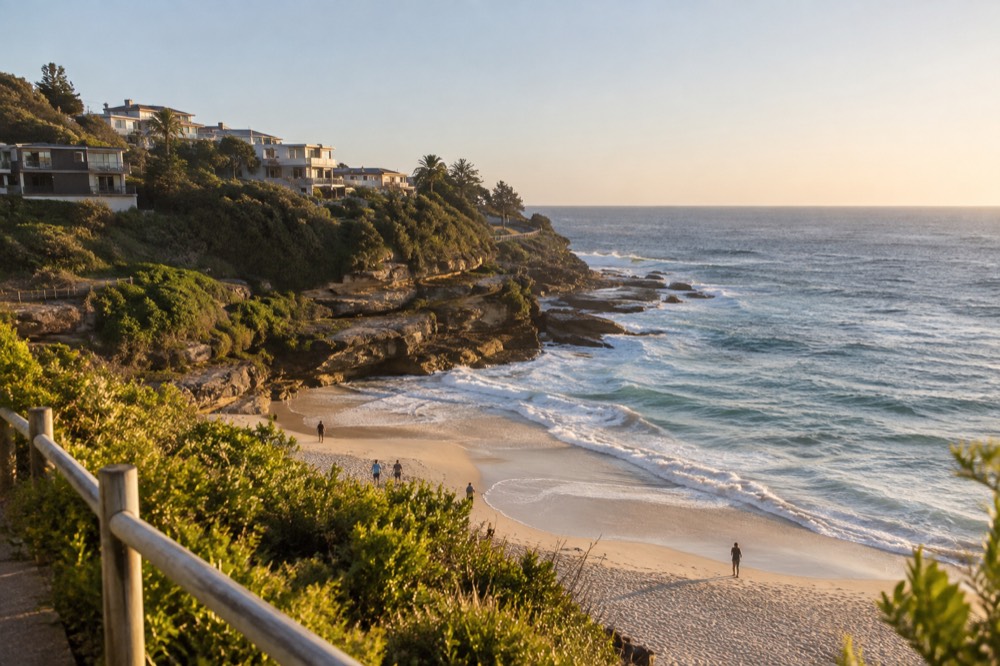
The walk links six stretches of coast in order: Bondi Beach, the tiny cove at Mackenzies Bay, Tamarama Beach, Bronte Beach, Clovelly Beach and Gordon's Bay, finishing at Coogee Beach. Tamarama is the smallest and steepest, Bronte has the best family facilities, Clovelly is a calm snorkelling channel, and Coogee is the widest and most relaxed of the lot. Each has its own character and its own swimming story.
Bondi needs little introduction, and there is a full Bondi Beach guide if you want to spend the morning there first. The walk proper starts at the Icebergs end, past the famous pool and up the headland. Mackenzies Bay appears and disappears with sand movement: some years it is a beach, some years it is just rocks, and it is not a swimming spot either way.
Tamarama is the one people remember. It is a compact, beautiful, dangerous-feeling cove with a strong permanent rip running out of the middle, and it is the beach where swimming between the flags matters most on this whole walk. It is also the home of Sculpture by the Sea, the coastal sculpture exhibition that takes over the cliffs each spring.
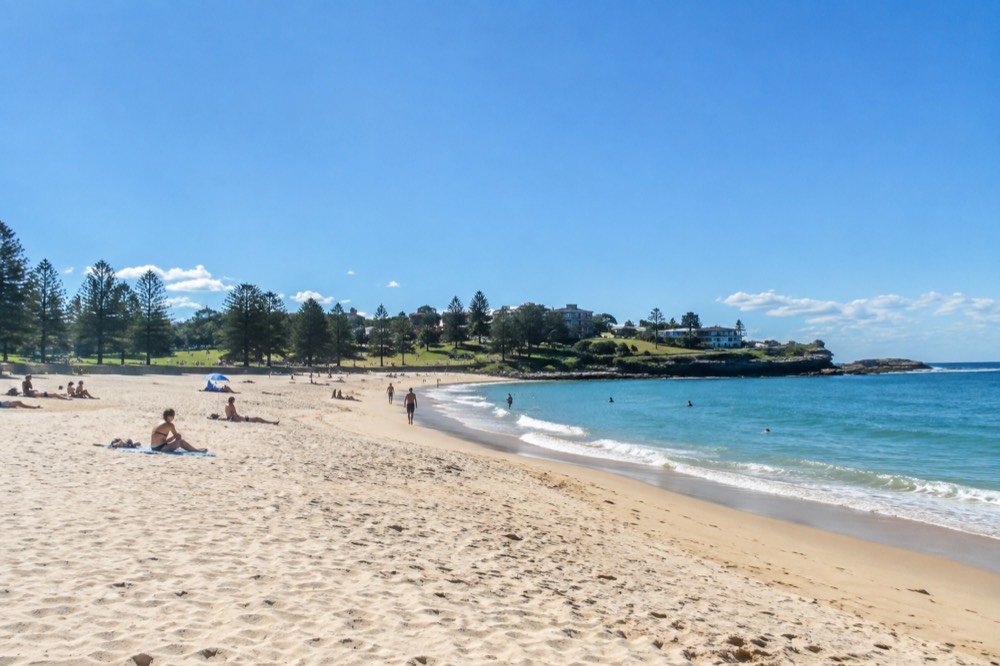
Bronte is the halfway reward: a grassy park behind the sand, a free ocean pool at the southern end, a natural rock pool for kids, and barbecue facilities. Clovelly is unlike the others, a concrete channel around a narrow bay that is calm enough for snorkelling and popular with older swimmers. Gordon's Bay, just past it, is a protected snorkelling reserve reached by steps. Coogee, the finish, is wide, gently shelving and backed by lawns, with its own guide covering where to eat and stay.
| Stop | Character | Best for |
|---|---|---|
| Bondi Beach | Iconic, busy, 1 km of sand | People-watching, surf lessons, the walk's start |
| Mackenzies Bay | Tiny cove, sand comes and goes | Photos only, no swimming |
| Tamarama | Small, steep, strong permanent rip | Confident swimmers between the flags |
| Bronte Beach | Park, pools, barbecues | Families, a long rest stop |
| Clovelly Beach | Calm concrete channel | Snorkelling, easy swimming |
| Gordon's Bay | Protected marine reserve | Snorkelling, quiet |
| Coogee Beach | Wide, gentle, relaxed | The finish, dinner, an easy swim |
If the coast has whetted your appetite for Sydney's water, these are the three experiences worth pairing with the walk.
When Is the Best Time to Do the Bondi to Coogee Walk?
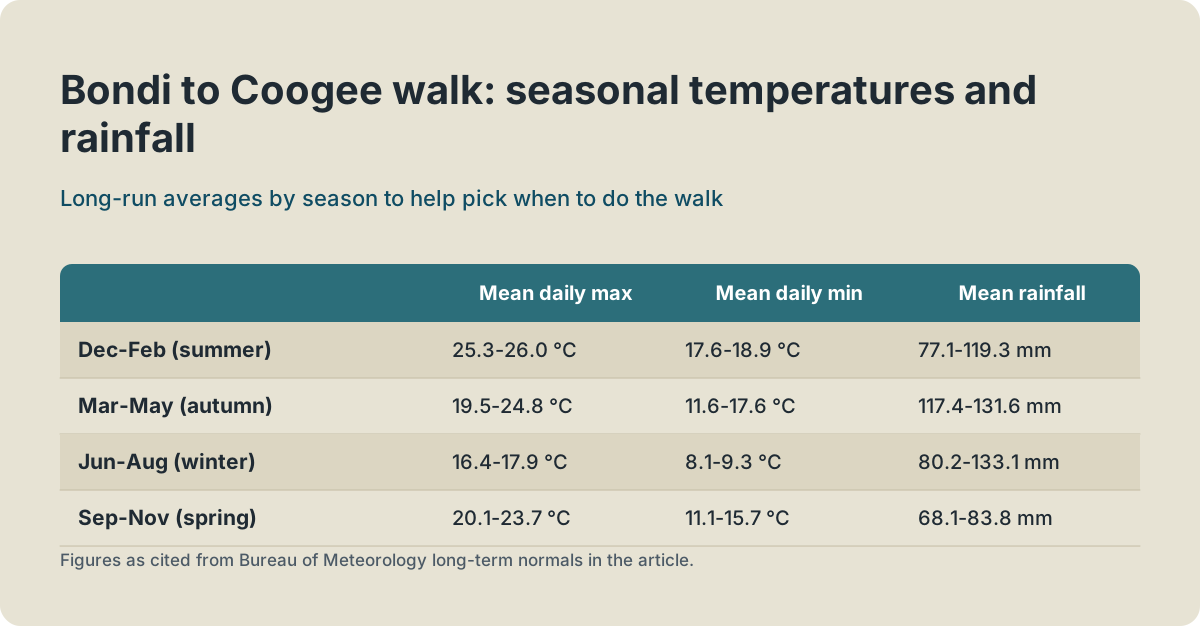
Early morning is the best time of day, and the August to November window is the best time of year. Mornings give you cooler air, softer light for photographs and the lowest chance of the afternoon sea breeze that builds in summer. The long-run data also favours winter: August is Sydney's clearest month on average, with 13.4 mean clear days, while February, the middle of the tourist peak, is its cloudiest at 5.3.
That cloudiness fact surprises nearly everyone. Sydney's rainfall peaks in autumn and early winter, not summer: June is the wettest month on the long-run average at 133.1 mm, wetter than any summer month. But rain in Sydney tends to come in short heavy bursts rather than full grey days, and the Bureau of Meteorology's long-term normals show winter skies are actually clearer once each front passes. The trade-off is shorter days, with June averaging just 5.5 hours of daily sunshine.
| Months | Mean daily max | Mean daily min | Mean rainfall | Notes for the walk |
|---|---|---|---|---|
| Dec-Feb (summer) | 25.3-26.0 °C | 17.6-18.9 °C | 77.1-119.3 mm | Hot by 11am, cloudiest skies, busiest path |
| Mar-May (autumn) | 19.5-24.8 °C | 11.6-17.6 °C | 117.4-131.6 mm | Warm water, highest rainfall, fewer crowds |
| Jun-Aug (winter) | 16.4-17.9 °C | 8.1-9.3 °C | 80.2-133.1 mm | Clearest skies, cold mornings, whales offshore |
| Sep-Nov (spring) | 20.1-23.7 °C | 11.1-15.7 °C | 68.1-83.8 mm | Best all-round: mild, dry-ish, clear |
Spring has one more attraction. The whale migration runs along this coast from May to November, and the clifftops between Bondi and Coogee are genuine land-based vantage points, with the southern migration, whales returning with calves closer to shore, running roughly August to November. There is a full whale watching in Sydney guide if you want to plan around it.
Where Can You Swim Safely Along the Route?
Swim only at patrolled beaches and only between the red and yellow flags. On this walk that means Bondi, Tamarama, Bronte and Coogee, which all have professional council lifeguards year-round, with volunteers adding weekend and public holiday coverage through the summer season. Surf Life Saving Australia's own reporting records that every coastal drowning in its most recent national report occurred outside the flags, outside patrol times, or at unpatrolled locations.
Rip currents are the number one hazard on this coast, and Tamarama in particular carries a strong permanent rip. The official advice from Beachsafe, Surf Life Saving's public safety site, is to check for rips before entering the water: if you are caught in one, stay calm, conserve energy, raise an arm and call for help, float with the current which may return you to a sandbank, or swim parallel to the beach toward breaking waves. Never try to swim directly back against the rip.
Patrol hours are generous but not unlimited. Waverley Council's professional lifeguards cover Bondi, Bronte and Tamarama year-round: 6am to 7pm daily in the high season from October to April, and 7am to 5:30pm in the low season from May to September. Coogee's council lifeguards also patrol year-round, roughly 7am to 7pm in the daylight saving months and 7am to 5pm outside them. Swim inside those windows, or use an ocean pool instead.
| Beach | Professional patrol | High season hours | Low season hours |
|---|---|---|---|
| Bondi | Year-round | 6am-7pm | 7am-5:30pm |
| Tamarama | Year-round | 6am-7pm | 7am-5:30pm |
| Bronte | Year-round | 6am-7pm | 7am-5:30pm |
| Coogee | Year-round | approx. 7am-7pm | approx. 7am-5pm |
There is one more rule worth more than any other on this coast: stay out of the water while it is raining and for up to one day after heavy rain at ocean beaches. The NSW Beachwatch program, which grades every Sydney swim site for water quality, publishes daily water quality updates, and its post-rain advice is the single most useful swimming fact in this city. After a big storm, the ocean pools are your friend.
What About the Ocean Pools Along the Way?
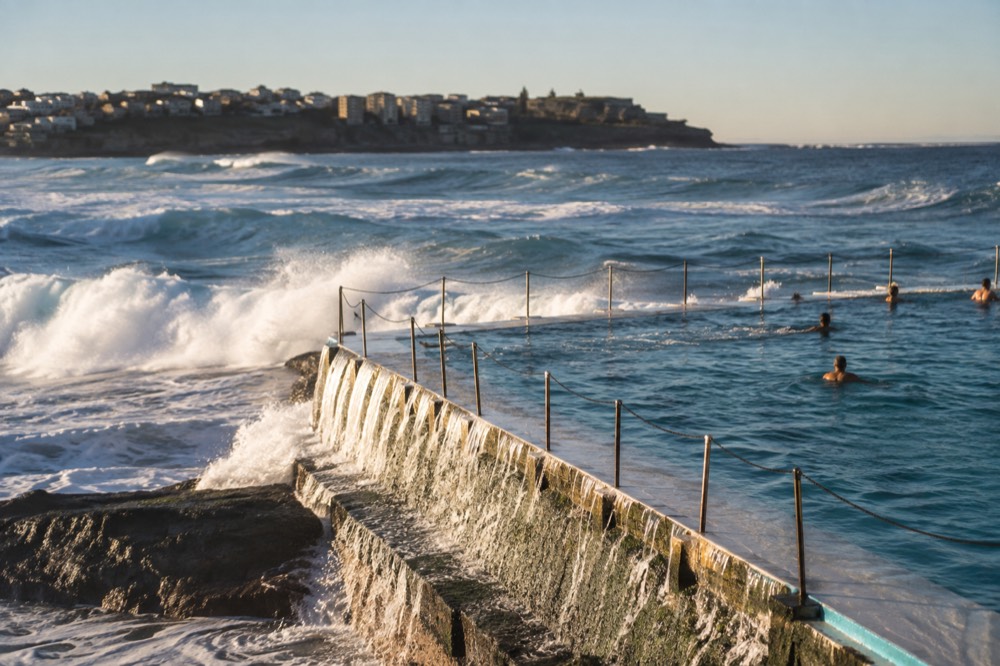
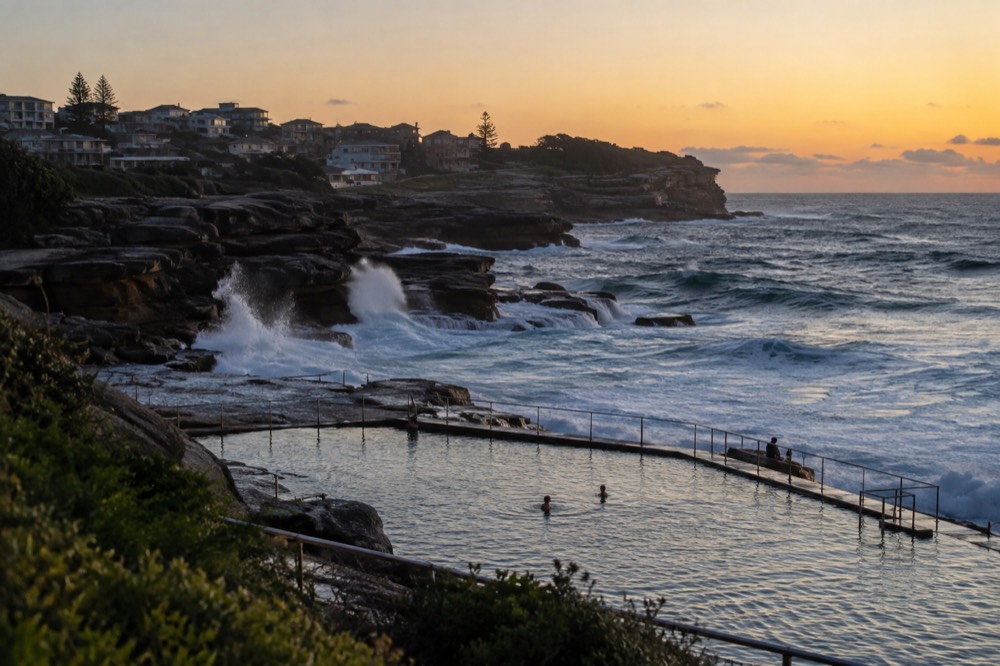
The walk passes two of Sydney's most famous ocean pools, Bondi Icebergs at the start and Bronte Ocean Pool at the halfway point, plus Wylie's Baths at Coogee near the finish. Bondi Icebergs is a club-managed 50 metre pool and charges for entry; Bronte's council pool is free, cleaned weekly and open daily except on cleaning days. Wylie's Baths at Coogee is a heritage timber pool on stilts above the rocks.
Ocean pools are the great Sydney compromise: seawater, waves washing over the edges, but no rip currents and no surf to fight. For nervous swimmers, families with small children, or anyone visiting in the colder months when the surf looks uninviting, they turn this walk into a swimming tour rather than just a walk. The best beaches in Sydney guide covers the city's other pools, including Clovelly and Mahon, both of which sit just off this route.
| Pool | Location on the walk | Entry | Notes |
|---|---|---|---|
| Bondi Icebergs | South end of Bondi, at the start | Paid, club-managed | The photographed one, 50 m, famous winter swimming club |
| Bronte Ocean Pool | South end of Bronte, halfway | Free, council-run | Cleaned weekly, closed on cleaning days |
| Wylie's Baths | South end of Coogee, near the finish | Paid, heritage pool | Timber decks, tidal, a Sydney institution since the 1900s era |
One honest caveat: ocean pools are safer than the surf, but they are not risk-free, and big swell can close them or make entry hazardous. Check the conditions on the day, and never jump or dive into any pool or rock shelf, no matter how deep it looks. The council cleans its pools weekly, and closure for cleaning is the only routine shutdown.
Is the Walk Suitable for Everyone?
Most people of average fitness can do the full walk, including older children, but it is not fully step-free and it is not flat. There are sustained stair sections, the climb around Mackenzies Point, and the long rising stretch past Waverley Cemetery. Allow three to four hours with young children and plan to exit at Bronte. The path is sealed or well-formed boardwalk for almost its entire length, so ordinary walking shoes are fine; thongs are not, on stairs.
Wheelchair and pram users have a genuinely good partial option rather than the full route. The Bondi end, from North Bondi around the headland to the Icebergs, and the Coogee foreshore are the most accessible stretches, and there is a dedicated accessible Sydney guide covering which sections and facilities work best. The middle of the walk, over the headlands, is where the stairs concentrate.
Runners and swimmers have their own versions of this route. The walk is the middle leg of Sydney's coastal running culture, busy with before-work runners, and the surfing lessons in Sydney scene is based at Bondi, where a two-hour lesson covers the basics on the sand before you paddle out. If you would rather be on the water than looking at it, the harbour side of the city has the best options.
Dogs, by the way, are not permitted on any of these beaches, though the clifftop path itself passes through areas where leashed dogs are tolerated outside the beach reserves. Check the council signage at each entry point rather than assuming.
What Should You Bring, and Where Are the Toilets?
Bring water, a hat, sunscreen and reef shoes if you plan to swim at the rock pools: there is very little shade anywhere on the route and Sydney's UV index exceeds the protection threshold of 3 for most of the year, reaching extreme levels of 11 and above in summer. Toilets and outdoor showers sit at Bondi, Tamarama, Bronte, Clovelly and Coogee, roughly one to two kilometres apart, and there are cafes at Bondi, Bronte and Coogee.
The sun point deserves emphasis, because it catches visitors from cooler climates badly. The Australian Radiation Protection and Nuclear Safety Agency operates a live UV monitoring station in Sydney, and even in early spring the daily peak passes the protection threshold by mid-morning. Slip on a shirt, slop on sunscreen, slap on a hat, seek shade and slide on sunglasses: that is the official national messaging, and on this exposed clifftop route it is not optional politeness.
Water refill points exist at the major beach blocks but not along the headland sections, so fill up at Bondi and again at Bronte in summer. A light rain jacket earns its place outside summer: Sydney's rain arrives in short intense bursts, and June, the wettest month on average, can deliver 133 mm across the month without ever ruining a full day.
Bluebottles are the other seasonal nuisance. These stinging creatures drift in on warmer-month winds and nor'easters, and the official advice is simple: do not touch them on the sand or in the water, and if stung, leave the water, remove any tentacles with seawater rather than bare hands, immerse the sting in hot water around 45 °C for up to 20 minutes, and get a lifeguard if the reaction is severe. Every patrol beach on this route has a lifeguard who has treated hundreds of them.
Can You Do the Walk in Winter, or in Reverse?
Yes to both. Winter, meaning June to August in Australia, is arguably the best-kept secret on this coast: the path is quiet, the skies are the clearest of the year on average, and the ocean pools are at their most atmospheric with waves washing over the edges. The traditional direction is Bondi to Coogee, but walking north from Coogee means the sun is behind you for photographs and you finish at Bondi with the most transport options home.
The in-reverse question has a real answer, not just a preference. Walking Coogee to Bondi in the morning puts the sun behind you rather than squinting into it, which matters for photography, and finishing at Bondi gives you the largest cafe scene plus the most frequent buses back to the city. Walking Bondi to Coogee in the morning gives you the classic postcard light on Bondi first and a downhill finish into Coogee's lawns. In summer, either direction is best before 10am.
Winter swimming is a genuine Sydney subculture, and the Bondi Icebergs club has been swimming through it for generations. For visitors, the honest winter formula is simple: walk the whole route briskly, swim at Bronte's free pool or Wylie's if the swell is small, and finish with lunch at Coogee. The Sydney in winter guide has the broader cold-season itinerary, and the Sydney coastal walks guide ranks this route against the Spit to Manly and the Royal National Park tracks.
Whichever direction you choose, the same safety rules apply: swim between the flags at patrolled beaches, respect the post-rain water quality advice, and treat Tamarama's rip with the seriousness it deserves. This coast is beautiful, and it is real ocean, not a resort pool.
If the walk leaves you wanting more of Sydney from the water or on foot, these are the three pairings that work best.
Common Questions About the Bondi to Coogee Walk
How long does the Bondi to Coogee walk take?
About 6 kilometres one way, which most people cover in two to three hours at a relaxed pace. Fast walkers manage 90 minutes, but with swimming stops, photos and a coffee at Bronte, half a day is realistic.
Is the Bondi to Coogee walk hard?
It is moderately demanding rather than hard. The path is sealed or boardwalk for nearly its whole length, but there are stairs, a climb at Mackenzies Point and a long rise past Waverley Cemetery. Anyone comfortable with 6 km of walking with some steps can do it.
Can you swim on the Bondi to Coogee walk?
Yes, at Bondi, Tamarama, Bronte and Coogee, all patrolled by professional lifeguards year-round. Swim between the red and yellow flags during patrol hours, or use the ocean pools at Bondi Icebergs, Bronte and Wylie's Baths if the surf is strong.
Which direction is better, Bondi to Coogee or Coogee to Bondi?
The traditional direction is Bondi to Coogee. Walking north from Coogee puts the morning sun behind you for photographs and finishes at Bondi, which has the most cafes and the most frequent buses back to the city.
Is the Bondi to Coogee walk free?
Completely. The path is a public walkway with no entry charge at any point. The only costs are optional: food, a paid swim at Bondi Icebergs or Wylie's Baths, and transport to and from either end.
When is the worst time to do the Bondi to Coogee walk?
Mid-afternoon on a hot summer day: the sea breeze is up, shade is almost nonexistent, the UV index is at extreme levels, and the path is at its busiest. Do it early in the day, and in summer start before 9am.