Sydney in Winter: What to Expect, What to Do and How to Pack
Winter is Sydney's quietest, cheapest and clearest season, and it is when the humpback whales pass the coast. Here is what the weather actually does from June to August, and how to fill three days.
Short answer
Sydney's winter runs June to August, with average maximums of 16.4 to 17.9 °C and minimums of 8 to 9 °C. June is the wettest month of the year (133.1 mm on average), while August is the clearest. Whale watching peaks in late June and July, and harbour cruises, museums and the Blue Mountains fill the rest.
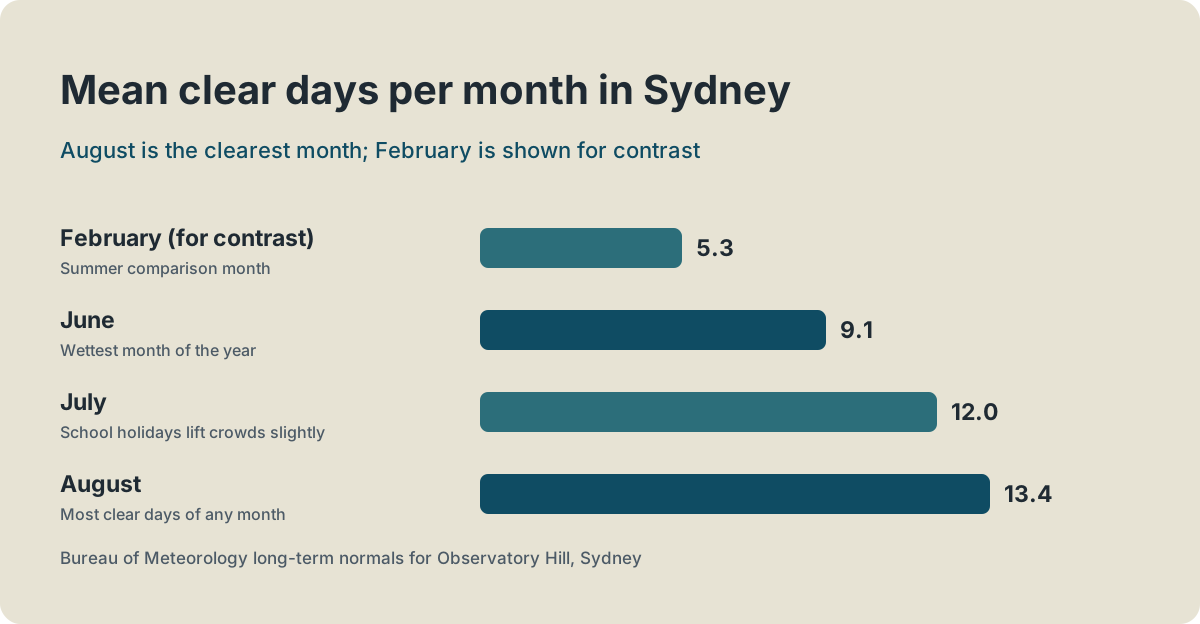
Sydney in winter is not what most visitors picture when they imagine Australia. The city does not shut down, the beaches do not disappear, and the harbour looks arguably better than it does in February, because August is statistically the clearest month of the entire year. The Bureau of Meteorology's long-run record for Observatory Hill counts 13.4 mean clear days in August against just 5.3 in February, which means peak tourist season is the cloudiest time to visit and late winter is the sharpest.
The trade-off is rain. June, not a summer month, is Sydney's wettest month of the year at 133.1 mm on average, and the days are short, with sunrise near 7am and sunset before 5pm through the middle of the season. This guide covers what the numbers actually say, what still works outdoors, what to do when it pours, and a three-day winter itinerary built around the season's two big assets: clear skies and humpback whales.
What Is Winter in Sydney Actually Like?
Sydney's winter is mild rather than cold, and it is the clearest but also the wettest stretch of the year depending on the month. Average daily maximums sit between 16.4 °C in July and 17.9 °C in August, with nights around 8 to 9 °C. June averages 133.1 mm of rain, the highest of any month, while August averages 13.4 clear days, the most of any month.
Those two facts sit side by side because Sydney's winter is a tale of two halves. June brings the year's heaviest rainfall totals alongside short days. July and August turn drier and clearer, with the Bureau of Meteorology's long-term normals for Sydney showing July and August carrying the two highest clear-day counts of any month on the calendar. Rain still falls, roughly 7 to 9 days a month at 1 mm or more, but it arrives as showers rather than the long grey drizzle of a northern European winter.
Temperatures rarely stray far from the averages. Daytime highs in the city typically sit in the high teens, and because the humidity is low, 17 °C in the sun feels pleasant on a sheltered terrace. Nights are genuinely chilly by local standards, and the western suburbs and the Blue Mountains drop well below the city figures, with Katoomba regularly colder than the coast. Snow does not fall in Sydney itself; the nearest reliable snowfields are in the Snowy Mountains, a long way south.
Daylight saving is the detail that catches northern-hemisphere visitors out. NSW runs on AEDT from October to April, so in winter the state reverts to AEST and the harbour goes dark by about 5:15pm in July. Plan sightseeing for the front of the day and the harbour views for the golden hour that starts mid-afternoon.
| Month | Mean max °C | Mean min °C | Mean rainfall mm | Mean clear days |
|---|---|---|---|---|
| June | 17.0 | 9.3 | 133.1 | 9.1 |
| July | 16.4 | 8.1 | 96.3 | 12.0 |
| August | 17.9 | 9.0 | 80.2 | 13.4 |
| (February, for contrast) | 25.8 | 18.9 | 119.3 | 5.3 |
Is Winter a Good Time to Visit Sydney?
Yes, for three reasons: prices, crowds and whales. Winter is Sydney's low season, so hotel rates and flight fares drop while the August skies are the clearest of the year. Humpback whale watching peaks in late June and July, and the city's major indoor attractions are all open daily. The compromise is short days and June's rain.
The crowd arithmetic is the strongest argument. Sydney's visitor economy is overwhelmingly domestic by headcount, and the local school holidays fall in July, which lifts that fortnight slightly. Outside those two weeks, the queues at the Opera House, the ferries and the Blue Mountains lookouts thin out noticeably. Anyone who has fought for a patch of sand at Bondi in January will find the same beach near-empty at 9am on a Tuesday in August.
The whale season is the argument most visitors never knew they had. Humpbacks migrate along the NSW coast from May to November, and the peak viewing window, late June through July, sits squarely inside winter. An estimated 40,000-plus humpbacks pass the NSW coast each year according to NSW National Parks, and the southbound migration with calves runs closer to shore from August. If wildlife is a priority, winter is not the fallback season, it is the reason to come.
The honest downsides: the days are short, the sea is at its coldest, surf lessons and swimming are brisk rather than balmy, and a June week can deliver three wet days in a row. The Sydney rainy day itinerary exists for exactly that scenario, and this guide builds in the same fallbacks. For a full month-by-month comparison, see the best time to visit Sydney.
The Best Indoor Attractions for a Cold or Wet Sydney Day
Sydney's biggest indoor attractions are largely free to enter, which makes a wet winter day cheap. The Art Gallery of New South Wales, the Australian Museum and the Royal Botanic Garden Sydney all cost nothing for general entry, and the gallery stays open until 10pm on Wednesdays. Paid options include the Sydney Tower Eye deck and SEA LIFE Sydney Aquarium.
The free tier is genuinely strong. The Australian Museum opposite Hyde Park opens 10am to 5pm daily and charges nothing for general entry, with only its major temporary exhibitions ticketed. The Art Gallery of New South Wales is also free for general entry and holds its Wednesday late nights to 10pm, which turns a cold evening into an easy one. The Royal Botanic Garden Sydney is free too, and between showers on a clear winter afternoon it is at its best, with the harbour views from Mrs Macquarie's Point needing no ticket at all.
One closure to plan around: Powerhouse Museum Ultimo has been closed since February 2024 for a major redevelopment and is not due back until around 2029. Its replacement, Powerhouse Parramatta, is scheduled to open in November 2026 out west, reachable by train. Any guide still listing the Ultimo site as open is out of date, as the Powerhouse Museum guide explains.
For paid indoor time, the Sydney Tower Eye observation deck is the classic wet-weather fallback, and the view through August's clear air is sharper than the summer equivalent through haze. Advance tickets start from A$29 for adults against A$39 on the day, according to the operator's own price table, and children under 16 must be with an adult. SEA LIFE Sydney Aquarium sits right on Darling Harbour and uses timed dynamic pricing, so the live listing is the only reliable price source. If you plan to do several Merlin attractions, the four-attraction combo pass is worth comparing first.
For a day that works in any weather, the Taronga Zoo entry and return ferry bundle from Circular Quay is hard to beat: the ferry crossing is a harbour cruise by another name, and the zoo's winter hours, 9:30am to 4:30pm from May to August, still leave a full day. Booking online saves roughly 10% against the gate price at every tier, per Taronga's own ticket page.
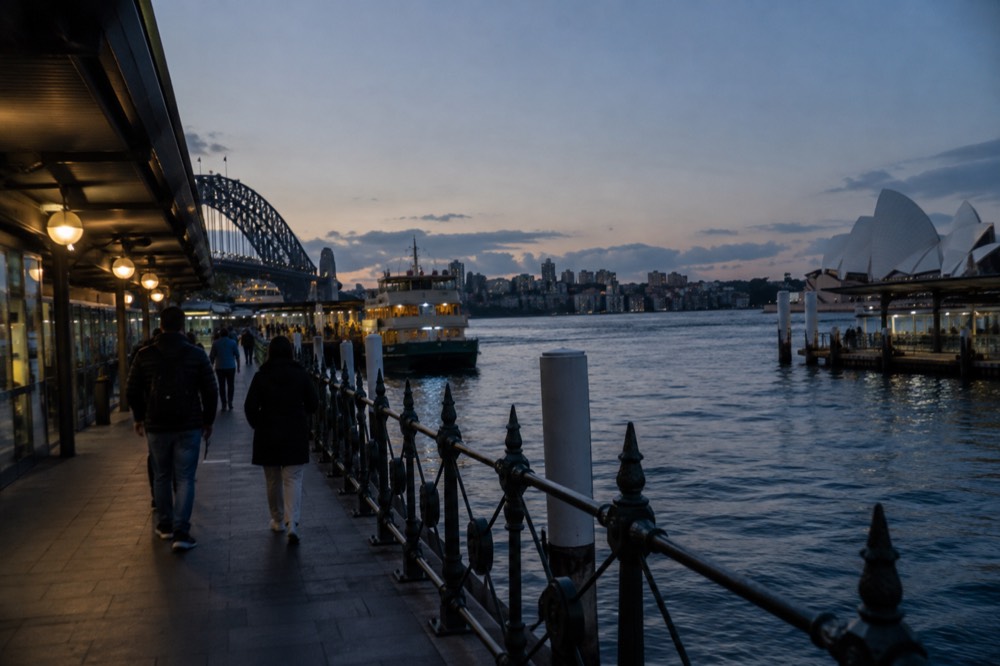
Whale Watching: Winter Is Sydney's Best Wildlife Season
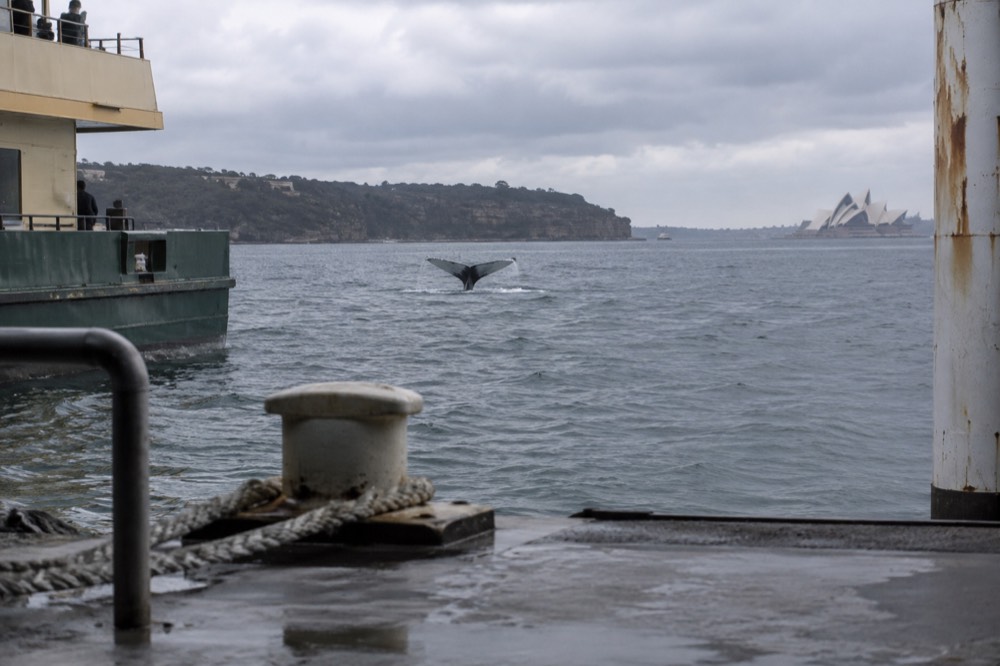
Humpback whales migrate past Sydney from May to November, and the peak of the northern migration, late June through July, falls entirely inside winter. Cruises run throughout the season, with the southbound return, mothers with calves closer to shore, running August to November. No operator guarantees a sighting, and sea conditions matter more in winter.
The migration is the single biggest seasonal draw. NSW National Parks' whale migration guide lays out the pattern: northbound whales head to breeding grounds from roughly May to July, and the numbers visible from headlands and boats peak around the end of June and into July. Land-based watching is free and real, with vantage points inside Sydney Harbour National Park and Royal National Park, but a boat puts you dramatically closer.
Cruises come in several formats, and winter is when they all run. A lunch or breakfast cruise gives you a longer, calmer morning on the water; a smaller speed boat covers more ground and gets you to the animals faster, at the cost of a wetter, bumpier ride. Whales are wild animals, so treat any sighting as the likely outcome of a well-timed trip rather than a promise, and check the operator's policy on rebooking if the swell is up.
| Migration phase | Months | What you see | Best platform |
|---|---|---|---|
| Northern migration | May to July | Adults heading north, peak numbers late June to July | Boat cruise or headland |
| Peak window | Late June to July | Highest whale traffic of the season | Boat cruise |
| Southern migration | August to November | Mothers and calves, closer to shore | Boat cruise or coastal lookout |
The full lowdown on operators, vantage points and what a sighting actually looks like is in the whale watching in Sydney guide. If your dates are flexible within winter, aim for July, and book the cruise on the clearer-weather day of your week rather than the first day you arrive.
Winter Beaches and Coastal Walks: Worth It or Not?
Yes, with the right expectations. Swimming is cold and patrol hours are shorter, but the sand is quiet, the air is clear and the coastal walks are at their best in winter. Bondi, Bronte, Tamarama, Coogee and Manly are patrolled year-round by council lifeguards, with reduced hours from May to September. Ocean pools are the smarter swim option.
Swimming is the one activity winter genuinely takes off the table for most people. The water is at its coldest, and the Waverley beaches drop to 7am to 5:30pm professional patrol hours in the low season, May to September, against 6am to 7pm in summer. The rule does not change with the season: swim between the red and yellow flags at a patrolled beach, never at an unpatrolled stretch, and check Beachwatch water quality after rain, staying out of ocean beaches for up to a day after heavy falls and harbour sites for up to three days.
Ocean pools are the winter compromise that locals actually use. Bronte Ocean Pool and the North Bondi Children's Pool are free and council-maintained, while Bondi Icebergs is club-managed and charges entry; swimming laps at Icebergs in midwinter with steam coming off the water is a Sydney scene in its own right. The Bondi Beach guide covers the pool options and the year-round patrol picture in detail.
Walking, not swimming, is winter's coastal prize. The Bondi to Coogee coastal walk is a six-kilometre clifftop track that is punishing in February heat and superb in August's clear, cool air, and the winter light makes it a photographer's walk. The Spit to Manly walk through Sydney Harbour National Park is the other classic, with harbour-side bush that holds its colour all winter. Take layers, start mid-morning, and you will finish before the 5pm dark.
A Blue Mountains Day Trip in Winter
The Blue Mountains are at their best in winter: clear air, fewer day-trippers and the year's best views from the lookouts. Katoomba is several degrees colder than Sydney, so pack properly. Blue Mountains National Park charges no entry fee except in the Glenbrook area, and several tracks and roads have closures running into late 2026, so check alerts before you go.
Winter is the connoisseur's season for Katoomba. The haze that softens the Three Sisters in summer is largely gone, and August's clear-day record means the lookouts over the Jamison Valley deliver their sharpest views of the year. The towns run wood fires, the pubs run roasts, and the whole experience feels built for the season rather than merely tolerant of it.
Two planning facts matter. First, the national park itself is free to enter except at Glenbrook, where an $8 per vehicle daily fee applies; arriving by train, which runs from Central to Katoomba, avoids vehicle fees entirely. Second, the NSW National Parks service has track and road closures in the area running into late 2026, including Mount Hay Road and sections around Jenolan, so check the live alerts before locking a walking plan. The Blue Mountains day trip guide has the full transport breakdown, and the train options from Sydney cover the car-free route.
A small-group tour solves the winter logistics neatly: the deluxe Blue Mountains tours bundle Scenic World and Featherdale Wildlife Park, pick up in the city, and run around ten hours, which in winter means you are back in Sydney not long after dark. Independent travellers should book Scenic World tickets online ahead, since its pricing is dynamic and its site is the only reliable source.
What to Pack and What Winter Costs
Pack layers, a proper rain jacket and something warm for evenings, because Sydney's winter swings from 17 °C afternoons to 8 °C nights. Day-to-day costs drop in winter: hotel rates are at their annual low, and public transport caps at A$9.65 a day on Fridays, weekends and public holidays. Attractions mostly use dynamic pricing, so booking ahead is the reliable saving.
The packing list is straightforward. Locals dress in layers through winter: a jumper or fleece, a windproof jacket, and a scarf for the evenings, because the harbour wind cuts when the sun drops. Rain gear matters more in June than July or August. Comfortable walking shoes matter all season, since the coastal paths and the Blue Mountains tracks are the season's best activities. If you plan to swim or surf, a wetsuit is standard from June through August, and the surf schools supply them with every lesson.
Costs work in your favour. Winter sits outside the December-to-February peak, so accommodation in every tier runs cheaper. Getting around is capped: Opal and contactless payments cap at A$19.30 a day Monday to Thursday and A$9.65 a day from Friday to Sunday, per Transport for NSW's fare pages, and a contactless bank card earns identical fares and caps to an Opal card. The airport station access fee sits outside those caps, which the Sydney airport to the city guide explains in full.
| Winter cost item | Typical range | Notes |
|---|---|---|
| Budget hotel night (winter) | Lower than any summer month | Low season pricing citywide |
| Opal/contactless daily cap | A$9.65 Fri-Sun, A$19.30 Mon-Thu | Public holidays get the lower cap |
| Ferry to Manly (one way) | A$9.20 | The cheapest harbour cruise there is |
| Taronga Zoo adult entry | A$57 gate, from A$51.30 online | Online is roughly 10% cheaper at every tier |
| Tower Eye adult deck | A$39 on the day, from A$29 advance | Dynamic pricing, book ahead |
For the full budget picture, including meals and nightly accommodation ranges, see the Sydney trip cost breakdown and the Sydney on a budget guide. Anyone can save money in Sydney; winter simply makes it the default.
Three Days in Sydney in Winter: A Sample Itinerary
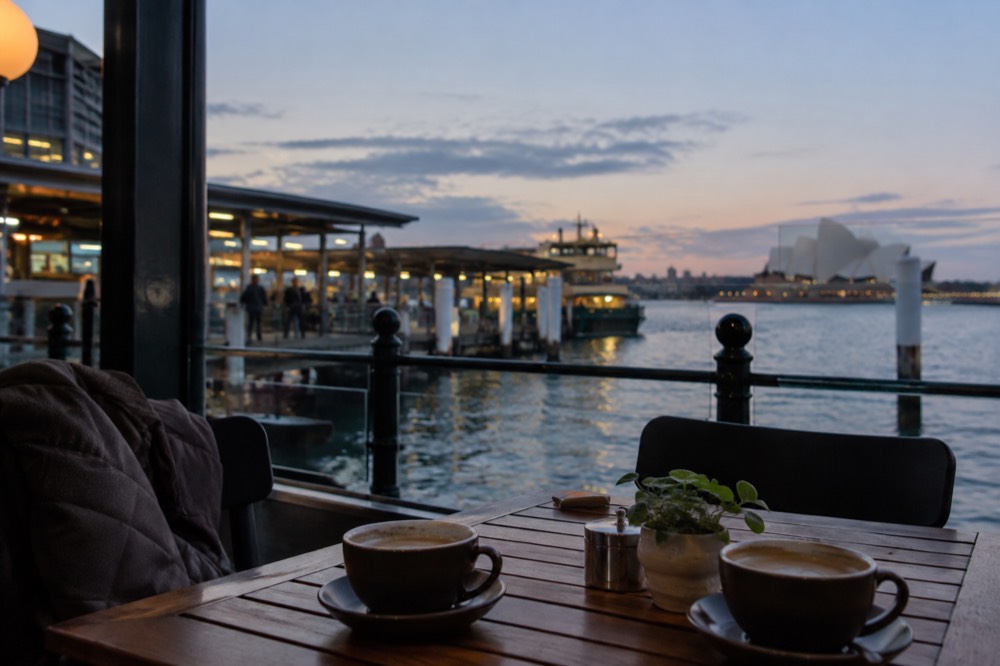
Day one, the harbour and the east: ferry to Taronga or Manly in the morning, the Botanic Garden and Opera House in the afternoon light. Day two, whales and the coast: a morning whale cruise in July, the Bondi to Coogee walk before the 5pm dark. Day three, the Blue Mountains by train or tour, finishing back in the city for a fireside dinner. Each day has a wet-weather swap.
The shape of a winter day matters more than the content: daylight runs roughly 7am to 5pm, so the outdoor block belongs before mid-afternoon and the indoor or dining block after it. The itinerary below assumes a July visit, whale season at its peak, and every day carries a rain plan that does not waste the booking.
| Day | Morning | Afternoon | Evening | If it rains |
|---|---|---|---|---|
| 1 | Ferry to Taronga Zoo, entry and ferry bundled | Royal Botanic Garden to Mrs Macquarie's Point, free entry | Opera House tour or a play; gallery open to 10pm Wednesdays | Zoo animals are active in cool weather; add the Australian Museum, free entry |
| 2 | Whale cruise, July peak season | Bondi to Coogee coastal walk, 6 km | Dinner in Surry Hills | Swap the walk for SEA LIFE Sydney Aquarium and Darling Harbour |
| 3 | Train or small-group tour to Katoomba | Scenic World and the Three Sisters lookouts | Return by 6pm; roast dinner in The Rocks | The Blue Mountains in mist is atmospheric, not ruined; Scenic World runs in rain |
Bookings follow a simple winter logic. The whale cruise is the one to lock first, since July sailings fill and you want the flexibility to pick your clearest morning. The Blue Mountains day should be booked second, ideally on a day with a clear forecast, because the lookouts are the point. Everything else, ferries, museums, galleries and the zoo, can be decided the night before. If the trip is longer than three days, the 3 days in Sydney and Sydney weekend itinerary guides extend the same skeleton.
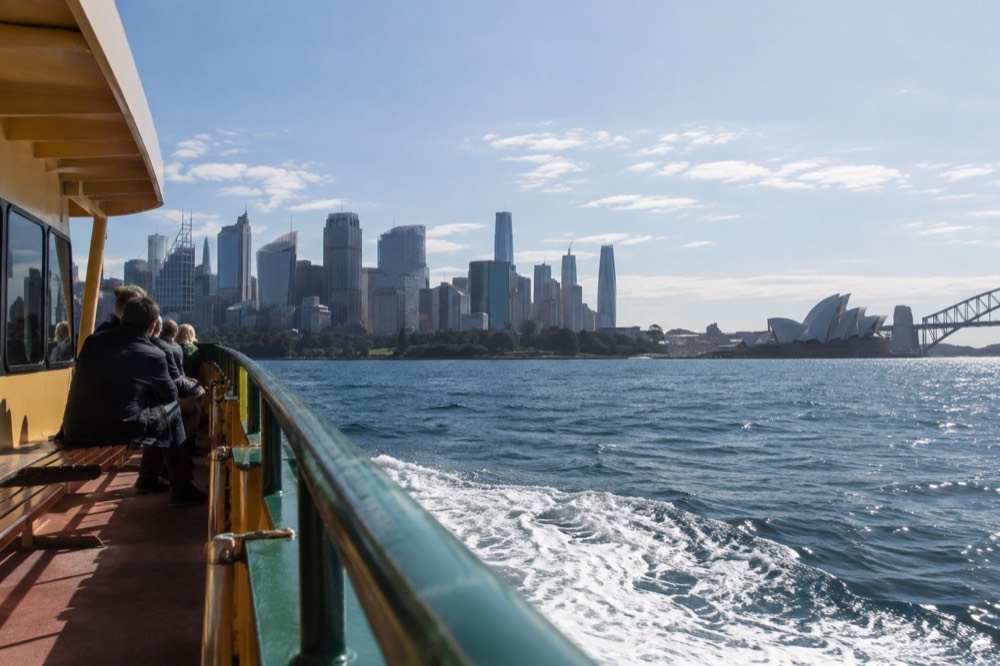
The zoo-plus-ferry bundle deserves its slot on day one because it solves two winter problems at once: it guarantees a harbour crossing in the calm morning light, and it fills a full day with something that does not depend on beach weather. The animals are notably more active in the cool, and the ferry back at golden hour, with the city skyline ahead and the low sun behind, is the best free view in Sydney on any winter day.
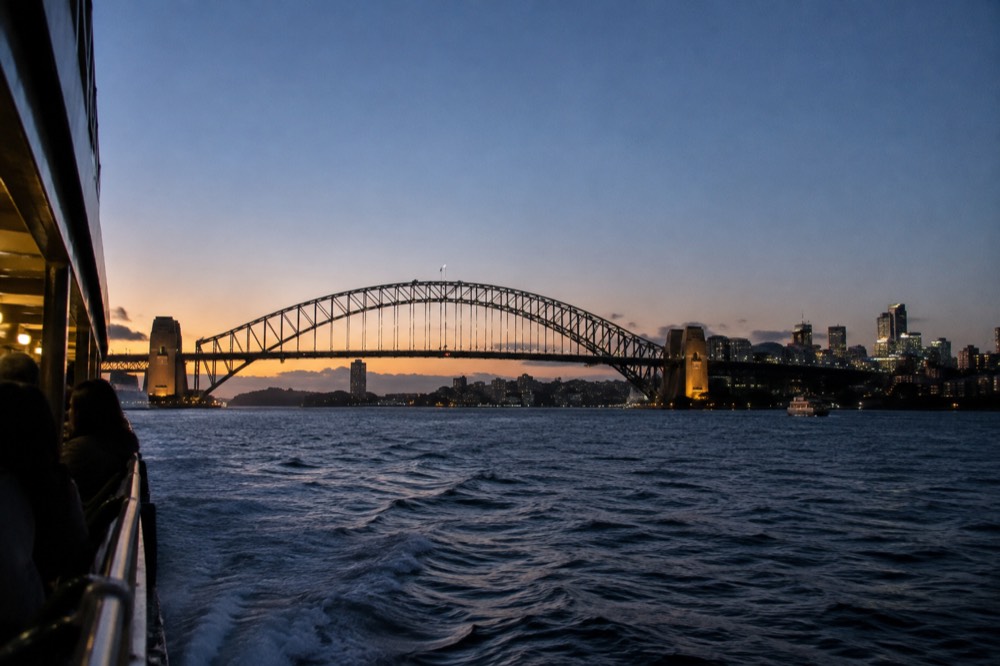
Winter is also the season Sydney belongs to its residents. The theatre calendar runs at full strength, the Sydney bars and pubs trade on fireplaces and red wine instead of rooftops, and the harbour you see from the Manly ferry is the same harbour, just clearer, cheaper and quieter than the one in every summer brochure. For more seasonal planning, start with Sydney Travel Guide and work outward.
Common Questions About Sydney in Winter
How cold does Sydney get in winter?
Sydney's winter average maximums run from 16.4 °C in July to 17.9 °C in August, with average minimums of 8 to 9 °C. Frost is rare near the coast, and snow never falls in the city itself. The Blue Mountains, an hour west, are several degrees colder and can drop close to zero at night in Katoomba.
Is June the rainiest month in Sydney?
Yes. June averages 133.1 mm of rain across the long-term record, more than any summer month. July and August are drier, and August is the clearest month of the year with an average of 13.4 clear days, which is why late winter is a better bet than early winter for outdoor plans.
Can you swim at Sydney beaches in winter?
You can, but it is cold and the experience is more bracing than relaxing. Bondi, Bronte, Tamarama, Coogee and Manly are patrolled year-round by council lifeguards, with reduced hours from May to September. Ocean pools such as Bronte and Bondi Icebergs are the popular winter option, and surf schools supply wetsuits with every lesson.
Is whale watching good in Sydney in winter?
Winter is the best time. Humpbacks migrate along the NSW coast from May to November, with peak numbers in late June and July, and the southbound mothers and calves passing closer to shore from August. Cruises run through the season, and no sighting is ever guaranteed.
What should I pack for Sydney in winter?
Layers: a jumper or fleece, a windproof jacket, a rain shell for June especially, and a scarf for evenings. Comfortable walking shoes for the coastal paths and the Blue Mountains, and a wetsuit is supplied by surf schools if you take a lesson. An umbrella is useful in June, less so in August.
Is Sydney cheaper to visit in winter?
Yes. Winter is the low season, so hotels and flights run cheaper than the December-to-February peak. Public transport caps at A$9.65 a day on Fridays, weekends and public holidays, and many of the city's best attractions, the Botanic Garden, the Australian Museum and the Art Gallery of New South Wales, are free to enter.