Accessible Sydney: A Practical Mobility Guide to the Harbour City
Sydney is a city of hills, ferries and sandstone steps, and a mobility condition changes how you plan around all three. Here is what actually works.
Short answer
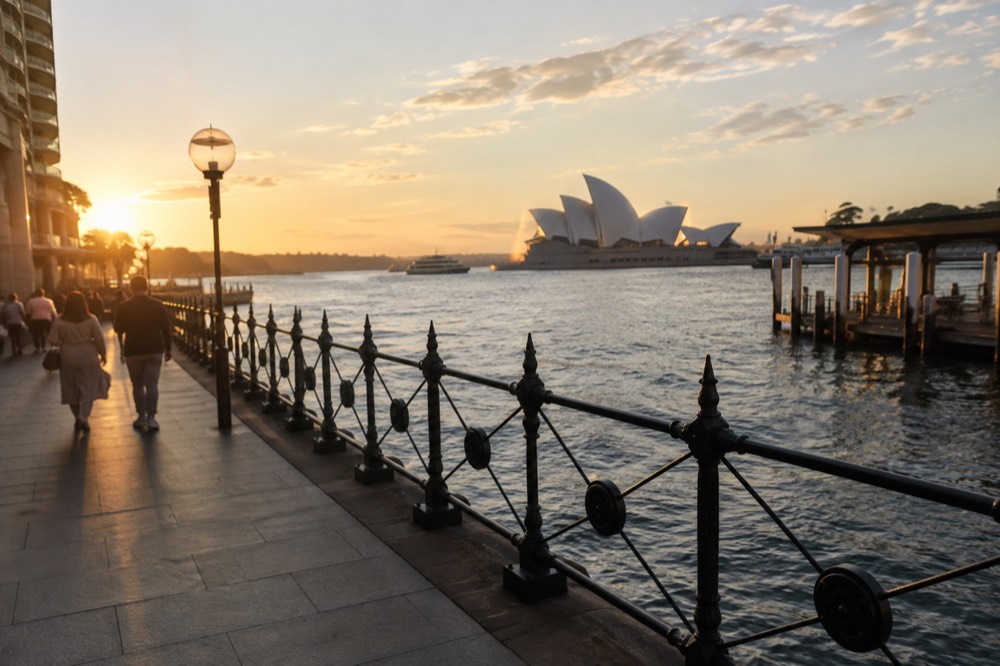
Sydney's core is broadly accessible: major museums and galleries offer free, step-free entry, the metro and ferries accept wheelchairs, and Opal caps travel at $19.30 a day, $9.65 on weekends. The catch is the terrain, harbour-side steps and unpatrolled beach sand, so plan around the flat foreshore paths and confirm each venue before you go.
Sydney can look hostile from a wheelchair. The city wraps around a drowned river valley, so the streets step down to the water in sandstone terraces, the famous beaches are ribbons of soft sand, and the postcard walks involve stairs cut into cliffs. That is the picture a first search gives you. The reality is more workable: the parts of Sydney a visitor actually wants, the Opera House forecourt, the Circular Quay promenade, Darling Harbour, the Royal Botanic Garden, are flat, paved and step-free, and the institutions that anchor a wet day are free to enter and built with lifts.
This guide is written for anyone planning Sydney around limited mobility: a wheelchair or mobility scooter user, a traveller with a heart or lung condition, a family pushing a pram, or someone who simply cannot manage a full day of hills. Everything here comes from official sources and the site's verified facts file, and where a detail varies by venue or by day, it says so rather than guessing. Start with the attractions and transport, then work outward to beaches and day trips.
Is Sydney a Wheelchair Accessible City Overall?
Broadly yes, with caveats about terrain and older streets. Sydney's major cultural institutions, the metro, ferries and the main foreshore precincts are accessible, and the headline museums and galleries are free to enter, so there is no money at risk if a venue does not suit. The difficulties are geographic: harbour-side paths drop through sandstone steps, The Rocks has steep old lanes, and beaches mean soft sand. Planning around the flat corridors, Circular Quay to the Opera House, Darling Harbour, the Royal Botanic Garden, solves most of it.
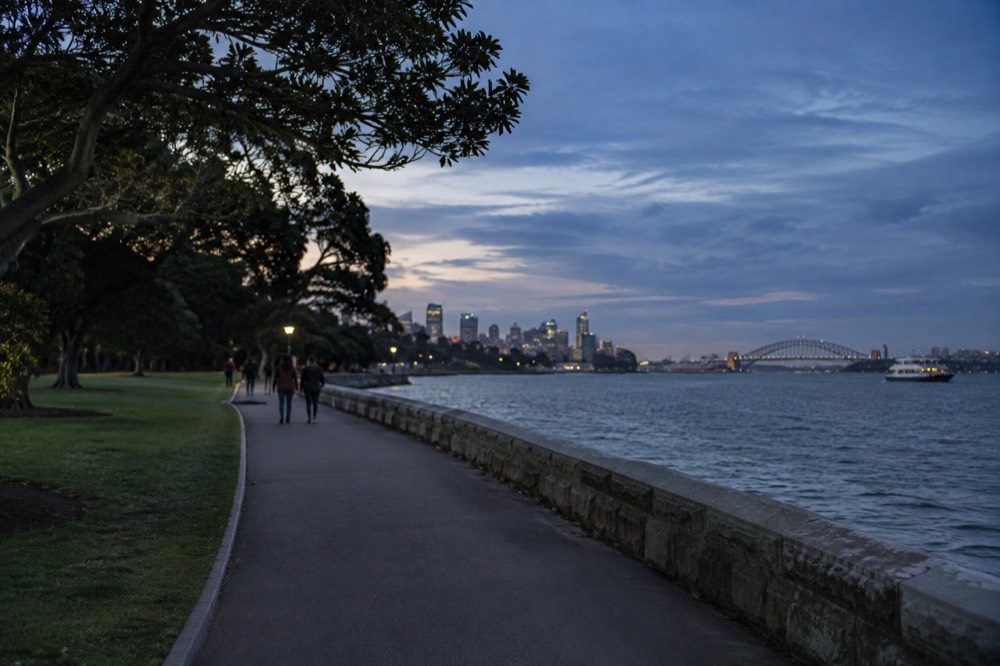
The geography is the honest starting point. Sydney's CBD sits on a ridge that falls to Circular Quay on one side and Darling Harbour on the other, so some streets slope at gradients that tire a manual chair user or unsettle anyone with balance issues. George Street, the main spine, is gentler than the cross streets that dive toward the water. The flat, reliable corridors are the foreshore itself: the promenade from Circular Quay past the Opera House into the Royal Botanic Garden is level, paved and continuous, and it delivers the two best views in the city without a single stair.
Older precincts are patchier. The Rocks is genuinely steep, with cobbled lanes and stepped alleys between George Street and the harbour, though its main artery along the quay is flat. Paddington and Newtown, lovely as they are, are terrace-house suburbs with kerb cuts of varying quality. The rule of thumb that holds across the city: anything built or rebuilt in the last three decades, the metro, Darling Harbour's redevelopment, Barangaroo, the museum precinct, meets modern access standards, and anything older demands a check before you commit.
Weather is a smaller factor than in most cities, but it is worth knowing. Sydney's long-run average tops out at 26.0 °C in January and bottoms at 16.4 °C in July, so heat, not cold, is the planning constraint, and summer UV reaches extreme levels where protection is advised at index 3 and above. June is statistically the wettest month, averaging 133.1 mm, while August is the clearest, averaging 13.4 clear days. If pavement smoothness matters to you, dry late-winter days are the most dependable.
Which Sydney Attractions Are Genuinely Accessible?
The free ones are the reliable ones. The Art Gallery of New South Wales, the Australian Museum and the Royal Botanic Garden all offer step-free entry at no cost. The Art Gallery opens daily 10am to 5pm and stays open until 10pm on Wednesdays; the Australian Museum runs 10am to 5pm daily except Christmas Day; the Garden opens at 7am and closes at sunset, with free entry. Taronga Zoo and Sydney Tower Eye are paid, step-free and bookable online at a discount.
Start with the free tier because it carries zero risk. The Royal Botanic Garden Sydney is the single best accessible outing in the city: entry is free, the main paths are wide and level, and it sits directly on the flat harbour corridor that links Circular Quay to the Opera House. The Art Gallery of New South Wales, a short level walk further east in The Domain, publishes its visit details at its own visitor page: free general entry, daily 10am to 5pm, and a late 10pm close every Wednesday, which suits anyone who travels off-peak to avoid crowds. The Australian Museum, opposite Hyde Park near Museum station, is likewise free for general entry, open 10am to 5pm daily and closed only on Christmas Day; its major temporary exhibitions are ticketed separately and change through the year.
The paid tier splits into step-free indoor sights and outdoor ones. Sydney Tower Eye is a lift to an enclosed observation deck, adult tickets $39 on the day and from $29 in advance, child tickets $29 on the day and from $19 in advance, with children under 16 needing an adult. The operator states plainly that pricing fluctuates with demand and advance purchase is cheaper, so book ahead. SEA LIFE Sydney Aquarium in Darling Harbour is a flat, indoor, continuous-loop walkthrough. Taronga Zoo is a hillside site, but it is served by the ferry and an aerial cable car, and it opens 365 days a year, 9:30am to 5pm from September to April and 9:30am to 4:30pm from May to August, with hours published on Taronga's visitor information page. Online tickets are roughly 10% cheaper than the gate at every tier: an adult pays $57.00 at the gate or from $51.30 online, a child 4 to 15 pays $33.00 or from $29.70, and infants under 4 are free.
The Opera House is the one to book rather than assume. The forecourt and the broad walk around it are fully level and free to roam, and the building runs guided tours roughly 9am to 5pm daily in sessions of about an hour; pricing is dynamic and booking-only, so the live listing carries the current rate. Interior access varies between the theatres, so if a performance rather than a tour is the goal, confirm seating access with the box office when you book. For a fuller picture of the building, see Sydney Opera House.
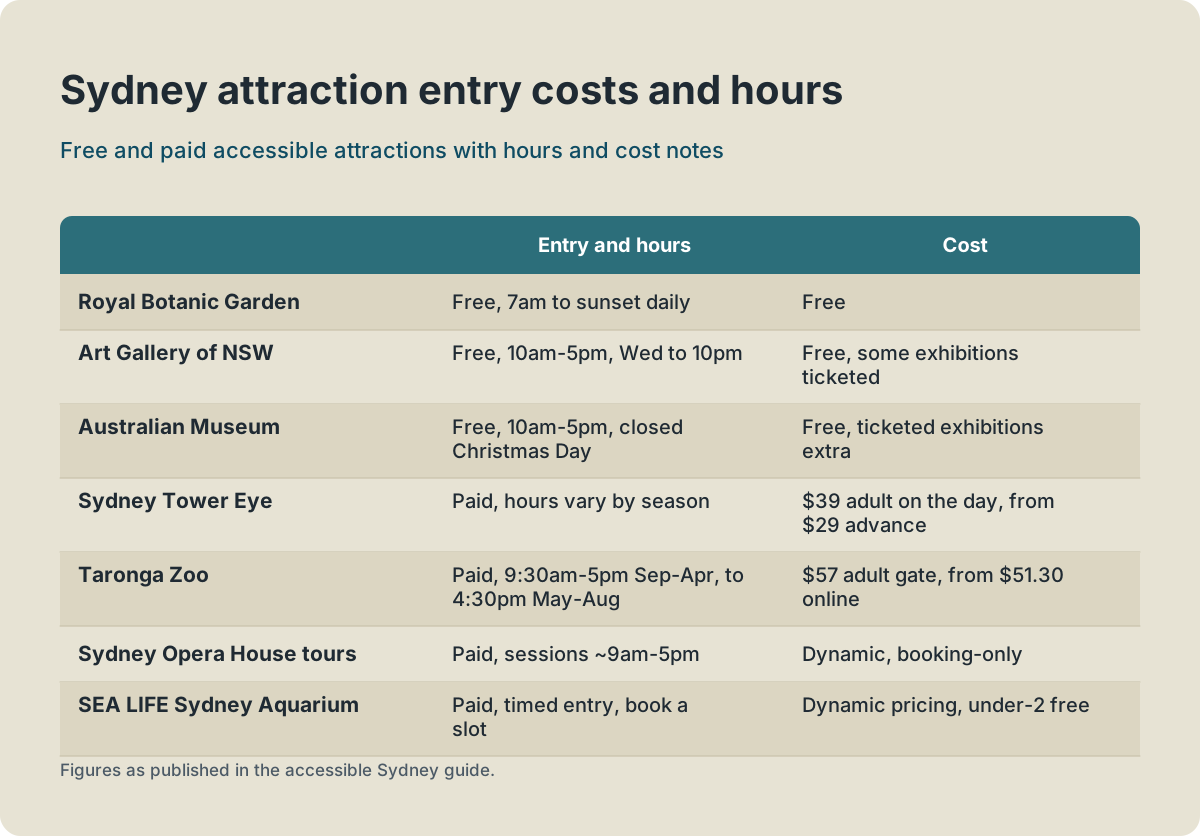
Here is how the headline attractions stack up for a mobility planner:
| Attraction | Entry | Access profile | Hours | Cost note |
|---|---|---|---|---|
| Royal Botanic Garden | Free | Wide level paths, harbour corridor | 7am to sunset daily | Free |
| Art Gallery of NSW | Free | Step-free entry, lifts | 10am-5pm, Wed to 10pm | Free, some exhibitions ticketed |
| Australian Museum | Free | Lifts to all floors | 10am-5pm, closed Christmas Day | Free, ticketed exhibitions extra |
| Sydney Tower Eye | Paid | Lift to enclosed deck | Varies by season, check hours page | $39 adult on the day, from $29 advance |
| SEA LIFE Sydney Aquarium | Paid | Flat indoor loop | Timed entry, book a slot | Dynamic pricing, under-2 free |
| Taronga Zoo | Paid | Hillside site, ferry and cable car access | 9:30am-5pm Sep-Apr, to 4:30pm May-Aug | $57 adult gate, from $51.30 online |
| Sydney Opera House tours | Paid | Level forecourt, interior varies by venue | Sessions ~9am-5pm | Dynamic, booking-only |
If you want several of the paid indoor sights in one trip, a bundled pass covers the aquarium, the Tower Eye, WILD LIFE Sydney Zoo and Madame Tussauds, and it is usually cheaper than separate tickets if you genuinely want all four.
How Accessible Is Sydney's Public Transport?
Sydney's transport network accepts wheelchairs across metro, train, bus, ferry and light rail, and the fare system works in your favour. Contactless card or device payments match Adult Opal fares and earn every benefit, travel caps at $19.30 a day Monday to Thursday, $9.65 from Friday to Sunday and on public holidays, and $50 a week. The airport station access fee, $18.61 for an adult, sits outside those caps. The 400 bus to the airport carries no access fee at all.
Payment first, because it is the easiest win. Tap a contactless credit card, debit card or phone and you are charged exactly what an Adult Opal card pays, with the same daily and weekly caps and the same off-peak discount of 30% on metro, train, bus and light rail outside weekday peaks. Ferries have no off-peak discount. Single-trip tickets from machines cost more and earn no benefits at all, so avoid them. The one trap is the airport: the station access fee is charged on top of the train fare at both Domestic and International stations, is excluded from the ordinary caps, and carries its own weekly cap of $37.75. Full fare details are published at Transport for NSW's adult fares page.
The network itself is a mixed but improving picture, and the honest advice is to check each specific trip. The metro, opened in stages from 2024, is the newest and most consistently step-free railway in the city. Ferries accept wheelchairs on the public F1 to F10 routes with full Opal benefits, though boarding depends on the wharf and the vessel, so arrive with staff present and confirm at the wharf. Buses and light rail take wheelchairs, but a full service can pass you by at peak times, so build slack into any bus-dependent plan. The practical strategy for a mobility-limited visitor is to anchor the trip on the flat foreshore and the ferry network, and treat the trains as connectors. Our getting around Sydney guide covers the network in more depth, and the Opal card guide for visitors explains the payment side.
| Mode | Wheelchair access | Fare notes |
|---|---|---|
| Metro | Newest line, level boarding | $4.33 peak, 0-10 km band; 30% off-peak discount |
| Train | Varies by station, check before travel | Same bands as metro |
| Ferry (F1-F10) | Accepted, boarding depends on wharf and vessel | $7.35 under 9 km, $9.20 at 9 km and over, no off-peak discount |
| Bus | Accepted, capacity dependent | $3.30 to $5.77 by distance |
| Light rail | Level stops | Same bands as bus |
| Airport train | Step-free stations | Plus $18.61 access fee, outside caps |
One planning note that saves real money: the Manly ferry, the F1, is a public Sydney Ferry in the 9 km-plus band at $9.20 one way with full cap benefits, but the privately run Manly Fast Ferry accepts the Opal card through OpalPay at different fares with no caps and no transfer discounts. If a cap matters to your budget, board the public F1, not the fast boat.
Are Sydney's Harbour Cruises and Experiences Wheelchair Friendly?
The harbour is the most accessible thing in Sydney, because the best of it is free and level: the foreshore promenade from Circular Quay past the Opera House to the Royal Botanic Garden. Paid harbour cruises vary by vessel, so confirm step-free boarding with the operator before booking, and favour larger sightseeing catamarans over small craft. A one-and-a-half-hour sightseeing cruise is the low-effort way to see the harbour, and whale season runs only May to November.
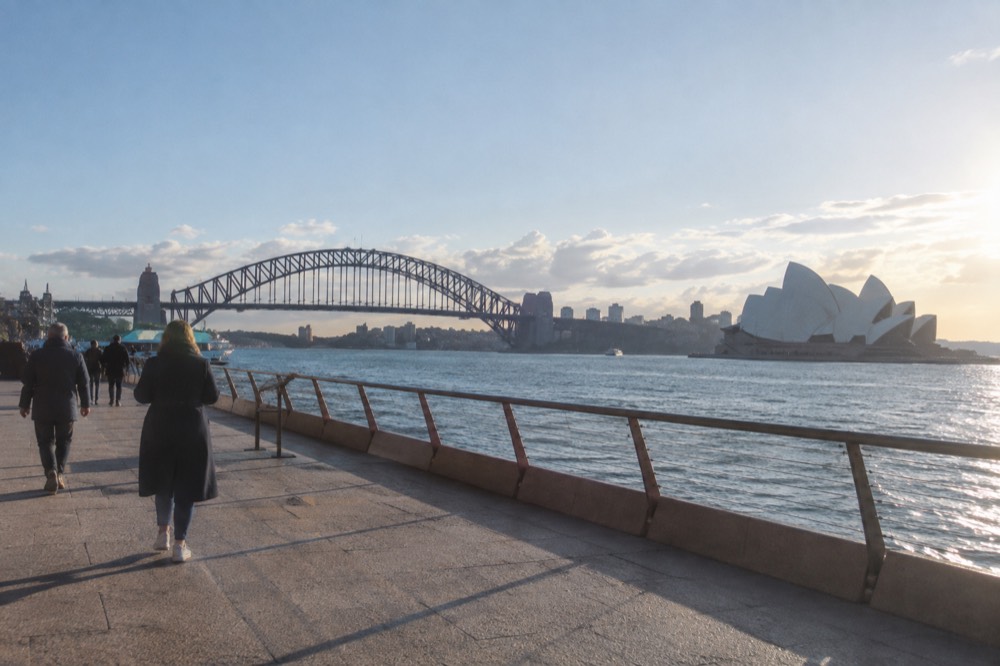
The free option deserves stating first because many visitors miss it. The walk from Circular Quay around the Opera House and into the Royal Botanic Garden is flat, continuous and delivers the harbour, the bridge and the Opera House from every angle, with Mrs Macquarie's Chair at the garden's far point giving the classic postcard view without a stair. Wendy's Secret Garden and the Barangaroo foreshore add level waterfront on the western side of the CBD. None of these costs anything, and none of them demands more than a few kilometres of gentle paving.
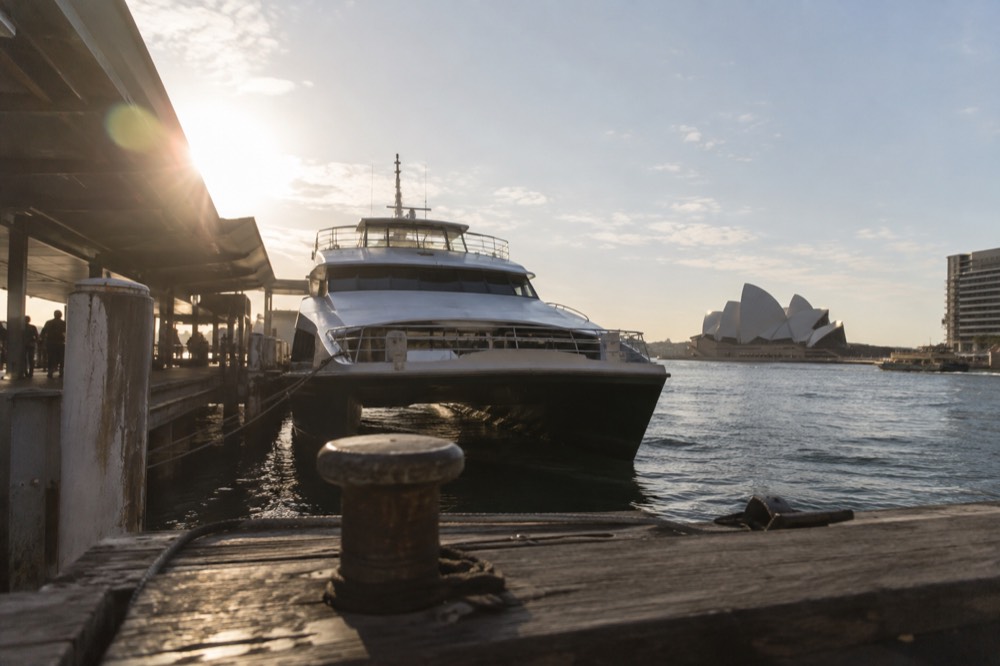
For the water itself, vessel choice decides everything. Large sightseeing catamarans and the bigger dining vessels generally have level or ramped boarding from major wharves, while tall ships, jet boats and small sailing craft involve steps, ladders and transfers that rule out most wheelchairs, and the jet boat is unsuitable for back or neck conditions regardless of mobility. Sightseeing cruises run morning and afternoon departures from Darling Harbour and Circular Quay, last about an hour and a half, and are the gentlest paid harbour experience; confirm boarding access on the live listing when you book. Our Sydney harbour cruises guide compares the formats.
Whale watching is a special case with two caveats. The season is May to November, with the northern migration roughly May to July and the return with calves from August to November, and no operator guarantees a sighting. More to the point here, whale cruises go out through open ocean swell, so they suit travellers whose mobility limits are not compounded by sea sickness or the need to brace in a moving cabin, and boarding usually involves a gangway. If the sea does not appeal, land-based vantage points inside Sydney Harbour National Park and Royal National Park work in whale season, though some of those headland paths are steep or stepped, so pick a lookout you can reach and settle in.
Where Are Sydney's Best Accessible Walks and Viewpoints?
The flat harbour corridor is the answer: Circular Quay to the Opera House to the Royal Botanic Garden, roughly two kilometres of level paving with the two most photographed views in Australia. Barangaroo's foreshore adds a modern, step-free western alternative, and the Anzac Bridge and Pyrmont side are gentler than the harbour's northern headlands. Skip the coastal cliff walks and the Harbour Bridge stairs, and use the ferry or the Pylon Lookout for height instead.
Distance matters more than gradient on flat paths, so plan by corridor. The eastern corridor, Circular Quay eastward, is the flagship: level, wide, water on one side the whole way, with shade in the garden and seats at regular intervals. The western corridor runs from King Street Wharf through Barangaroo, a redevelopment built to modern standards with smooth paving and accessible amenities along the whole stretch. Between them, the Darling Harbour boardwalk connects the aquarium and the convention precinct on flat ground. Together these three corridors give a visitor two full days of walking, rolling and viewing without a significant hill.
Height is where accessibility and Sydney's geography argue, and there are workarounds. The Sydney Harbour Bridge pedestrian deck is reachable by lifts and ramps at its southern pylon, and walking partway out is free; the full Pylon Lookout involves stairs at the pylon itself, so treat the deck, not the lookout, as the accessible version. For the highest view in the city, Sydney Tower Eye's lift is the step-free option. The cliff-top coastal walks, the famous Bondi to Coogee stretch, involve stairs, sand and uneven rock platforms, and are covered honestly in the next section because parts of them, not all, can be done from flat access points.
Which Sydney Beaches and Pools Work with Limited Mobility?
Ocean pools beat beaches. Bronte Ocean Pool and the North Bondi Children's Pool are free, council-maintained pools cleaned weekly, while Bondi Icebergs is a separate club-managed 50m pool with access fees. Beach sand is the barrier: wheelchairs cannot cross it, and beach wheelchair loans are not something this site can verify, so ask the specific council first. If you swim, swim at a patrolled beach between the red and yellow flags, and stay out of the water for up to a day after heavy rain at ocean beaches.
Ocean pools are the great Sydney equaliser and the least advertised one. Bronte Ocean Pool and the North Bondi Children's Pool are maintained by the council, free to use and open daily except weekly cleaning days, which fall on a Wednesday or Thursday rotation. Bondi Icebergs, the famous 50m pool at the south end of Bondi, is club-managed and charges access or membership fees, and like every ocean pool it closes in big swell. Clovelly, Wylie's at Coogee and Mahon are further pools along the coast, each reached by its own access path of varying steepness, so check the specific entry before committing.
The sand itself is the honest problem. A manual or powered wheelchair cannot cross dry beach sand, and this site will not claim a beach wheelchair loan service it has not verified; the relevant councils are the source for equipment hire, and it varies by season. What can be said firmly is the safety half: Bondi, Bronte, Tamarama, Coogee, Manly and Dee Why all have year-round professional lifeguard patrols, with Waverley's three beaches patrolled 6am to 7pm in the October to April high season and 7am to 5:30pm from May to September, hours the council describes as the longest in Australia. Swim between the red and yellow flags during patrol hours, never at an unpatrolled beach, and if you are caught in a rip, stay calm, raise an arm and call for help, float with the current which may return you to a sandbank, or swim parallel to the beach toward breaking waves. After heavy rain, stay out of the water for up to one day at ocean beaches and up to three days at harbour and estuarine swim sites, because stormwater degrades water quality, and Beachwatch publishes daily grades.
| Site | Type | Access reality | Patrol or cleaning |
|---|---|---|---|
| Bronte Ocean Pool | Free ocean pool | Pool edge access, steepish approach from Bronte | Cleaned weekly, closed cleaning days |
| North Bondi Children's Pool | Free ocean pool | Shallow, sheltered | Cleaned weekly, closed cleaning days |
| Bondi Icebergs | Club pool, fees apply | Iconic 50m pool, closes in big swell | Club-managed |
| Bondi Beach | Ocean beach | Sand blocks wheelchairs | Lifeguards year-round, 6am-7pm Oct-Apr |
| Coogee Beach | Ocean beach | Sand, adjacent Wylie's pool | Lifeguards year-round |
| Manly Beach | Ocean beach | Sand, flat promenade behind beach | Lifeguards year-round |
For more on choosing a beach, see the best beaches in Sydney, and for the coastal path's honest difficulty, the Bondi to Coogee walk.
Where Should You Eat and Drink with Accessibility in Mind?
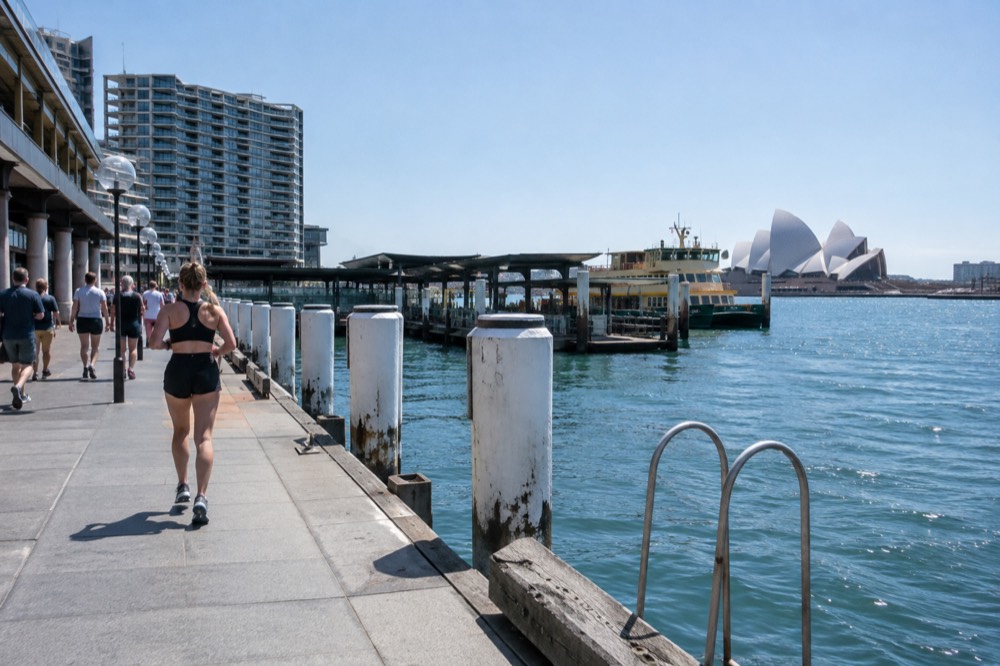
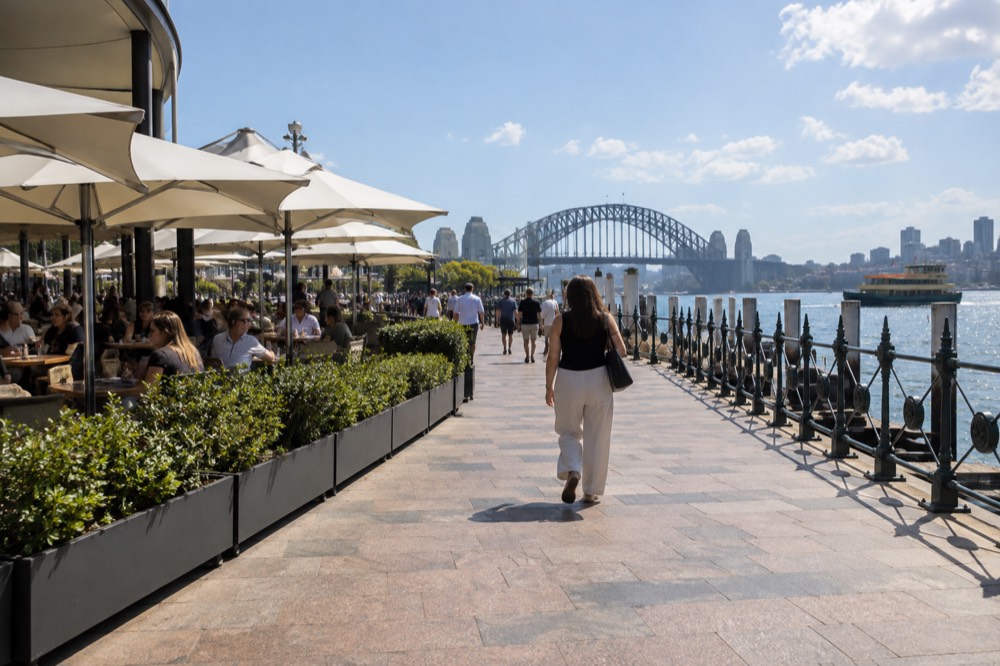
The flat precincts are the eating precincts. Darling Harbour, Circular Quay and the Barangaroo waterfront are modern builds with level entries and accessible amenities throughout, and Circular Quay's restaurant row sits directly on the ferry and train interchange, so no venue demands a hill. The food tour scene is worth a look too: a guided tasting walk keeps you on level ground with a local making the calls, and runs about three and a half hours.
Venue-level access is the one thing this guide cannot promise for specific restaurants, because it changes with renovations and staffing, so the workable strategy is geographic: eat where the terrain is already solved. Circular Quay's east promenade, the Opera House's surrounding dining, Barangaroo's restaurant strip and Darling Harbour's boardwalk are all level, and all sit within a few hundred metres of step-free transport. The Sydney food guide maps the city's dining by neighbourhood so you can match cuisine to corridor.
A guided food tour solves the problem differently, by putting a local between you and the terrain. A six-tasting walking tour through the city centre runs about three and a half hours and keeps a group on the flat downtown grid, which is more accessible than striking out alone into Surry Hills' or Newtown's sloping streets, and it comes with the standing, seating and pacing questions already answered by someone who runs the route daily. Confirm any specific mobility needs with the operator at booking, as with any walking tour.
Which Day Trips from Sydney Work with Limited Mobility?
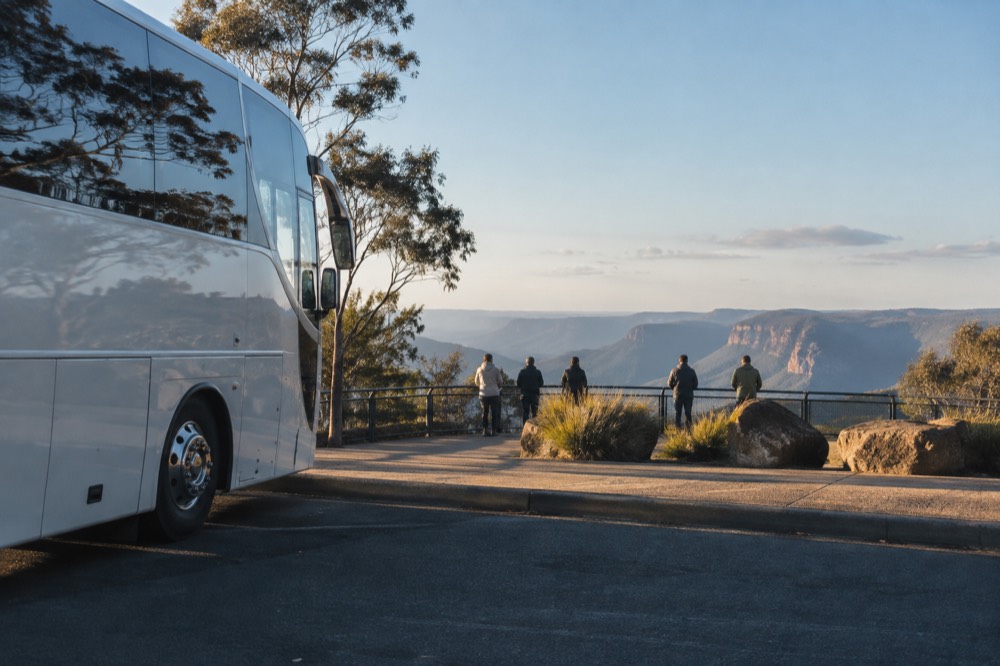
The Blue Mountains and the Hunter Valley are both reachable by coach tour, and a small-group tour with a local guide is the most reliable way to do either without stairs or sandstone. The Blue Mountains National Park charges no vehicle entry fee outside the Glenbrook area, so a tour's only costs are the tour and Scenic World if you add it. Whale season day trips only run May to November, and dolphin cruises at Port Stephens or Jervis Bay involve boarding steps.
Coach tours are the answer to day trips, because they replace every inaccessible link in the chain. A Blue Mountains day trip from Sydney runs about ten hours by road and handles the driving, the parking and the walking-route decisions; the national park itself charges no entry fee for visitors except an $8 per vehicle per day fee in the Glenbrook area only, so Katoomba, Blackheath, Wentworth Falls and the Three Sisters viewpoints carry no park fee at all. Scenic World is a separate private operator with its own ticketing, and its cableway and railway are the accessible-friendly way to reach the valley floor without the Federal Pass walking track, though note that parts of the Blue Mountains track network have closures running into late 2026, so a tour that checks current alerts beats a self-planned hike. Our Blue Mountains day trip guide covers the options.
The wildlife and wine alternatives suit different needs. An all-inclusive wombat and kangaroo day tour runs about 10 hours 30 minutes and centres on flat wildlife-park viewing rather than bushwalking, which makes it one of the more mobility-friendly nature days out from the city. The Hunter Valley wine region runs about eleven hours by coach with cellar-door visits, which are flat, indoor and seated by nature, though the day is long, so weigh stamina honestly. Port Stephens and Jervis Bay trips hinge on a dolphin cruise, and boarding a cruise vessel at a marina is the access question to put to the operator first. See day trips from Sydney for the full comparison, and day trips from Sydney without a car if you would rather not drive.
| Day trip | Travel time | Access profile | Key caveat |
|---|---|---|---|
| Blue Mountains, small-group tour | ~10 hours | Coach, lookouts, Scenic World cableway | Track closures into late 2026, check alerts |
| Wombat and kangaroo tour | ~10 hours 30 minutes | Flat wildlife-park viewing | Long day |
| Hunter Valley wine tour | ~11 hours | Cellar doors are flat and seated | Very long day |
| Port Stephens, cruise or hike | ~12 hours | Choose cruise over hike | Vessel boarding steps |
| Jervis Bay day trip | ~12 hours | Beach time on sand, dolphin cruise | Sand access, boarding steps |
| Whale watching cruise | 2-4 hours | Harbour boarding, ocean swell | May to November only, no sighting guarantee |
What Should an Accessible Sydney Itinerary Look Like?
Three days is the comfortable shape. Day one: the flat harbour corridor, the Royal Botanic Garden and an Opera House tour, all on level ground from Circular Quay. Day two: Darling Harbour's flat boardwalk with the aquarium and the Tower Eye's lift, or a harbour sightseeing cruise. Day three: a coach day trip to the Blue Mountains or the wildlife parks, letting the tour operator handle the terrain. Ferries connect all of it, and the $50 weekly Opal cap bounds the transport budget.
The sequencing matters as much as the content. Put the flat harbour corridor first, on day one, because it is the guaranteed success: even if weather or energy fails, a partial version of the Quay-to-Garden walk is still the best of Sydney. Keep the second day flexible between the indoor Darling Harbour cluster and the water, because the indoor sights are the rain plan and the cruise is the sun plan, and a ferry ride to Manly and back is itself a level, seated harbour tour if the cruise does not suit. Reserve the third day for the coach day trip, and treat it as optional rather than the centrepiece, because a ten-hour tour day is the hardest thing on this list.
Build in the city's own rhythm. Weekends and public holidays carry the $9.65 daily fare cap rather than the $19.30 weekday cap, so they are the cheap days to move around widely, but they are also when the flat corridors are most crowded, which matters for anyone who finds crowds difficult. Midweek mornings are the quiet window for the garden and the galleries, and the Art Gallery's Wednesday night opening to 10pm is a genuinely calm time to see it. Sydney's clearest skies, on the long-run average, come in August with 13.4 clear days, and its wettest month is June at 133.1 mm, so an August visit buys the most dependable outdoor days, though Sydney is a year-round city with winter means of 16.4 to 17.9 °C. For a general framework first, see Sydney for first-timers and 3 days in Sydney, then adjust for the access notes above.
Whichever of these you book, the same rule applies to all of them: confirm the specific access detail with the operator at the time, because vessels get refurbished, wharves get rebuilt and tour routes change. The pass below is the one this guide recommends most often for accessible Sydney, because it bundles the flattest indoor sights into a single flexible ticket.
Common Questions About Accessible Sydney
Is Sydney wheelchair accessible overall?
Yes in its modern core and no in its older pockets. The foreshore corridors, the metro, ferries and the major museums and galleries are accessible, while The Rocks' lanes, cliff walks and beach sand are not. Plan around the flat corridors and check individual venues before committing.
Are Sydney's ferries wheelchair accessible?
Wheelchairs are accepted on the public F1 to F10 ferry routes with full Opal benefits, but boarding depends on the wharf and the vessel. Arrive when staff are present and confirm at the wharf. The Manly F1 ferry costs $9.20 one way in the 9 km-plus band; the private fast ferry takes OpalPay at different fares with no caps.
Can you visit the Sydney Opera House with limited mobility?
The forecourt and surrounding walk are fully level and free. Interior access varies between venues, and guided tours run roughly 9am to 5pm daily in hour-long sessions with dynamic, booking-only pricing. Confirm theatre seating access with the box office if attending a performance.
Can you swim in Sydney with limited mobility?
Ocean pools are the best option: Bronte Ocean Pool and the North Bondi Children's Pool are free and council-maintained, while Bondi Icebergs charges fees. Beach sand blocks wheelchairs, so ask the relevant council about equipment before you go. Swim only at patrolled beaches between the red and yellow flags, and stay out of the water for up to a day after heavy rain at ocean beaches.
What is the cheapest way for a visitor to get around Sydney?
Tap a contactless card or phone, which matches Adult Opal fares and caps exactly: $19.30 a day Monday to Thursday, $9.65 Friday to Sunday and on public holidays, and $50 a week. Avoid single-trip tickets, which cost more and earn nothing, and avoid the airport train's $18.61 access fee by taking the 400 bus if your route allows.
Are Sydney's day trips possible without walking?
Largely, if you take a coach tour. Blue Mountains tours handle lookouts and Scenic World's cableway, wildlife tours centre on flat park viewing, and Hunter Valley cellar doors are seated and indoor. Cruise-based trips at Port Stephens and Jervis Bay depend on vessel boarding, so ask the operator first.
Planning Sydney around mobility is mostly a matter of choosing the flat corridors, trusting the newest infrastructure, and putting a tour operator between you and everything steep. This Sydney Travel Guide keeps the fares, hours and closures on file so the version you read is the version that is true.