Opal Card Guide for Visitors: Fares, Caps and Every Trap to Avoid
Sydney's trains, metros, ferries, buses and light rail all run on one tap-and-go system, and almost every visitor gets at least one detail wrong. This is the complete rulebook.
Short answer
An Opal card is Sydney's reusable transport smartcard, accepted on all public trains, metro, buses, ferries and light rail. Adult fares start at $4.33 for a short train trip, daily travel caps at $19.30 Monday to Thursday and $9.65 Friday to Sunday, and a contactless bank card is charged exactly the same as an Opal card.
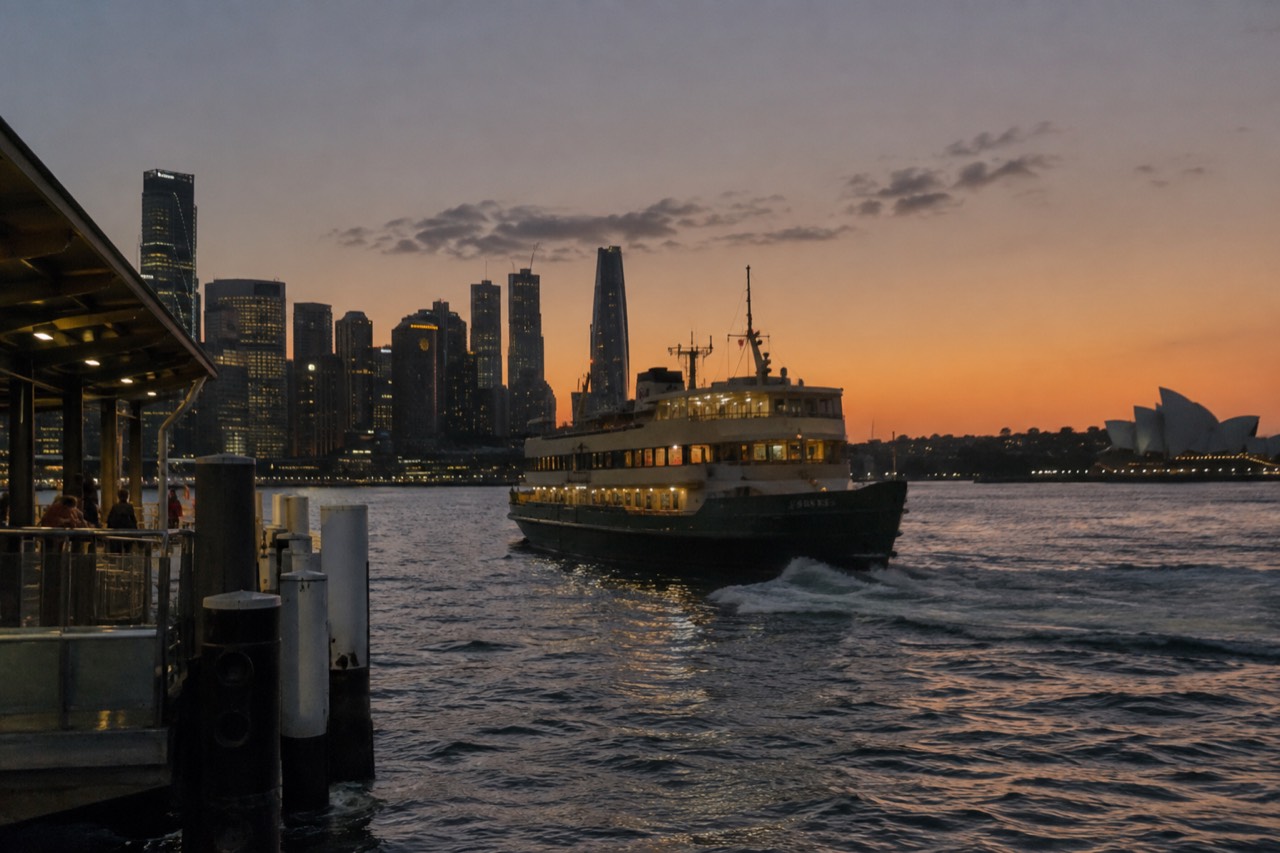
Ferry commuters tap an Opal reader at Circular Quay more than a million times a week, and almost none of them think about the system underneath. Visitors have to, because the difference between tapping correctly and tapping carelessly on Sydney transport is real money: a single wrong assumption about the airport train, or about which ferry company you boarded, can add more than the price of a lunch to a day's budget.
The card itself is free. You load value onto it, tap on at a reader, tap off at the other end, and the fare is calculated by distance. That much is obvious. What is less obvious is the cap structure, which quietly turns Sydney into one of the cheapest big cities in the world to explore by public transport after you have spent a certain amount in a day, and the handful of operators who accept the card but sit outside the caps entirely.
This guide lays out the whole system: what the card is, exactly what trips cost, how the caps work, the airport fee that catches almost everyone, the ferry exceptions, and the mistakes that show up in traveller questions again and again. Every fare figure here comes from Transport for NSW's published fare tables for the 2026 fare year.
What Is an Opal Card and How Does It Work?
An Opal card is a free, reusable smartcard that holds stored credit and works on every mode of Sydney public transport: metro, train, bus, ferry and light rail. You tap on at a yellow reader when you board and tap off when you leave, and the fare is charged automatically by the distance you travelled. There is no paper ticket for regular travel any more, and the card itself costs nothing, you only pay for the credit you load onto it.
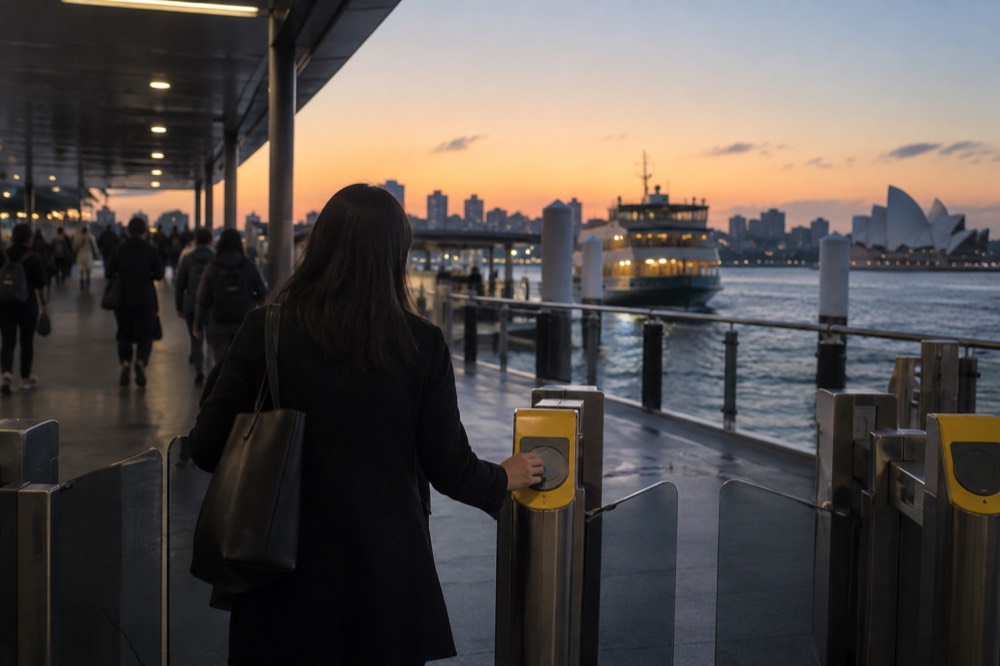
The mechanics are simple. Every station wharf, bus and light rail stop carries an Opal reader. On trains, metro and ferries you tap through gates or poles at both ends of the journey. On buses and light rail you tap when you board and tap again when you get off, and this second tap matters: if you forget it, the system charges you a default maximum fare for that mode because it cannot know how far you went.
The card uses NFC technology, the same standard as a contactless bank card, which is why a bank card works as a full substitute. It does not expire, and unused credit stays on it between trips, which is why locals keep the same card for years. If you are returning to Sydney after a previous visit, dig out the old card before buying a new one.
There are four card types: Adult, Child/Youth, Concession and Senior/Pensioner. Visitors almost always want Adult, and children aged 4 to 15 travel on the Child/Youth fare, roughly half the adult price. Under-4s travel free. Concession cards require an Australian entitlement card, so international visitors should not try to obtain one.
For the bigger picture of how the whole network fits together, the getting around Sydney guide maps every mode against the places you actually want to reach, and the Sydney trains guide for visitors covers the suburban rail network in more depth than a fare article can.
What Does an Opal Trip Actually Cost?
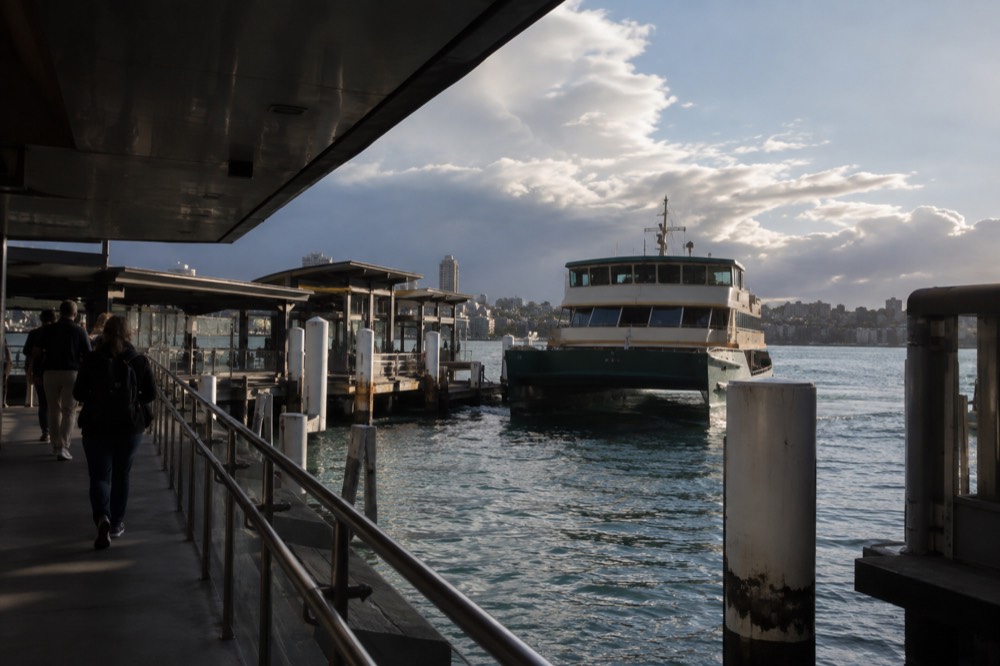
A short adult train or metro trip of up to 10 km costs $4.33 at peak times and $3.03 off-peak. A bus or light rail trip under 3 km costs $3.30 peak and $2.31 off-peak. Ferries have no off-peak discount: they charge a flat $7.35 for trips up to 9 km and $9.20 beyond that, which is what the Manly ferry costs. Every fare is distance-based.
The full adult fare tables for the 2026 fare year look like this, and they apply identically to Opal cards and contactless bank cards. Because the fare is set by distance, the same card can owe $3 or $10 depending on how far you ride, so the tables are worth a moment of study before you plan a day around them.
| Distance | Metro and train, peak | Metro and train, off-peak |
|---|---|---|
| 0-10 km | $4.33 | $3.03 |
| 10-20 km | $5.38 | $3.76 |
| 20-35 km | $6.20 | $4.34 |
| 35-65 km | $8.28 | $5.79 |
| 65+ km | $10.66 | $7.46 |
| Distance | Bus and light rail, peak | Bus and light rail, off-peak |
|---|---|---|
| 0-3 km | $3.30 | $2.31 |
| 3-8 km | $4.49 | $3.14 |
| 8+ km | $5.77 | $4.03 |
The off-peak discount is 30%, and it applies on metro, train, bus and light rail on Fridays, weekends, public holidays and outside weekday peak windows. It never applies to ferries, which charge the same fare at 6am on a Tuesday and 6pm on a Saturday.
One structural detail matters more than any single fare: the distance is measured on the network, not as the crow flies, and a trip that crosses a mode, say a train then a ferry, is charged as two separate fares. That is what makes the caps, covered next, the real story of Sydney transport budgeting.
If you are planning to lean on the ferries, and you should, the Sydney ferries guide and the dedicated Manly ferry guide explain the routes worth building a day around.
How Do the Daily and Weekly Caps Work?
Once your fares in a single day reach $19.30, every further trip that day is free, Monday to Thursday. From Friday to Sunday and on public holidays the cap is $9.65, which means a Saturday of unlimited trains, buses, ferries and light rail across the entire city costs less than a single long ferry ride. There is also a weekly cap of $50, running Monday to Sunday, after which the rest of the week is free.
The caps are the reason a transport article belongs in your planning at all. They apply network-wide, across every mode, and they stack with the off-peak discount, so each fare you pay on a Friday or weekend is 30% cheaper and pulls you toward the $9.65 cap faster. A visitor who does the Manly ferry, a train to Bondi Junction, a bus to Bondi and a ferry back through the day has almost certainly capped out by mid-afternoon on a Saturday.
| Cap | Amount | When it applies |
|---|---|---|
| Daily cap, Monday-Thursday | $19.30 | All modes, resets midnight |
| Daily cap, Friday-Sunday and public holidays | $9.65 | All modes, resets midnight |
| Weekly cap | $50 | Monday to Sunday, all modes |
| Airport station access fee | $18.61 each way | Excluded from both caps, own weekly cap of $37.75 |
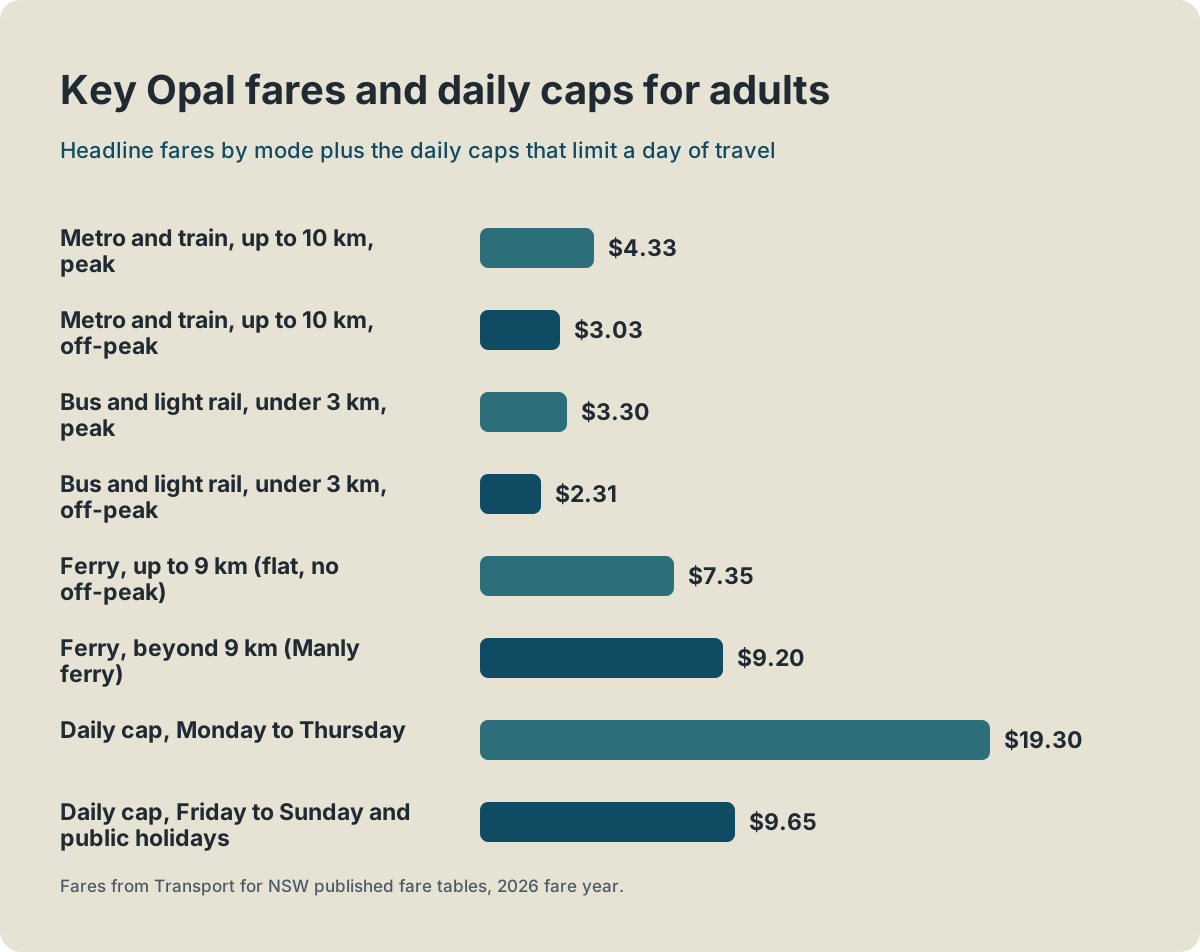
Two details do the heavy lifting. First, the public-holiday rule: NSW public holidays get the $9.65 cap, not $19.30, so a holiday Monday is the cheapest possible day to range widely. Second, the weekly cap means a seven-day trip eventually reaches a ceiling: after $50 of fares in a Monday-to-Sunday week, everything is free, so a full week of heavy sightseeing by public transport has a hard maximum cost.
There is also a $2 transfer discount when you change modes within 60 minutes of tapping off, which nudges multi-leg journeys down automatically. You never claim it, the system applies it by itself.
Want the harbour and the beaches without studying a timetable? A hop-on hop-off sightseeing bus strings together the stops that take three transfers by public transport.
Contactless Bank Card, Opal Card or Single Trip Ticket?
A contactless credit or debit card, or a phone or watch wallet, is charged exactly the same as an Adult Opal card and receives every benefit: the same fares, the same daily and weekly caps, the same off-peak discounts and the same transfer discount. A single trip ticket from a machine costs more and receives none of those benefits. For most short-stay visitors, the bank card already in your pocket is the best Opal card.
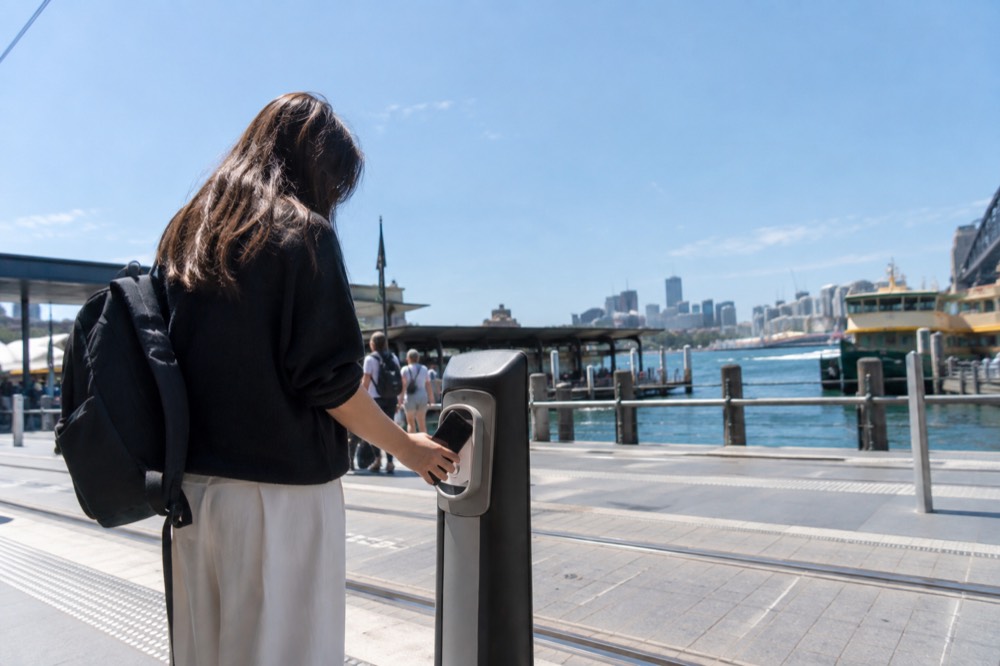
The equivalence is official and total. Transport for NSW's visitor payment guidance confirms contactless American Express, Mastercard and Visa cards, in card or device form, are treated as an Adult Opal. The only reasons to still get a physical card are travelling with children, who need a Child/Youth Opal for the child fare, wanting a physical keepsake, or your bank charging foreign transaction fees per tap, which is a real cost on some cards.
The single trip ticket is the option to avoid. It exists at machines for metro, train, ferry and light rail, costs more than the equivalent Opal fare, and earns no caps, no discounts and no transfer credit. It is a rescue option when a card genuinely will not work, nothing more.
One rule applies to both cards and devices: one card per person, always. Two people cannot share a single Opal card or tap the same bank card twice for one trip, because the reader reads the card, not the person. The system charges the same card twice at full default fare and flags it as an error. Families should carry one card each.
The full mechanics of that rule, and what happens if you try it, are covered in the article can two people use one Opal card, and the card-versus-contactless decision is unpacked further in is it cheaper to use an Opal or debit card.
What Is the Sydney Airport Station Access Fee?
The train from Sydney Airport to the city is not covered by the ordinary fare alone: both airport stations add a station access fee of $18.61 each way for adults, charged on top of the train fare, and this fee is excluded from the daily and weekly caps. It has its own separate weekly cap of $37.75. A single adult trip from the airport to Central therefore costs the train fare plus the fee, and the fee is the larger part.
This is the single most misunderstood charge in Sydney, and the most commonly stale number in travel content: the fee rose to $18.61, above the $17.92 figure that still circulates in guides published before the rise. Transport for NSW publishes the current airport access fee table, and it applies identically to Opal cards and contactless.
| Ticket type | Access fee each way | Separate weekly cap | Single trip ticket version |
|---|---|---|---|
| Adult | $18.61 | $37.75 | $19.00 |
| Child/Youth | $16.64 | $33.83 | $16.90 |
| Concession, Senior/Pensioner | $16.64 | $33.83 | not available |
The workaround is the 400 bus, a regular route bus serving the airport precinct that carries no station access fee at all. It is slower and less direct than the train, but for a solo traveller counting dollars it can be worth the trade. Taxis and rideshares sit outside the Opal system entirely with their own fixed airport charges.
For the full comparison of every way into the city, including the bus route and typical taxi costs, read the Sydney Airport to the city guide; the quick version of the train option is in how much is the train from Sydney Airport to Central.
Which Ferries and Operators Does Opal Not Cover?
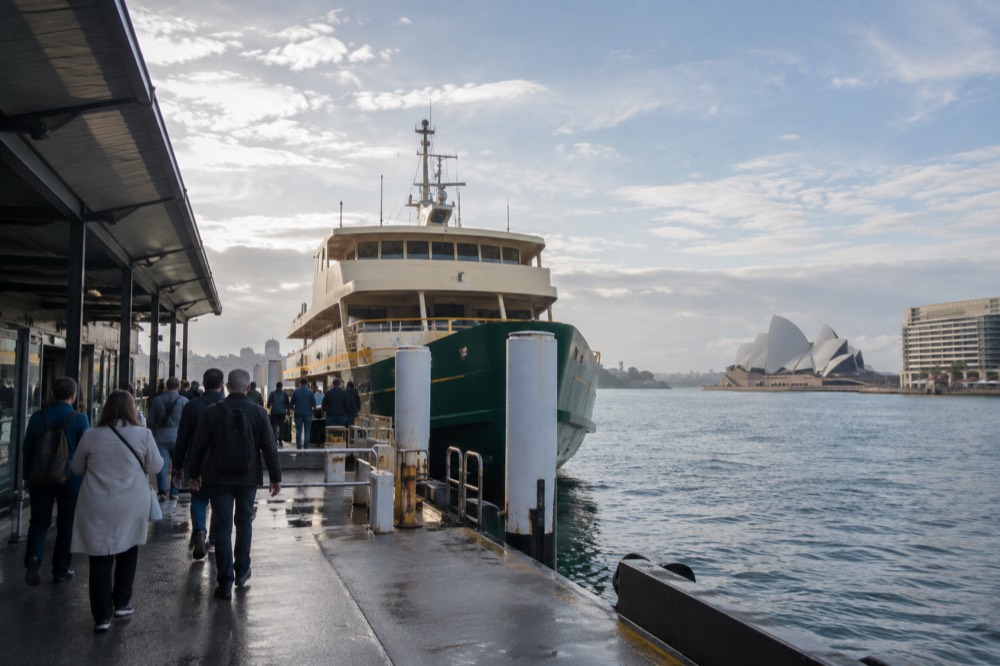
Public Sydney Ferries, routes F1 to F10, accept Opal with full benefits and count toward every cap. Privately operated ferries, including the Manly Fast Ferry, accept the card through OpalPay but charge different fares and give you none of the caps, discounts or transfer benefits. Tapping onto a private ferry with a capped day is the classic trap: you pay full price even after your daily cap has been reached.
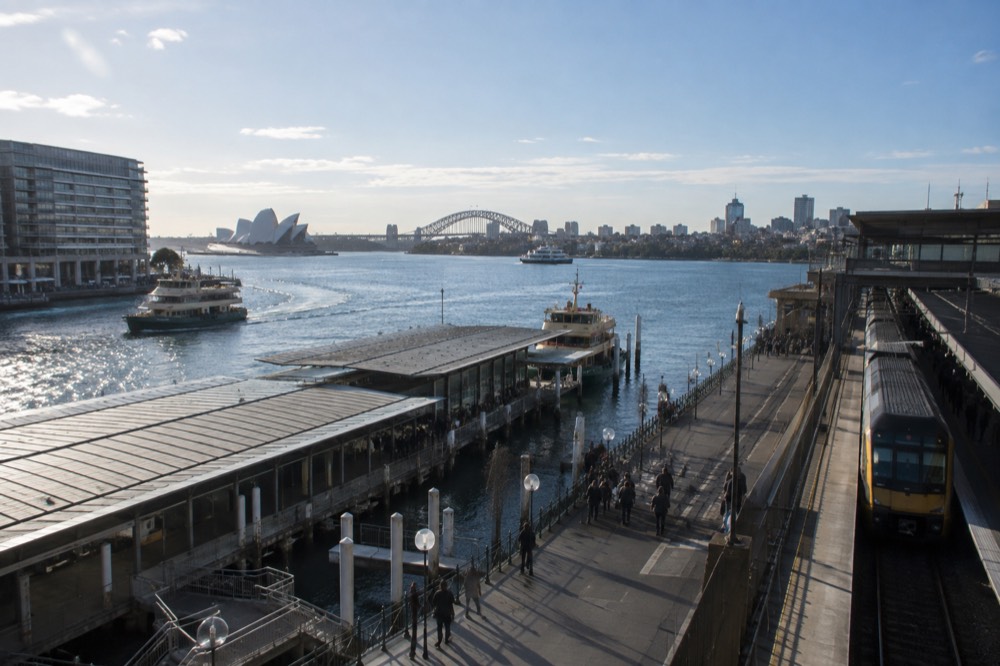
The distinction is invisible at the wharf. The public F1 Manly ferry and the private fast ferry leave from adjacent berths at Circular Quay and both display the Opal logo, because OpalPay is a genuine payment acceptance. But OpalPay is a payment method, not a fare system: the private operator sets its own price and the trip never appears in your cap calculation. The differences are laid out in what is the difference between the Manly Fast Ferry and the regular ferry.
The safe rule for visitors: if a ferry is a green-and-yellow Sydney Ferries vessel on an F-numbered route, tap freely. If it is a fast, privately branded vessel, check the price board before boarding, because your capped day will not protect you.
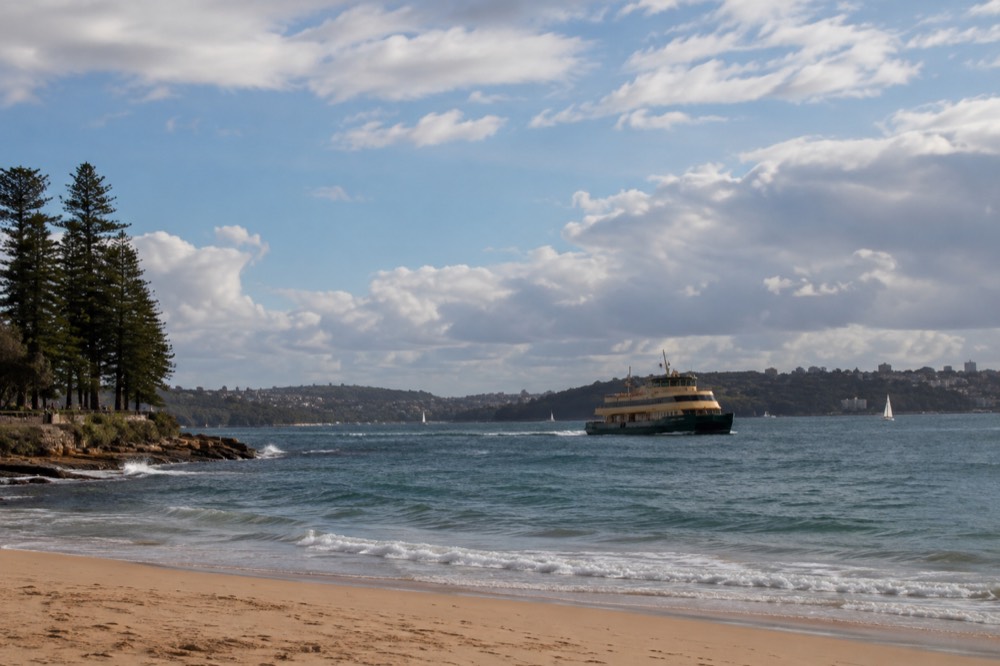
The ferry network itself is one of Sydney's genuine attractions. The F1 to Manly is a 30-minute harbour crossing that costs $9.20 each way, within the daily cap, and the is the Manly ferry the best value tour in Sydney question deserves its own answer. If you want the harbour without committing to timetables, there is also a dedicated hop-on hop-off ferry product that circles the main wharves all day.
Where Do You Buy and Top Up an Opal Card?
You can buy and top up an Adult Opal card at convenience stores and supermarkets, including Woolworths and Coles, at train station ticket machines and kiosks, and at the airport stations. Top-up is also available through the Opal Travel app. There is no charge for the card itself and no minimum load beyond a small first top-up, so the only real decision is whether you want one at all when a contactless bank card does the same job.
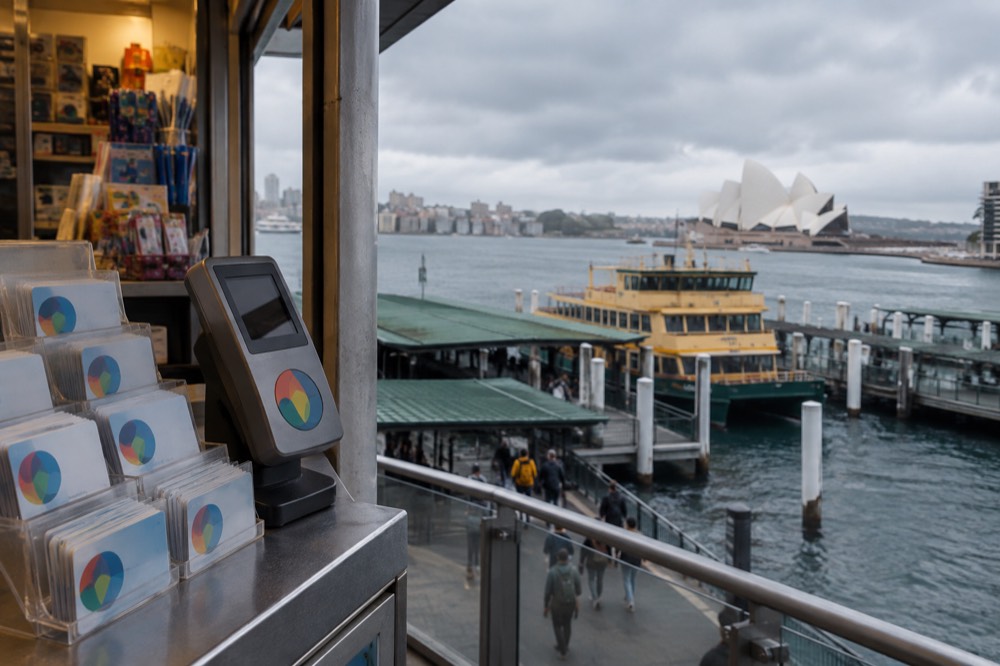
The retail network is broad: thousands of shops display the Opal sign, and the app's map shows the nearest. Airport station machines sell cards, which matters on arrival, though buying one there does not avoid the access fee, that is charged per trip regardless of where the card was purchased. The specifics of supermarket availability are answered in can I buy an Opal card at Woolworths.
Checking your balance needs no shop: the Opal Travel app shows balance and trip history, and every card reader briefly displays your remaining credit when you tap. The mechanics are in how do I check my Opal card balance.
Leftover credit is refundable, but the process is slower than most visitors expect, so the cleaner strategy for a one-week trip is to top up in small amounts and finish the trip near zero. A card with $30 stranded on it is the most common small loss visitors report.
What Mistakes Do Visitors Make with Opal?
The four expensive mistakes are: forgetting to tap off a bus or light rail, which triggers a default maximum fare; sharing one card between two people, which fails outright; tapping a private ferry assuming the caps apply, which they do not; and budgeting airport train trips as ordinary capped fares, which the access fee is not. Each one is easy to avoid once you know it, and together they account for nearly every overcharge a visitor reports.
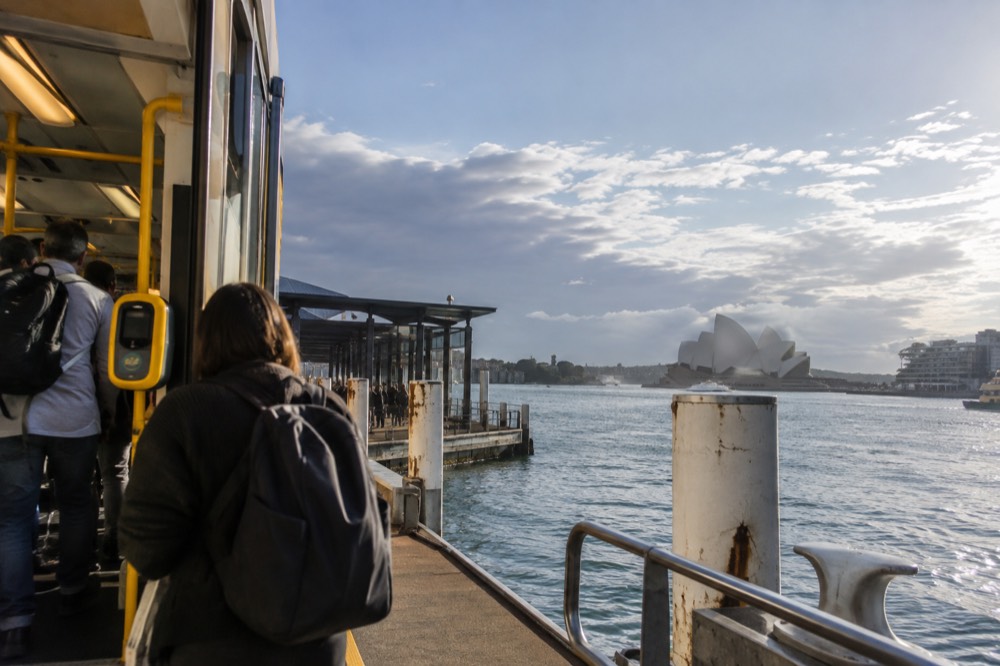
The tap-off failure deserves emphasis because buses feel like they should be one-tap systems. They are not. Tap on at the front, tap off at the front or back when you leave, every time. If you genuinely forget, the default fare is capped at the maximum for that mode, so the damage is bounded, but on a bus that is $5.77 instead of perhaps $2.31.
The second is timing. Peak versus off-peak is calculated on when you tap on, so a 4pm train departure on a weekday is peak and the same train at 9:30am is not. Travellers who shift long train trips to Fridays, weekends or midday save 30% on every fare, and on a capped day that pulls the free-travel threshold closer.
The third is assumption. The do tourists need an Opal card in Sydney question has a genuinely conditional answer: for a weekend city trip using contactless, no; for a week of suburban exploring with children, yes. Deciding before you arrive, rather than at the airport machine, is the whole game.
And if the transport day feels like work, a sightseeing bus that stops at Bondi, the harbour and the city centre is a legitimate substitute for a day, with the commentary doing what the timetable cannot.
Is an Opal Card Worth It for Your Trip?
For a short city stay of one to three days, a contactless bank card is an Opal card in every way that costs money, so the physical card is optional. For a week or more, families, or anyone who wants the child, concession or senior rates, the card is worth getting, because the weekly $50 cap and the discounted child fares only attach to real Opal cards. Either way, Sydney's caps make the transport itself cheap: the decision is about convenience, not cost.
The honest framing is that Sydney has already solved most of the problem for you. The caps are generous, the contactless equivalence removes the need to acquire anything before arrival, and the network reaches essentially every place a visitor wants to go. The residual decisions are small: whether to accept the airport access fee or take the 400 bus, and whether to buy a physical card for the children.
Where public transport stops being the answer is the sprawl of sightseeing: the attractions cluster in ways no single train line serves, and a day that strings the aquarium, the tower and the beaches together is a day of transfers. That is the gap a combination [sightseeing pass](https://gocity.tpk.ro/rUvgw2vS) fills, bundling the aquarium, the observation deck and two more attractions at one price.
For everything beyond the fare system, the Sydney sightseeing buses guide compares the touring options, and Sydney Travel Guide covers the rest of the city, from the Blue Mountains day trip to the best lookouts in Sydney.
Common Questions About the Opal Card
Can I tap my credit card instead of an Opal card?
Yes. A contactless Visa, Mastercard or American Express card, or the same card in a phone or watch wallet, is charged identically to an Adult Opal card and receives every benefit: the same fares, the daily and weekly caps, the off-peak discount and the transfer discount. The only exceptions are child, concession and senior rates, which require a physical Opal card.
How much does an Opal card cost in Sydney?
The card itself is free. You pay only for the credit you load onto it, and there is no expiry date. Single trip tickets from machines cost more than the equivalent Opal fare and receive no caps or discounts, so the free card or a contactless bank card always beats them on price.
Can two people use one Opal card?
No. The system reads the card, not the passenger, so a second tap of the same card within moments of the first is rejected or charged as a default fare. Every traveller needs their own card or their own contactless device, including children travelling on child fares.
Is the airport train included in the Opal daily cap?
No. The train fare itself is capped like any other train trip, but the airport station access fee of $18.61 each way for adults sits outside the daily and weekly caps and has its own separate weekly cap of $37.75. The 400 bus from the airport precinct carries no access fee at all.
Do Sydney ferries count toward the Opal daily cap?
Public Sydney Ferries on routes F1 to F10 do, fully. Privately operated ferries, including the Manly Fast Ferry, accept Opal through OpalPay but charge their own fares with no caps, no off-peak discount and no transfer benefits. Check which operator you are boarding at shared wharves.
What happens if I forget to tap off?
The system charges a default maximum fare for that mode, because it cannot know where you left the vehicle. The default fare is bounded, not open-ended, so the cost is the difference between your real fare and the mode maximum, typically a few dollars on a bus or light rail trip. Tap off every time to avoid it.