Sydney Opera House: Tours, Free Entry and the Best Views
The Sydney Opera House is the building most visitors come to Sydney to see, and most of what they assume about it is slightly wrong. Entry to the foyers is free, tours run roughly 9am to 5pm daily, and the best photographs are taken from the other side of the water.
Short answer
Yes, you can enter the Sydney Opera House for free: the foyers, box office and exterior walkways are open to anyone. Guided tours run roughly 9am to 5pm daily and last about an hour, with prices set by date and session. Allow two to three hours for a tour plus the surrounding Circular Quay and Royal Botanic Garden Sydney foreshore.
The Sydney Opera House sits on Bennelong Point at the edge of Circular Quay, and it does something few world-famous buildings manage: it rewards walking around it more than photographing it from one spot. The white sail roofs change character from every angle, the sandstone podium underneath is a public walkway in its own right, and the foyers are free to enter even when you have no ticket for anything. This guide, part of the Sydney Travel Guide coverage of the city, covers what is free, what costs money, which tour suits which traveller, and where the harbour's best vantage points actually are.
One thing to settle immediately: the Opera House is a working performance venue first and a monument second. Around the year it hosts opera, theatre, music and talks across multiple indoor venues, which means some rooms close without notice for rehearsals and bump-outs. The building's own tours page lists what is running on any given day, and it is the only source for current session times: the official tours page publishes the live schedule. Everything below is written around that reality rather than around a fixed timetable.
What Is the Sydney Opera House and Why Is It Famous?
The Sydney Opera House is a multi-venue performing arts centre on Bennelong Point, opened by Queen Elizabeth II after more than a decade of construction and political controversy, and it is UNESCO World Heritage listed, one of the few buildings of its era to carry that status while still in daily public use. Its fame rests on the sail-shaped roof shells, one of the most recognisable silhouettes on earth, and on its position: it terminates the view down Sydney Cove with water on three sides. No official annual visitor count is published, but the precinct stays busy year-round with audiences, tour groups and people who come simply to walk the point.
The land itself carries far older significance than the building. Bennelong Point is the country of the Gadigal people of the Eora Nation, and the point takes its name from Bennelong, a Gadigal man of the Wangal and Cammeraygal clans whose interactions with the early colonial settlement are part of the site's story. Any honest account of the place starts there rather than with the concrete.
The shells are the engineering story most visitors ask about. They are covered in more than a million glazed ceramic tiles in two finishes, a chevron pattern that reads as brilliant white from a distance but resolves into subtle cream and grey up close. The podium underneath, with its massive sandstone columns, was designed as a public platform and still works as one: you can walk almost the entire ground plane without a ticket. For the full picture of the surrounding precinct, our Circular Quay visitor guide covers the wharves, the ferry terminals and the walk east.
Can You Visit the Sydney Opera House for Free?
Yes, and this surprises people: the exterior walkways, the monumental steps and the western and northern foyers are free to enter during opening hours with no ticket required, and while the major theatres and the concert hall stay closed to unaccompanied visitors, free daily architecture talks run inside on a schedule published on the official site. You cannot walk into the performance venues on your own, but you can stand inside the building, use the box office, browse the visitor information desk and follow the boardwalk around the whole point. What costs money is the guided tour of the interior venues, performances, and food.
The free experience is genuinely worthwhile rather than a consolation prize. The northern boardwalk looks straight across the harbour to Kirribilli and the Harbour Bridge, the monumental steps are one of the city's great public stairs, and the foyer spaces under the shells are architecturally the most impressive free interior in Sydney. On a warm evening the precinct turns into an informal gathering place for the whole eastern Quay.
Here is the honest split between what is free and what is paid:
| Experience | Cost | What you get |
|---|---|---|
| Exterior, steps and boardwalk | Free | Full walk around Bennelong Point, harbour views |
| Foyers and box office area | Free | Interior architecture, information desk, free architecture talks |
| Guided interior tour | Paid, varies by date and session | Inside the major venues, about 60 minutes |
| Performance ticket | Varies by show | Entry to a venue as an audience member |
| Tour plus meal package | Paid, varies by session | Guided tour plus dining at an Opera House venue |
One planning note that saves disappointment: because the foyers are free and the precinct is pleasant, many visitors assume they have "done" the Opera House without going inside a single theatre. The interiors are the reason the building is famous, and the only way into them outside a performance is a guided tour. If your time is short and you want the interior, a tour is the efficient choice; if your budget is zero, the free layer plus the surrounding precinct still fills half a day. Our free things to do in Sydney guide places the Opera House foyers in a wider no-cost itinerary.
Which Sydney Opera House Tour Should You Book?
For most visitors the standard guided tour with entry included is the right pick, running roughly 9am to 5pm daily for about an hour and taking you into the concert hall and theatre spaces that free access never reaches, with sessions in other languages on set weekdays and prices that vary by date and session rather than being fixed. If you are combining the visit with a meal, a tour-and-dine package adds dining at an Opera House venue. Check the live listing for the day you want, since the price appears there at the moment you book.
The tour with entry included is the workhorse option. It runs about 60 minutes, covers the principal venues that are not in rehearsal that day, and includes admission to the building's guided areas. Traveller reviews consistently praise the guides' storytelling about the construction saga and the shell engineering, and the flexibility to cancel suits visitors whose Sydney plans are still loose. Families with children over five manage the standard tour comfortably.
The official guided walking tour covers similar ground in a similar hour, and suits visitors who want the venue interiors with the operator's own guides and the standard schedule. The tour-and-dine experience pairs the tour with a meal, which turns a one-hour visit into a two-hour one and makes sense on a day when you are eating in the Quay area anyway.
A quick comparison of the three bookable Opera House experiences:
| Option | Duration | Best for |
|---|---|---|
| Guided tour with entry included | About 1 hour | First-time visitors who want the interiors |
| Official guided walking tour | About 1 hour | Visitors who prefer the venue's own guides and schedule |
| Tour and dine experience | About 2 hours | Visitors combining the tour with a meal |
One warning worth its own sentence: do not buy a tour for the same evening as a performance you are attending and expect to see that venue empty. Rehearsal and event schedules close rooms without notice, and the tour will simply route around them. Morning sessions see fewer closures.
What Can You Actually See Inside the Building?
Inside, the Opera House is a cluster of separate venues rather than one big auditorium: a concert hall, an opera theatre, a drama theatre, a playhouse and a studio, plus rehearsal rooms and recording spaces, all under the shell roofs. A tour typically takes in the concert hall and the opera theatre, both radically different in character: the concert hall is paneled in Australian hardwoods with the famous cloud of acoustic reflectors above the stage, while the opera theatre is a darker, more intimate space. Which rooms you see depends on what is rehearsing that day.
The interiors are the payoff for the tour, and they surprise people who only know the white exterior. Underneath the shells the palette shifts to warm timber, coloured glass and exposed structural concrete. The concert hall's pipe organ towers over the stage beneath those reflectors, and the foyers' glass walls frame the Harbour Bridge so precisely that the view feels designed into the building, because it was.
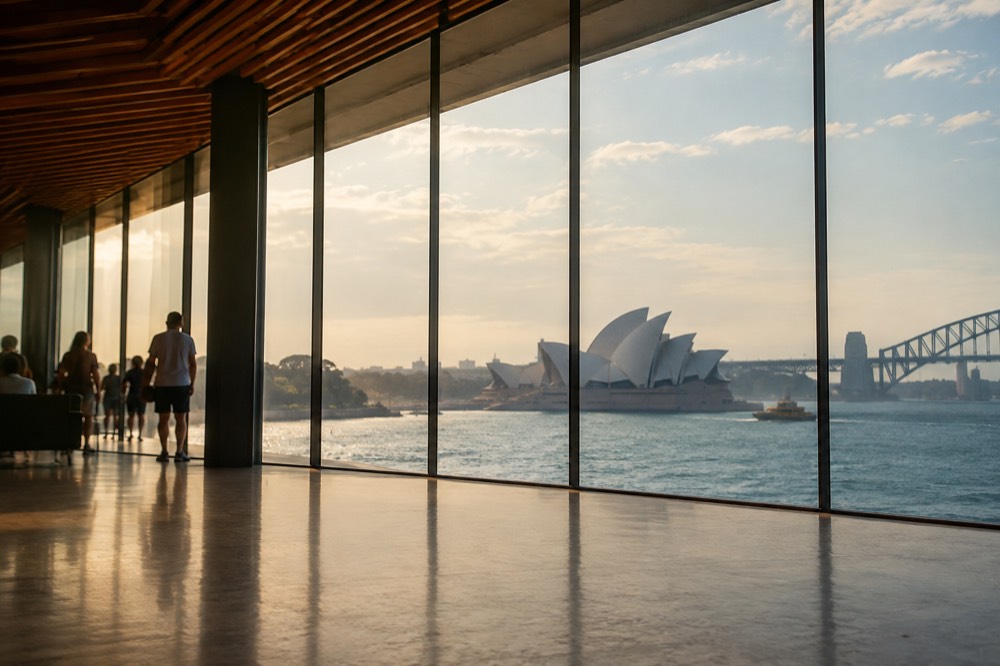
Practical interior notes: photography is allowed in foyers and on most tours, though flash and tripods are restricted in venues, and some rehearsals are off-limits entirely. Accessible tours run for visitors with mobility needs, and the building's lifts connect all public levels of the podium. If a performance is your goal rather than a tour, the box office in the western foyer sells same-day tickets when seats remain, and the Sydney theatre and shows guide explains how the city's ticketing landscape works.
Where Are the Best Views and Photo Spots of the Opera House?
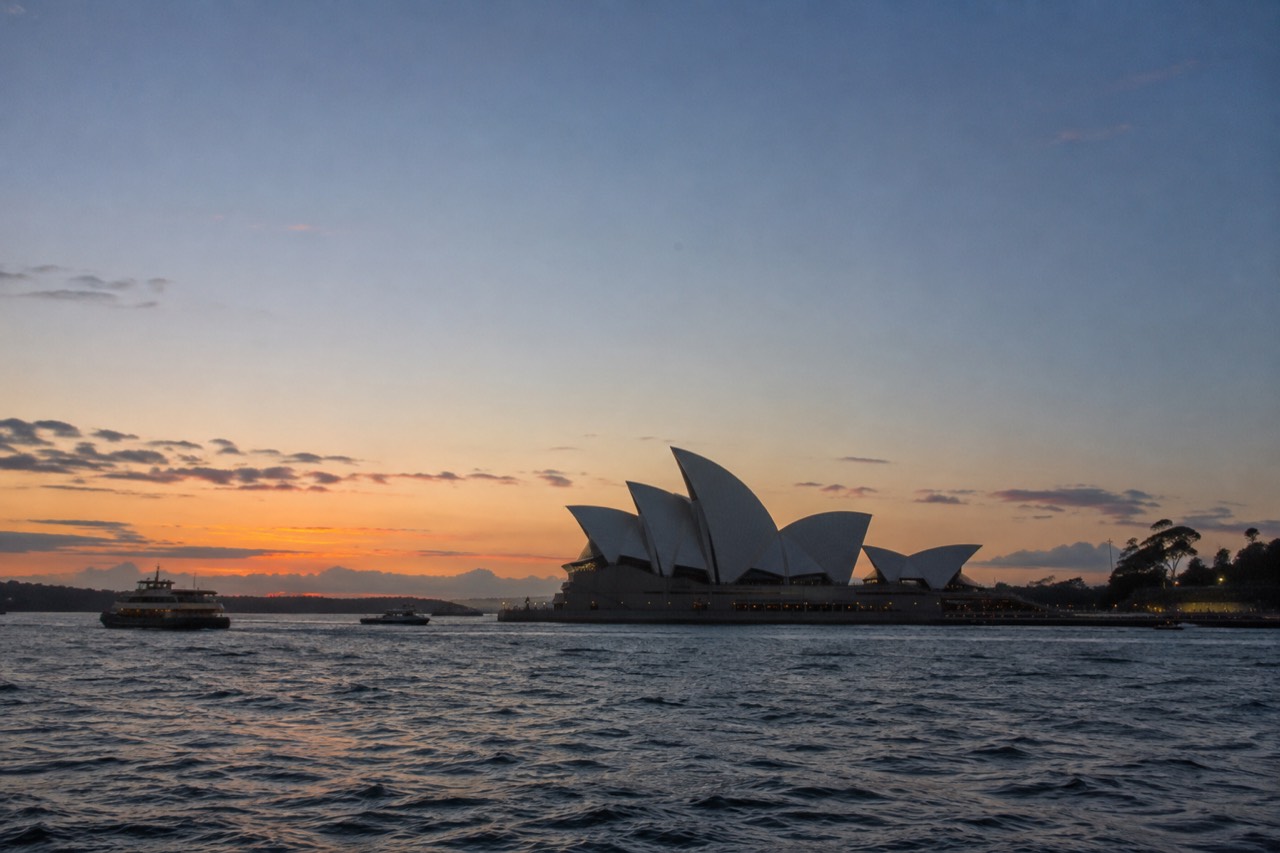
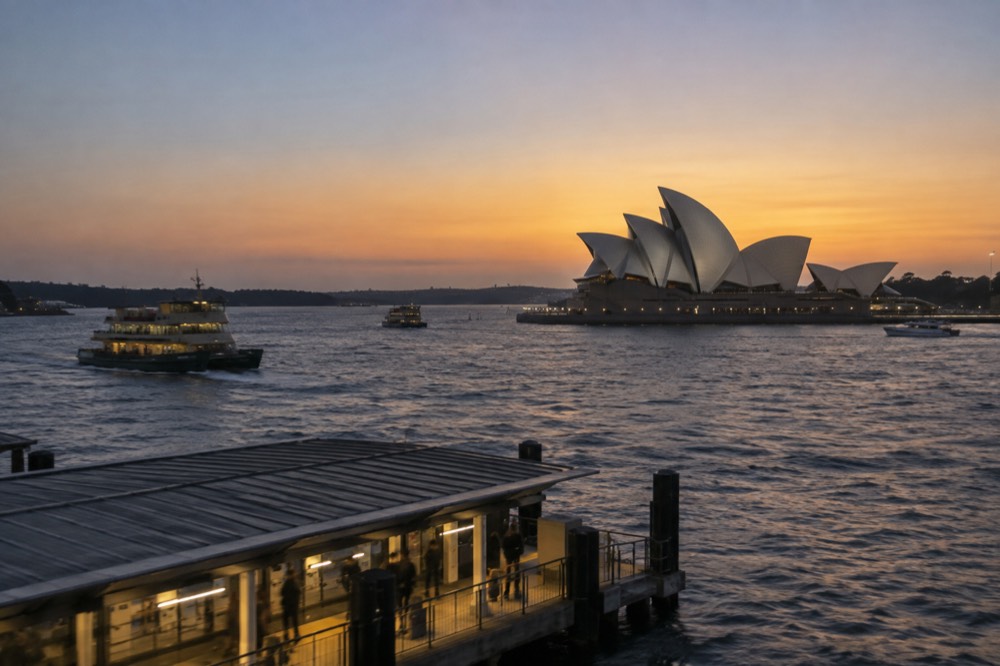
The best photographs of the Opera House come from the water or the far shore, not from its own steps: the Manly ferry as it swings out of Circular Quay, Mrs Macquarie's Point through the Royal Botanic Garden Sydney, and the Kirribilli side of the harbour give the classic postcard angles. From the building itself you photograph details, not the silhouette. Sunset and the hour after are when the shells catch warm light, and the blue hour, when the interior lights glow through the foyer glass, is the building's most photogenic half hour.
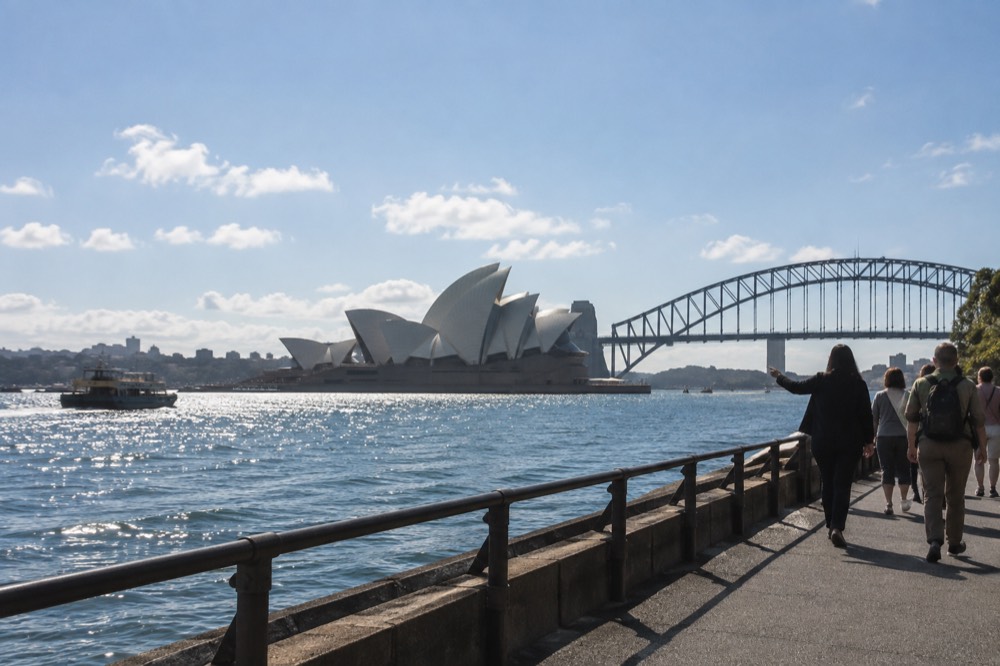
The ferry option is the cheapest and most fun: the Manly ferry turns through Sydney Cove on departure and gives a moving, water-level view of the point for the price of an Opal fare. Mrs Macquarie's Point, at the end of the Royal Botanic Garden Sydney, frames the Opera House and the Harbour Bridge together, which is the single most requested photo in the city. From Kirribilli, across the water, you get the building against the city skyline.
| Vantage point | Where it is | Best time |
|---|---|---|
| Mrs Macquarie's Point | Eastern edge of the Royal Botanic Garden Sydney, about a 15-minute walk from the Opera House | Late afternoon into sunset |
| Manly ferry departure | Circular Quay wharf 3, view unfolds as the ferry clears the cove | Any daylight hour |
| Kirribilli waterfront | Across the harbour, near Milsons Point ferry wharf | Morning, with the sun behind you |
| Opera Bar boardwalk | Western side of Bennelong Point itself | Blue hour, interior lights on |
| Cahill Expressway lookout | Above Circular Quay station | Midday, elevated panorama |
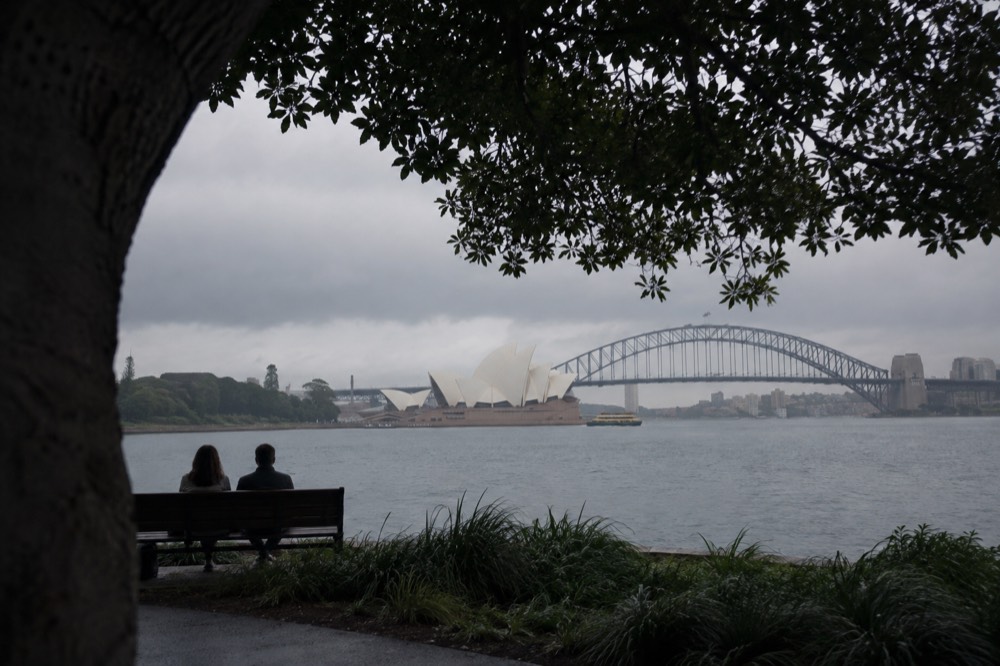
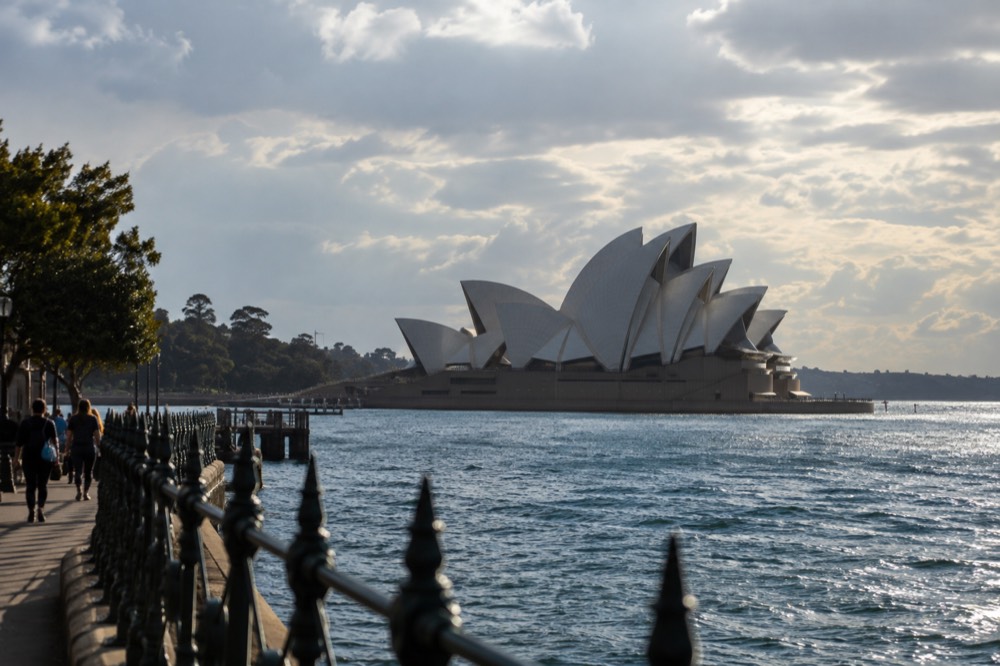
The garden route deserves its own mention because it combines two of Sydney's best free experiences in one walk. The Royal Botanic Garden Sydney is free to enter and open from 7am until sunset, with closing time shifting through the year, and the Farm Cove shoreline path delivers the Opera House from angles you cannot get anywhere else. Our Sydney photography spots guide ranks the whole city's vantage points, and the Royal Botanic Garden Sydney guide covers the garden's own layout, including The Calyx exhibition space, entry by donation.
How Do You Get to the Sydney Opera House?
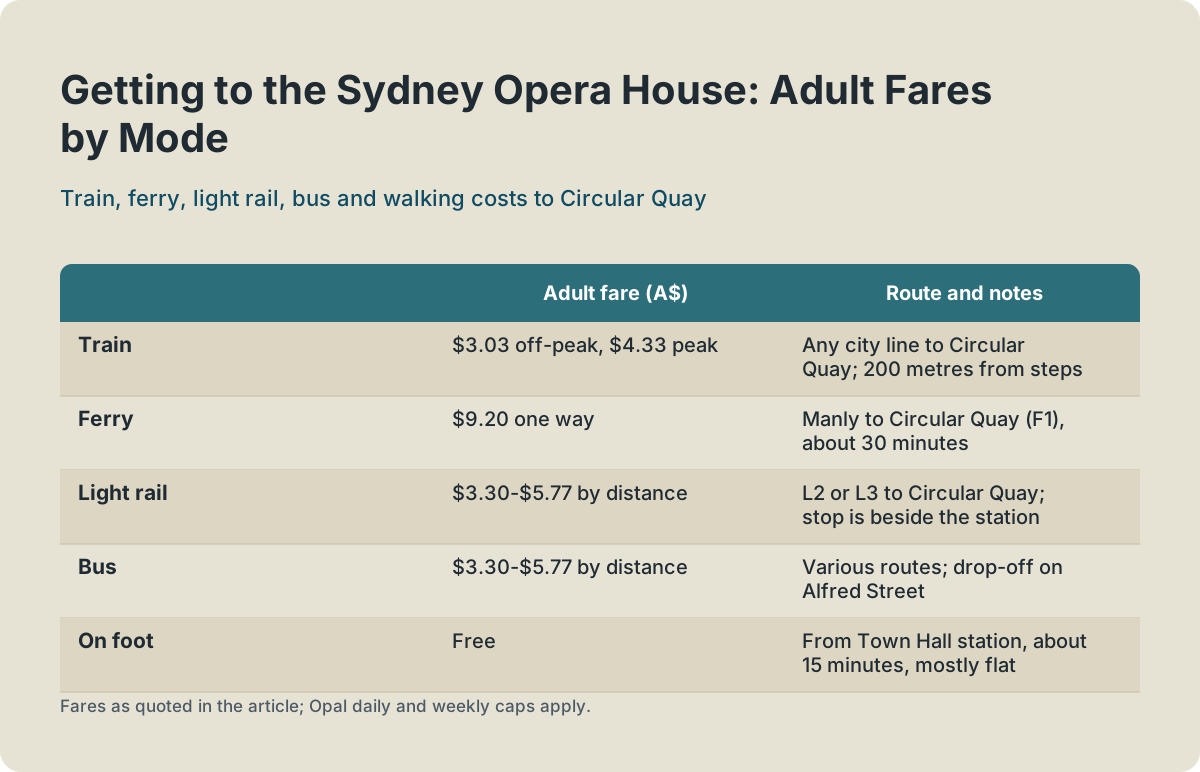
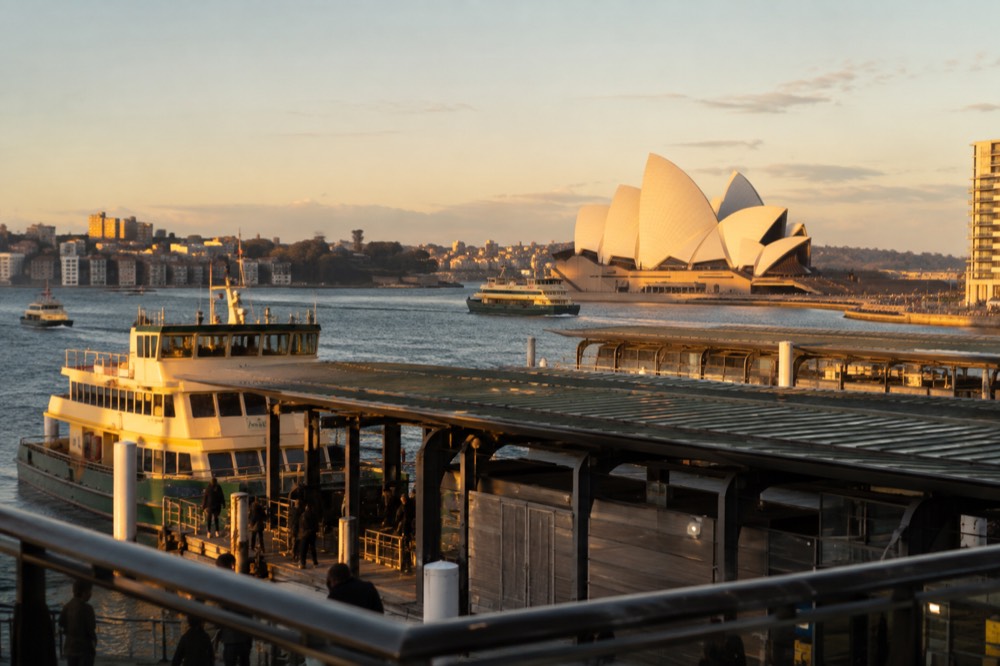
Circular Quay station and ferry wharves sit about 200 metres from the Opera House steps, making this one of the easiest major attractions on earth to reach, since trains, the light rail and most harbour ferries all terminate there, and walking from Town Hall station takes only about 15 minutes. An adult train fare from Central costs $3.03 off-peak or $4.33 peak, and the Manly ferry, the classic arrival, costs $9.20 one way. There is no parking at the venue itself, and driving here is the one choice to avoid.
The Opal system rewards you for arriving by public transport. Tap a contactless card or an Opal card and you earn the same fares and caps: $9.65 per day on Fridays, weekends and public holidays, $19.30 Monday to Thursday, and $50 per week across the whole network. Ferries do not get the off-peak discount, but they count toward the caps. The full fare tables are published by Transport for NSW, and our Opal card guide for visitors explains the caps in plain language.
| Mode | Route | Adult fare (A$) | Notes |
|---|---|---|---|
| Train | Any city line to Circular Quay | $3.03 off-peak, $4.33 peak | Station is 200 metres from the steps |
| Ferry | Manly to Circular Quay (F1) | $9.20 one way | The scenic arrival, about 30 minutes |
| Light rail | L2 or L3 to Circular Quay | $3.30-$5.77 by distance | Stop is beside the station |
| Bus | Various routes to Circular Quay | $3.30-$5.77 by distance | Drop-off on Alfred Street |
| On foot | From Town Hall station | Free | About 15 minutes, mostly flat |
Accessibility is well handled. The walk from Circular Quay to the building is flat and step-free, lifts serve the podium levels and the foyers, and accessible tours of the interior run on the standard schedule. Visitors using wheelchairs or mobility scooters can cover the full exterior circuit and the main foyer level without assistance; our accessible Sydney guide covers the wider city, and the question is Sydney wheelchair accessible answers the transport side in detail.
How Much Time Do You Need at the Sydney Opera House?
Allow two to three hours for the building itself, an hour for a guided tour plus time for the foyers, the boardwalk and the monumental steps, and add another hour if you are eating here or half a day if you are walking on through the Royal Botanic Garden Sydney to Mrs Macquarie's Point. Visitors who try to compress the visit into 30 minutes see the exterior and nothing else; visitors who give it a morning get the interior, the garden and the best photo light in one loop.
Timing within the day matters more than most guides admit. Morning tours run when rehearsal closures are fewest, the middle of the day is when the precinct is most crowded with cruise-ship and tour groups, and the evening is when the building belongs to performance audiences and the bars. If you are only in the city for a day, our 1 day in Sydney itinerary slots the Opera House into a full Circular Quay-to-garden loop, and longer versions exist for 2 days and beyond.
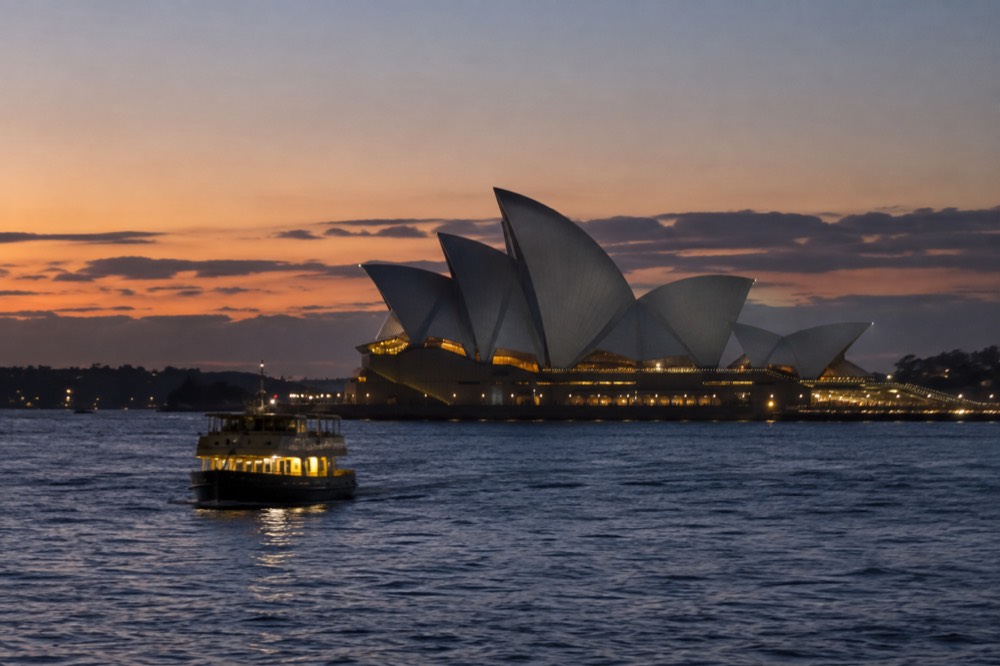
Season by season, the building changes character rather than closing. In summer, December through February, sunset sessions run late and the outdoor precinct stays busy past midnight. In winter, June through August, the early darkness brings the foyer lights on by 5pm, which is when the blue-hour photographs are easiest. Vivid Sydney, running over 23 nights in late May and June, transforms the entire Quay with light installations, and more than 80 per cent of that festival is free; our Vivid Sydney guide covers viewing strategy for the busiest fortnight of the year.
Where to Eat and Drink Around the Opera House
Opera Bar, on the western boardwalk, is the precinct's famous outdoor drinking spot with the Harbour Bridge directly opposite, and the surrounding Circular Quay and The Rocks strip holds everything from food-court quick meals to fine dining within a fifteen minute walk of the steps. Inside the building, the House Canteen and the venue restaurants serve tour crowds and performance audiences, though renovation works have shuffled some outlets. Two hundred metres west, the The Rocks laneways hold the city's densest cluster of historic pubs.
The honest food advice: eat for the view or eat for quality, and know which one you are choosing. Opera Bar's appeal is the panorama, and it is priced accordingly. The Rocks pub food, a ten-minute walk, gives you a sandstone-walled dining room for less money. For a picnic alternative, the Royal Botanic Garden Sydney lawn east of the building is free, and our Sydney picnic spots guide lists the best grass within walking distance of the Quay.
| Eating option | Where | Style |
|---|---|---|
| Opera Bar | Western boardwalk of the Opera House | Outdoor drinks and casual food, harbour view |
| House Canteen | Ground level of the Opera House | Casual dining, reopening after renovation works |
| Circular Quay eateries | 200-400 metres west | Food courts, bakeries, quick meals |
| The Rocks pubs | 10-15 minutes on foot | Historic sandstone pubs, bistro menus |
| Garden picnic | Royal Botanic Garden Sydney lawn | Bring your own, free entry |
If dinner before a performance is the plan, book well ahead. Performance nights fill every venue within 400 metres, and the pre-show window between 6pm and 7pm is the most contested seating in the precinct. The Sydney restaurants guide covers the city's dining landscape beyond the tourist strip.
Common Questions About the Sydney Opera House
Can you just walk into the Sydney Opera House?
Yes, into the foyers, the box office area and all exterior walkways, free of charge during opening hours. The theatres and the concert hall are only accessible on a guided tour or with a performance ticket. Free architecture talks run inside on a daily schedule published on the official site.
How much does a Sydney Opera House tour cost?
Tour prices are not published as fixed figures; they vary by date, session type and language, and the venue sells them dynamically. The live price appears on the operator's listing at the moment you book. Sessions run roughly 9am to 5pm daily and last about an hour.
Is there a free tour of the Sydney Opera House?
There is no free guided interior tour, but free daily architecture talks run inside the building, and the foyers and boardwalk are open to everyone. The talks cover the design and construction story and are scheduled on the official tours page.
Which Sydney Opera House tour is the best?
For most visitors the standard guided tour with entry included, about an hour, is the best balance of time and access. The official guided walking tour covers similar ground with the venue's own guides, and the tour-and-dine experience suits visitors combining the visit with a meal. All access the same core venues, subject to rehearsal closures.
What is the best time of day to visit the Sydney Opera House?
Morning, for two reasons: tours between 9am and midday encounter the fewest rehearsal closures, and the precinct is least crowded before the midday tour groups arrive. Photographers, however, get the best light late in the day, when the shells catch the sunset and the foyer lights come on.
How long do you need at the Sydney Opera House?
Two to three hours for the building itself: an hour for a tour plus time for the foyers and boardwalk. Add an hour for a meal, and half a day if you are continuing through the Royal Botanic Garden Sydney to Mrs Macquarie's Point. Visitors who only view the exterior typically spend 30 minutes.