Is Sydney Wheelchair Accessible?
A practical answer to whether Sydney works for wheelchair users: which areas are easy, which are hard, and how the transport network measures up.
Is Sydney Wheelchair Accessible?
Yes, in the main, and better than most visitors expect, but unevenly. Sydney's modern core, the Circular Quay to Darling Harbour foreshore, the ferries, the metro and the major museums are all genuinely usable with a wheelchair. The weak points are the older parts of the city: The Rocks' cobblestones and steps, the steep streets of Potts Point and Woolloomooloo, and the coastal walks, which are walking tracks rather than paved paths. Plan around the strong parts and Sydney is very manageable.
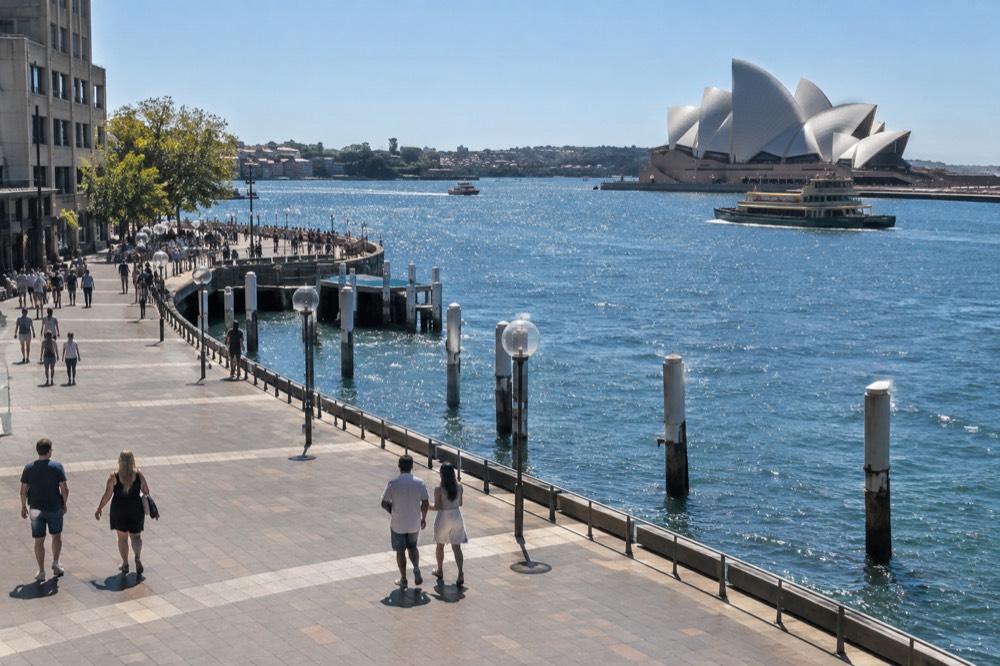
Sydney rebuilt large parts of its city core for the 2000 Olympics and has kept improving access since, which is why the waterfront reads so differently from the backstreets. The Circular Quay promenade, the Barangaroo waterfront and the wide walkway across the Sydney Harbour Bridge footpath are all level, paved and step-free. A dedicated Sydney wheelchair access guide covers the full planning picture in more depth than this page can.
Where the city falls down is geography. Sydney is built on ridges, sandstone shelves and a drowned river valley, so even the modern parts connect through slopes. The Sydney CBD itself is mostly flat between George Street and the harbour, but one block east or west and the gradient starts.
Which Parts of Sydney Are Easiest with a Wheelchair?
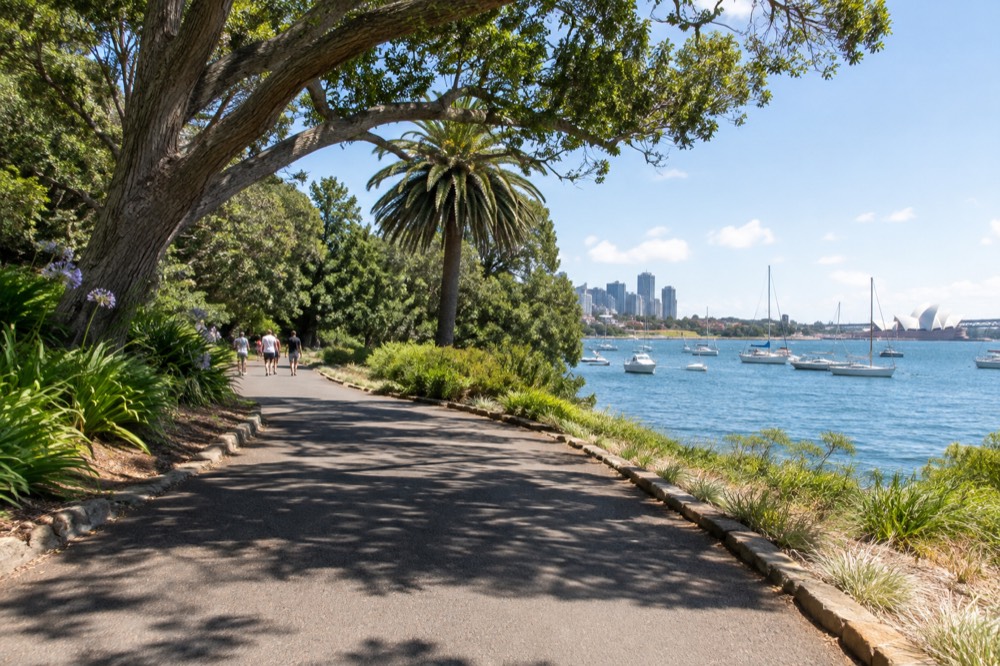
The easiest areas are Circular Quay and The Rocks foreshore, Darling Harbour, Barangaroo, the Royal Botanic Garden Sydney and the Pyrmont and King Street Wharf precincts. All offer level, continuous paved paths along the water, accessible toilets at reasonable intervals and step-free entry into their main attractions. The Royal Botanic Garden is free to enter, open daily from 7am to sunset, and its harbourside Farm Cove path is sealed and gently graded.
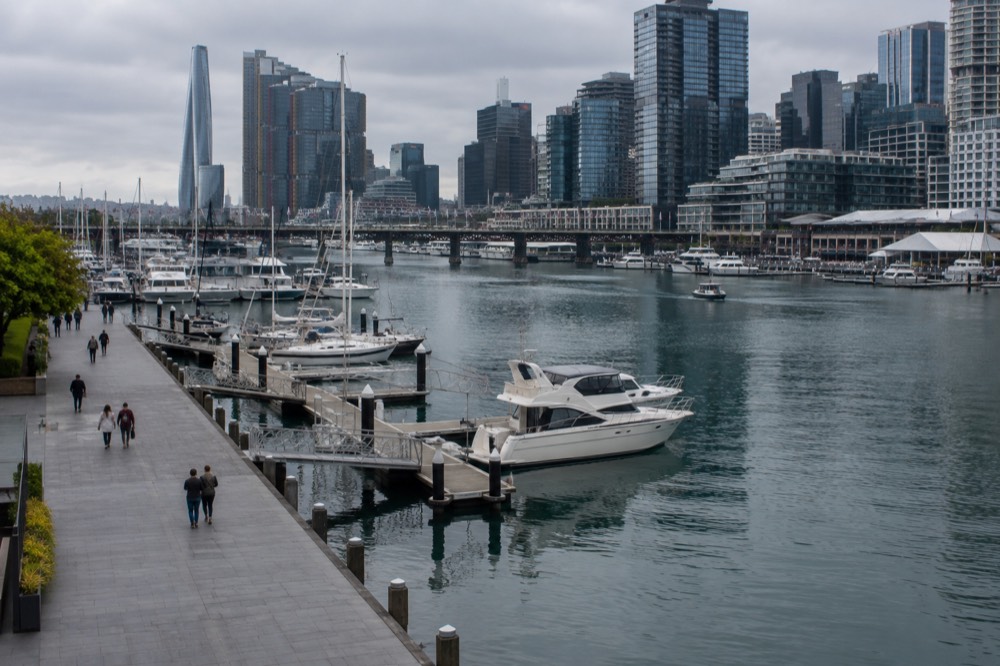
The foreshore ribbon is the city's best asset for a wheelchair user. You can travel from Barangaroo in the west, through Darling Harbour and Circular Quay, around Farm Cove to Mrs Macquarie's Point, almost entirely on flat, wide pavement. The Royal Botanic Garden Sydney sits in the middle of that run, and its lawns and main paths are sealed and step-free, though some garden beds and lookout points use gravel or grass.
Darling Harbour deserves a specific mention. Its convention precinct, the SEA LIFE Sydney Aquarium and the surrounding boardwalks were rebuilt as a single accessible waterfront, with lifts at every level change and ramps at every kerb crossing. It is the one part of Sydney where a wheelchair user never has to plan a detour.
The harbour itself is an accessible attraction, not just a barrier to cross. A sightseeing cruise from Circular Quay is a seated, step-free way to take in the full panorama, with boarding assistance available at the main wharves.
If you would rather stay on land, the trio below covers the harbour from the water, from the Sydney Tower Eye observation deck and on foot through the historic quarter, three different ways to see the city that all depart from the accessible core.
How Accessible Is Sydney's Public Transport?
Sydney's public transport is one of its strongest accessibility stories. The metro and the ferries are almost entirely step-free, most trains run accessible services with boarding ramps on request, and Transport for NSW's trip planner lets you filter journeys for wheelchair access. Contactless card payment is charged exactly the same as an adult Opal card, with the same daily caps, so there is no ticket barrier to negotiate.
The Sydney ferries are the standout. The main Circular Quay wharves have gangway boarding, and ferries to Manly, Taronga Zoo and Parramatta carry wheelchair spaces near the crew so help is close at hand. The F1 Manly ferry fare is $9.20 one way for an adult, and the daily Opal cap is $9.65 on Fridays, weekends and public holidays, so a full day of harbour hopping costs less than two single fares, as Transport for NSW's fare pages set out.
The metro, running from Tallawong to Sydenham, was built to modern accessibility standards: level boarding, lifts at every station and wide gates. The older suburban train network is more mixed. Major stations such as Central, Town Hall and Circular Quay have lifts, but some heritage stations do not, so checking the trip planner for a step-free route matters more on the train network than anywhere else. Everything else covered here is indexed on Sydney Travel Guide.
Buses are the patchiest leg. Most of the fleet is low-floor with ramps, but ramp deployment depends on the kerb being usable at that specific stop, and drivers cannot always guarantee a spot in a full bus. The Opal card guide for visitors covers the payment side; for routing, always plan through the accessible-journey filter rather than assuming the fastest route is the usable one.
Which Sydney Attractions Are Wheelchair Friendly?
Most of the headline attractions are. The Opera House offers accessible tours and step-free entry to its foyers, Taronga Zoo is built around a cable car and level pathways, the Australian Museum and Art Gallery of New South Wales are free to enter with lifts to every floor, and the Sydney Tower Eye observation deck is reached by lift. The main exceptions are the BridgeClimb, which has physical and harness requirements, and the coastal walks.
The Sydney Opera House is better than its reputation for steps suggests. The forecourt and lower concourse are step-free, lifts connect the foyers, and the venue publishes an access guide covering wheelchair seating in the theatres and accessible tour options. Tour prices vary by date and session rather than being published as a fixed figure, so check the official tours page for the session you want.
Taronga Zoo is one of the best days out in the city for a wheelchair user precisely because its site is steep, and the zoo solves that with the Sky Way cable car and a free internal shuttle. Entry is $57 for an adult at the gate or from $51.30 online, and the zoo is open 365 days a year. The ferry wharf at the bottom connects directly to the entrance plaza by cable car or lift, which makes the whole day, ferry ride included, work without a car.
The free museums are the quiet achievers. The Australian Museum states on its visit page that general entry is free, with daily opening from 10am to 5pm and step-free access throughout, and only major temporary exhibitions carry separate tickets. The Art Gallery of New South Wales, a short level walk through The Domain from the museum, is likewise free for general entry, open until 10pm on Wednesdays, and its modern building has level entry and lifts to every level.
| Attraction | Entry cost | Access notes |
|---|---|---|
| Royal Botanic Garden Sydney | Free | Sealed, gently graded harbourside paths; open 7am to sunset |
| Australian Museum | Free general entry | Step-free, lifts; open daily 10am to 5pm |
| Art Gallery of New South Wales | Free general entry | Level entry, lifts; Wednesdays until 10pm |
| Taronga Zoo Sydney | Adult $57 gate, from $51.30 online | Cable car and shuttle manage the steep site |
| Sydney Tower Eye | Adult $39 on the day, from $29 advance | Observation deck reached by lift |
| Sydney Opera House tours | Prices vary by date and session | Accessible tour options; lift access to foyers |
What Are the Hardest Parts of Sydney for Wheelchair Users?
The Rocks, the eastern beach suburbs and the coastal walks are the hardest. The Rocks combines nineteenth-century laneways, steps and cobblestones, and while its George Street spine is fine, the side lanes toward the harbour are not. Bondi, Bronte and the clifftop track between them are effectively off the table: the Bondi to Coogee walk is a natural-surface walking trail with stairs, not an accessible path. Potts Point and Woolloomooloo add steep gradients.
The Rocks is the one visitors get caught by, because it sits right next to the accessible Circular Quay precinct and looks continuous with it. It is not. The historic quarter was never flattened, and its charm is exactly what makes it hard: sandstone kerbs, stepped lanes and narrow passages. The main streets and the foreshore walk to the harbour bridge are manageable, but the laneways behind them need detours.
The beaches deserve honest framing. Bondi Beach's promenade is paved and level, and the beach itself has beach wheelchairs available through the council's accessibility programme, but the surrounding streets slope hard and the ocean pools are entered by steps. The Bondi to Coogee coastal walk is a bush track with rock stairs at several points and cannot be done in a wheelchair at all. If the coast matters to your trip, Manly is the better base: its Shelly Beach path is a flat, sealed promenade, and the ferry to get there is fully accessible.
One more practical caution: Sydney's older mid-city blocks still have heritage kerbs and steep driveway crossings, and the city's sandstone geography means a route that looks flat on a map can carry a serious gradient. Local knowledge beats map-reading here, which is exactly why this site maintains a full accessible Sydney planning guide rather than a single page of reassurance.
Is Sydney Worth Visiting with a Wheelchair?
Yes, comfortably, if the itinerary is built around the harbour rather than the coast. A visitor who bases themselves near Circular Quay, Darling Harbour or Barangaroo, uses the ferries and metro instead of buses, and spends their days on the foreshore, at Taronga Zoo and in the free museums will find Sydney one of the more workable major cities in the world. The city rewards planning and punishes improvisation.
The difference between a frustrating day and a great one in Sydney is rarely the destination, it is the route. The same two points can be connected by a flat foreshore path or by a sandstone staircase, and the map does not always tell you which. Building each day around the accessible core, with the harbour as the connecting thread, removes most of that risk before it starts.
For a longer stay, the 3 days in Sydney itinerary and the Sydney for first-timers guide both adapt well to an accessible plan, since both already lean on the foreshore, the ferries and the major attractions. If you are weighing Sydney against another Australian city, the Sydney versus Melbourne comparison is worth a read, though on pure terrain, flat Melbourne has an edge that Sydney answers with a better ferry network.
Common Questions About Sydney Wheelchair Access
Is Sydney wheelchair accessible?
Yes, in the main. The harbour foreshore, the ferries, the metro and the major museums are all genuinely accessible, while The Rocks' laneways, the steep eastern suburbs and the coastal walking tracks are not. Plan around the accessible core and the city works well.
Are Sydney ferries wheelchair accessible?
Yes. The main Circular Quay wharves offer gangway boarding and wheelchair spaces near the crew, and the major routes including the F1 Manly ferry carry accessible vessels. Boarding assistance is available, and ferry fares earn the same Opal caps as trains and buses.
Can you visit the Sydney Opera House in a wheelchair?
Yes. The forecourt and foyers are step-free with lift connections, the theatres offer wheelchair seating, and the venue runs accessible tour options. Tour prices vary by date and session rather than being published as a fixed figure.
Is the Bondi to Coogee walk wheelchair accessible?
No. It is a natural-surface coastal trail with stairs and rock sections and cannot be done in a wheelchair. Bondi's paved promenade and the flat, sealed path from Manly to Shelly Beach are the accessible coastal alternatives.
Do Sydney trains have wheelchair access?
Most do, but not all stations. Major stations such as Central, Town Hall and Circular Quay have lifts, while some heritage stations do not. Transport for NSW's trip planner includes a wheelchair-accessible filter, which should be used for every train journey.
Where is the best place to stay in Sydney for wheelchair access?
The Circular Quay, Darling Harbour and Barangaroo precincts are the strongest bases: level foreshore paths, accessible transport links and step-free attractions are all within reach. The inner east and the beach suburbs involve steep gradients and should be checked street by street before booking.