2 Days in Sydney: The Perfect First-Timer Itinerary
Two days is enough to see Sydney's headline acts if you plan the geography properly: the harbour and historic centre on day one, the beaches and the eastern suburbs on day two.
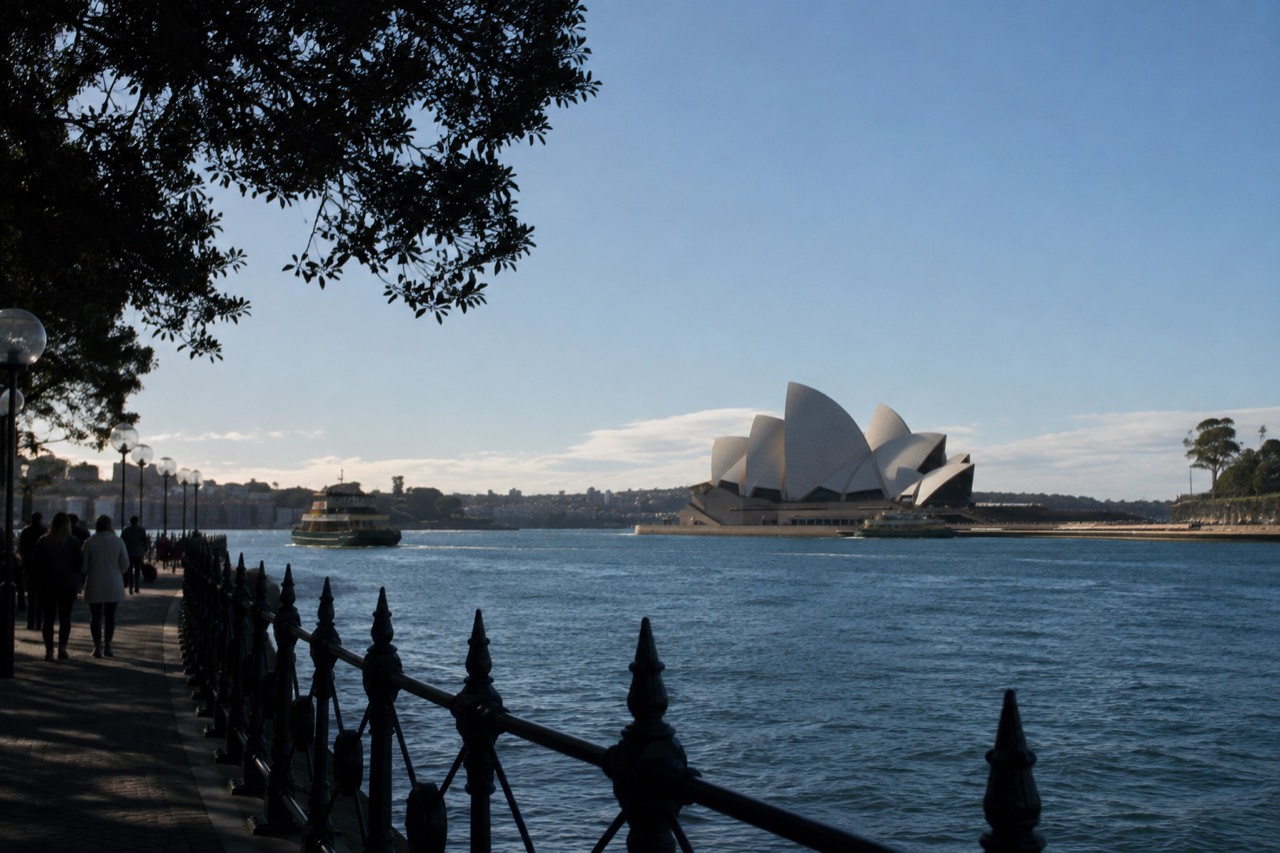
Short answer
Spend day one around Circular Quay, The Rocks, the Sydney Opera House, the Harbour Bridge and the Royal Botanic Garden Sydney, which is free to enter. Spend day two at Bondi Beach, on the Bondi to Coogee coastal walk, and finish on a harbour ferry. A contactless card covers all transport, capped at $9.65 a day on weekends.
Two days in Sydney is a real brief, not a compromise. The city's headline attractions sit within a few kilometres of each other, the ferry network doubles as sightseeing transport, and the two big questions every first-timer asks, the Opera House and Bondi, can each be answered inside half a day. The failure mode is geography: visitors who try to see Bondi, Manly and the Blue Mountains on the same day spend most of their trip on trains. This itinerary splits the city the way the transport network does, with the harbour and historic centre on day one and the eastern beaches on day two.
One planning note before anything else: Sydney observes daylight saving from the first Sunday in October to the first Sunday in April, so summer evenings stay light until around 8pm. Winter days are shorter but the skies are often clearer, and the site's month-by-month weather pages cover that trade-off in detail on Sydney Travel Guide.
What Does a Perfect 2 Days in Sydney Look Like?
A perfect two days pairs the harbour with the coast. Day one covers Circular Quay, The Rocks, the Sydney Opera House, the Harbour Bridge and the Royal Botanic Garden Sydney, all walkable within about two kilometres. Day two goes east to Bondi Beach and the Bondi to Coogee coastal walk, then returns to the harbour for a sunset ferry. Total attraction spend stays low if you walk the bridge rather than climb it, since the garden, the museums and the coastal walk are all free.
The order matters more than the list. Circular Quay is the transport hub where trains, ferries and buses meet, so it anchors day one naturally. Bondi is a 30-minute bus or a hop-on hop-off ride from the city centre, and the coastal walk from Bondi to Bronte takes about an hour at a relaxed pace, which leaves the afternoon free. Trying to reverse the two days, beaches first, harbour second, works too, but the sunset ferry on day two is the stronger finish and it only works if Bondi happens earlier in the day.
Day 1 Morning: Circular Quay, the Rocks and the Opera House
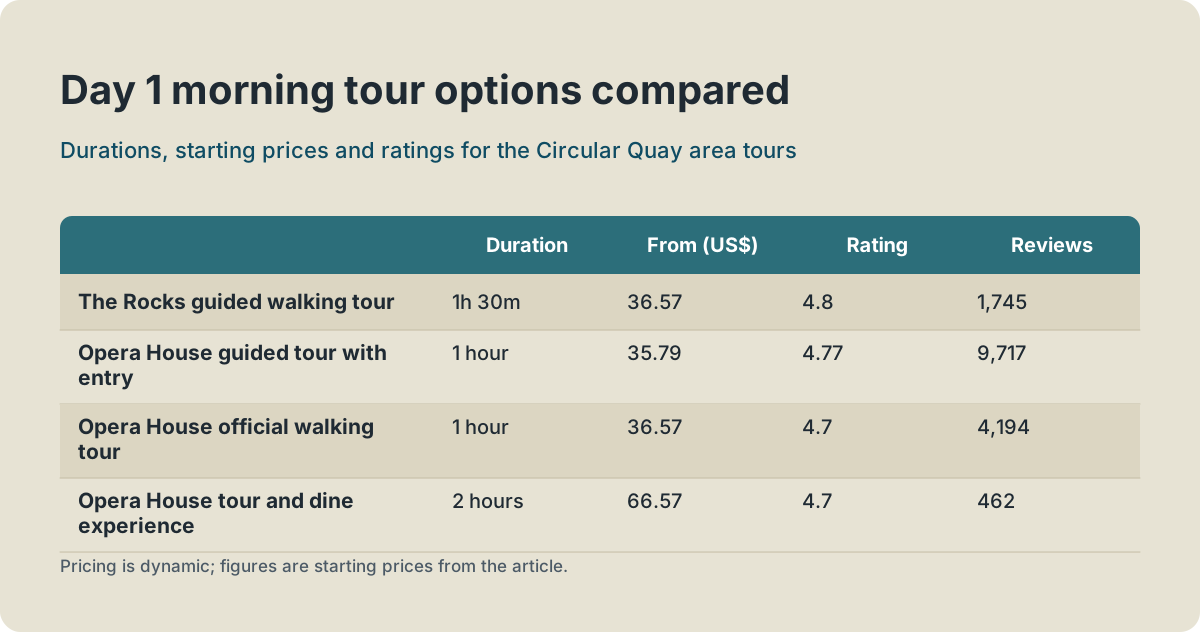
Start at Circular Quay by 9am, walk west into The Rocks for an hour, then circle back to the Sydney Opera House for a late-morning tour. The Rocks guided walking tour runs 90 minutes from US$36.57, and the Opera House guided tour with entry included runs about an hour from US$35.79. Doing all three before lunch costs two tour tickets and a short walk, and covers the two most photographed buildings in Australia.
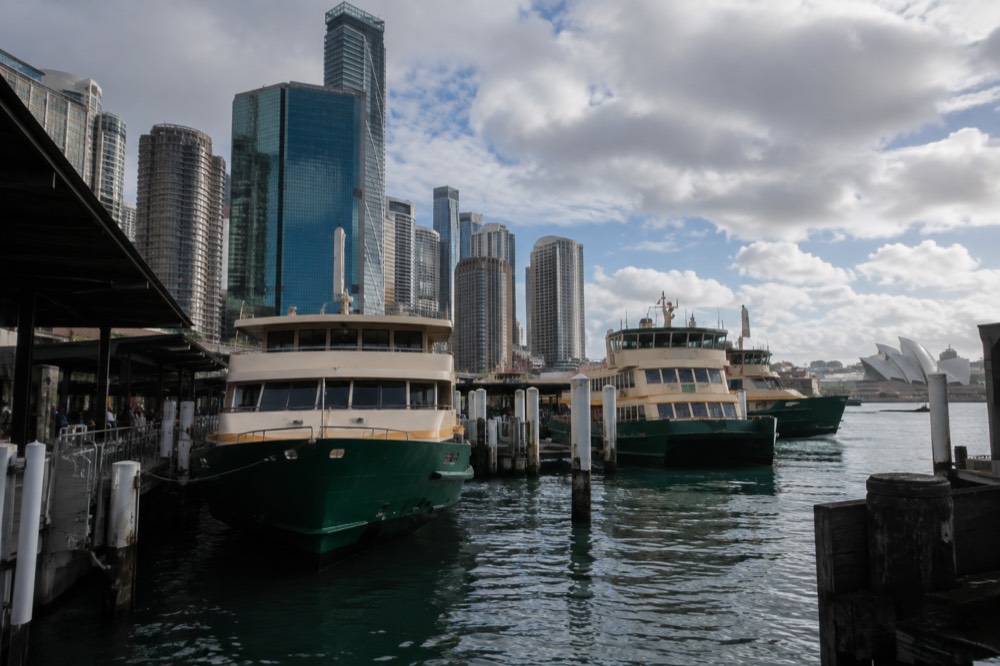
Circular Quay is where Sydney started, and it is still the city's front door. The ferry wharves sit in a line along the cove, the train station sits directly behind them, and the Opera House sits on the eastern point with the Harbour Bridge framing the western side. Everything in this itinerary's first day sits within a 15-minute walk of that cove, which is why the area rewards an early start: by late morning the quay fills with cruise passengers and tour groups.
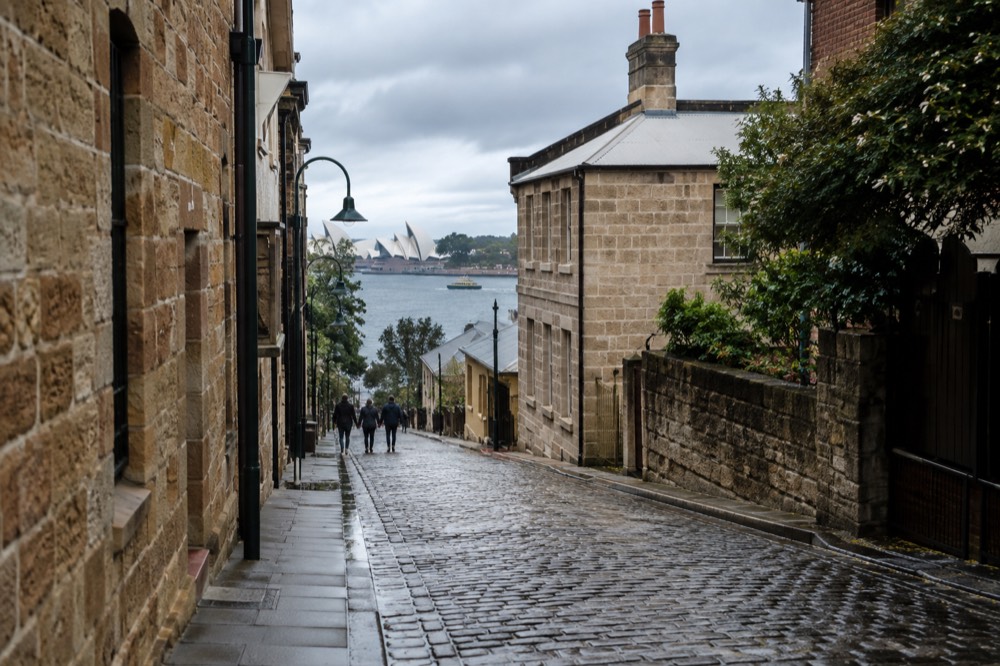
The Rocks, on the western side of the cove, is Sydney's oldest neighbourhood, a grid of sandstone lanes and 19th-century workers' cottages that survived the demolition waves elsewhere in the city. A morning here needs about an hour of wandering, longer if you stop at the weekend markets. The area's colonial history is genuinely dark in places, and the The Rocks guided walking tour covers it properly, from US$36.57 with a 4.8 rating across 1,745 reviews. Our guide to The Rocks maps the lanes, the pubs and the lookout spots in more depth.
The Opera House is the third stop and the one worth booking ahead. The building runs guided tours roughly 9am to 5pm daily, about 60 minutes each, and the standard tour with entry included starts from US$35.79 with a 4.77 rating across 9,717 reviews. The official tour pages describe what each variant includes; pricing is dynamic, so the live listing is the honest source for the exact figure on your date.
| Day 1 morning option | Duration | From (US$) | Rating | Reviews |
|---|---|---|---|---|
| The Rocks guided walking tour | 1h 30m | 36.57 | 4.8 | 1,745 |
| Opera House guided tour with entry | 1 hour | 35.79 | 4.77 | 9,717 |
| Opera House official walking tour | 1 hour | 36.57 | 4.7 | 4,194 |
| Opera House tour and dine experience | 2 hours | 66.57 | 4.7 | 462 |
If you would rather not walk the whole circuit, the hop-on hop-off bus links Circular Quay, The Rocks, Darling Harbour and Bondi on one ticket, from US$54.86 for the Sydney and Bondi loop with an optional harbour cruise added.
Day 1 Afternoon: The Harbour Bridge to the Botanic Garden
Walk east from the Opera House through the Royal Botanic Garden Sydney, which is free to enter and open daily from 7am to sunset, then double back to Mrs Macquarie's Chair for the classic Opera House panorama. The full loop is about three kilometres of flat walking and takes two relaxed hours. Add the Harbour Bridge pedestrian walkway, also free, if your legs still work after lunch.
The Royal Botanic Garden Sydney sits directly behind the Opera House, and its free entry surprises most visitors, who assume the city's headline harbourside garden is ticketed. It is not, and the official garden page confirms both the free entry and the 7am-to-sunset hours, with closing time shifting through the year. The garden sits on the land of the Gadigal people of the Eora Nation, and the site's plantings run from rainforest species to the Calyx exhibition space, entry by donation.
Mrs Macquarie's Chair, at the garden's north-eastern tip, is the spot where the Opera House and the Harbour Bridge line up in one frame. It is a 20-minute walk from the Opera House forecourt and the single best photo position on this itinerary. From there, the Farm Cove shoreline path loops you back to the quay.
The Harbour Bridge is the optional add-on. The pedestrian walkway on the eastern side is free and takes about 20 minutes each way from Circular Quay to Milsons Point, where Kirribilli's harbour-side lawns give you the north-shore view back toward the city. The Pylon Lookout is the mid-priced option, and the full climb is a separate decision with its own price band; our BridgeClimb guide covers whether it is worth it.
Day 1 Evening: Sunset on the Harbour
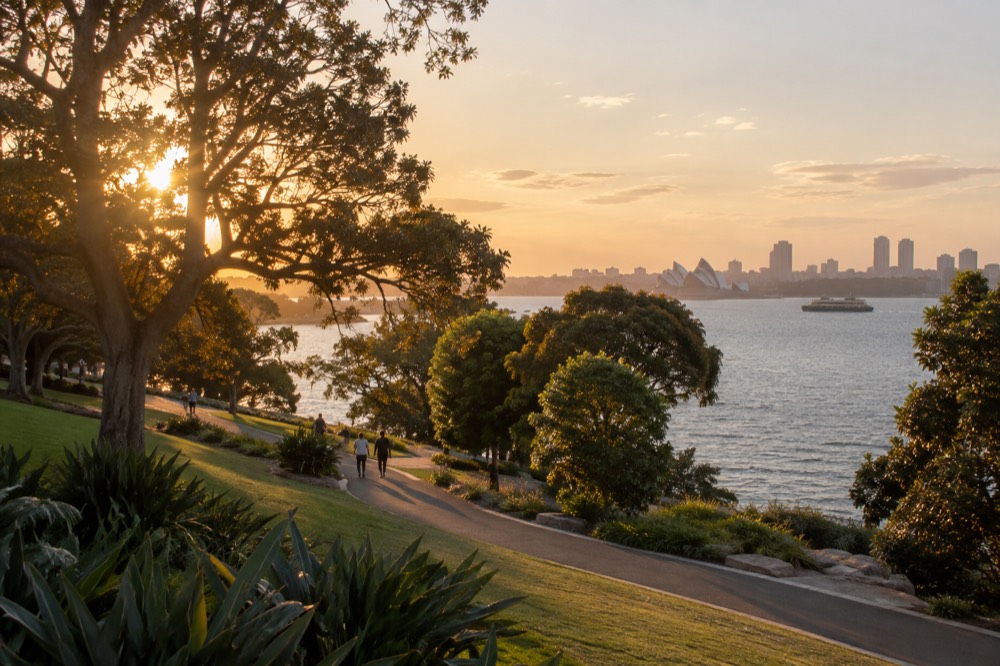
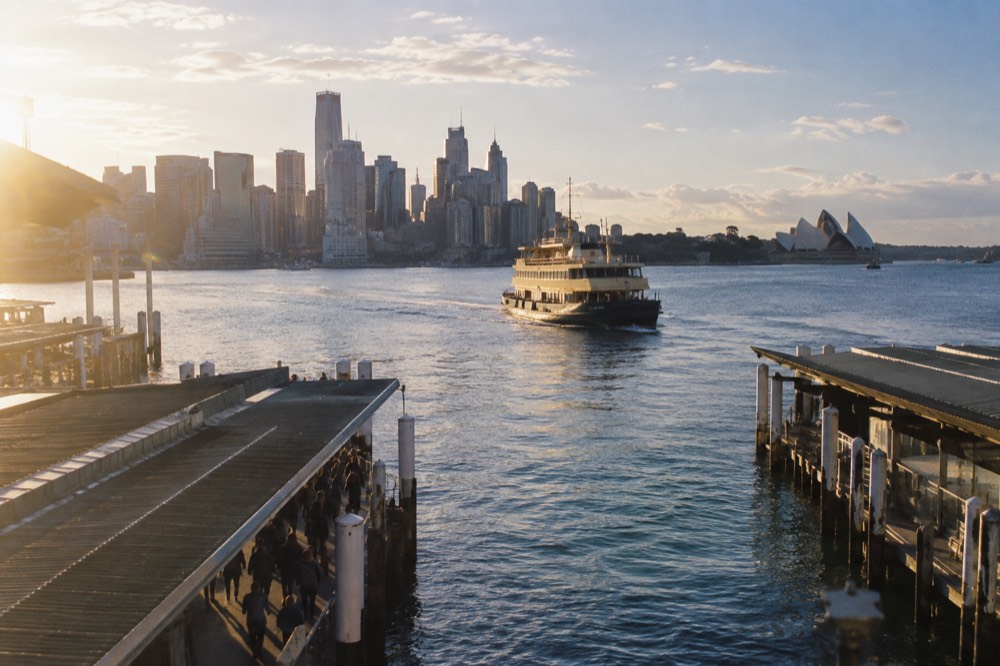
Book a sunset harbour cruise for around 6pm in summer or 5pm in winter, or ride the F1 Manly ferry as a low-cost alternative. The sunset catamaran cruise runs one hour from US$43.38 with a 4.83 rating across 310 reviews. The Manly ferry costs A$9.20 one way on an adult Opal or contactless card and is regularly called the best-value harbour cruise in Sydney.
Sydney's harbour is the reason the city exists where it does, and it looks best from the water in the last hour of daylight. The cruise options split into three price bands: the sightseeing cruise from US$28.53 for a 90-minute loop, the sunset catamaran from US$43.38 for a one-hour golden-hour run, and the dining cruises from US$94.36 for a three-course early dinner upward if you want a meal on the water. All of them depart from Darling Harbour or Circular Quay.
The budget answer is the public ferry. The F1 Manly route crosses the heads, the harbour's ocean entrance, which the inner-harbour cruises do not, and the fare is charged to the same daily cap as every other Opal trip. Our Manly ferry guide covers the route, the seats with the best views and the return timing.
If you stay on land instead, the Opera Bar and the Circular Quay boardwalk both face west and need no booking, though the bar fills fast on Friday and Saturday evenings in summer.
The morning and afternoon sightseeing cruise, from US$28.53 for 90 minutes, is the same loop at a lower price if sunset timing does not suit your day one.
Day 2 Morning: Bondi Beach and the Coastal Walk
Take a bus or the hop-on hop-off service to Bondi Beach by 9am, allow an hour on the sand, then walk the coastal path to Bronte, about one hour each way over cliffs and stairs. Bondi is patrolled year-round by professional lifeguards, 6am to 7pm in the October-to-April high season. Swim between the red and yellow flags, and stay out of the water for up to a day after heavy rain.
Bondi in the morning is a different beach from Bondi at noon: the bus queues have not formed, the sand is clean, and the light is better for photographs. The bus from the city centre takes about 30 minutes. Once there, the practical advice is the safety advice: this is a surf beach with real rip currents, and the red and yellow flags mark the only place to swim. Surf Life Saving Australia's National Coastal Safety Report 2025 recorded 154 coastal drowning deaths nationally, every one of them outside the flags, outside patrol hours or at unpatrolled locations. The official rip current guidance is blunt about this for good reason.
The Bondi to Bronte section of the coastal walk is the part most two-day visitors should do. The full Bondi to Coogee route is about six kilometres and two hours one way, and it passes Tamarama, the smallest of the eastern beaches, plus two free ocean pools, Bronte Ocean Pool and the North Bondi Children's Pool. Bondi Icebergs, the famous 50-metre pool at the south end, is club-managed and charges an access fee, unlike the free council pools.
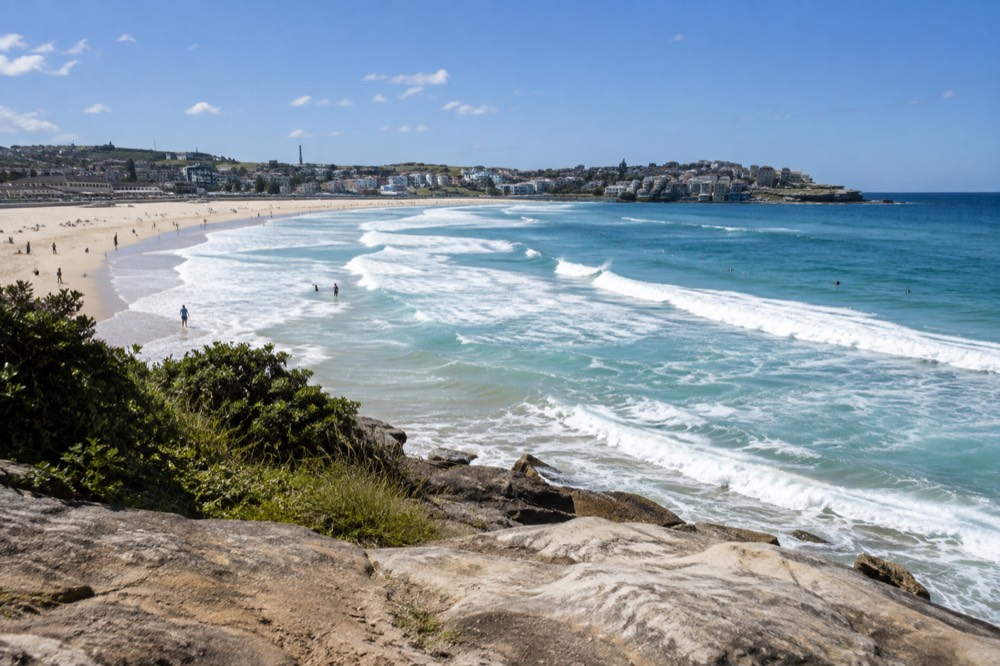
A surf lesson is the structured alternative to the walk. The two-hour Bondi lesson runs from US$70.86 with a 4.88 rating across 1,023 reviews, boards included, and our surfing lessons guide compares the operators.
Day 2 Afternoon: Darling Harbour, Manly or the Museums
Spend the afternoon on one of three options, not all of them: Darling Harbour for the aquarium and family attractions, the Manly ferry and Shelly Beach for a second beach fix, or the free museums, the Australian Museum and the Art Gallery of New South Wales, both free for general entry. Each option fills about three hours. The SEA LIFE Sydney Aquarium ticket starts from US$31.49.
This is the slot where the itinerary flexes to your interests. Families tend to pick Darling Harbour: SEA LIFE Sydney Aquarium, the wildlife zoo, Madame Tussauds and the maritime museum all sit within a few hundred metres, and the four-attraction combo pass covers several of them from US$35.84 with a 4.3 rating across 298 reviews. Our attraction passes compared page runs the maths on whether the pass beats individual tickets for a two-day trip.
Beach people should take the ferry to Manly. The F1 crossing takes about 30 minutes each way, Manly itself is patrolled year-round, and Shelly Beach, a 15-minute walk along the foreshore, is a calm-water swimming spot inside Cabbage Tree Bay. The Manly and Shelly Beach snorkelling tour runs from US$89.47 with a 4.71 rating across 222 reviews if you want gear and a guide.
The free-museum afternoon is the underrated choice. The Australian Museum, opposite Hyde Park, is free for general entry and open daily 10am to 5pm. The Art Gallery of New South Wales, at the top of the Domain, is also free for general entry and stays open until 10pm on Wednesdays, which makes it the one attraction in this itinerary that works after dinner.
| Day 2 afternoon option | Best for | Cost | Time needed |
|---|---|---|---|
| Darling Harbour attractions | Families | SEA LIFE from US$31.49; combo pass from US$35.84 | 3 hours |
| Manly ferry and Shelly Beach | Beach lovers | A$9.20 ferry fare each way | 3-4 hours |
| Australian Museum | Rainy days, free entry | Free general entry | 2 hours |
| Art Gallery of New South Wales | Art, Wednesday evenings | Free general entry | 2 hours |
The four-attraction pass, from US$35.84, covers SEA LIFE, the Sydney Tower Eye, the wildlife zoo and Madame Tussauds, and it is the cheaper route if Darling Harbour is your day-two plan.
How Much Does 2 Days in Sydney Cost?
A comfortable two-day Sydney trip costs roughly A$250 to A$400 per person excluding accommodation and flights: about A$40 for transport at the daily caps, one paid tour at US$35 to US$55, and the rest on food. The budget floor is much lower, around A$120, because the Opera House exterior, the bridge walkway, the Botanic Garden, both major museums and the coastal walk are all free.
The transport maths is fixed and worth knowing before you arrive. A contactless credit card or an Opal card is charged identically, with the same caps, and the official fare page sets them: A$19.30 a day Monday to Thursday, A$9.65 a day Friday to Sunday and on public holidays, and A$50 a week. The airport station access fee, A$18.61 adult each way, sits outside those caps, so a public holiday is genuinely the cheapest day to travel widely.
| Cost item | Budget | Comfortable | Notes |
|---|---|---|---|
| Transport, 2 days | A$20-30 | A$40 | Weekend daily cap A$9.65; airport fee extra |
| Opera House tour | free exterior | US$35.79 | Guided tour with entry |
| Harbour cruise | Manly ferry fare | US$43.38 | Public ferry vs sunset cruise |
| Bondi and coastal walk | free | US$70.86 | Free walk vs 2-hour surf lesson |
| Museums | free | free | Both general entries free |
| Food, 2 days | A$60 | A$150 | Coffee and bakeries vs two restaurant dinners |
| Transport fact | Figure | Notes |
|---|---|---|
| Daily cap, Mon-Thu | A$19.30 | Metro, train, bus, ferry, light rail |
| Daily cap, Fri-Sun and public holidays | A$9.65 | Cheapest days to travel widely |
| Weekly cap | A$50 | Opal week runs Monday to Sunday |
| Manly ferry, one way | A$9.20 | 9+ km ferry band, no off-peak discount |
| Airport station access fee | A$18.61 adult | Charged on top of the train fare, outside caps |
When Should You Do This Itinerary?
The itinerary works year-round, but the best two-day window is September to November or March to April, when daytime averages sit in the low-to-mid 20s Celsius and the cruise and beach segments both work. June is Sydney's wettest month on the long-run averages, 133.1 mm, wetter than any summer month, and February is its cloudiest, with 5.3 mean clear days against August's 13.4.
That rainfall fact runs against every assumption visitors bring to an Australian city. The Bureau of Meteorology's long-term normals for Sydney show rainfall peaking in March and June, not in summer, and the clearest skies of the year arriving in August, mid-winter. Peak tourist season is statistically the cloudiest time to visit. The trade-off in winter is daylight and warmth: mean daily maxima run 16.4 to 17.9 °C across June, July and August, which is fine for walking the harbour but cold for swimming.
What If It Rains, or You Only Have One Day?
If it rains, swap the coastal walk for the covered attractions: the Australian Museum and the Art Gallery of New South Wales are both free, SEA LIFE Sydney Aquarium is indoors, and the sightseeing cruises run in all weather. If you only have one day, do day one of this itinerary and add Bondi by bus in the late afternoon, since the harbour half is the part Sydney is famous for.
The rain rule that matters is the swimming one. Beachwatch, the NSW government water-quality programme, advises staying out of the ocean for up to one day after heavy rain at ocean beaches, and up to three days at harbour and estuarine swim sites, because stormwater runoff carries pollution into the water. A grey-sky beach is not just unappealing on those days, it is genuinely not swimmable.
For a single-day version of Sydney, our 1 day in Sydney page compresses the harbour circuit further, and if two days stretches to three, the 3 days in Sydney itinerary adds the Blue Mountains question on day three. The Blue Mountains as a day trip from Sydney is a full 10-hour commitment, which is exactly why it is not in this two-day plan.
Common Questions About 2 Days in Sydney
Is 2 days in Sydney enough?
Two days is enough for the harbour, The Rocks, the Opera House, Bondi and a ferry ride, which is the core of what Sydney is famous for. It is not enough for the Blue Mountains, the Hunter Valley or the Royal National Park, each of which needs a full day. Treat two days as the city proper and save the regions for a longer trip.
What should I skip if I only have 2 days in Sydney?
Skip the Blue Mountains day trip, which takes 10 hours, and skip the BridgeClimb if the budget is tight, since the free bridge walkway gives you the crossing and the Pylon Lookout gives you the view for far less. Also skip trying to do both Bondi and Manly as beach days; pick one.
Do I need an Opal card for 2 days in Sydney?
No. A contactless credit or debit card, or a phone wallet, is charged exactly the same adult fares with the same daily and weekly caps. The only reason to buy a physical Opal card is if your card is not contactless or you want a child or concession fare.
Should I do Bondi on day 1 or day 2?
Day 2, because day one's harbour circuit is walkable and compact while Bondi needs a bus ride each way. Doing the harbour first also means you learn the ferry and train layout before you head east, and the sunset ferry on day two is the stronger finish.
Can you walk from the Opera House to the Harbour Bridge?
Yes, the walk between them along the Circular Quay foreshore takes about 15 minutes, and the free pedestrian walkway on the bridge's eastern side continues across to Kirribilli on the North Shore. Allow about 40 minutes for the full crossing with photo stops.
What is the cheapest way to see Sydney in 2 days?
Walk the harbour circuit, use the free bridge walkway and Botanic Garden, visit the free museums, and ride the Manly ferry, which is capped with all other transport. On that plan the only unavoidable costs are food and fares, and a weekend's transport caps at A$9.65 a day.