Sydney Harbour Bridge Pylon Lookout: The Cheap Way to See the Bridge from Up High
The Pylon Lookout sits inside the bridge's southeast pylon, a short climb above the roadway, and it is the most affordable way to stand on the Sydney Harbour Bridge itself. Here is what it offers, how to reach it, and how it stacks up against the climb.
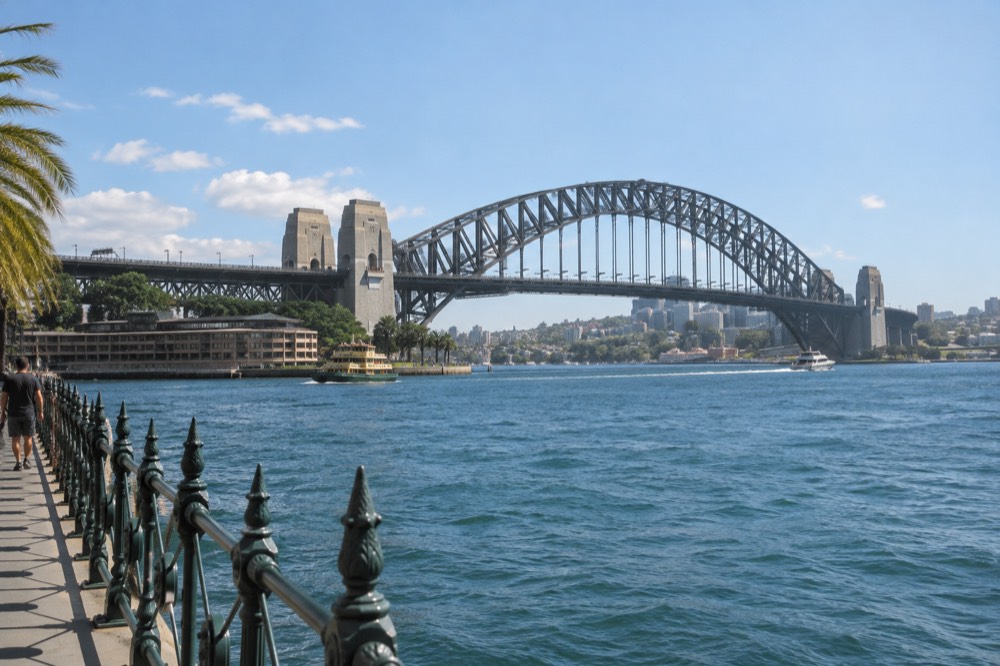
Short answer
The Pylon Lookout is a small viewing level and bridge-history exhibition inside the southeast pylon of the Sydney Harbour Bridge, reached by internal stairs from the pedestrian walkway. It is the budget alternative to BridgeClimb, with harbour views from a fixed platform. This guide covers access by train or ferry, what you can see, the best time of day, and how it compares with the full climb.
Most people photograph the Sydney Harbour Bridge from below. Far fewer know you can go up it without booking a climb, strapping into a harness or paying summit prices. The Pylon Lookout, tucked inside the southeast pylon on the city side of the bridge, has been quietly doing this for decades: an internal staircase, a modest exhibition on the bridge's construction, and an open-air viewing platform that puts you above the traffic and the railway, roughly level with the top of the arch's lower chord. It is not the summit. It is not trying to be. For the price of a coffee or two, it is one of the better-value viewpoints in a city that charges heavily for its heights.
This guide, from the team behind Sydney Travel Guide, covers what the Pylon Lookout actually is, how to reach it using Opal, what you can see from the platform, when to go, and the honest comparison with the BridgeClimb Summit so you can decide which one deserves your money. If you want the broader picture of the crossing itself, start with our Sydney Harbour Bridge guide, then come back here for the pylon specifics.
What Exactly Is the Pylon Lookout?
The Pylon Lookout is a small museum and observation deck inside the southeast pylon of the Sydney Harbour Bridge, the stone-faced tower closest to The Rocks. Visitors climb an internal staircase, pass displays on the bridge's design and construction, and finish at an outdoor viewing level looking east over Sydney Cove and north across Lavender Bay. It is self-guided, takes most people under an hour, and is the only way to stand high on the bridge without a guided climb.
The four pylons are the bridge's most recognisable decorative feature, and here is the detail most visitors find surprising: they are largely decorative. The steel arch itself carries the entire load of the bridge. The pylons are cladding over a steel frame, and they were finished in the bridge's early years partly to give the structure a more solid, reassuring presence, and partly with future road or rail connections in mind that were never built. The southeast pylon, the one you can enter, has served various commercial purposes over the decades, and its current role as a lookout and exhibition space is the longest-lasting.
Inside, the displays walk you through how the bridge was assembled: the creeper cranes that crawled along the arch, the hundreds of workers, the rivets, the bridge's official opening. The exhibition is modest rather than high-tech, but it is genuinely informative, and it gives the staircase a purpose beyond the view. You climb past the history and arrive at the platform with a better sense of what you are standing inside.
The viewing level itself is an open-air deck ringed by fencing, with clear sightlines east toward the Opera House and Circular Quay, south over the city skyline, and north over the harbour's north shore suburbs. You are above the roadway and the rail tracks, close enough to feel the trains pass through the bridge below you, which is part of the charm. It is a fixed platform, not a walk, so it suits visitors who want the height without the three-hour commitment or the physical demands of a climb.
One honest caveat: the stairs are the only way up. There is no lift, and the climb, while far shorter than the BridgeClimb, is still a real staircase. If steps are a problem, the Pylon Lookout's sibling viewpoints around Circular Quay at ground level still deliver outstanding bridge photography without any ascent.
How Do You Get to the Pylon Lookout?
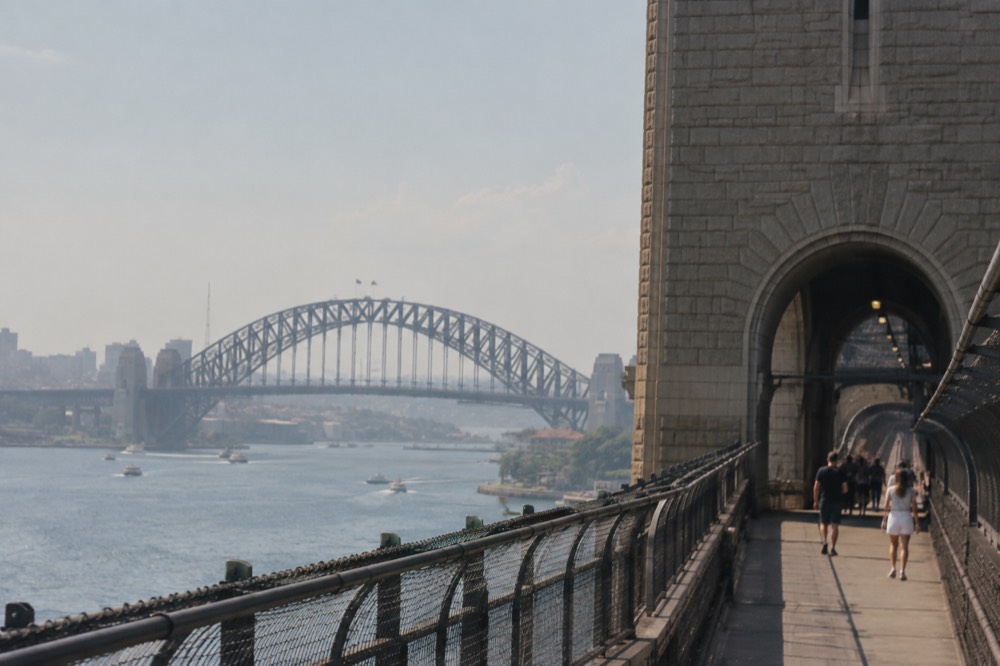
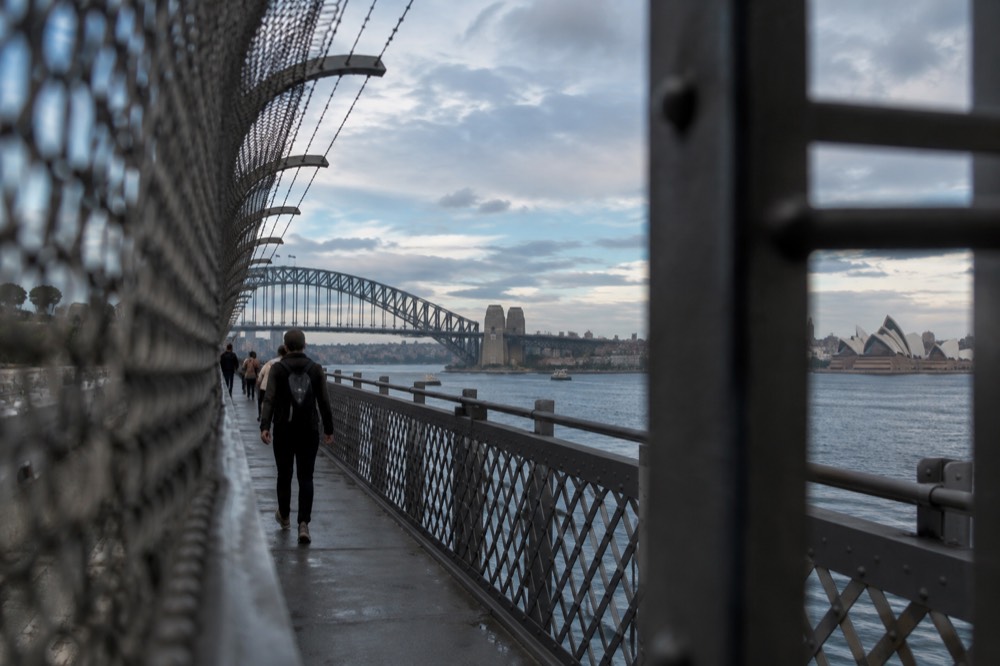
The Pylon Lookout is entered from the bridge's pedestrian walkway on the city side, a short walk from Circular Quay, Wynyard or Milsons Point stations. From Circular Quay it is roughly a ten-minute walk north through The Rocks to the bridge stairs; from Milsons Point on the North Shore you cross the bridge on foot and the pylon is the first tower you reach. Trains and ferries both drop you within easy walking distance, and the walkway itself is free to use.
The eastern walkway runs along the city side of the bridge and is open to pedestrians around the clock. Access stairs sit at both ends: one set climbs from near Cumberland Street in The Rocks, the other from near Milsons Point station on the north side. Once on the walkway, the southeast pylon is unmistakable, the first big stone tower you meet coming from the south. The lookout entrance is a doorway in the pylon's base, directly off the walkway.
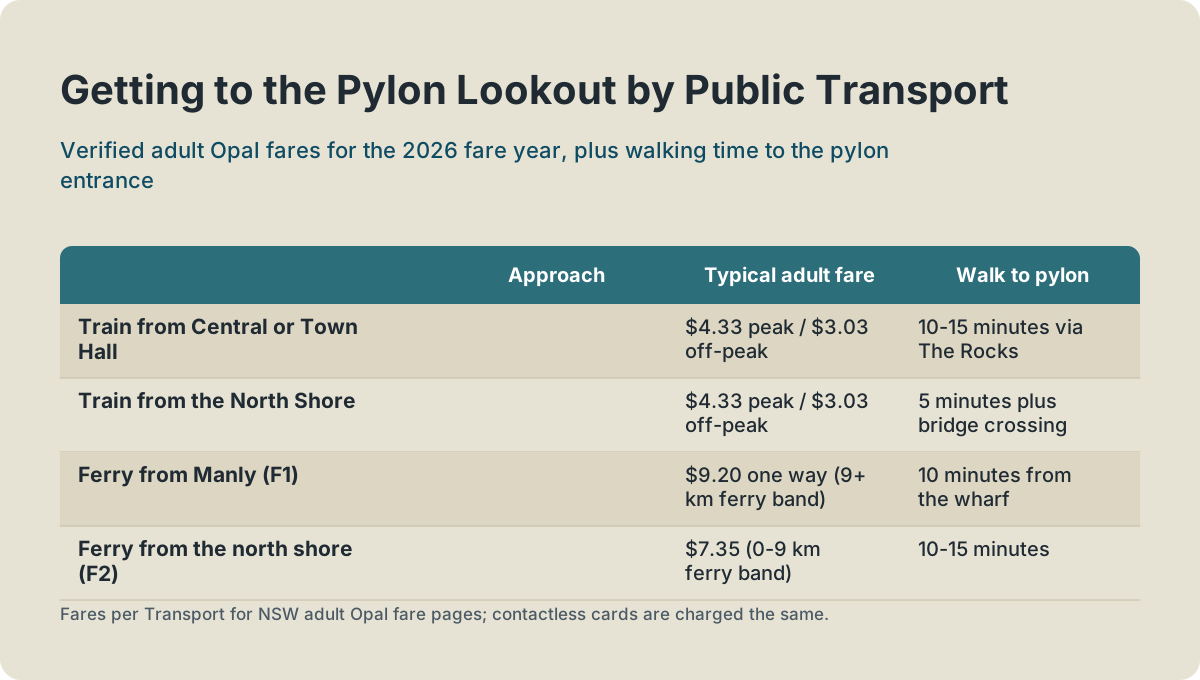
Getting there by public transport is straightforward. The table below uses verified adult Opal fares for the 2026 fare year; a contactless card or device is charged exactly the same as an Adult Opal card and earns every cap and discount, per Transport for NSW's fare pages.
| Approach | Station or wharf | Typical adult fare | Walking distance to the pylon entrance |
|---|---|---|---|
| Train from Central or Town Hall | Circular Quay or Wynyard | $4.33 peak / $3.03 off-peak (0-10 km band) | 10-15 minutes via The Rocks |
| Train from the North Shore | Milsons Point | $4.33 peak / $3.03 off-peak (0-10 km band) | 5 minutes, plus the bridge crossing |
| Ferry from Manly (F1) | Circular Quay | $9.20 one way (9+ km ferry band) | 10 minutes from the wharf |
| Ferry from the north shore (F2 Taronga Zoo direction) | Circular Quay or nearby wharves | $7.35 (0-9 km ferry band) | 10-15 minutes |
A few fare details worth knowing. The daily cap is $19.30 from Monday to Thursday and $9.65 on Fridays, weekends and public holidays, so a weekend visit that bundles a ferry, a train and the walkway costs less overall. Ferries carry no off-peak discount, but the harbour crossing to reach the bridge is half the pleasure; the Manly ferry approach is covered in detail in our Manly ferry guide. If you are still deciding whether you need an Opal card at all, the short answer is that contactless payment does everything the card does, which we unpack in our getting-around guide.
If the bridge itself is your destination rather than just the pylon, consider making the crossing on foot from the north. The walk from Milsons Point over to The Rocks takes about twenty minutes, delivers the classic Opera House view from the midway point, and drops you right at the pylon door. Kirribilli, on the north side, is one of the city's best photography positions for the bridge and harbour, and our best lookouts in Sydney guide maps several angles from that shore.
Whichever way you arrive, wear comfortable shoes and bring water in summer. The Rocks approach involves a gentle but steady uphill stretch, and the walkway is fully exposed to sun and wind. There is shade inside the pylon's exhibition levels, which is a welcome break on a hot afternoon.
Pylon Lookout or BridgeClimb: Which One Is Right for You?
The Pylon Lookout and BridgeClimb are different products, not tiers of the same one. The pylon is a short, self-guided ascent to a fixed platform for the price of a snack, open to anyone who can manage stairs. BridgeClimb is a guided, harnessed, roughly three-hour expedition over the arch to the summit, from around A$375 for an adult weekday climb. If your goal is the view and the history, the pylon delivers most of it. If the achievement is the point, only the climb will do.
The operator's indicative rates put the Summit Day adult climb at $375 on a weekday and $385 on a weekend, with a $35 per-person surcharge from 25 December to 4 January. Those are dynamic prices, set by date and demand, so treat them as a planning range rather than a quote. The pylon's ticket, by contrast, is bought at the door or on its official site, and its pricing is not published in a fixed public list, so check the current rate when you plan.
Here is the honest comparison, experience by experience:
| Factor | Pylon Lookout | BridgeClimb Summit |
|---|---|---|
| Height | Fixed platform partway up the pylon, above the roadway | The summit at the very top of the arch, the bridge's highest point |
| Duration | Under an hour, self-paced | About 3 hours total, roughly 2 hours on the bridge |
| Format | Self-guided, exhibition plus viewing deck | Guided, harnessed, in a small group |
| Physical demand | A staircase inside the pylon | Ladders, catwalks and sustained climbing; moderate fitness needed |
| Age and gear | Everyday clothing; check current entry conditions at the door | Minimum age applies, breath-test and gear provided; no loose items |
| Booking | Walk-up usually possible; check the official site | Advance booking strongly recommended, especially in peak season |
| Best for | Budget travellers, families, photography, a quick visit | A milestone experience, summit views, a guided story |
The view difference matters and is worth stating plainly. From the pylon you look east and north from a fixed point near the bridge's southern end: the Opera House, Circular Quay, the city towers and the north shore. From the summit you stand on the arch's spine, with the harbour on both sides, the roadway far below your feet, and a full sweep that includes the open ocean heads on a clear day. The climb's view is genuinely superior, which is what you are paying the premium for, along with the guide and the achievement.
For many visitors the pylon is not a compromise but the better choice. Families with young children, anyone with a fear of heights severe enough that a harness would ruin the experience rather than enable it, travellers on a tight budget, and people who simply want thirty minutes of elevated photography all get more from the pylon. Our is it worth doing the Sydney BridgeClimb article goes deeper on the climb decision if you are torn.
If the summit is calling you, the night climb deserves special mention. The city after dark, seen from the arch, is a different experience from the daytime summit, and the roster's night option covers it.
The night climb runs about three hours end to end, the same shape as the daytime summit but with the city lights spread below instead of the daytime panorama. Summit departures fill first in peak season, so if a night date is the one you want, booking ahead is the safer play.
Either way, do not try to do both on the same afternoon in summer heat. The pylon plus a Rocks wander plus a ferry ride is a full half-day in itself, and the climb will consume most of one.
What Can You Actually See from the Pylon?
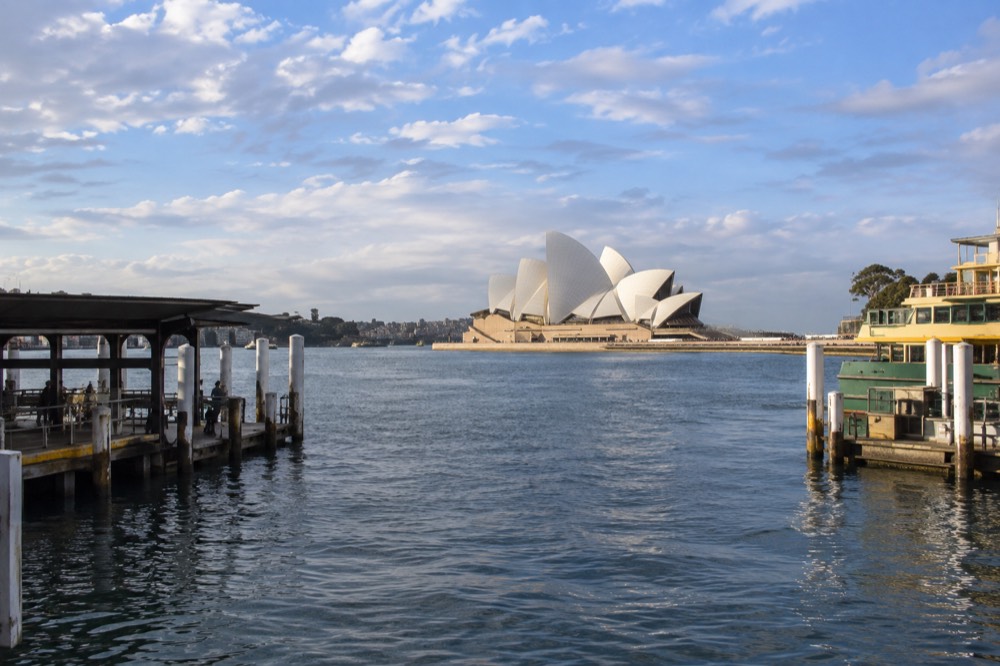
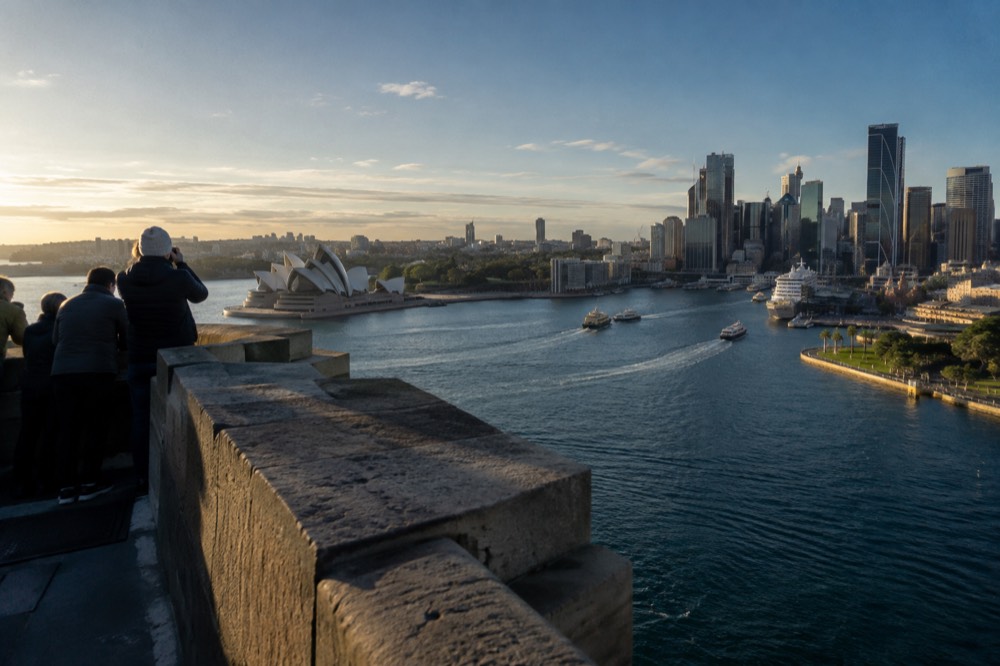
From the Pylon Lookout's deck the view runs east over Sydney Cove, the Opera House, Circular Quay and the ferries threading out toward Manly; south over the CBD towers; and north across Lavender Bay, Kirribilli and the harbour's north shore. You are looking along the bridge's length, which gives a perspective the postcard viewpoints cannot: the roadway, rail corridors and arch structure in the foreground, the harbour spread beyond. It is a photographer's angle more than a panorama.
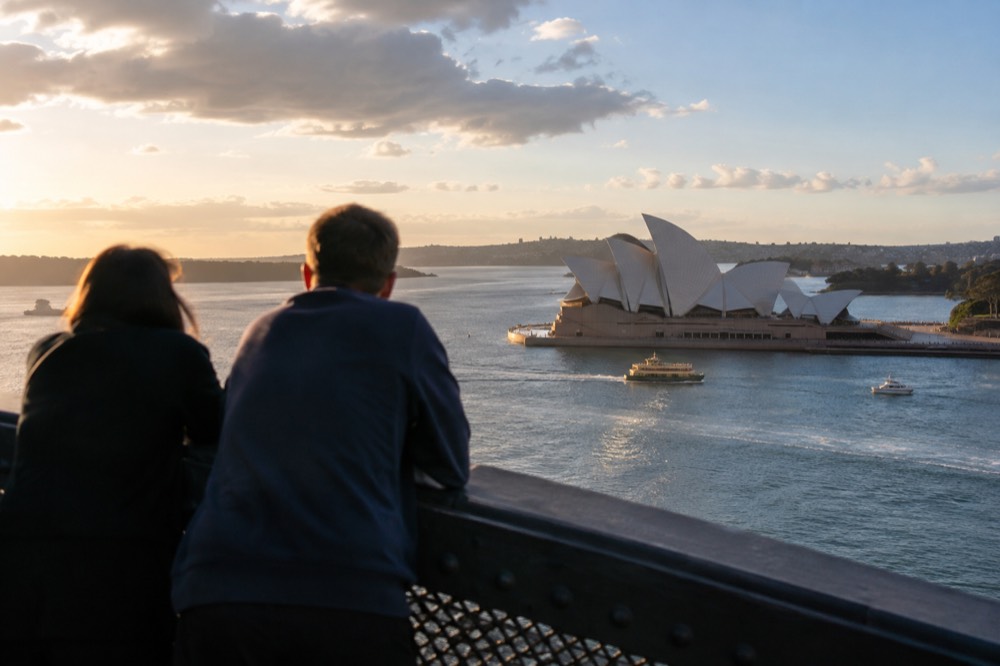
The east-facing view is the headline. The Opera House sits at the centre of it, close enough that its white shells read clearly, with Circular Quay's ferry wharves in the near foreground. Cruise ships, tall ships and the green ferries cross the frame constantly, which makes the deck good for motion-filled shots rather than static postcards. Late afternoon, when the low sun lights the western faces of the CBD towers and the harbour turns gold, is the classic window.
The north-facing view is underrated. Lavender Bay's boats, the Kirribilli shoreline, and Luna Park Sydney's face at the bridge's northern foot are all in frame, and the arch itself curves away from you toward the north pylon. If you want the arch shot, the pylon deck is one of the few places you can photograph it from within the structure.
| Direction | Landmarks in view | Best time of day |
|---|---|---|
| East | Sydney Opera House, Circular Quay, Sydney Cove, ferries | Morning for clear light on the eastern shore |
| South | CBD skyline, The Rocks rooftops, Sydney Tower in the distance | Midday and afternoon |
| North | Kirribilli, Lavender Bay, Luna Park Sydney's entrance face | Afternoon into sunset |
| West | Barangaroo headland, Darling Harbour direction, Anzac Bridge far off | Sunset |
Photographers should note the fencing: it is safety fencing on an open deck, and you shoot through or over it. A phone held steady against a rail does fine; a tripod is impractical on a small platform that other visitors share. For the wider craft of shooting this city, our Sydney photography spots guide ranks the pylon among the structured viewpoints and suggests the free foreshore positions that complement it, including several covered in unique things to do in Sydney.
One more sight worth timing for: the New Year's Eve fireworks are launched from the bridge itself, and the pylon area is inside the ticketed and crowded zone for that night. Do not plan a NYE visit to the lookout; the vantage points that night are a separate operation entirely, covered in our Sydney New Year's Eve guide.
Can You Walk Across the Sydney Harbour Bridge for Free?
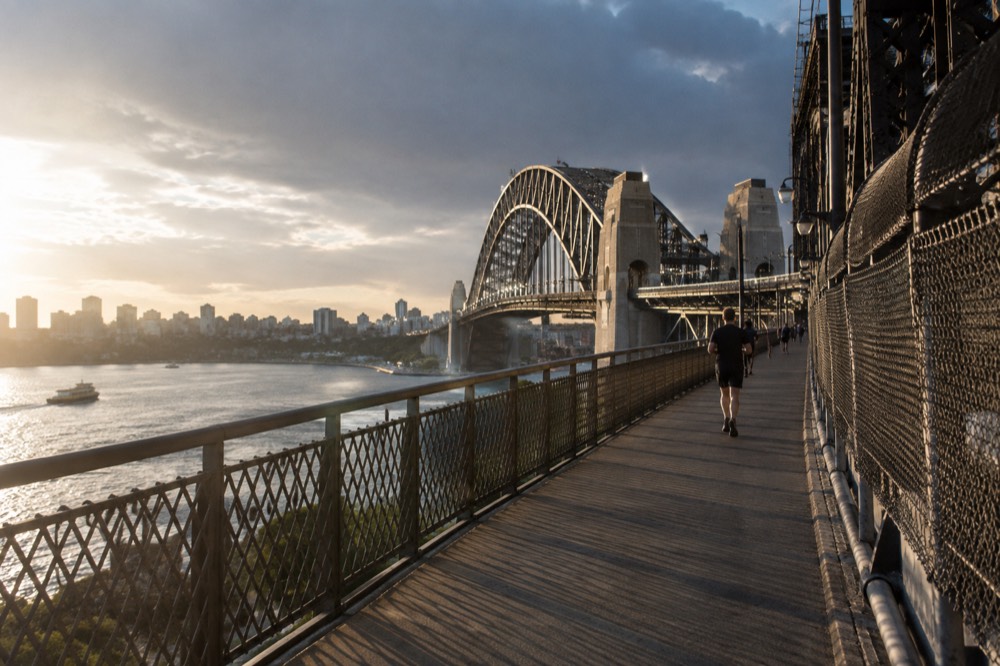
Yes. The pedestrian walkway along the bridge's eastern side is free, open daily, and requires no ticket of any kind. You can cross from The Rocks to Milsons Point, or the reverse, in about twenty minutes, at any hour, and the midway views of the Opera House are among the best free sights in Sydney. The Pylon Lookout is the only part of the bridge structure that charges an entry fee, and the climb is the only part that requires a guide.
This distinction confuses a surprising number of visitors, so it is worth spelling out. The bridge has three experiences stacked on top of each other: the free walkway at deck level, the paid lookout inside the southeast pylon, and the guided climb over the arch. You can enjoy the first without spending a cent, and many people do exactly that, crossing in both directions and skipping the pylon door entirely. The walkway is also the access route to the pylon, so even paying visitors get the free crossing as part of the trip.
The free crossing deserves its own planning. Walk it from north to south if you want the Opera House to appear in front of you rather than behind, and go in the last two hours before sunset for the best light. Cyclists have a separate route on the western side, which is one reason the eastern walkway stays pleasant for pedestrians; the split is covered properly in our cycling in Sydney guide.
For visitors assembling a free day around the crossing, the walk pairs naturally with the Royal Botanic Garden, whose entry is free, and with the ground-level Rocks laneways. Our free things to do in Sydney guide builds a full itinerary that includes the bridge walk as its centrepiece.
When Is the Best Time to Visit the Pylon Lookout?
Late afternoon is the best time for most visitors, when the low sun lights the harbour and the Opera House, and the deck is quieter after the midday tour groups. Mornings suit photographers who want clean eastern light and fewer people in frame. Avoid midday in summer, when the walkway and deck are fully exposed, and note that February is statistically Sydney's cloudiest month while August is its clearest, so winter visits often get better skies than peak-season ones.
That last point surprises people, and it is one of the most useful pieces of climate data a Sydney visitor can hold. The Bureau of Meteorology's long-term normals for Sydney show August averaging 13.4 clear days, the most of any month, while February averages just 5.3, the fewest. Peak tourist season is statistically the cloudiest time of year, and late winter delivers the clearest skies. June, meanwhile, is Sydney's wettest month on average, with 133.1 mm of rain, wetter than any summer month.
| Month | Mean daily max | Mean rainfall | Mean clear days | What it means for the pylon |
|---|---|---|---|---|
| February | 25.8 °C | 119.3 mm | 5.3 | Warm but the cloudiest month; sunset views less reliable |
| April | 22.5 °C | 126.5 mm | 9.1 | Comfortable walking weather, decent skies |
| June | 17.0 °C | 133.1 mm | 9.1 | Wettest month on average; carry a rain option |
| August | 17.9 °C | 80.2 mm | 13.4 | Clearest skies of the year, cool but bright |
| November | 23.7 °C | 83.8 mm | 6.0 | Warm, long evenings, mixed cloud |
The climate normals above are long-term averages from the Bureau of Meteorology's Observatory Hill record, not a forecast for your dates, and the BOM's published tables are the source if you want the full monthly breakdown. For sunset timing specifically, remember that NSW observes daylight saving from the first Sunday in October to the first Sunday in April; the official dates are published by NSW Government, and a 5pm winter sunset can be an 8pm summer one. Check the sunset time for your specific date before choosing your window, because the pylon's closing time and the light you want are two different clocks.
Wind is the other factor. The deck is exposed, and southerly changes can arrive quickly, dropping the temperature several degrees in minutes even in summer. A windproof layer earns its place in your bag more often than an umbrella does.
Is the Pylon Lookout Worth It?
For most visitors, yes, and especially for anyone who has already decided against the climb. The Pylon Lookout costs a fraction of the summit experience, needs no booking commitment weeks in advance, delivers genuine elevation above the roadway, and adds a history exhibition that the free walkway cannot. Its limits are real: a modest platform, stairs only, and views that stop at the pylon's height. As a budget viewpoint combined with the free crossing, it is one of the best value-for-money hours in central Sydney.
The value case is strongest for three groups. Families, because children who cannot join the climb can still stand high on the bridge and enjoy the exhibition. Budget travellers, because the pylon plus the free walkway plus a ferry ride is a full bridge experience for the cost of a single attraction ticket. And photographers, because the along-the-bridge perspective is one you cannot get from the foreshore.
The case against is equally honest. If you have already booked the climb, the pylon adds little you will not see better. If you only have one hour at the bridge and the sky is grey, the free walkway gives you the structure itself and costs nothing. And if stairs are a barrier, neither the pylon nor the climb is your product; the foreshore positions around The Rocks do the job at ground level.
A good pattern for a half-day bridge visit: start at Milsons Point, photograph the bridge and Opera House from Kirribilli, cross on the free walkway, enter the pylon when you reach the south end, then descend into The Rocks for a drink. If you would rather someone else organise the storytelling, the guided walking tours of The Rocks cover the district's colonial and convict history and end within a few minutes' walk of the pylon entrance.
And if heights are your thing rather than history, the harbour's other elevated experiences are worth a glance. The Sydney Tower Eye observation deck sits above every bridge viewpoint, and the Opera House's own guided tours, just across the cove, make a natural pairing with the pylon for a day of the city's two most famous structures.
Practical Tips for Visiting
Plan on one to two hours total including the walkway approach, bring water and sun protection, and buy your ticket at the door or via the official site on the day rather than trusting a price from an old guide. The stairs are the only access, the deck is exposed to wind, and the best pairing is a north-to-south bridge crossing that finishes at the pylon. Check the official site for current opening days and hours before you set out, as they have varied between seasons.
A few specifics that save frustration:
- Getting there: Circular Quay or Wynyard for the southern approach, Milsons Point for the northern one. Both are short walks, and the ferry arrival at Circular Quay turns the approach into part of the outing. Our Sydney ferries guide covers the routes.
- What to wear: ordinary walking clothes and grippy shoes. The walkway and deck can be windy enough that hats are a liability; a secured layer is better.
- Sun: Sydney's UV index passes the protection threshold on most days of the year and reaches extreme levels in summer, so sunscreen applies even on a winter visit.
- Food: none inside the pylon. The Rocks, five minutes' walk south, has everything from bakeries to fine dining; our best restaurants in Sydney guide covers the area.
- Rain plan: the exhibition levels are indoors, so a shower shortens the deck time rather than cancelling the visit. For a genuinely wet day, our Sydney rainy day itinerary has indoor-heavy alternatives.
- Crowds: midday is busiest with tour groups; the last hour of opening is usually the quietest for the deck.
If your day at the bridge is part of a bigger first visit to the city, our Sydney for first timers guide slots the pylon into a sensible opening itinerary, and the one day in Sydney plan shows how it fits when time is short.
Common Questions About the Pylon Lookout
How much does the Pylon Lookout cost?
The Pylon Lookout's ticket price is not published in a fixed public list and has varied over time, so check the official site or the door pricing when you plan. It is a small fraction of the BridgeClimb Summit's indicative adult rate of around A$375 for a weekday climb. Whatever the current figure, it is the cheapest way to stand on the bridge structure itself.
Can you walk across the Sydney Harbour Bridge for free?
Yes. The eastern pedestrian walkway is free and open daily, crossing from The Rocks to Milsons Point in about twenty minutes. No ticket, no booking and no time limit apply to the walkway itself. The Pylon Lookout is the only part of the structure with a separate entry fee, and the guided climb is the only part that requires a booking and a guide.
Is the Pylon Lookout or BridgeClimb better?
They serve different goals. The pylon is a short, self-guided climb to a fixed platform for a modest fee, suitable for families and anyone avoiding a big spend. BridgeClimb is a guided, harnessed, roughly three-hour expedition to the summit at the very top of the arch, from around A$375 for an adult weekday climb. If the view and the history are the goal, the pylon delivers most of it; if the achievement is the point, only the climb will do.
How long should I allow for the Pylon Lookout?
Most visitors spend thirty to sixty minutes inside the pylon, depending on how much of the exhibition they read and how long they linger on the deck. Add ten to fifteen minutes to walk from Circular Quay or Wynyard, or twenty minutes if you cross the whole bridge on foot from Milsons Point first. Budget ninety minutes to two hours for the full experience including the approach.
Is the Pylon Lookout suitable for children and older visitors?
Children generally enjoy it, and the pylon is one of the few elevated bridge experiences available to families whose kids are too young for the climb. The one hard limit is the staircase: there is no lift, so anyone who cannot manage an internal stair climb should treat the free walkway as the alternative. Check current entry conditions at the door, as age and access policies are set by the operator.