Cycling in Sydney: Best Bike Rides, Hire and Rules
Sydney rewards cyclists unevenly: the harbour foreshore and a handful of dedicated paths are a joy, while the traffic corridors in between are not. Here is where to ride, what it costs, and the rules that catch visitors out.
Short answer
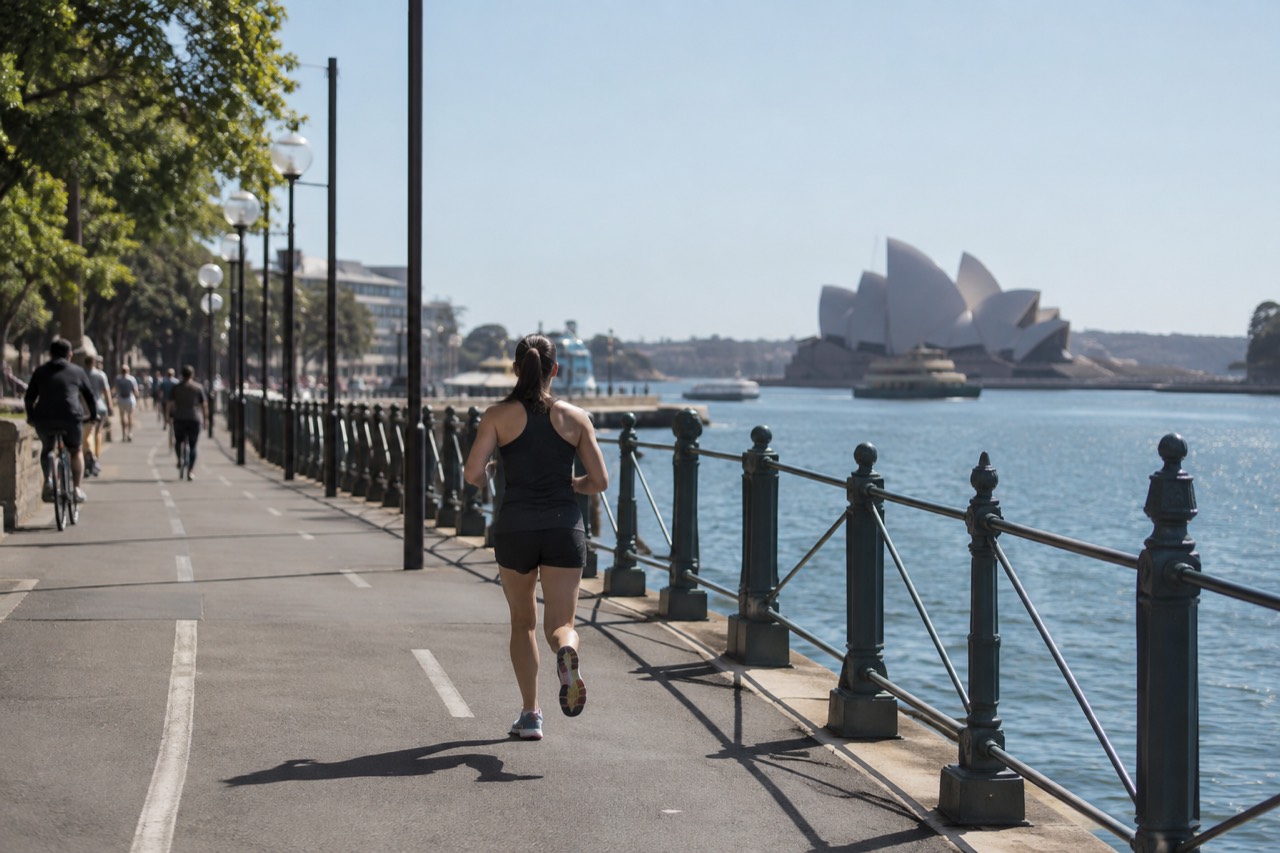
Sydney's best cycling is on its dedicated off-road paths: the harbour foreshore around Pyrmont and Barangaroo, Centennial Park's shared loop, and the Iron Cove and Cooks River bay runs. Hire bikes are widely available, helmets are legally required, and the clearest riding weather arrives in the winter months of July to September.
Sydney is a city that looks made for a bike and often isn't. The harbour wraps around almost everything worth seeing, the weather cooperates for most of the year, and the views from a saddle are among the best in Australia. Then you meet the traffic. The good news is that the parts of Sydney built for cars and the parts worth cycling are surprisingly separable, and a visitor who sticks to the off-road network gets the harbour city at its best without ever merging with a bus.
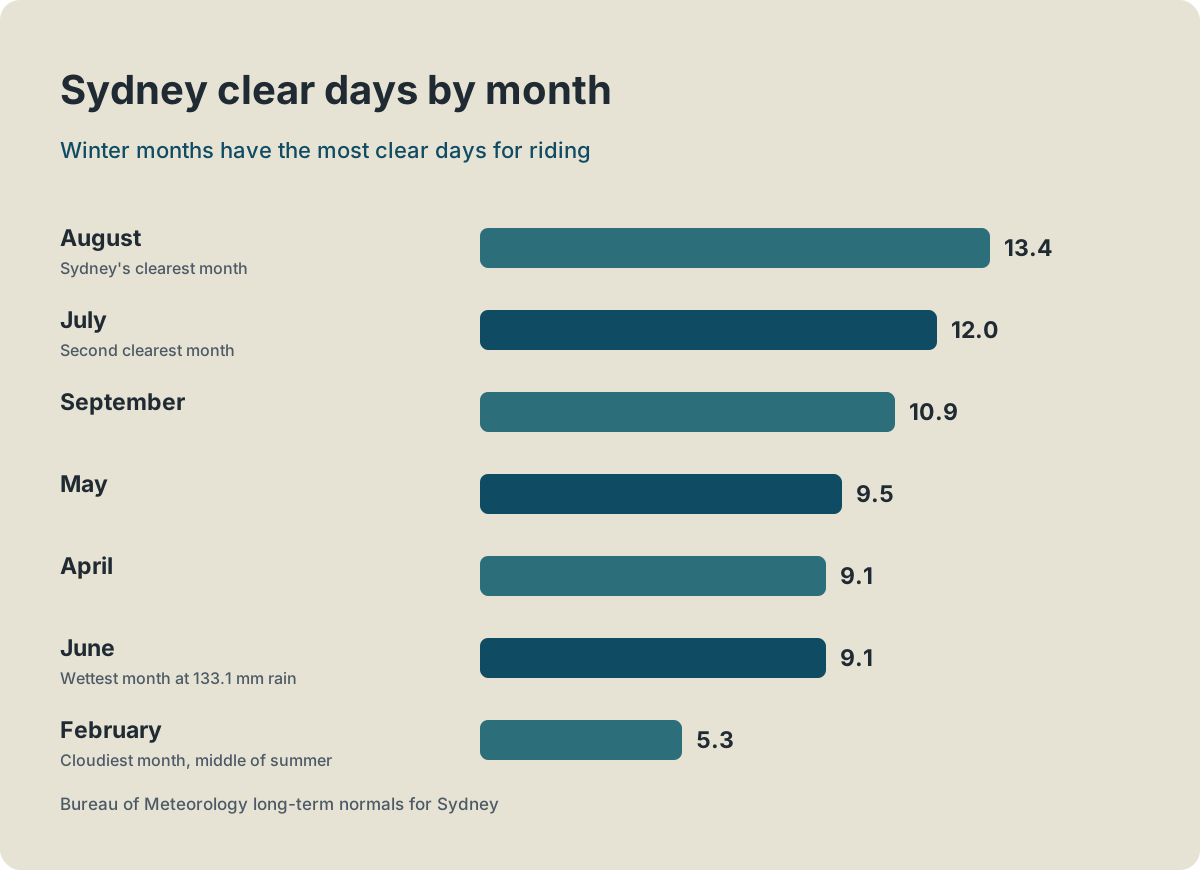
This guide covers where to ride, how hire works, the rules that catch people out, and the seasons. One fact worth knowing before anything else: Sydney's clearest skies arrive in the middle of winter. August averages 13.4 clear days, more than any other month, while February, the middle of peak season, averages just 5.3. If you are choosing when to come for a sydney bike ride, the calendar is not pointing where you expect. For the wider transport picture, see our guide to getting around Sydney.
Where Are the Best Places to Ride a Bike in Sydney?
The best riding in Sydney is on its off-road shared paths: the harbour foreshore from Pyrmont through Barangaroo to Circular Quay, the Centennial Parklands loop in the eastern suburbs, the Iron Cove Bay Run in the inner west, and the Cooks River path heading south. None of these put you in traffic, and together they cover roughly a full day of varied riding. The harbour foreshore sections deliver the postcard views; Centennial Park is the easiest place to ride with children.
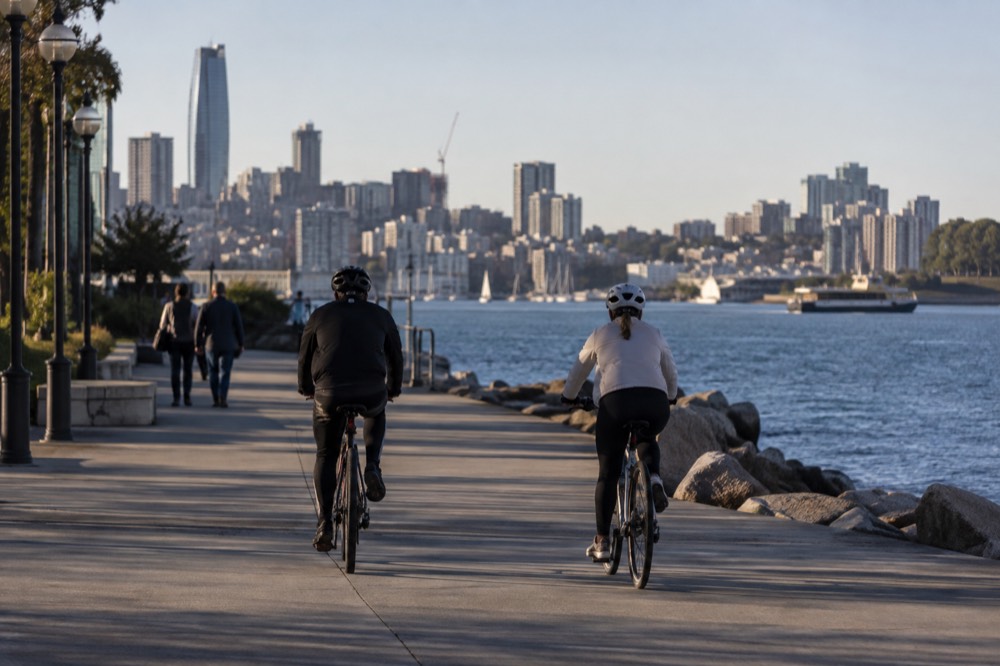
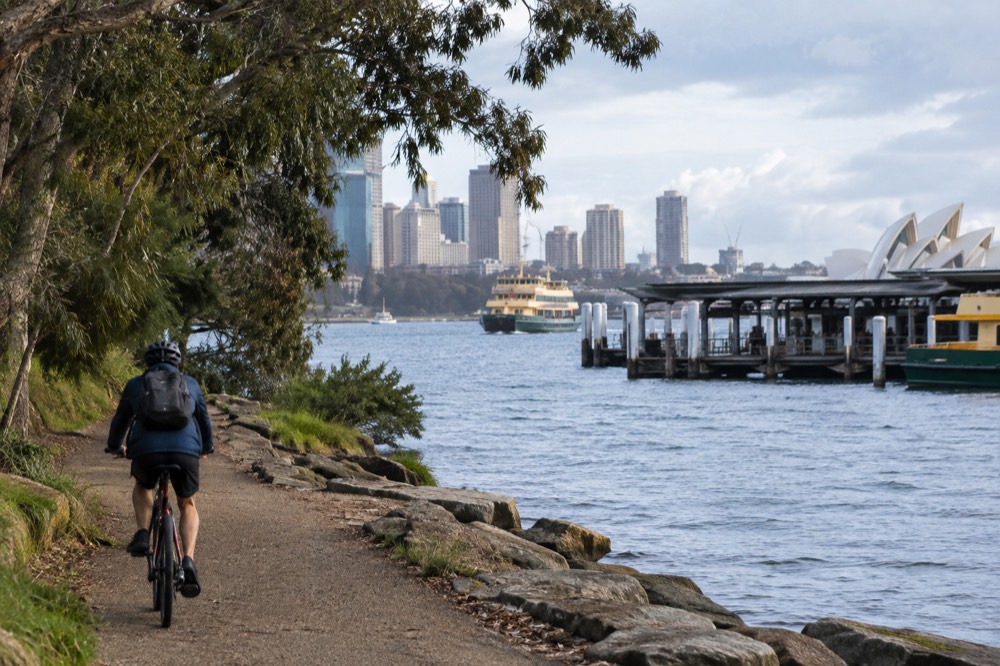
Start with the harbour. The shared path network around Pyrmont, Darling Harbour, Barangaroo and on towards Circular Quay is flat, wide and continuous for long stretches, and it puts the Opera House, the Harbour Bridge and the working harbour in your eyeline the whole way. On a weekday morning you will share it with commuters; by mid-morning it belongs to tourists and parents with cargo bikes. The surface is good and the crossings are mostly signalised, which matters if you are riding with kids.
Centennial Park, in the eastern suburbs near Paddington, is the city's learning-to-ride heart. Its internal roads are closed to through traffic and form a natural loop that families ride all weekend. There is bike hire just outside the gates. The park connects by shared paths to Bondi via the eastern suburbs cycleway, though that link involves some on-road riding and suits confident adults more than children.
In the inner west, the Iron Cove Bay Run is a 7-kilometre shared path circling the Parramatta River between Rozelle and Drummoyne, flat and almost entirely off-road. Further south, the Cooks River path follows the river from Marrickville towards Botany Bay, passing through parkland the whole way. Both are genuine cycling infrastructure rather than painted lanes beside traffic, which is the distinction that matters in this city.
Can You Hire a Bike in Sydney, and What Does It Cost?
Yes, easily. Hire shops cluster around the places people actually ride: Circular Quay and The Rocks for harbour riding, Centennial Park for the family loop, and Manly for the northern beaches paths. Expect standard adult bikes, e-bikes at a premium, and kids' bikes and trailers at the family-oriented shops. Prices vary by season and shop, so treat any figure as a range and confirm when booking. Helmets are almost always included in the rate.
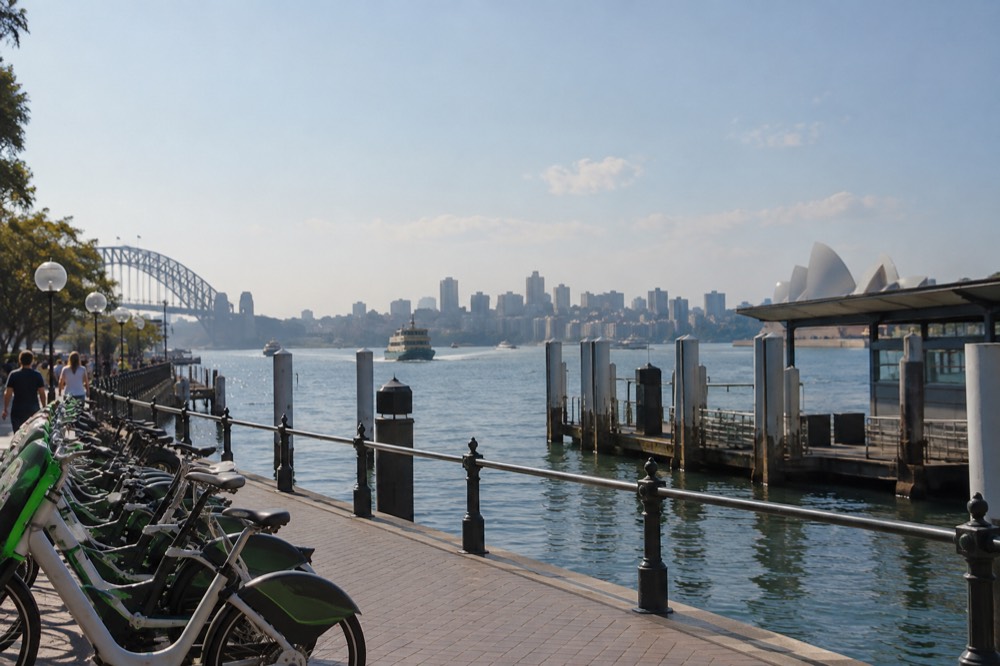
A practical note on the range: casual hourly hire in Sydney typically runs in the tens of Australian dollars, with full-day rates roughly doubling that, and e-bikes sitting above both. Those are planning figures, not operator quotes; every shop prices its own fleet and the summer peak moves everything up. Book ahead in the December-January school holidays, when the Centennial Park hire outlets in particular run out of kids' bikes.
The other option is a guided ride, which bundles the bike, the helmet, the route and the commentary. That suits a visitor who wants the harbour story, not just the harbour path, and it removes every decision about which road is safe.
Is Sydney a Bike-friendly City?
Honestly, it is uneven. Sydney's riding has improved sharply in the last decade, with separated cycleways through the city centre and a growing off-road network, but it lags Melbourne on connectedness and the arterial roads remain hostile. A visitor who rides the shared paths and the separated lanes has a genuinely good time; a visitor who treats it like Amsterdam and rides anywhere will not. Plan by route, not by assumption.
The geography is part of the problem. Sydney's harbour cuts the city into fingers, so a direct line between two suburbs is rarely possible and the crossings funnel everyone, bikes included, onto a few busy corridors. Hills are the other factor: the eastern suburbs and North Shore are steep in a way that flat-city cyclists do not expect, and it is a real reason e-bikes have taken off here.
The city centre is the exception that proves the city can do this well. Separated cycleways run through the CBD, connecting the Harbour Bridge's northern approach to Darling Harbour and on to the inner west, and commuter numbers on those routes have grown every year they have existed. Ride those, then decide how you feel about the rest.
If a ride and a rest appeal in equal measure, the ferry network is a cyclist's friend: bikes travel on Sydney Ferries at no charge beyond your fare, which turns a one-way ride into a loop. The Sydney ferries guide covers the routes, and the fare bands below are the ones that matter for a bike-on-board day out.
| Ferry journey | Distance band | Adult Opal fare |
|---|---|---|
| Short harbour hops (e.g. Circular Quay to Darling Harbour area) | 0-9 km | $7.35 |
| Manly ferry (F1) and other long crossings | 9+ km | $9.20 |
| Daily cap, Monday to Thursday | network-wide | $19.30 |
| Daily cap, Friday to Sunday and public holidays | network-wide | $9.65 |
Note the cap quirk: a public holiday is the cheapest day to ride the ferries widely, because the daily cap drops to $9.65. There is no off-peak discount on ferries, unlike trains and buses.
Which Sydney Harbour Rides Are Worth Doing?
The ride worth travelling for is the western harbour foreshore: Pyrmont Bridge through Darling Harbour, along the water at Barangaroo, and around to Circular Quay, with the Harbour Bridge overhead for most of it. It is flat, almost entirely separated from traffic, and it stacks up more of the city's icons per kilometre than any other route. Extend it north over the bridge to Kirribilli and Luna Park and you have Sydney's single best half-day of cycling.
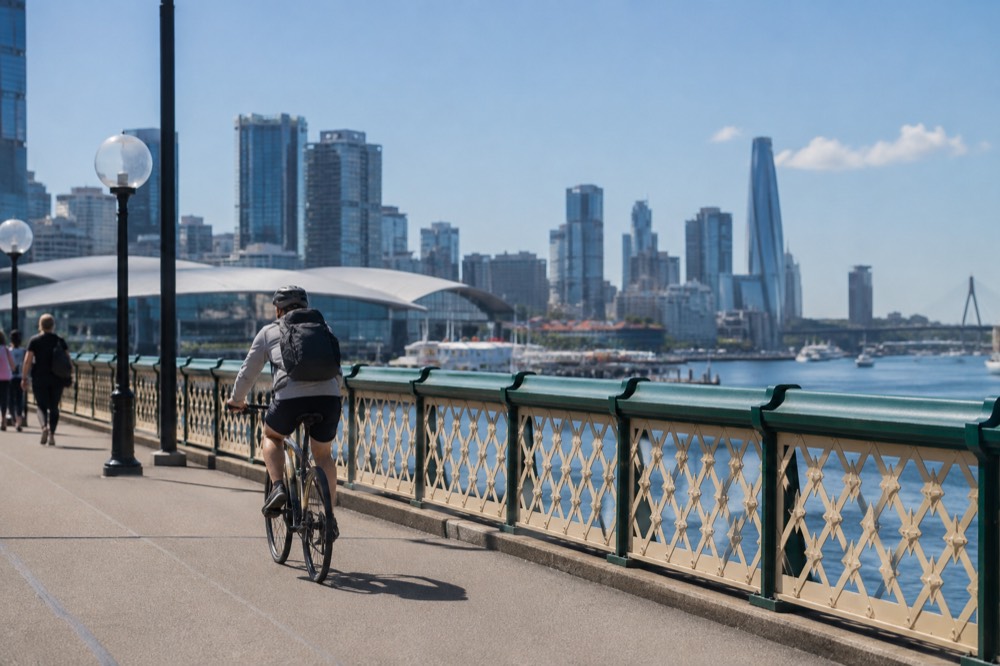
Riding over the Sydney Harbour Bridge itself is allowed and is a rite of passage. The northern approach from the city side takes you up through the north Sydney cycle network to the bridge's shared path on the western side of the deck. The path is narrow and shared with pedestrians, so it is a slow, sightseeing pace rather than a training run, and stopping on the bridge deck to take photos is a bad idea with cyclists behind you. Pause at the Pylon Lookout after you come off instead.
The payoff on the far side is immediate: Luna Park's grinning face at Milsons Point, the harbour view back towards the Opera House from Kirribilli, and the option to loop back by ferry from Milsons Point or Neutral Bay wharves with the bike. That loop, ride out and float back, is the shape of most of Sydney's best cycling days.
If you would rather be on the water than beside it, the harbour also carries paddle options. A sunrise kayak tour is the active-water alternative to a sunrise ride, and it covers the same stretch of water from a completely different angle.
Can You Cycle from Bondi to Coogee?
You can ride between them, but not along the coast path the whole way, and you should not try to. The famous Bondi to Coogee route is a walking track first: it descends to stairs and narrow cliffside sections at Tamarama and Bronte where bikes are impractical and unwelcome. Cyclists make the connection via the suburban streets and the parallel road, Waverley's shared paths, which is a fine ride but a different experience from the walk. Ride the streets, walk the track.
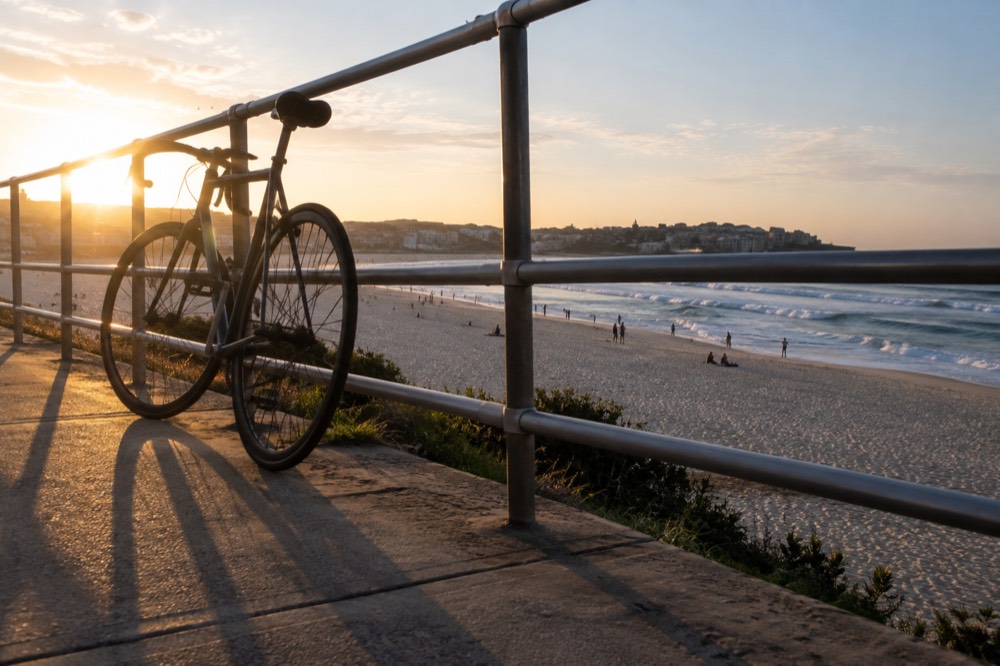
The distinction matters because visitors conflate the two, and a cyclist rolling onto the coastal walk at a busy time makes enemies fast. The full walking route is covered in our Bondi to Coogee coastal walk guide; on a bike, the honest version is a road ride through the eastern suburbs with stops at each beach, parking the bike and walking the scenic clifftops on foot.
What cycling does give you here is range. From Bondi you can extend south to Coogee and Maroubra on quiet backstreets, or ride the eastern suburbs cycleway back towards Centennial Park and the city. The eastern suburbs are hilly, so plan the direction around the climbs: descending to the coast and riding home along the flatter inland paths is the smarter order.
Beach safety applies to stops as much as swims: if you do go in, swim between the red and yellow flags at a patrolled beach. Bondi, Bronte, Tamarama and Coogee are all patrolled year-round by council lifeguards, which is unusual in Sydney and worth knowing. Most other beaches in the region are patrolled only through the warmer months.
Where Can You Ride Outside the City?
The best out-of-town riding within reach of Sydney is in the national parks and river country to the north and south: Ku-ring-gai Chase's Bobbin Head loop, the Royal National Park's Lady Carrington Drive, and the Hawkesbury river flats around Windsor. All three are reachable with a bike on a train or ferry, and all three trade harbour views for bushland. The Blue Mountains, by contrast, is a driving-and-walking destination; its roads are fast, narrow and unsuited to casual cycling.
Lady Carrington Drive in the Royal National Park is the classic easy option: a flat, sealed, vehicle-light road along the Hacking River that families ride out and back. Bobbin Head in Ku-ring-gai Chase National Park is steeper and prettier, descending through mangroves to a waterside picnic area. Both parks charge a vehicle entry fee if you drive in, but arriving by train, ferry or on foot, with a bike, avoids it entirely at almost every Sydney park.
| Park | Vehicle entry fee | Notes for cyclists |
|---|---|---|
| Royal National Park | $12 per vehicle per day | No charge arriving by train or bike |
| Ku-ring-gai Chase National Park | $12 per day | Bobbin Head road is steep in both directions |
| Blue Mountains National Park | $8 per day, Glenbrook area only | Katoomba and Blackheath entrances carry no park fee |
| Sydney Harbour NP: Bradleys Head | $8 per day | Reachable by ferry with a bike |
Those fees are per vehicle and reviewed periodically; the National Parks and Wildlife Service's fee and passes page carries the current schedule. The Blue Mountains line in the table deserves its own sentence: the park is free at Katoomba, and the surprise is that a day trip there carries no park entry fee at all, only the Scenic World tickets if you want them. Our Blue Mountains day trip guide covers that side of the mountains properly.
What Are Sydney's Cycling Rules?
Three rules matter to visitors. Helmets are legally required for every rider, adult or child, and the fine is real. Riding on the footpath is illegal unless you are under 16 or accompanying a child under 16, so the shared paths, marked with signs, are where you ride instead. And private e-scooters are illegal on NSW roads, footpaths and bike paths alike, which catches visitors from states where they are not. Ride the marked network, wear the helmet, and the law stays simple.
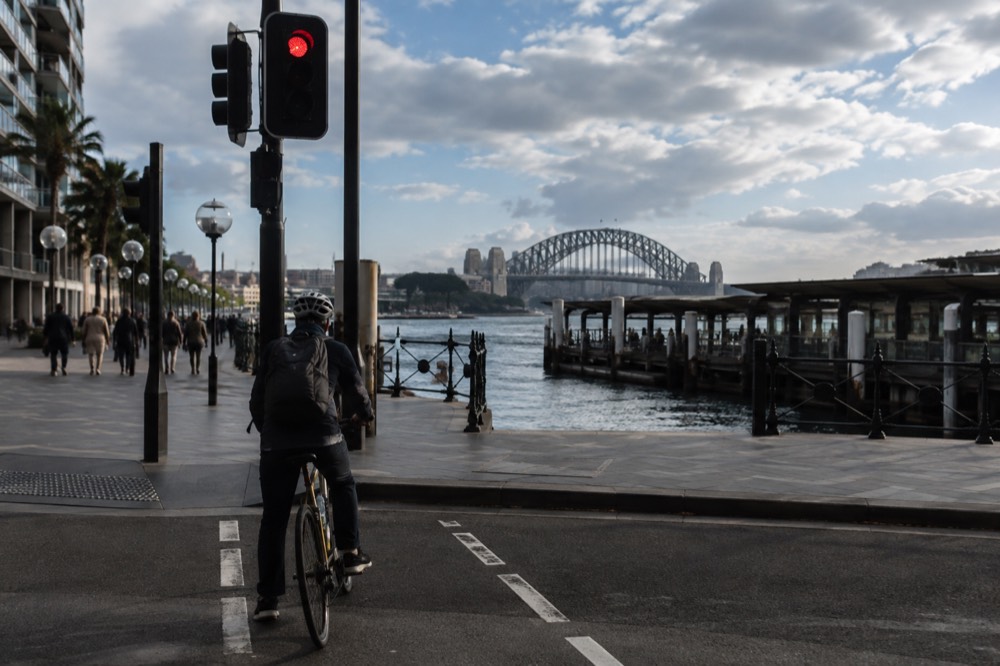
The shared-path etiquette is worth a line because it is where most friction happens. Pedestrians have right of way on shared paths, bells are expected, and the harbour foreshore paths fill with walkers who are looking at the view, not at you. Slow down around the Opera House approaches and Pyrmont Bridge in particular. E-bikes are legal up to the standard 250-watt power cap; anything more powerful is treated as a motor vehicle and needs registration, which no hire fleet will hand you.
On the e-scooter point, the rules are strict and current: private scooters cannot be ridden on roads, footpaths, shared paths or bike lanes anywhere in NSW, with limited shared-scheme trials in designated areas only. Transport for NSW's e-scooter rules page is the official wording. If you were planning to cover Sydney standing on a scooter, plan a bike instead.
When Is the Best Time of Year for a Sydney Bike Ride?
July to September is the best cycling window, and almost nobody plans a trip around it. August is Sydney's clearest month on the long-run record, 13.4 clear days on average, and July is second with 12.0, while February, the middle of summer, is the cloudiest at 5.3. Add mild winter means of 16.4 to 17.9 degrees and low-humidity air, and winter is objectively the better riding season. The catch is shorter days: June averages just 5.5 hours of sunshine.
The full picture, from the Bureau of Meteorology's long-term normals for Sydney, is below. The number that surprises most visitors is June's rainfall: at 133.1 mm on average it is Sydney's wettest month, wetter than any summer month. Sydney's rain peaks in autumn and early winter, not in the season people associate with an Australian beach city.
| Month | Mean max °C | Rain days (≥1mm) | Mean clear days |
|---|---|---|---|
| Jan | 26.0 | 8.6 | 6.8 |
| Feb | 25.8 | 9.0 | 5.3 |
| Mar | 24.8 | 9.9 | 7.1 |
| Apr | 22.5 | 8.9 | 9.1 |
| May | 19.5 | 8.6 | 9.5 |
| Jun | 17.0 | 8.8 | 9.1 |
| Jul | 16.4 | 7.4 | 12.0 |
| Aug | 17.9 | 7.1 | 13.4 |
| Sep | 20.1 | 7.1 | 10.9 |
| Oct | 22.2 | 7.9 | 8.1 |
| Nov | 23.7 | 8.3 | 6.0 |
| Dec | 25.3 | 7.9 | 6.6 |
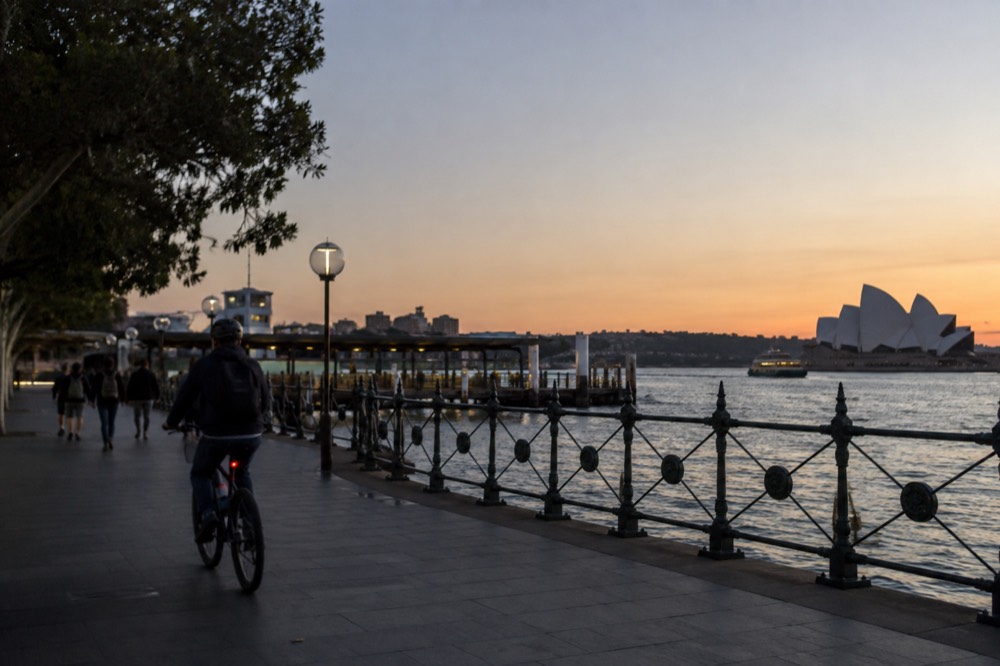
One more planning layer: the UV index. Sydney passes the protection threshold of 3 for most of the year and hits extreme levels of 11-plus in the December-to-February summer, so sunscreen applies on winter rides too. And daylight saving, from the first Sunday in October to the first Sunday in April, extends evening riding by an hour; outside it, plan to be off the shared paths by around 5pm in June and July, when the light goes.
If a grey day lands mid-visit, swap the saddle for the observation deck. The Tower Eye sits above the weather's low cloud more often than not, and it is the standard wet-weather pivot for a day that was meant to be outdoors.
Should You Take a Guided Bike Tour or Ride Yourself?
Ride yourself if you are confident on shared paths, want a specific route, and are happy solving the hire, helmet and ferry logistics. Take a guided tour if you want the route decisions made for you, the history told as you ride, or the safety of a group on a city whose bike-friendliness is uneven. Guided rides run from two to five hours, cover the harbour highlights, and suit a first-day-in-town visit better than a last one.
The self-guided case is strong once you know the network. The harbour foreshore, the bridge crossing and a ferry loop back is a route you can assemble from this guide in an afternoon, and hire makes it cheap. The freedom to stop at every lookout, and to eat where you please, is what a guide cannot sell you.
The guided case is about compression. A local guide takes the guesswork out of which streets connect, and on a short visit that saves more time than it costs. It is also the safer choice for riders unused to riding on the left, or to a city where the good infrastructure and the bad sit one street apart.
| Option | What it suits | Time needed |
|---|---|---|
| Self-guided harbour loop | Confident riders, first-time visitors who plan | Half a day plus ferry time |
| Guided city bike tour | History, route-finding, riding on the left | 2 to 5 hours |
| Centennial Park family hire | Children, beginners, a low-stress morning | 1 to 3 hours |
| National park ride (Lady Carrington) | Bushland, flat terrain, a picnic day | Half a day |
Whichever way you go, the underlying advice from this whole guide holds: pick the route before you pick the bike. Sydney's cycling is excellent inside the network and unpleasant outside it, and knowing which is which is the entire skill. This site, Sydney Travel Guide, keeps the route-by-route detail across its neighbourhood and attraction guides, so the planning is already done by the time you arrive.
Common Questions About Cycling in Sydney
Do you have to wear a helmet when cycling in Sydney?
Yes. Helmets are legally required for all riders in New South Wales, adults included, and hire shops include one with every bike. The fine for riding without one is real and enforced, and there is no exemption for short rides or shared paths.
Can you ride a bike on the footpath in Sydney?
Only if you are under 16, or an adult accompanying a rider under 16. For everyone else footpath riding is illegal, and the correct place to ride is the marked shared paths and separated cycleways, which are signposted and plentiful around the harbour.
Can you take a bike on Sydney ferries?
Yes. Bikes travel on public Sydney Ferries at no extra charge beyond your fare, and the F1 Manly ferry is a popular way to turn a one-way ride into a loop. Avoid peak commuter times when ferries are crowded, and check the operator's guidance for electric bikes.
Is Sydney flat enough for casual cycling?
It depends entirely on where. The harbour foreshore, the Cooks River path and Lady Carrington Drive are flat, while the eastern suburbs and the North Shore are steep. E-bike hire solves the hills if you want the coastal routes without the climbs.
Are e-scooters an alternative to cycling in Sydney?
No. Private e-scooters are illegal on NSW roads, footpaths, shared paths and bike lanes, with only limited designated-area trials. A hire bike is the legal and practical equivalent for getting around on two wheels.