Ku-ring-gai Chase National Park: Sydney's Quiet Day Trip North
Ku-ring-gai Chase is the second-oldest national park in Australia and sits barely an hour north of central Sydney, yet most visitors never make it past the ferry wharves of Manly. Here is how to do it properly.
Short answer
Ku-ring-gai Chase National Park sits about 25 km north of central Sydney where the Hawkesbury River meets the sea. Vehicle entry costs $12 per day, foot and public transport entry is free, and highlights include the West Head lookout, the sandstone engravings of the Basin Track and the waterways around Bobbin Head.
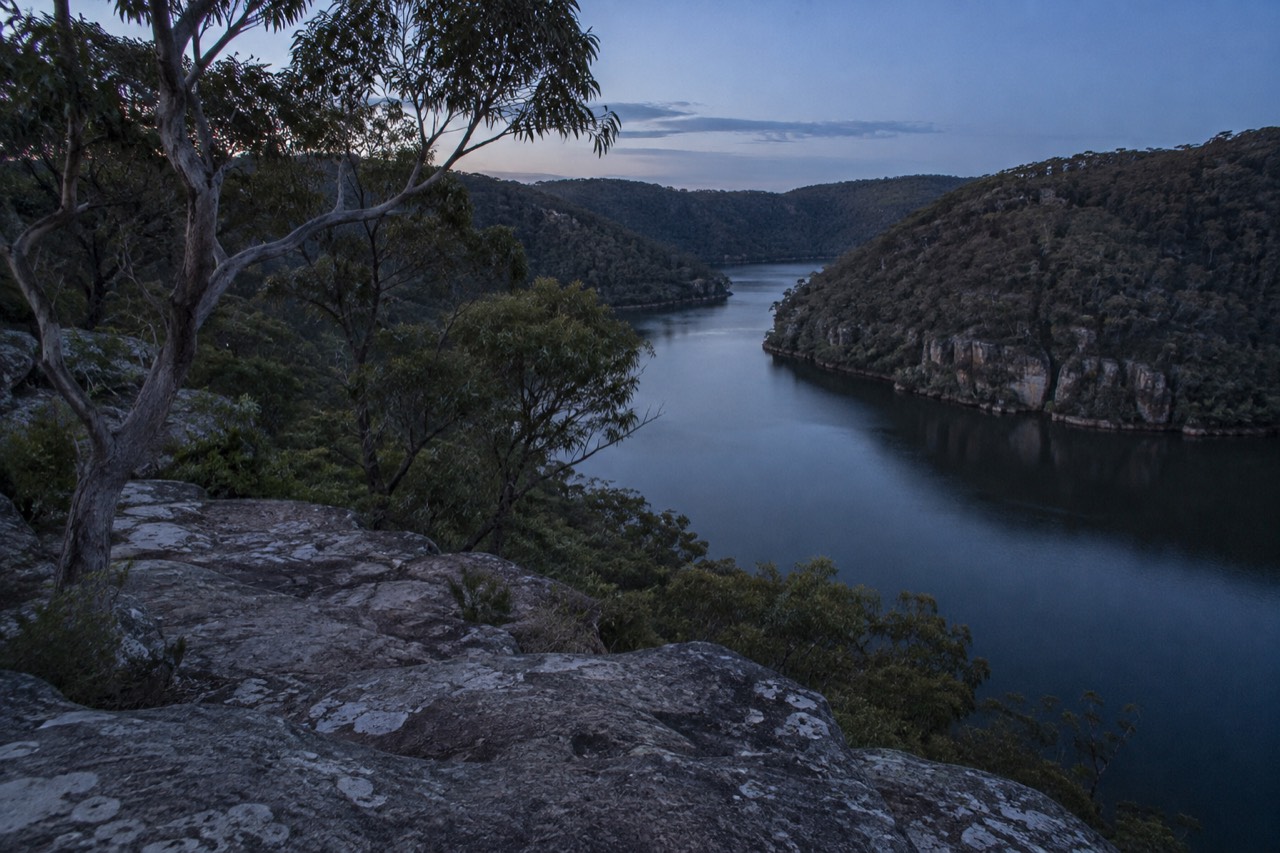
Ku-ring-gai Chase National Park covers more than 15,000 hectares of sandstone country where the Hawkesbury River pours into the Pacific, and it was declared in 1894, making it one of the oldest national parks in Australia. It wraps around the northern edge of Sydney like a second harbour: drowned river valleys, mangrove-lined inlets, ridge-top lookouts and one of the densest collections of Aboriginal rock engravings anywhere in the country. Most visitors to Sydney never see it, which is precisely the appeal. This guide covers how to get there, what entry costs, what to do once you arrive and when to go.
What Is Ku-ring-gai Chase National Park?
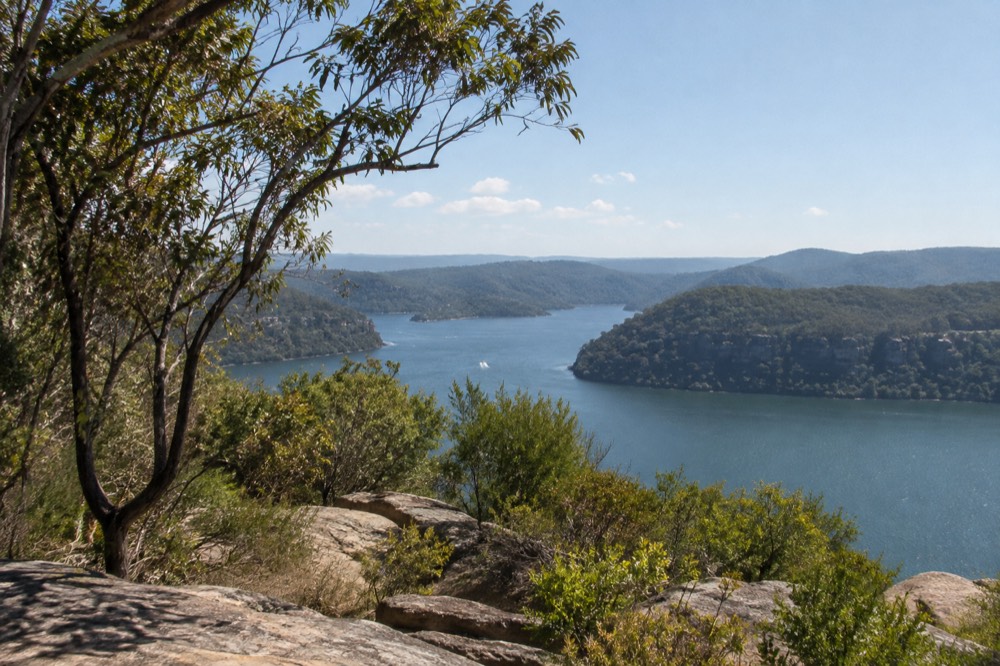
Ku-ring-gai Chase is a protected area of sandstone plateau, river estuary and coastal cliffs about 25 km north of central Sydney, declared in 1894 and managed by the NSW National Parks and Wildlife Service. It protects significant Aboriginal heritage sites, including rock engravings and shell middens, alongside more than 100 km of shoreline where the Hawkesbury River meets Broken Bay. Despite sitting inside the Sydney metropolitan area, it feels far more remote than its distance suggests.
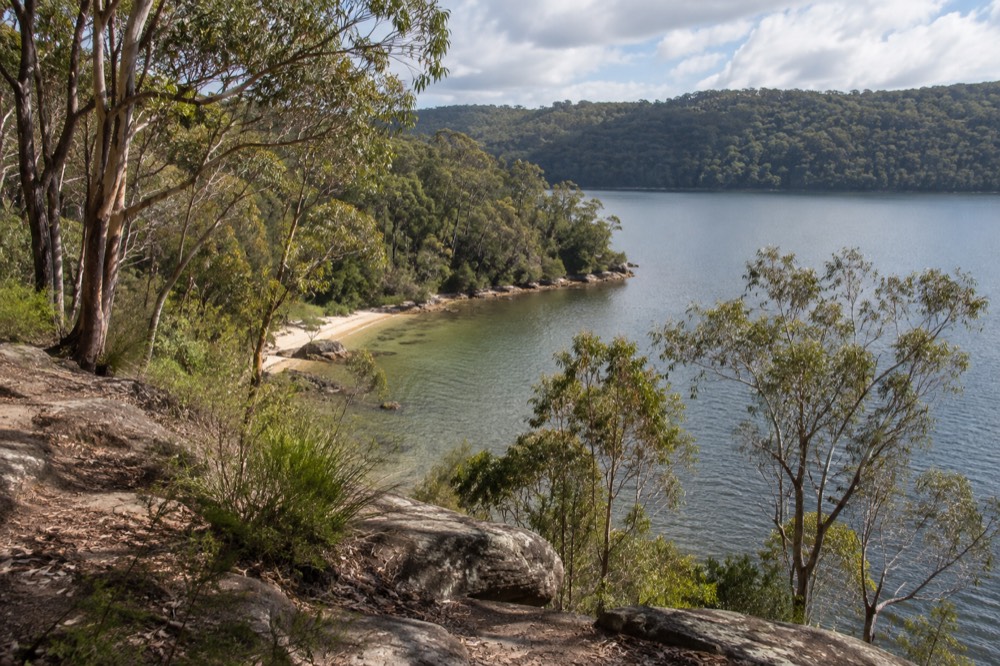
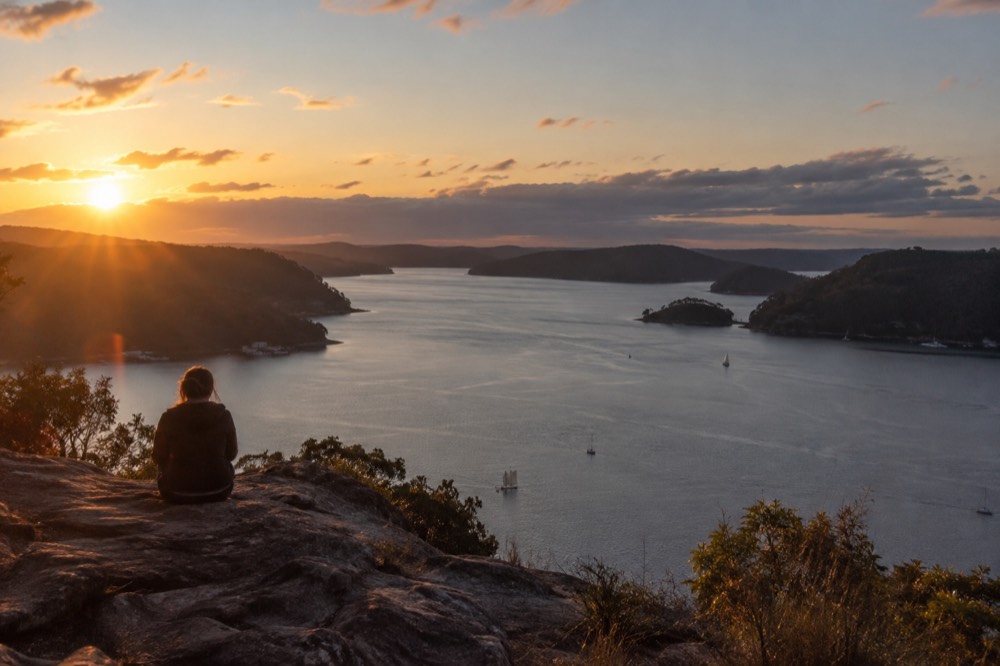
The park's geography is its whole character. The Hawkesbury, the river that drains much of the Sydney Basin, widens into a maze of bays and arms here before reaching the ocean between Barrenjoey Headland at Palm Beach and Box Head on the Central Coast. Ridge roads along the park's western and southern edges drop suddenly into rainforest gullies at Bobbin Head and Cottage Point, where boatsheds and cafes sit on the water's edge in settings that look closer to a Norwegian fjord than a Sydney suburb.
The name acknowledges the Aboriginal people of the area, and the park's heritage listing reflects that this is one of the richest Aboriginal cultural landscapes in the Sydney region. Engravings of kangaroos, fish, whales and ancestral figures are scattered across the sandstone platforms, and several are reachable on short, signposted walks. Treat every site with respect: do not touch the grooves, stay on marked tracks and leave everything where it lies. The engravings are fragile, and oils from hands accelerate their erosion.
What surprises most first-time visitors is how empty it is. The Northern Beaches crowd thins out north of Narrabeen, and once you cross into the park proper you can walk for an hour on a ridge track and meet nobody. On a weekday in the cooler months you will sometimes have a lookout entirely to yourself, something that is essentially impossible at Bondi Beach or the Blue Mountains lookouts.
How Do You Get to Ku-ring-gai Chase from Sydney?
Driving is the practical way in: about 45 to 60 minutes from the Sydney CBD via the Warringah Freeway and Mona Vale Road to the West Head side, or the Pacific Highway to Bobbin Head. Without a car your best options are the train to stations such as Turramurra or Berowra plus a bus or taxi for the last stretch, or a ferry from Palm Beach across to the park's northern shore. There is no single park entrance; you enter at whichever end suits your plans.
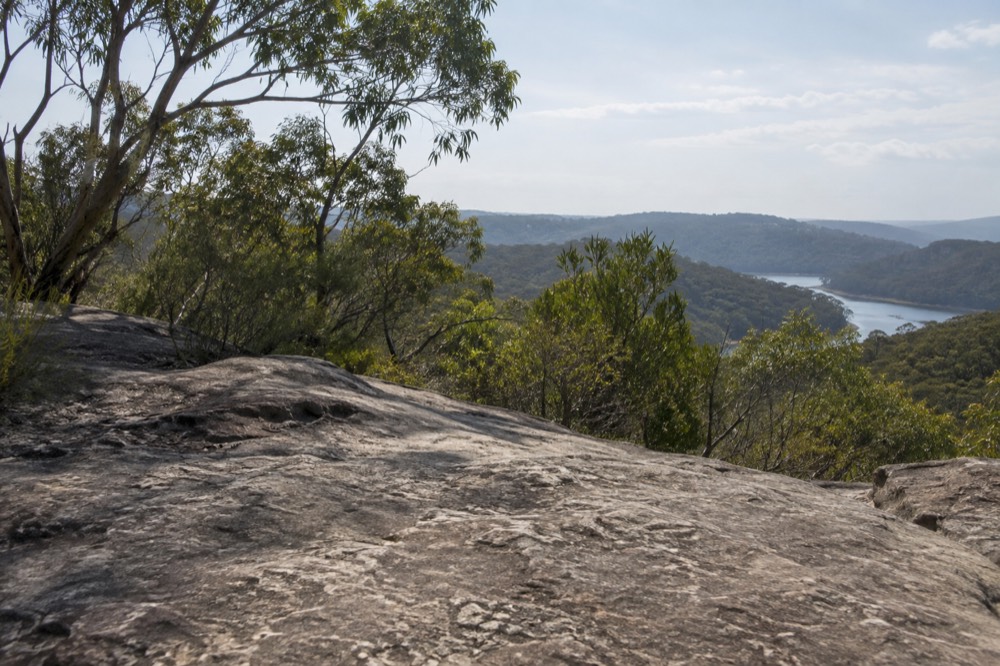
The park has several distinct gateways and it pays to pick one before you set out. Bobbin Head, on the southern shore of Cowan Creek, is the most accessible: it is a 15 minute drive from Turramurra through leafy North Shore suburbs, and it has picnic grounds, a cafe in a historic kiosk, a boat ramp and the start of several walks. West Head, at the park's northeastern corner, is reached via West Head Road off Mona Vale Road and delivers the park's signature lookout over the meeting of the Hawkesbury River, Pittwater and Barrenjoey Headland.
Public transport is workable but requires patience. Trains on the North Shore line reach Turramurra, Wahroonga and Berowra, and from there local buses run toward the park's edges, though services are infrequent and drop you well short of the lookouts themselves. A far more enjoyable car-free option is to combine the park with a day on the water: catch a ferry or bus to Palm Beach at the tip of the Northern Beaches, and view the park's sandstone headlands from the water. Cruise passengers with a full free day can find more ideas in our Sydney cruise ship day guide.
Cycling is a genuine middle path. The roads through the park are quiet outside weekends, and our cycling in Sydney guide covers what to expect, though be aware the terrain is steep and there is little shade on the ridge roads in the middle of the day.
If you would rather not organise any of this yourself, a guided day trip from Sydney is the low-effort route, and the three below are the strongest fits for travellers who want nature without the logistics.
What Does Entry Cost and When Is the Park Open?
Vehicle entry to Ku-ring-gai Chase costs $12 per vehicle per day, charged at the Bobbin Head and West Head areas, while arriving on foot, by bike or by public transport is free. The park itself never closes, though some picnic areas, gates and roads have restricted hours and the West Head Road gate can close at night. There is no per-person entry fee for the park, only the vehicle charge.
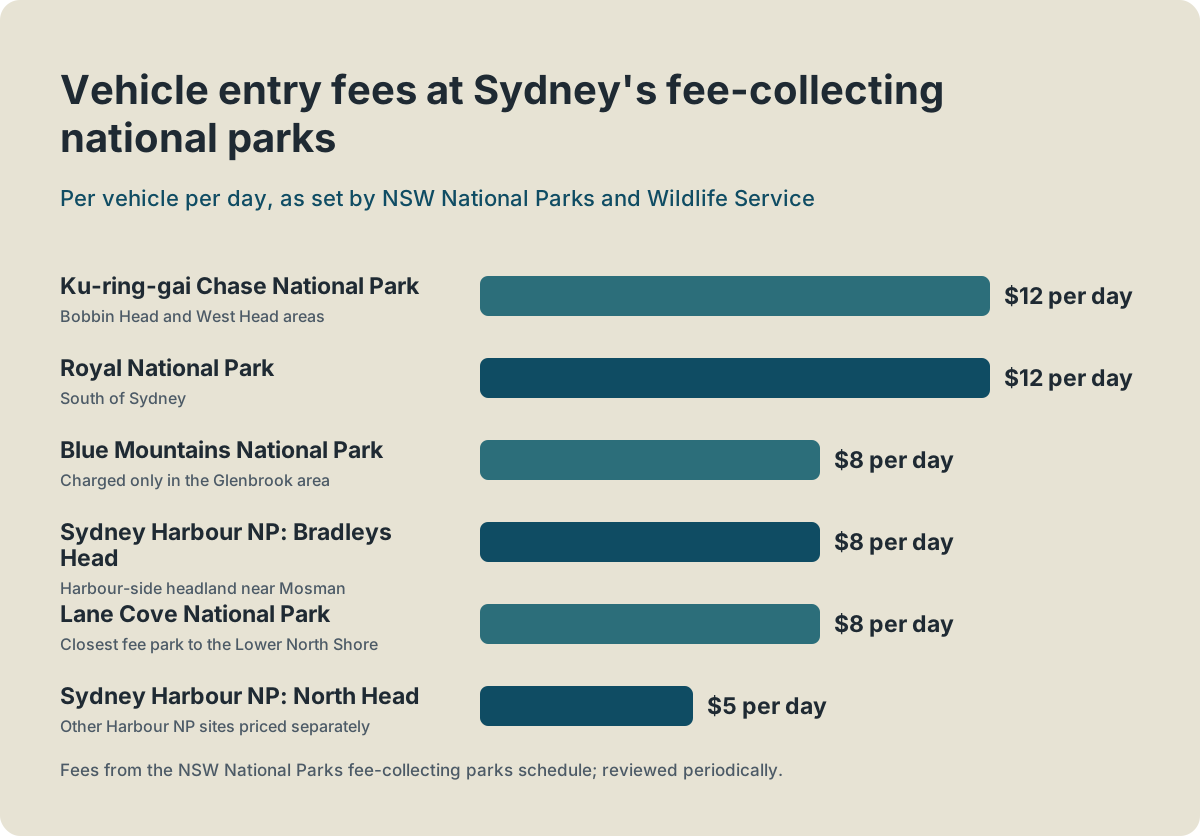
The $12 day pass is set by NSW National Parks and Wildlife Service and applies across the fee-collecting areas of the park. You can pay at entry stations, pay machines or via the Park'nPay app, and the same pass system operates across the other fee-collecting parks around Sydney. For comparison, here is how the vehicle fees stack up across the parks a Sydney visitor is most likely to consider:
| Park | Vehicle entry fee | Notes |
|---|---|---|
| Ku-ring-gai Chase National Park | $12 per day | Bobbin Head and West Head areas |
| Royal National Park | $12 per day | South of Sydney, world's second-oldest national park |
| Blue Mountains National Park | $8 per day | Charged only in the Glenbrook area |
| Sydney Harbour NP: North Head | $5 per day | Other Harbour NP sites priced separately |
| Sydney Harbour NP: Bradleys Head | $8 per day | Harbour-side headland near Mosman |
| Lane Cove National Park | $8 per day | Closest fee park to the Lower North Shore |
The full fee schedule, including annual pass options, is published on the National Parks fee-collecting parks page, which is the authoritative source and is reviewed periodically. Two details from that schedule are worth flagging. First, the fees are per vehicle, so a car of four people splits $12 four ways, while a solo driver pays it alone. Second, the free-on-foot rule means a walk-in visit costs nothing, which makes the park one of the cheapest full-day nature experiences in the Sydney region.
If you are planning several park visits in one trip, do the arithmetic on an annual pass, which covers vehicle entry to all fee-collecting parks for a year. Two or three day trips to Royal National Park and Ku-ring-gai Chase in a single fortnight can make the pass cheaper than individual day fees.
What Are the Best Things to Do in the Park?
The headline experiences are the West Head lookout over the Hawkesbury River and Barrenjoey Headland, the Aboriginal rock engravings along the Basin Track and the Resolute Track, the rainforest and waterfalls around Bobbin Head, and time on the water at Cottage Point or Apple Tree Bay. Most visitors pick one area and spend the day there rather than trying to cross the whole park.
West Head lookout is the single most rewarding stop for a first visit. From the platform you look straight down the line of Barrenjoey Headland at Palm Beach, with the Tasman Sea on one side and the broad, island-dotted expanse of the Hawkesbury estuary on the other. On a clear day the view stretches across Broken Bay toward the Central Coast. The lookout is a short, flat walk from the car park, so it suits every fitness level, and a nearby side track leads down toward Mackerel Beach, one of the boat-access-only communities that give this corner of Sydney its odd, isolated character.
The engravings are the reason the park is listed on the National Heritage List, and you do not need to be a bushwalker to see them. Along the Basin Track, a short side loop passes a large engraving site on an exposed sandstone platform, with figures interpreted in signage at the site. The grooves are shallow and best seen in low light, early or late in the day, when the raking angle of the sun throws the carvings into relief. Under the midday sun they can be almost invisible, which is worth knowing before you make the trip.
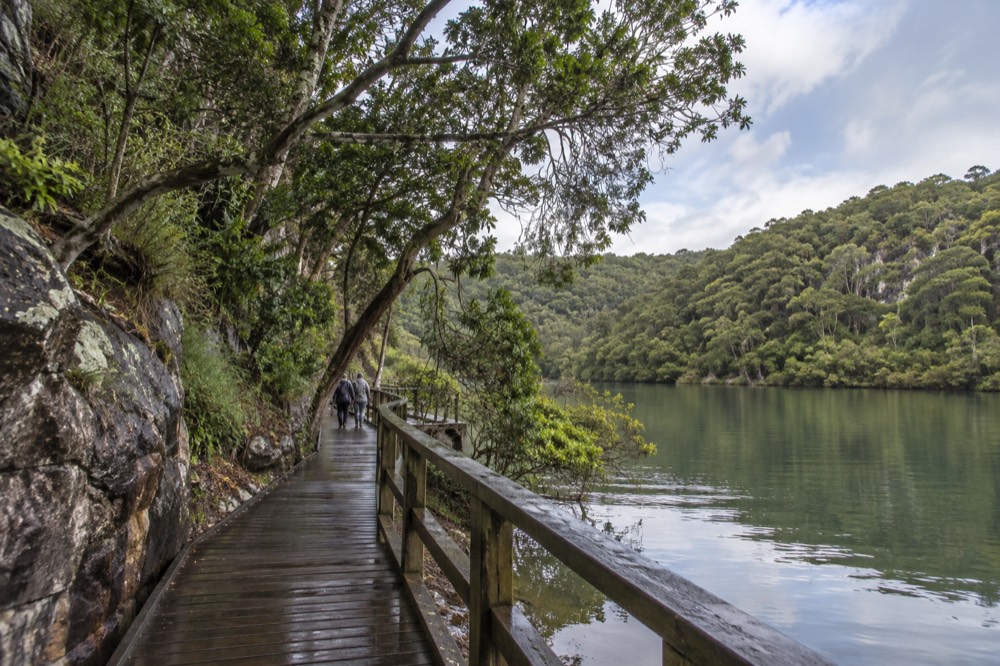
Bobbin Head is the family-friendly heart of the park. There is a rainforest boardwalk through mangroves along Cockle Creek, a historic kiosk building housing a cafe, lawns for picnics, and the Gibberagong track heading up toward the ridge if you want a longer walk. The setting is a drowned river valley, so the water is calm and glassy, and kayaks and small boats are a common sight on warm weekends. Our kayaking in Sydney guide covers the broader paddling scene if the calm water tempts you.
Cottage Point, a few minutes' drive from West Head Road, is a tiny settlement on Coal and Candle Creek with a historic boatshed cafe and a launching spot for the water taxi services that run to restaurants further up the waterways. It is one of the few places in a Sydney national park where you can sit over a long lunch within sight of the bush.
Which Walks and Lookouts Should You Actually Do?
The best short walks are the West Head lookout path, the Basin Track engraving loop and the Bobbin Head rainforest boardwalk, each under an hour. For a half-day commitment, the Resolute Track to Resolute Beach and West Head Beach combines engravings, Aboriginal heritage pools and two beaches in one circuit. The park's tracks range from 20-minute strolls to full-day ridge traverses, so match the walk to the season and your water supply.
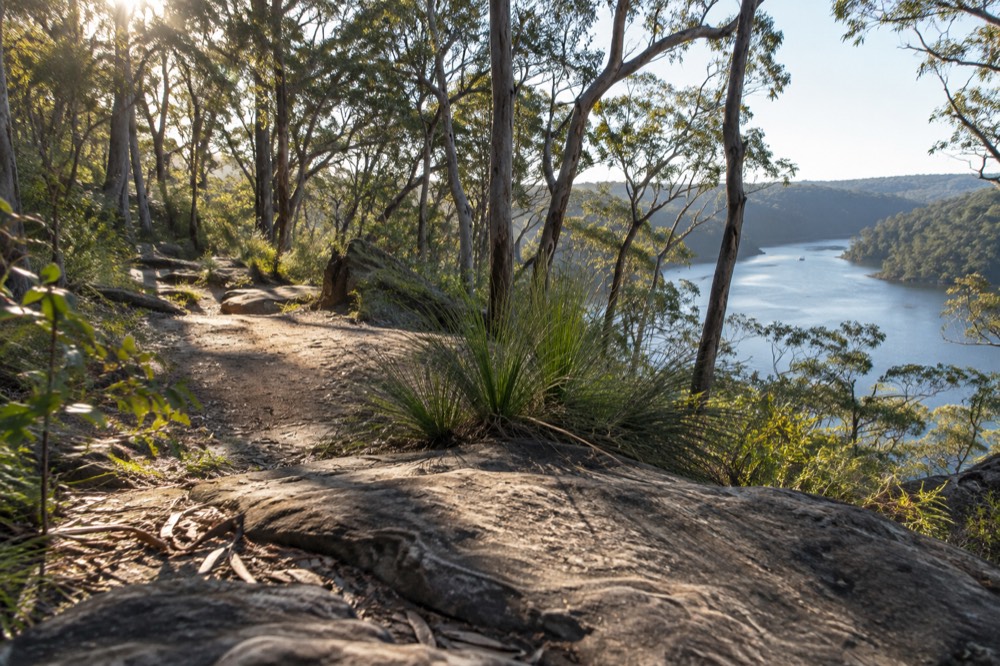
The Basin Track is the one most guidebooks name, and deservedly so. It descends from West Head Road through woodland to The Basin, a camping and picnic area on the water reachable also by ferry from Palm Beach, and passes the engraving site on the way. The return climb is steady but manageable, and swimming at The Basin in the warmer months is the reward. Note that the water here is estuarine, not surf, so it is calm but should be avoided for a few days after heavy rain, the same rule that applies to all harbour and estuary swim sites in Sydney.
The Resolute area, a short drive west of West Head, packs several experiences into a small radius: the engravings and heritage pools near the trackhead, Resolute Beach with its view straight down Pittwater, and West Head Beach on the Hawkesbury side. Doing Resolute Beach and West Head Beach as a linked circuit gives you two very different bodies of water in a single walk.
For walkers who want a serious leg of the park, the longer ridge tracks between Bobbin Head and Cowan connect into the Great North Walk, the 250 km walking route from Sydney to Newcastle. You do not need to commit to the whole thing; a section walk out of Bobbin Head and back gives you the rainforest gullies and the sandstone overhangs without an overnight expedition. If your appetite is really for multi-day walking, our spit to Manly walk and Sydney coastal walks guides cover the easier end of the city's track network.
When Is the Best Time of Year to Visit?
The most comfortable months for Ku-ring-gai Chase are autumn and spring, when Sydney's mean daily maximums sit in the low 20s Celsius and the bush is neither parched nor sodden. Winter is the clearest time of year in Sydney, with August averaging 13.4 clear days, the most of any month, and June is the wettest, averaging 133.1 mm of rain. Summer is hot, humid and the busiest, especially around The Basin and West Head.
Sydney's climate runs against what most northern-hemisphere visitors expect, and the park's long-run numbers make the pattern plain. These are Bureau of Meteorology long-term averages for Sydney, not a forecast:
| Month | Mean max °C | Mean min °C | Mean rainfall mm | Mean clear days |
|---|---|---|---|---|
| January | 26.0 | 18.8 | 101.2 | 6.8 |
| February | 25.8 | 18.9 | 119.3 | 5.3 |
| April | 22.5 | 14.8 | 126.5 | 9.1 |
| June | 17.0 | 9.3 | 133.1 | 9.1 |
| August | 17.9 | 9.0 | 80.2 | 13.4 |
| October | 22.2 | 13.6 | 76.7 | 8.1 |
Two of those numbers are worth dwelling on because they are the opposite of what visitors assume. June, deep in Sydney's winter, is the city's wettest month on the long-run average, wetter than any summer month. And August, still winter, is Sydney's clearest month, while February, the heart of the tourist season, is its cloudiest. For a park whose whole point is ridge-top lookouts, that makes late winter a genuinely underrated window: crisp, clear and quiet. The full station record is published by the Bureau of Meteorology if you want to check other months.
One seasonal note that applies to the water rather than the tracks: whale season on the NSW coast runs May to November, with the southern migration passing close to shore from August to November, and the coastal vantage points around the park's northern edge can pick up distant blows on a clear day. Do not build a day around it, but if you are at West Head in spring, keep an eye on the ocean horizon. Our whale watching in Sydney guide covers the season in detail.
Where Can You Eat and Picnic Inside the Park?
Bobbin Head has the strongest food options: a cafe in a heritage-listed kiosk building beside the water, large picnic grounds with facilities, and a setting calm enough for a long lunch. Cottage Point has a historic boatshed cafe reachable by road or by boat. Elsewhere in the park you are picnicking, so bring everything you need, including water, because the ridge-top areas have no supplies at all.
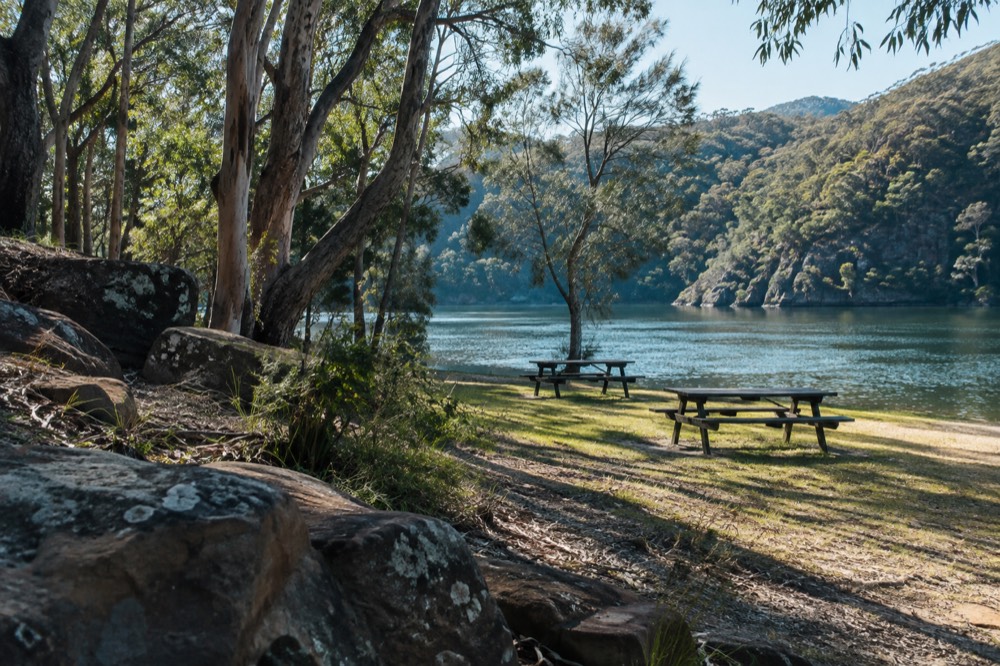
The Bobbin Head kiosk sits on the water at the head of Cowan Creek and is one of the more picturesque lunch stops in the Sydney region. The building dates from the 1930s and the lawns around it hold picnic tables, electric barbecues and toilets, which makes it the default choice for families. Arrive before midday on weekends in the warmer months, because the picnic grounds fill early and the access road queues afterward.
Cottage Point is a different mood: a small, historic settlement on Coal and Candle Creek with a boatshed cafe and a wharf where water taxis pick up diners bound for waterfront restaurants further up the waterways. It is a 10 minute drive from West Head Road, so it pairs naturally with a morning at the lookout.
Beyond those two spots, the park reverts to self-catering. West Head, the Basin Track and the Resolute area have picnic spots and toilets at the main sites but no food, no coffee and no drinking water on the tracks. In summer, carry more water than feels reasonable; the ridge tracks are exposed and the humidity is real. If your day is running long and you would rather finish at a table than a picnic rug, the cafes of Palm Beach are a 20 minute drive from West Head.
Should You Visit Independently or Take a Guided Day Trip?
Visit independently if you have a car and want the lookouts, engravings and Bobbin Head at your own pace, since the park is easy to self-navigate and the only fixed cost is the $12 vehicle fee. A guided tour makes sense if you are carless, want Aboriginal heritage interpreted properly, or prefer to bundle a nature day with transport and lunch. The guided options from Sydney mostly run to the Blue Mountains rather than Ku-ring-gai Chase itself.
The honest state of the market is that Ku-ring-gai Chase is under-served by commercial day tours, and the big operators run west to the Blue Mountains instead. That is not a slight on the park; it is a reflection of where the demand sits. So the practical decision tree is simple. With a car, drive yourself and use this guide. Without a car, your best guided nature days run elsewhere, and the strongest all-round option is a Blue Mountains day trip, which covers transport, park entries and lunch in a single booking.
The all-inclusive Blue Mountains trip below is the one we would point a carless traveller at first: it runs with a local guide, includes the in-park costs and food, and reviews consistently rate it among the best day tours out of Sydney. You can read more about the Blue Mountains day trip in our dedicated guide, and check current availability on the listing.
If your priority is Australian animals rather than mountains, an all-inclusive wombat and kangaroo day tour runs a similar full-day format with wildlife as the centrepiece, and it suits families well. It is a different landscape entirely from Ku-ring-gai Chase, but it answers the same underlying question: how do I see real Australian nature without [hiring a car](https://discovercars.tpk.ro/FvKIyzXW)?
For a coastal-nature day with dolphins and beach time, the Jervis Bay trip is the third strong option in this family of tours, though it is a longer day at around 12 hours door to door. Our Jervis Bay day trip guide covers what the journey involves.
What Should You Know Before You Go?
Bring more water than you think you need, check the NPWS alerts page before driving out, pay the $12 vehicle fee by card or the Park'nPay app, and plan around the fact that mobile coverage drops in the valleys. The park is day-use friendly but remote in feel, and the difference between a good day and a difficult one is usually preparation rather than weather.
A few practicalities that regularly catch visitors out. The park's tracks are sandstone-based and can be slick after rain, so if June's average 133.1 mm has just fallen, give the steeper descents a miss and stay on the ridge. Snakes are present in the warmer months, as they are across all Sydney bushland; standard practice is to give them distance and let them move off. The estuarine swimming spots should be avoided for up to three days after heavy rain, per the NSW Government's Beachwatch advice for harbour and estuary sites, and the ocean beaches nearby follow the one-day rule. Current water quality grades are published at Beachwatch.
Bushfire season matters here too. The statutory bush fire danger period in NSW runs 1 October to 31 March, and on days of extreme fire danger national parks can close tracks and roads at short notice. NPWS publishes alerts for every park, and checking the Ku-ring-gai Chase alerts page the morning you travel is the reliable habit.
Finally, the park is a genuine escape, so treat it as one. There is no shop at West Head, no fuel in the park, and the nearest full supermarkets are back in the suburbs. A small planning table keeps the day honest:
| Item | Bring it? | Why |
|---|---|---|
| Drinking water, 2 litres per person | Essential | No potable water on tracks or at ridge lookouts |
| Card or Park'nPay app | Essential | Vehicle fee payment; carry some cash as backup |
| Sun protection | Essential | UV reaches extreme levels in Sydney summers |
| Enclosed walking shoes | Recommended | Slick sandstone after rain, rough steps on descents |
| Swimwear and towel | Seasonal | The Basin and West Head Beach in warmer months |
| Insect repellent | Recommended | Mosquitoes around the mangroves at Bobbin Head |
How Does Ku-ring-gai Chase Compare with Sydney's Other Park Day Trips?
Ku-ring-gai Chase is the water-and-heritage choice: closest to the city, cheapest to enter on foot, best for Aboriginal rock engravings and calm-water picnics. Royal National Park, an hour south, offers coastal cliffs and the famous Figure Eight Pool landscape. The Blue Mountains, 90 minutes west, is the pick for grand canyon views and waterfalls, and it charges no entry fee outside Glenbrook. Each suits a different day.
| Day trip | Direction | Drive from CBD | Vehicle fee | Best for |
|---|---|---|---|---|
| Ku-ring-gai Chase | North | 45-60 min | $12 per day | Engravings, lookouts, calm water |
| Royal National Park | South | About 1 hour | $12 per day | Coastal cliffs, swimming, Figure Eight Pools |
| Blue Mountains | West | About 90 min | $8, Glenbrook only | Canyon views, waterfalls, Scenic World |
| Sydney Harbour NP | Within city | 20-40 min | $5-8 by site | Harbour headlands, half-day visits |
The comparison that surprises people is the drive time. Ku-ring-gai Chase's West Head lookout is under an hour from the central city, yet the view is of a wild river mouth with no suburb in sight. Royal National Park, covered in our Royal National Park guide, is the better swimming park; the Blue Mountains, covered in our Blue Mountains day trip guide, is the better grand-vista park. Ku-ring-gai Chase is the one you pick for quiet, heritage and water, and it is the one you pick when you do not want to share the track.
For a broader survey of car-free options, our day trips from Sydney without a car guide ranks the reachable ones, and the general day trips from Sydney round-up covers the full spread of directions.
If a guided day in the bush is the version of this that fits your trip, these are the three tours we would shortlist from Sydney.
Common Questions About Ku-ring-gai Chase National Park
How much does it cost to enter Ku-ring-gai Chase National Park?
Vehicle entry costs $12 per vehicle per day, charged at the fee-collecting areas such as Bobbin Head and West Head. Entering on foot, by bicycle or by public transport is free. Fees are set by NSW National Parks and reviewed periodically, so check the NPWS passes and fees page before you go.
Can you get to Ku-ring-gai Chase without a car?
Yes, but it takes patience. Trains reach Turramurra, Wahroonga and Berowra on the North Shore line, and local buses run toward the park edges, though no service reaches the lookouts directly. A practical car-free plan is to view the park from the water, combining a ferry or bus to Palm Beach with a boat trip past the sandstone headlands.
What is the best walk in Ku-ring-gai Chase?
For a first visit, the Basin Track is the pick: it passes a major Aboriginal engraving site and descends to The Basin, a calm-water swimming and picnic spot. The Resolute Track to Resolute Beach is the best half-day alternative, and the Bobbin Head rainforest boardwalk is the easiest option for families and anyone short on time.
Can you swim in Ku-ring-gai Chase National Park?
Yes, in the warmer months, at spots like The Basin and West Head Beach. The water is estuarine, so it is calm rather than surf. Follow the NSW Beachwatch guidance: stay out of the water while it rains and for up to three days afterward at estuary sites, and check the published water quality grade before you swim.
When is the best time of year to visit?
Autumn and spring are the most comfortable, with mean maximums in the low 20s Celsius. Late winter is the underrated window: August is Sydney's clearest month on the long-run average, with 13.4 clear days, and the lookouts are at their best. June is the wettest month on average, so check the forecast if you are visiting then.
Are there Aboriginal rock engravings you can see?
Yes, and they are among the most significant in the Sydney region. Short, signposted side tracks off the Basin Track and near the Resolute area lead to engraving platforms depicting animals and ancestral figures. Do not touch the grooves, stay on the marked track, and visit early or late in the day when low light makes the carvings easiest to see.
Planning a Sydney trip around its parks, lookouts and ferry routes is exactly what Sydney Travel Guide exists for, and Ku-ring-gai Chase is the piece of the puzzle most visitors never find. Pick your gateway, pay the $12 if you drive, carry the water, and go early.