Palm Beach Sydney: The Northern Beaches' Farthest Reach
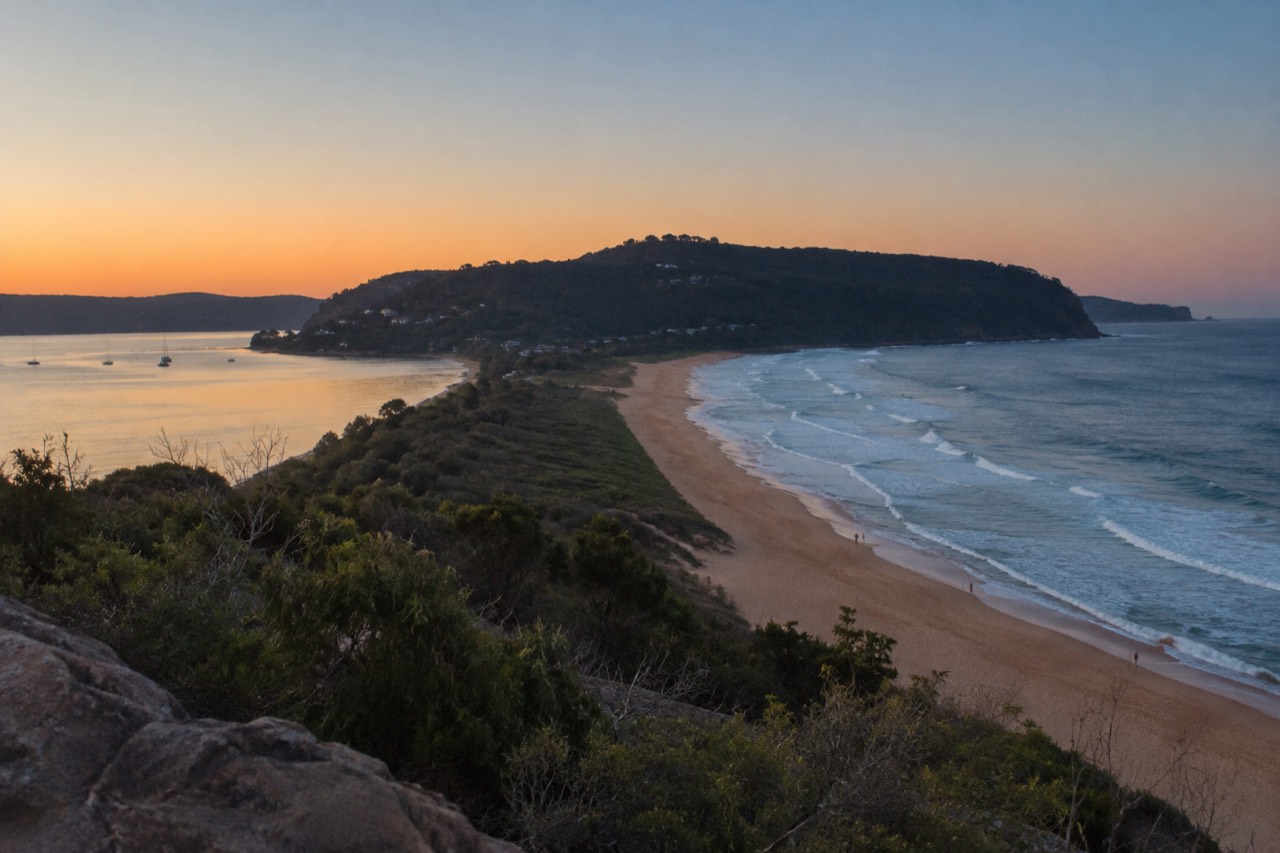
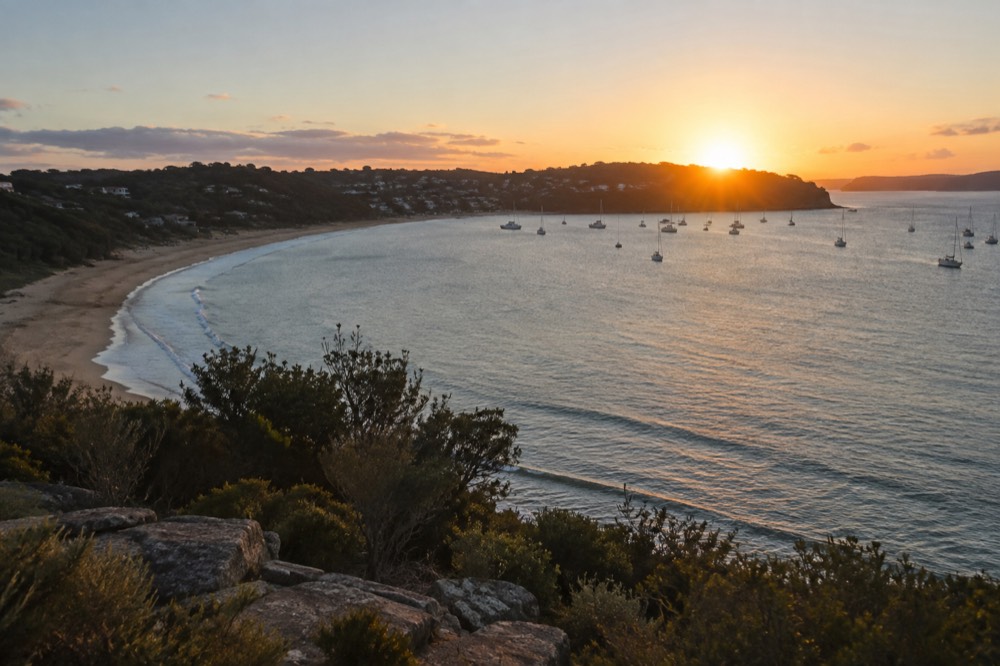
Palm Beach sits at the very top of Sydney's Northern Beaches, a narrow sand spit with the ocean on one side and the calm water of Pittwater on the other, crowned by Barrenjoey Head and its lighthouse.
Short answer
Palm Beach is about 40 to 50 kilometres north of the Sydney CBD at the tip of the Northern Beaches peninsula. A bus from the city takes roughly 90 minutes. Entry is free, Barrenjoey Lighthouse is reached on foot, and the beach is patrolled seasonally, roughly late September to late April, 9am to 5pm.
Palm Beach is the last stop. The B1 bus line ends here, the peninsula ends here, and the map of Sydney's surf beaches runs out of land. What you get at the end of it is a narrow spit of sand barely a few hundred metres wide, with the Tasman Sea breaking on the eastern side and the flat, boat-dotted water of Pittwater on the west, all of it watched over by Barrenjoey Head and its lighthouse. It is the furthest of the beaches covered in our guide to the Northern Beaches of Sydney, and the one that rewards the long trip most.
Locals call it "Palmy". On a winter morning you can have the sand nearly to yourself; on a summer weekend the Spit Bridge traffic and the car park fill before noon. The Bureau of Meteorology's long-run records for Sydney show why the timing matters: August is statistically the city's clearest month, with 13.4 mean clear days, while February, the middle of peak season, is its cloudiest, at 5.3. The conventional wisdom that summer is the best time to be on a Sydney beach does not survive contact with the data.
Where Exactly Is Palm Beach, and Why Do People Go?
Palm Beach sits at the northern tip of Sydney's Northern Beaches peninsula, roughly 40 to 50 kilometres from the CBD, where the land finally stops between the ocean and Broken Bay. People go for the contrast: surf beach on one side of the spit, the calm boating water of Pittwater on the other, and Barrenjoey Lighthouse above it all. There is no entry fee for the beach itself.
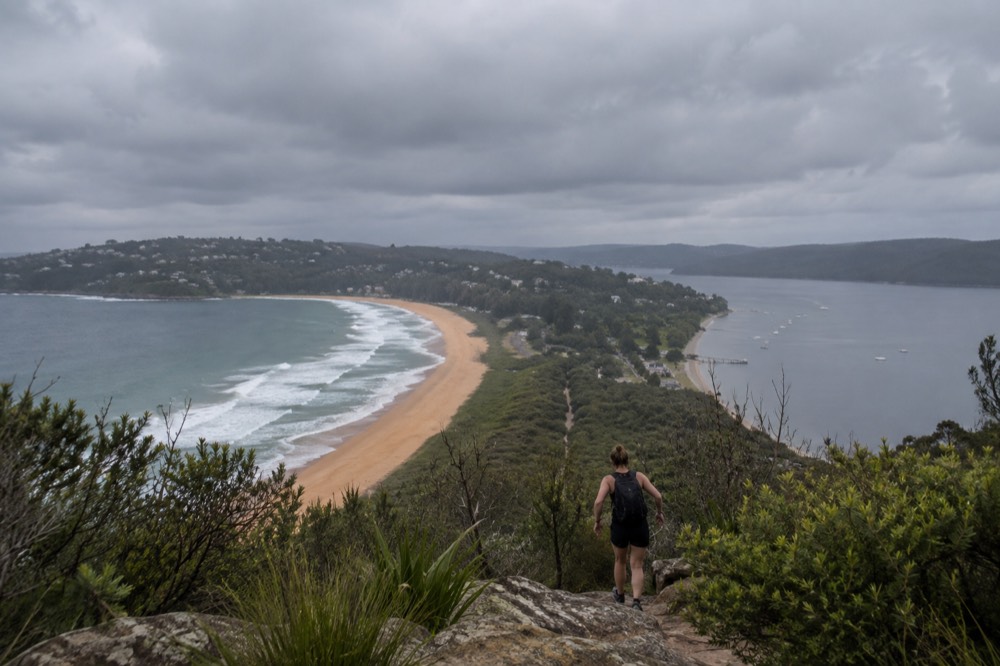
The geography is the whole story. The suburb occupies a sand spit: ocean beach to the east, Pittwater to the west, Ku-ring-gai Chase National Park visible across the water on the western shore. Barrenjoey Head rises at the northern end, and the lighthouse on top is one of the most photographed structures in Sydney. The view from up there takes in Broken Bay, the Central Coast, and the whole sweep of the peninsula behind you.
It is also the quietest of the famous Sydney beaches in terms of development. There are a handful of cafes, a surf club, some expensive houses and not much else. No shopping strip, no arcade, no high-rise. That is the point of the drive. If you want a beach with a busy town attached, Manly Beach does that job far better and is half the distance from the city.
How Do You Get to Palm Beach from the City?
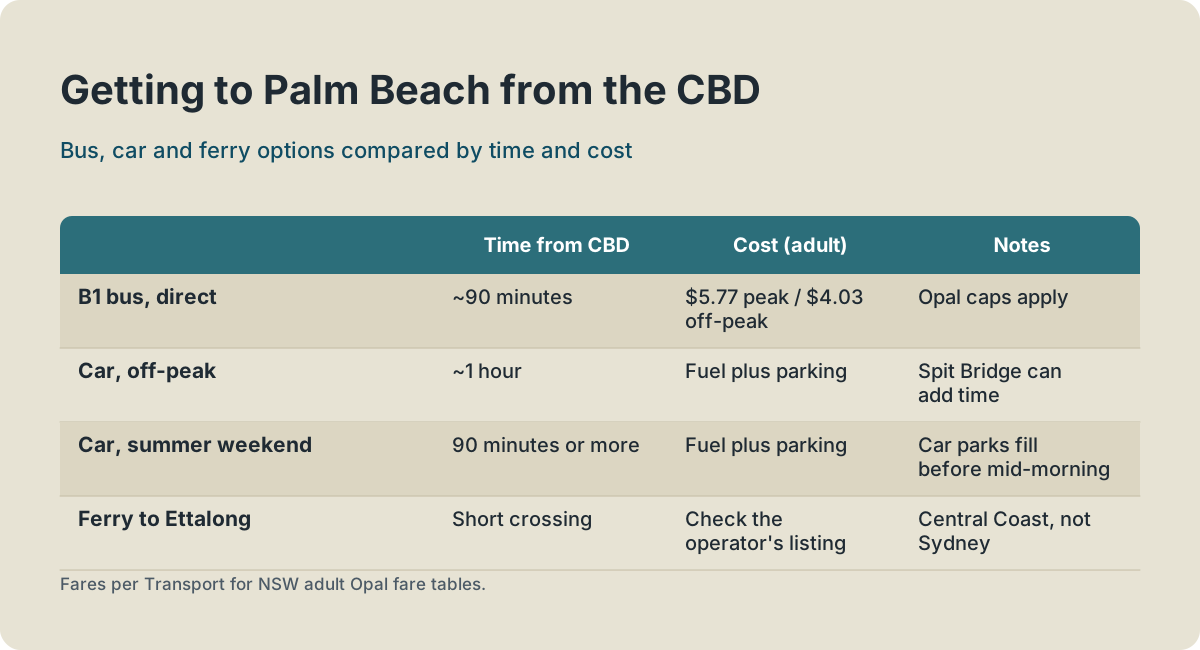
The direct option is the B1 bus from the Sydney CBD, which runs the length of the Northern Beaches and terminates at Palm Beach; the trip takes roughly an hour and a half and costs the standard Opal bus fare for a long trip, $5.77 peak or $4.03 off-peak. Driving takes about an hour outside peak times but the single road in means heavy weekend traffic. There is no train and no ferry from the city.
The B1 is the honest answer. It runs frequently, it uses the same Opal or contactless tap as everything else in Sydney, and the fare is capped: $19.30 a day Monday to Thursday, $9.65 a day Friday to Sunday and on public holidays, and $50 a week, per the fare tables Transport for NSW publishes. A public holiday is therefore the cheapest day to make this trip. Tap on and tap off, or you get charged the default maximum fare.
Driving looks faster on paper and rarely is. The route crosses the Spit Bridge, which opens for boat traffic and can stop everything, and on summer weekends the queue through Mona Vale and Avalon can add an hour. Parking at Palm Beach is limited and fills early. Most visitors who drive arrive before 9am or not at all.
| Option | Approximate time from CBD | Cost (adult) | Notes |
|---|---|---|---|
| B1 bus, direct | ~90 minutes | $5.77 peak / $4.03 off-peak | Opal caps apply; runs the whole peninsula |
| Car, off-peak | ~1 hour | Fuel plus parking | Spit Bridge and weekend traffic add time |
| Car, summer weekend | 90 minutes or more | Fuel plus parking | Car parks fill before mid-morning |
| Ferry from Palm Beach to Ettalong | Short crossing across Broken Bay | Check the operator's listing | Connects to the Central Coast, not to Sydney |
One thing worth knowing before you plan the day: Sydney's ferry network is a genuine sightseeing tool, not just transport. The public ferries run routes F1 to F10 with full Opal benefits, and the hop-on hop-off harbour ferry pass is a popular way to use them for a day of harbour hopping. It does not reach Palm Beach, which sits outside the ferry network, but pairs well with a separate Palm Beach day on the itinerary.
If you are building a wider beaches-and-water plan, our one day in Sydney itinerary shows how the closer harbour sights fit together, and Palm Beach works best as its own dedicated day rather than a bolt-on.
What Are the Best Things to Do at Palm Beach?
The three anchors are the Barrenjoey Lighthouse walk up the headland, swimming or surfing on the ocean side, and calm-water activities on the Pittwater side such as kayaking and stand-up paddleboarding. The lighthouse walk is free, takes in the best view on the peninsula, and can be done in under an hour round trip at an easy pace. The two sides of the spit suit completely different days and different swimmers.
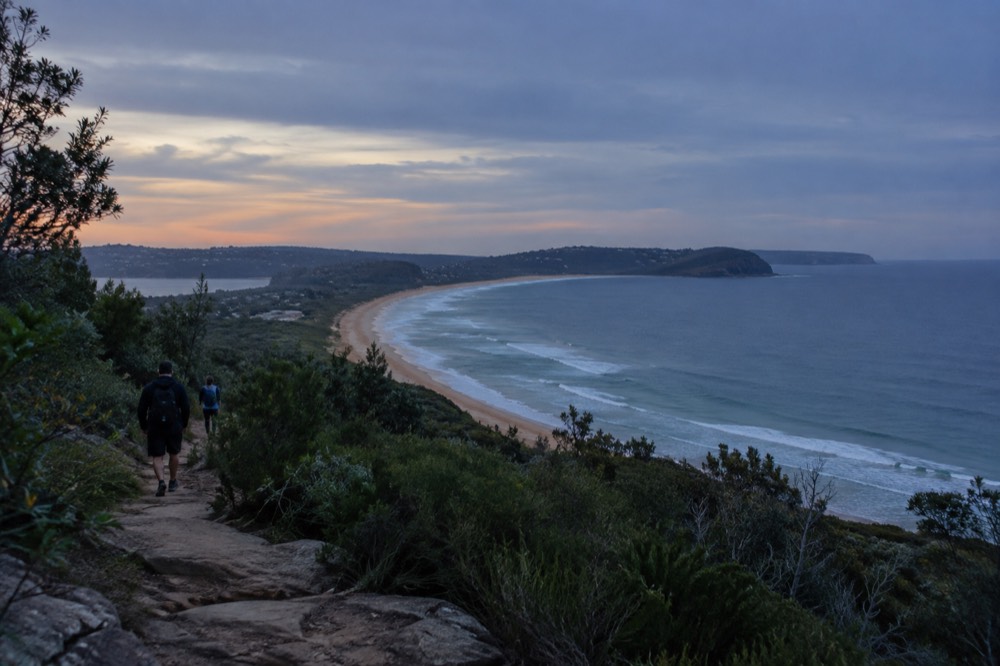
Start with the lighthouse. The track up Barrenjoey Head climbs through bush to the lighthouse at the top; the walk itself is free and the view over Broken Bay is the reason most people make the trip. Go early: the path has little shade and the summer sun in Sydney is extreme, with UV levels of 11 or more in December through February. Protection is advised whenever the UV index reaches 3, and Sydney passes that threshold for most of the year.
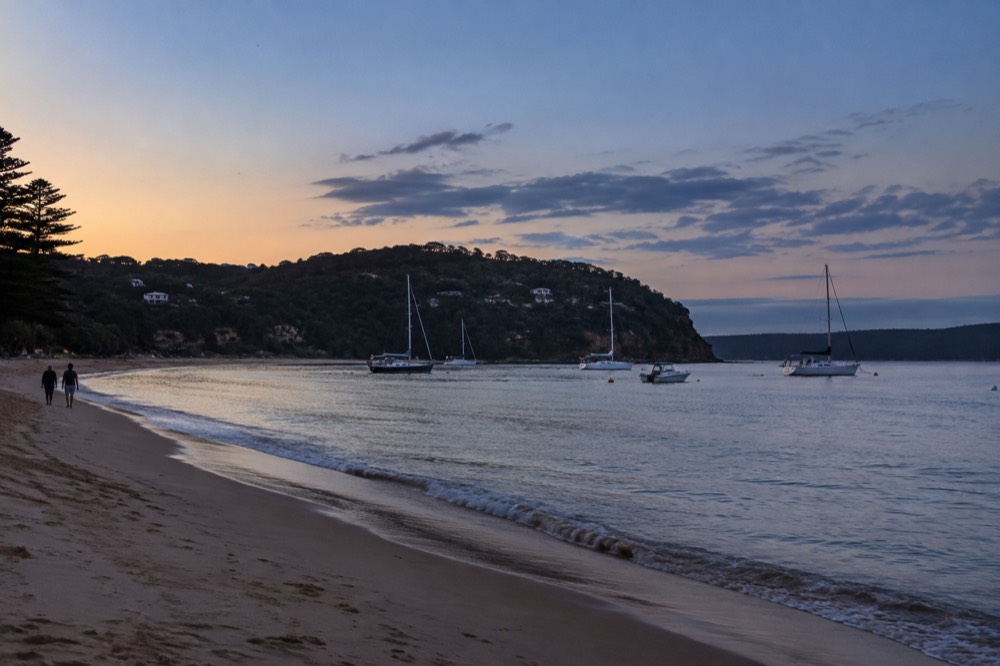
The ocean side is the surf beach, a long arc of sand patrolled by lifeguards in season. The Pittwater side is the opposite: flat water, moored yachts, a boat ramp and a much safer place for children and weak swimmers. This split personality is what separates Palm Beach from every other beach on the peninsula, and it is why families tend to base themselves on the western sand.
Kayaking is the local way to use Pittwater, and it is one of the calmest paddling environments in Sydney. If you would rather be on the harbour itself, the sunrise kayak tour on Sydney Harbour is the best-reviewed water experience in the city and pairs naturally with a Northern Beaches trip if you have more than one day.
The sunrise timing is worth a thought even if you never paddle: the harbour at first light is glassy, the ferries have not started their wash, and you are off the water before the UV climbs. Anyone who has done a dawn session on Sydney's water tends to plan the rest of the trip around doing it again. If that sounds appealing, it is worth locking in before you finalise your itinerary.
Beyond the spit itself, the ferry across Broken Bay to Ettalong on the Central Coast makes an easy half-day loop, and the walking tracks around West Head on the opposite shore sit inside Ku-ring-gai Chase National Park. Our kayaking in Sydney guide covers where else the flat water is, and the Spit to Manly walk is the harbour-side walk to do on a different day.
Can You Swim at Palm Beach, and Is It Patrolled?
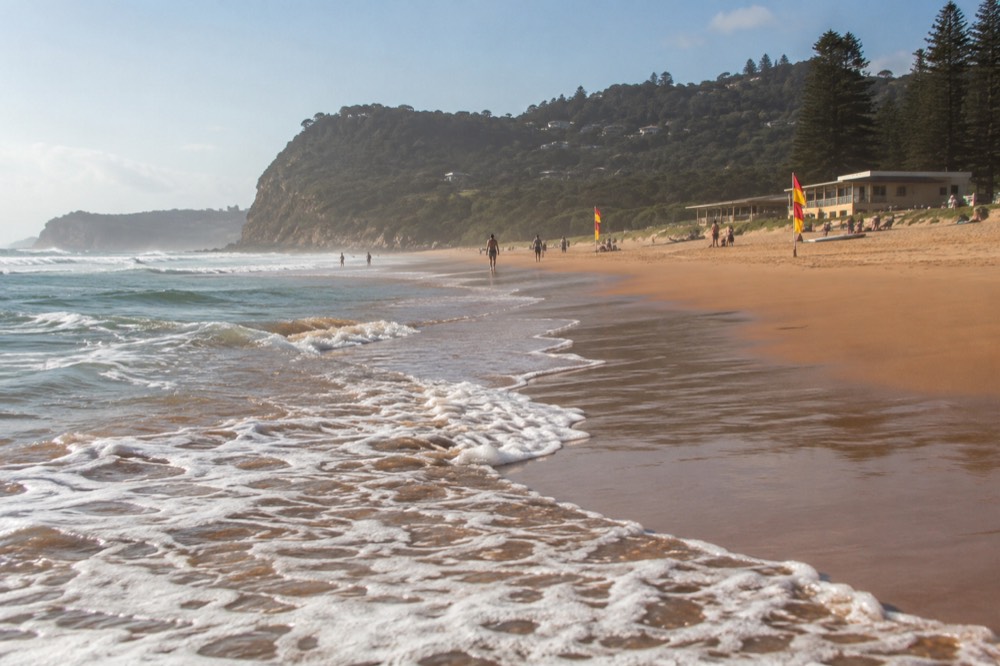
Swim between the red and yellow flags during patrol hours. Palm Beach is patrolled by council lifeguards seasonally, like most Northern Beaches outside the year-round exceptions: most beaches in the area patrol roughly late September to late April, generally 9am to 5pm, with longer hours in peak summer. Outside those dates and times there is no lifesaving service on this beach, and rip currents are the number one hazard on the entire coast.
The Northern Beaches council publishes the patrol detail for its beaches, and the pattern matters for planning: Bondi, Bronte, Tamarama, Coogee and Manly are patrolled year-round, but most others, Palm Beach included, run the seasonal schedule. If you visit in June or July, assume no flags and no lifeguards, and treat the water accordingly.
The official rip advice, from Surf Life Saving's beach safety program, is simple: stay calm, conserve energy, raise an arm and call for help, float with the current, which may return you to a sandbank, or swim parallel to the beach toward breaking waves. Prevention beats all of it. Check for rips before entering, and if in doubt, stay on the sand or use the calmer Pittwater side.
| Sydney beach | Patrol | Hours (typical) |
|---|---|---|
| Bondi, Bronte, Tamarama | Year-round | Oct-Apr 6am-7pm; May-Sep 7am-5:30pm |
| Coogee | Year-round | ~7am-7pm summer; ~7am-5pm winter |
| Manly | Year-round | Daily, council lifeguards |
| Dee Why | Year-round, from around May 2026 | Daily, council lifeguards |
| Palm Beach and most other Northern Beaches | Seasonal, ~late Sep to late Apr | Generally 9am-5pm, longer in peak summer |
One more water fact that most guides leave out: after heavy rain, the NSW Beachwatch program advises staying out of the water at ocean beaches for up to one day, and at harbour and estuarine swim sites like Pittwater for up to three days. The daily grades are published at beachwatch.nsw.gov.au. It is the single most useful check before any Sydney swim.
When Is the Best Time of Year to Visit Palm Beach?
For weather, the data favours the shoulder seasons: April and May combine mild temperatures, 9.1 to 9.5 mean clear days per month and thin crowds. For swimming, December through February is warmest, with mean maximums of 25.3 to 26.0 °C, but February is Sydney's cloudiest month. For whales, visit between May and November and watch from Barrenjoey Head, with the southern migration, whales closer to shore, running August to November.
The Bureau of Meteorology's long-run Sydney normals upend the usual assumptions. June is the city's wettest month, at 133.1 mm of mean rainfall, wetter than any summer month. August is its clearest, at 13.4 mean clear days. Peak tourist season is statistically the greyest time of year on this coast, which is why a May or September visit often delivers better beach light than a February one.
| Month | Mean max °C | Mean min °C | Mean rainfall mm | Mean clear days |
|---|---|---|---|---|
| Jan | 26.0 | 18.8 | 101.2 | 6.8 |
| Feb | 25.8 | 18.9 | 119.3 | 5.3 |
| Apr | 22.5 | 14.8 | 126.5 | 9.1 |
| May | 19.5 | 11.6 | 117.4 | 9.5 |
| Jun | 17.0 | 9.3 | 133.1 | 9.1 |
| Aug | 17.9 | 9.0 | 80.2 | 13.4 |
| Oct | 22.2 | 13.6 | 76.7 | 8.1 |
| Dec | 25.3 | 17.6 | 77.1 | 6.6 |
Source: Bureau of Meteorology long-term averages for Sydney, station 066062. These are long-run averages, not forecasts.
Whale watching from the headland is the winter consolation prize. The humpback migration passes the NSW coast from May to November, northbound roughly May to July and southbound, with calves and closer to shore, from August to November, with peak numbers around late June through July. An estimated 40,000-plus humpbacks migrate along the NSW coast each year, per NSW National Parks. Standing on Barrenjoey Head in July with a clear sky is a genuinely good plan, and our whale watching in Sydney guide covers the season in detail.
What Does a Day at Palm Beach Cost?
The beach, the lighthouse walk and the headland are all free. The costs are transport, roughly $12 return on the bus with Opal caps limiting the damage, food, and any optional extras. If you drive into Ku-ring-gai Chase National Park across the water for the West Head side, vehicle entry is $12 per day. A cafe lunch on the peninsula is comparable to city prices.
Budget travellers should note the caps again: a Friday, Saturday, Sunday or public holiday bus day is capped at $9.65 total across the whole Opal network, so the Palm Beach return trip plus local hops cannot exceed that. Concession and child fares are cheaper still. The full fare mechanics are in our Opal card guide for visitors.
| Item | Typical cost | Notes |
|---|---|---|
| B1 bus, return from CBD | ~$10-12 adult | Capped at $9.65 on Fri-Sun and public holidays |
| Barrenjoey Lighthouse walk | Free | Walking track, open daylight hours |
| Ku-ring-gai Chase NP vehicle entry | $12 per vehicle per day | Only if you drive to West Head; foot entry avoids it |
| Cafe lunch on the peninsula | Comparable to Sydney CBD prices | Limited options; book in summer |
| Surf lesson, nearby beaches | From US$70.86 | See our surfing lessons guide |
The national park fee detail is worth knowing: fees are per vehicle, so arriving by bus, ferry or on foot avoids them entirely at almost every Sydney park. The current fee schedule is published by NSW National Parks.
Where Do You Eat and Drink Around Palm Beach?
Options are limited and concentrated: a small cluster of cafes near the surf club and the ferry wharf, a couple of famous institutions, and not much else, which is deliberate for an area of this wealth. In summer, arrive early or book, because the weekend population triples and kitchens queue. There is no food court, no fast-food strip and no late-night scene.
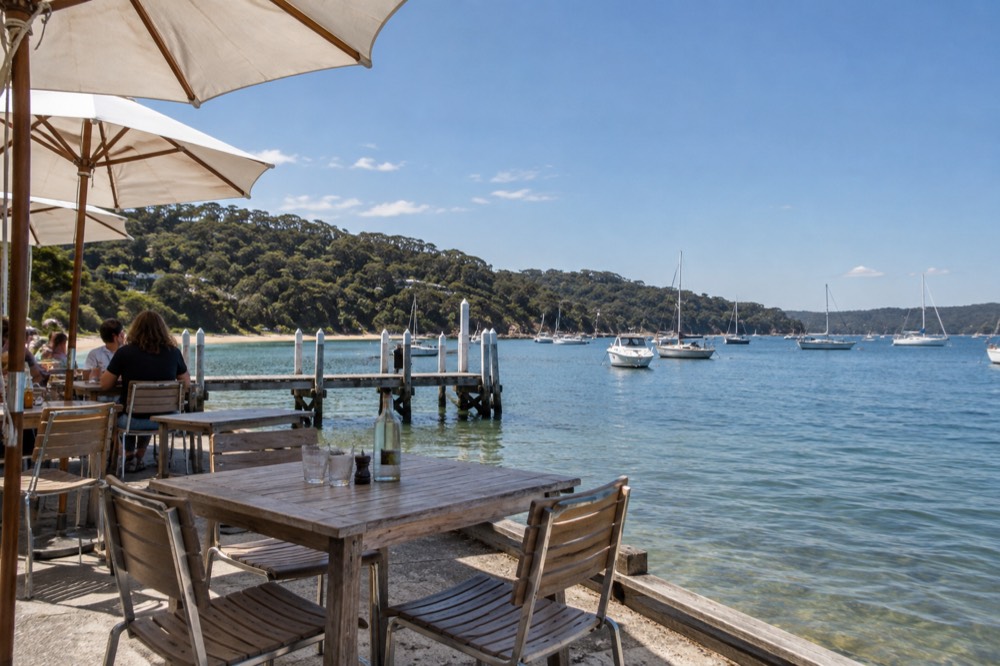
The Boathouse at Palm Beach is the one most visitors have heard of, a waterfront cafe on the Pittwater side that books out weeks ahead in summer. The general store near the wharf covers basics and coffee. Beyond that, the practical move for families is to bring a picnic: the grass and shade at the southern end of the ocean beach, near the surf club, is one of the more comfortable picnic setups on the peninsula, and our Sydney picnic spots guide has alternatives if you want variety.
Coffee here is genuinely good, because the Northern Beaches takes its cafes seriously; the standards are covered in our Sydney coffee guide. Dinner options are thin, which is one reason most visitors treat Palm Beach as a day trip rather than an evening destination, then head back down the peninsula toward Newtown or the city for the night.
What Should You Not Miss, and What Should You Skip?
Do not miss the lighthouse walk, a swim or a paddle on the Pittwater side, and the view from Barrenjoey Head back down the peninsula. Skip trying to combine Palm Beach with a second distant destination on the same day: the transit time makes it a whole-day trip. Also skip the mid-afternoon summer arrival, when the car park is full, the sand is hot and the UV is at its daily peak.
The single most common mistake is underestimating the distance. Palm Beach is not a beach you drop into between the Opera House and dinner; it is 90 minutes each way by bus. Treat it like a day trip, which it is, and it repays the effort. Our day trips from Sydney without a car guide frames it exactly that way.
The second mistake is swimming outside patrol season on the ocean side. The beach looks gentle from the sand; rips do not. If you visit between May and September, the Pittwater side, or the walk and the ferry, is the better plan. And if the whole point of your trip is water and views rather than one specific beach, a harbour sightseeing cruise covers more of the city's best waterfront in 90 minutes than any single beach day can, and the morning or afternoon sightseeing cruise is among the best-value ways to do it.
For a contrasting day out after the beach, the all-inclusive Blue Mountains day trip trades salt water for escarpment, and the best beaches in Sydney guide ranks where Palm Beach sits against the rest.
Planning a Sydney trip end to end, from transport caps to what each neighbourhood does best, is the job of the main Sydney Travel Guide, and Palm Beach slots into most itineraries as the beaches-and-lighthouse day.
Common Questions About Palm Beach Sydney
How do I get to Palm Beach from the Sydney CBD?
The B1 bus runs directly from the city to Palm Beach, the end of the line, in roughly 90 minutes. The adult fare is $5.77 peak or $4.03 off-peak, capped at $9.65 on Fridays, weekends and public holidays. There is no train or ferry from the city.
Is Palm Beach patrolled by lifeguards?
Seasonally, like most Northern Beaches outside the year-round exceptions. The typical season runs roughly late September to late April, generally 9am to 5pm, with longer hours in peak summer. Swim between the red and yellow flags during patrol hours; outside them there is no lifesaving service.
Can you walk to Barrenjoey Lighthouse?
Yes, and it is free. The track climbs Barrenjoey Head from the northern end of the beach and takes under an hour round trip at an easy pace. The view covers Broken Bay, the Central Coast and the whole peninsula. Bring water and sun protection; shade is limited.
What is the best time of year to visit Palm Beach?
For weather, April, May and the August-to-September window offer the most clear days per the long-run climate record. For swimming, December to February is warmest but February is Sydney's cloudiest month. For whales, visit May to November and watch from the headland.
Is Palm Beach worth the trip from the city?
As a dedicated day, yes: the lighthouse, the ocean-Pittwater contrast and the ferry across Broken Bay are unlike anything closer to the city. As a stop squeezed between other sights, no; transit alone is about three hours return.
Can you swim on the Pittwater side at Palm Beach?
Yes, and it is the calmer, safer option, especially for children and outside patrol season. Note the Beachwatch advice after rain: stay out of harbour and estuarine swim sites for up to three days after heavy rain.