Sydney Kayaking: Where to Paddle, Launch and Book on the Harbour
Sydney is one of the few cities on earth where you can paddle a kayak past a World Heritage opera house, under a steel arch bridge and into a quiet cove, all before breakfast. This guide covers where to launch, what a guided tour includes, and the safety rules that matter on open water.
Short answer
The best Sydney kayaking is on the harbour's protected coves and the Manly to Shelly Beach marine reserve, with guided sunrise tours from around US$120.96 per person. You need no licence to paddle in NSW, but lifejackets are legally required on most craft, and the calmest water arrives early morning between October and April.
Kayaking in Sydney is not a novelty bolted onto a sightseeing city. It is one of the few activities here where the geography does the selling: a drowned river valley carved into long kilometres of wriggling shoreline, national park headlands on three sides, and a working harbour that falls silent for a short window every dawn. The Sydney Travel Guide desk has pulled the verified launch spots, the transport fares, the safety rules and the seasonal data into one place, because the information scattered across operator sites is thin on exactly the things a visitor needs to know before getting wet.
Where Can You Go Kayaking in Sydney?
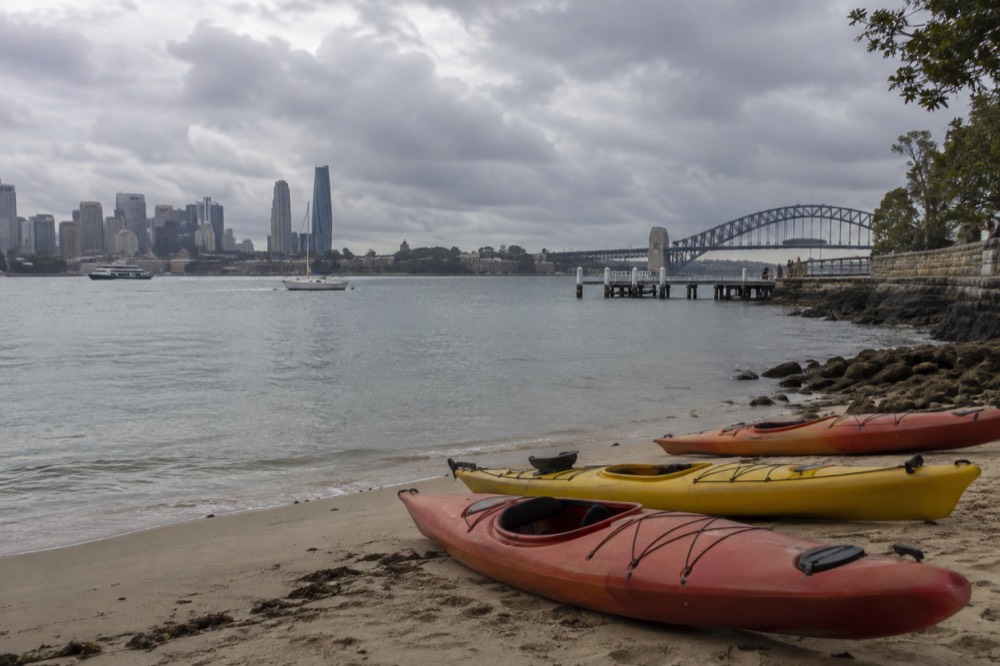
The best kayaking water in Sydney sits in three zones: the protected coves of Sydney Harbour from Rose Bay to Middle Harbour, the Manly and Shelly Beach no-take marine reserve on the North Shore, and the sandstone inlets of Sydney Harbour National Park such as Chowder Bay and Store Beach. Each suits a different paddler, from a first-timer in a sit-on-top to a confident sea kayaker. The harbour itself is a working port, so paddling near ferry lanes requires care and, in practice, a guide.
The harbour is bigger than it looks from Circular Quay. West of the bridge, past Darling Harbour and Barangaroo, the water is busier, more exposed to wind funnelling and less interesting from a kayak. East of the bridge is where paddling actually happens: Rose Bay, Double Bay, Woolloomooloo's quieter edges, and the long sheltered arms of Middle Harbour that wind past Spit Bridge toward Garigal country. The Spit to Manly walk follows the same shoreline you would paddle, and the two make a natural pairing on one North Shore day.
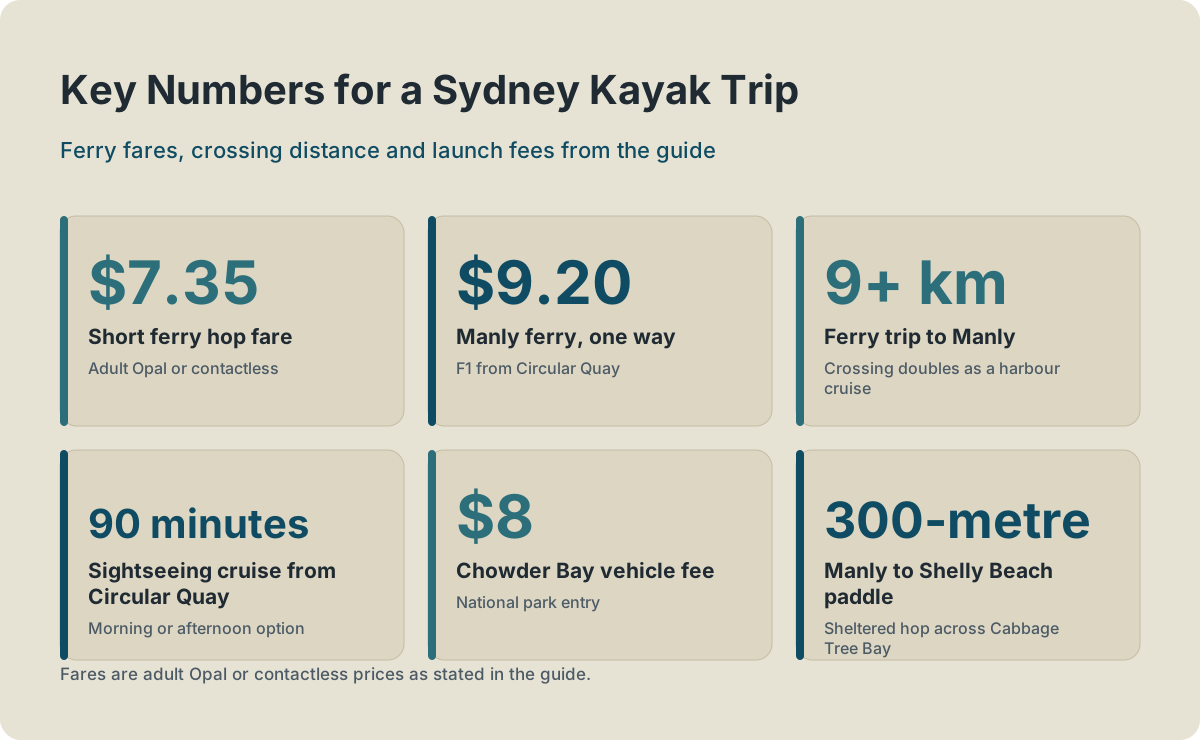
Store Beach, reachable only by water or a long bush track near Manly, is the classic guided-kayak destination: a tiny sand beach inside Sydney Harbour National Park where little penguins have historically nested. Further north, the Manly to Shelly Beach stretch is the single easiest quality paddle in the city, a sheltered 300-metre hop across Cabbage Tree Bay between two beaches, both patrolled, with clear water over seagrass and wrasse you can watch from the surface.
| Launch area | Water character | Best for | Exposure |
|---|---|---|---|
| Rose Bay to Double Bay | Sheltered, ferry wake near wharves | Beginners, city-skyline views | Low |
| Middle Harbour past Spit Bridge | Calm inlets, mangroves, bush shoreline | Half-day paddles, wildlife | Low to moderate |
| Manly to Shelly Beach (Cabbage Tree Bay) | Sheltered bay, marine reserve | First-timers, snorkelling combos | Low, swell-dependent |
| Chowder Bay and Bradleys Head | National park coves, ferry lanes nearby | Guided groups | Moderate |
| Sydney Cove and Farm Cove | Iconic but busy, restricted zones | Guided sunrise paddles only | High traffic |
| Parramatta River coves | Flat, industrial-quiet upper reaches | Locals, fitness paddles | Low |
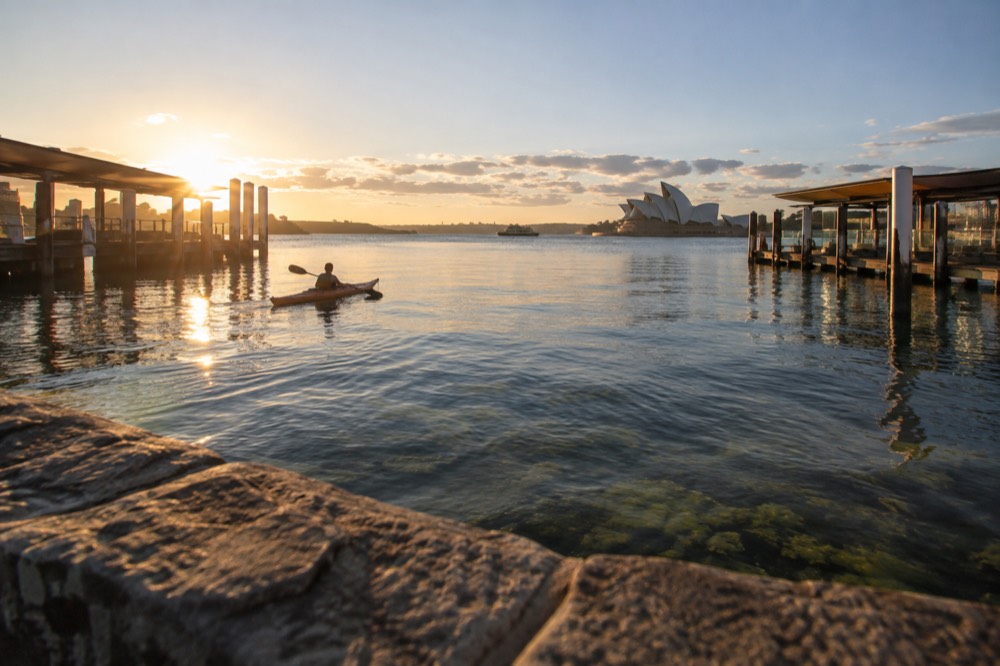
One restriction matters more than the rest: the waters directly around Sydney Opera House and the Harbour Bridge include exclusion zones for small craft, and the naval base at Garden Island is off-limits. This is why the guided sunrise tours are the practical way to paddle the iconic stretch, because a licensed operator knows the boundaries and the ferry timetable. Our guide to Sydney Harbour cruises covers the same water from bigger decks if paddling it solo feels like too much logistics.
What Does a Sydney Kayak Tour Actually Include?
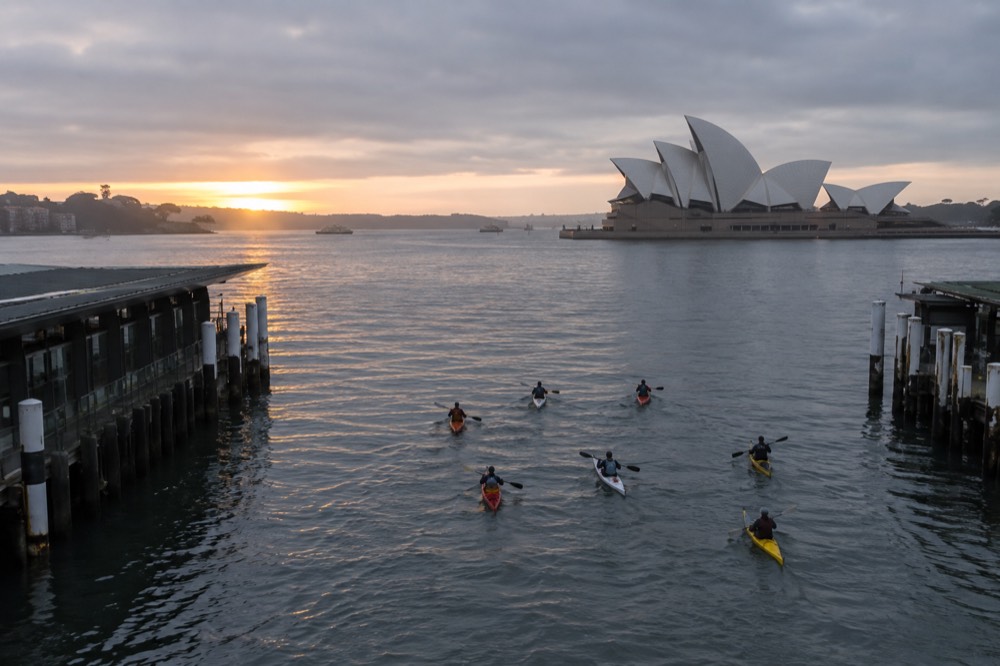
A guided Sydney kayak tour typically includes the kayak, paddle, lifejacket, dry bag, a safety briefing and a guide, and runs around two to three hours. The premium option is a sunrise harbour tour, which paddles the calmest water of the day past the Opera House and Harbour Bridge before the ferries begin. No experience is needed for standard tours, and most operators set a minimum age rather than a skill bar.
The sunrise product is the standout. It works because of a fact about Sydney Harbour that few visitors realise: the ferries, jet boats and cruise ships that churn the water from 7am onward are absent at dawn, and the wind, which builds most afternoons off the sea breeze cycle, is at its weakest. The result is genuinely glassy water in the middle of Australia's largest city, and the tour times itself to that window. The listing's own numbers, 4.95 across 2,606 reviews, reflect how reliably that window delivers.
If dawn is not your thing, the same water can be seen from deck level rather than water level. A morning or afternoon sightseeing cruise alternative runs 90 minutes from Circular Quay, and the public ferry network covers much of the same geography for the price of an Opal fare, $7.35 for a short ferry hop or $9.20 for a long one such as Manly. The trade is simple: a kayak puts you at water level with a paddle in your hands, a ferry puts you above the water with a timetable.
What a tour does not include is usually a towel, swimwear worn under clothes, and a sense of how wet you will get. The honest answer on that last point: in a sit-on-top kayak on flat water, damp, not soaked. In a double kayak when your partner paddles out of sync, more than damp. Bring a change of clothes regardless; every guided operator in Sydney finishes near somewhere you can change.
Is Kayaking in Sydney Safe for Beginners?
Yes, with two qualifications. Sydney's sheltered paddling water is genuinely beginner-friendly, and guided tours supply the lifejacket, the briefing and the route judgement that make a first paddle low-risk. The qualifications are ferry wake and wind: the harbour is a working port with large vessels creating wake near shipping lanes, and afternoon sea breezes can turn a calm cove choppy within an hour. Beginners should paddle in the morning and stay inside marked swimming and small-craft zones.
NSW law requires an appropriately sized lifejacket to be worn on most powered and paddled craft, and any commercial operator supplies one that fits. The deeper safety issue is knowing which water is which. Cabbage Tree Bay between Manly and Shelly Beach is sheltered and patrolled at both ends. The main harbour is not a swim-anywhere body of water, and it is emphatically not a paddle-anywhere one either: the NSW maritime authority publishes the rules for small craft on its official site, and the ferry corridors through the harbour are the zones to cross quickly or avoid.
For anyone considering an unguided paddle, the same principle that applies to swimming applies doubled on a kayak: check conditions on the day, not the season. The official rip and surf safety guidance from Beachsafe, Surf Life Saving Australia's public safety site, is aimed at swimmers but the framing transfers, because a kayak that capsizes outside a patrolled area turns its paddler into a swimmer. Coastal drowning in Australia is overwhelmingly an outside-the-flags phenomenon, and the same logic applies to paddling outside sheltered water.
A few practical safety notes that apply specifically here:
- Ferry wake is largest mid-harbour; coves and the harbour's northern inlets are wake-calm.
- Afternoon north-easterly sea breezes build from midday in the warmer months, so morning paddles are calmer, not just prettier.
- Water quality after rain matters: official Beachwatch advice is to stay out of ocean water for up to one day after heavy rain, and up to three days at harbour and estuarine swim sites.
- Mobile phones die in salt water; a guide carries a marine radio, you do not.
Can You Kayak and Snorkel Around Manly and Shelly Beach?
Yes, and this is the best combined paddle-and-snorkel in Sydney. Cabbage Tree Bay, the sheltered stretch between Manly Beach and Shelly Beach, is a no-take aquatic reserve with seagrass meadows, blue gropers and rays in shallow, clear water. A guided snorkelling tour from Manly covers the bay's underwater life with gear included, and the paddle between the two beaches takes minutes, making it an easy half-day even for a cautious swimmer.
Shelly Beach is the western bookend and the calmer of the two, which is why it anchors our Shelly Beach, Manly guide. The bay faces away from the dominant swell, and the reserve status means the fish are abundant and unbothered by fishing. Blue gropers, big wrasse that start life female and can transition to male, are the local celebrities, and they are habituated enough to snorkellers that they will cruise past your fins without much fuss.
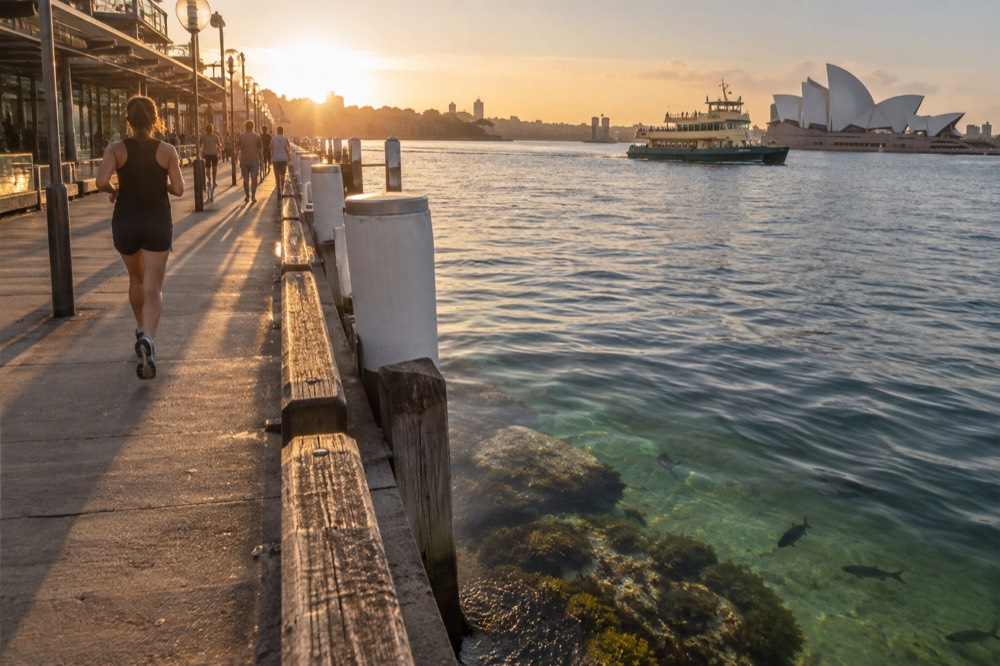
Getting to Manly is half the pleasure. The F1 ferry from Circular Quay is a 9+ km ferry trip at $9.20 one way on an adult Opal or contactless card, and the crossing itself is a de facto harbour cruise. Our Manly ferry guide covers the route in detail, including the trap that the private fast ferry accepts Opal cards through OpalPay but without the daily caps and transfer discounts that apply on the public F1.
When Is the Best Time of Year to Kayak in Sydney?
The most reliable paddling months are October to April, Sydney's warm half of the year, when morning water is calm, air temperatures average 20 to 26 degrees Celsius and sunrise tours run in daylight from 5:30am. The counterintuitive fact is that June, the start of winter, is Sydney's wettest month at 133.1 mm of rain on average, while August has the most clear days of any month. Winter paddling is possible and often stunning, just colder and better with a wetsuit.
The Bureau of Meteorology's long-term normals for Sydney tell a story most visitors misread. People assume the Australian summer, December to February, is the clear-sky season. It is not. February is statistically Sydney's cloudiest month, with just 5.3 mean clear days, while August records 13.4, the highest of the year. June is the wettest month by total rainfall, wetter than any summer month. For a kayaker this matters in a specific way: summer gives you warm water and long days but more cloud and a stronger afternoon sea breeze, while late winter gives you glass and blue sky but 9 degree mornings and a wetsuit.
| Month | Mean max °C | Mean rainfall mm | Mean clear days | Paddling verdict |
|---|---|---|---|---|
| Jan | 26.0 | 101.2 | 6.8 | Warm, busy, breezy afternoons |
| Feb | 25.8 | 119.3 | 5.3 | Warm but the cloudiest month |
| Mar | 24.8 | 131.6 | 7.1 | Warm, wettest of the shoulder |
| Jun | 17.0 | 133.1 | 9.1 | Wettest month, cold mornings |
| Jul | 16.4 | 96.3 | 12.0 | Cold but very clear |
| Aug | 17.9 | 80.2 | 13.4 | Clearest skies of the year, cold water |
| Oct | 22.2 | 76.7 | 8.1 | Sweet spot: warm, calm, clear |
| Nov | 23.7 | 83.8 | 6.0 | Warm and settled |
Daylight saving shifts the arithmetic. NSW clocks move forward on the first Sunday of October and back on the first Sunday of April, so a 6am October launch is in daylight while a 6am July launch is in the dark. Sunrise tours time themselves accordingly, and the season to book them without a headtorch is October through March. The Bureau of Meteorology's Sydney climate normals are the source for every figure in the table above.
One more seasonal note: whale season runs May to November along this coast, and a paddler in the right place at the right time can see blows offshore, though sightings are never guaranteed and kayakers must keep legally required distances from whales. Our whale watching in Sydney guide covers the season properly, from boats built for it.
Do You Need a Licence or a Booking to Kayak in Sydney?
No licence is required to paddle a kayak in NSW, and no booking is needed to launch your own craft at most public foreshore spots. The legal requirements are an appropriate lifejacket, visibility after dark, and respect for exclusion zones around the naval base, ferry terminals and the Opera House. For a rental or guided tour, booking is effectively mandatory in the warmer months, because weekend morning slots sell out days ahead.
Rental operations cluster where the water is friendliest: Manly and Shelly Beach, the Spit, Rose Bay and Chowder Bay. Prices vary by operator and craft, so check the specific rental desk for current rates rather than trusting a round number from an old article. What is fixed and worth knowing is the public-land picture: much of the best launch shoreline sits inside Sydney Harbour National Park, where vehicle entry is charged per car at sites such as Bradleys Head, $8 per day, and North Head, $5 per day, but arriving on foot, by ferry or by kayak avoids vehicle fees entirely. The NSW National Parks fees page lists every fee-collecting park.
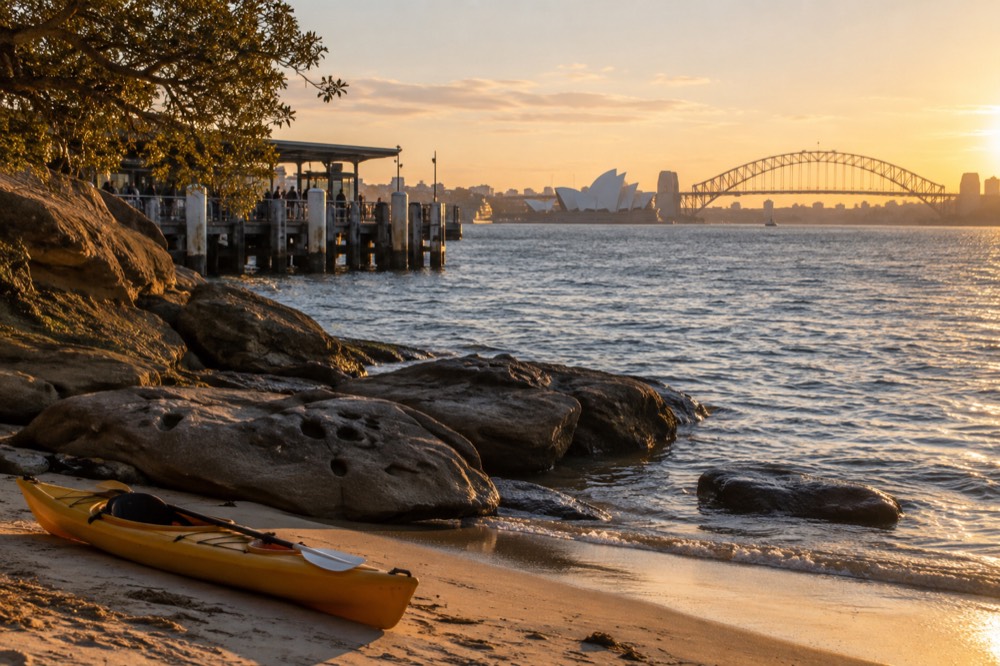
For independent paddlers, the practical launch list looks like this:
| Launch point | Access | Notes |
|---|---|---|
| Shelly Beach, Manly | Beach, ferry plus 10-minute walk | Sheltered, patrolled, marine reserve |
| Clontarf Reserve, Middle Harbour | Beach, parking, toilets | Flat water, family-friendly |
| Rose Bay wharf area | Beach and ramp | Skyline views, ferry wake nearby |
| Chowder Bay | Jetty and small beach | National park cove, $8 vehicle fee |
| Balmoral Beach | Beach, easy parking | Very sheltered, popular with learners |
| Blackwattle Bay | Ramp near the new fish market | Calm upper harbour, city views |
What Should You Bring on a Sydney Kayak Tour?
Bring swimwear worn under clothes, a towel, a hat, reef-safe sunscreen, a full water bottle and a change of clothes, plus a wetsuit or rash vest outside the October to April window. Operators supply the craft, paddle, lifejacket and dry storage, so the only things you genuinely need are what you would take to a beach and a willingness to get damp. Shoes that can get wet beat anything with laces and value.
Sydney's UV is the detail that surprises northern-hemisphere visitors. The protection threshold is a UV index of 3, and Sydney exceeds it for most of the year, reaching extreme levels of 11 and above in summer. On water, reflection adds exposure from below as well as above, so sunscreen goes on the backs of your hands, under your chin and on your lower legs, the three spots everyone forgets in a kayak. A long-sleeve rash vest solves the problem more thoroughly than any cream.
| Item | Why it matters on the water |
|---|---|
| Lifejacket (supplied on tours) | Legally required on most craft in NSW |
| Wide-brim hat plus strap | Sun and reflection; wind takes unstrapped hats |
| SPF 50 sunscreen, reapplied | UV exceeds 3 for most of the year in Sydney |
| Dry bag or sealed phone case | Ferry wake and splash reach dry pockets |
| Water bottle, 1 litre minimum | Morning heat plus paddling dehydrates quietly |
| Wetsuit or rash vest, May-Sep | Water and air both cold; operators advise on hire |
| Shoes that can get wet | Sandstone launches are sharp underfoot |
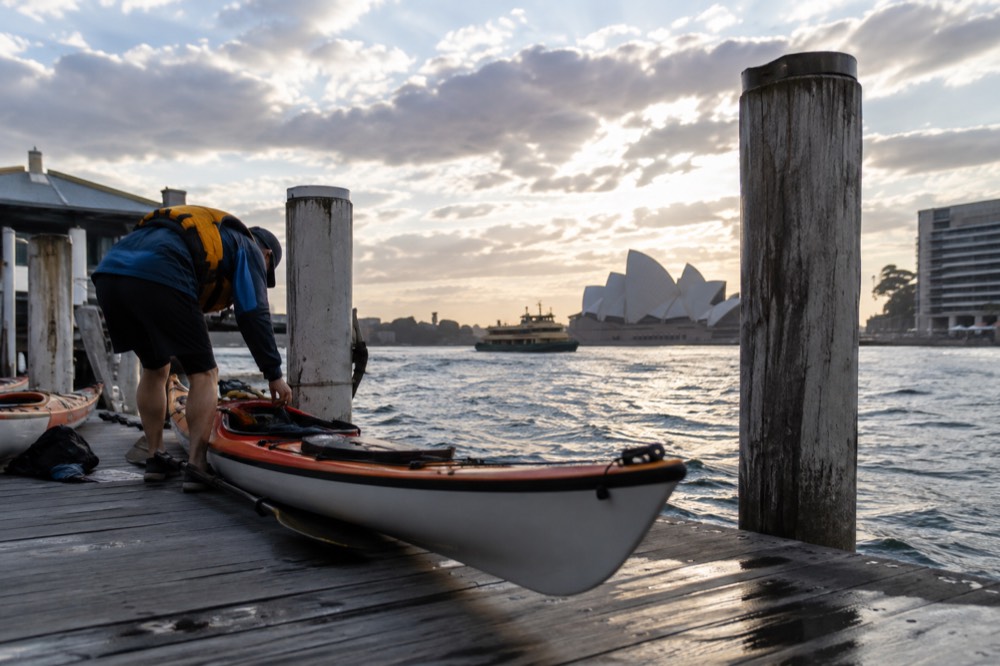
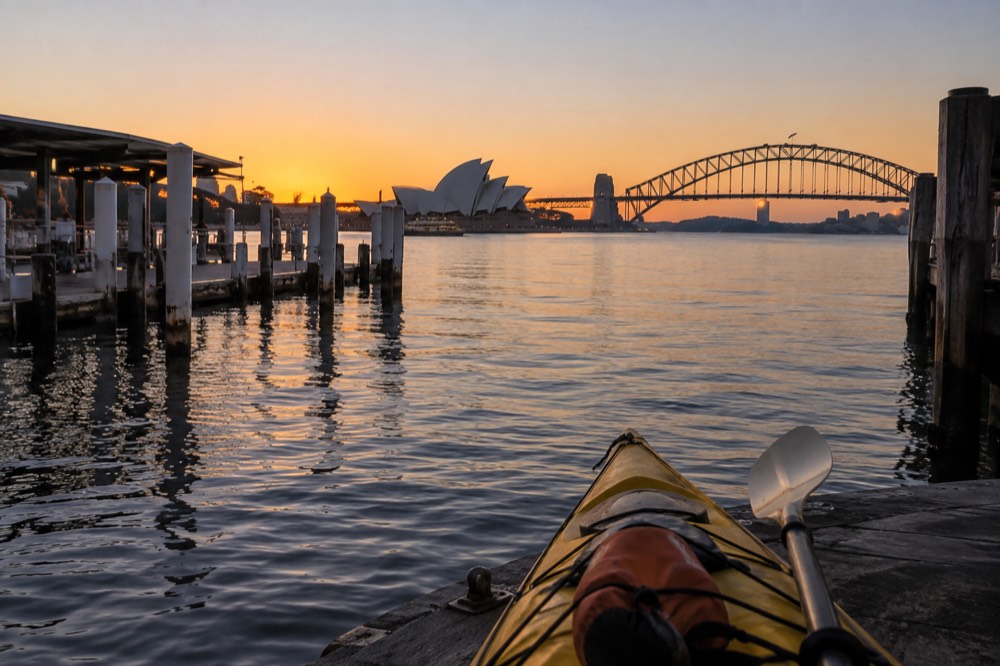
The phone case deserves a line of its own. Every kayaker in Sydney wants the photo: the Opera House from water level, the bridge overhead, the sunrise over the harbour. Water and phones meet badly, and the people who get the photo are the ones whose phone was sealed before launch. A neck strap on the case, not on the phone, is the setup that survives a capsize.
What If the Weather Turns While You Are on the Water?
The rule is to head for the nearest sheltered shore when the wind picks up, not to fight back to your launch point. Sydney's afternoon sea breeze builds predictably from around midday in the warmer months, and the safe response is to shorten the paddle and hug the lee shore. If a storm approaches, get off the water entirely: lightning and an aluminium or carbon paddle are a bad combination, and shelter under a headland beats a dash across open harbour.
Guided tours make these calls for you, which is a large part of what you are paying for beyond the equipment. A professional guide cancels or reroutes when the forecast turns, and the booking terms on the live listing explain the rescheduling options when weather closes a morning down. Independent paddlers should check the Bureau of Meteorology's marine forecasts the night before and again at dawn, and treat the wind speed, not the rain, as the go or no-go variable: 15 knots turns a beginner's pleasant paddle into a grind.
Rain itself, in Sydney, is a water-quality variable more than a comfort one. The official Beachwatch guidance is to stay out of the water while it rains and for up to a day after heavy rain at ocean beaches, and for up to three days at harbour and estuarine sites, because stormwater runoff carries the city's streets into its coves. A kayak keeps you mostly above this problem, but a capsize or a swim changes the arithmetic, so the days after a big downpour are days to book the deck-level experience instead.
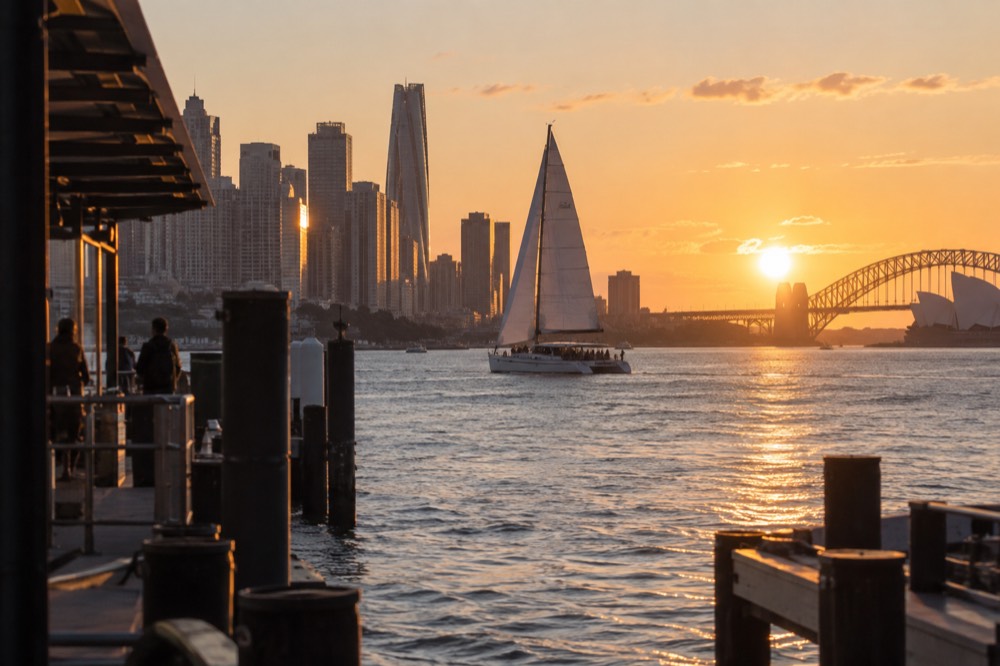
That deck-level alternative deserves its own mention. A sunset catamaran cruise runs the same harbour in the golden hour, one hour on the water with none of the logistics, and it is the honest recommendation for anyone whose knees, toddlers or schedule rule out a dawn paddle. The things to do in Sydney at night guide has the wider evening menu.
How Do You Fit Kayaking Into a Sydney Itinerary?
Most visitors fit kayaking into one of two slots: a sunrise harbour paddle on the first or second morning, finished by 9am with the whole day ahead, or a Manly-based half-day that pairs a Shelly Beach paddle or snorkel with the ferry ride and lunch. Both work inside a two-day itinerary. The mistake to avoid is scheduling a paddle for the afternoon of a summer day, when the sea breeze and the ferry traffic are both at their peak.
The sunrise slot is the one experienced Sydney visitors guard. You are on the water before the ferries, off it before the heat, and back at the hotel for breakfast with the day's sightseeing intact. Our 2 days in Sydney itinerary builds exactly this pattern, and a first-timers guide to Sydney will tell you the same thing about the harbour: the early hours are when the city is at its most beautiful and its least crowded, and the water is no exception.
The Manly slot suits families and cautious swimmers. Ferry out on the F1, walk the Corso to the ocean side, paddle or snorkel Cabbage Tree Bay while the morning is calm, lunch on the foreshore, ferry back. If the whole day is free, the Northern Beaches guide extends the trip up the coast, and the Sydney with kids itinerary folds the same stops into a family plan.
Common Questions About Kayaking in Sydney
Do you need experience to kayak in Sydney Harbour?
No. Guided tours are built for first-timers, with a briefing, stable sit-on-top kayaks and a guide setting the route. The sheltered coves at Manly, Balmoral and Middle Harbour are genuinely forgiving water, and the sunrise harbour tours run in the calmest conditions of the day.
Is it safe to kayak in Sydney Harbour?
Yes, in the right zones. Stay out of ferry corridors where possible, cross shipping lanes quickly, wear the lifejacket supplied, and paddle in the morning before the sea breeze builds. The harbour is a working port, so a guided tour is the safest way to see the Opera House and bridge from the water.
Can you kayak to the Sydney Opera House?
Yes, with a guide. The waters around the Opera House and the Harbour Bridge have small-craft restrictions and heavy traffic, and licensed sunrise tours are the practical way to paddle that stretch legally and safely. Paddling there independently is possible but requires care with exclusion zones and ferry wake.
What is the best month for kayaking in Sydney?
October and November are the sweet spot: warm mornings, settled water and daylight from before 6am thanks to daylight saving. August has the clearest skies of the year but cold water, while February, despite being summer, is Sydney's cloudiest month and June its wettest.
Do you need a licence to kayak in NSW?
No licence is required for a non-powered kayak. The legal requirements are an appropriate lifejacket, lights if paddling after dark, and compliance with exclusion zones around the naval base, ferry terminals and the Opera House precinct.
Can you rent a kayak in Sydney without a tour?
Yes. Rental desks operate around Manly, Shelly Beach, the Spit, Rose Bay and Balmoral, with prices set by each operator. Book ahead for weekend mornings in the warmer months, and check the marine forecast before you go, since wind, not rain, is the variable that ends a rental paddle early.