Sydney Coastal Walks: Every Route Worth Your Legs
Sydney's coastline is stitched together by walking tracks that link harbour coves, ocean pools and surf beaches, and several of them rank among the best day walks in Australia.
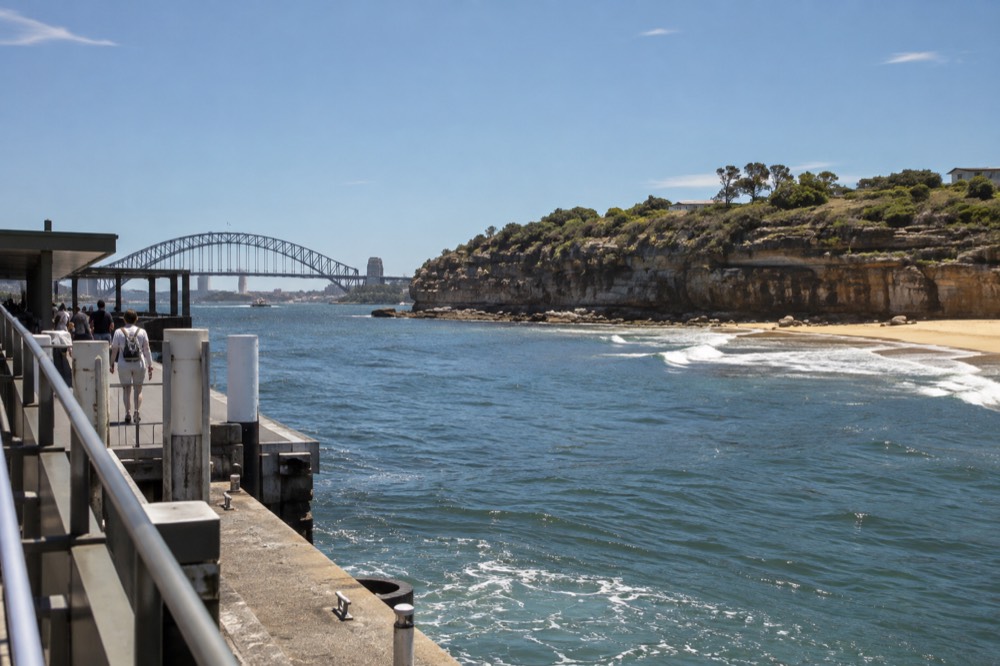
Short answer
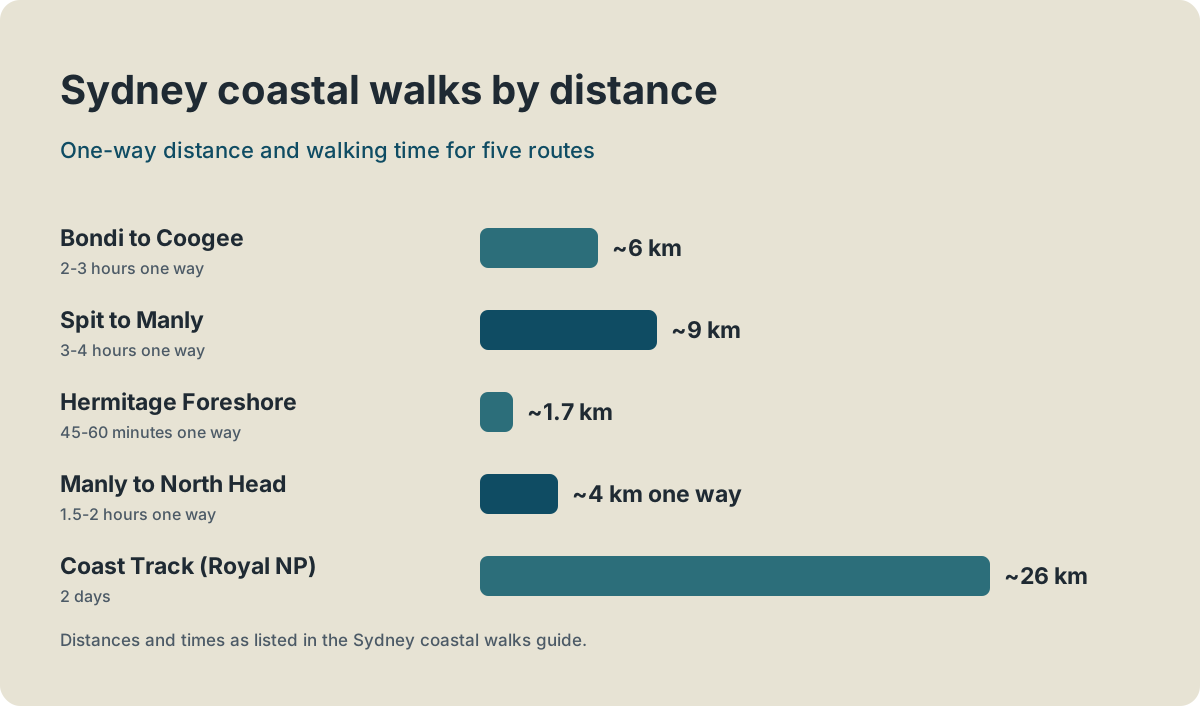
Sydney's best coastal walks are the Bondi to Coogee stretch, the Spit to Manly harbour path, and the Coast Track in the Royal National Park. The Bondi to Coogee walk covers about 6 km and takes two to three hours; the Spit to Manly walk covers about 9 km. Both are free, signposted and served by public transport at each end.
Sydney is one of very few major cities where you can walk for hours with the ocean on one side and nothing but sandstone, heath and the occasional ocean pool between you and the next beach. The Bondi to Coogee coastal walk alone carries close to a million walkers a year along cliffs that drop into surf, and it is neither the longest nor the most spectacular option in the city.
This guide covers the routes that matter, how hard they actually are, when to walk them, and the swim safety facts that most visitors get wrong. The short version: the eastern beaches chain is the classic, the Spit to Manly walk is the connoisseur's choice, and the Royal National Park's Coast Track is the multi-day prize.
What Are the Best Coastal Walks in Sydney?
The best coastal walks in Sydney are the Bondi to Coogee walk, the Spit to Manly walk, the Hermitage Foreshore Track in Vaucluse, and the Coast Track through the Royal National Park. Bondi to Coogee runs about 6 km and takes two to three hours at a walking pace. The Spit to Manly track is longer at roughly 9 km, while the Hermitage Foreshore Track is a gentle 1.7 km stroll better suited to families and short visits.
Each of these serves a different kind of walker, and choosing between them is mostly a question of time, fitness and whether you want ocean surf or harbour calm.
The Bondi to Coogee stretch is the one most visitors mean when they say "Sydney coastal walk". It links six beaches, two ocean pools and some of the most photographed cliff scenery in the country, and it sits entirely inside the regular bus network, so you can start at one end and bail out at any of four or five points along the way. Our full Bondi to Coogee walk guide breaks it down turn by turn.
The Spit to Manly walk is the harbour answer. Instead of surf it gives you sandstone overhangs, Aboriginal rock engravings, hidden beaches like Reef Beach and a finish at the Manly ferry wharf, where a $9.20 Opal fare floats you back to Circular Quay. It is quieter, shadier and, in the opinion of many locals, the better walk. The Manly ferry guide covers the return leg in detail.
| Walk | Distance | Time one way | Terrain | Transport at both ends |
|---|---|---|---|---|
| Bondi to Coogee | ~6 km | 2-3 hours | Paved paths, some stairs | Bus |
| Spit to Manly | ~9 km | 3-4 hours | Bush track, stairs, sand | Bus and ferry |
| Hermitage Foreshore | ~1.7 km | 45-60 minutes | Flat, paved and dirt | Bus |
| Manly to North Head | ~4 km one way | 1.5-2 hours | Sealed road and track | Ferry and bus |
| Coast Track (Royal NP) | ~26 km | 2 days | Sand, rock, heath | Train plus walk or taxi |
For something shorter and gentler, the Hermitage Foreshore Track from Bayview Hill Road to Nielsen Park passes through harbour-side bushland with swimming spots along the way, and the Manly to North Head extension adds military history and headland views to a Manly visit. If you are basing yourself in the eastern suburbs, our Sydney eastern suburbs guide situates all of these on one map.
How Hard Is the Bondi to Coogee Walk?
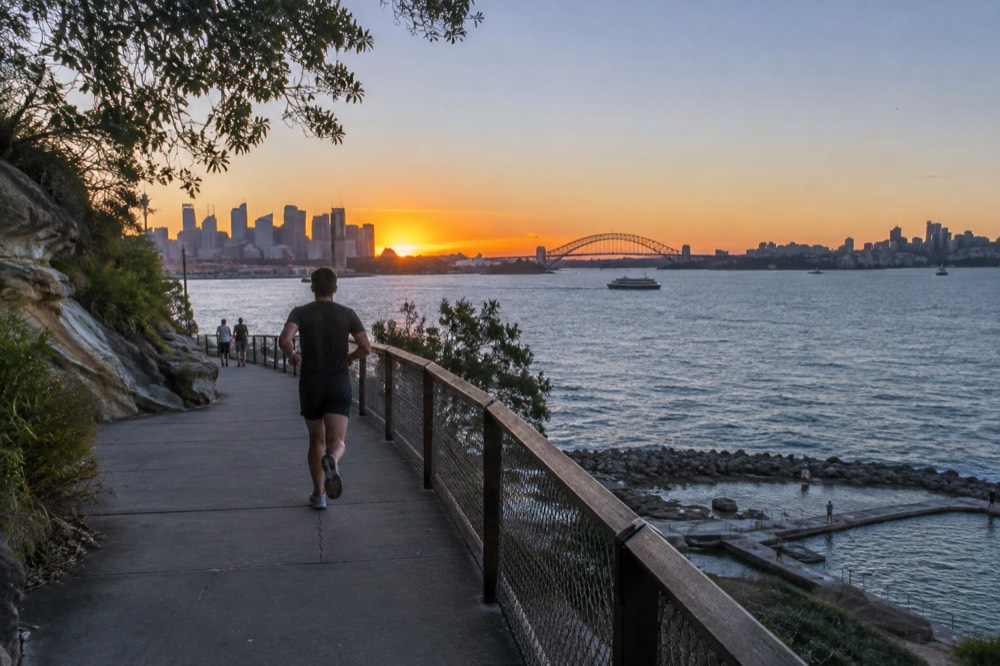
The Bondi to Coogee walk is easy to moderate: about 6 km one way, mostly paved, with short stair sections at Mackenzies Point and around Bronte. Most walkers finish in two to three hours without stopping, and the path is pram-friendly except for the stairs, which have ramp or road bypasses. There is no serious climbing anywhere on the route, and you can exit to a bus at Tamarama, Bronte or Clovelly if the full distance is too much.
The walk's reputation for difficulty is mostly a rumour spread by people who did it at noon in February. In practice the hardest decision is where to stop for a swim.
The route runs Bondi, then Mackenzies Point and the headland cemetery, then Tamarama, Bronte, Clovelly, Gordons Bay and finally Coogee. Tamarama is the smallest and most dramatic of the beaches; Bronte has the best picnic facilities and a free ocean pool maintained by the council; Clovelly is a concrete-edged channel that functions as a natural wading pool; Gordons Bay is a tiny, boat-moored cove reached by a timber boardwalk. Coogee finishes the walk with a wide surf beach and the historic Wylie's Baths at the southern end.
| Segment | Character | Notes |
|---|---|---|
| Bondi to Tamarama | Cliff headland | Graveyard headland, big cliff views |
| Tamarama to Bronte | Short descent | Stairs down to Bronte, ocean pool |
| Bronte to Clovelly | Clifftop stretch | Cemetery clifftop, whale lookout in season |
| Clovelly to Gordons Bay | Boardwalk | Timber boardwalk over rocks |
| Gordons Bay to Coogee | Stairs then beachfront | Stairs, then beachfront finish |
Swim stops are the point of the walk, and each beach has its own character. Bondi itself needs no introduction; Tamarama is a gorgeous but notoriously rippy little cove that is only worth swimming when the flags are up; Bronte's pool is free and calm even when the surf is not. Clovelly is the safest swimming of the whole route because it is barely a surf beach at all. If you want the full picture of each stop, our Bondi Beach guide and Coogee Beach guide cover facilities, transport and food at both ends.
One genuinely useful detail: Waverley Council's professional lifeguards patrol Bondi, Bronte and Tamarama year-round, the longest patrol hours in Australia, from 6am to 7pm in the October to April high season and 7am to 5:30pm from May to September. Most visitors assume nothing is patrolled outside summer, and that assumption is the single most dangerous belief you can bring to this coast.
Is the Spit to Manly Walk Worth Doing?
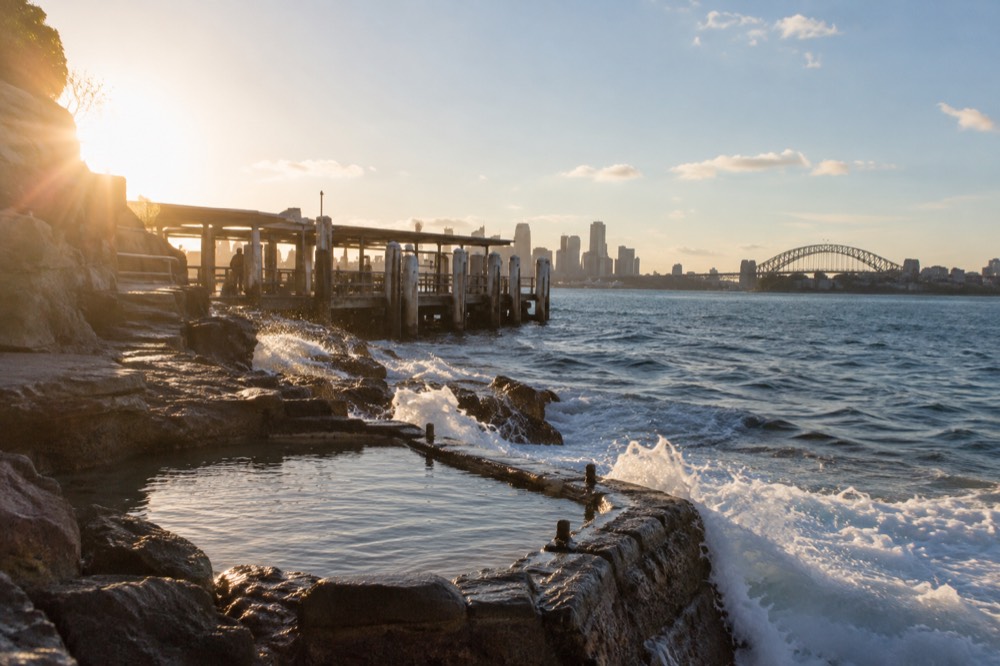
Yes. The Spit to Manly walk is widely considered Sydney's most beautiful half-day walk, covering about 9 km of harbour sandstone, Aboriginal engravings, hidden coves and a finish at Manly Wharf. It takes three to four hours at a relaxed pace, is well signposted, and ends with a ferry ride back to the city. The middle sections involve stairs and some rough track, so it is slightly harder than Bondi to Coogee but still manageable for most reasonably fit walkers.
The walk starts at Spit Bridge, which lifts open on the hour at set times to let yachts through, and that detail alone tells you what kind of water you are walking beside. This is harbour, not surf: the water is calmer, the swimming spots are quieter, and the bush comes right down to the shore.
The highlights cluster in the middle third. Grotto Point has Aboriginal rock engravings a short detour off the main track, Reef Beach and Washaway Beach are small sandy coves that see a fraction of the traffic of the ocean beaches, and the climb over Dobroyd Head gives the widest harbour panorama of the walk. The final stretch into Manly passes Fairlight and the beachfront before delivering you to the Corso and the wharf.
Swimming options along the way are genuinely safe by Sydney standards because the harbour coves are sheltered. Reef Beach and Store Beach are the classic stops; both are small, both are calm, and neither has lifeguard patrols, so treat them as wading and cooling-off spots rather than swim-training beaches. Manly itself, at the end, is patrolled year-round by council lifeguards, and the sheltered Shelly Beach side is the calmest swimming in the area.
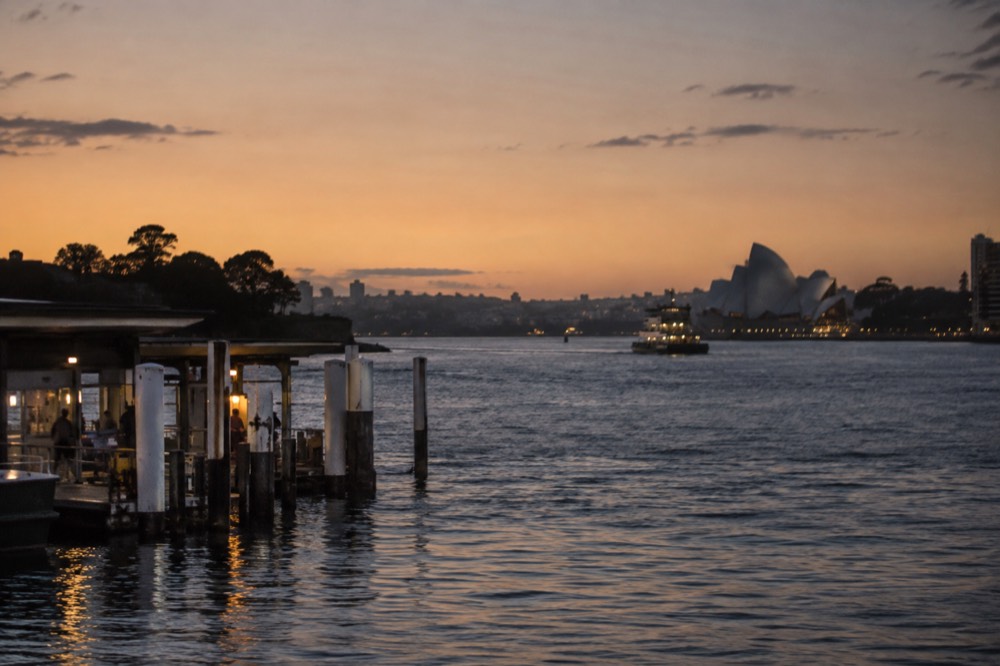
Getting there and back is half the pleasure. Buses run to The Spit from the city, and the walk finishes at Manly Wharf where the F1 ferry runs the 9+ km fare band at $9.20 one way on Opal or contactless. Do the walk in the Spit to Manly direction, not the reverse, so the ferry is your reward rather than your warm-up. Our Manly Beach guide has the food and drink options for the finish line.
If a half-day on harbour sandstone appeals but the distance does not, a guided alternative exists on the water itself: the harbour sunrise kayak tour paddles the same coves from below the cliffs, and the kayaking in Sydney guide compares that with other on-water options.
Between the harbour coves and the ocean cliffs, though, most visitors also want a few hours in the historic quarter where Sydney began, and that is where a guide genuinely changes the experience. The Rocks sits at the harbour end of the coastal story, where the same sandstone under your walking shoes becomes the walls of the oldest buildings in the country.
When Is the Best Time of Year for Coastal Walks in Sydney?
The best months for Sydney coastal walks are August, September and October. August is statistically Sydney's clearest month, with 13.4 mean clear days, and June through August brings cooler walking temperatures of 16 to 18 degrees Celsius. The worst stretch is February, which is both the cloudiest month, 5.3 clear days on average, and the middle of summer heat. Whale season from May to November adds a bonus reason to walk the ocean cliffs.
This is where Sydney contradicts what every northern-hemisphere visitor assumes. Peak tourist season, December to February, is statistically the cloudiest time of year in Sydney, and June, the middle of winter, is actually the city's wettest month at 133.1 mm of rain on average. The Bureau of Meteorology's long-run normals for Sydney Observatory Hill show the pattern plainly, and it is one of the least-published facts about this city.
| Month | Mean max °C | Mean rainfall mm | Mean clear days |
|---|---|---|---|
| Jan | 26.0 | 101.2 | 6.8 |
| Feb | 25.8 | 119.3 | 5.3 |
| Mar | 24.8 | 131.6 | 7.1 |
| Jun | 17.0 | 133.1 | 9.1 |
| Jul | 16.4 | 96.3 | 12.0 |
| Aug | 17.9 | 80.2 | 13.4 |
| Sep | 20.1 | 68.1 | 10.9 |
| Oct | 22.2 | 76.7 | 8.1 |
What that means for a walker: winter and early spring give you the clearest skies, comfortable 16 to 20 degree temperatures and the southern whale migration close to shore from August to November, with the NSW National Parks service noting the southbound humpbacks travel nearer the coast than the northbound ones do. June is the one winter month to hedge against, because its rainfall total is the highest of the year. The full picture, month by month, is in our Sydney weather month by month guide.
Daylight matters as much as sky. Sydney observes daylight saving from the first Sunday in October to the first Sunday of April, so an October walk still has light past 7pm, while a June walk is dark before 5pm. Start early in winter if you want the full Bondi to Coogee stretch plus a swim.
Can You Swim Safely Along Sydney's Coastal Walks?
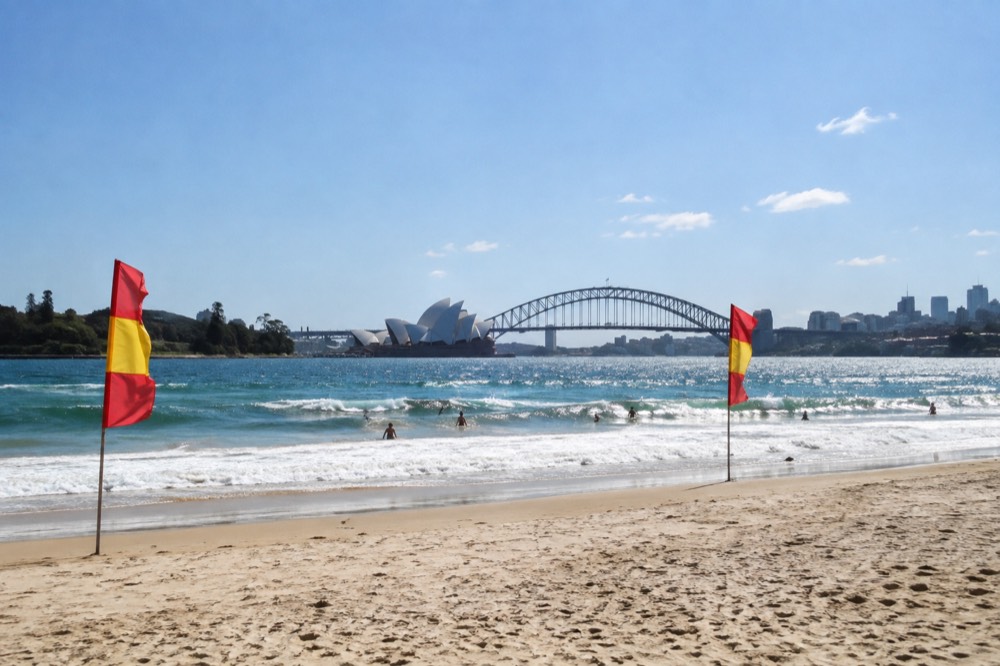
Swim between the red and yellow flags at a patrolled beach, and only during patrol hours. Bondi, Bronte, Tamarama, Coogee and Manly all have year-round professional lifeguard patrols, but most other Sydney beaches are seasonal. Stay out of the water while it rains and for up to one day after heavy rain at ocean beaches, or up to three days at harbour and estuarine swim sites. Rip currents are the number one hazard on this coast.
That post-rain rule is the single most useful and least-published swimming fact in Sydney, and it comes from the NSW Government's Beachwatch program, which grades every swim site from Very Good to Very Poor. Harbour coves like those on the Spit to Manly walk hold stormwater runoff far longer than open ocean beaches do, which is why the advice differs: one day for the surf beaches, three for the harbour.
The rip current advice matters everywhere on the ocean coast. The official guidance from Surf Life Saving Australia's Beachsafe service is to stay calm, conserve energy, raise an arm and call for help, float with the current which may return you to a sandbank, or swim parallel to the beach toward breaking waves. Prevention beats all of it: check for rips, look for other dangers, and plan your entry point before you get wet. Surf Life Saving Australia's National Coastal Safety Report 2025 recorded 154 coastal drowning deaths nationally, the highest on record, and every single one occurred outside the flags, outside patrol hours or at an unpatrolled location.
| Beach | Patrol | Notes for walkers |
|---|---|---|
| Bondi | Year-round lifeguards | 6am-7pm Oct-Apr, 7am-5:30pm May-Sep |
| Tamarama | Year-round lifeguards | Small, powerful rips; flags essential |
| Bronte | Year-round lifeguards | Free ocean pool as a calm alternative |
| Coogee | Year-round lifeguards | Wylie's Baths at the southern end |
| Manly | Year-round lifeguards | Shelly Beach side is the calmest swim |
| Harbour coves (Spit to Manly) | No patrols | Calm water, but swim at your own judgement |
Ocean pools are the genuinely safer alternative, and Sydney's coast is unusually rich in them. Bronte Ocean Pool and the North Bondi Children's Pool are free and council-maintained; Bondi Icebergs is a separate club-managed 50 m pool with its own access fees; Wylie's Baths at Coogee and Mahon Pool at Maroubra are further historic examples. All of them, however, close in big swell, so treat them as a fair-weather option rather than a guarantee. Our best beaches in Sydney guide ranks the swimming options end to end.
Bluebottles deserve a sentence too. They are common in warmer months and after onshore winds, and the official advice is not to touch them on the sand or in the water; if stung, leave the water, remove tentacles with seawater rather than bare hands, immerse the area in hot water around 45 degrees Celsius for up to 20 minutes, and find a lifeguard if the reaction is severe.
Can You Do a Long Coastal Walk in the Royal National Park?
Yes. The Coast Track in the Royal National Park runs about 26 km from Bundeena to Otford and is normally done as an overnight walk over two days, camping at North Era. It passes Wedding Cake Rock, Figure Eight Pool and long stretches of wild heathland coast. A shorter option is the Bundeena to Marley walk, roughly 7 km return, which delivers the same scenery in half a day. Vehicle entry to the park costs $12 per day.
The Royal, as locals call it, is the world's second-oldest national park and sits an hour south of the city, but the walking access is easier than most people expect: a ferry from Cronulla to Bundeena replaces the need for a car entirely on the northern sections. The Royal National Park guide covers access, camping permits and the Figure Eight Pool safety warnings in full, and the day trips from Sydney without a car guide lists the train-plus-ferry chain.
Two safety points are non-negotiable on this coast. Figure Eight Pool is only safe to visit at low tide and in flat swell; people have been swept from it, and the pool sits below an unpatrolled stretch of rock shelf. Wedding Cake Rock is fenced for a reason: the sandstone is unstable and sections of the cliff have collapsed. View it from the barrier.
The full Coast Track demands planning: water is scarce along the track, the camping at North Era requires a booking through the National Parks service, and the Otford end has a steep final climb out of the valley. Fit walkers do the track in one very long day, but two is the sensible split. Fees are per vehicle, so arriving on foot or by the Cronulla ferry avoids the $12 entry cost altogether, which is true of nearly every Sydney national park.
For a taste of the same park without the overnight commitment, the Bundeena to Marley track is the answer: wedding-white sand, a big lagoon, and a beach that is almost always near-empty on weekdays. It is the closest thing Sydney has to a wilderness beach walk inside a commuter's morning.
What Should You Bring on a Sydney Coastal Walk?
Bring sun protection regardless of season, one litre of water per person minimum, shoes with grip for sandstone, and a contactless card or Opal card for transport at either end. Sydney's UV index exceeds the protection threshold of 3 for most of the year and reaches extreme levels of 11 or more in summer, so a hat and sunscreen matter even on a cloudy August day. Most walks have water and food at the beach ends but not along the track itself.
The sun point surprises people from northern latitudes. Australia's UV is fierce by world standards, and the Australian Radiation Protection and Nuclear Science Agency operates a live UV monitoring station in Sydney; even in early spring the daily peak clears the protection threshold by mid-morning. Slip on a shirt, slop on sunscreen, slap on a hat, seek shade and slide on sunglasses is the local formulation, and it is not a joke.
Footwear matters more on the harbour walks than the ocean ones. The Spit to Manly track crosses patches of rough sandstone that turns slippery after rain, and the Royal National Park sections involve soft sand. Runners are fine everywhere; thongs are not, and they are the most common cause of the twisted ankles you see being helped off these tracks.
| Item | Why | Applies to |
|---|---|---|
| Hat and SPF 50 sunscreen | UV exceeds 3 most of the year | All walks |
| 1-2 L water per person | Few water points mid-track | Spit to Manly, Royal NP |
| Shoes with grip | Sandstone is slippery when wet | All walks |
| Opal or contactless card | Bus and ferry exits at both ends | All walks |
| Swimwear and towel | Ocean pools and coves en route | Bondi to Coogee, Spit to Manly |
| Tide and swell check | Figure Eight Pool and rock shelves | Royal NP only |
Timing within the day is the last piece. Summer walks are best started before 9am, both for the heat and because Bondi to Coogee has almost no shade along its clifftop sections. Winter walks can start any time but finish earlier, with darkness arriving before 5pm in June and July. Whale season walkers, May to November, should carry binoculars if they have them; the headlands between Bronte and Clovelly are a recognised land-based vantage point, and NSW National Parks publishes whale watching guidance for the whole coast.
Are There Guided Alternatives to Walking Alone?
Yes, though Sydney's coastal walks are self-guided by design, and the bookable guided products concentrate in the city and harbour rather than on the ocean clifftops. The Rocks guided walking tour is the most popular option and covers colonial history rather than coastline; food tours and Blue Mountains day trips cover different ground entirely. A private guide for the Bondi to Coogee walk exists but carries a high price and a thin review base, so most walkers are better served by the free routes plus a city walking tour.
The honest framing is this: the coastal walks need no guide, and the city walks benefit from one. The Rocks walk sits at the harbour end of the coastal story, where the sandstone the coast is made of becomes the buildings Sydney was built from, and a guide there earns their fee in stories you cannot read off a plaque.
For walkers who want the coast with a group and a structure, the sightseeing bus network touches Bondi and the Sydney sightseeing buses guide compares the hop-on hop-off options against simply catching the regular bus along the same corridor on the standard Opal fare. Cyclists have their own answer too: the cycling in Sydney guide covers the shared paths that parallel parts of the harbour route.
And if the coast has been walked and you want the mountains next, the Blue Mountains all-inclusive day trip is the natural sequel: it trades salt water for sandstone escarpment and carries one of the largest review bases of any tour in this destination. The Blue Mountains day trip guide compares it against the train-and-bus DIY route.
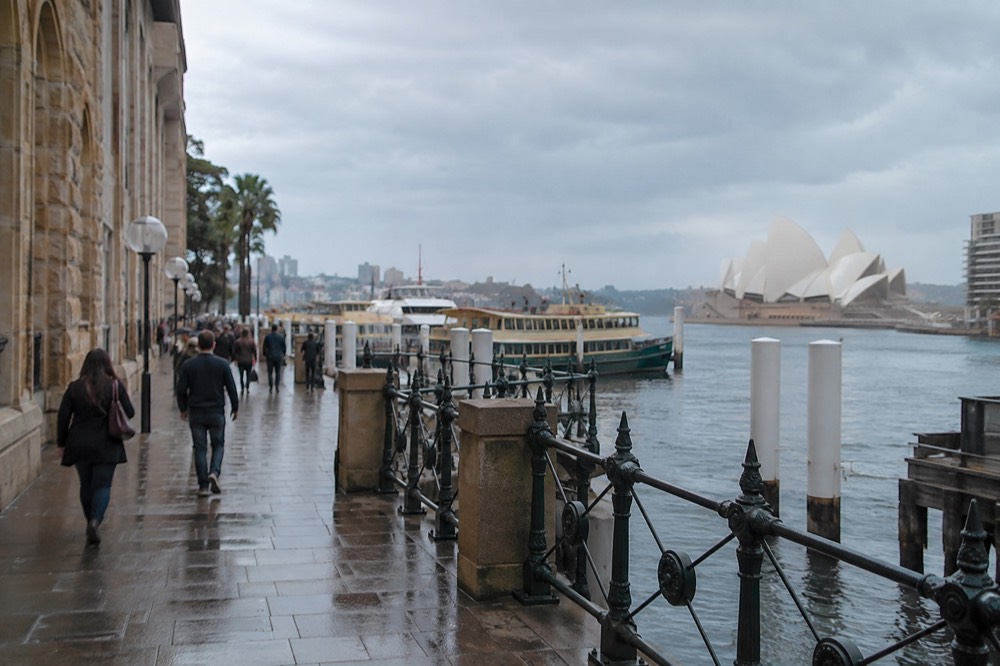
Sydney's coastal walks are free, public and open every day of the year, which is exactly why they are under-appreciated by visitors who assume the good stuff must be ticketed. Walk one of them well, at the right time of year, with the flags rule in your head, and the city rearranges itself around the water that made it. More route ideas, including rainy day alternatives, sit in the Sydney rainy day itinerary and the wider Sydney Travel Guide collection.
Common Questions About Sydney Coastal Walks
What is the most beautiful coastal walk in Sydney?
The Spit to Manly walk is the most beautiful for many walkers: harbour sandstone, Aboriginal engravings, hidden coves and a ferry finish. For pure ocean drama, the Bondi to Coogee stretch wins, and for a wilderness experience, the Royal National Park's Coast Track is unmatched.
How long does the Bondi to Coogee walk take?
About two to three hours one way at a relaxed pace, over roughly 6 km. Allow half a day with a swim stop, or longer if you pause at every beach and ocean pool along the route.
Can you walk from Bondi to Coogee in winter?
Yes, and winter is statistically a better time than you would expect. August is Sydney's clearest month on the long-run record, and the walking temperatures of 16 to 18 degrees Celsius are comfortable. June is the wettest month of the year, so hedge against June specifically.
Is the Spit to Manly walk hard?
It is moderate. The track is about 9 km with stairs and some rough sandstone, taking three to four hours. It is slightly harder than Bondi to Coogee but manageable for most reasonably fit walkers, and you can exit partway along the route.
Are Sydney's coastal walks safe for swimming stops?
Yes, if you swim at patrolled beaches between the red and yellow flags during patrol hours. Bondi, Bronte, Tamarama, Coogee and Manly are patrolled year-round. Harbour coves on the Spit to Manly walk have no patrols, and all swimmers should stay out of the water for up to one day after heavy rain at ocean beaches, or three days at harbour sites.
Do you need to pay to walk Sydney's coastal tracks?
No. Bondi to Coogee, the Spit to Manly walk and the Hermitage Foreshore Track are all free. The Royal National Park charges $12 per vehicle per day, but arriving on foot or by the Cronulla to Bundeena ferry avoids that fee.