Royal National Park from Sydney: The Complete Day Trip Guide
The Royal National Park sits on Sydney's southern doorstep, and most visitors never make it past the first lookout. Here is how to do it properly: transport, fees, beaches, walks and the safety facts that matter.
Short answer
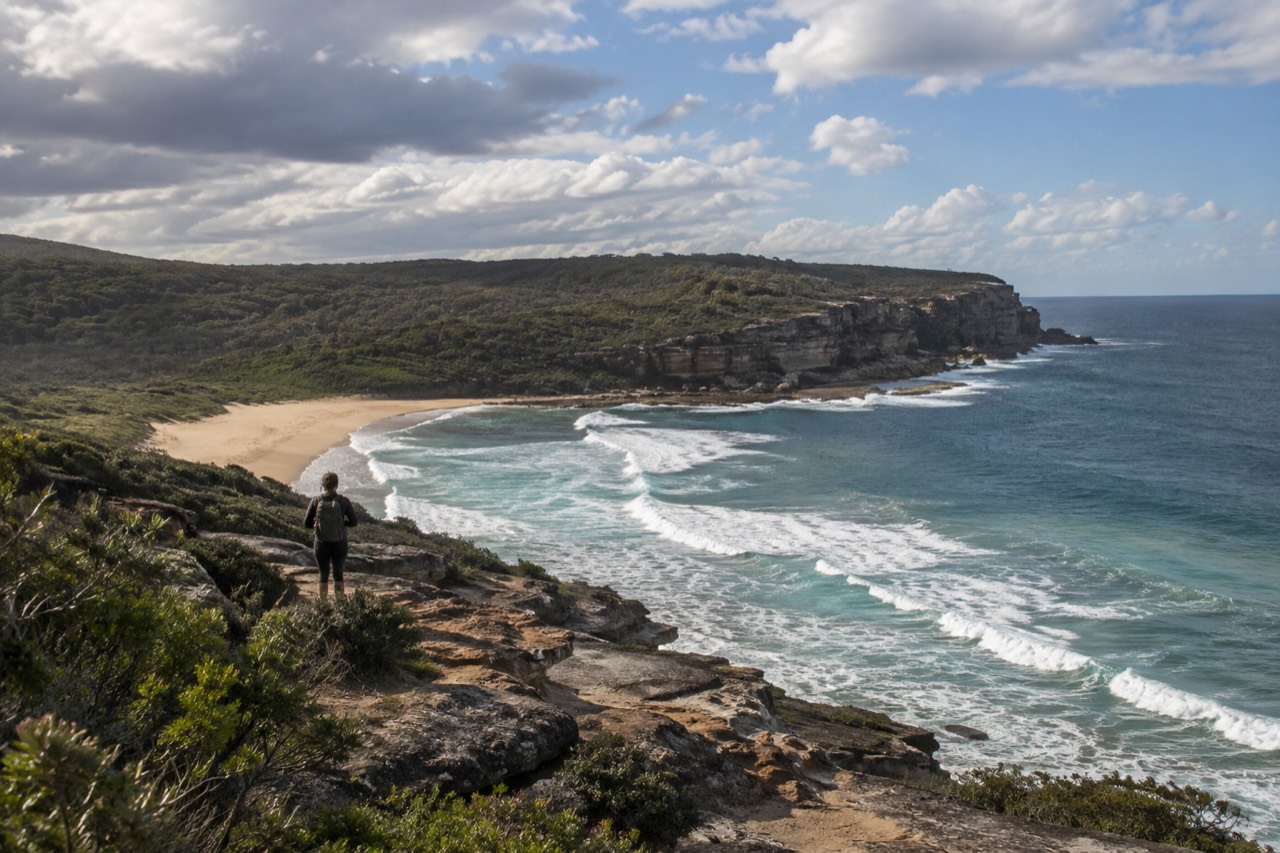
The Royal National Park is about an hour south of central Sydney and costs $12 per vehicle per day to enter, or nothing if you arrive by train or on foot. Council ferries and trains get you there without a car, several beaches are patrolled in season, and whales pass the headlands from May to November.
The Royal National Park sits immediately south of the Sydney suburbs, close enough that the train line to its northern edge is a normal commuter line, and it holds 16,000 hectares of sandstone cliffs, heathland, rainforest gullies and surf beaches that most Sydney visitors never see. This guide covers the parts a day tripper can realistically reach: how to get there, what entry costs, where to swim safely, and the months that give you the best of it.
Why the Royal National Park Is Worth a Day of Your Sydney Trip
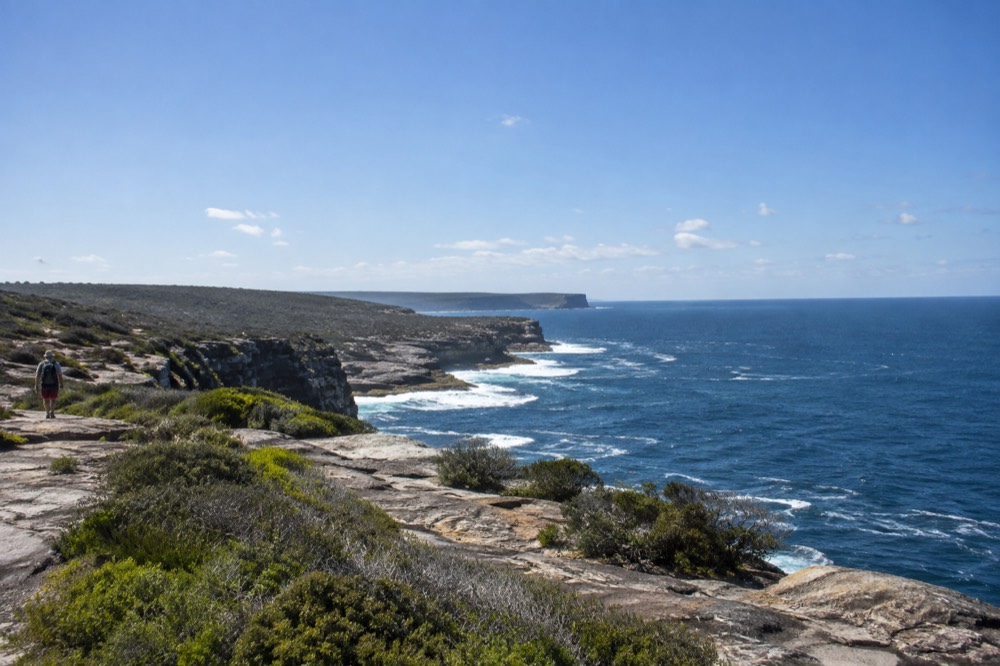
Yes, it earns the day. The park is roughly an hour from central Sydney by train or car, entry is $12 per vehicle per day and free if you arrive by train or on foot, and it gives you ocean cliffs, rainforest and patrolled swimming beaches in a single outing. You do not need a tour, a permit or a booking, just a tap-on Opal card and a plan.
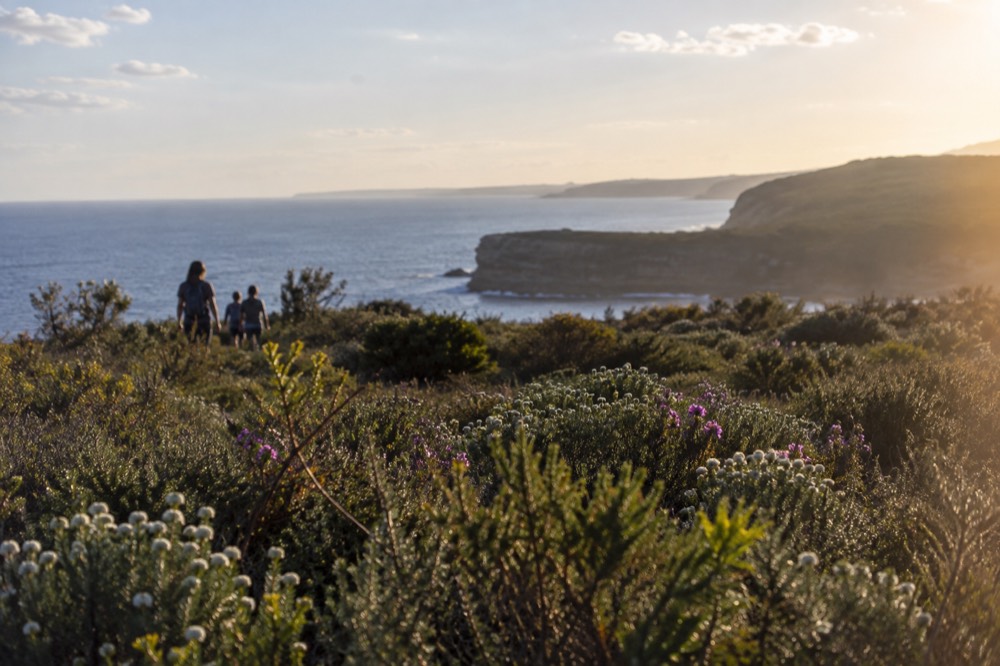
The park's pitch is variety within a small radius. In one day you can stand on a sandstone headland above breaking swell, walk through grey myrtle rainforest in a shaded gully, and swim at a beach patrolled by council lifeguards. That range is unusual this close to a major city, and it is the reason locals treat the park as an extension of their weekend rather than a destination they travel to.
It is also genuinely under-visited relative to the Blue Mountains. The mountains pull the coach crowds and the internationally famous lookouts, while the Royal's beaches and cliff tops stay comparatively quiet on weekdays, even in summer. If you have already done the harbour and Bondi, this is the next layer of Sydney, and it costs almost nothing to enter. For a broader view of the options, our guide to day trips from Sydney by train ranks where this one sits against the mountains, the Central Coast and Wollongong.
How Do You Get to the Royal National Park from Sydney?
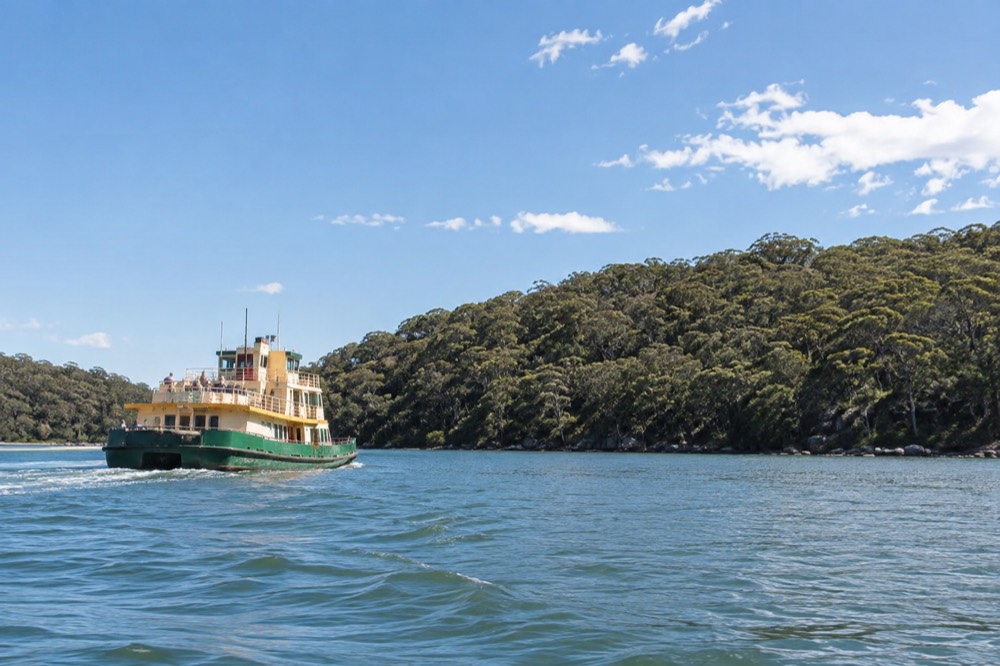
Two practical routes: drive south on the Princes Highway or Grand Parade to the park's northern entrances, about an hour from the CBD outside peak times, or take the T4 Illawarra line train to Cronulla and connect across the Port Hacking estuary to Bundeena. Arriving by train or on foot means you pay no vehicle entry fee at all, which is the cheapest way in.
The train option is the one most guides under-explain. The T4 line runs from Central through Sutherland to Cronulla, and from Cronulla the suburb of Bundeena, inside the park's northern edge, is a short ferry ride across Port Hacking. The ferry is a small council-run service, so check the current timetable before you rely on it, and note that the last departures run well before dusk. Fares on the T4 are standard Opal fares, capped like any other Sydney travel, and the adult fare bands are published by Transport for NSW.
Driving gives you more reach. The park's road network touches Audley, Garie, Wattamolla and the Otford end of the Coast Track, and having a car means you can string a morning walk and an afternoon beach together without watching a ferry timetable. The trade-off is the entry fee and parking, which fills early at Wattamolla on warm weekends. If you are renting a car for the trip, our Sydney trip cost breakdown helps you weigh whether a car day is worth it against tour and train options.
If you would rather not drive at all, a guided day trip is a legitimate alternative, and for this park's northern neighbour the options are strong. These three cover the spectrum from all-inclusive nature touring to a city-and-beach hop-on format:
A guided tour is not the only way to see the Sydney region's big natural drawcards, but it removes the two things that wear a day trip down: route planning and the drive back at the end of a long day. For a park this close to a railway line, though, independent travel is genuinely easy, and the sections below assume you are making your own way.
What Does It Cost to Enter the Royal National Park?
Entry is $12 per vehicle per day for most of the park, charged at fee-collecting entrances. Larger vehicles, those with more than 8 seats, pay $4.40 per adult and $2.20 per child per day instead. Arriving on foot, by bike or by train costs nothing, and there is no per-person charge for standard car arrivals.
The fee is set by the NSW National Parks and Wildlife Service and reviewed periodically, so treat the figure as the current published rate rather than a permanent price. The official fee-collecting parks page lists every park that charges and the current amounts. Payment is accepted at entry stations, pay machines and the visitor centre, and through the Park'nPay app, which matters because some entrances have no booth staff on weekdays.
| Arrival method | Cost | Notes |
|---|---|---|
| Standard vehicle | $12 per day | Covers all passengers, all day |
| Vehicle over 8 seats | $4.40 adult / $2.20 child per day | Teachers and educational supervisors free |
| On foot or by bicycle | Free | No entry station involved |
| By train (via Cronulla) | Free park entry | Opal train fares apply as normal |
| Annual pass holder | Included | Multi Park Pass and All Parks Pass cover this park |
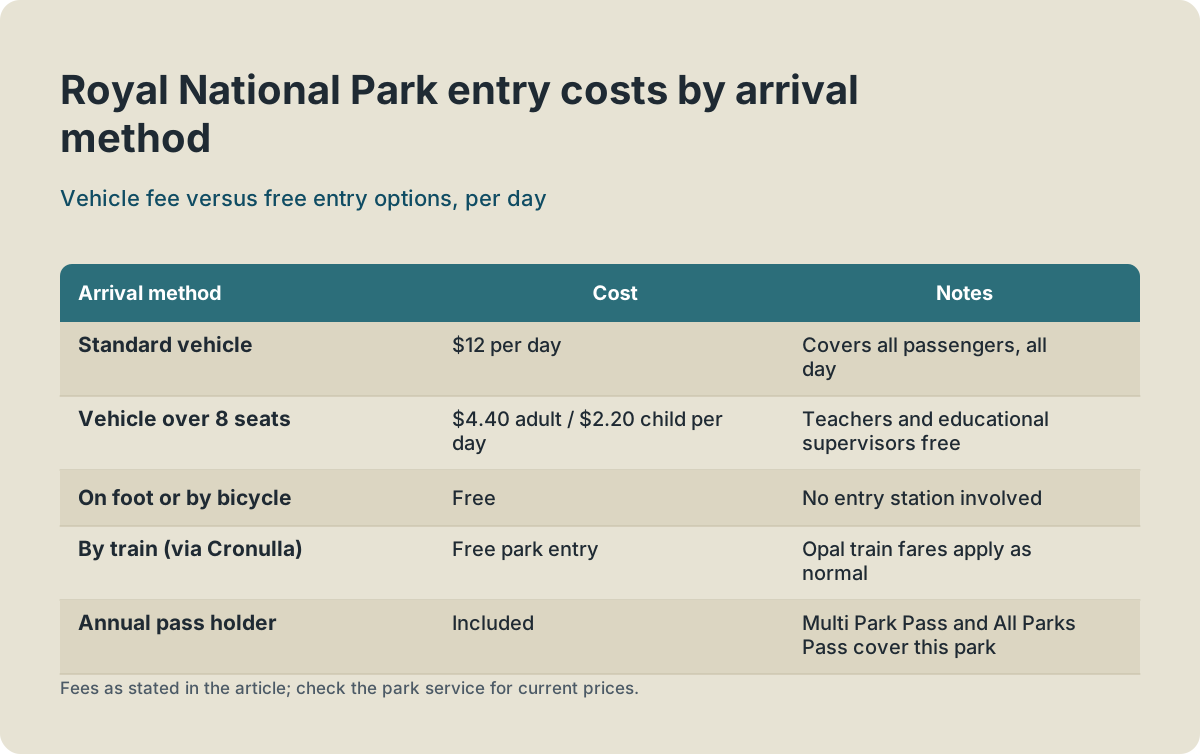
One detail worth knowing: the fee is per vehicle, not per person, so a full car of four splits to $3 each, cheaper than most Sydney coffees. Solo travellers arriving by train pay nothing at the gate at all. That makes the Royal one of the least expensive big outings in the Sydney region, a point our Sydney on a budget guide puts in context against paid attractions.
If the DIY version appeals but you would still like the planning lifted off you for one day of the trip, a fully guided nature day is worth a look:
Guided or independent, the park itself is the easy part. The decisions that actually shape your day are which beach, which walk and what the water is doing.
What Are the Best Things to Do in the Royal National Park?
Three anchors fill a day well: a cliff-top or rainforest walk in the cooler morning hours, a patrolled beach swim at midday, and a headland lookout in the late afternoon. The park's best-known multi-day route is the Coast Track, which links Bundeena to Otford along the clifftops, but day walkers cover satisfying sections of it without committing to the whole thing.
The Coast Track is the park's signature walk, and it is the reason serious walkers travel here. It is a multi-day undertaking end to end, so most day visitors walk a section: out and back from Bundeena toward the famous rock formations, or from the Otford end into the rainforest. If you are weighing how long the full walk needs, our companion piece on how long the Royal National Park walk is breaks the route into day-sized pieces.
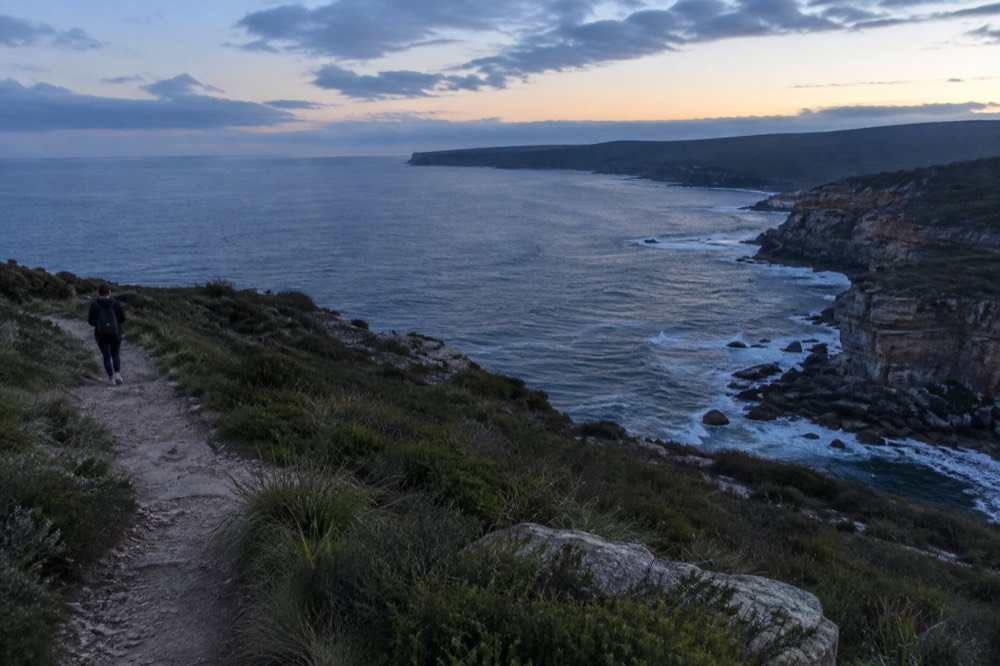
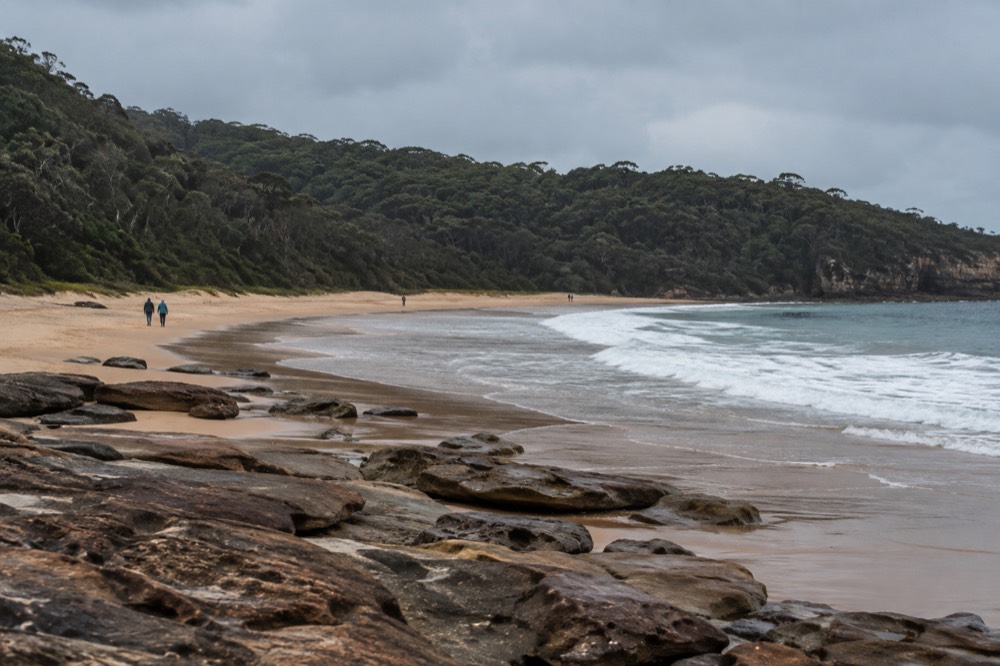
Beaches are the second anchor. Wattamolla is the family favourite because it combines a surf beach with a sheltered lagoon, Garie draws surfers and is one of the park's classic sand stretches, and Bundeena's beaches sit closest to the train-and-ferry arrival. The park's beaches sit inside the Sutherland Shire patrol area, where professional lifeguards patrol the main beaches roughly September to April, with volunteer surf lifesavers supplementing on weekends and public holidays. Outside that window, and at any beach without flags, you are swimming unpatrolled, and that changes the calculus entirely.
| Spot | What it is | Best for | Watch out for |
|---|---|---|---|
| Wattamolla | Surf beach plus sheltered lagoon | Families, first-time visitors | Car park fills early on warm weekends |
| Garie | Open surf beach, surf culture | Strong swimmers, surfers | Rips, no shelter from sun |
| Bundeena beaches | Calm bay beaches near the ferry | Train arrivals, easy swims | Boat traffic in the estuary |
| Coast Track sections | Cliff-top walking track | Half-day and full-day walkers | Little shade, carry water |
| Audley | Rainforest picnic area on the river | Shaded breaks, kayaking | Weekend crowding at picnic tables |
Wildlife is the quiet third reason to come. The park's heath and forest hold echidnas, lyrebirds and the eastern grey kangaroos that graze the cleared edges at dawn and dusk, and the birdlife along the rainforest gullies is a genuine draw for anyone with binoculars. If seeing Australian animals in the wild is a priority for your trip, the guided wildlife options are worth comparing, since a local guide dramatically raises your hit rate:
Whatever mix you choose, start early. The park's walking tracks have limited shade, Sydney's UV index passes the protection threshold of 3 by mid-morning for most of the year, and the afternoon light on the cliffs is better than the noon glare anyway.
Is It Safe to Swim at the Royal National Park's Beaches?
Swim only at patrolled beaches, between the red and yellow flags, during patrol hours. In this park that means the main beaches in the warmer months, roughly September to April, and no swimming outside flagged areas at any time of year. Rip currents are the number one hazard on this coast, and every coastal drowning in Australia's most recent national safety report occurred outside the flags, outside patrol times, or at an unpatrolled location.
That last sentence is the most important one on this page. Surf Life Saving Australia's National Coastal Safety Report 2025 recorded 154 coastal drowning deaths nationally, the highest figure on record, and every single one happened outside the flagged area, outside patrol hours, or at a beach with no patrol at all. The flags are not a suggestion, they are the entire safety system. The official rip current advice from Beachsafe tells you what to do if you are caught: stay calm, conserve energy, raise an arm and call for help, float with the current which may return you to a sandbank, or swim parallel to the beach toward breaking waves.
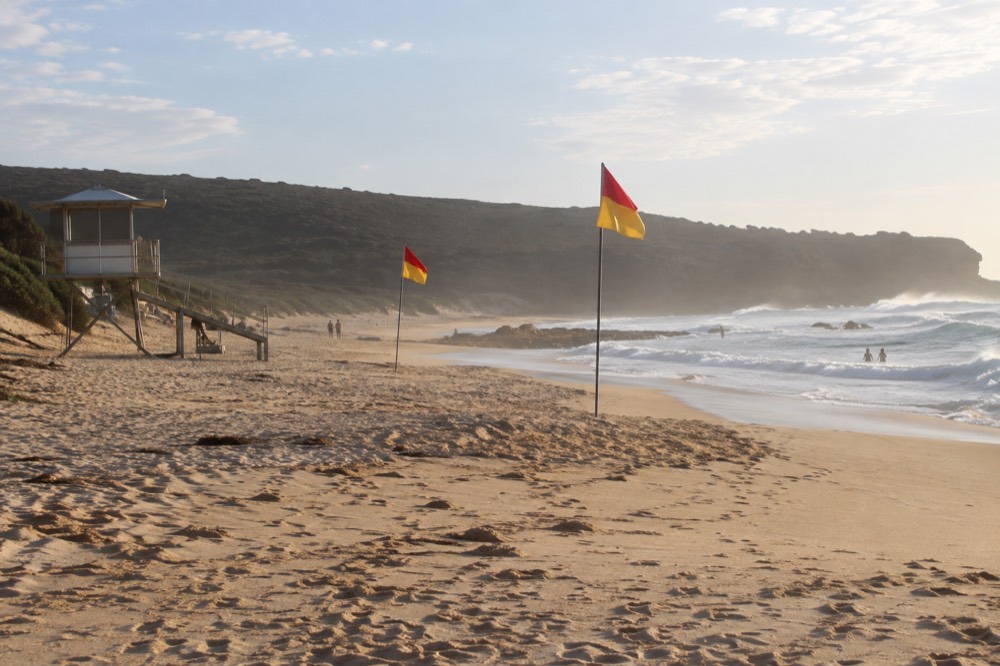
Two more facts change how you should plan. First, patrol seasons are limited and set by council, and they vary by beach: never assume a beach is patrolled year-round just because it is patrolled in summer, and check the signs at the beach for its own hours. Second, water quality. The NSW Beachwatch program grades swim sites from Very Good to Very Poor, and its official advice is to stay out of the water while it rains and for up to one day after heavy rain at ocean beaches, and for up to three days at estuarine and harbour sites. That matters here because Wattamolla's lagoon is an estuarine-style swim spot, and the Beachwatch site publishes daily results for the Shire's beaches.
| Hazard | When it applies | The official advice |
|---|---|---|
| Rip currents | Every surf beach, all year | Swim between the red and yellow flags at patrolled beaches |
| No patrol | Outside patrol hours and season | Do not swim, or swim only where flags are up |
| Rain runoff | During and after heavy rain | Stay out 1 day at ocean beaches, 3 days at estuarine sites |
| Bluebottles | Warmer months, after onshore winds | Do not touch; hot water around 45 °C for stings, seek a lifeguard if severe |
| UV radiation | Most of the year, extreme in summer | Protection advised whenever the UV index is 3 or above |
If you want a swim with the risk profile turned down, the region's ocean pools are the honest answer. Sydney's rock pools, like those along the coast north and south of the city, are a safer alternative to open surf, though they still close in big swell. Our best beaches in Sydney guide covers the patrolled options in detail, including which beaches hold year-round patrols.
Can You See Whales from the Royal National Park?
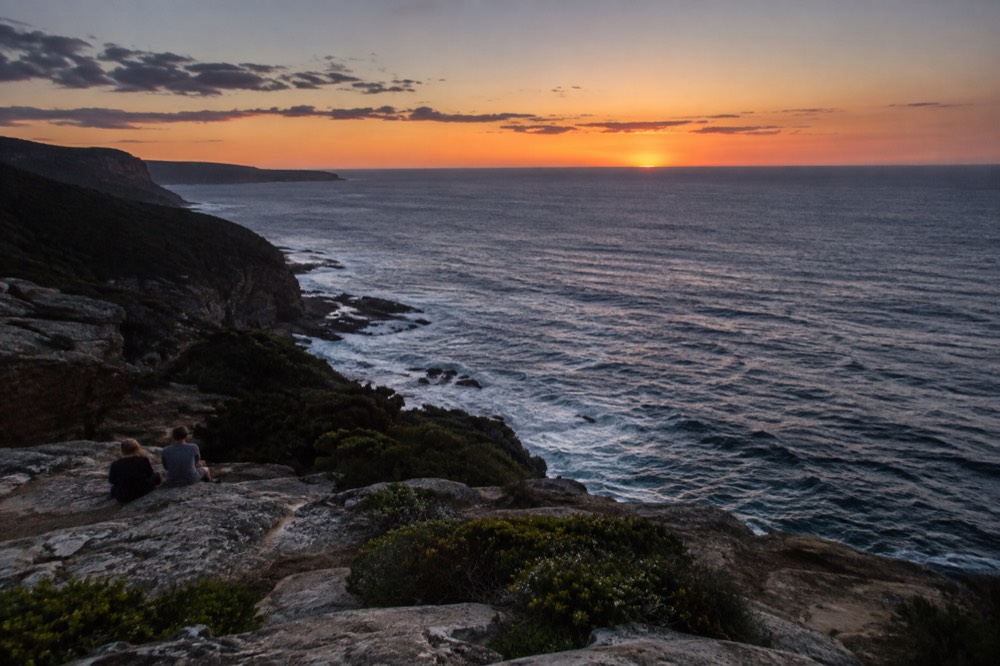
Yes, between May and November, when humpback whales migrate along the NSW coast, and the park's clifftops are genuine land-based vantage points. The northern migration runs roughly May to July, the southern return with calves runs August to November, and the peak viewing window is late June through July. No sighting is ever guaranteed.
The NSW National Parks service runs its whale-watching guidance around this migration, and the eastern Australian humpback population is estimated at 40,000-plus animals, a recovery figure that has grown season on season. The park's ocean-facing headlands put you above the water with clear sightlines south, which is exactly what land-based whale watching needs. Bring binoculars, face the right direction, and be patient: these are wild animals on a long migration route, not a scheduled show.
If being on the water beats standing above it, Sydney runs seasonal whale-watching cruises between May and November, and our whale watching in Sydney guide covers the season in full, including the migration months in detail. The cruises depart from the harbour, which pairs badly with a Royal National Park day trip on the same day, so pick one or the other rather than attempting both.
When Is the Best Time of Year to Visit?
Late autumn through early spring, and specifically August, gives you the best combination of clear skies, manageable temperatures and thin crowds. August is Sydney's clearest month on the long-run record, with 13.4 mean clear days, while February, the middle of peak tourist season, is its cloudiest at 5.3. Summer brings heat, crowds and full car parks, but it is also the only season with beach patrols.
That August figure surprises people, and it should: it inverts everything a northern-hemisphere visitor assumes about an Australian city. Sydney's rainfall actually peaks in June, at a long-run average of 133.1 mm, wetter than any summer month, and the clearest skies of the year arrive in late winter, when the days are short but the air is dry and transparent. The Bureau of Meteorology's climate averages for Sydney hold the full record behind these numbers.
| Month | Mean max °C | Mean rainfall mm | Mean clear days | Verdict for the park |
|---|---|---|---|---|
| January | 26.0 | 101.2 | 6.8 | Hot, crowded, patrolled beaches |
| February | 25.8 | 119.3 | 5.3 | Cloudiest month, peak crowds |
| April | 22.5 | 126.5 | 9.1 | Warm, good walking weather |
| June | 17.0 | 133.1 | 9.1 | Wettest month, whale peak begins |
| August | 17.9 | 80.2 | 13.4 | Clearest skies, whale calves passing |
| October | 22.2 | 76.7 | 8.1 | Warm, spring wildflowers, no patrols yet |
The honest trade-off is this: summer gives you lifeguards, warm water and long days, at the cost of crowds and cloud. Winter gives you clarity, whales and empty lookouts, at the cost of short days and cold water. Spring is the compromise most locals would pick, with wildflowers on the heath and the southern whale migration still running into November. Our best time to visit Sydney guide works through this for the whole trip, not just the park.
How Should You Plan the Actual Day?
Arrive by 9am, walk in the cool hours, swim only where flags are up at midday, and be heading back by late afternoon. If you come by train, build the day around Bundeena and the northern section, since the ferry connection sets your exit time. If you drive, pick one south, like Wattamolla or Garie, and one north, like Audley, rather than trying to see everything.
A realistic train-based day looks like this: an early T4 train from Central to Cronulla, the ferry across to Bundeena, a morning walk on the northern Coast Track sections, lunch in Bundeena, an afternoon at the bay beaches or back over to Cronulla's patrolled surf beach, and a return train before the evening peak. The ferry's last sailing is the hard deadline of the day, so confirm it on arrival, not at 4pm.
A car-based day has more reach: Wattamolla for the lagoon and beach mid-morning, a clifftop walk after, then the rainforest shade at Audley in the afternoon heat. Either way, carry more water than feels reasonable, reapply sunscreen on a timer, and treat the car park at Wattamolla as a reason to arrive early rather than a problem to solve at noon.
For travellers who want the nature-day experience without the logistics at all, the strongest guided options in the Sydney region look like this:
If you have more than one day-trip day in your itinerary, the Royal pairs well with a second outing in a different direction, and the coastal comparison worth making is with Port Stephens to the north, where dolphins replace whales and the sand dunes replace the cliffs. Our Port Stephens day trip guide covers that side, and the Jervis Bay day trip guide covers the south coast's white-sand answer.
One last planning note: this site, Sydney Travel Guide, keeps the whole Sydney region mapped, so if the park day leaves you wanting more coast, the Sydney coastal walks guide is the natural next read.
Common Questions About the Royal National Park
How much does it cost to get into the Royal National Park?
$12 per vehicle per day for a standard car, or $4.40 per adult and $2.20 per child for vehicles with more than 8 seats. Arriving by train, on foot or by bicycle is free. Fees are set by the NSW National Parks and Wildlife Service and reviewed periodically.
Can you get to the Royal National Park by train?
Yes. Take the T4 Illawarra line from Central to Cronulla, then the council ferry across Port Hacking to Bundeena at the park's northern edge. Standard Opal fares and caps apply on the train, and there is no park entry fee for train arrivals.
Is the Royal National Park good for swimming?
Yes, at patrolled beaches during patrol hours, swimming between the red and yellow flags. The main beaches are patrolled roughly September to April by professional lifeguards, with volunteer lifesavers on summer weekends and public holidays. Never swim outside the flags on this coast.
What is the best time of year to visit?
August for the clearest skies and the southern whale migration, or October for warm weather, spring wildflowers and thinner crowds. Summer brings patrols and warm water but also the biggest crowds, and February is statistically Sydney's cloudiest month.
Can you see whales from the park?
Yes, between May and November. Humpbacks pass the NSW coast on their northern migration roughly May to July and return with calves from August to November, with peak numbers late June through July. Sightings are never guaranteed.
How long do you need in the Royal National Park?
A full day covers one section well: a morning walk, a midday swim and an afternoon lookout. The full Coast Track is a multi-day walk, so day visitors should choose a section rather than attempting the whole route.