Sydney Trip Cost: What a Day, a Week and Everything Between Actually Costs
Sydney has a reputation for being expensive, and the reputation is half right. The harbour and the beaches cost nothing; the ticketed attractions, the restaurants and the airport train add up faster than most visitors expect. Here is what each part of a Sydney trip actually costs, in real numbers, so you can budget the parts that matter and skip the parts that do not.
Short answer
Transport is the cheap half of a Sydney trip: Opal fares cap at A$19.30 a day Monday to Thursday and A$9.65 on Fridays, weekends and public holidays, with a A$50 weekly cap. The expensive half is accommodation and restaurant meals, both of which swing sharply with season, and summer hotel rates sit far above the June-August weeks. The free layer, from the Royal Botanic Garden Sydney to the coastal walks, costs nothing.
Sydney's cost problem is not uniform. A swim at Bronte is free, the ferry to Manly costs less than a coffee back home, and the Royal Botanic Garden Sydney charges nothing at the gate. Then you look at a BridgeClimb price and the city's reputation snaps back into focus. The trick to budgeting Sydney is knowing which parts of the trip carry the expensive surprises and which parts are genuinely cheap, because the gap between the two is wider than in almost any other Australian city.
This breakdown works through a Sydney trip the way you actually spend it: a place to sleep, food, getting around, attractions, and the day trips most visitors add. Every figure here is a planning range drawn from official and operator sources, not a promise, and where a price is dynamic we say so rather than pretending it is fixed. Currency matters too: locals pay in Australian dollars (A$), and the tour prices on this site are quoted in US dollars, so we keep the two clearly labelled throughout.
How Much Does a Sydney Trip Cost per Day?
A Sydney day splits into one cheap half and one expensive half. Transport is capped at A$19.30 a day Monday to Thursday and A$9.65 on Fridays, weekends and public holidays, and the harbour's best experiences, from the coastal walks to the Royal Botanic Garden Sydney, cost nothing. Accommodation and restaurant meals are the expensive half, and both move sharply with season: summer hotel rates can be double the winter weeks. Your daily total is set almost entirely by the room you book.
The daily number moves more with season than with anything else. Sydney's peak tourist months are December through February, which is summer, and hotel rates in that window can double versus the winter months of June through August. That inverts the pricing pattern most northern-hemisphere travellers are used to, where they travel south to escape their own winter and expect a low season. Your winter is Sydney's high season.
There is also a counterintuitive weather wrinkle worth knowing before you pay summer rates. Bureau of Meteorology long-term records show February is Sydney's cloudiest month, with a mean of just 5.3 clear days, while August is its clearest, with 13.4. June is actually the wettest month of the year, at a long-run average of 133.1 mm of rain, wetter than any summer month. In other words: the most expensive time to visit is statistically the least sunny, and the cheapest weeks of winter often have the clearest skies. That does not make winter the "best" time to visit, but it does mean the premium you pay for summer is buying warmth and beach weather, not clear skies.
| Experience | What it costs | Notes |
|---|---|---|
| Royal Botanic Garden Sydney | Free | Open 7am to sunset daily |
| Bondi to Coogee coastal walk | Free | About 6 km, all on paths |
| Opal daily cap, Fri-Sun and public holidays | A$9.65 | All modes, all day |
| Manly ferry (F1), one way | A$9.20 | A harbour cruise in all but name |
| Sydney Tower Eye, advance adult | from A$29 | On the day A$39 |
| Taronga Zoo, adult online | from A$51.30 | Gate price A$57 |
| Sydney Opera House guided tour | from US$35.79 | Dynamic pricing, roughly 1 hour |
| BridgeClimb Summit, day | from around A$375 | 3 hours, dynamic by date |
For most travellers the honest answer is that Sydney is expensive by world standards but not uniformly so. The Sydney Travel Guide site exists partly because this city rewards planning: the difference between a cheap day and an expensive one is rarely comfort, it is usually just which attractions you stacked and where you ate.
What Does Accommodation Cost in Sydney?
Accommodation is the biggest single line in a Sydney budget, and its price moves more with season than with quality: December through February is peak, and rates in that window can be double the June-August weeks. Staying outside the CBD in Potts Point, Surry Hills or Parramatta cuts nightly rates meaningfully but adds a short daily train ride. Serviced apartments win for stays of a week or more, and family rooms beat booking two doubles.
Location drives price more than quality does. A four-star room in Potts Point or Surry Hills can cost noticeably less than the same chain's Circular Quay property ten minutes away, and the harbour-view premium at the big-name hotels is a category of its own. The trade is simple: the CBD and The Rocks put you within walking distance of the Opera House, the Royal Botanic Garden Sydney and the ferry wharves, while the inner suburbs put you among better food at lower prices with a quick train ride attached.
| Area | Character | Trade-off |
|---|---|---|
| The Rocks / Circular Quay | Walk-everywhere heritage quarter | Highest rates in the city |
| CBD | Transport links, weekend trips | Quiet on weekends, few cheap eats |
| Potts Point / Darlinghurst | Restaurants and nightlife | Short train ride to the Quay |
| Surry Hills / Newtown | Food-focused, characterful | Furthest from the harbour |
| Bondi / Coogee | Beach-first trips | Bus or ferry commute to the CBD |
| Manly | Ferry lifestyle, relaxed pace | Ferry-dependent, slower mornings |
| Parramatta | Budget-conscious, second CBD | Longest commute, lowest rates |
Timing matters as much as geography. Rates spike around Vivid Sydney (late May to mid June, scheduled 22 May to 13 June in the recent edition), New Year's Eve, and the Christmas-January school holidays, when the harbour fireworks draw up to a million people to the foreshore. If your dates are flexible, shifting a week away from those windows can cut a hotel bill by a third without changing anything else about the trip. Hotel pricing in Sydney is dynamic, so treat any quoted rate as a snapshot and compare at booking time.
For a deeper dive into neighbourhoods, our where to stay in sydney guide compares the main areas for first-timers, and sydney on a budget covers the cheaper end of the city in detail.
What Does Food Cost in Sydney?
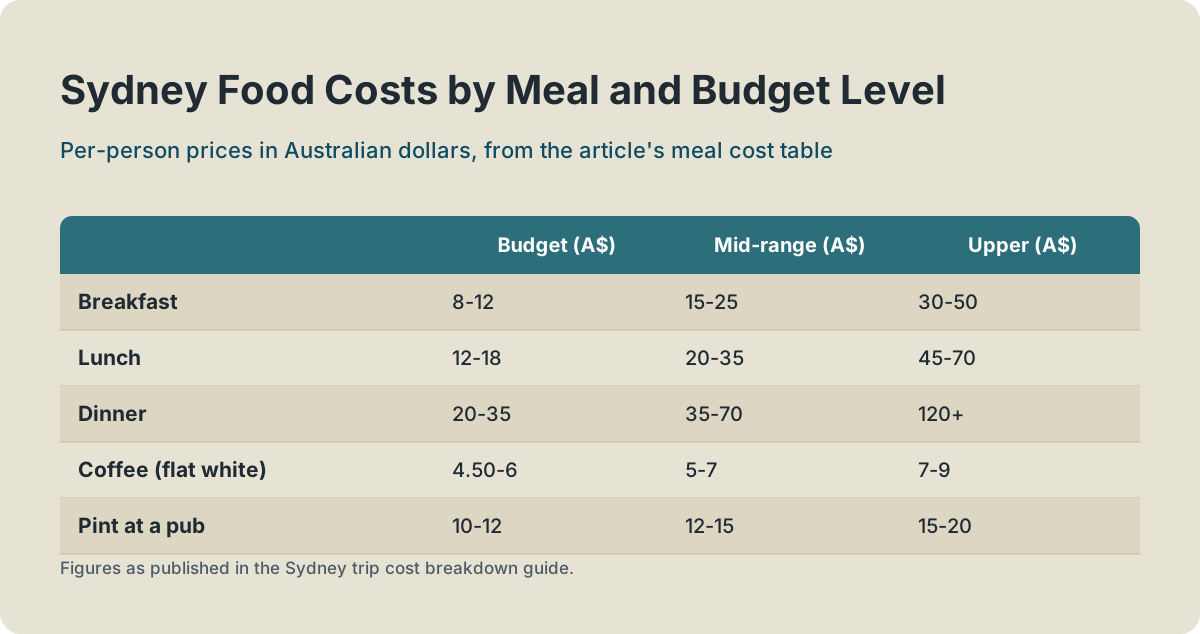
Budget roughly A$60-90 per person per day for food at mid-range level: about A$8-15 for a flat white and pastry breakfast, A$15-25 for a casual lunch, and A$35-70 for a sit-down dinner before drinks. Self-catering or sticking to food halls and suburbs can drop that to A$35-50 a day, while fine dining starts around A$120 a head and climbs without a ceiling.
Tipping is genuinely optional in Australia, which saves 15-20% versus the United States on every table.
The structure of Sydney eating rewards knowing where the cheap good food is. The CBD's laneway food courts and Chinatown serve large, genuinely good lunches in the A$12-18 range. Suburban strips in Newtown, Marrickville and Cabramatta beat the tourist core on both price and quality. Dinner is where the money goes: harbour-view restaurants in The Rocks and Circular Quay charge for the view, and the same kitchen's food would cost half as much two suburbs west.
| Meal | Budget (A$) | Mid-range (A$) | Upper (A$) |
|---|---|---|---|
| Breakfast | 8-12 | 15-25 | 30-50 |
| Lunch | 12-18 | 20-35 | 45-70 |
| Dinner | 20-35 | 35-70 | 120+ |
| Coffee (flat white) | 4.50-6 | 5-7 | 7-9 |
| Pint at a pub | 10-12 | 12-15 | 15-20 |
Two structural savings are worth planning around. First, licensed restaurants often run weekday lunch specials that undercut their own dinner menus by half. Second, BYO ("bring your own") restaurants, common in the inner suburbs, let you bring bottled wine for a small corkage fee of a few dollars, which is a Sydney habit that quietly saves a lot over a week. Our sydney food guide covers where the money is best spent, and sydney brunch spots is the cheapest good meal of the day done properly.
What Does Getting Around Sydney Cost?
Transport is Sydney's cheapest line item: adult Opal fares are capped at A$19.30 a day Monday to Thursday and A$9.65 a day on Fridays, weekends and public holidays, with a A$50 weekly cap. A contactless credit card is charged exactly the same as an Opal card, so most visitors never need to buy one. The one big exception is the airport train, which adds a station access fee of A$18.61 on top of the fare, outside the caps entirely.
That cap structure is worth understanding because it changes behaviour. On a weekend or public holiday you can ride trains, ferries, light rail and buses all day for A$9.65 total, which makes a ferry-heavy day (Manly, Taronga Zoo, Watsons Bay) almost free to move around. The off-peak discount of 30% on trains, metro, buses and light rail applies on Fridays, weekends and public holidays too, though not on ferries. The Manly ferry itself, the F1, sits in the 9+ km ferry band at A$9.20 each way, and it is regularly called the best-value sightseeing in the city.
| Transport item | Cost (A$) | Notes |
|---|---|---|
| Opal daily cap (Mon-Thu) | 19.30 | All modes |
| Opal daily cap (Fri-Sun, public holidays) | 9.65 | All modes |
| Weekly cap | 50 | Monday-Sunday week |
| Train 0-10 km, peak | 4.33 | Off-peak 3.03 |
| Bus 0-3 km | 3.30 | Off-peak 2.31 |
| Ferry 0-9 km | 7.35 | No off-peak discount |
| Manly ferry (F1), one way | 9.20 | 9+ km band |
| Airport station access fee | 18.61 | On top of the fare, outside caps |
| 400 bus from airport | no access fee | The cheap airport alternative |
The airport access fee is the single most common budget surprise in Sydney, and the figure is widely misquoted in older guides. Transport for NSW's own fare pages are the authority here, and they also confirm that single-trip tickets bought at machines cost more and earn no caps or discounts, so tap a contactless card instead. Our opal card guide for visitors covers the mechanics, and sydney airport to the city compares every airport option with real costs.
If your itinerary leans on the ticketed sights, it is worth pricing the [multi-attraction pass](https://gocity.tpk.ro/rUvgw2vS) before you commit to individual tickets, since a pass bought once can replace four separate box-office queues.
What Do Sydney's Attractions Cost?
Sydney's headline attractions split cleanly into free and paid: the Royal Botanic Garden Sydney, the Australian Museum and the Art Gallery of New South Wales all have free general entry, while the Opera House, Taronga Zoo, the Tower Eye and BridgeClimb are ticketed, with prices from around US$21 for the Tower Eye deck up to roughly A$375 for a daytime BridgeClimb. A visitor who stacks three paid attractions a day can easily spend more on tickets than on the hotel room.
The free list is genuinely strong, not a consolation prize. The Royal Botanic Garden Sydney, wrapping the harbour from Circular Quay to Mrs Macquarie's Point, charges nothing and is open daily from 7am to sunset. The Australian Museum on College Street is free for general entry, open 10am to 5pm daily. The Art Gallery of New South Wales is free too, and stays open until 10pm on Wednesdays, one of the city's under-used details. Special exhibitions at the museums are ticketed separately, and which ones change through the year.
| Attraction | Entry cost | Notes |
|---|---|---|
| Royal Botanic Garden Sydney | Free | Open 7am to sunset daily |
| Australian Museum | Free general entry | Ticketed special exhibitions |
| Art Gallery of New South Wales | Free general entry | Open until 10pm Wednesdays |
| Sydney Opera House guided tour | from US$35.79 | Dynamic pricing, roughly 1 hour |
| Taronga Zoo (online) | from A$51.30 adult | Gate price A$57, book ahead |
| Sydney Tower Eye (advance) | from A$29 adult | On the day A$39 |
| SEA LIFE Sydney Aquarium | from US$31.49 | Dynamic timed entry |
| BridgeClimb Summit (day) | from around A$375 | 3 hours, dynamic by date |
Taronga Zoo is the clearest case for booking ahead: the operator's own price page shows online tickets at A$51.30 for an adult against A$57 at the gate, a saving of roughly 10% at every tier. The zoo is open 365 days a year, 9:30am to 5pm from September to April and 9:30am to 4:30pm from May to August.
The Sydney Tower Eye is the other attraction where the timing of purchase matters. Advance online tickets start from A$29 for adults against A$39 on the day, and the operator states plainly that pricing fluctuates with demand and capacity. If the deck is on your list, buying early is a real saving, not a marketing line.
Should You Buy an Attractions Pass?
A multi-attraction pass makes sense when you plan to visit three or more of the covered sights; below that, individual tickets win. The four-attraction combo covering SEA LIFE Sydney Aquarium, the Sydney Tower Eye, WILD LIFE Sydney Zoo and Madame Tussauds runs from US$35.84, which is less than two of those attractions bought separately at the door. The pass expires 30 to 60 days after first use, so it suits a single trip, not a scattered one.
The maths is straightforward: check the door price of each attraction on your list, add them up, and compare against the pass. If SEA LIFE and the Tower Eye are both on the list, the pass has probably already paid for itself; throw in a third and the margin gets comfortable. The pass suits families especially well, since aquarium and zoo visits are the kind of attraction children repeat-visit.
The honest caveat is that the pass covers the Merlin-owned indoor attractions, not the harbour experiences. It will not get you onto the Opera House stage, up the Bridge, or across to Taronga. If your Sydney list is Opera House tour plus BridgeClimb plus a whale cruise, the pass is irrelevant to you. Our sydney attraction passes compared guide runs the full numbers across every pass on the market.
What Do Sydney Day Trips Cost?
Day trips are the budget's biggest swing item: a Blue Mountains all-inclusive small-group day trip runs from US$190.19, a hop-on hop-off bus day pass in the city from US$54.86, and a premium Hunter Valley wine tour with lunch from US$218.72. Doing the Blue Mountains independently by train is dramatically cheaper, with off-peak fares from A$7.46 each way plus food, but you trade the guide, the in-park transport and the included entries.
The Blue Mountains comparison is the one most visitors actually face. The train from Central to Katoomba sits in the 65+ km Opal band at A$10.66 peak or A$7.46 off-peak each way, and the national park itself charges no entry fee outside the Glenbrook area, a fact that surprises almost everyone. Against that, the all-inclusive tour includes Scenic World, Featherdale Wildlife Park and lunch, items that would cost a fair amount bought separately, plus a guide and door-to-door transport. For a confident independent traveller the train wins on price; for a one-day-only visit the tour wins on coverage.
| Day trip | From (US$) | Duration | Style |
|---|---|---|---|
| Blue Mountains all-inclusive | 190.19 | 10 hours | Small group, entries included |
| Blue Mountains by train | Opal fares only | Full day | Independent |
| Hunter Valley premium wine tour | 218.72 | 11 hours | Two-course lunch included |
| Jervis Bay day trip | 114.98 | 12 hours | Dolphins, beach time |
| Port Stephens day trip | 91.04 | 12 hours | Dolphin cruise or hike |
| Canberra day trip | 167.51 | 12.5 hours | Capital sights |
Two cheaper notes on the independent option. The Blue Mountains National Park charges A$8 per vehicle per day, but only in the Glenbrook area at the base of the mountains; Katoomba, Blackheath, Wentworth Falls and the Three Sisters cost nothing, and arriving by train avoids vehicle fees entirely at nearly every Sydney park. Royal National Park, by contrast, does charge A$12 per vehicle per day, which matters if you are planning a self-drive trip there. The details are in our blue mountains day trip and royal national park guides.
What Does a Week in Sydney Cost in Total?
A week's transport is the one line you can state exactly: Opal caps at A$50 for the Monday-to-Sunday week, and less if your heaviest travel days fall on weekends or public holidays. The attraction stack is also predictable, since every headline ticket has a published from-price. The two dynamic halves are accommodation, which swings with season, and food, which swings with habit. Flights are excluded throughout, since airfare depends entirely on where you fly from.
The structure of a week's budget is worth seeing laid out, because it shows where the flexibility is. Accommodation is the largest single block, and it is the line that responds most to date choice. Food is the next biggest and the one most responsive to habit changes. Attractions are the most discretionary: a week built on the free museums, the beaches, the coastal walks and capped weekend ferry travel costs a fraction of one built on daily ticketed experiences.
| Sample one-week paid stack | From-price | Notes |
|---|---|---|
| Opal transport, full week | capped at A$50 | Less with weekend-heavy travel |
| Sydney Opera House guided tour | from US$35.79 | Roughly 1 hour |
| Taronga Zoo, adult online | from A$51.30 | Includes return ferry option |
| Sydney Tower Eye, advance adult | from A$29 | Cheaper than the A$39 door price |
| Blue Mountains all-inclusive day trip | from US$190.19 | Entries and lunch included |
| Whale watching cruise, in season | from US$56.69 | May to November only |
The biggest single lever on a week's cost is date choice. The same week costs meaningfully less in June or August than in January, and as the climate data above shows, the winter months are not the grey penalty many visitors imagine: August is Sydney's clearest month on the long-run record. Swimming is off the table outside summer, but the harbour, the walks, the museums and the whale season (May to November, peaking late June through July) are all in full swing.
How Can You Cut a Sydney Budget Without Cutting the Trip?
The five biggest savings are: travel in the June-August window instead of summer, eat dinner in the inner suburbs rather than on the harbour, use the weekend Opal cap for ferry-heavy days, lean on the free museums and gardens, and book dynamic-priced attractions like Taronga Zoo and the Sydney Tower Eye online in advance. Together those moves cut a mid-range budget by a wide margin without removing a single experience, and none of them involve skipping the things Sydney is famous for.
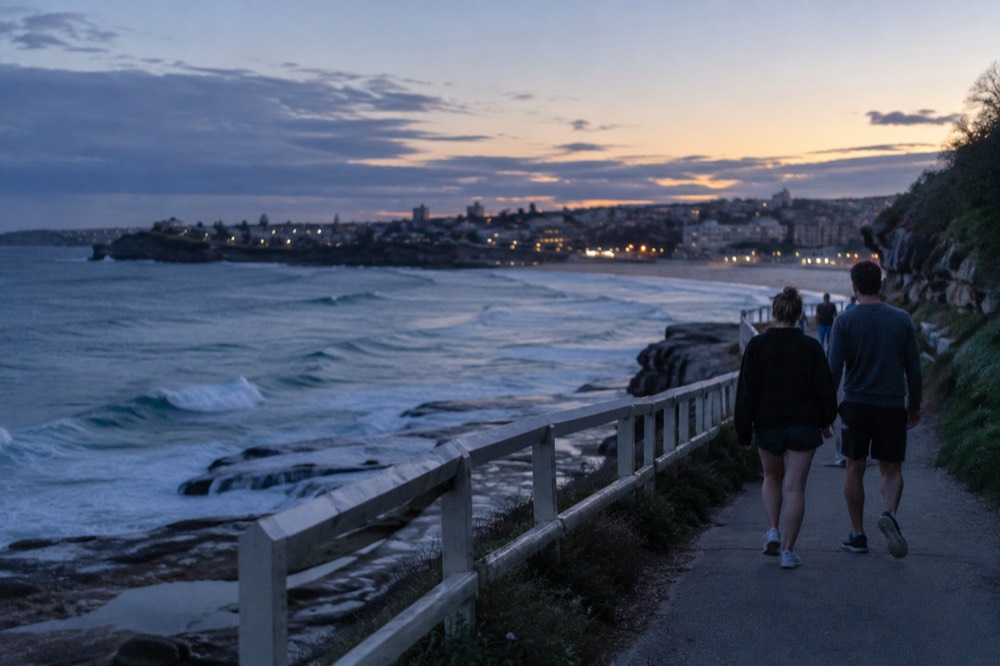
The free layer of the city is the one most budgets underuse. The Bondi to Coogee coastal walk costs nothing. The Manly ferry is a A$9.20 harbour cruise in all but name. The Royal Botanic Garden Sydney, the Australian Museum and the Art Gallery of New South Wales are all free at the gate. Add the beaches, the Harbour Bridge pedestrian walkway and the Northern Beaches by ferry-bus combinations, and you have two full days of Sydney's best material for the cost of transport caps.
On the paid side, the pattern to avoid is stacking three or four ticketed attractions into a single day. Sydney's ticketed experiences are priced for a once-per-trip purchase, not a daily habit. One big-ticket item (a BridgeClimb, a whale cruise in season, a premium day trip) plus the free layer is the pattern most satisfied visitors land on. Our free things to do in sydney guide is the companion piece to this one, and sydney in winter makes the case for the cheapest good-weather window.
A hop-on hop-off bus pass is the one paid transport item that can make sense on top of the Opal cap, because it is a routing decision rather than a fare: it links the CBD and Bondi on a commentary loop, which saves a first-time visitor the work of planning the same day by train and bus. Price it against the A$9.65 weekend cap before you commit, and it only wins on convenience.
If your week still feels loose at this point, the trio below is the shortlist most budgets converge on: the attractions pass for the indoor sights, the hop-on hop-off bus for the first day's orientation, and the Blue Mountains all-inclusive for the one big day out of town.
Whichever way the totals land, the shape of a Sydney budget is consistent: a cheap, capped transport floor, a free layer of world-class sights on top of it, and two dynamic lines, beds and dinners, where your choices do almost all of the deciding.
Common Questions About Sydney Trip Costs
How much does a Sydney trip cost per day?
Transport is capped at A$19.30 a day Monday to Thursday and A$9.65 on Fridays, weekends and public holidays, and the free layer of beaches, walks and museums costs nothing, so the floor is low. What pushes a day up is accommodation, which is seasonal and dynamic, and restaurant meals. Plan around the caps and the free layer, and let your hotel choice set the ceiling.
Is Sydney expensive for tourists?
Sydney is expensive by world standards but not uniformly. The beaches, the coastal walks, the Royal Botanic Garden Sydney, the Australian Museum and the Art Gallery of New South Wales are all free, and Opal caps make transport cheap. Restaurants, hotel rooms in peak season and the big ticketed attractions are where the money goes.
What is the cheapest month to visit Sydney?
June through August, Sydney's winter, is the cheapest window for accommodation, and August is statistically the city's clearest month on the long-term record, with 13.4 mean clear days. June is the wettest month on average, so July and August are the strongest combination of low rates and reliable skies. Whale watching runs May to November, so a winter trip can still include a cruise.
How much is the train from Sydney Airport to the city?
The airport train fare is a standard Opal distance fare plus a station access fee of A$18.61 for adults, which sits outside the daily and weekly caps. The 400 bus carries no access fee and is the cheaper alternative. Full comparisons are in our guide to getting from Sydney Airport to the city.
Do you tip in Sydney?
Tipping is optional and not expected. Locals round up or leave a few dollars for good table service at restaurants, but there is no 15-20% obligation as in the United States, which quietly saves a meaningful amount over a week of meals.
Is the Sydney attractions pass worth it?
It depends entirely on your list. The four-attraction combo covering SEA LIFE Sydney Aquarium, the Sydney Tower Eye, WILD LIFE Sydney Zoo and Madame Tussauds runs from US$35.84, which beats individual door prices once you visit three or more of the covered sights. If your list is the Opera House, the Bridge and the zoo instead, the pass is irrelevant and individual tickets win.