Sydney on a Budget: A Full Guide to Cheap Days, Cheap Eats and Free Views
Sydney has a reputation for emptying wallets, but the city's best experiences, its harbour views, its coastal walks and its major galleries, cost little or nothing. This guide sets out where the money actually goes and how to plan around it.
Short answer
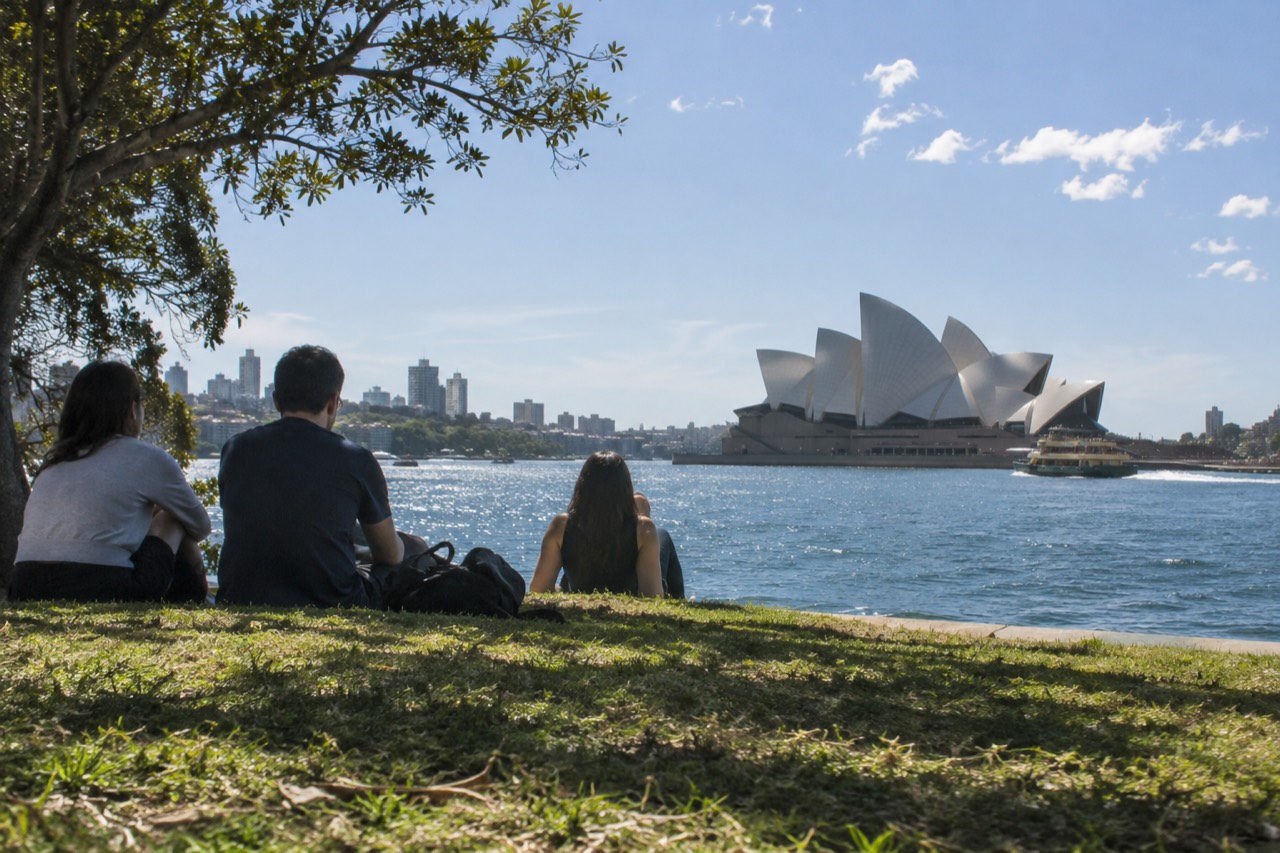
Sydney on a budget works because the headline experiences are free or nearly free: the Royal Botanic Garden, the Art Gallery of New South Wales and the Australian Museum all cost nothing to enter, the Opal card caps daily travel at $9.65 on weekends, and the Bondi to Coogee walk costs nothing at all. Budget from around $80-120 a day excluding accommodation, and spend selectively on one or two paid attractions.
Sydney's reputation as an expensive city is half earned and half myth. The earned half is real: [accommodation](https://booking.tpk.ro/ndznHj9h) in the centre is pricey, a coffee near Circular Quay costs more than the same coffee in Newtown, and the BridgeClimb sits firmly in the splurge category. The myth is that the city itself charges admission. It does not. The harbour is public, the ferries are a capped commuter fare rather than a tourist cruise, and three of the city's major cultural institutions, the Royal Botanic Garden, the Art Gallery of New South Wales and the Australian Museum, ask for nothing at the door.
This guide, from the team behind Sydney Travel Guide, is built around a simple principle: spend on two or three things that genuinely matter to you, and let the city's free layer carry the rest. The free layer here is unusually deep.
Is Sydney Actually Expensive for Visitors?
Yes and no, and the split is predictable. Sydney is expensive for beds, restaurant dinners and bridge climbs, and cheap for almost everything you do between those things. Entry to the Royal Botanic Garden is free, general entry to the Australian Museum and the Art Gallery of New South Wales is free, the Manly ferry is $9.20 one way on a capped Opal fare, and the coastal walks cost nothing. A visitor who plans around the free layer can run a full day of sightseeing on transport money alone.
The numbers that catch people out are the ones attached to beds and plates. Where you stay matters more than what you do: a room near Circular Quay can cost double the equivalent in Parramatta or Newtown for the same city, because the train in takes under half an hour. Food follows the same geography. A sit-down dinner in The Rocks is a different price universe from the same meal in Chinatown or the food halls around Parramatta.
The other trap is paying full price for things that are discounted by default. Taronga Zoo's own gate pricing shows the pattern: adult entry is $57.00 at the gate but online from $51.30, and the same roughly 10% saving applies at every tier. Sydney Tower Eye charges $39.00 for an adult on the day but from $29.00 in advance. The rule across this city is consistent: buy ahead, online, and the first discount is built in.
What Are the Best Free Things to Do in Sydney?
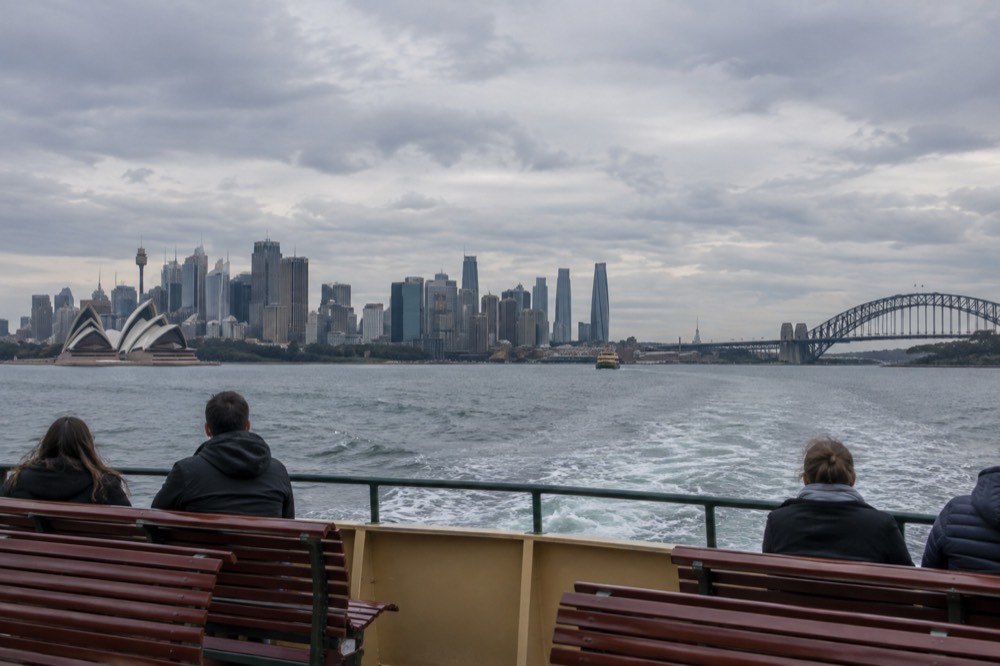
The free list fills three days easily. Walk the Bondi to Coogee coastal path, about 6 km of clifftops and ocean pools. Wander the Royal Botanic Garden from the Opera House down to Mrs Macquarie's Chair, entry free, open 7am to sunset. Cross to Manly on the F1 ferry as a commuter would. General entry to the Art Gallery of New South Wales and the Australian Museum is free, and both are worth half a day each.
Start with the harbour itself, because it is the city's best free asset and most visitors only see it from a cruise deck. The walk from Circular Quay through the Royal Botanic Garden to Mrs Macquarie's Chair delivers the postcard view of the Opera House and Harbour Bridge together, and the garden asks for no ticket. The Botanic Gardens' own visitor page confirms entry is free and the gates open at 7am daily, closing at sunset, so the closing time moves with the seasons.
The Art Gallery of New South Wales is the quiet star of the free list. General entry costs nothing, it opens daily 10am to 5pm, and on Wednesdays it stays open until 10pm, which makes it one of the few free evening activities in the city centre. The Australian Museum on William Street is also free for general entry, open 10am to 5pm daily except Christmas Day, with only its major temporary exhibitions ticketed separately.
For the full free-layer playbook, see our dedicated guide to free things to do in Sydney, and for the harbour's cheapest "cruise", the Manly ferry guide explains why commuters get the same view for a fraction of the tour-boat price.
If you want paid attractions in the mix without paying individually for each, two products do the heavy lifting. The first bundles Sydney's big Merlin attractions into one pass; the second is a hop-on hop-off bus that covers the city and Bondi without a tour-group price tag.
The pass is the sharper deal for families and rainy-day itineraries, since it stacks SEA LIFE Sydney Aquarium, Sydney Tower Eye, WILD LIFE Sydney Zoo and Madame Tussauds into a single purchase that undercuts buying each door separately. The bus suits a first day in the city: it connects Circular Quay, Darling Harbour, Kings Cross and Bondi on a loop, so you see the geography before you commit to walking it.
How Do You Save Money on Sydney's Paid Attractions?
Buy online and in advance, every time. Taronga Zoo's own pricing shows the pattern: $57.00 at the gate versus from $51.30 online for an adult, and the same gap at child and family tiers. Sydney Tower Eye runs from $39.00 on the day down to from $29.00 booked ahead. If you plan to visit three or more paid attractions, a combo pass beats individual tickets, and the zoo's ferry-plus-entry product saves again by bundling transport with the gate.
The table below sets out the main paid attractions with what a budget planner actually needs: the official entry price where one is published, and where the discount lives.
| Attraction | Official adult price | The budget move |
|---|---|---|
| Taronga Zoo Sydney | $57.00 gate, from $51.30 online | Book online; the ferry-and-entry bundle saves more |
| Sydney Tower Eye | $39.00 on the day, from $29.00 advance | Book ahead; pricing fluctuates with demand |
| Royal Botanic Garden Sydney | Free | Nothing to save; The Calyx is by donation |
| Art Gallery of New South Wales | Free general entry | Wednesday nights run to 10pm |
| Australian Museum | Free general entry | Only temporary exhibitions are ticketed |
| Sydney Opera House tours | Dynamic, booking-only | Compare sessions before booking; no fixed price exists |
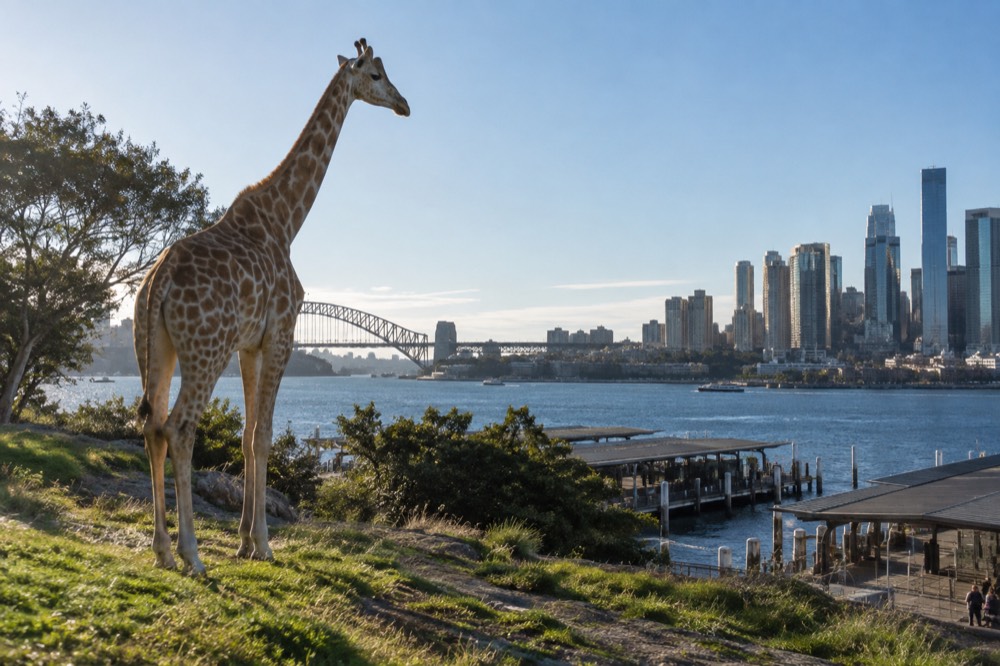
The zoo deserves special mention because it is the one big-ticket attraction that bundles well. The Taronga product that pairs zoo entry with the return ferry from Circular Quay turns two purchases into one, and the ferry leg alone is one of the best harbour views in the city. Our Taronga Zoo guide covers the layout and how to spend the least time in queues.
If your itinerary stacks the aquarium, the tower and the zoo in the same trip, the four-attraction pass below is usually the arithmetic winner.
Before you commit, it is worth doing the sums against your own list. The pass pays off from around three attractions onward; with only two on your plan, individual advance tickets usually cost less, and the free institutions can fill the gaps at no cost at all.
One more saving that is easy to miss: Sydney's attraction passes are compared in detail in our Sydney attraction passes compared guide, including when a pass stops paying for itself. If your list is two attractions long, individual advance tickets usually win.
What Is the Cheapest Way to Get Around Sydney?
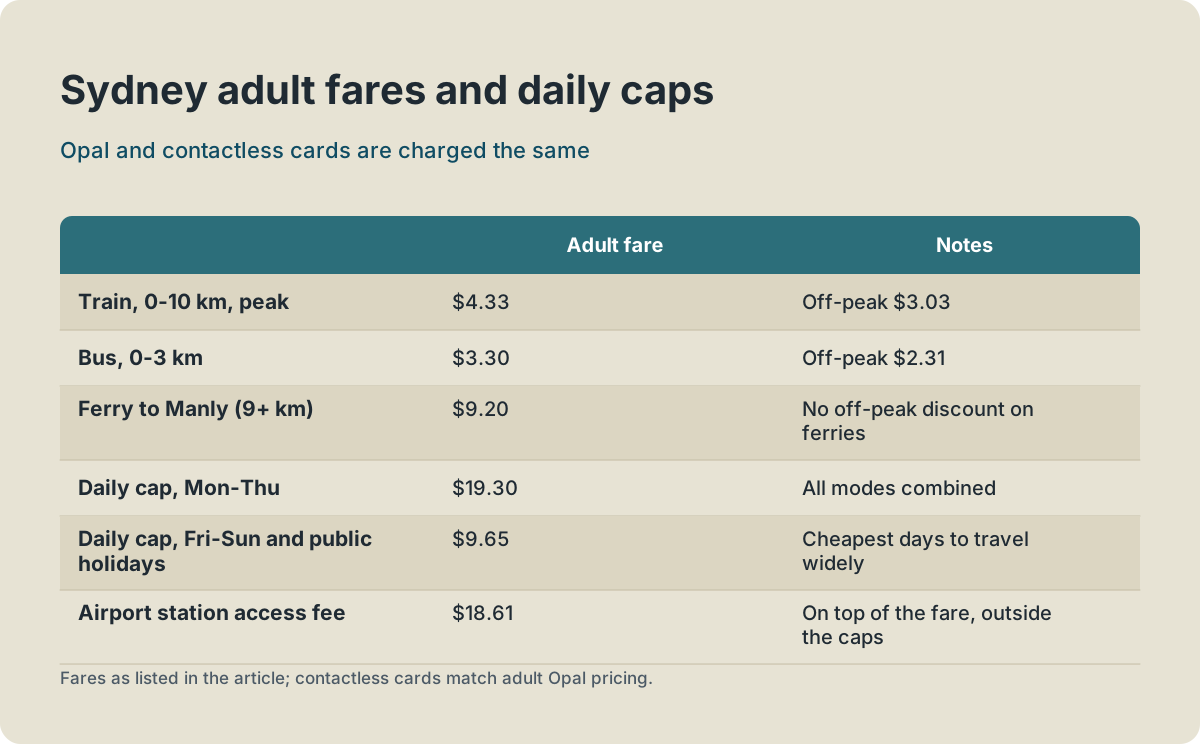
Use a contactless credit card or an Opal card and let the caps do the work. Adult fares cap at $19.30 a day Monday to Thursday and $9.65 a day on Fridays, weekends and public holidays, with a $50 weekly cap, and the caps cover metro, trains, buses, light rail and ferries together. A contactless card is charged exactly the same as an adult Opal card with every benefit included. The one trap is the airport: the station access fee of $18.61 sits outside the caps entirely.
The fare structure rewards the exact behaviour a budget traveller already has. Because the daily cap applies across every mode, a day built around a ferry to Manly, a train back and a bus to Bondi costs no more than a single long ferry return once the cap is hit. Weekends and public holidays are the cheapest days to travel widely, at $9.65.
| Trip | Adult fare | Notes |
|---|---|---|
| Train, 0-10 km, peak | $4.33 | Off-peak $3.03 |
| Bus, 0-3 km | $3.30 | Off-peak $2.31 |
| Ferry to Manly (9+ km) | $9.20 | No off-peak discount on ferries |
| Daily cap, Mon-Thu | $19.30 | All modes combined |
| Daily cap, Fri-Sun and public holidays | $9.65 | Cheapest days to travel widely |
| Airport station access fee | $18.61 | On top of the fare, outside the caps |
The airport fee is the single most misunderstood charge in the city. It applies at both Domestic and International stations, it is added to the train fare rather than replacing it, and it is excluded from the standard daily and weekly caps, though it carries its own weekly cap. Two ways around it: the 400 bus carries no station access fee at all, and it is spelled out in our Sydney airport to the city guide. The full fare system, including the off-peak discount rules, is covered in our Opal card guide for visitors, and Transport for NSW publishes the live fare tables on its adult fares page.
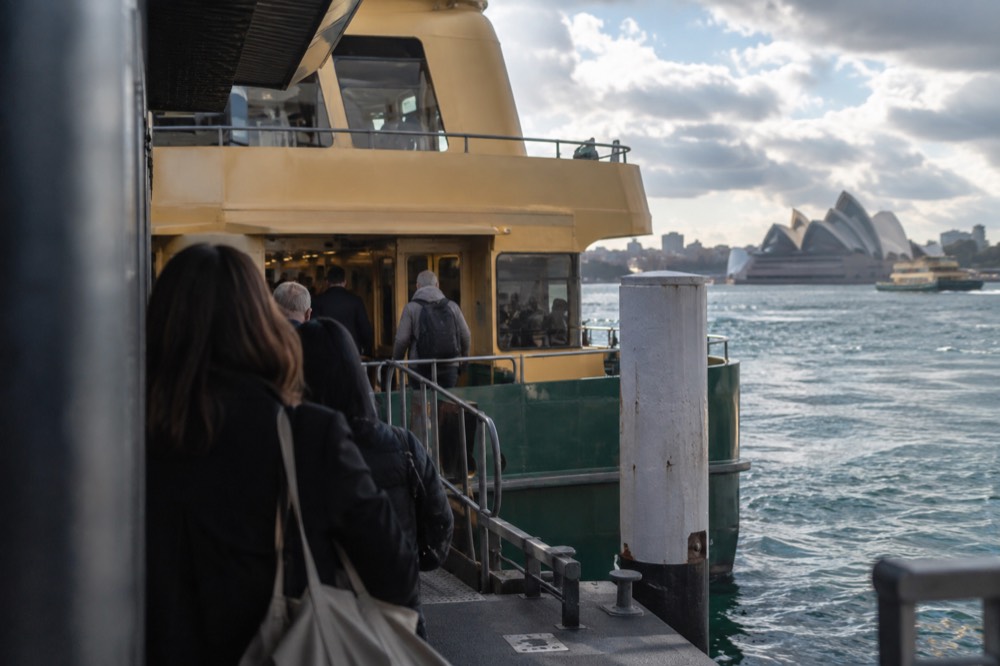
If you would rather someone else handle the routing on day one, the hop-on hop-off bus covers the central loop and Bondi, and it pairs naturally with a ferry pass or a walking day.
Where Can You Eat Cheaply in Sydney?
Eat where the food halls, suburban strips and markets are, not where the harbour views are. Chinatown's food courts serve full meals for the price of a Quay-side appetiser, the new Sydney Fish Market at Blackwattle Bay sells ready-to-eat seafood at wholesale-adjacent prices, and Newtown and Marrickville run entire streets of cheap and genuinely good food. A realistic budget is $15-25 for a casual dinner, $8-14 for a basic breakfast, and less if you picnic.
The geography rule from the accommodation section applies double to food. The same kitchen's food costs more within a short walk of Circular Quay than it does a couple of kilometres inland. The Rocks and Darling Harbour are for one splurge meal; the daily rotation should happen elsewhere.
| Eating strategy | Typical cost per person | Where |
|---|---|---|
| Food court lunch | $12-18 | Chinatown, World Square, shopping centres |
| Fish market seafood | $15-30 | Sydney Fish Market, Blackwattle Bay |
| Cheap eats strip dinner | $15-25 | Newtown, Marrickville, Cabramatta |
| Cafe brunch | $18-28 | Surry Hills, Paddington |
| Harbourside restaurant dinner | $50+ | The Rocks, Circular Quay, Darling Harbour |
| Supermarket picnic | $8-12 | Anywhere with a view, which is free |
The Sydney Fish Market moved to its new Blackwattle Bay building in early 2026, so any guide still pointing you to the old Pyrmont site is out of date; our Sydney Fish Market guide has the current layout and the best-value counters. For the broader cheap-eats map, the Sydney food guide covers the neighbourhoods where the food is better and the prices lower.
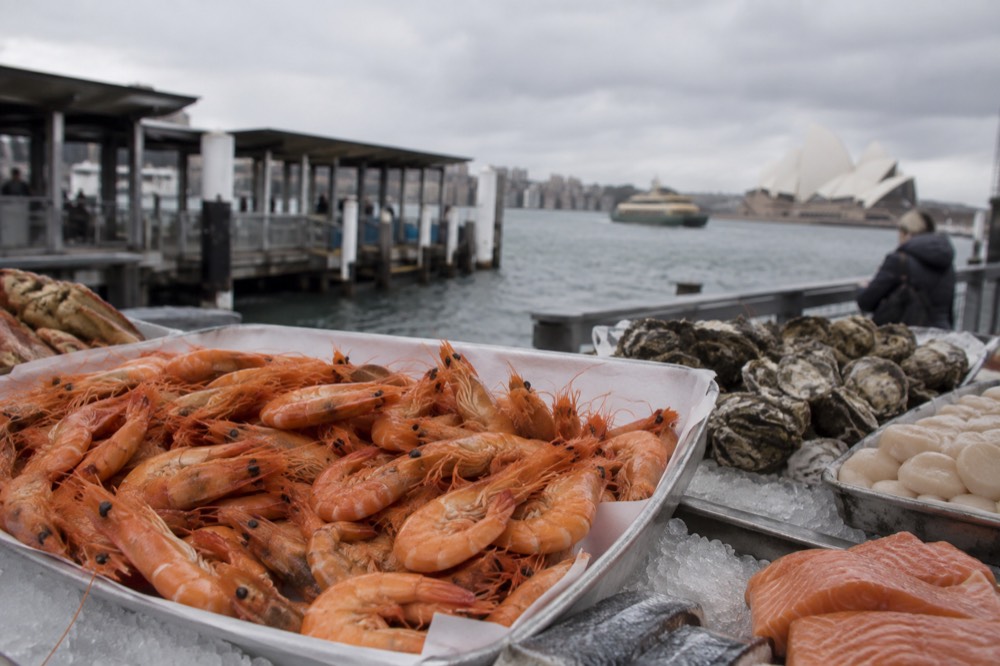
Two structural savings are worth planning around. First, brunch in Sydney is a competitive sport, and the $18-28 range in Surry Hills buys food that would be a $60 dinner elsewhere. Second, lunch menus are almost always cheaper than dinner for the same kitchen, so if there is one restaurant you want to try, try it at noon.
What Are the Best Budget Day Trips from Sydney?
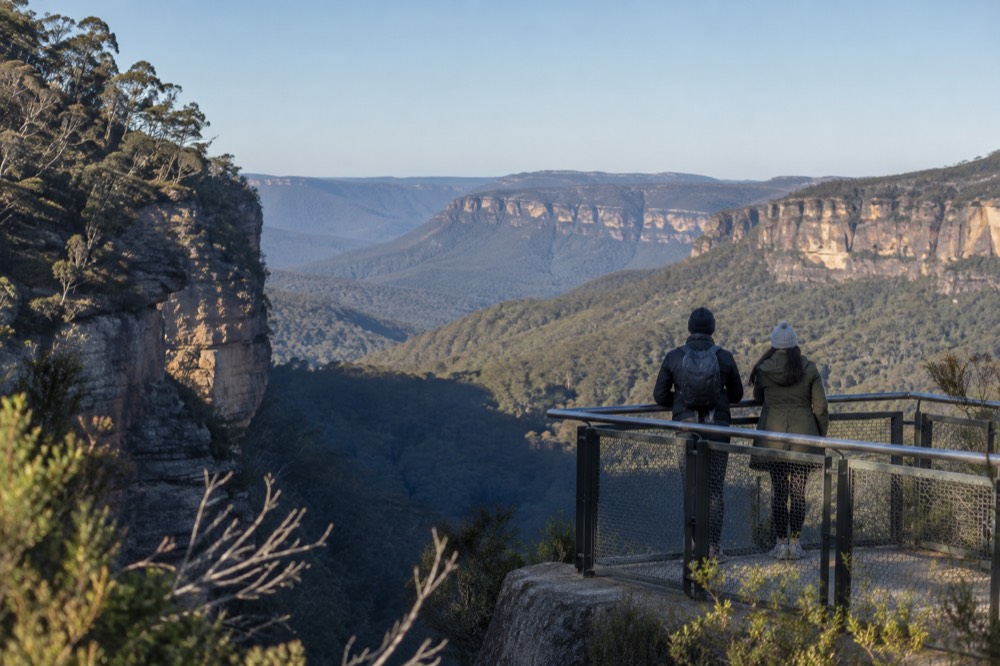
The Blue Mountains, by train, is the best-value day trip in New South Wales. The national park charges no entry fee outside the Glenbrook area, Katoomba's lookouts over the Three Sisters are free, and the train from Central is capped by the same Opal limits as any other trip. The Royal National Park costs $12 per vehicle but nothing on foot or by train. Whale watching runs May to November only, so time any coastal day trip to the season rather than paying for an empty ocean.
The Blue Mountains is the headline, and the budget version is genuinely better than the expensive one in some ways. The train from Central to Katoomba takes under two hours, the town's lookouts and walking tracks are free, and the national park itself levies no vehicle fee outside Glenbrook, a fact that surprises most visitors who assume a park entry charge. The paid layer, Scenic World's rides and guided day tours, is optional and covered in our Blue Mountains day trip guide.
If you would rather not run the logistics yourself, the all-inclusive small-group day tour below handles transport, guiding and food in one price, which suits travellers who value a day of not thinking over the train-and-walk savings.
Closer to town, the options stack up quickly. The Royal National Park's entry fee is per vehicle, so arriving by train to Engadine or Loftus and walking in costs nothing at the gate; our Royal National Park guide explains the train-and-bushwalk combination. The Central Coast from Sydney and Wollongong and the Sea Cliff Bridge guides cover two more train-friendly escapes. For the full no-car picture, day trips from Sydney without a car ranks the options by cost and convenience.
What Does a Cheap Day in Sydney Actually Look Like?
Here is a full day, attractions included, that costs under $40 per person excluding accommodation: the ferry to Manly at $9.20 each way inside the daily cap, a morning at Manly Beach and Shelly Beach for free, a food-court or fish-and-chips lunch for around $15, the free ferry ride back with harbour views, an afternoon walk through the Royal Botanic Garden to Mrs Macquarie's Chair, and a free evening at the Art Gallery of New South Wales on a Wednesday.
The plan below assumes a weekend or public holiday, when the daily cap drops to $9.65. On a weekday it still works, just with a $19.30 ceiling.
| Time | Activity | Cost |
|---|---|---|
| 9:00am | F1 ferry from Circular Quay to Manly | $9.20, inside the daily cap |
| 10:00am | Manly Beach and the Shelly Beach walk | Free |
| 12:30pm | Fish and chips on the Manly Corso | $15-20 |
| 2:00pm | Ferry back to the city | Already capped |
| 3:00pm | Royal Botanic Garden to Mrs Macquarie's Chair | Free |
| 5:00pm | Art Gallery of New South Wales (Wednesdays to 10pm) | Free |
| 7:00pm | Chinatown food court dinner | $12-18 |
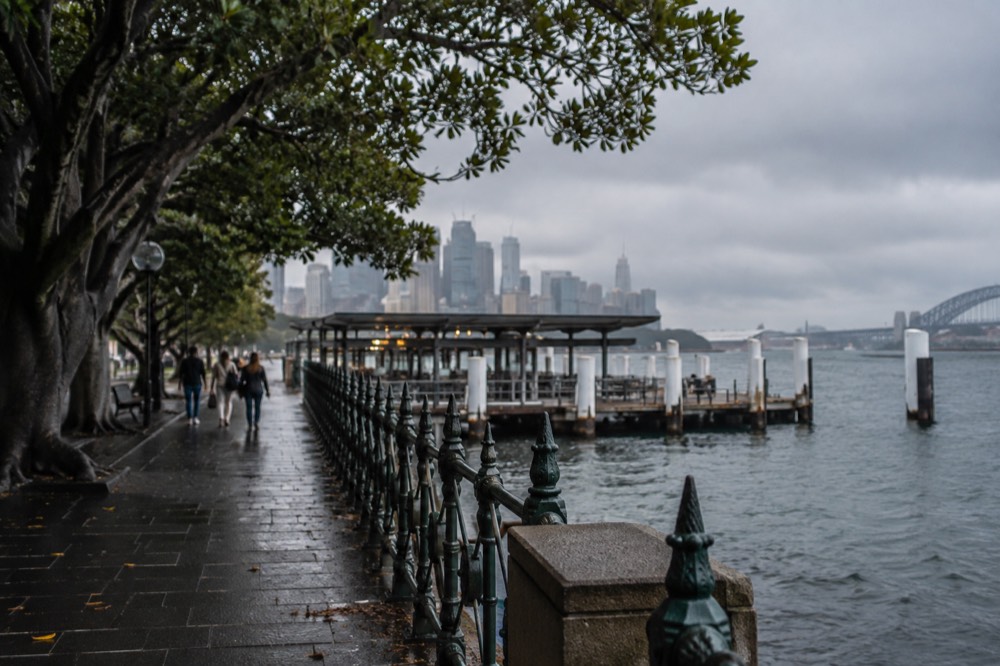
The only mandatory spend in that plan is transport and lunch. Swap in alternatives as the days stack up. Day two could be the Bondi to Coogee walk in the morning, free, followed by an ocean swim at Bronte or the free Bronte Ocean Pool, then a bus back toward the city inside the same cap; the Bondi to Coogee coastal walk guide has the directions and where to cut it short. Day three is the Blue Mountains by train. A week of this costs less than two days of tour-boat and restaurant spending, and you will have seen more of the actual city.
If the weather turns, the rainy-day playbook in our Sydney rainy day itinerary keeps the same budget discipline: museums that are free, food halls that are cheap, and the aquarium or the tower as the one paid stop, which is exactly where the attractions pass earns its keep.
However you build the week, three products cover most budget travellers' one paid splurge: the attraction pass for the indoor stops, the bus loop for orientation, and the Blue Mountains tour for the day you would rather not plan.
Common Questions About Sydney on a Budget
How much money do you need per day in Sydney?
A budget traveller can run Sydney on roughly $80-120 a day excluding accommodation: $10-20 on transport inside the Opal caps, $40-60 on food from markets and food courts, and the rest for one paid attraction or a coffee-and-brunch stop. Add accommodation and the number roughly doubles in the city centre, which is why staying a train ride out is the single biggest saving available.
What is the cheapest month to visit Sydney?
June through August, the southern winter, is the cheapest window for accommodation, and August is statistically the city's clearest month, averaging 13.4 clear days on the Bureau of Meteorology's long-run figures. The trade-off is June, the wettest month at 133.1 mm on average. May and September to November are the shoulder compromise: milder crowds, moderate prices, and whale season from May to November along the coast.
Is the Opal card worth it for tourists?
You often do not even need one: a contactless credit or debit card is charged exactly the same as an adult Opal card, with the caps, transfers and off-peak discounts all included. An Opal card matters mainly for concession holders, children, or travellers who want a fixed card rather than exposing their bank card. Either way, tap on and tap off every time, or you are charged the default maximum fare.
Can you do Sydney without paying for any attractions?
Yes, comfortably, for several days. The Royal Botanic Garden, the Art Gallery of New South Wales, the Australian Museum's general galleries, The Rocks, Darling Harbour, the coastal walks and the ferry rides as a commuter are all free or capped-fare experiences. Most visitors choose to pay for one or two headline attractions, and the combo pass or the zoo ferry bundle is the cheapest way to do that.
Is food expensive in Sydney?
It is expensive where the harbour views are and cheap where the food scenes actually live. A restaurant dinner in The Rocks can exceed $50 a head, while Chinatown food courts, the fish market and the suburban strips of Newtown and Marrickville serve full meals in the $12-25 range. Brunch is the city's best-value meal format, and a supermarket picnic eaten on the harbour foreshore costs under $15 with the same view as a $40 restaurant table.