Parramatta, Sydney: The River City Worth the Train Ride West
Parramatta is Sydney's second CBD, 23 kilometres west of Circular Quay, and it packs a river foreshore, a new light rail line, a major museum opening and one of the city's biggest food scenes into an easy day trip by train or ferry.
Short answer
Parramatta sits about 23 kilometres west of the Sydney CBD and takes roughly 30 minutes by train from Central, with an adult Opal fare of A$6.20 peak or A$4.34 off-peak in the 20-35 km band. The river ferry costs A$9.20 one way. Plan half a day to a full day for the foreshore, the food scene and the new museum precinct.
Parramatta gets called Sydney's second CBD, and the label undersells it. This is where the colonial story of the settlement actually took root, where the river still runs through the middle of town, and where a food scene has grown faster than almost anywhere else in the metropolitan area. It is 23 kilometres west of Circular Quay, roughly 30 minutes by train, and it costs less than A$7 to get there. Most visitors never make the trip, which is exactly why it rewards the ones who do.
The city has been pouring money into the west, and it shows. A light rail line opened here in December 2024, a A$300m Powerhouse museum is scheduled to open on the river in November 2026, and the foreshore walk now links a string of parks, wharves and eating streets. You can do Parramatta as a half-day add-on or as a full day with a river ferry home, and the second option is one of the better-value days out in the whole region.
What Is Parramatta and Why Does It Matter?
Parramatta is Sydney's second central business district, 23 kilometres west of the harbour, and it was one of the earliest European settlement sites in Australia, founded as a farming town when the harbour colony could not feed itself. Today it is a major centre in its own right, with its own river, its own food precincts, its own light rail and a museum precinct opening on the foreshore. Roughly 30 minutes by train from Central, it functions as a second city rather than a suburb.
That layered history is what makes it different from everywhere else you can visit on a day trip from the city centre. The early colonial buildings sit a short walk from a busy restaurant strip, which sits on a river that carries working commuter ferries. The streets mix heritage brick with office glass, and the whole thing is walkable in a way the sprawling west rarely is.
The practical payoff for a visitor is density. Church Street's eat street runs for blocks. The river foreshore connects parkland to wharves. The rail interchange puts the train, the light rail and the ferry within a few hundred metres of one another. You do not need a car, and you do not need to plan around a handful of sights scattered across a suburb; the good stuff is mostly within a 15-minute walk of the station.
For orientation before you go, our overview of getting around Sydney by public transport covers the network-wide rules, and the Opal card guide for visitors explains the caps that make a Parramatta day cheap. This guide from Sydney Travel Guide sticks to the area itself.
How Do You Get to Parramatta from the City?
The train is the quickest way: roughly 30 minutes from Central, with adult Opal fares of A$6.20 peak or A$4.34 off-peak in the 20-35 km distance band. The river ferry from Circular Quay costs A$9.20 one way and takes about an hour, but it is the better ride. Driving takes 30-50 minutes depending on traffic and is the worst option. Contactless payment works everywhere Opal does.
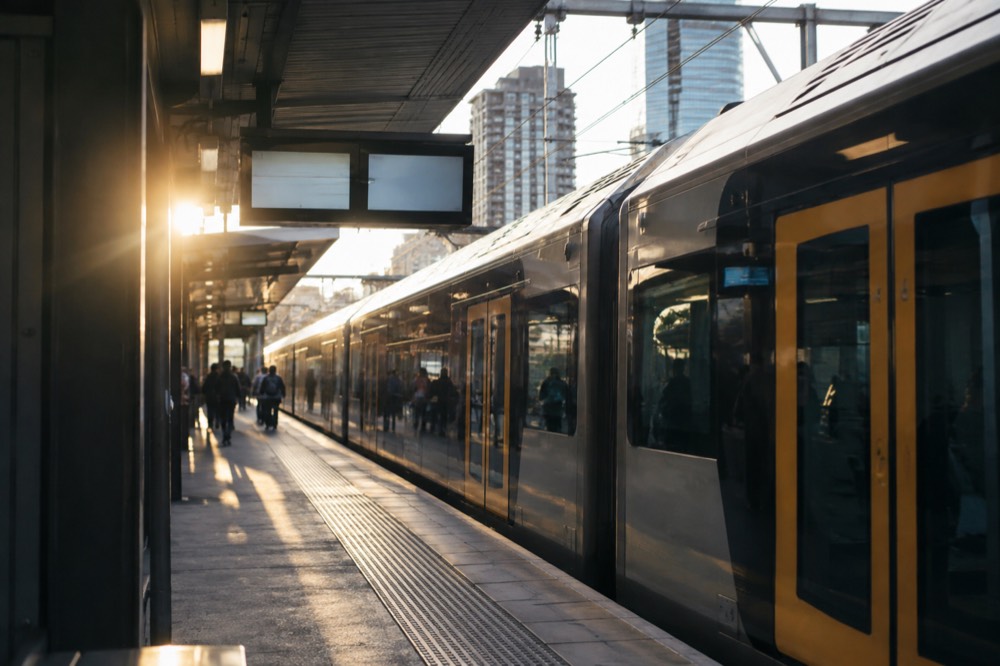
The train runs frequently and lands you at one of the state's biggest interchanges. Tap on with a contactless card or an Opal card and you are charged identically, caps included. A Friday, Saturday, Sunday or public holiday trip is charged at the off-peak rate, and the daily cap is A$9.65 on those days, so a return Parramatta journey on a weekend costs less than a single peak weekday fare each way. Transport for NSW publishes the full adult fare and cap tables, and the ferry payment rules confirm Opal is accepted on the Parramatta River routes with full benefits.
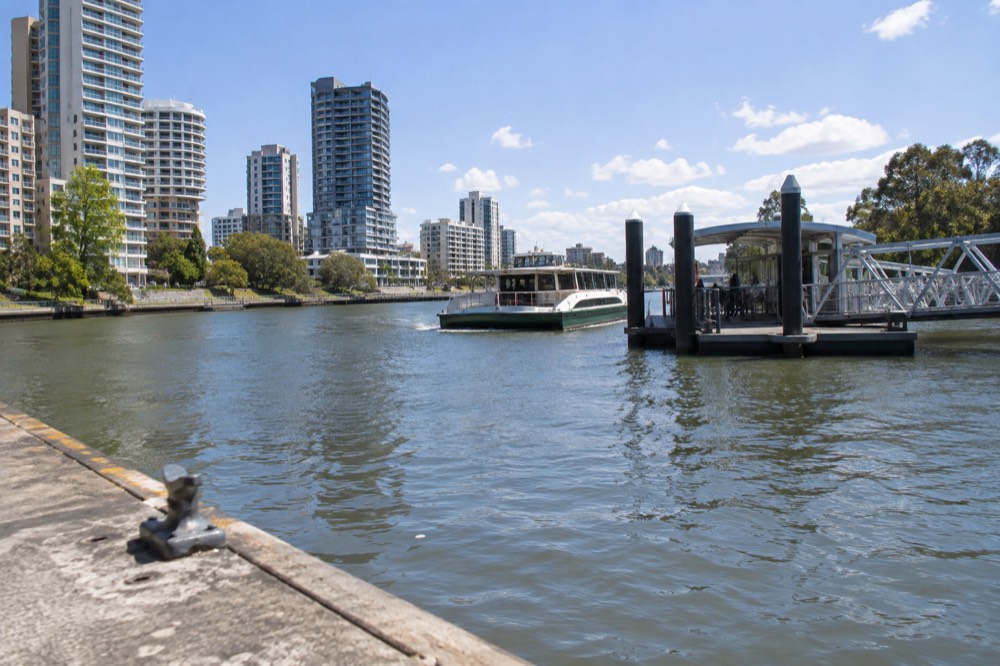
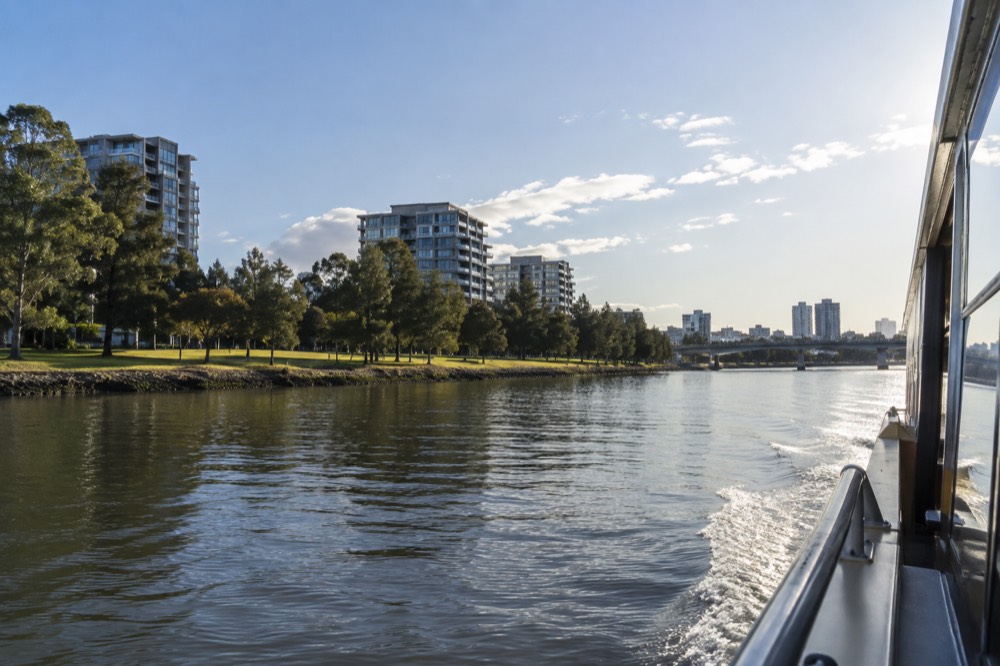
The ferry deserves the return leg at minimum. The F3 Parramatta River route runs from Circular Quay through the inner harbour's industrial and residential reaches, past gliding rowing crews and under two bridges, and it puts you at the foot of the eat street. It falls in the 9+ km ferry band, so the adult fare is A$9.20 one way, and unlike trains there is no off-peak discount on ferries. Check the timetable before you commit: river services are less frequent than harbour services and can be affected by low tide and closures.
Once you arrive, the Parramatta Light Rail is the local connector. Stage 1 opened on 20 December 2024 as the L4 line, running from Westmead through the Parramatta CBD to Carlingford, and it is handy for reaching the stadium end of town. Stage 2, heading toward Sydney Olympic Park, is funded and in procurement but not open yet, so do not plan around it. Buses fill the remaining gaps and use the same distance-band fares as light rail.
| Option | Route | Time | Adult fare | Notes |
|---|---|---|---|---|
| Train | Central to Parramatta | ~30 min | A$6.20 peak / A$4.34 off-peak | Most frequent; interchange at Parramatta |
| River ferry | Circular Quay to Parramatta Wharf | ~60 min | A$9.20 one way | No off-peak discount; check timetable |
| Light rail (local) | L4 Westmead to Carlingford | local hops | A$3.30-5.77 by band | Opened Dec 2024; good within the area |
| Bus | Various from the CBD | 40-70 min | A$5.77 max band | Slower than train |
| Car | Via M4 or Victoria Road | 30-50 min | parking varies | Avoid peak direction |
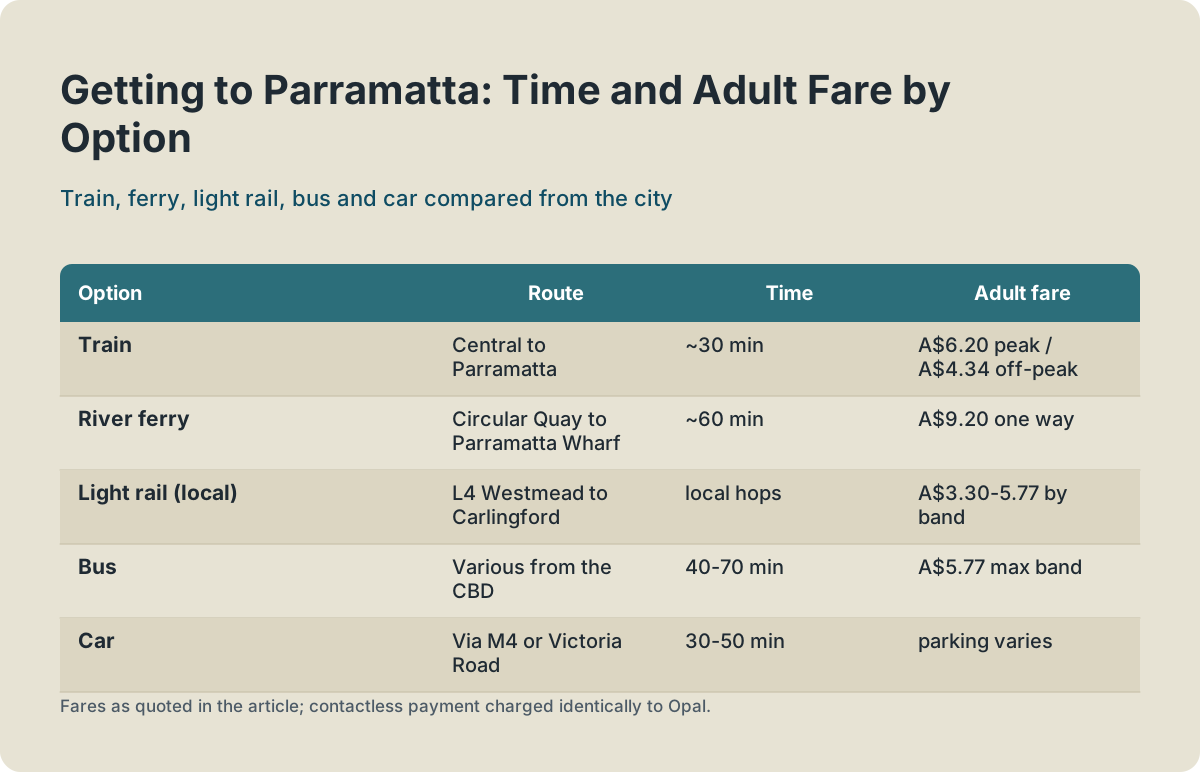
The fare table above is the short version of the decision. Weekday peak travellers pay the full A$6.20; anyone travelling Friday to Sunday, on a public holiday or outside peak times pays A$4.34 and enjoys a A$9.65 daily cap. If you build a weekend day around Parramatta, the transport cost is close to irrelevant.
Those three options are city-based, but they are the tours that pair most naturally with a Parramatta day: a guided history walk for the colonial story, a food tour for the eating, and a harbour cruise for the water leg. If Parramatta is one part of a wider Sydney stay, our guide to how many days you need in Sydney helps you slot a western day into a bigger itinerary.
What Are the Best Things to Do in Parramatta?
The essentials are the river foreshore walk, the Church Street eat street, the heritage core around Parramatta Square and its historic buildings, and the stadium-and-park precinct to the west. Add the Powerhouse museum once it opens, scheduled for 7 November 2026, and a river ferry leg for the ride itself. Most of it is free to walk, and the whole circuit fits in half a day.
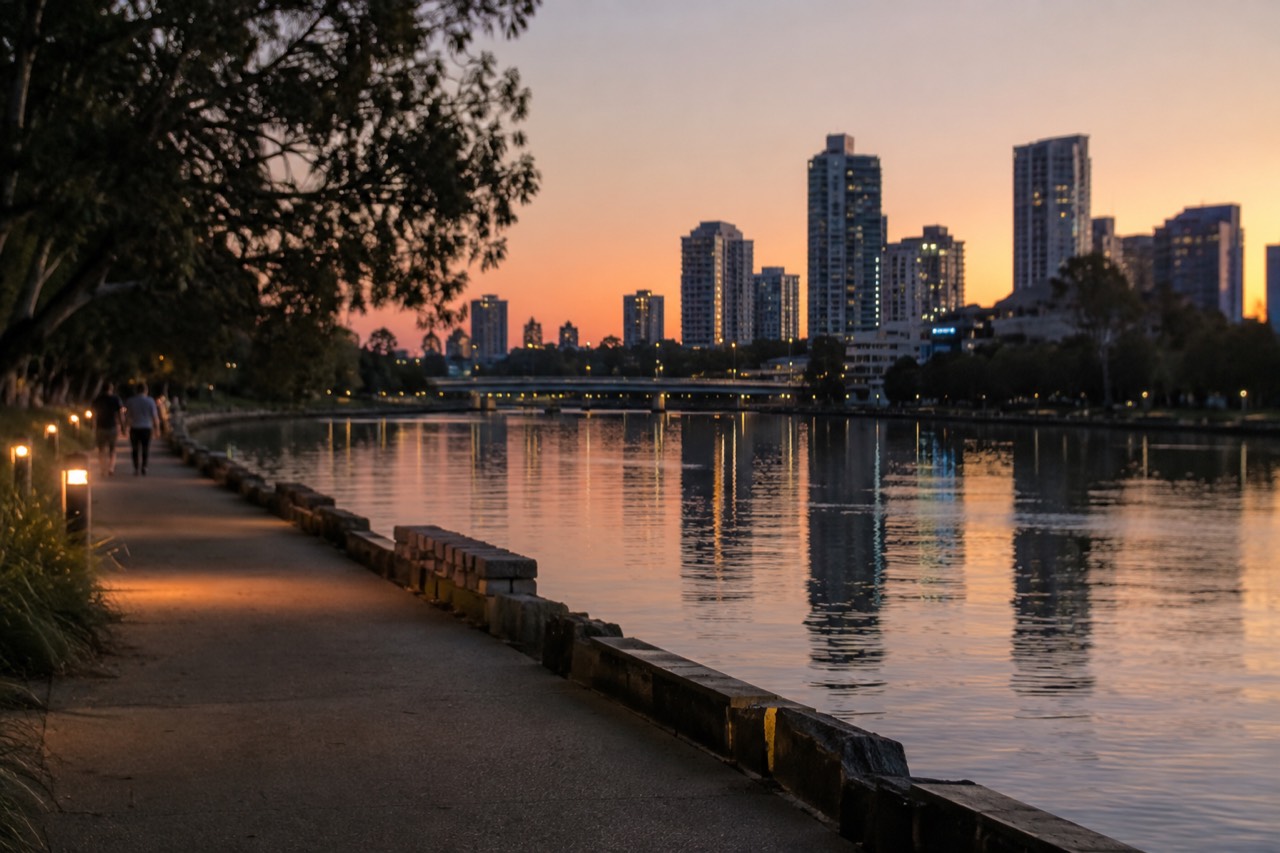
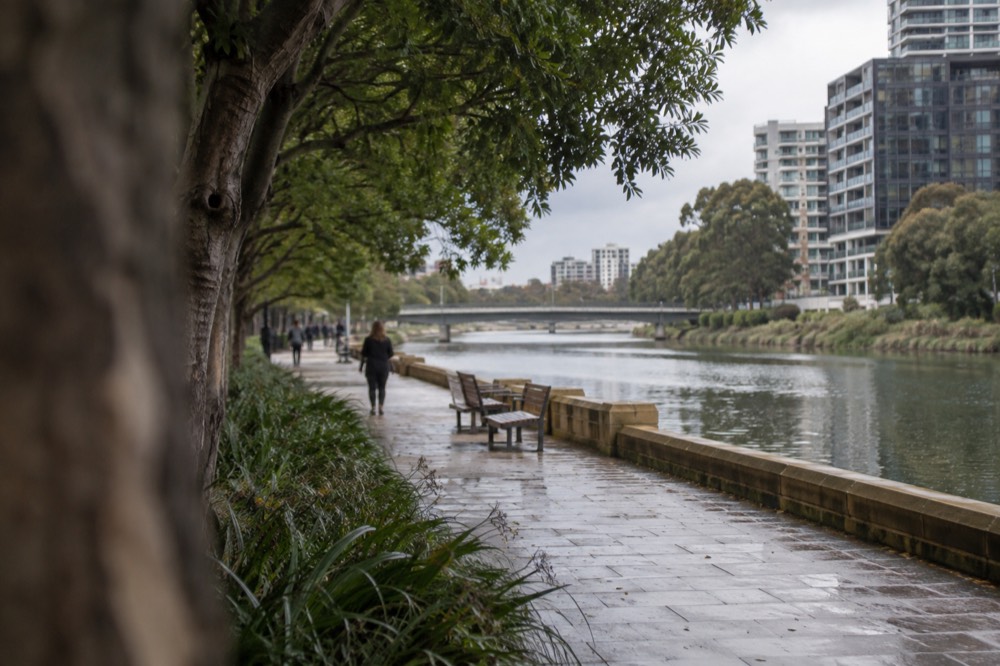
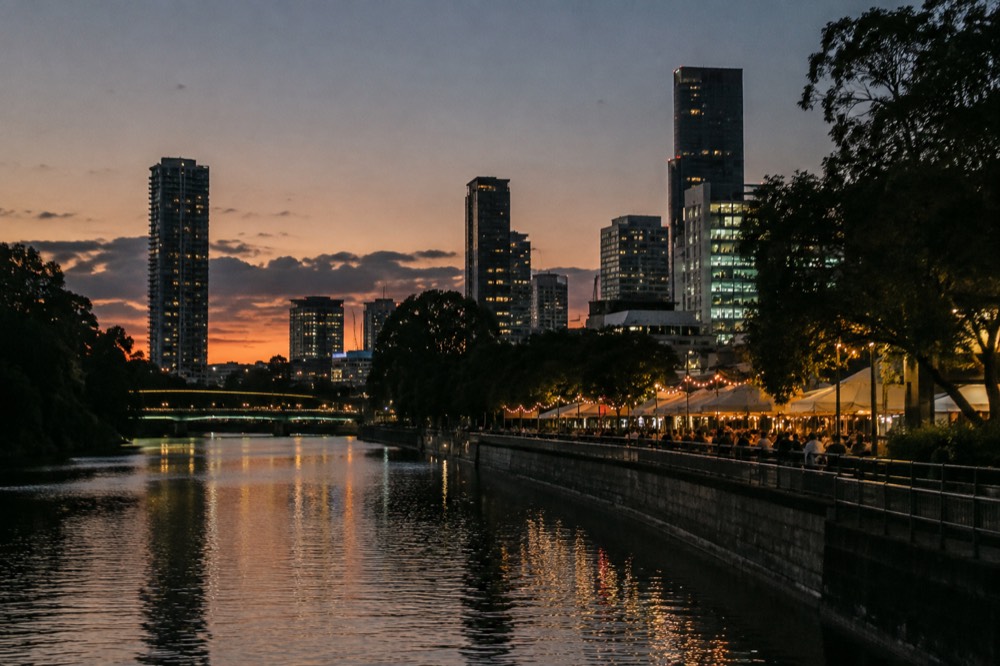
Start at the river. The foreshore path runs from the ferry wharf through parkland toward the stadium precinct, and it is flat, shaded in stretches, and busy with locals rather than visitors. The Parramatta River is a working commuter corridor, so you will share the water with ferries and rowing crews. Give the walk 45 minutes to an hour at sightseeing pace, longer if you stop at the parks.
Parramatta Square, directly south of the station, is the new civic heart: a large pedestrian plaza ringed by recent commercial architecture and older civic buildings, and a genuinely pleasant place to sit with a coffee. From there, the heritage buildings of the early settlement are a short walk east, including the old government buildings that predate anything in the Sydney CBD's current stock. This is the historical reason the trip exists: the colony's earliest surviving chapters sit here, not at Circular Quay.
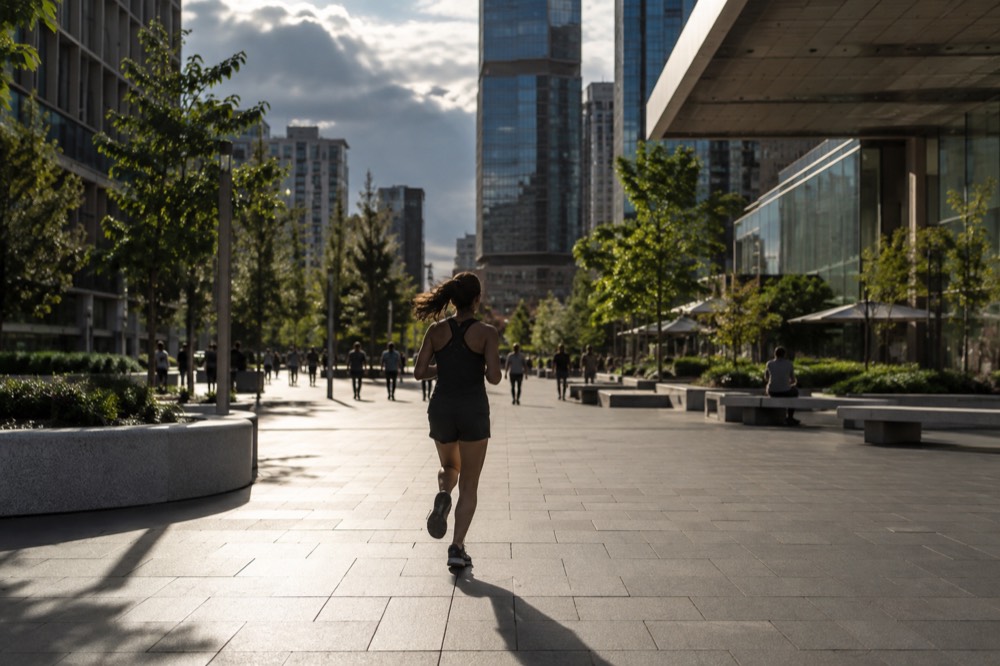
The Powerhouse Parramatta is the biggest change on the horizon. The state government has scheduled the new museum's public opening for 7 November 2026, on the river at the southern end of the eat street. If you are travelling before then, expect construction hoarding rather than a gallery; if you are travelling after, it becomes the anchor sight of the whole area and justifies a full day on its own. Check the official opening status before you plan around it.
For a sense of how the colonial story is told in the city itself, a guided walk helps. The most-reviewed history walk in Sydney is The Rocks guided walking tour, which covers the harbour-side end of the story; doing it before or after Parramatta gives you both halves of the early settlement narrative, the harbour where the ships landed and the west where the colony fed itself.
If a full Parramatta day leaves you with a spare morning in the city, the harbour sightseeing cruise is a low-effort way to see the water you arrived over, and it pairs with the ferry home from Parramatta as a two-part river-and-harbour day.
Where Do You Eat and Drink in Parramatta?
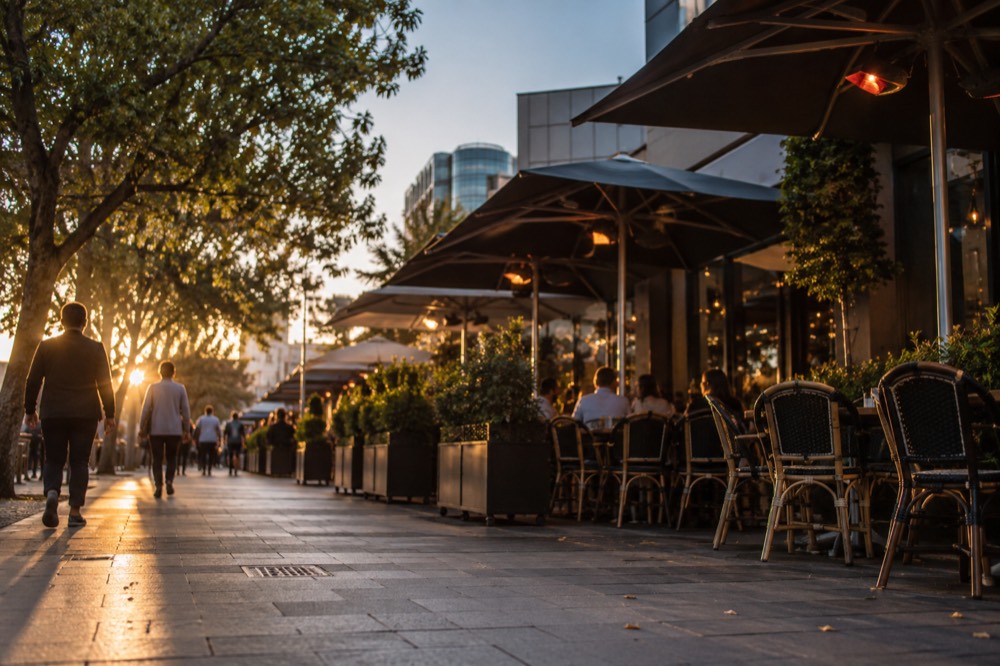
Church Street is the centre of gravity: a long eat street with a heavy concentration of restaurants, and the surrounding blocks add some of the most varied cheap eating in greater Sydney. Parramatta's food scene reflects its population, one of the most multicultural in the country, so the strong suits are Asian, Middle Eastern and South American cooking at prices well below the CBD. Budget roughly A$15-30 for a main meal.
Eat street runs south from the river through the CBD, and the density holds for well over a kilometre. The quality-per-dollar ratio here is the real draw: this is where western Sydney eats, and the volume keeps prices honest. The dining ranges given here are planning ranges, so check the room or the menu before you commit.
| Eating area | What it is good for | Planning range | Vibe |
|---|---|---|---|
| Church Street eat street | Everything; highest density | mains A$15-30 | Busy, casual, family-friendly |
| Harris Park, one stop away | Indian sweets and regional dining | mains A$12-25 | Low-key, local, excellent value |
| Parramatta Square precinct | Cafes, quick lunch, coffee | coffee A$4-6 | Modern, daytime |
| Foreshore pubs and hotels | Pub meals, river views | mains A$20-35 | Relaxed, evening |
Harris Park deserves its own line. It is one train stop or a 15-minute walk away and is one of the best Indian dining precincts in Australia. If you have come all the way west for food, going one stop further is the difference between a good meal and a great one.
If you want eating treated as a guided experience rather than self-directed, a food tour in the city centre covers the same instinct, and the Sydney food tour with six tastings is the established option. It runs in the CBD rather than the west, so treat it as a complement to Parramatta, not a substitute.
For the wider picture of where to eat across the city, Sydney's best restaurants guide covers the fine-dining end, and the Sydney food guide covers the everyday eating that Parramatta excels at.
Is Parramatta Worth the Trip, and How Long Should You Spend?
Yes, with one condition: go for the food, the river and the history rather than for headline attractions, because until the Powerhouse opens the sights are modest and the atmosphere is the product. Half a day covers the foreshore, the heritage core and a meal; a full day adds Harris Park, the stadium precinct and a leisurely ferry home. The ferry return leg is what turns a good half-day into a memorable full one.
The honest comparison is with the other day trips on offer. The Blue Mountains and the Hunter Valley are bigger-ticket days with bigger-ticket prices; Parramatta is the cheap, close option that costs under A$20 in transport and delivers a real sense of the metropolis beyond the postcard. Travellers who only see the harbour get a partial picture of Sydney: the city's centre of gravity has been shifting west for years, and Parramatta is where you can see it happening.
| Trip length | What fits | Transport cost | Best for |
|---|---|---|---|
| Half day (~4 hours) | Foreshore walk, heritage core, one meal | ~A$9-12 return by train | First-timers short on time |
| Full day | Add Harris Park, the stadium precinct, long lunch | ~A$15 with ferry leg | Food-led travellers |
| Full day plus ferry home | Train out, F3 ferry back at sunset | ~A$16 | The best version of the day |
Timing matters less here than in the mountains. Parramatta is a working city, so it is lively on weekdays and quieter on Sunday mornings before the eat street fills. Weekends give you the cheap travel cap and the off-peak fare, which is a real saving on a A$6.20 peak fare. Evenings are when Church Street is at its best, and the last ferries back are limited, so check the timetable if your plan ends riverside.
When Is the Best Time to Visit Parramatta?
Any season works, because the area's core activities, eating, walking and river riding, are weather-tolerant. Winter days average 16-18 °C maximum and are often clear; summer days average 25-26 °C and are better planned around morning walks and evening meals. August is Sydney's clearest month on the long-run averages, while June is its wettest, so late winter is a surprisingly good bet.
The climate logic that applies to Sydney generally applies here, with one western twist: Parramatta sits inland of the sea breeze, so summer afternoons can run a few degrees warmer than the coast and there is no beach to retreat to. Plan summer visits for morning walking and evening dining, and treat the middle of the day as cafe time. In winter the reverse holds: midday is the comfortable window and the foreshore walk is at its best then.
June is the wettest month in the long-run averages for Sydney, at 133.1 mm, wetter than any summer month, which surprises most visitors. August averages 13.4 clear days, the most of any month. If you are choosing between a June weekend and an August one for a Parramatta day, the numbers favour August. Rain never needs to cancel the trip, though, because the eat street and the interchanges keep you indoors for most of the distance between them. For the full month-by-month picture, see Sydney's weather month by month, and for seasonal planning across the whole trip, our best time to visit Sydney guide.
Daylight saving matters for ferry planning. NSW clocks move forward on the first Sunday in October and back on the first Sunday in April, so an evening ferry home in summer runs in daylight and the same ferry in winter runs in the dark. The river at dusk either way is one of the quiet pleasures of the trip.
If Parramatta is one stop on a longer exploration of the region, our day trips from Sydney roundup places it alongside the bigger-name destinations, and the guide to day trips from Sydney without a car confirms how few of them are this easy by train.
Common Questions About Parramatta
What is Parramatta and why does it matter?
Parramatta is Sydney's second CBD, 23 kilometres west of the harbour and roughly 30 minutes by train from Central. It was one of the earliest European settlement sites in Australia and is now a major centre with its own river, light rail, food precincts and a museum opening in November 2026.
How do you get to Parramatta from the city?
The train takes about 30 minutes from Central and costs A$6.20 peak or A$4.34 off-peak for an adult. The river ferry from Circular Quay costs A$9.20 one way and takes about an hour. Contactless cards are charged the same as Opal, with the same caps.
What are the best things to do in Parramatta?
Walk the river foreshore, explore Parramatta Square and the heritage buildings of the early settlement, eat along Church Street, and ride the river ferry. The Powerhouse Parramatta museum is scheduled to open on 7 November 2026 and will become the area's anchor attraction.
Where do you eat and drink in Parramatta?
Church Street is the main eat street, with mains typically running A$15-30. Harris Park, one train stop away, is one of the best Indian dining precincts in the country. Prices are generally well below the Sydney CBD for equivalent quality.
Is Parramatta worth the trip, and how long should you spend?
Yes, if you go for the food, the river and the history rather than headline attractions. Half a day covers the essentials; a full day with the ferry home is the better version. Transport costs under A$20 return.
When is the best time to visit Parramatta?
Any season works. Summer averages 25-26 °C maximum and suits morning walks and evening meals; winter days average 16-18 °C and are often clear. August is Sydney's clearest month on the long-run averages, while June is its wettest.