Sydney in Summer: Beaches, Events and a Five-Day Plan
Sydney's summer, December through February, is the season of patrolled beaches, harbour ferries and the city's biggest events. Here is how to plan it properly.
Short answer
Sydney's summer runs December to February, with average daily maximums of 25.3 to 26.0°C. The city's beaches are patrolled by professional lifeguards, the harbour is at its busiest, and New Year's Eve draws up to a million people to the foreshore. Plan around the heat, the flags and the festival calendar.
Sydney's summer is the reason most people come. The long-run averages from the Bureau of Meteorology put December at a mean maximum of 25.3°C, January at 26.0°C and February at 25.8°C, with warm nights that barely drop below 18°C. The harbour is busy, the ferries are full, and the city's three biggest spectacles, New Year's Eve, Sydney Festival and Mardi Gras, all land inside the same three-month window. This guide from the Sydney Travel Guide desk covers the weather as it actually is, where to swim safely, what is on, and a five-day plan that survives a 35°C afternoon.
What Does Summer in Sydney Actually Feel Like?
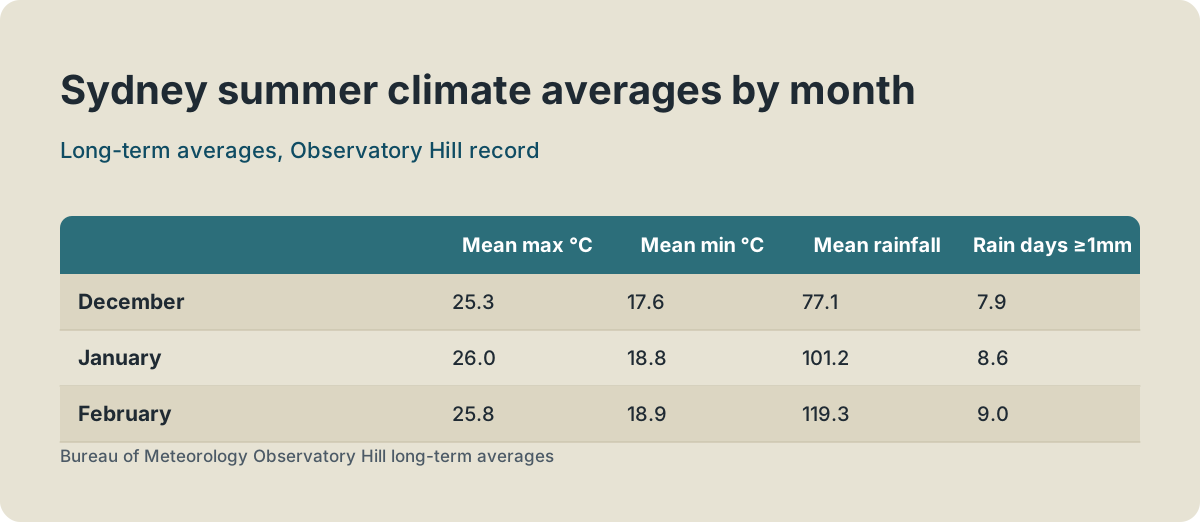
Sydney's summer, December through February, averages daily maximums of 25.3 to 26.0°C and overnight minimums of 17.6 to 18.9°C. Rainfall is moderate, with January averaging 101.2 mm and February 119.3 mm, and the UV index regularly reaches extreme levels of 11 or above. Daylight saving adds an extra hour of evening light until early April.
Those numbers are long-term averages from the Bureau of Meteorology's Observatory Hill record, not a forecast, and they understate the real experience in two ways. First, heatwaves push well past the average: individual summer days in Sydney routinely exceed 35°C, and the city's humidity makes the harbour feel heavier than the thermometer suggests. Second, and this is the detail most guides miss, February is statistically Sydney's cloudiest month, with a long-run average of just 5.3 clear days, fewer than any other month of the year. August, in the middle of winter, averages 13.4. Peak season is not the sunniest time to be here. The full month-by-month picture, including the winter months if you are weighing a different season, is in our Sydney weather month by month guide.
| Month | Mean max °C | Mean min °C | Mean rainfall mm | Rain days ≥1mm | Mean clear days |
|---|---|---|---|---|---|
| December | 25.3 | 17.6 | 77.1 | 7.9 | 6.6 |
| January | 26.0 | 18.8 | 101.2 | 8.6 | 6.8 |
| February | 25.8 | 18.9 | 119.3 | 9.0 | 5.3 |
The practical consequences are simple. Book shade, water and air-conditioning into the middle of the day, treat sun protection as non-negotiable rather than optional, and do not build an itinerary that assumes cloudless skies. The Bureau of Meteorology publishes the full climate averages behind these figures, and the sun-protection threshold is official advice: cover up whenever the UV index hits 3, which in a Sydney summer happens by mid-morning every day.
How Should You Organise Your First Summer Days?
Start with a loop that links the harbour, the eastern beaches and the city centre, because Sydney's headline sights sit along two corridors rather than one. A hop-on hop-off bus ticket covering Sydney and Bondi, from US$54.86, lets you do that loop without learning the train map on day one. Save the walking-heavy exploring for early morning or after 4pm.
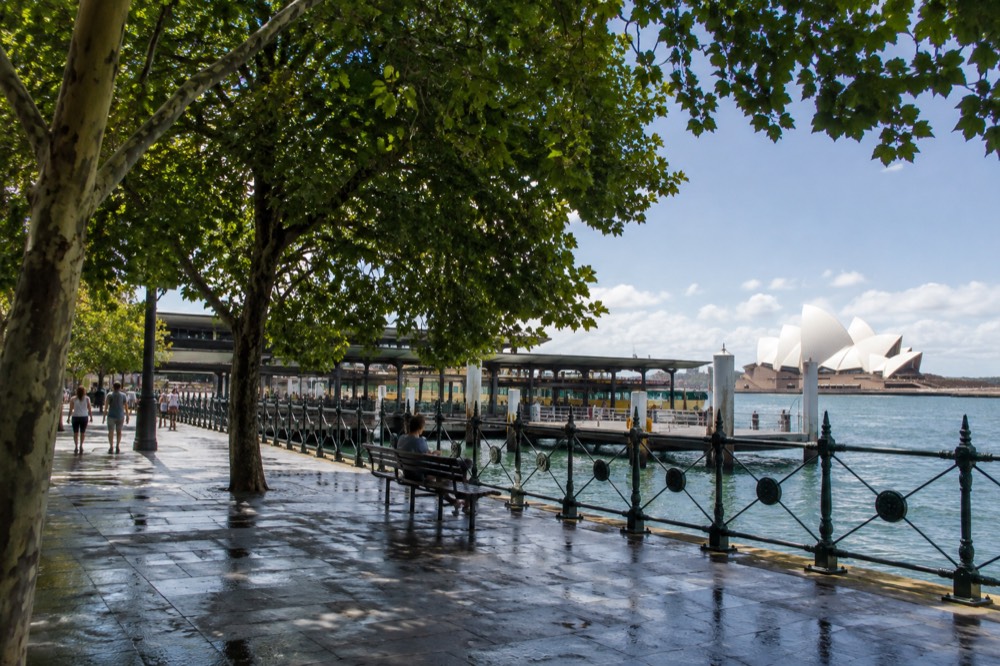
The geography rewards a plan. Circular Quay, The Rocks, the Sydney Opera House and the Royal Botanic Garden sit within a two-kilometre stretch of foreshore, while Bondi is 30 to 40 minutes away by bus on the other side of the city's eastern suburbs. First-time visitors who try to walk everything in summer heat end up exhausted by lunchtime. A structured first day, which our Sydney for first timers guide lays out in full, plus a transport pass that removes the navigation problem, is the combination that works.
The trio above covers the three ways people actually consume Sydney in summer: a bus loop for the overview, a [multi-attraction pass](https://gocity.tpk.ro/rUvgw2vS) for the indoor escapes, and a harbour cruise for the water itself. If you only take one of them, the bus is the most flexible, since it runs the Sydney and Bondi routes on a hop-on hop-off basis and pairs with an optional cruise. The Sydney and Bondi Big Bus tour, rated 4.0 across 2,848 reviews, is the one to check first for your dates, because summer school holidays thin out the seat availability more than visitors expect.
One planning note that saves real money: the indoor attractions on the pass, SEA LIFE Sydney Aquarium, Sydney Tower Eye, WILD LIFE Sydney Zoo and Madame Tussauds, are exactly the places you will want at 1pm on a 35°C day. Buying the pass before you arrive, rather than at a counter, is the cheaper route, and the air-conditioning is part of the product.
Where Should You Swim, and How Do You Stay Safe?
Swim at a patrolled beach, between the red and yellow flags, during patrol hours. Bondi, Bronte, Tamarama, Coogee and Manly are patrolled year-round by council lifeguards, with Waverley's summer hours running 6am to 7pm daily from October to April. If a beach is not patrolled at that moment, do not swim there, regardless of your ability.
That is not caution for its own sake. Surf Life Saving Australia's National Coastal Safety Report 2025 recorded 154 coastal drowning deaths nationally, the highest on record, and every single incident occurred outside the flags, outside patrol hours, or at an unpatrolled location. Rip currents are the number one hazard on this coast. The official advice from Beachsafe, the organisation's public safety site, is to stay calm, raise an arm and call for help, float with the current which may return you to a sandbank, or swim parallel to the beach toward breaking waves. The prevention message is simpler: STOP, check for rips; LOOK, for other dangers; PLAN, how to stay safe.
| Beach | Patrol | Summer hours | Lifeguard type |
|---|---|---|---|
| Bondi, Bronte, Tamarama | Year-round | 6am–7pm daily (Oct–Apr) | Council professionals |
| Coogee | Year-round | Approx. 7am–7pm in daylight saving | Council professionals, volunteer lifesavers on summer weekends |
| Manly | Year-round | Daily, hours vary by season | Council professionals |
| Dee Why | Year-round from around May 2026 | Daily | Council professionals |
| Most other Northern Beaches | Late September to late April | Generally 9am–5pm | Professionals plus weekend volunteers |
Two summer-specific hazards deserve their own mention. Bluebottles are common in warmer months and after onshore winds: do not touch them on the sand or in the water, and if stung, leave the water, remove tentacles with seawater rather than bare hands, and immerse the sting in hot water around 45°C for up to 20 minutes. Water quality is the other one. The NSW Beachwatch program advises staying out of the water while it rains and for up to one day after heavy rain at ocean beaches, and for up to three days after heavy rain at harbour and estuarine swim sites. February's 119.3 mm average rainfall makes that a real planning factor, not a footnote.
If you want the water without the surf, Sydney's ocean pools are the safer alternative. Bronte Ocean Pool and the North Bondi Children's Pool are free and council-maintained, while Bondi Icebergs is a separate club-managed 50-metre pool with its own access fees. They still close in big swell. For surf itself, a lesson beats renting a board: the two-hour Bondi lessons run from US$70.86 with all equipment included, and instructors put you between the flags.
The full coastal picture, including the walk that links Bondi to Coogee past three of these beaches, is in our Bondi to Coogee coastal walk and Bondi Beach guides. If the beach plan feels like a lot of logistics on top of a new city, the hop-on hop-off bus runs a stop at Bondi, so you can pair a morning swim with an afternoon circuit of the city sights without a transfer.
What Is the Best Way to See the Harbour in Summer?
Take a ferry as transport and a cruise as an event. The F1 Manly ferry costs $9.20 one way on an Opal card and is arguably the best-value harbour viewing in the city, while a dedicated sightseeing cruise, from US$28.53, adds commentary and a fixed circuit. For a summer evening, the sunset catamaran option runs about one hour on the water.
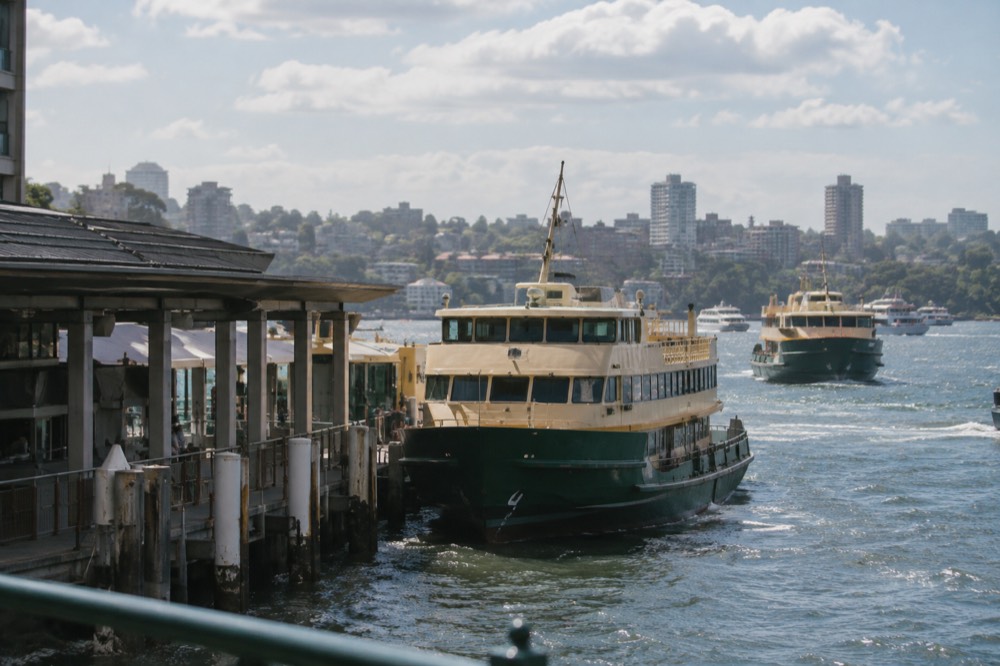
Sydney's harbour is the one asset you should experience from the water at least twice, because the two experiences are different. The public ferries are working transport: you ride with commuters, you pay with the same Opal card as the trains, and the Manly crossing takes about 30 minutes past the harbour heads. A sightseeing cruise is slower, narrated and built for the view. The morning and afternoon departures run 90 minutes, and the operator's listing carries the live price and departure times.
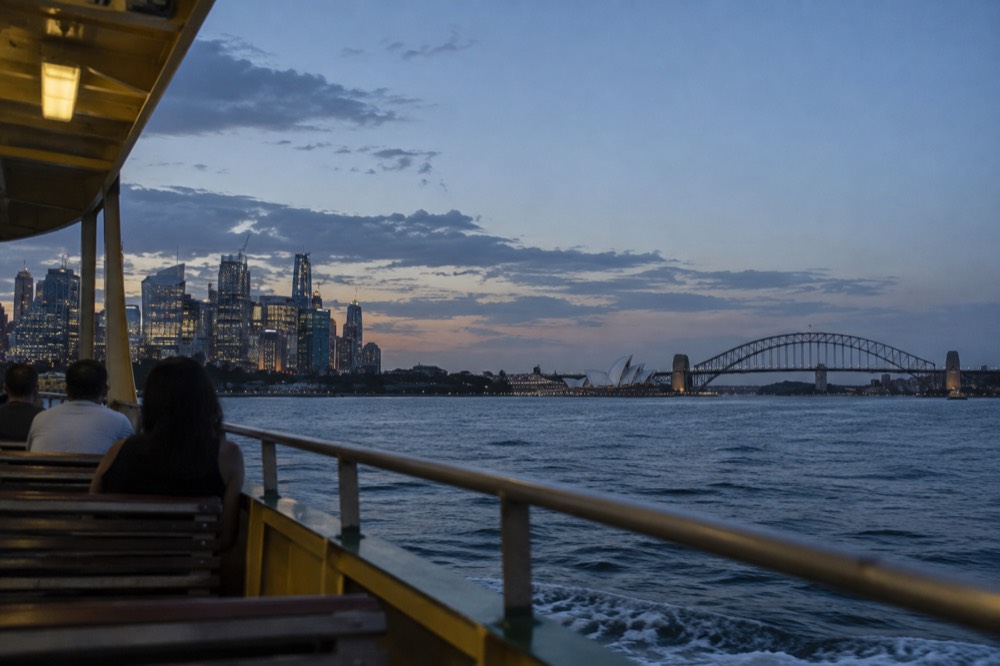
One trap worth naming: the privately operated Manly Fast Ferry accepts Opal cards through OpalPay, but its fares differ and the Opal daily caps and transfer discounts do not apply. The public F1 ferry gives you full Opal benefits. The distinction, and the whole fare system, is explained in our Sydney ferries guide.
For the evening, the harbour changes character after sunset, and a one-hour sunset catamaran cruise, from US$43.38 with a 4.83 rating across 310 reviews, is the low-effort way to be on it. Daylight saving means summer sunsets land close to 8pm, so the cruise slots neatly after a beach afternoon.
What Is on in Sydney in Summer?
The season's anchors are New Year's Eve, with 9pm family fireworks and a midnight display drawing up to a million people to the foreshore; Sydney Festival across January; Australia Day on 26 January; and the Mardi Gras parade, scheduled for Saturday 6 March 2027 with Fair Day on 14 February 2027. Most New Year's Eve vantage points are free and unticketed, but they fill early.
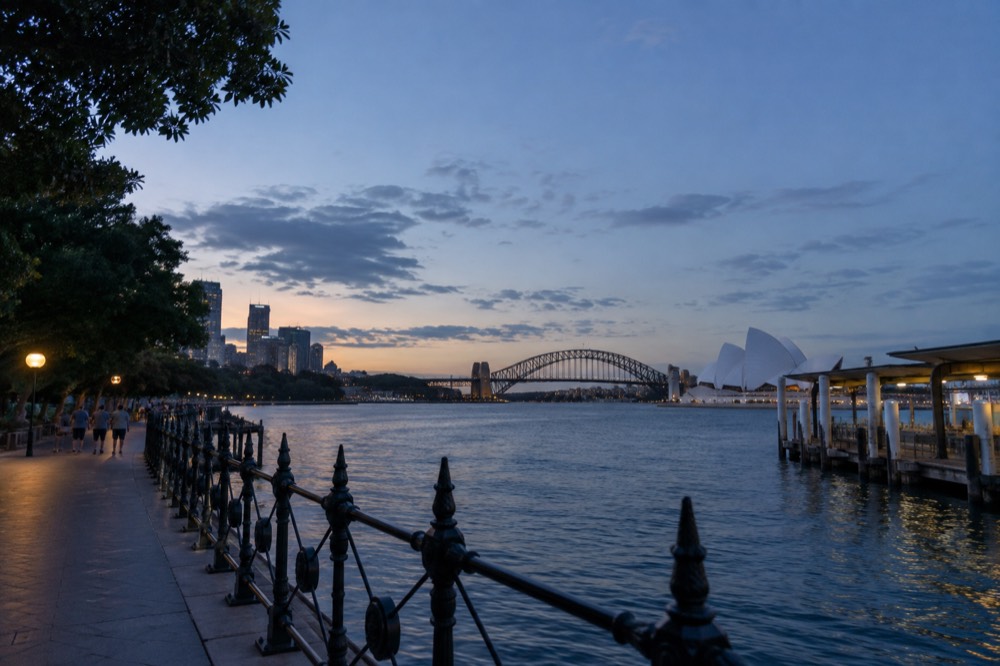
New Year's Eve is the biggest night of Sydney's year. The official free vantage points include Birchgrove Park, capacity around 5,000, and Circular Quay West, capacity around 16,000, and the City of Sydney has counted crowds of up to one million around the harbour. Free sites open hours before the 9pm display and reach capacity well before midnight, so the decision is really about how early you are willing to hold a spot in summer evening heat. Our Sydney New Year's Eve guide covers the vantage points in detail.
| Event | When | Cost basics |
|---|---|---|
| New Year's Eve fireworks | 31 December, 9pm and midnight | Most foreshore vantage points free, fill early |
| Sydney Festival | Across January | Program varies, mix of free and ticketed |
| Australia Day | 26 January (public holiday) | Public events, Opal capped at the $9.65 holiday rate |
| Mardi Gras Fair Day | 14 February 2027 | Free public event |
| Mardi Gras parade | 6 March 2027 | Free to watch along Oxford St |
Sydney Festival's 2027 dates were not yet published when this guide was prepared, so check the organiser's site rather than a blog's guess. The same caution applies to any specific event date beyond the ones above: 2027 calendars for several Sydney events had not been announced. What is certain is the shape of the season, with the festival circuit running through January and the Mardi Gras build-up starting in February. One transport bonus worth knowing: public holidays, including Australia Day, Boxing Day and the additional Christmas and Anzac days, use the cheaper $9.65 Opal daily cap rather than the $19.30 weekday cap, so a public holiday is the cheapest day to travel widely.
How Do You Fill a Hot Afternoon When the Beach Is Too Much?
Go to the free, air-conditioned institutions first. The Royal Botanic Garden Sydney is free to enter and open from 7am to sunset, the Australian Museum is free for general entry, and the Art Gallery of New South Wales is free and stays open until 10pm on Wednesdays. The Calyx horticultural space is entry by donation.
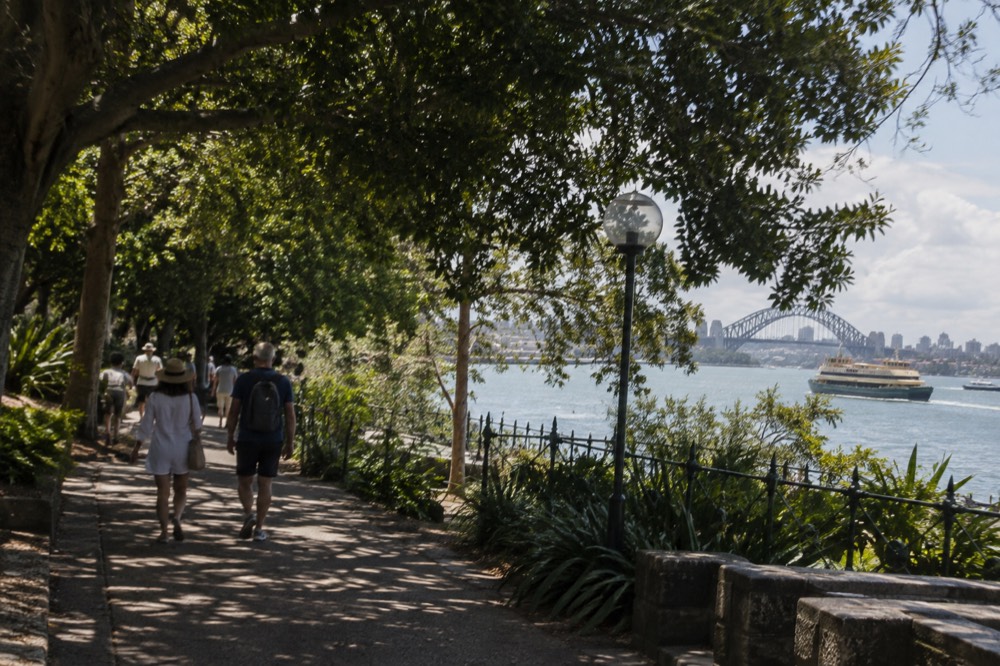
The free list is longer than most visitors expect, and it matters in summer because the middle of the day is genuinely unpleasant outdoors between Christmas and the end of February. The Art Gallery's Wednesday late opening is the under-used detail: a 10pm close turns a 35°C afternoon into a civilised evening indoors, and the gallery sits at the top of the Botanic Garden so you can pair the two across one walk. The full list, including picnic lawns and shade, is in our free things to do in Sydney and Sydney parks and gardens guides.
One closure to plan around: the Powerhouse Museum in Ultimo has been closed to the public since 4 February 2024 for a major redevelopment and is not due back until around 2029. Its replacement in Parramatta is scheduled to open on 7 November 2026, but that is a different trip. Any guide still listing Powerhouse Ultimo as an open attraction is out of date.
For families, the paid indoor circuit is the counterweight to the heat: SEA LIFE Sydney Aquarium, Sydney Tower Eye, WILD LIFE Sydney Zoo and Madame Tussauds, all covered by the four-attraction pass from US$35.84 with a 4.3 rating across 298 reviews. Taronga Zoo is the outdoor exception, open 365 days a year with summer hours of 9:30am to 5pm, and online adult tickets from $51.30 against a $57.00 gate price, roughly 10% cheaper at every tier. Go early, before the animals retreat into shade.
How Do You Get Around, and What Will It Cost?
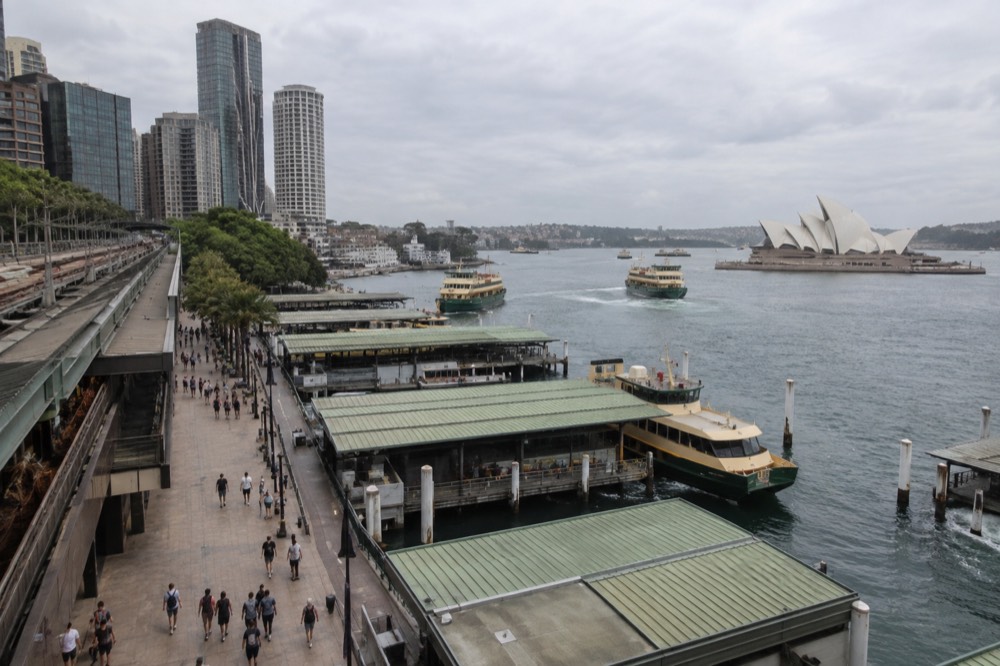
Use a contactless credit card or an Opal card and tap on and off everything. Adult fares are capped at $19.30 a day Monday to Thursday and $9.65 a day from Friday to Sunday and on public holidays, with a $50 weekly cap. The airport station access fee of $18.61 sits outside those caps, so the 400 bus is the cheaper airport alternative.
The system is forgiving to visitors because a contactless card is charged exactly what an Opal card is charged, with every cap and the 30% off-peak discount included. The off-peak discount applies to metro, train, bus and light rail on Fridays, weekends, public holidays and outside peak times, but not to ferries. Tap off, always, because a missed tap-off charges the maximum default fare. The full fare tables, including the airport transfer options, are published by Transport for NSW, and our Opal card guide for visitors walks through them.
| Ticket type | Daily cap Mon–Thu | Daily cap Fri–Sun and holidays | Weekly cap | Notes |
|---|---|---|---|---|
| Adult Opal or contactless | $19.30 | $9.65 | $50 | Caps apply across metro, train, bus, ferry, light rail |
| Opal single trip ticket | None | None | None | Costs more, earns no benefits; backup only |
| Airport station access fee | Outside caps | Outside caps | $37.75 separate | $18.61 adult, charged on top of the fare |
Two summer-specific transport notes. First, the metro does not yet reach Bankstown: the Sydenham to Bankstown extension completed trial running and was targeting a late-2026 opening, so a guide claiming it is running today is wrong. Second, daylight saving means every published time is AEDT from the first Sunday of October to the first Sunday of April; when an operator says a sunset cruise departs at 6:30pm in January, that is daylight saving time.
Can You See Whales or Wildlife in Summer?
Not whales. Sydney's whale watching season runs May to November, with the northern migration from May to July and the return with calves from August to November, so December to February is the one stretch of the year with no whale product running. For native animals in summer, Taronga Zoo and the wildlife parks are the reliable options.
This is one of the most common booking mistakes in Sydney: visitors assume whale cruises run year-round and are surprised that the season closes in November. The NSW National Parks service is explicit that the migration window is May to November, with the peak around late June and July. An estimated 40,000-plus humpbacks pass along the NSW coast each year, but none of them are off Sydney Heads in February. If whales are the reason for your trip, the season guide to whale watching in Sydney will tell you which month to book instead.
Wildlife on land is a different story. Taronga Zoo's ferry-plus-entry combination, from US$57.19 with a 4.61 rating across 1,461 reviews, is the summer-friendly option because the F2 zoo ferry from Circular Quay is itself a harbour cruise, and the zoo's summer hours run to 5pm. Featherdale Wildlife Park, out west, is reachable inside several Blue Mountains day tours, but a standalone ticket is not sold here, so treat it as a day-trip inclusion rather than a separate booking. For a deeper look at koalas, kangaroos and where to actually find them near the city, see where can you see koalas in Sydney.
How Do You Structure a Five-day Summer Itinerary?
Build each day around the heat: outdoors before 11am or after 4pm, indoors or on the water in the middle. A five-day split of city and harbour, Bondi, Manly, an indoor day and one flexible day covers Sydney's summer essentials without a midday collapse. The ferry, the coastal walk and one evening on the water are the three non-negotiables.
The table below is the shape that works. Treat it as a frame rather than a contract: swap the indoor day to whichever afternoon the forecast turns, and keep the ferry day for a clear morning, because the harbour crossing is wasted in cloud, and February averages only 5.3 clear days.
| Day | Morning | Middle of the day | Late afternoon and evening |
|---|---|---|---|
| 1 | Circular Quay, The Rocks walk | Sydney Opera House tour or Art Gallery (open until 10pm Wednesdays) | Royal Botanic Garden, harbour sunset |
| 2 | Bondi, surf lesson or swim between the flags | Sea LIFE Aquarium or Tower Eye on the attractions pass | Bondi to Tamarama stretch of the coastal walk |
| 3 | F1 ferry to Manly, Shelly Beach snorkelling spot | Manly Corso and shade | Ferry back at golden hour, sunset cruise |
| 4 | Australian Museum (free entry) | Indoor attractions or a pool afternoon | Newtown or Surry Hills dinner |
| 5 | Flexible: festival event, zoo ferry, or a rest morning | Taronga Zoo or shopping at the QVB | New Year's Eve fireworks if your dates align |
Cost the week before you book. Beyond the tour prices shown on the cards above, the day-to-day numbers are modest: the Opal weekly cap is $50, the Botanic Garden, Australian Museum and Art Gallery general entry are free, and the beach days cost nothing but sunscreen. A fuller budget breakdown, including meals and accommodation ranges, is in our Sydney trip cost breakdown and Sydney on a budget guides.
However you fill the days, three habits carry the whole season: sunscreen reapplied at lunchtime, swimming only between the flags, and a plan B for the afternoons when the heat wins. Sydney in summer is at its best early and late, and the city is generous to anyone who plans around that.
Common Questions About Sydney in Summer
What are the hottest months in Sydney?
January and February, with long-run average maximums of 26.0°C and 25.8°C respectively, and December close behind at 25.3°C. Individual days regularly exceed 35°C, and February nights average 18.9°C, the warmest of the year.
Is summer the best time to visit Sydney?
Summer suits beach-goers and event-goers, but it is statistically not the sunniest season: February averages just 5.3 clear days, the fewest of any month. Many travellers prefer the shoulder months for clearer skies and thinner crowds.
Can you swim at Sydney beaches in summer?
Yes, at patrolled beaches between the red and yellow flags during patrol hours. Bondi, Bronte, Tamarama, Coogee and Manly are patrolled year-round, with Waverley summer hours of 6am to 7pm daily. Stay out of the water for up to one day after heavy rain at ocean beaches.
What should I book in advance for a Sydney summer trip?
Book New Year's Eve accommodation and any harbour-view dining first, then BridgeClimb and the Opera House tour, then festival tickets. Free New Year's Eve vantage points need no booking but fill hours before the 9pm fireworks.
Are there whales in Sydney in summer?
No. The whale watching season runs May to November along the NSW coast, with the peak in late June and July. December to February has no scheduled whale product running.
What time does it get dark in Sydney in summer?
Sunset falls close to 8pm in December and January thanks to daylight saving, which runs until the first Sunday of April. All published summer times are AEDT, one hour ahead of standard time.