3 Days in Sydney: The Itinerary That Actually Works
Three days is enough to see Sydney properly, if you group the city by geography instead of ticking landmarks at random. This itinerary does exactly that.
Short answer
A good 3-day Sydney itinerary splits the city by area: Day 1 around Circular Quay, The Rocks and the harbour; Day 2 the Eastern Suburbs and Bondi to Coogee; Day 3 a trip out, either the Blue Mountains or Manly and the Northern Beaches. Most of the core sights are free to walk between, and ferries cost from A$7.35 each way.
3 Days in Sydney: The Itinerary That Actually Works
Sydney rewards three days more than almost any other Australian city, because its headline sights cluster into three distinct pockets: the harbour, the coast, and the bush beyond it. Visitors who lose a third of their trip to backtracking between those pockets usually leave convinced the city is spread out. It is not. Circular Quay to The Rocks is a five-minute walk, the ferry to Manly takes about half an hour, and the train to Bondi Junction connects to the beach in under an hour from the centre. The failure mode is planning by landmark rather than by area.
This itinerary is built on that principle. Day one stays around the harbour, day two takes the eastern coastline, and day three goes out of town. Every walking distance in this guide is real, every fare comes from Transport for NSW's published fare tables, and the two things genuinely worth booking ahead are flagged where they appear. The Sydney Travel Guide team keeps this page's transport figures aligned with the current fare year, so the numbers below hold until the next annual reset.
What Is a Good 3-Day Itinerary for Sydney, Australia?
A good 3-day Sydney itinerary is: Day 1, Circular Quay, The Rocks, the Royal Botanic Garden Sydney and an afternoon harbour ferry; Day 2, Bondi Beach and the coastal walk to Bronte or Coogee; Day 3, either the Blue Mountains by train or Manly and the Northern Beaches by ferry. Each day uses one transport spine, so you never cross the city twice. Expect roughly 8 to 10 kilometres of walking on days 1 and 2 combined.
The structure matters more than the specific stops. Sydney's harbour sits at the bottom of a ridge, the beaches face east, and the mountains sit 65 kilometres to the west. A day that starts at the Opera House, jumps to Bondi at lunch and ends in The Rocks spends nearly three hours on transport for maybe four hours of actual sightseeing. The itinerary below keeps each day inside one corridor.
Day 1: The Harbour Core
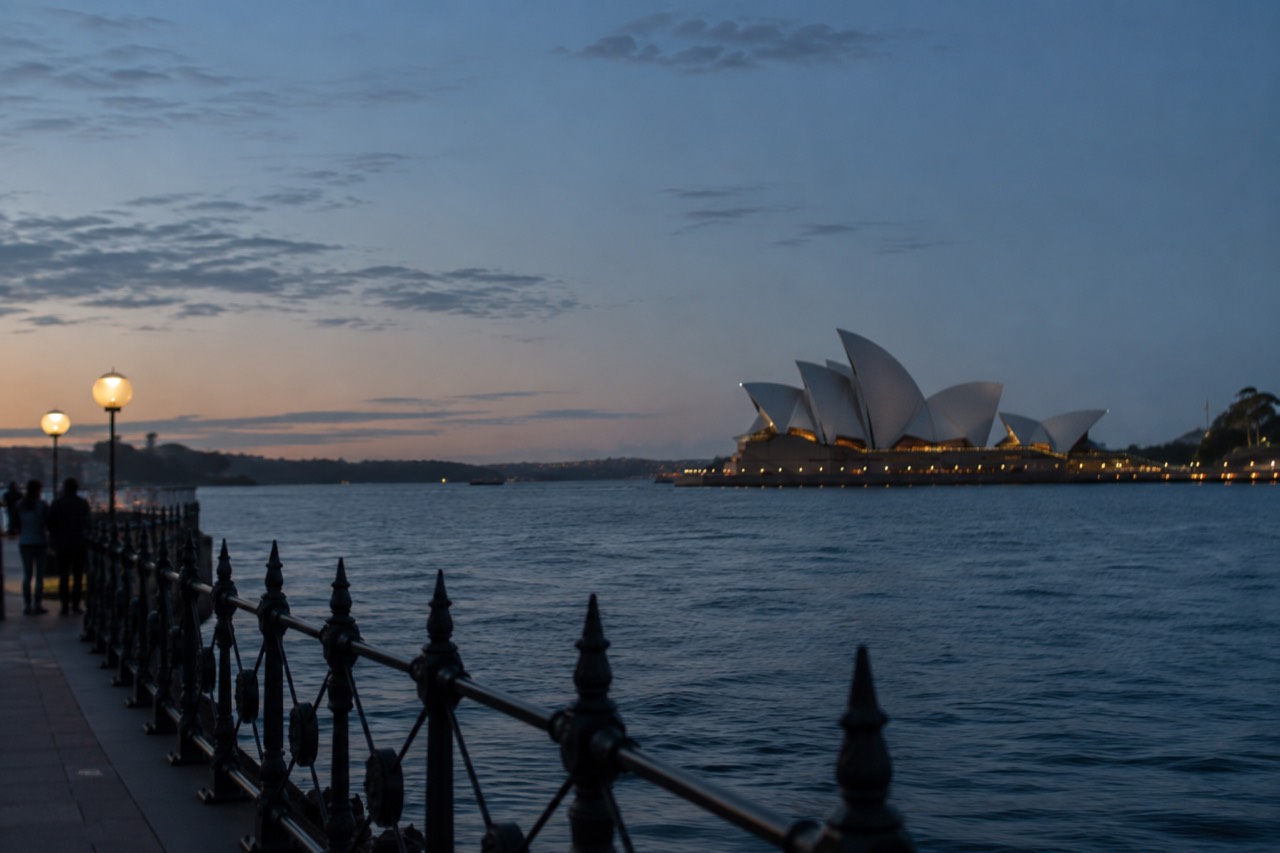
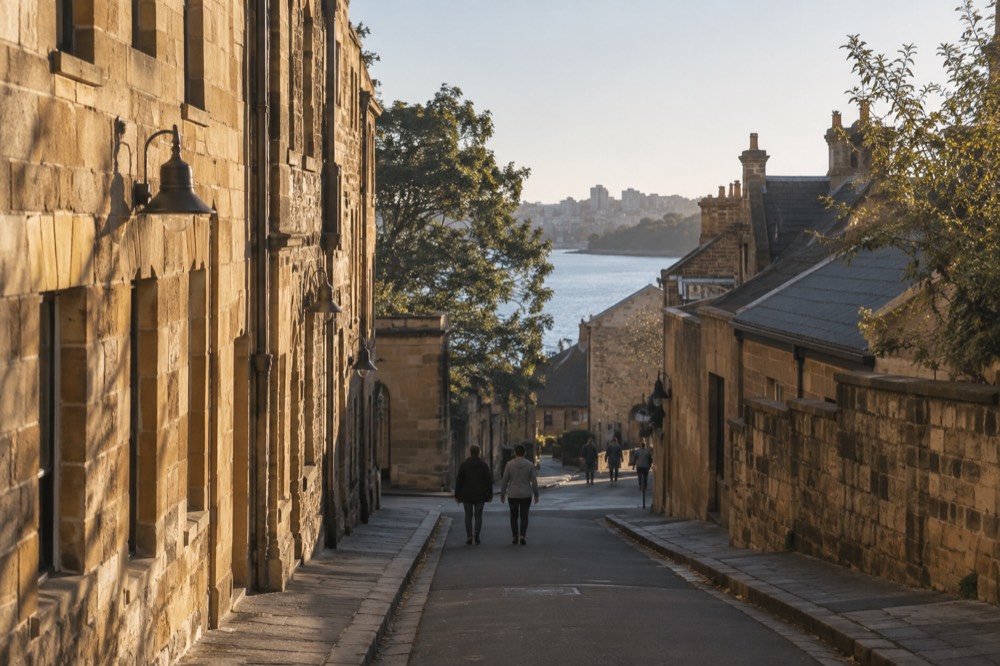
Start at Circular Quay early, before the tour buses arrive around 10am. The Opera House forecourt is free to walk, and the building is at its best in the morning light from the east. From there, walk west through The Rocks, Sydney's oldest neighbourhood, where the sandstone laneways hold the weekend markets and some of the city's oldest pubs. Allow two unhurried hours.
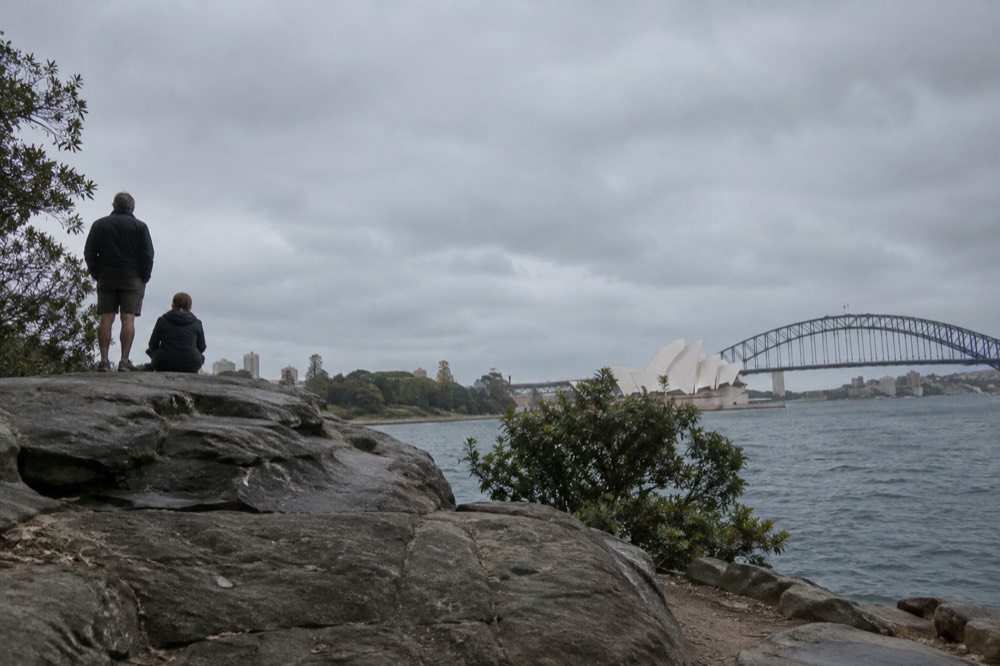
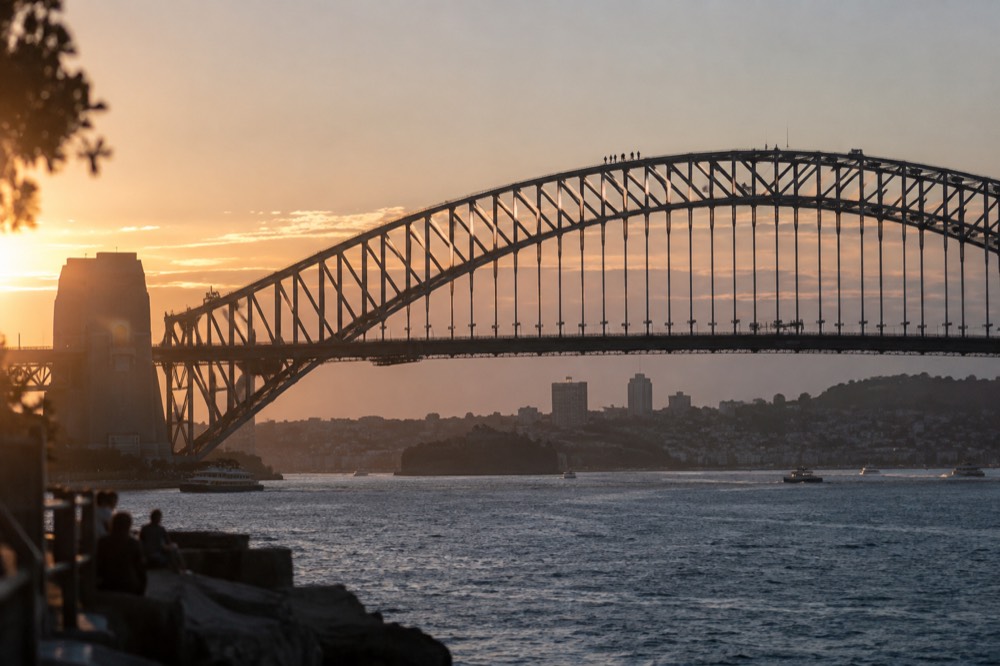
Cut south to the Royal Botanic Garden Sydney, which is free to enter and open daily from 7am to sunset. The path along the Farm Cove shoreline to Mrs Macquarie's Chair takes about 20 minutes at a stroll and delivers the single best photo angle in the city: Opera House left, Harbour Bridge right. Turn back through the garden and you land at the Art Gallery of New South Wales, free to enter and open until 10pm on Wednesdays.
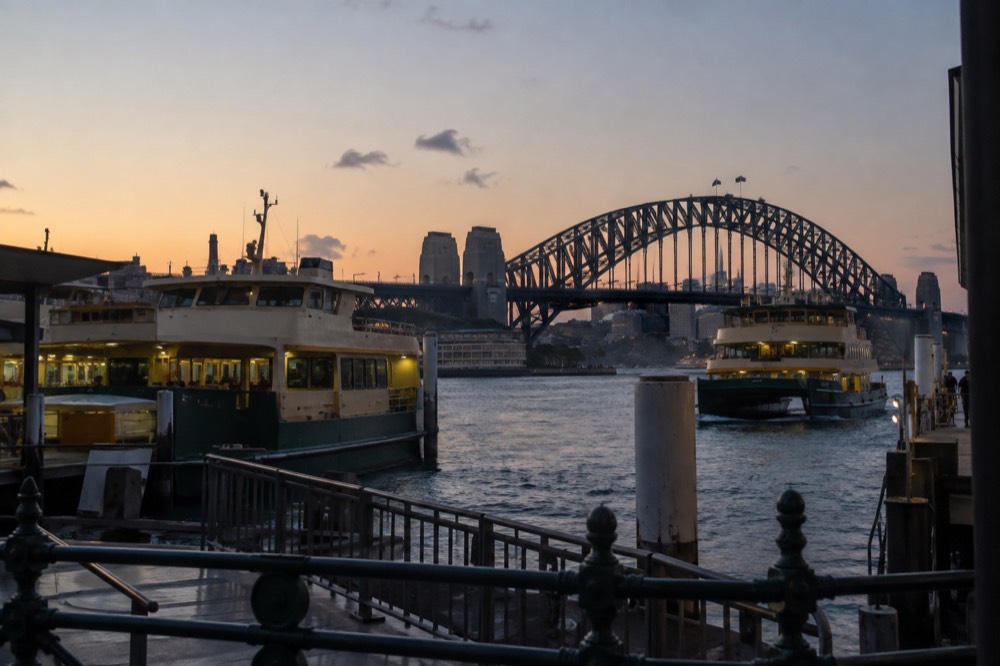
Late afternoon is ferry time. The F1 to Manly or the F2 towards Taronga Zoo gives you the harbour from the water for the price of a commuter fare, and the ferry is the one Sydney experience that costs almost nothing and disappoints nobody. Our manly ferry guide covers the route in detail, including which side of the boat to sit on.
Day 2: The Eastern Beaches
Take the train to Bondi Junction and a connecting bus from the interchange to the beach. Bondi before 10am is a different place from Bondi at noon: swimmers at the ocean pool, surfers out the back, and the sand still half-empty. The Bondi Beach guide covers the practical side, including where the patrolled swimming area sits.
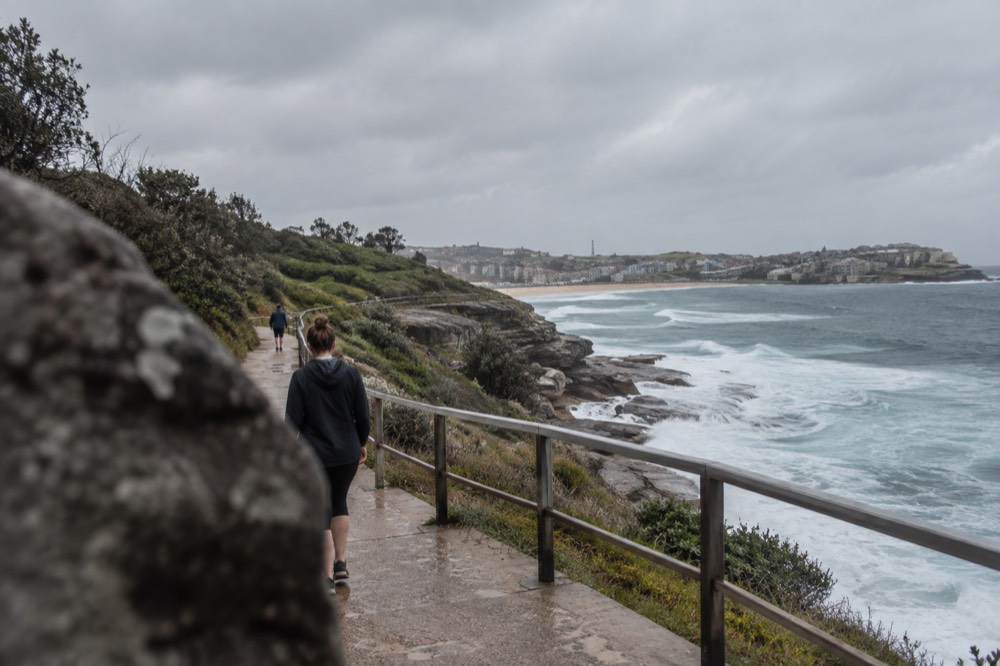
The Bondi to Coogee coastal walk is the day's spine. The full walk is about 6 kilometres and takes two to three hours with stops; most people walk only the Bondi to Bronte section, roughly half that. Swim between the red and yellow flags, at a patrolled beach, during patrol hours: Bondi, Bronte, Tamarama and Coogee are all patrolled year-round by council lifeguards, which is unusual and worth knowing. Finish at Coogee and take the bus back towards the centre.
Day 3: Out of Town
Two strong options, and the choice is really about weather and energy. The Blue Mountains day trip works entirely by train: Central to Katoomba takes about two hours, Scenic World and the Three Sisters viewpoints are reachable on foot or a short hop, and the national park entry fee is only charged in the Glenbrook area, so arriving by train costs nothing at the gate. The Blue Mountains day trip guide has the full plan.
The softer alternative is Manly: ferry over, the Corso to the ocean beach, the Shelly Beach walk, and the ferry back at golden hour. It costs a fraction of the mountains day and still feels like leaving the city. If the forecast is cloudy, take the mountains day anyway: valley fog is part of the spectacle, not a failure.
What Should I Do in Sydney for 3 Days?
Do the harbour on day one, the coast on day two and one trip out of town on day three, and book only two things ahead: an Opera House tour if you want the interior, and a Blue Mountains tour or Scenic World tickets if you go west. Everything else, including the Botanic Garden, the Art Gallery and the coastal walk, is free and needs no booking at all.
That free-to-paid ratio is the quiet headline of a Sydney trip. The Opera House tour, the BridgeClimb and the Taronga Zoo ferry bundle are the paid anchors; the walks, gardens, galleries and ferry views cost close to nothing. A realistic daily spend for a mid-range visitor is A$150 to A$250 per person including food, transport and one paid activity, before accommodation. Our Sydney trip cost breakdown unpacks that line by line.
Here is the three-day plan compressed into one table, with the transport spine for each day:
| Day | Area | Morning | Afternoon | Transport spine |
|---|---|---|---|---|
| 1 | Harbour core | Opera House forecourt, The Rocks | Botanic Garden, Mrs Macquarie's Chair, harbour ferry | Train to Circular Quay, then ferry |
| 2 | Eastern beaches | Bondi Beach, ocean pool | Coastal walk to Bronte or Coogee, swim | Train to Bondi Junction, connecting bus |
| 3 | Out of town | Blue Mountains, or Manly | Scenic World or Shelly Beach, return | Train to Katoomba, or F1 ferry |
Two practical notes shape the whole trip. First, tap a contactless card or an Opal card for every train, bus and ferry: contactless is charged exactly the same as an adult Opal card, including the daily caps of A$19.30 Monday to Thursday and A$9.65 from Friday to Sunday, per Transport for NSW's fare pages. Second, public holidays get the cheaper cap, which makes them surprisingly good sightseeing days.
For travellers who would rather not plan the corridors themselves, the Big Bus hop-on hop-off service links Circular Quay, Darling Harbour, Kings Cross and Bondi on one ticket, with an optional harbour cruise bolted on. It is not faster than doing it independently, but it removes every navigation decision from the day.
The three products above cover the three paid decisions most first-time visitors face: getting between the sights, bundling the indoor attractions, and getting on the water. If you take only one, take the water one. Sydney from a deck is the version of the city people actually remember.
What to Do for 3 Days in Sydney?
Do the free harbour walks and ferry rides first, spend on one or two anchor experiences, and leave the third day flexible for weather. The strongest paid anchors for a first visit are an Opera House guided tour, a harbour sightseeing cruise, and Taronga Zoo with the return ferry. The strongest free anchors are the coastal walk, the Botanic Garden at sunset, and the Manly ferry itself.
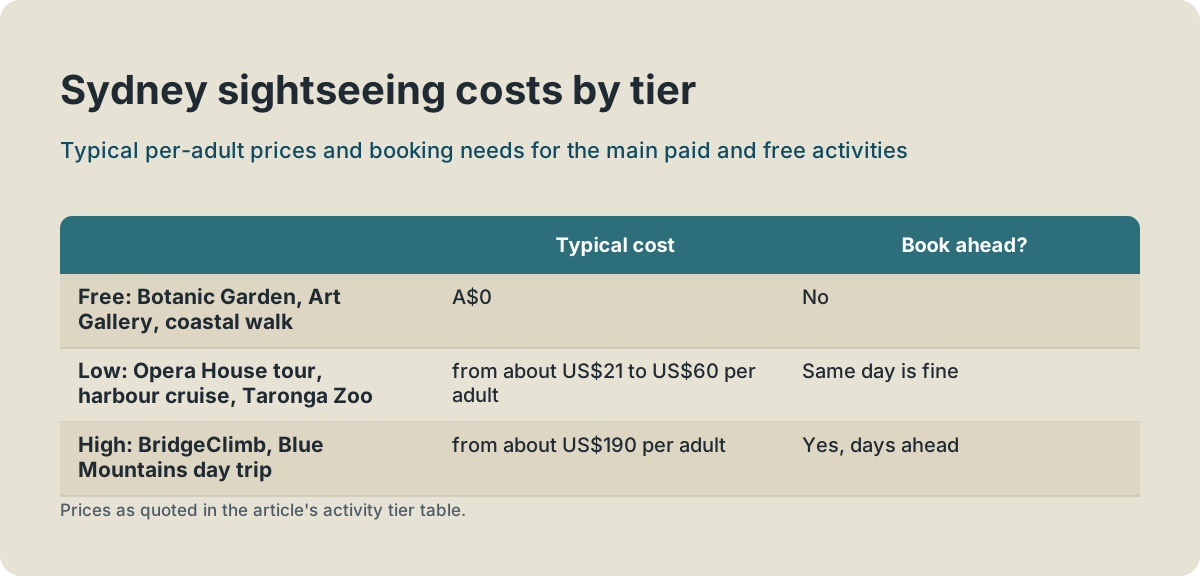
The balance question is where the money goes. Sydney's paid attractions divide cleanly into three tiers, and a three-day visitor should pick from the top two rather than trying everything.
| Tier | Examples | Typical cost | Book ahead? |
|---|---|---|---|
| Free | Botanic Garden, Art Gallery of NSW, coastal walk, ferry views, The Rocks | A$0 | No |
| Low | Opera House tour, harbour cruise, Taronga Zoo entry, Tower Eye | from about US$21 to US$60 per adult | Same day is fine |
| High | BridgeClimb, Blue Mountains all-inclusive day trip, luxury sailing cruise | from about US$190 per adult | Yes, days ahead |
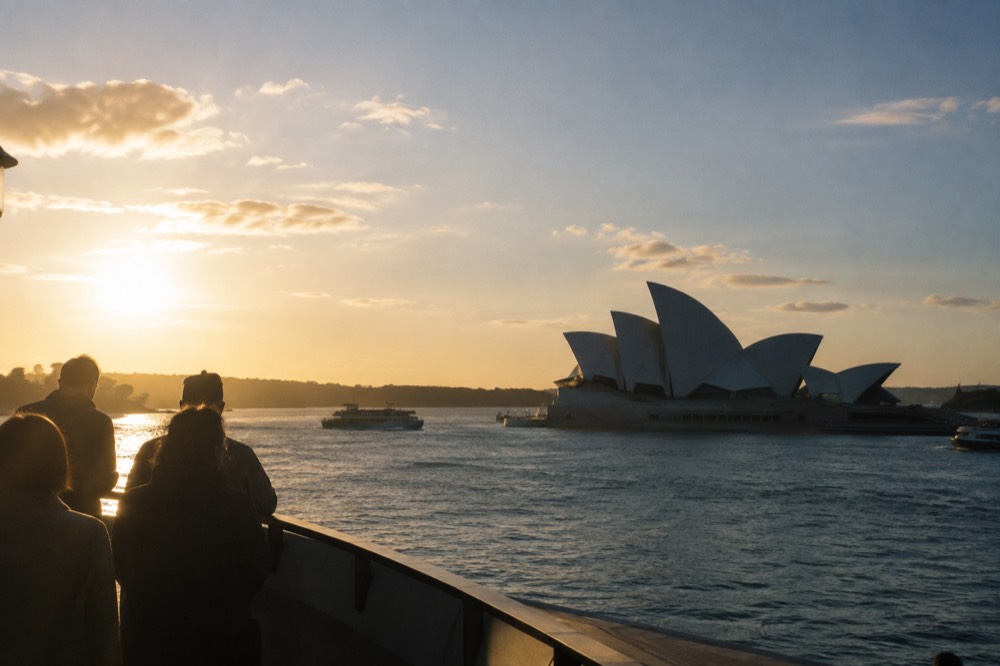
The Opera House interior is the one paid sight that consistently earns its price for first-timers. The building's public spaces are free, but the theatres are not, and the guided tour is the only way to stand inside the Concert Hall with a guide explaining what you are looking at. The operator runs sessions roughly 9am to 5pm daily and about an hour long, with some non-English sessions on set weekdays; prices vary by date and session on the live listing.
For the water, the basic sightseeing cruise is the sensible default: about 90 minutes, morning or afternoon departures, and it pairs naturally with day one's harbour theme. The sunset catamaran is the more romantic variant at a similar price band, and the jet boat is the version for anyone travelling with teenagers.
Taronga Zoo is the third anchor, and it is as much a ferry trip as a zoo day. The combined entry-and-ferry ticket from Circular Quay is the efficient way to do it, and entry itself is cheaper online than at the gate: adult tickets run A$57 at the gate or from A$51.30 booked ahead, per Taronga's own pricing page. The zoo's summer hours run 9:30am to 5pm from September to April, closing an hour earlier through winter.
How Much Walking and Transport Does 3 Days Involve?
Expect 8 to 12 kilometres of walking across the three days, with day 2 the heaviest at 5 to 7 kilometres on the coastal route, and total transport costs of roughly A$40 to A$60 per person using contactless, well inside the weekly A$50 Opal cap. The airport station access fee of A$18.61 sits outside those caps and is charged on top of the train fare at both airport stations.
That last figure is the one that surprises people. The train from the airport is fast and frequent, but the station access fee makes it more expensive than it looks, and it is excluded from the daily and weekly caps. The 400 bus from the airport carries no access fee at all and suits travellers staying near Bondi Junction or the eastern suburbs. Our Sydney airport to the city guide compares every option with real fares.
Within the city, the fare bands are simple. Train and metro trips under 10 kilometres cost A$4.33 peak or A$3.03 off-peak; ferries cost A$7.35 for trips under 9 kilometres and A$9.20 beyond, which is where the Manly ferry sits. The off-peak discount of 30 percent applies on trains, buses and light rail on Fridays, weekends and public holidays, but never on ferries.
| Trip | Mode | Fare |
|---|---|---|
| Circular Quay to Bondi Junction | Train | A$4.33 peak |
| Manly ferry, one way | Ferry | A$9.20 |
| Taronga Zoo ferry, one way | Ferry | A$7.35 |
| Bondi Junction to Bondi Beach | Bus | A$3.30 to A$4.49 |
| Any additional trips that day | Capped | A$19.30 Mon-Thu, A$9.65 Fri-Sun |
Two transport traps close the section. The privately operated Manly Fast Ferry accepts Opal cards through OpalPay but charges different fares, and Opal caps and transfer discounts do not apply on it, so a traveller who assumes they have hit the daily cap is wrong. And single-trip tickets bought at machines cost more than tapping a card and receive no benefits at all, so nobody should buy them.
When Should You Do Which Day?
Order the days by forecast, not by habit: give the clearest day to the coastal walk and the Blue Mountains, keep the harbour day for the cloudiest one, and remember that August is Sydney's clearest month on average while February, peak tourist season, is its cloudiest. June is the wettest month of the year, wetter than any summer month.
That climate pattern is the least-known planning fact about Sydney. The Bureau of Meteorology's long-term normals for Observatory Hill show August averaging 13.4 clear days against February's 5.3, and June carrying 133.1 mm of mean rainfall against September's 68.1 mm. Visitors who assume the Australian summer is the reliable-weather window get the cloudiest skies of the year. If your three days fall in February, plan indoor anchors for the afternoon and treat clear mornings as a gift.
Seasonal events also reorder the itinerary. Vivid Sydney, which runs across 23 nights in late May and early June, turns the harbour core into a light-walk after dark, and more than 80 percent of it is free, so a trip in that window should push the ferry and the Opera House to evening and free up a daytime slot. Whale watching runs May to November along the whole NSW coast, with the southern migration closest to shore from August to November, so a winter trip can add a whale cruise to day three without displacing anything. Our Sydney events calendar tracks the year.
What Mistakes Should a 3-Day Visitor Avoid?
The five mistakes that cost the most time: splitting the harbour and the beaches into the same day, buying single-trip train tickets, taking the fast ferry to Manly and assuming the Opal cap applies, listing the Powerhouse Museum at Ultimo on the itinerary, and planning a Bondi swim without checking patrol flags. Powerhouse Ultimo has been closed since February 2024 and is not due back until around 2029.
The Powerhouse point matters because older itineraries still send people there. Its replacement on many lists should be the Powerhouse's new Parramatta building, scheduled to open in November 2026, or the Australian Museum opposite Hyde Park, which is free to enter and open daily from 10am to 5pm.
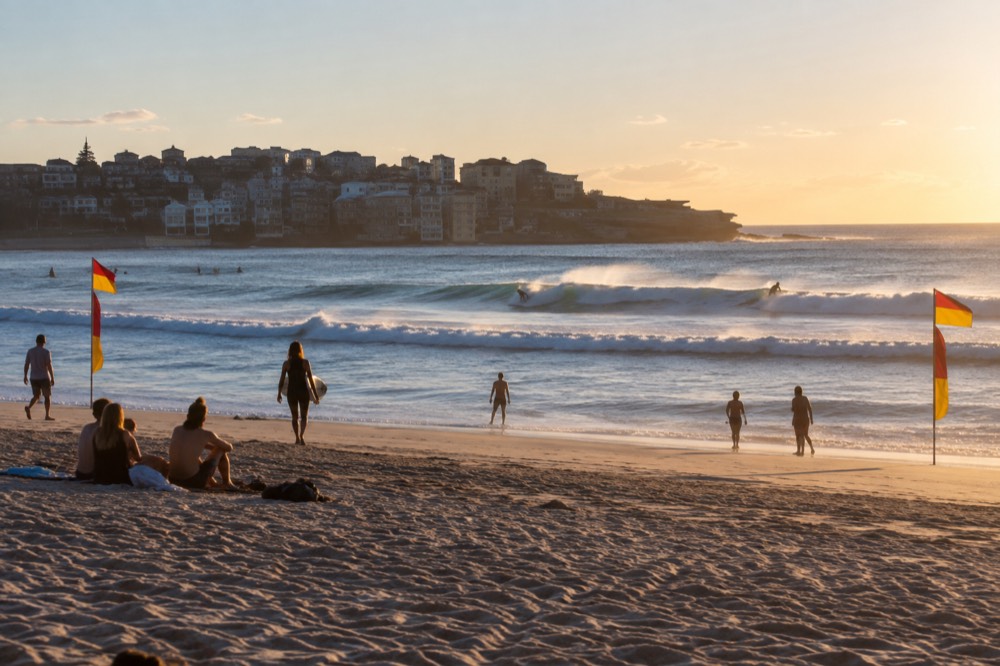
The swim point matters more. Swim between the red and yellow flags, at a patrolled beach, during patrol hours; every coastal drowning in Surf Life Saving Australia's most recent national report occurred outside the flags, outside patrol times, or at an unpatrolled location. Sydney's year-round patrolled beaches are Bondi, Bronte, Tamarama, Coogee, Manly and, since 2026, Dee Why, which is a longer list than most visitors expect. After heavy rain, the official advice is to stay out of the water for up to a day at ocean beaches and up to three days at harbour swim sites, per the NSW Beachwatch program.
A final, smaller trap: the Bank Holiday on the first Monday of August is not a public holiday for most workers, so shops, attractions and transport run normally. Do not let a holiday list scare you into changing that day's plan.
Should You Book Anything Before You Arrive?
Book two things ahead: the BridgeClimb, if you are doing it, because sessions sell out days in advance in peak season, and a Blue Mountains all-inclusive tour if you want one, because small-group departures are capacity-limited. Everything else, including Opera House tours, harbour cruises and zoo tickets, can be booked the day before or same-day without real risk, and the free anchors need nothing at all.
The BridgeClimb is the one product where advance booking genuinely matters. Climbs run about three hours total with roughly two hours on the bridge, and the operator's own rate sheet shows dynamic pricing by date and demand, with a peak surcharge from late December to early January. Our BridgeClimb guide covers the cheaper alternatives, including the free pedestrian walkway over the bridge and the Pylon Lookout.
For the Blue Mountains, the choice is between the train at a few dollars each way or an organised day trip. The all-inclusive small-group tours include Scenic World entry, a wildlife stop and lunch, and they run about ten hours door to door; the train-and-DIY version costs a fraction of that and trades away the commentary and the koala stop. Travellers who want the animals should read our can you see kangaroos near Sydney piece before deciding, because the answer changes the value of the tour.
Three days is enough. It is not enough for everything, but it is enough for the harbour, the coast, one trip out of town, and the slow hour at Mrs Macquarie's Chair that most rushed itineraries skip. Keep the corridors clean, tap the same card all weekend, and let the forecast, not the brochure, pick which day goes where.
Common Questions About 3 Days in Sydney
What is a good 3-day itinerary for Sydney, Australia?
Day 1 around Circular Quay, The Rocks, the Royal Botanic Garden and an afternoon ferry; Day 2 at Bondi Beach with the coastal walk to Bronte or Coogee; Day 3 out of town, either the Blue Mountains by train or Manly by ferry. The structure groups each day into one corridor so you never cross the city twice.
What should I do in Sydney for 3 days?
Do the free harbour walks and ferry rides first, spend on one or two anchor experiences such as an Opera House tour or a harbour cruise, and keep day 3 flexible for the weather. Only the BridgeClimb and small-group Blue Mountains tours genuinely need booking days ahead.
What to do for 3 days in Sydney?
Walk the Opera House forecourt and The Rocks, stroll the Botanic Garden to Mrs Macquarie's Chair, ride the Manly ferry, walk Bondi to Bronte, swim between the flags, and spend one day in the Blue Mountains or at Manly and Shelly Beach. Most of that costs nothing beyond fares.
Is 3 days in Sydney enough?
Three days is enough for the harbour core, the eastern beaches and one day trip. It is not enough to also add the Hunter Valley, Jervis Bay or the South Coast, so treat those as a reason to return rather than a squeeze.
How much does 3 days in Sydney cost?
Roughly A$150 to A$250 per person per day at mid-range, covering food, transport and one paid activity, before [accommodation](https://booking.tpk.ro/ndznHj9h). Transport alone lands around A$40 to A$60 across three days using contactless, inside the weekly A$50 Opal cap.
What is the best month for a 3-day Sydney trip?
On the climate record, August is Sydney's clearest month and February its cloudiest, while June is the wettest. October to December and March to April balance warm weather, clear skies and manageable crowds better than the peak summer months.