Hyde Park Barracks: What to See at Sydney's Convict-era Museum
Hyde Park Barracks is one of the few places in Sydney where the city's convict founding is the whole story, not a footnote.
Short answer
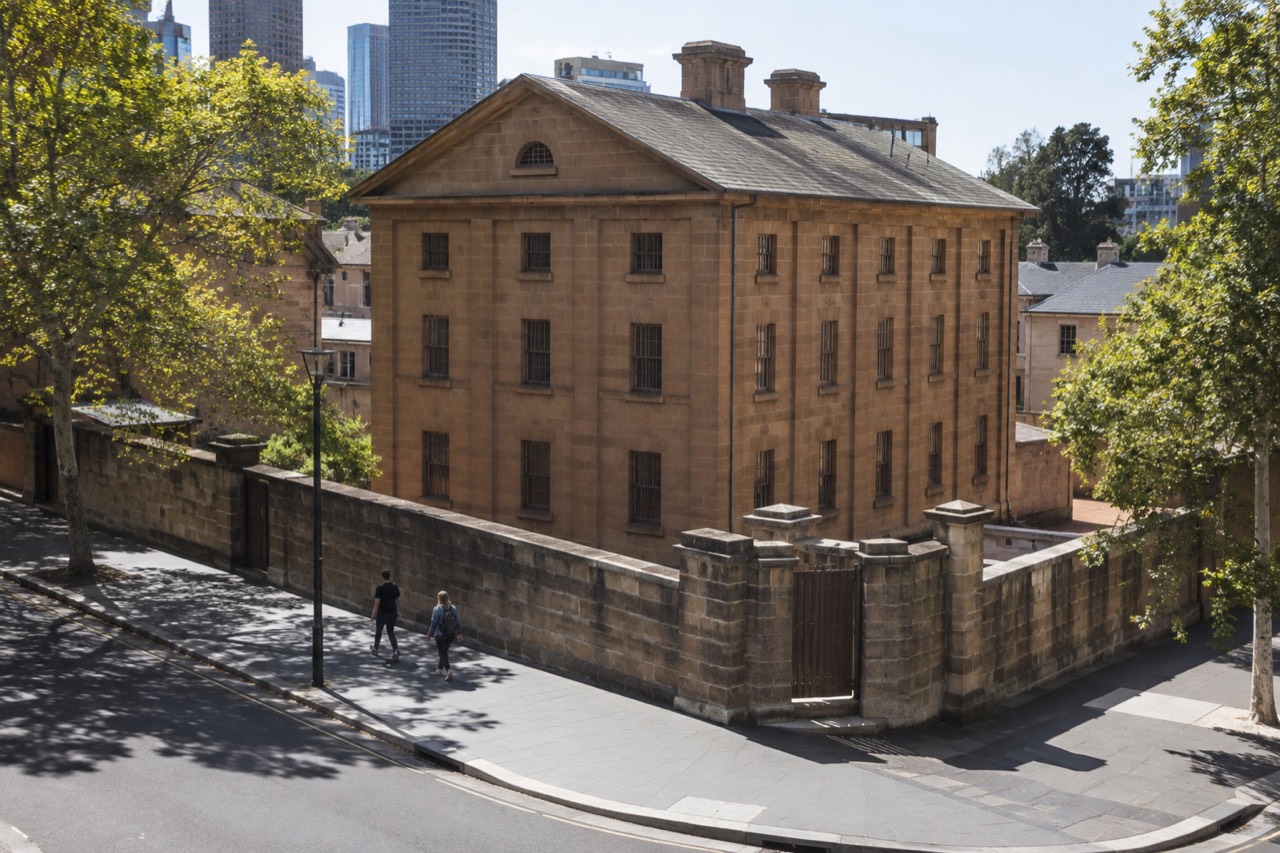
Hyde Park Barracks is a convict-era sandstone building at the top of Sydney's Hyde Park, now a museum about the men who built it, the women who passed through it and the institutional life that followed. Expect to spend one to two hours. It sits in the heart of the CBD, a short walk from Circular Quay, and pairs easily with the free Australian Museum and Art Gallery of New South Wales nearby.
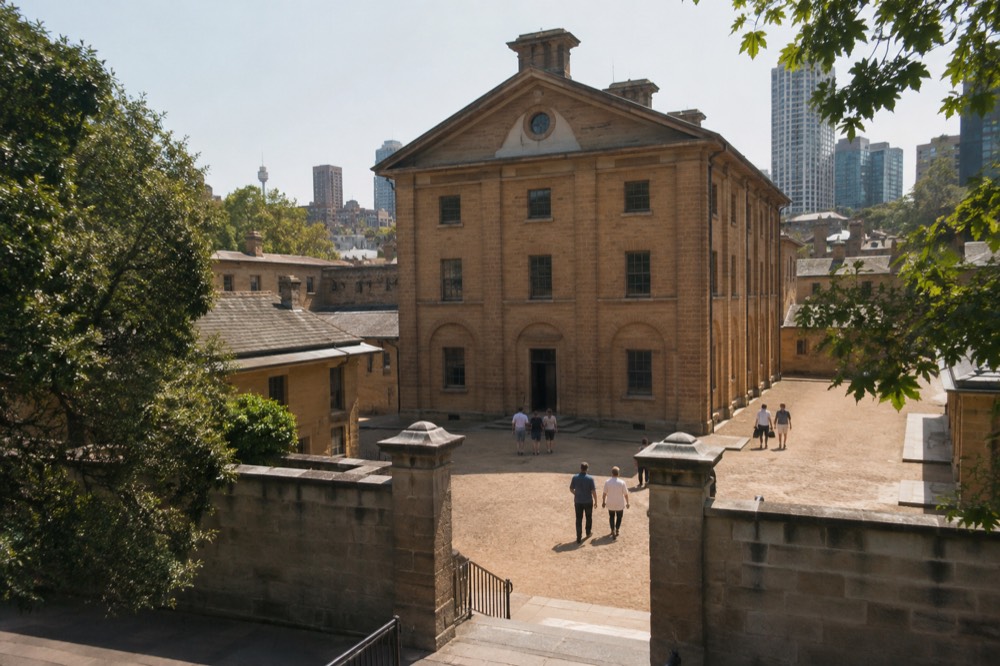
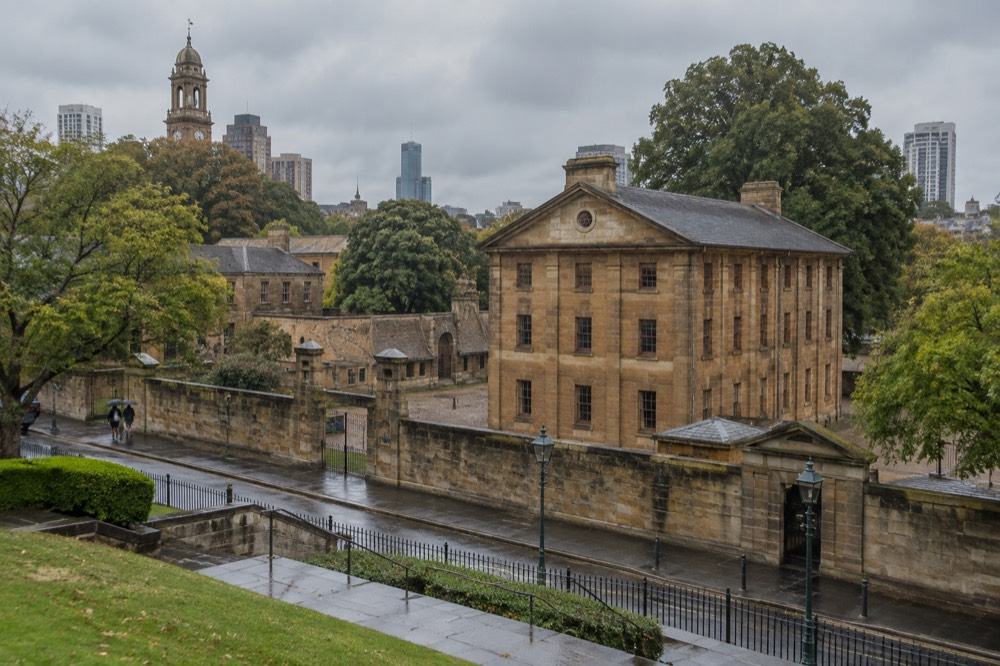
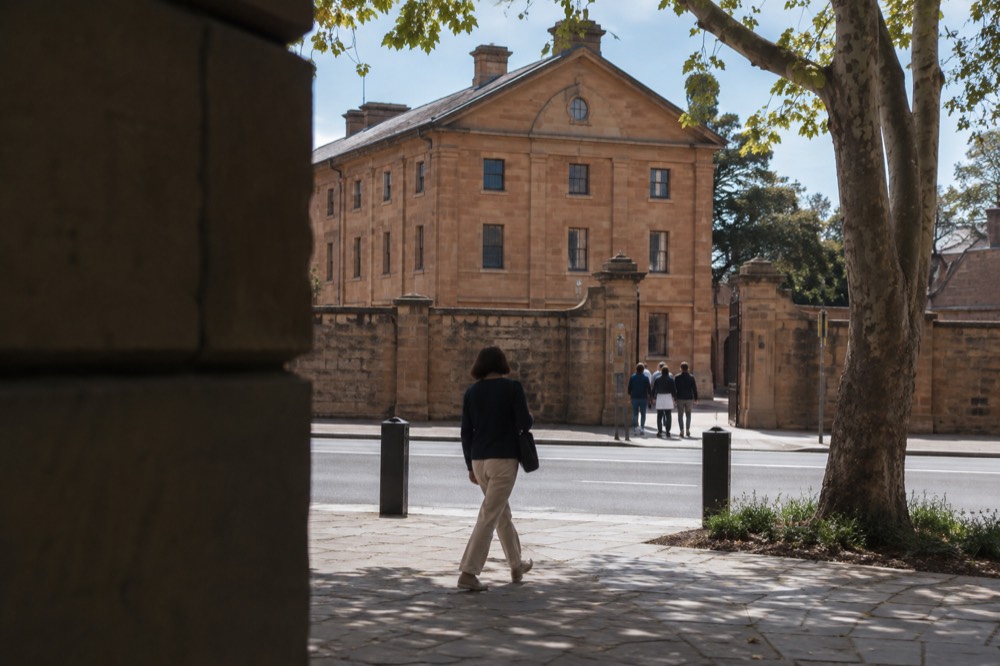
A plain sandstone rectangle at the southern end of Macquarie Street has held more Sydney history per square metre than almost any other building in the country. Hyde Park Barracks was built to sleep convict men by the hundreds, then went on to serve as a female immigration depot, an asylum and government offices before becoming the museum it is today. For a visitor, that layered past is the draw: one building tells the story the harbour postcards leave out.
The barracks sits directly on the edge of Hyde Park, which gives the whole precinct its name. You can walk there from Circular Quay in roughly ten minutes, from Town Hall in about the same, and the surrounding blocks hold some of the city's best free museums. This guide covers what you will actually see inside, how to get there, what a visit costs to plan around, and how to fold it into a bigger Sydney day.
What Is Hyde Park Barracks?
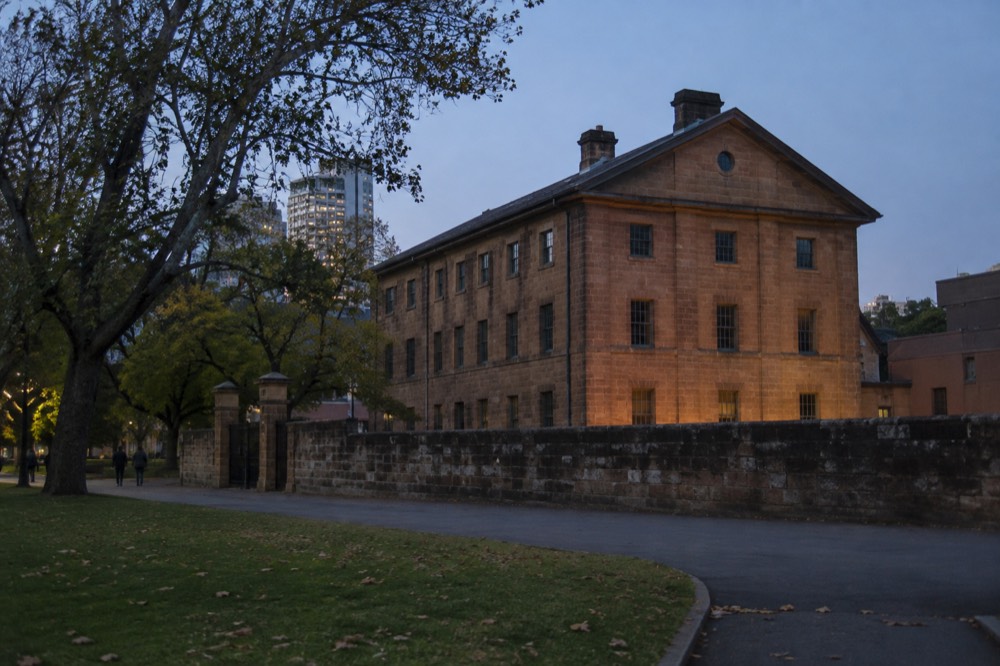
Hyde Park Barracks is a World Heritage-listed convict site in the Sydney CBD, originally built to house convict labourers and now a museum dedicated to the convict system, female immigration and the institutional era that followed. It is one of the most significant surviving buildings from Australia's early colonial period, and it tells the story of the people the system processed rather than the officials who ran it. Plan on one to two hours inside, longer if you take an audio guide.
The building's later lives matter as much as its first. After convict transportation ended, the barracks became a depot for immigrant women arriving on their own, then a home for women with nowhere else to go, then a stretch of government offices. Each layer left records, and the museum's displays lean on those: lists of names, carved graffiti, personal objects recovered from underneath the floorboards. The archaeology here is unusually intimate for a national-history site.
That intimacy is why the barracks rewards a slower visit. You are not looking at a recreation of the past; you are looking at the actual dormitory spaces, the actual brick and the actual objects the people who lived there dropped or hid. Few convict sites anywhere let you stand inside the room the story happened in.
What Will You See Inside the Museum?
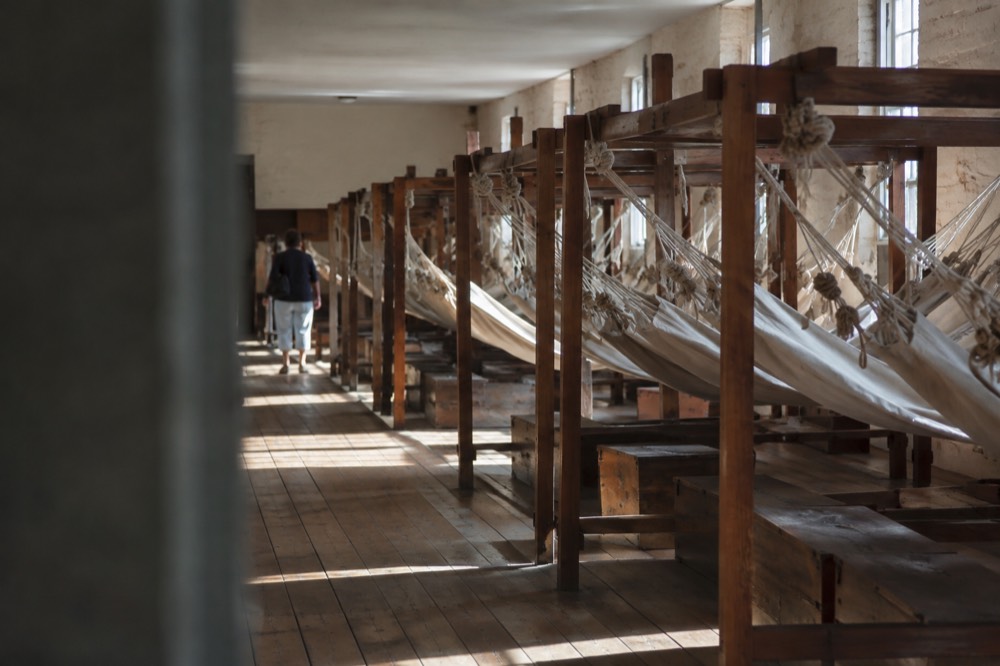
The museum's displays spread across the barracks' three levels and cover the convict men who slept here, the immigrant women who arrived later, and the everyday objects recovered from the site itself. Highlights include the reconstructed dormitory hammock layout, recovered artefacts displayed by the thousands, and first-person audio that carries individual stories through the rooms. Most visitors move through in about 90 minutes, and the audio guide is included rather than an upsell.
Start at the top and work down, which is how the building's own timeline unfolds. The upper level deals with the convict era, and the reconstructed sleeping arrangements give the clearest sense of scale: rows of hammocks, packed tight, with barely a metre of personal space per man. The middle level picks up the immigration and asylum decades, when the same rooms held women waiting for work, family or a ship home.
The ground level is where the archaeology lands hardest. Excavations here recovered tens of thousands of objects, and the display strategy is deliberately overwhelming: rat bones, clay pipes, buttons, sewing kits, letters, all catalogued in open storage. It reads less like a curated exhibition and more like a direct look at the evidence, which is precisely the point.
If convict history is your reason for visiting Sydney at all, the barracks pairs naturally with the walking tours of The Rocks, where the same era survives in the streetscape. Our guide to The Rocks historic precinct covers that side of the story, and the Sydney walking tours overview compares the guided options worth paying for.
After a morning in the museum's quiet rooms, plenty of visitors want a Sydney experience that needs no homework at all. These three are the ones we would point you at first: a sunset catamaran on the harbour, an early-dinner cruise from Darling Harbour, and an after-dark ghost walk through The Rocks, which picks up the darker side of the same colonial story you just read about.
How Do You Get to Hyde Park Barracks?
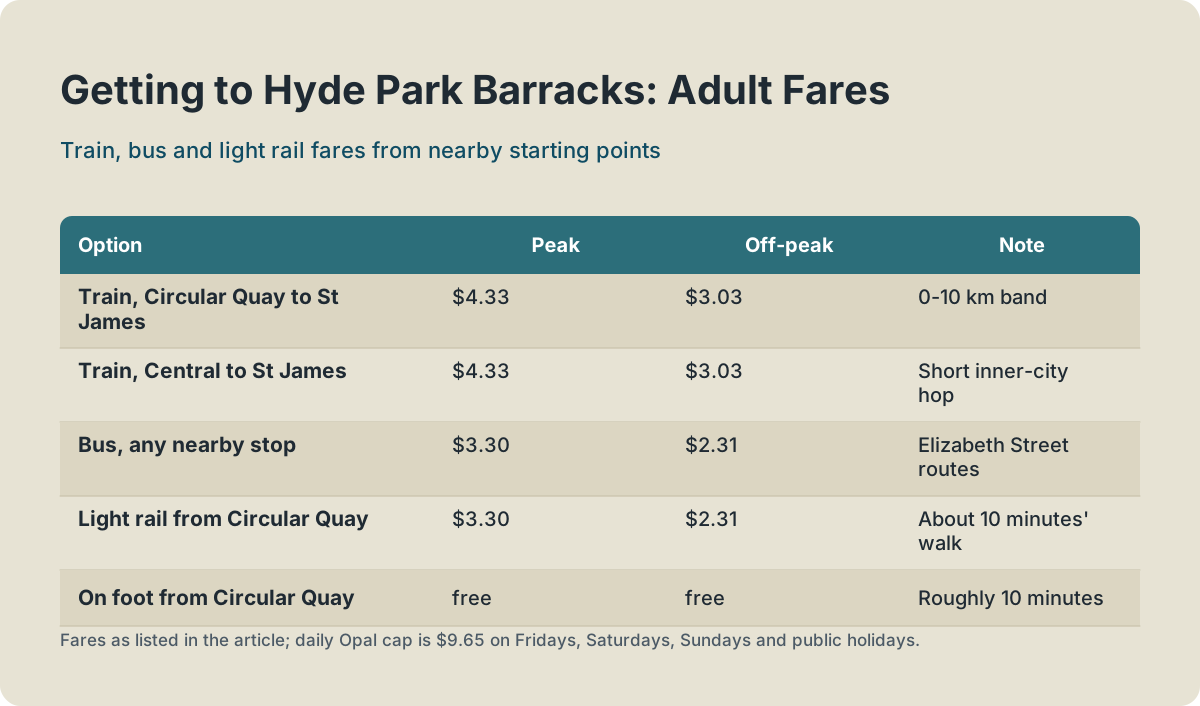
Hyde Park Barracks sits at the Queens Square corner of Hyde Park, and the easiest way to reach it is by train to St James or Martin Place station, both a few minutes' walk away. Museum station is also close, on the opposite side of the park. An adult train fare from Circular Quay falls in the shortest Opal distance band, and a contactless credit card is charged exactly the same as an Opal card, so there is no need to buy anything special for one trip.
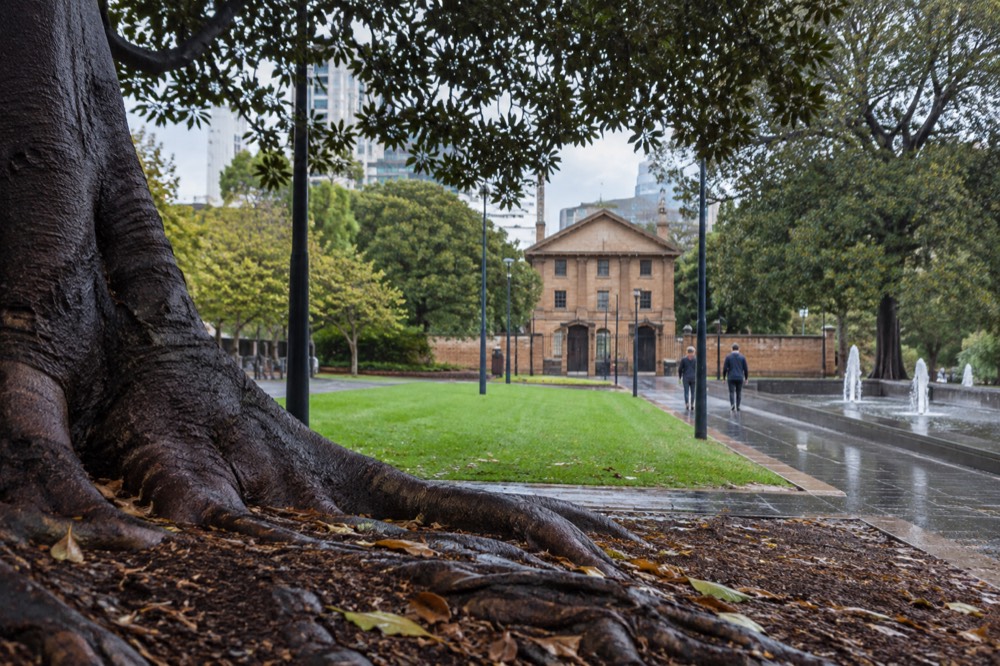
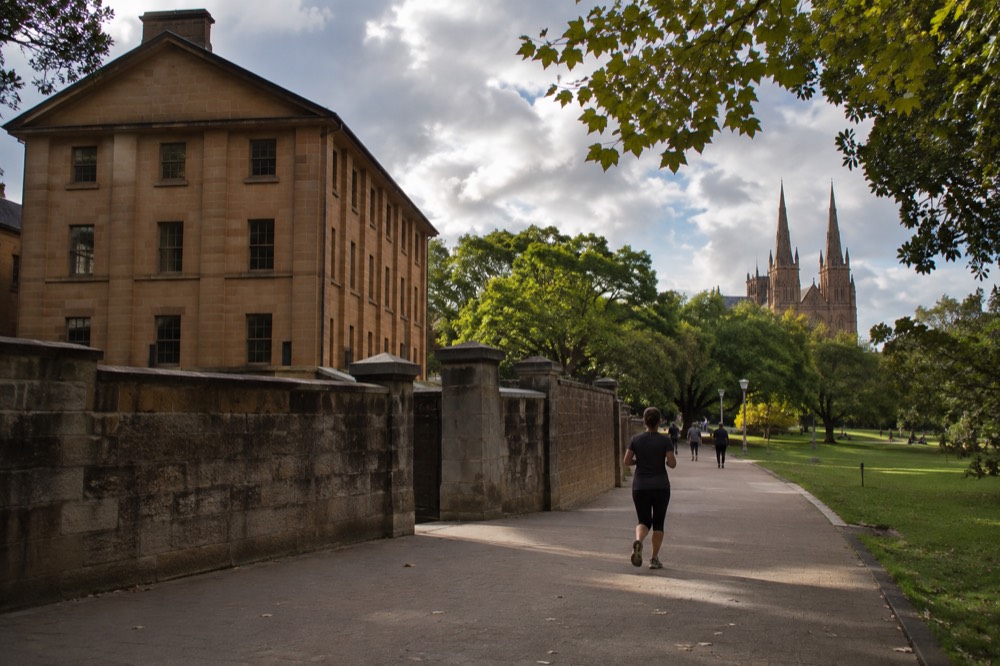
The location is genuinely walkable from most of the places visitors stay. From Circular Quay, head up Macquarie Street past the State Library and you arrive in about ten minutes without crossing a single major road. From Town Hall, walk up through the QVB and Hyde Park itself. The park approach is the nicer one: the barracks appears at the top of the fig-lined avenue like a full stop at the end of the city's main civic spine.
If you are riding the network rather than walking, the fare maths is simple. Opal and contactless charge identical fares with identical caps, and tapping off matters, because a missed tap-off charges the default maximum fare. Our Opal card guide for visitors explains the caps in full, and the getting around Sydney overview compares trains, ferries, buses and light rail for a short stay.
| Transport option | Where from | Approximate adult fare (A$) | Notes |
|---|---|---|---|
| Train, 0-10 km band | Circular Quay to St James | $4.33 peak, $3.03 off-peak | Off-peak discount applies Fridays, weekends, public holidays and outside peak |
| Train, 0-10 km band | Central to St James | $4.33 peak, $3.03 off-peak | Same band, short inner-city hop |
| Bus, 0-3 km band | Any nearby stop | $3.30 peak, $2.31 off-peak | Routes run along Elizabeth Street beside Hyde Park |
| Light rail | Circular Quay stop | $3.30 peak, $2.31 off-peak | Drops you at the top of the CBD, about 10 minutes' walk |
| On foot | Circular Quay | free | Roughly 10 minutes up Macquarie Street |
Fares are set by an annual NSW determination, so treat those figures as the current fare year's values rather than permanent prices. Transport for NSW publishes the live adult fare tables, which are the authoritative source if you are planning a multi-day transport budget.
One planning note worth acting on: the daily Opal cap is $9.65 on Fridays, Saturdays, Sundays and public holidays, against $19.30 Monday to Thursday. If you are stringing together the barracks, a ferry and a beach on one day, a weekend day is the cheaper day to do it.
What Do Tickets Cost and When Is It Open?
Ticket prices for Hyde Park Barracks are set by the museum and change between seasons and exhibitions, so check the museum's own website for the current rate before you go, and book online if a timed entry applies. Concession and family rates exist, as does free entry for children under a young age, and the museum closes on some public holidays. Budget roughly one to two hours for the visit itself.
The honest answer about price is that this site, like several major Sydney attractions, does not publish a fixed figure that stays true. What you can plan around is the structure: a standard adult entry, concessions for students and seniors, and free or cheap entry for young children. If your itinerary leans museum-heavy, it is worth pricing the barracks against the city's attraction passes before you buy anything individually, and our Sydney attraction passes compared guide does that maths across the big multi-venue passes.
Opening hours follow the pattern of most Sydney state-run cultural sites: daily through the working week, standard daytime hours, with closures on Christmas Day and a handful of other dates. Hours can shift for special exhibitions or events, so if you are visiting on a public holiday or during a festival period, a quick check of the official site the day before saves a wasted trip. Our Sydney public holidays and school holidays guide lists the dates that matter, including the August Bank Holiday, which is not actually a public holiday for most workers and does not affect attractions.
| Nearby attraction | Entry cost | Hours (verified) | Walk from the barracks |
|---|---|---|---|
| Australian Museum | Free general entry | Daily 10am-5pm, closed Christmas Day | Under 5 minutes, opposite Hyde Park |
| Art Gallery of New South Wales | Free general entry | Daily 10am-5pm, Wednesdays until 10pm | About 10 minutes through the Domain |
| Royal Botanic Garden Sydney | Free | Daily 7am to sunset | About 10 minutes down Macquarie Street |
| State Library of New South Wales | Free exhibitions | Check current hours | About 3 minutes, same block |
That table is the real budget story of this precinct. The barracks may be the one ticketed stop in a day that is otherwise free, and the Australian Museum's free general entry is confirmed on its own visitor information page. The Art Gallery's Wednesday late opening, verified on its visit page, is the best free evening in this part of the city.
When Is the Best Time to Visit?
The best time to visit Hyde Park Barracks is a weekday morning, when the museum is quietest, and the best months are the shoulder seasons of autumn and spring, when walking to and through Hyde Park is at its most pleasant. Sydney's wettest month on long-term average is June, at 133.1 mm, while August is statistically the clearest month, with 13.4 mean clear days, so late winter is a better museum-plus-walk day than most visitors assume.
The climate detail is worth internalising, because it inverts what northern-hemisphere visitors expect. Sydney's rainfall peaks in June, wetter than any summer month, and February, the middle of peak season, is statistically the cloudiest month of the year. August, by contrast, has the most clear days of any month. A winter visit to this precinct, with the barracks as your rainy-day anchor and Hyde Park as your clear-sky bonus, is genuinely well timed rather than a compromise.
| Month | Mean max °C | Mean min °C | Mean rainfall mm | Mean clear days |
|---|---|---|---|---|
| January | 26.0 | 18.8 | 101.2 | 6.8 |
| February | 25.8 | 18.9 | 119.3 | 5.3 |
| March | 24.8 | 17.6 | 131.6 | 7.1 |
| June | 17.0 | 9.3 | 133.1 | 9.1 |
| August | 17.9 | 9.0 | 80.2 | 13.4 |
| October | 22.2 | 13.6 | 76.7 | 8.1 |
Those figures are long-term averages from the Bureau of Meteorology's Observatory Hill record, not a forecast, so read them as the shape of the year rather than a promise about your week. For a fuller month-by-month breakdown, see our Sydney weather month by month guide, and our best time to visit Sydney guide weighs the seasons against crowd levels and prices.
Inside the museum, weather matters less than crowd rhythm. School holidays fill the upper floors with family groups; midweek mornings outside holidays are the quiet windows. If you want the dormitory rooms nearly to yourself, aim for a Tuesday or Wednesday before 11am, then walk down to the free museums when the barracks starts filling after lunch.
How Does the Barracks Fit Into Sydney's Wider Story?
Hyde Park Barracks belongs to the same chapter of Sydney's past as The Rocks, the QVB and the harbour's colonial buildings, but it is the only major site that puts the convict experience itself, rather than the officials' architecture, at the centre of the display. Visiting it first gives context to everything else: the grand public buildings of Macquarie Street were built by the men who slept here. Pair it with The Rocks for the streetscape and the Australian Museum for the natural-history counterweight.
Macquarie Street as a whole is Sydney's most concentrated heritage strip, and the barracks is its anchor. Walking south from Circular Quay you pass the State Library, the Parliament and the old Sydney Hospital before reaching the barracks at Queens Square. Our Circular Quay guide and Sydney CBD guide both cover that walk in detail, and the free things to do in Sydney guide confirms how much of this precinct costs nothing at all.
The women's side of the story is the part most itineraries skip. After the convict decades, the barracks processed thousands of women who arrived alone, and the museum treats that chapter with the same seriousness as the convict one. If that history interests you, the Hyde Park Barracks displays will be the highlight of your Sydney trip rather than a stop on the way to the Opera House.
For the evening, the precinct empties out and the harbour takes over. A sunset catamaran cruise is the cleanest handoff: you finish with colonial history by mid-afternoon, and the boat gives you the harbour at its best light without any planning effort on your part. The cruise runs about an hour, departs from the city side of the harbour, and reviews rate it highly for the value.
What Else Should You See Nearby?
Within a ten-minute walk of Hyde Park Barracks you can reach the Australian Museum, the Art Gallery of New South Wales, the Royal Botanic Garden, the State Library, the QVB and St Mary's Cathedral, and most of those are free. That makes the barracks the natural paid anchor of a full day that costs very little beyond the one ticket. The Opera House and Circular Quay are about 15 minutes away on foot, so the whole central heritage precinct is walkable in a single loop.
The classic loop runs like this: barracks in the morning, lunch around the QVB or in the Darling Harbour direction, then the Art Gallery and the Botanic Garden in the afternoon, finishing at the Opera House for sunset. Our one day in Sydney itinerary writes that full day out hour by hour, and the Sydney for first timers guide is the broader orientation if this is your first visit.
Two nearby stops deserve specific mention. St Mary's Cathedral, directly behind the barracks, is free to enter and its forecourt is one of the better quiet spots in the CBD. And the Royal Botanic Garden, free to enter and open from 7am daily, is the pleasant way to walk toward the Opera House rather than taking the busy Macquarie Street footpath the whole way.
If you would rather let someone else organise the afternoon, an early-dinner cruise from Darling Harbour covers the harbour sightseeing and the evening meal in a single 1 hour 45 minute sitting. It is a sensible pick on a first night in the city, when you want the postcard views but not the logistics.
Is Hyde Park Barracks Worth Visiting?
Hyde Park Barracks is worth visiting if convict history, archaeology or women's migration history interests you at all, and it is the single best indoor stop in the Sydney CBD on a wet day. It is not worth rushing for if your Sydney time is one day and your priorities are the harbour, the beaches and the Opera House; in that case, walk past it on the Macquarie Street route and come back on a longer trip. With two or more days in the city, it earns its place easily.
The honest comparison is with the city's other paid history experiences. A guided walk through The Rocks covers the same era outdoors in about 90 minutes, with storytelling rather than artefacts, and it suits visitors who want atmosphere over detail. The barracks suits visitors who want the detail: the names, the objects, the floorboards. Many people do both on consecutive days, and the sequence works either way around.
For a guided version of the colonial story, The Rocks guided walking tour is the highest-rated of the paid walks, running 1 hour 30 minutes from the harbour end of the precinct. It makes a natural companion to the barracks: one gives you the objects, the other gives you the streets they were found beneath.
However you build the day, the precinct around the barracks is the part of Sydney where the city's origins are still physically present, and a single morning here rearranges how the rest of the city reads. This Sydney Travel Guide site covers the harbour icons in depth elsewhere, but the barracks is where the story underneath them starts.
If the barracks morning leaves you with an evening to fill, these are the three experiences we would shortlist from the same part of the city: the sunset catamaran for pure harbour views, the early-dinner cruise for a meal on the water, and the Rocks ghost walk for the darker colonial history after dark.
Common Questions About Hyde Park Barracks
How long do you need at Hyde Park Barracks?
Plan on one to two hours. The three levels reward a slow pass, especially the ground-floor archaeology displays, and the included [audio guide](https://wegotrip.tpk.ro/bdXsJ4s3) adds time without adding cost. Visitors who read most panels report closer to two hours; a brisk walk-through with the audio on takes about 75 minutes.
Is Hyde Park Barracks worth visiting?
Yes, if convict history, archaeology or women's migration history interests you, and it is the best wet-day indoor stop in the CBD. If your Sydney visit is a single day built around the harbour and beaches, treat it as a walk-past on Macquarie Street and save it for a longer trip.
How do you get to Hyde Park Barracks?
The nearest stations are St James and Martin Place, both a few minutes' walk away; Museum station sits on the opposite side of Hyde Park. From Circular Quay it is roughly a ten-minute walk up Macquarie Street. An adult train fare from Circular Quay falls in the shortest Opal distance band, and a contactless card is charged the same as an Opal card.
What else can you see near Hyde Park Barracks?
The Australian Museum is under five minutes away on the opposite side of Hyde Park, with free general entry. The Art Gallery of New South Wales, the Royal Botanic Garden, the State Library, St Mary's Cathedral and the QVB are all within about ten minutes, and most are free. Circular Quay and the Opera House are about 15 minutes on foot.
When is the best time to visit Hyde Park Barracks?
A weekday morning outside school holidays is quietest inside the museum. Across the year, autumn and spring are the pleasant months for the Hyde Park walk, and August is statistically Sydney's clearest month, with 13.4 mean clear days, while June is the wettest on long-term average at 133.1 mm.
Is Hyde Park Barracks suitable for kids?
The museum works best for primary-school-aged children and up, particularly the hammock dormitory and the artefact walls, which are genuinely engaging for curious kids. The free-entry children's policy makes a family visit low-risk; very young children will tire of the display cases quickly, and the adjacent Hyde Park playground and lawns are the better stop for them.