Sydney Public Holidays and School Holidays: The Visitor's Calendar
NSW runs on eleven public holidays a year, plus a Bank Holiday that fools almost every visitor. Here is what actually changes in Sydney on each one, and when the school terms quietly double the crowds.
Short answer
NSW has eleven public holidays in 2026, from New Year's Day on Thursday 1 January to Boxing Day on Saturday 26 December. Public holidays are also the cheapest days to ride public transport: the Opal daily cap drops to $9.65. Most attractions stay open, banks close, and the school holiday blocks matter as much as the holidays themselves.
Public holidays in New South Wales are not evenly spread. There is a cluster across summer, a long gap through the middle of the year broken only by the King's Birthday in June, and then a run of spring dates that most international visitors never see coming. The Sydney Travel Guide events desk keeps this page current because the holiday calendar quietly shapes almost everything a visitor cares about: whether the shops are open, whether the ferries are packed, and how much a day of sightseeing costs.
There is one detail worth knowing before anything else: a public holiday in NSW is also the cheapest day to travel widely on public transport. The Opal daily cap falls to $9.65 on public holidays, the same as every Friday, Saturday and Sunday, against $19.30 Monday to Thursday. A visitor who plans a big transport day, say Manly ferry plus a train to the Blue Mountains foothills, saves real money by doing it on a holiday. That single fact is buried in the fare rules and almost never appears in a guide.
What Are the NSW Public Holidays in 2026 and 2027?
NSW observes eleven public holidays in 2026, running from New Year's Day on Thursday 1 January to Boxing Day on Saturday 26 December, with an additional Monday 28 December when Christmas and Boxing Day fall on weekends. The 2027 list shifts: Good Friday lands on 26 March and Christmas Day on Saturday 25 December, with additional days on 27 and 28 December. Every date below is confirmed on the official NSW Government list, so you can build an itinerary around them with confidence.
The full 2026 calendar is: New Year's Day Thursday 1 January, Australia Day Monday 26 January, Good Friday 3 April, Easter Saturday 4 April, Easter Sunday 5 April, Easter Monday 6 April, Anzac Day Saturday 25 April with an additional Monday 27 April, King's Birthday Monday 8 June, Bank Holiday Monday 3 August, Labour Day Monday 5 October, Christmas Day Friday 25 December, and Boxing Day Saturday 26 December with an additional Monday 28 December. The Easter dates are the big ones for travellers: a five-day stretch from Friday to Monday that turns into the busiest domestic tourism weekend of autumn.
In 2027 the pattern repeats with different dates: New Year's Day Friday 1 January, Australia Day Tuesday 26 January, Good Friday 26 March, Easter Saturday 27 March, Easter Sunday 28 March, Easter Monday 29 March, Anzac Day Sunday 25 April with an additional Monday 26 April, King's Birthday Monday 14 June, Bank Holiday Monday 2 August, Labour Day Monday 4 October, Christmas Day Saturday 25 December, Boxing Day Sunday 26 December, and additional days Monday 27 and Tuesday 28 December. The additional days exist because NSW law guarantees the holiday even when the date lands on a weekend, so the Monday or Tuesday becomes a day off instead. The full official list, including the fine print on each date, is published by the NSW Government public holidays page.
| Holiday | 2026 date | 2027 date |
|---|---|---|
| New Year's Day | Thu 1 Jan | Fri 1 Jan |
| Australia Day | Mon 26 Jan | Tue 26 Jan |
| Good Friday | Fri 3 Apr | Fri 26 Mar |
| Easter Saturday | Sat 4 Apr | Sat 27 Mar |
| Easter Sunday | Sun 5 Apr | Sun 28 Mar |
| Easter Monday | Mon 6 Apr | Mon 29 Mar |
| Anzac Day | Sat 25 Apr (+ Mon 27) | Sun 25 Apr (+ Mon 26) |
| King's Birthday | Mon 8 Jun | Mon 14 Jun |
| Bank Holiday | Mon 3 Aug | Mon 2 Aug |
| Labour Day | Mon 5 Oct | Mon 4 Oct |
| Christmas Day | Fri 25 Dec | Sat 25 Dec (+ Mon 27) |
| Boxing Day | Sat 26 Dec (+ Mon 28) | Sun 26 Dec (+ Tue 28) |
Which Dates Move the Crowds Most in Sydney?
Australia Day on 26 January and the Easter weekend are the two dates that visibly transform the city, followed by the Christmas to New Year stretch. Australia Day fills the harbour foreshore and beaches from morning to fireworks. Easter drains the CBD of office workers and fills every coastal walk and Blue Mountains lookout. Anzac Day morning is the quietest a Sydney CBD ever gets, until the afternoon, when pubs fill after the two-up tradition.
Australia Day is the one to plan around carefully. Ferries run to a holiday timetable but the demand is summer-peak, the harbour is busy with events, and vantage points around Circular Quay and Darling Harbour fill hours before the evening fireworks. If you want a quieter version of the day, the Northern Beaches and the Royal National Park absorb crowds far better than the eastern suburbs beaches, which are at capacity by late morning.
Easter works in the opposite direction for the city itself. With office workers away for four days, the CBD feels emptier, but every family destination, Taronga Zoo, Scenic World, the Blue Mountains generally, Manly, is at school-holiday levels of busy because the Easter break always overlaps the autumn school holidays. Book the zoo, the BridgeClimb and any Blue Mountains day trip well ahead. The same logic applies to the King's Birthday and Labour Day long weekends: three-day weekends push Sydneysiders outward to the mountains, the Hunter Valley and the South Coast, so day-trip destinations are busier than the city.
The Christmas and New Year period is its own category. Between Christmas Day and New Year's Eve, Sydney is in full festive mode, with the harbour foreshore drawing up to a million people for the midnight fireworks. Our Sydney New Year's Eve guide covers the free vantage points in detail, and the Vivid Sydney guide covers the other huge crowd event in late May and June. For a broader view of what is on across the year, the Sydney events calendar lists the festivals that compound the holiday crowds.
A sunset harbour cruise is one of the better ways to see a holiday evening without fighting for kerbside space, and the operator runs on public holidays through the warmer months.
Do Shops and Attractions Open on Public Holidays in Sydney?
Yes, almost everything a visitor cares about stays open. Major attractions, supermarkets, hotel restaurants and public transport run on every public holiday including Christmas Day, though often with reduced hours and holiday surcharges on dining. Banks and post offices close. The practical difference is cost and crowding, not closure: restaurants commonly add a public holiday surcharge to the bill, so check menus before you sit down.
Sydney's major attractions treat public holidays as peak trading days, not days off. Taronga Zoo opens 365 days a year, the Art Gallery of New South Wales opens daily except Good Friday and Christmas Day, and the Australian Museum closes only on Christmas Day. The pattern holds across the board: holidays mean more visitors, so operators open longer, not shorter. The exceptions are Good Friday and Christmas Day, when a much larger share of the city genuinely shuts, and even then the hotel and tourism economy keeps running.
Shopping is the area with the most variation. Large supermarkets and malls in the CBD and tourist precincts trade on holidays, though Good Friday and Christmas Day are the exceptions where almost all retail closes by law and tradition. Smaller shops vary by neighbourhood and by owner. The surcharge question is the one that surprises visitors: many restaurants and cafes add a percentage surcharge on public holidays, which is legal when disclosed, so the price on the menu is not always the price on the bill.
| What | Public holidays | Good Friday and Christmas Day |
|---|---|---|
| Major attractions | Open, often busier | Most closed or reduced |
| Supermarkets and malls | Open in CBD and tourist areas | Largely closed |
| Banks and post offices | Closed | Closed |
| Restaurants and cafes | Open, surcharges common | Limited, hotel venues best bet |
| Public transport | Holiday timetable, Opal cap $9.65 | Sunday-style reduced service |
| Hotel reception and tours | Normal | Normal, book ahead |
If you are deciding how to spend a holiday evening, an early dinner cruise is one of the few experiences that feels the same on a public holiday as any other night, and it sidesteps the surcharge lottery on land.
When Are NSW School Holidays, and Why Do They Matter?
NSW school students get four term breaks a year: a long summer holiday from mid-December to late January, plus shorter breaks around Easter, in July and in late September to early October. Exact dates shift each year and are set by the NSW Department of Education, so check the current term calendar before you plan. For a visitor, these weeks matter as much as any public holiday, because they fill every family attraction in the city and every regional day-trip destination.
The school calendar is the hidden variable in Sydney crowds. A mid-week visit in a school term can feel almost quiet at Taronga Zoo or the Powerhouse, while the same visit during the July break means queues from the gate. The summer holiday block, roughly mid-December to late January, is the peak of the whole year: it overlaps Christmas, New Year's Eve and Australia Day, which is why that six-week window is simultaneously the most festive and the most crowded time to be in the city.
The practical rules are simple. If you are travelling without children and want quieter attractions, aim for school-term weekdays in February to March or late October to November, both of which also sit in statistically clearer and drier parts of the year. If you are travelling with children, the school holidays are actually a good time to come: attractions extend hours, extra tours run, and the beaches are fully patrolled in the October to April season. Our best time to visit Sydney guide breaks down the trade-offs month by month, and the Sydney with kids itinerary is built around the family-peak weeks.
One more planning note: the school holiday dates do not always align with other states, so a Queensland or Victorian school holiday week can add crowds to Sydney attractions even when NSW schools are in session. The busiest weeks are the overlaps, especially the summer block and the two weeks around Easter.
What Is the Bank Holiday, and Is It a Real Public Holiday?
The Bank Holiday, the first Monday of August, is listed on the official NSW calendar but is not a public holiday for most people. It applies to banks and some financial institutions only. Shops, attractions, restaurants and public transport in Sydney all run normally, and most workers simply go to work. A guide that tells you everything closes on the first Monday of August is wrong.
This is the single most misunderstood date on the NSW calendar, and it catches out domestic travellers as often as international ones. You will see "Bank Holiday, Monday 3 August 2026" on the official list and reasonably assume a long weekend. It is not one. Bank branches close, and that is effectively the whole effect. For a visitor, the first Monday of August is an ordinary Monday, and a convenient one, because it sits in one of Sydney's clearest and calmest months of the year.
The reason it survives on the list is historical, tied to bank trading hours rather than general recreation, and NSW is unusual in keeping it as a separate listed date. If your own bank matters to you, an Australian branch visit on that Monday will not work. Otherwise, treat the date as a footnote. The genuinely quiet winter weekdays either side of it are a good time for the harbour experiences that book out in summer, including the sunset sailing runs.
How Do Public Holidays Change Opal Fares and Transport?
Public holidays are the cheapest days to travel widely in Sydney. The Opal daily cap drops to $9.65, the same as Friday to Sunday, against $19.30 on Monday to Thursday, and the 30% off-peak discount applies all day on metro, train, bus and light rail. Ferries have no off-peak discount but still count toward the same daily cap. The airport station access fee sits outside the caps entirely.
The fare mechanics reward visitors who know the calendar. On a public holiday, an adult contactless card or Opal card is capped at $9.65 for the whole day across metro, train, bus, ferry and light rail combined. That means a Manly ferry return, a train out to Parramatta and a light rail ride through the CBD all cost no more than $9.65 combined. The same day on an ordinary Tuesday could approach the $19.30 cap. The weekly cap of $50 runs Monday to Sunday, so a holiday Monday inside a heavy travel week can still be effectively free once the weekly cap is reached.
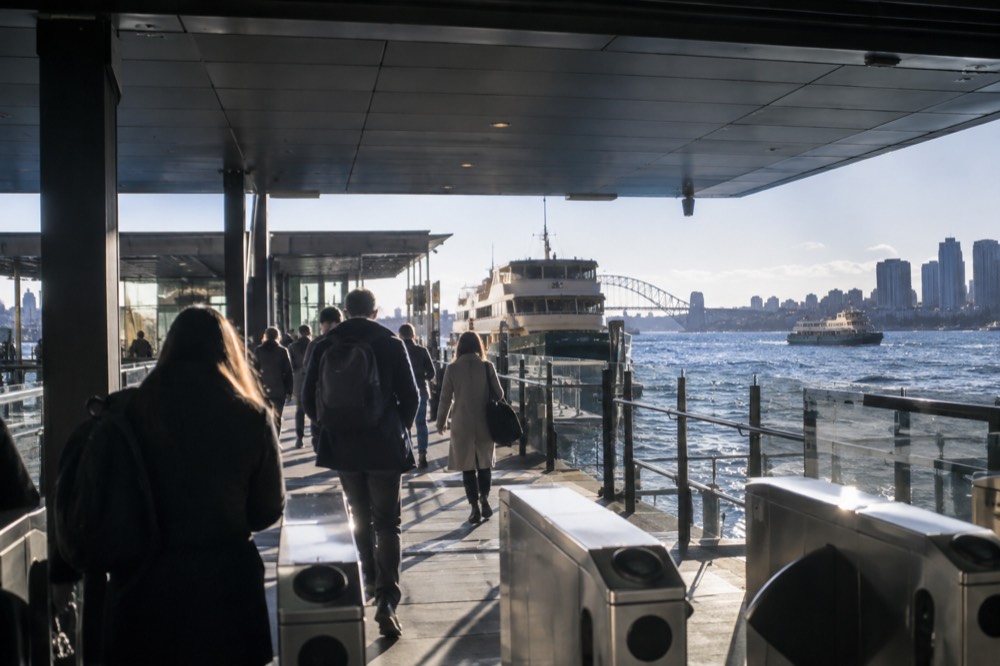
The airport exception matters. The station access fee at the Domestic and International airport stations, $18.61 for an adult in the 2026 fare year, is charged on top of the train fare and is excluded from both the daily and weekly caps, with its own separate weekly cap. Public holidays do not waive it. The cheaper alternative is the 400 bus, which carries no access fee at all. Full fare mechanics, including the contactless-card equivalence that means most visitors never need a physical Opal card, are in our Opal card guide for visitors, and the current caps are published by Transport for NSW on its adult fares page.
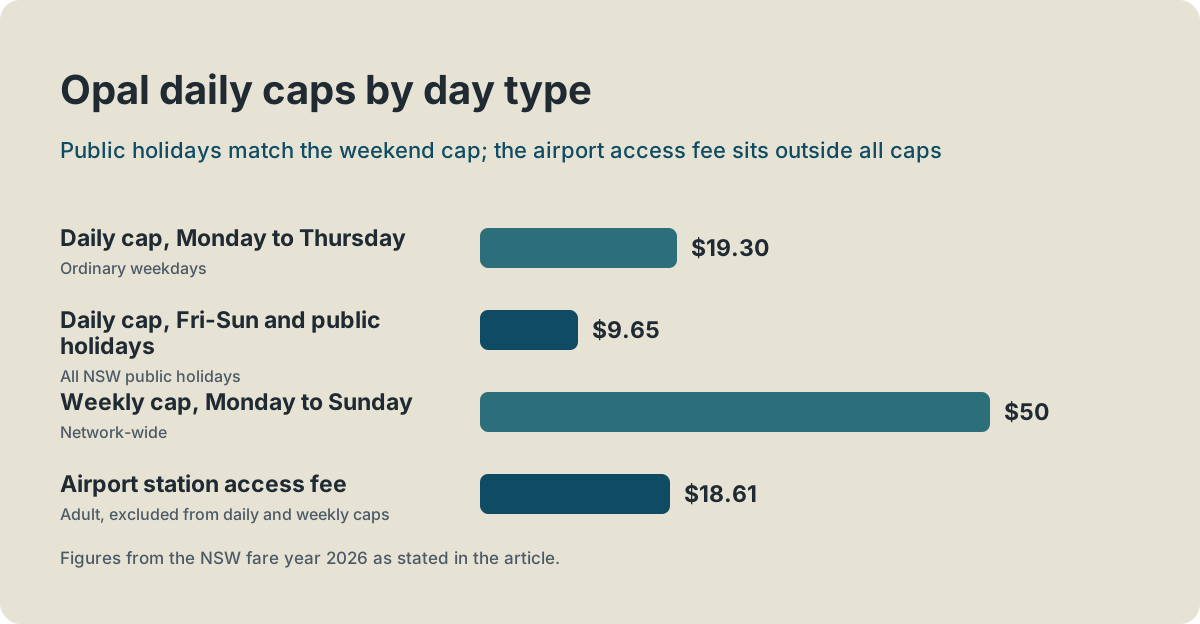
| Opal cap | Amount | When it applies |
|---|---|---|
| Daily cap, Mon-Thu | $19.30 | Ordinary weekdays |
| Daily cap, Fri-Sun and public holidays | $9.65 | Weekends, all NSW public holidays |
| Weekly cap | $50 | Monday to Sunday, network-wide |
| Airport station access fee | $18.61 adult | Outside both caps, own weekly cap |
How Should You Plan a Trip Around Sydney's Holiday Calendar?
Match your dates to what you want from the city. For the festive peak, come between Christmas and New Year's Eve and book harbour vantage points and dinner weeks ahead. For quieter attractions, come in a school term in February to March or late October to November. For the cheapest big sightseeing days, anchor your transport-heavy plans to a public holiday and ride all day under the $9.65 cap. Book anything involving the harbour, the BridgeClimb or the Blue Mountains ahead in every case.
The single best planning move is to lay the public holiday list over your draft itinerary before booking anything. A holiday Monday in the middle of your week is a gift: use it for the transport-heavy day, the Manly ferry, the Parramatta River, a train west. A holiday that lands inside school holidays, Easter above all, is a warning: use it for slow neighbourhood days, Paddington, Glebe, Newtown, rather than the headline attractions that every family in the city is also targeting.
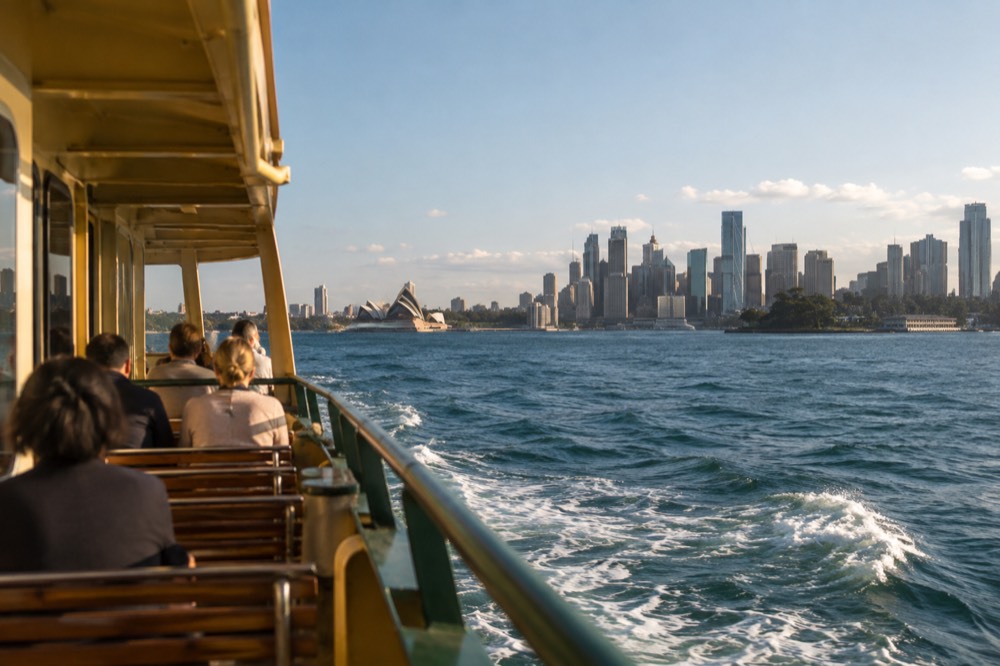
Budget travellers should note the double effect: public holidays both cut the transport cap and concentrate surcharges in dining. Our Sydney on a budget guide covers the free layers of the city, the free Royal Botanic Garden, the free Art Gallery of New South Wales, the free ocean pools, which do not change on a holiday at all. A well-structured holiday day can pair a free morning garden walk with a capped $9.65 afternoon of ferries and trains, and cost less than an ordinary weekday doing the same things.
| Your priority | Best window | What to book ahead |
|---|---|---|
| Festive harbour atmosphere | Late Dec to 1 Jan | NYE vantage plans, dinners, weeks out |
| Quietest attractions | School-term Feb-Mar or late Oct-Nov | Little, walk-up mostly works |
| Cheapest transport days | Any NSW public holiday | Nothing, just tap on |
| Whale watching | May to November, peak late Jun-Jul | Whale cruise, before peak weeks |
| Easter weekend | Four-day break, school overlap | Zoo, Blue Mountains, BridgeClimb |
If an evening experience is the centrepiece of your holiday plan, the dining cruises run to a set timetable that survives holiday crowds better than most land venues, and the hop-on bus keeps a full holiday schedule for covering ground between the dates that matter.
For covering ground between the dates that matter, the hop-on hop-off bus runs its full holiday timetable, pairing a Bondi loop with the city route, and it keeps running through the school holiday blocks when the trains are at their most crowded. It is the one sightseeing product whose value actually rises on a public holiday, because the roads are quieter and the loop times shorten.
Common Questions About Sydney Public Holidays and School Holidays
What are the NSW public holidays in 2026 and 2027?
Eleven in each year. In 2026 they run from New Year's Day on Thursday 1 January to Boxing Day on Saturday 26 December, with an additional Monday 28 December. In 2027, Good Friday falls on 26 March and Christmas Day on Saturday 25 December, with additional days on 27 and 28 December. The Bank Holiday in early August applies to banks only.
Is everything closed on public holidays in Sydney?
No. Major attractions, supermarkets, hotel restaurants and public transport run on almost every public holiday, often busier than usual. Banks and post offices close. Good Friday and Christmas Day are the two dates when a much larger share of the city, especially retail, genuinely shuts.
Are shops open on Australia Day in Sydney?
Yes. Australia Day, 26 January, is a normal trading day for most retail and attractions, and it is one of the busiest days of the year on the harbour and at the beaches. Expect holiday surcharges at some restaurants and heavy crowds at the foreshore from mid-morning onward.
Do restaurants add a surcharge on public holidays in Sydney?
Many do. A percentage surcharge on public holidays is legal in NSW when it is disclosed, typically on the menu or at the point of sale. It is not universal, and hotel venues and chains often absorb it, but check before ordering so the bill holds no surprises.
When are the NSW school holidays?
Four blocks a year: a long summer break from mid-December to late January, plus shorter breaks around Easter, in July and in late September to early October. Exact dates shift annually and are set by the NSW Department of Education, so check the current term calendar when you plan. These weeks fill every family attraction in the city.
Is the August Bank Holiday a public holiday for tourists?
No. The first Monday in August is listed on the official calendar but applies only to banks and certain financial institutions. Shops, attractions, tours and public transport in Sydney all operate normally, and most workers simply work. Treat it as an ordinary Monday.