Sydney Weekend Itinerary: A Two-Day Plan That Actually Fits
Two days is enough to see Sydney properly if you sequence it right: the harbour and historic quarter on day one, the coast on day two, and ferries doing the heavy lifting between them.
Short answer
A good Sydney weekend splits into a harbour day and a coast day. Day one: Circular Quay, the Opera House, the Rocks, the Royal Botanic Garden and a harbour cruise. Day two: Bondi or Manly, with the ferry or bus out and the coastal walk back. Most of it needs no car, and Opal caps keep two days of transport under A$40.
Two days in Sydney is the classic visitor problem: the city spreads along 70-plus kilometres of coastline and harbour, and the famous bits are not next to each other. The fix is sequencing. Put the harbour, the Opera House and the Rocks together on Saturday, because they are all within a 15 minute walk of Circular Quay. Save the beach for Sunday, and let a ferry or a bus do the crossing. This itinerary does exactly that, with real fares, real walking distances and the few things genuinely worth booking ahead.
How Should You Structure Two Days in Sydney?
Split the weekend into a harbour day and a coast day. Day one stays inside the walking triangle of Circular Quay, the Rocks and the Royal Botanic Garden, all free to roam. Day two goes east or north to the water: Bondi by bus, or Manly by ferry, roughly 30 minutes each way. Doing both coasts in one day is the single biggest mistake first-time visitors make, because you spend the whole weekend on transport instead of in the places you came for.
The harbour day works because Sydney stacked its icons on one headland. The Opera House, the Harbour Bridge, the Rocks, the Royal Botanic Garden and Circular Quay form a loop you can walk in under an hour without entering any of them, and the whole loop is free. The coast day works because Sydney's beaches are genuinely far from the centre: Bondi is about 8 kilometres from the CBD, Manly about 13 by ferry across the open harbour. Pick one, do it properly, and keep the other for a longer trip.
If your weekend is a Saturday and Sunday, use the Opal pricing to your advantage. The daily cap is A$9.65 on Friday, Saturday, Sunday and public holidays, against A$19.30 Monday to Thursday, so a weekend is already the cheap time to travel widely. The full fare detail lives in our Opal card guide for visitors.
| Day | Theme | Anchor point | Getting there | Time on foot |
|---|---|---|---|---|
| Day 1 morning | Harbour icons | Circular Quay | Train or ferry to Circular Quay | 3-4 km total |
| Day 1 afternoon | The Rocks and bridge | Circular Quay | Walk | 2 km |
| Day 2 morning | Bondi | Bondi Beach | Bus from the CBD, about 30-45 min | 1-2 km |
| Day 2 morning alt | Manly | Manly Wharf | F1 ferry, about 30 min | 2-3 km |
| Day 2 afternoon | Coastal walk or aquarium | Bondi to Tamarama, or Darling Harbour | Bus or ferry | 2-4 km |
What Should You Do on Day One: The Harbour Day?
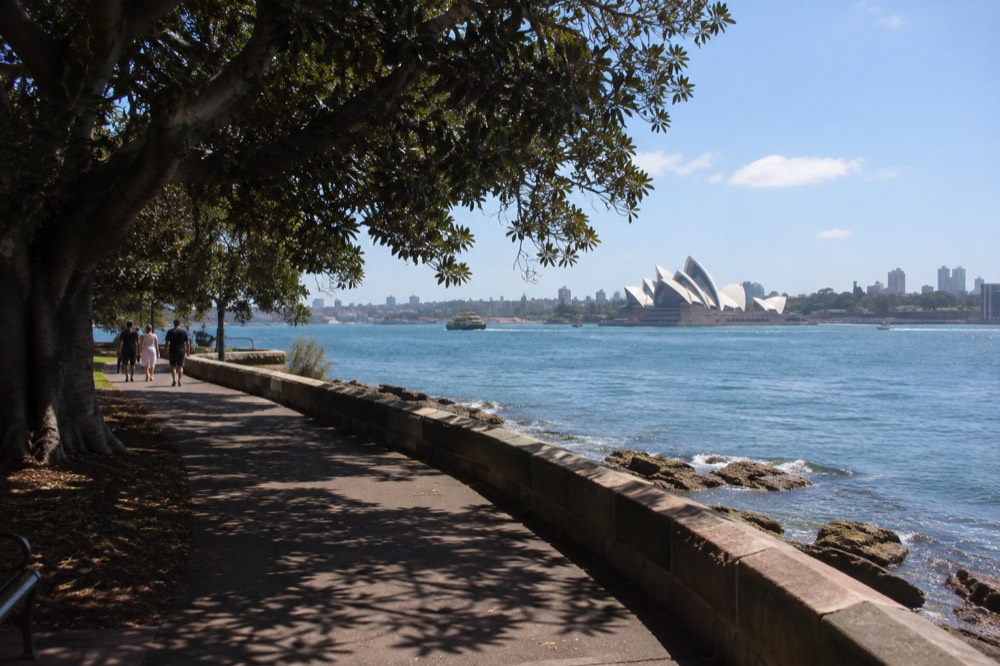
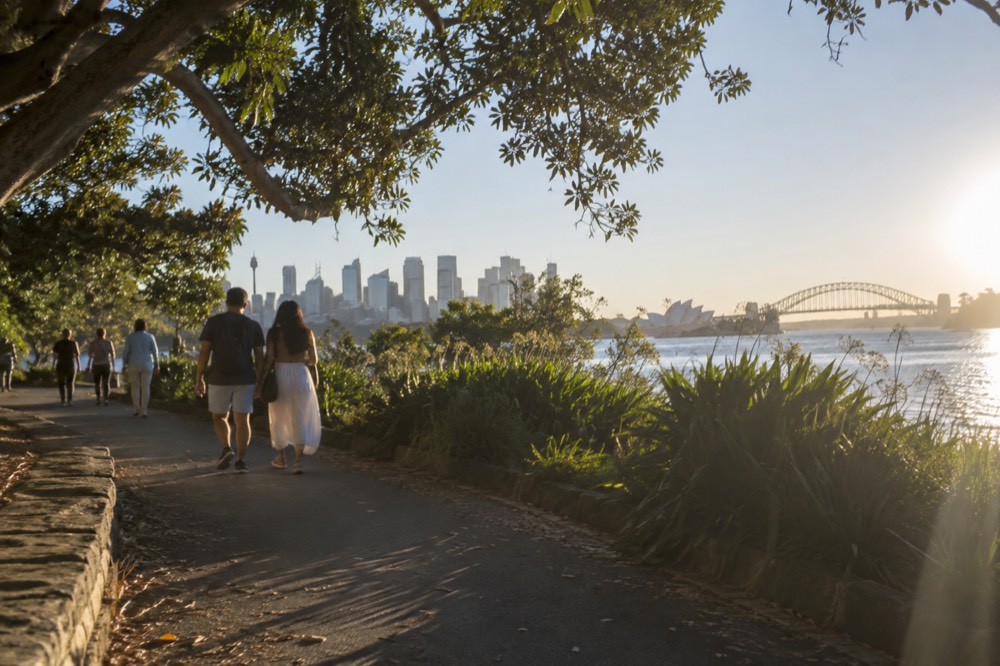
Start at Circular Quay early, before the tour groups arrive, walk east through the Royal Botanic Garden to Mrs Macquarie's Point for the classic Opera House and bridge view, then loop back through the Opera House forecourt and spend the middle of the day in the Rocks. Entry to the garden is free, and the whole loop is about 4 kilometres of flat walking. An Opera House tour in the late morning is the one bookable that earns its place on day one.
The Royal Botanic Garden Sydney is the quiet headline of day one: entry is free, it opens at 7am daily, and the Farm Cove path to Mrs Macquarie's Point delivers the postcard angle of the Opera House framed against the bridge that every other viewpoint misses. The garden's own page confirms the free entry and the 7am-to-sunset hours. Most visitors walk right past the gates assuming a ticketed attraction sits inside.
Those three cover the day-one decisions in one glance: a bus pass if you would rather ride than walk, a [multi-attraction pass](https://gocity.tpk.ro/rUvgw2vS) if the aquarium and the tower are on your list, and a sightseeing cruise if you want the harbour itself as an activity rather than a transport corridor.
The Opera House tour question comes down to timing. The official tours run roughly 9am to 5pm daily, about an hour long, and the Opera House publishes no fixed public price for the standard tour, so pricing is dynamic by date and session. The guided tour product in the roster above includes entry, runs an hour, and carries a rating above 4.7 across thousands of reviews, which is about as strong a consensus as Sydney tours get. Book the late morning slot, tour the building, then have lunch at Circular Quay or in the Rocks.
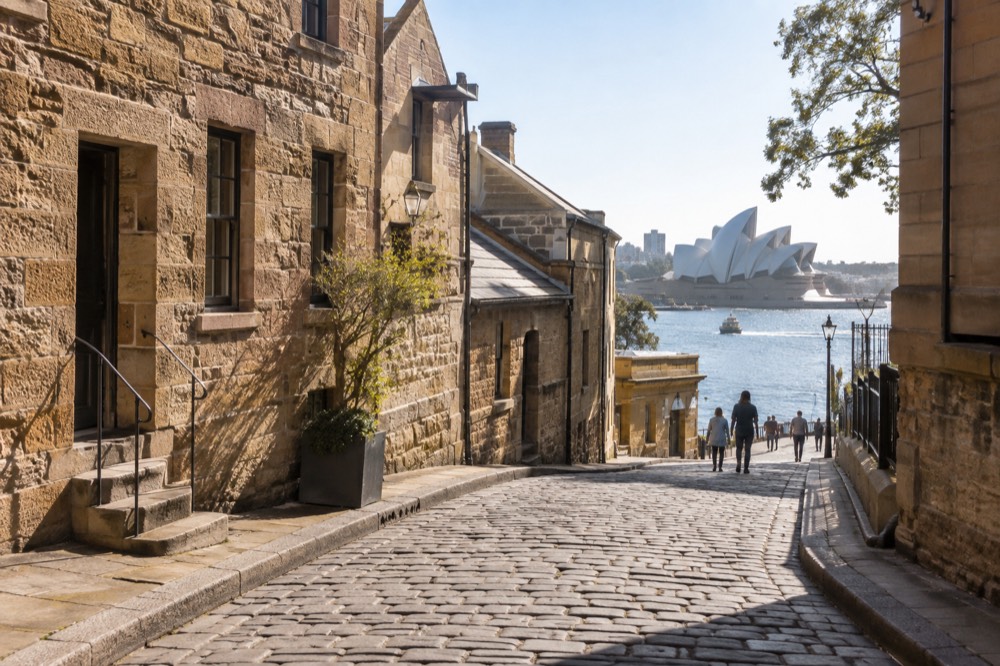
Afternoon belongs to the Rocks, Sydney's oldest neighbourhood, sitting directly under the southern end of the Harbour Bridge. The Rocks walking tour in the roster runs 90 minutes and is a solid way to absorb the colonial history quickly, but the area also rewards just wandering: sandstone lanes, weekend markets, and the harbour bridge approach overhead. If you want the bridge view without the climb price, the Pylon Lookout sits inside the bridge's southeast pylon and is far cheaper than a summit climb.
A hop-on hop-off [bus ticket](https://busbud.tpk.ro/SiBDUlSE) is the pragmatic day-one upgrade: the Sydney loop links Circular Quay, Darling Harbour, the Rocks and Kings Cross, and a Bondi extension covers day two as well. If your weekend forecast turns wet, the pass saves you standing at bus stops, and the free-cancellation terms on the listing mean a weather change costs you nothing.
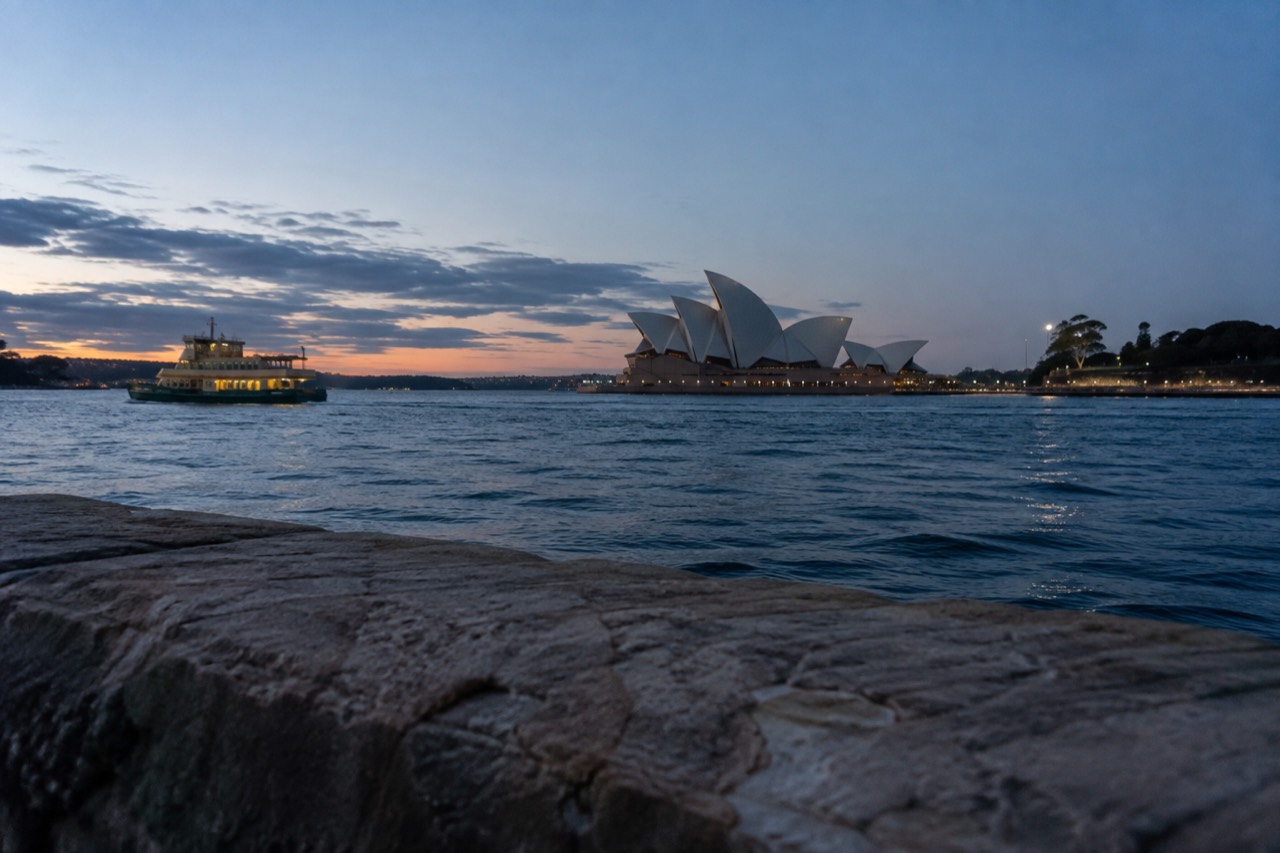
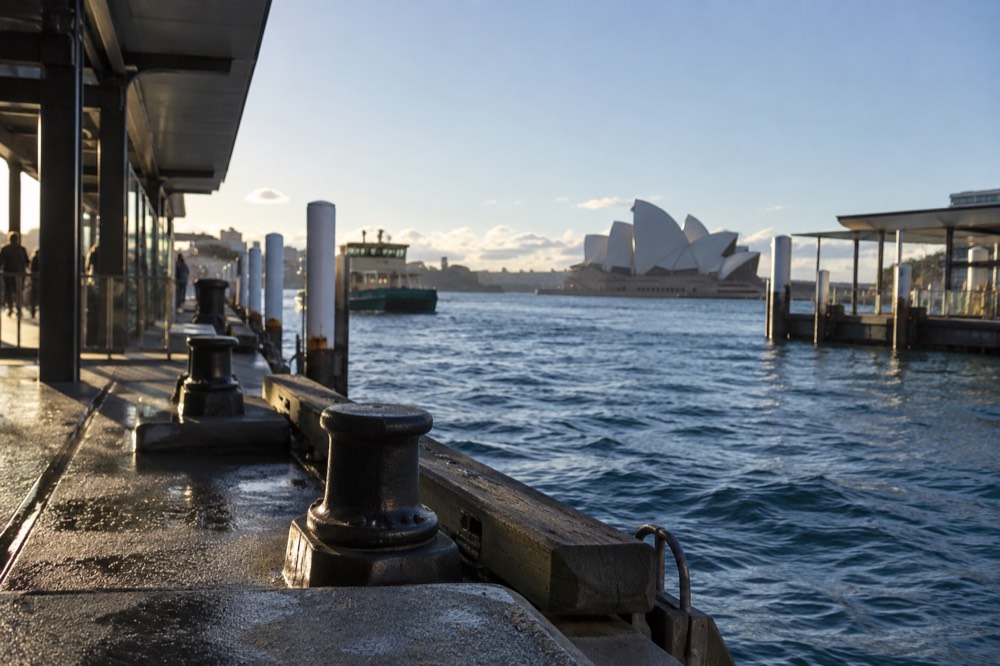
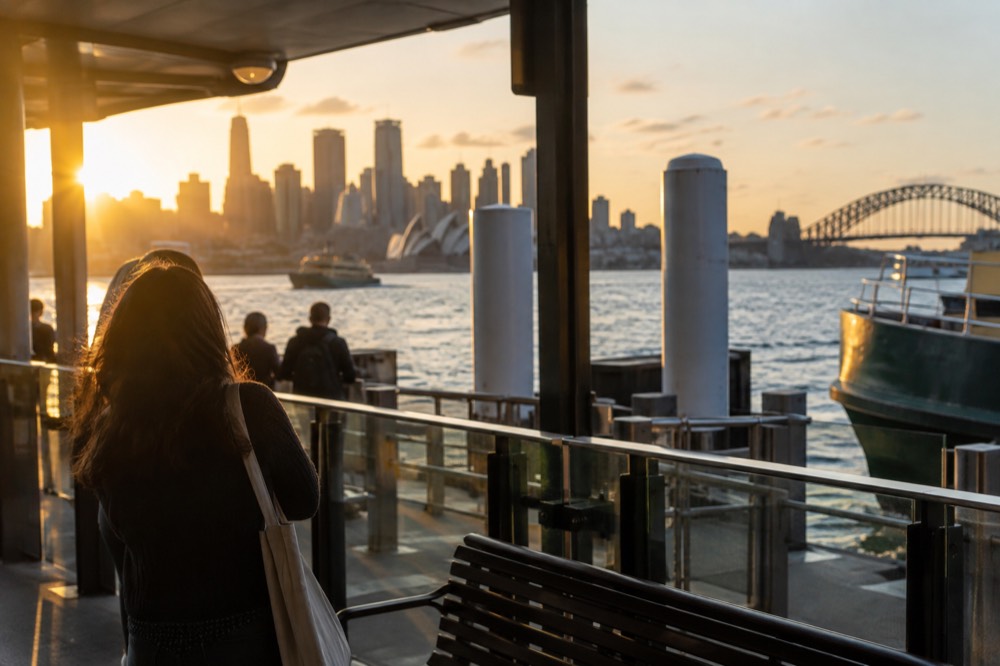
Finish day one on the water, because Sydney at dusk is a harbour show. A sunset catamaran cruise runs about an hour and departs from Darling Harbour or Circular Quay, which slots neatly after a Rocks afternoon. Alternatively, just ride the F4 or F1 ferry as a commuter would: a regular ferry at sunset costs a few dollars on Opal and delivers most of the same skyline.
What Should You Do on Day Two: The Coast Day?
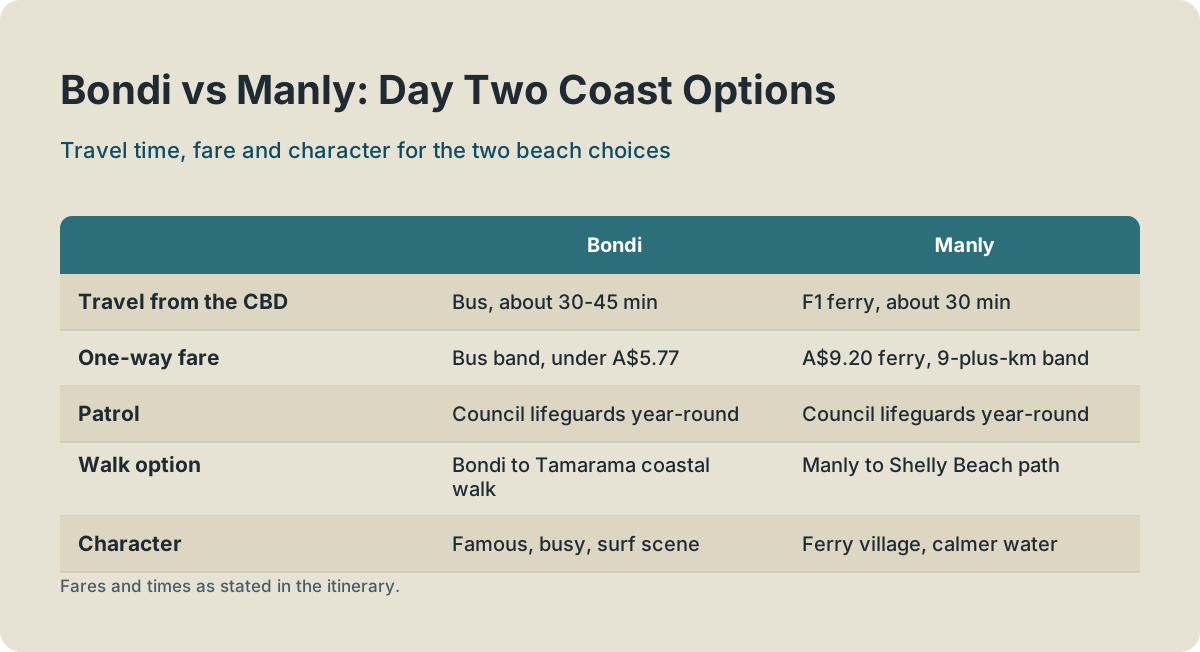
Pick one beach and commit. Bondi is the famous choice, reached by bus from the CBD in 30 to 45 minutes, with the Bondi to Tamarama section of the coastal walk as the morning's exercise. Manly is the calmer choice, 30 minutes by ferry from Circular Quay, with Shelly Beach and its snorkelling a short walk past the surf club. Swimming between the red and yellow flags is the rule at both, and both are patrolled year-round by council lifeguards.
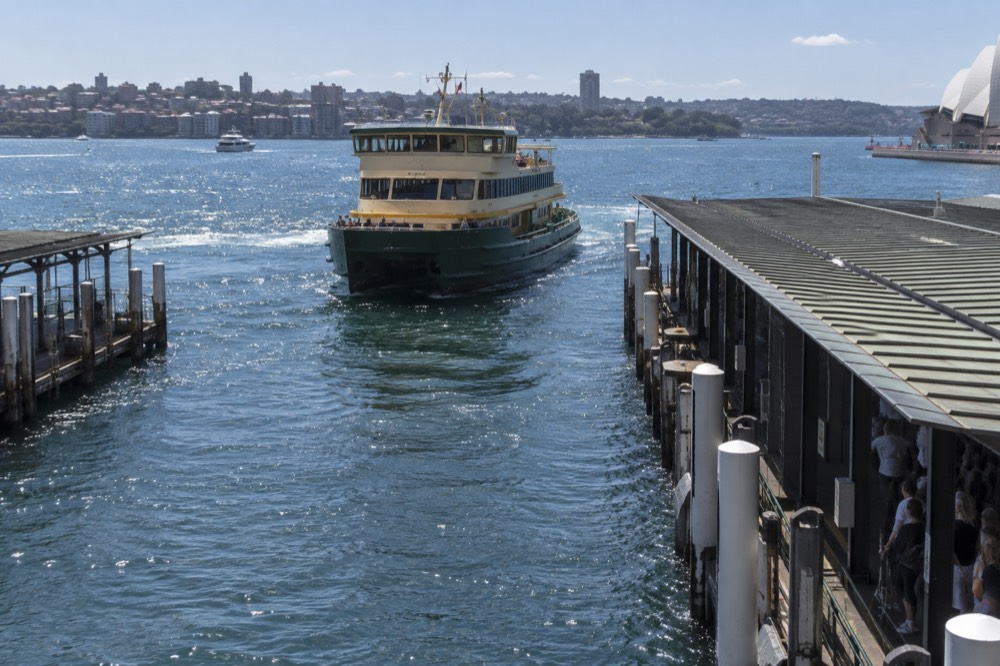
The ferry-versus-bus decision shapes the whole day. The Manly ferry is a crossing of the open harbour, about 30 minutes each way, and the F1 fare sits in the 9-plus-kilometre band at A$9.20 one way, capped at A$9.65 on a Sunday. Bondi's bus is cheaper and shorter but is a road journey through the eastern suburbs. Our Manly ferry guide covers the crossing in detail, and the Bondi Beach guide does the same for the eastern option.
| Bondi | Manly | |
|---|---|---|
| Travel from the CBD | Bus, about 30-45 min | F1 ferry, about 30 min |
| One-way fare | Bus band, under A$5.77 | A$9.20 ferry, 9-plus-km band |
| Patrol | Council lifeguards year-round | Council lifeguards year-round |
| Walk option | Bondi to Tamarama coastal walk | Manly to Shelly Beach path |
| Character | Famous, busy, surf scene | Ferry village, calmer water |
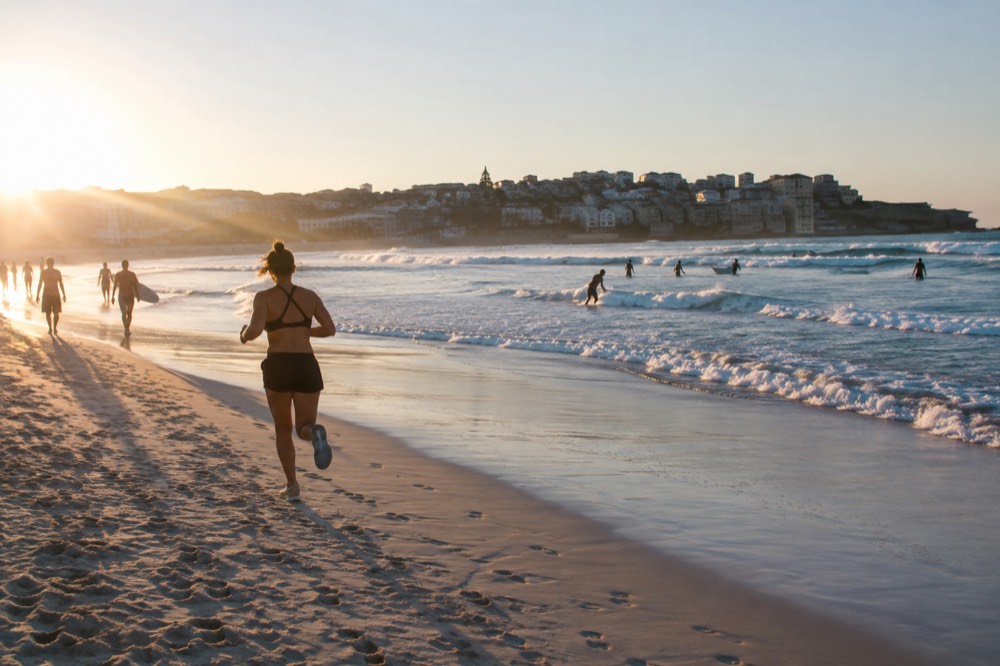
Safety first, because this is the part of a Sydney weekend where a careless sentence does real harm. Swim between the red and yellow flags, during patrol hours, at a patrolled beach. Bondi, Bronte, Tamarama, Coogee, Manly and Dee Why are patrolled year-round by council lifeguards, which is the genuinely non-obvious fact: most visitors assume nothing is patrolled outside summer. Patrol hours still vary by season and beach, so check the signs or the council page on the day. Rip currents are the number one hazard; the official advice from Beachsafe is to stay calm, raise an arm and call for help, float with the current, or swim parallel to the beach toward breaking waves.
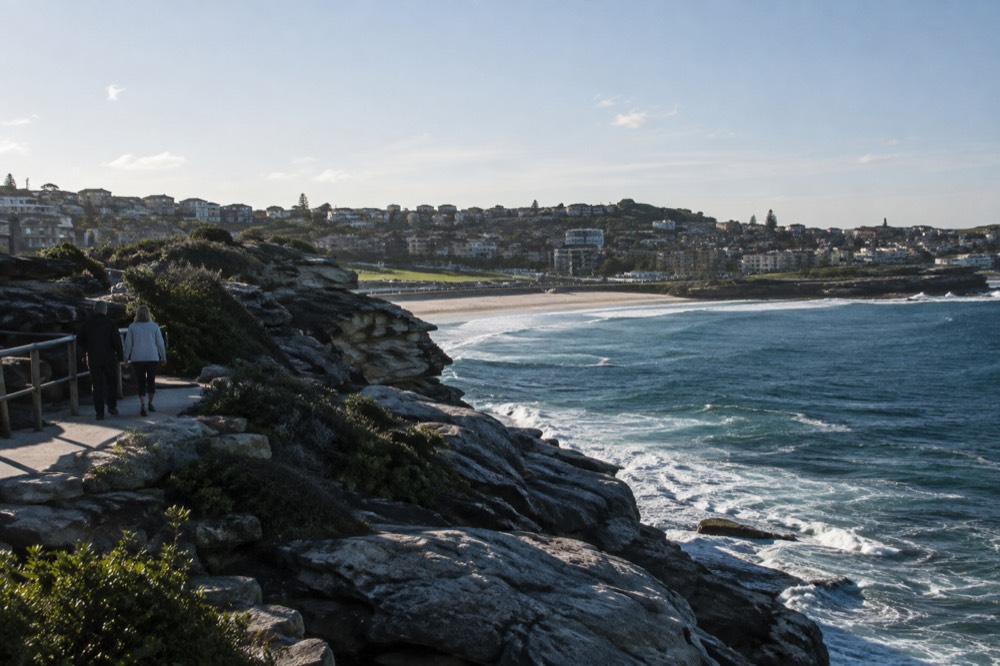
The Bondi to Coogee coastal walk is free, about 6 kilometres end to end, and the first section to Tamarama is the most photographed. Do the short version on a weekend: Bondi to Bronte, then a bus back. If you want the walk with a guide, note that no bookable guided version exists at scale, the walk itself is the product. Full detail lives in our Bondi to Coogee coastal walk guide.
If the weather turns, the coast day converts to a harbour-interior day without waste. SEA LIFE Sydney Aquarium, the Sydney Tower Eye and WILD LIFE Sydney Zoo cluster around Darling Harbour and the CBD, and a multi-attraction pass bundles them at a lower combined price than separate tickets. That is exactly what the attractions pass in the roster does, and it is the standard wet-weather play. Our Sydney rainy day itinerary has the full list.
How Much Does a Sydney Weekend Actually Cost?
Budget roughly A$150-250 per person per day mid-range, excluding accommodation and flights: about A$20-40 on transport thanks to the Opal caps, A$25-60 on food at casual venues, and one paid experience a day at US$30-120. The free layer is unusually thick here: the Royal Botanic Garden, the Australian Museum's general entry, the Art Gallery of New South Wales and the coastal walk all cost nothing. A tight weekend can run well under A$150 a day.
The transport maths is the part worth spelling out. A contactless card or an Opal card is charged identically, with the same caps, so visitors do not need to hunt for an Opal card before travelling. Tap on and tap off everywhere, including ferries.
| Transport item | Cost | Notes |
|---|---|---|
| Opal daily cap, Mon-Thu | A$19.30 | Applies across metro, train, bus, ferry, light rail |
| Opal daily cap, Fri-Sun and public holidays | A$9.65 | Weekend days are the cheap days |
| Opal weekly cap | A$50 | Monday to Sunday week |
| Manly ferry (F1), one way | A$9.20 | 9-plus-km ferry band |
| Off-peak discount | 30% | Metro, train, bus, light rail; not ferries |
| Airport station access fee | A$18.61 adult | On top of the fare, outside the caps |
Those figures come from Transport for NSW's published fare tables, and the airport access fee is the trap: it is charged on top of the train fare at both airport stations and sits outside the daily and weekly caps, with its own separate weekly cap. The fee also rose after the widely circulated 2025 figure, so ignore older guides quoting less. The full airport-to-city comparison, including the cheaper 400 bus which carries no access fee, is in our Sydney airport to the city guide.
Food is where budgets swing. A flat white and a pastry runs A$12-18, a casual lunch A$18-30, a mid-range dinner A$40-70 with a drink. The Sydney food guide covers the eating layer properly, and the trip cost breakdown does the whole-week arithmetic for longer stays.
When Is the Best Time of Year for a Sydney Weekend?
September to November and March to May are the sweet spots: warm days, thinner crowds and cheaper beds than the December-to-February peak. But the counterintuitive fact is that June, mid-winter, is Sydney's wettest month at 133.1 mm on average, wetter than any summer month, while August is its clearest month with 13.4 mean clear days, and February, the heart of peak season, is statistically its cloudiest at 5.3. Peak season is not the sunny guarantee visitors assume.
Those numbers are long-term Bureau of Meteorology normals from the Observatory Hill station, 162 years of record, and they invert the standard advice. A weekend in late winter gets you the clearest skies of the year, 17.9 °C average daily maxima in August, and the lowest accommodation prices. A weekend in February gets you the warmest water and the most clouds. Daylight saving runs from the first Sunday in October to the first Sunday in April, which stretches the usable afternoon on a spring or autumn weekend considerably.
Season also changes what is bookable. Whale watching runs May to November only, with the southern migration, mothers and calves closer to shore, from August to November. Vivid Sydney, the light festival, runs late May to mid-June, and more than 80% of it is free, which makes a Vivid weekend exceptional value if you accept the crowds and the rainiest month of the year. The best time to visit guide and the Sydney events calendar carry the full seasonal picture.
What Should You Book in Advance for a Sydney Weekend?
Book three things ahead: a BridgeClimb if you are doing it, because sessions sell out on weekends; an Opera House tour for the session time you want; and a weekend table at any restaurant worth the name. Everything else, ferries, buses, museums, the garden, the coastal walk, is either walk-up or free. The hop-on hop-off bus is worth pre-buying for the cancellation terms, and whale cruises need booking only in season, May to November.
The BridgeClimb is the one product where advance planning genuinely matters. Summit climbs run about 3 hours total, roughly 2 hours on the bridge, and weekend sessions are the first to fill. The operator's indicative rates put a Summit Day adult climb from around A$375 weekday, more on weekends, with a peak surcharge from late December to early January, all dynamic by date and demand. The cheaper question, whether the bridge is worth it at all, is answered in our BridgeClimb guide.
For everything else, the weekend rewards looseness. Museums are walk-up and free at the general-entry level: the Australian Museum is free, open 10am to 5pm daily, and the Art Gallery of New South Wales is free and stays open until 10pm on Wednesdays, which makes it a genuine evening option rather than a rainy-day filler. Our Sydney Opera House guide and The Rocks guide cover their respective corners in depth if you want to go deeper than a weekend allows.
Common Questions About a Sydney Weekend
Is two days in Sydney enough?
Two days is enough for the harbour core and one beach, which is the itinerary above. It is not enough for the Blue Mountains, the Hunter Valley or the Northern Beaches beyond Manly. If you can stretch to three or four days, our 3 days in Sydney and 4 days in Sydney guides add those layers without repeating day one.
Do you need a car for a Sydney weekend?
No. Every stop in this itinerary is reachable by train, bus, ferry or foot, and parking near Bondi or the CBD on a weekend is expensive and scarce. A car only earns its cost on a day trip to the Royal National Park or wine country, and even those have train or tour alternatives.
What is the best Sydney weekend itinerary for first-timers?
Day one: Circular Quay, the Royal Botanic Garden, an Opera House tour, the Rocks and a sunset ferry. Day two: Bondi or Manly plus the short coastal walk. That sequence front-loads the icons on foot and gives the second day to the coast, which is the trip most first-timers actually picture.
How much money do you need for a weekend in Sydney?
Roughly A$150-250 per person per day mid-range, excluding flights and accommodation, with transport capped at A$9.65 a day on weekends by Opal. A budget weekend using free museums, the garden, the coastal walk and commuter ferries can come in well under A$150 a day.
Is Sydney good for a weekend trip?
Yes, and the weekend itself is a discount: Opal caps drop to A$9.65 on Saturdays and Sundays, the Art Gallery stays open late on Wednesdays, and weekend markets fill the Rocks. The one trade-off is that locals have the same idea, so beaches and ferries are busiest exactly when you are there.
What if it rains during my Sydney weekend?
Swap the coast day for the harbour-interior day: SEA LIFE Sydney Aquarium, the Sydney Tower Eye, the Australian Museum and the Art Gallery, optionally bundled on an attractions pass. Beachwatch advises staying out of the water while it rains and for up to one day after heavy rain at ocean beaches, so a swim is off the table anyway.
The last word on a Sydney weekend: resist the urge to see everything. The city rewards depth over coverage, one beach walked properly beats three photographed from a bus window, and the ferry you catch as transport will be the thing you remember. For the fuller versions of this plan, see our 2 days in Sydney guide, and for everything the weekend cannot fit, the Sydney Travel Guide homepage is the map of the whole territory.