Sydney eSIM and Staying Connected: Phone, Data and Payment Guide
Your phone in Sydney does three jobs: data, money and directions. Get all three right and the city runs smoothly; get one wrong and the airport station is where you find out.
Short answer
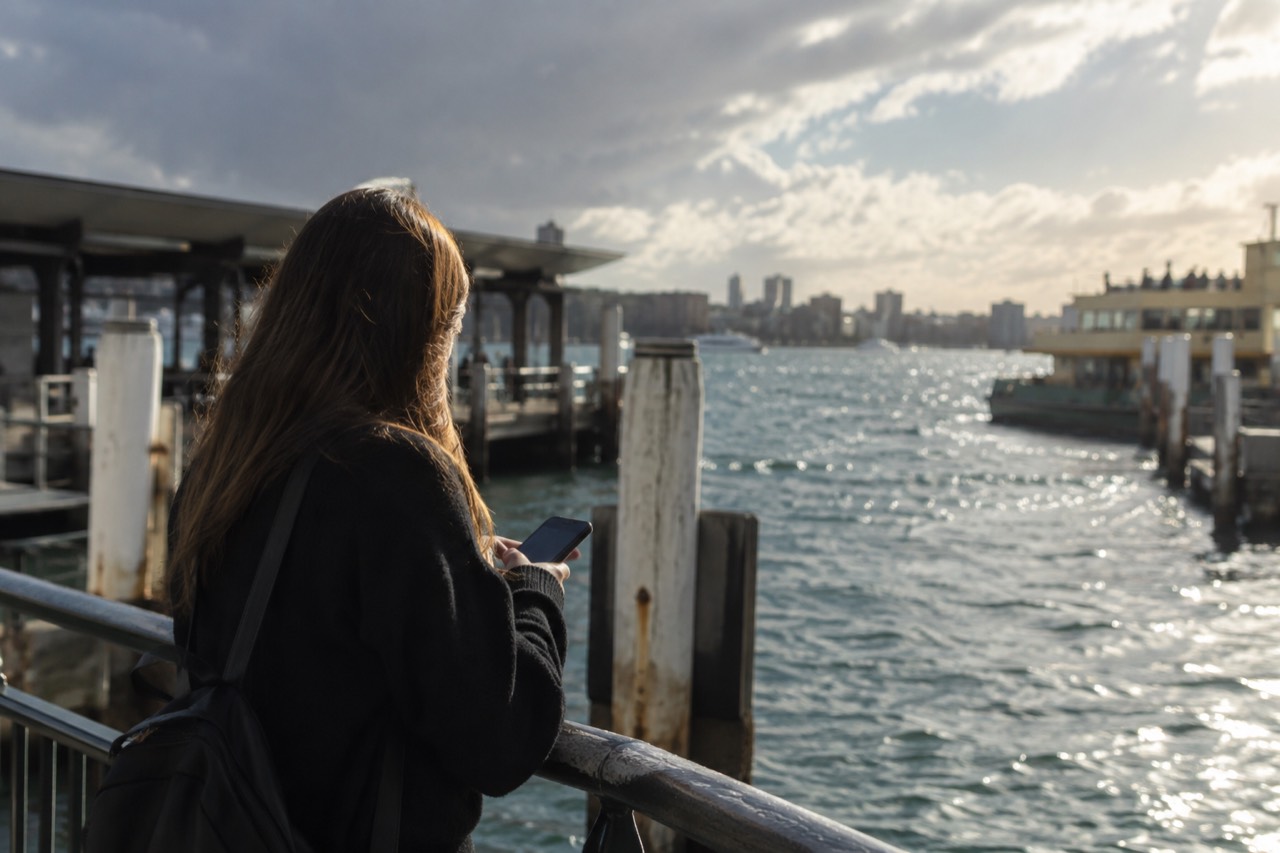
Buy an eSIM or travel data plan before you land, then tap the same phone or card for every train, ferry and bus ride. Sydney's transport network accepts contactless credit and debit cards at full Opal benefits, so you never need a physical transport card. Free WiFi is common at attractions but patchy on the street.
Sydney runs on a tap. You tap a card to board a train at the airport, tap again at Circular Quay for the Manly ferry, and tap a third time on a bus to Bondi. The same phone in your pocket carries your map, your boarding pass and your restaurant booking. Get connectivity and payments sorted before you land and the whole city behaves like one continuous system. Get them wrong and you discover the problem standing at an airport station gate at 6am with no signal.
This guide covers the three things your phone does in Sydney: data, money and directions. The good news is that Sydney is one of the easiest cities in the world for a connected visitor, because its transport network takes ordinary contactless credit and debit cards with every benefit a local Opal card gets. That single fact, published on Transport for NSW's visitor payments page, removes the single most common arrival headache.

Do You Need an eSIM for Sydney?
Yes, if your phone supports eSIM and your home plan charges roaming fees, an eSIM or travel data plan is the cheapest and simplest way to stay online in Sydney. Australia's major networks have strong 4G and 5G coverage across the city, the beaches and the Blue Mountains, and a travel eSIM activates the moment you land without a shop visit. If your home carrier offers cheap or included roaming in Australia, you may not need one at all.
The decision comes down to what your existing plan does in Australia. Some home carriers include Australia in a roaming bundle, in which case your phone simply works and you should do nothing. Most charge per-megabyte or per-day roaming fees that dwarf the cost of a short data plan, and that is the case an eSIM solves.
How eSIMs work here is the same as anywhere: you buy a plan from a travel provider or an Australian carrier, scan or install a QR code, and the plan sits alongside your home SIM. Your home number keeps receiving texts while the eSIM carries the data. That matters in Sydney more than in most cities, because your phone number is often the anchor for bank verification codes while you travel.
Practical advice, independent of any provider's pricing: install the eSIM and let it activate before you fly, not in the arrivals hall. Activation can require a data connection, and the one place you reliably have none yet is the aircraft cabin on final approach. Providers set their own prices and change them constantly, so compare a couple on the day rather than trusting a figure from a guide written months earlier.
What Are Your Options for Data in Sydney?
You have four realistic options: a travel eSIM, a prepaid Australian SIM, roaming on your home plan, or pocket WiFi. For most visitors a travel eSIM wins on convenience, while a prepaid local SIM can win on cost for longer stays. Roaming is only sensible if your home plan includes Australia. Pocket WiFi is largely obsolete now that eSIMs exist, except for groups sharing one device.
| Option | Best for | Setup time | Main drawback |
|---|---|---|---|
| Travel eSIM | Short trips, eSIM-capable phones | Before you fly, minutes | Data-only on most plans; calls need an app |
| Prepaid Australian SIM | Stays over 2 weeks, need a local number | Shop visit on arrival | Queue at the airport or find a city store |
| Home plan roaming | Plans that include Australia | None at all | Can be very expensive if not included |
| Pocket WiFi | Groups of 4+ sharing one device | Pickup and return logistics | Extra device to charge and carry |
A prepaid SIM bought in Sydney gives you an Australian number, which helps with local bookings and some delivery services that verify by SMS. Travel eSIMs are usually data-only, so if a Sydney business needs to text you an Australian number, a prepaid SIM is the stronger choice. For a week of maps, browsing and bookings, most visitors never notice the difference.
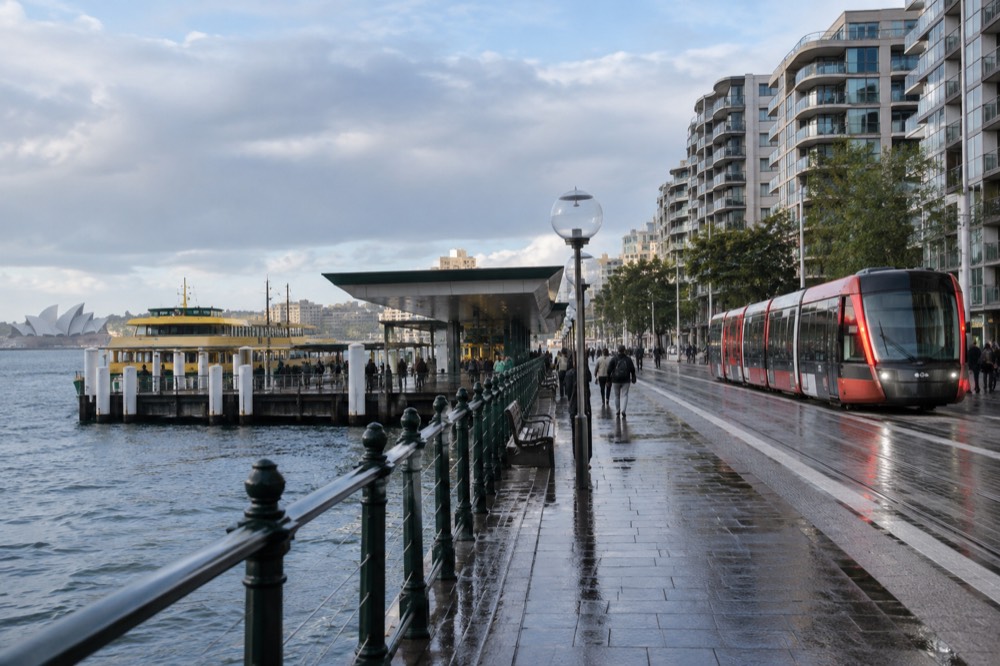
Coverage is a non-issue inside the city. The places where signal thins are the ones you'd expect: deep in Blue Mountains valleys, on ferry crossings mid-harbour for a few seconds, and in the lower levels of some older buildings. If you are planning a day trip out of town, our guide to day trips from Sydney without a car covers the routes where offline maps are worth downloading the night before.
Can You Pay for Sydney Transport with Your Phone?
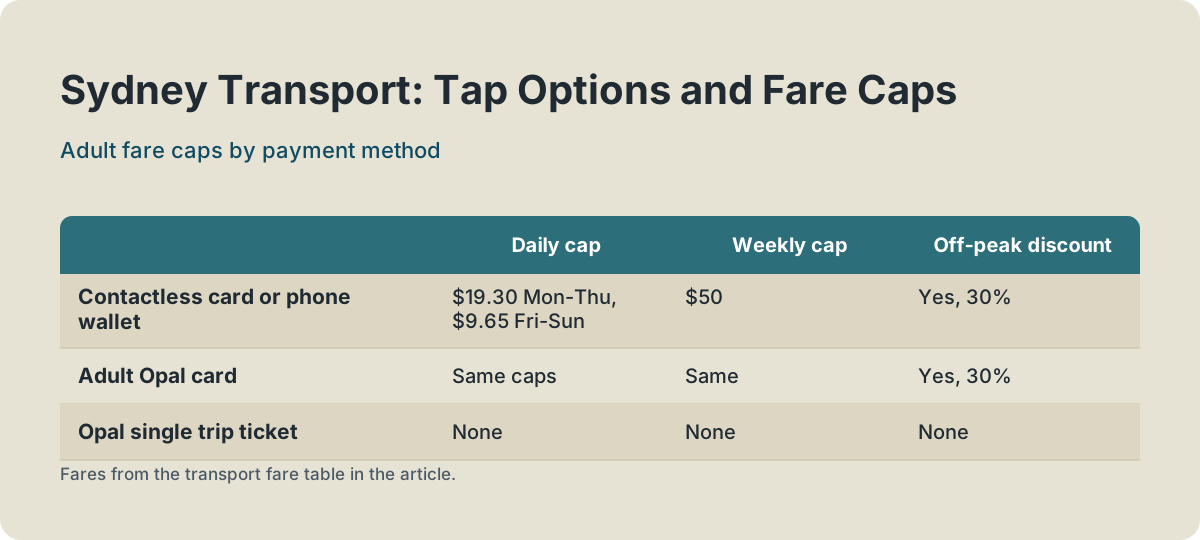
Yes. Sydney's trains, metro, ferries, buses and light rail all accept contactless credit and debit cards, including phone and watch wallets, charged at exactly the same fares as an adult Opal card, with the same daily caps, the same weekly cap and the same off-peak discounts. You never need to buy a physical Opal card as a short-stay visitor. Tap the same card or device on and off every single ride.
This is the single most useful connectivity fact about Sydney, and a surprising number of international visitors arrive believing they must queue for a transport card. You do not. The system, described on the official adult fares page, treats your contactless card as an Opal card in every way that matters to a wallet.
| What you tap | Adult fare | Daily cap | Weekly cap | Off-peak discount |
|---|---|---|---|---|
| Contactless card or phone wallet | Same as Opal | $19.30 Mon-Thu, $9.65 Fri-Sun | $50 | Yes, 30% |
| Adult Opal card | Standard | Same caps | Same | Yes, 30% |
| Opal single trip ticket | Higher | None | None | None |
The traps are few but real. First, tap the same card every time: the system counts your journeys per card, so mixing your phone with the physical card in your wallet splits your progress toward the caps. Second, tap off. On trains, ferries and light rail you must tap off at the end, or you are charged the maximum default fare for that trip. Third, know what a contactless payment is not: the privately operated Manly Fast Ferry accepts Opal cards through OpalPay, but that is a different fare scheme without the caps, so a contactless bank card is not the same thing there at all. Our guide to the ferries untangles that route.
One fee deserves its own warning. The train from either Sydney Airport station carries a station access fee on top of the normal fare, charged separately from every cap. The 400 bus from the airport carries no access fee at all. Both facts sit on the official airport transport page, and the full arrival decision is worked through in Sydney Airport to the city.
Should You Buy an Attractions Pass Online Before You Arrive?
Yes, for most short-stay visitors it pays to book attraction tickets and passes online before landing, for the same reason you install your eSIM early: prices are dynamic and advance purchase is cheaper, and you skip the ticket queue. The four-attraction combo pass covering SEA LIFE, Sydney Tower Eye, WILD LIFE and Madame Tussauds is a typical example, bought in minutes on a phone.
The pass logic mirrors the transport logic. Sydney's big attractions use timed entry and demand-based pricing, so a walk-up ticket on a busy Saturday costs more than the same ticket bought on a Tuesday a fortnight ahead. Booking ahead also fixes your schedule, which pairs well with a data plan: you buy the ticket on your phone, the confirmation lands in your email, and the QR code works offline.
There is a second reason to buy before you land, and it is specific to how Sydney handles queues in summer. The busiest weeks of the December and January school holidays see timed-entry attractions sell out of preferred slots entirely, and a same-day phone purchase then gives you the leftovers. Buying a fortnight ahead costs the same or less and gives you the pick of the times.
If you are weighing passes against individual tickets, our comparison piece on Sydney attraction passes runs the numbers for different trip lengths. The short version: passes reward density. Three or more included attractions in a short stay and the maths usually works; one or two and it does not.
The combo pass itself is worth a look even if you only manage two of its four attractions, because the pricing is set so that two visits often come close to the pass price anyway. SEA LIFE and the Tower Eye sit within a short walk of each other around Darling Harbour and the city centre, which makes them the natural pairing on a single connected day.
Where Can You Find Free WiFi in Sydney?
Free WiFi is common inside Sydney's major attractions, hotels, shopping centres and many cafes, but patchy on the street and effectively absent on buses and ferries. The State Library, major museums and the airport terminals all offer it. Treat public WiFi as a supplement to your data plan, not a replacement: it is fine for a booking lookup, unreliable for a day of navigation.
The pattern is the same in most large cities: indoor public venues have it, the open street does not. If your plan is to lean on free WiFi, plan your day around the buildings that have it. The major museums and galleries are reliable, hotel lobbies are reliable, and food courts generally are too. A day spent walking between the Opera House, the Royal Botanic Garden and Bondi will include long stretches with nothing to connect to.
Security is the standard advice: avoid entering banking details on a public network, and prefer your eSIM data for anything that involves a password you care about. A travel data plan in Sydney is cheap enough that the risk calculation is easy.
For a sense of how much of your day will be offline, it helps to know how Sydney's weather shapes an itinerary. The long-run averages from the Bureau of Meteorology show June is the wettest month of the year in Sydney, at 133.1 mm of rain on average, wetter than any summer month, while August has the most clear days of any month. If you are visiting in the wetter months, indoor WiFi-rich attractions matter more, and our rainy day itinerary is built around exactly that.
What Should You Set Up on Your Phone Before You Land?
Install and activate your eSIM, download offline maps for Sydney and the Blue Mountains, screenshot your first night's accommodation address, and check that your contactless card is in your phone wallet. Do all four before boarding, because activation and downloads both need a connection you already have at home. Arrivals WiFi at Sydney Airport exists but is not where you want to be troubleshooting a payment method.
The pre-flight checklist, in the order that saves the most stress:
- Activate the eSIM at home, where you have WiFi to fall back on if the install misbehaves.
- Download offline maps for Sydney, the Northern Beaches and the Blue Mountains; navigation is the single biggest data consumer on a trip.
- Add a contactless card to your phone wallet and confirm it works at a terminal at home.
- Screenshot or save offline copies of your hotel address, booking confirmations and your return flight details.
- If you plan to use rideshare apps from the airport, install and sign in before departure, since first-time sign-ups can require SMS verification.

One Sydney-specific wrinkle: daylight saving. Clocks go forward one hour on the first Sunday of October and back on the first Sunday of April, so a phone that sets its own time from the network handles the change automatically, but a phone stuck on manual time will have you an hour early or an hour late for every booking in that window. Check your phone's date and time setting is on automatic before you arrive.
How Do You Keep Costs Down Once You Are Connected?
Set three limits on day one: a data cap on your eSIM app, a mental note of the transport daily cap, and a rule about which card you tap. The transport side looks after itself once you know the caps, $19.30 a day Monday to Thursday and $9.65 from Friday to Sunday, while data costs stay predictable if you let your eSIM app warn you at a threshold you choose. The card rule matters most: tap the same card every ride.
| Cost area | How the cap or limit works | What you control |
|---|---|---|
| Transport, Monday to Thursday | Caps at $19.30 a day | Nothing, once tapping correctly |
| Transport, Friday to Sunday | Caps at $9.65 a day, public holidays included | Travel more on these days |
| Airport train | Station access fee outside all caps | The 400 bus carries no access fee |
| Mobile data | Whatever your eSIM plan allows | Set a usage warning in settings |
| Attractions | Dynamic pricing, cheaper in advance | Book before peak days |
Public holidays are a quiet bonus worth knowing. On a NSW public holiday the transport cap drops to the $9.65 weekend rate even if it falls on a Wednesday, so a holiday is the cheapest day to travel widely. The NSW Government publishes the full public holiday list, and one trap sits on it: the August Bank Holiday applies to banks only, not to shops, attractions or transport, so ignore it entirely when planning.
On the data side, the biggest consumer for most visitors is map navigation, which is exactly why offline maps belong on the pre-flight list. Streaming and video calls are the other heavy hitters; a week of ordinary use, maps, email, browsing and bookings, fits comfortably inside a modest travel plan.
What Connectivity Traps Catch Visitors in Sydney?
Four traps account for nearly every connectivity failure: assuming you must buy an Opal card, tapping different cards on different trips, taking the airport train without knowing about the access fee, and arriving with no offline map of the first night's address. All four are avoidable in under ten minutes of preparation, and none of them cost much to fix if caught early.
The Opal card assumption is the most widespread. Queues at the airport station machines exist largely because visitors believe a card is required. It is not; contactless does everything. The mixed-card tap is subtler: a couple sharing one phone wallet and one physical card, alternating, will each build separate fare histories and may both pay more than a shared cap would have. Consistency is the whole trick.
The airport access fee is not a scam, but it surprises people. The train from either airport station adds the access fee on top of the fare, outside the daily caps, while the 400 bus avoids it entirely and costs a normal bus fare. For a solo traveller with one bag the train is still often worth it for speed; for a family the maths changes quickly. The details, including the current fee, are in Sydney Airport to the city.
The offline map failure is the least glamorous and the most common. You land, your eSIM has not activated, your hotel address lives in an email you cannot load, and you are standing in a terminal making decisions on instinct. A screenshot costs nothing. Make it a habit for every city, not just this one.
Does Sydney Have Good Coverage for Navigation and Booking Apps?
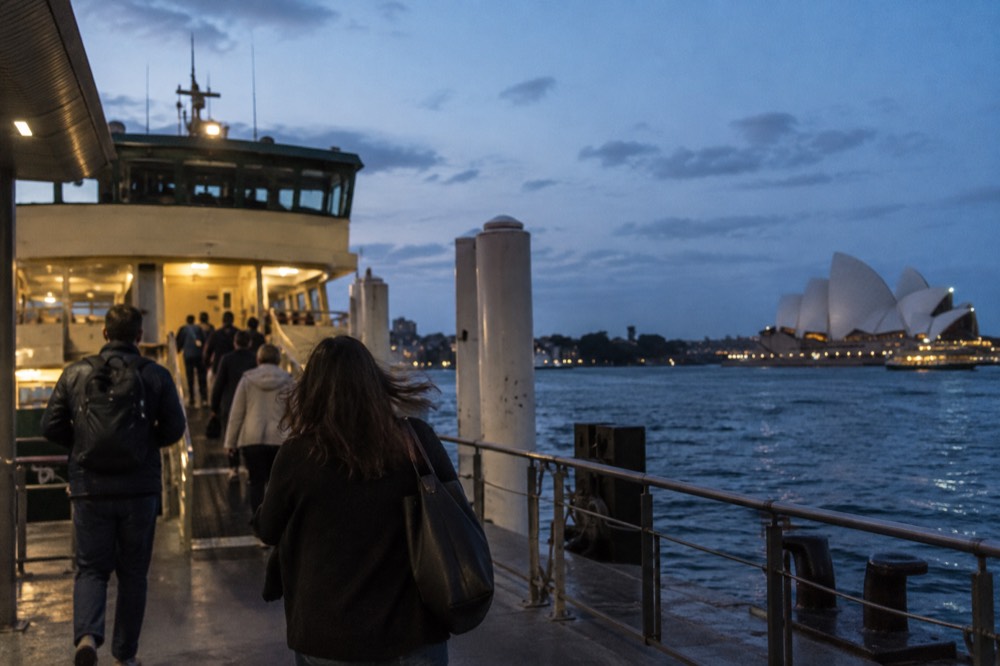
Yes, coverage across metropolitan Sydney, the beaches, the Northern Beaches and the main Blue Mountains tourist towns is strong on all major networks, and navigation apps run reliably everywhere a visitor is likely to go. The weak spots are valleys in the Blue Mountains, brief mid-harbour ferry moments, and underground in some older buildings. Download offline maps for any day trip regardless.
The practical difference between strong and perfect coverage is small but real on a day trip. Katoomba, Leura and the main lookouts are well covered; some sections of the valley floor walking tracks drop out, which matters if you are relying on a map mid-walk. Our Blue Mountains day trip guide flags where that matters most.
Booking apps behave well in Sydney. Restaurant, tour and ferry bookings are all commonly made on phones, and same-day bookings work fine on a modest data plan. If you are booking tours while you travel rather than before you leave, our piece on how far in advance to book Sydney tours sets expectations for the busy products.
For food specifically, a walking food tour is one of the products where a phone is genuinely optional for a few hours: the guide carries the plan, and you carry the appetite. Between tours, the Sydney food guide keeps the restaurant research efficient, which matters when you are doing it on a data cap.
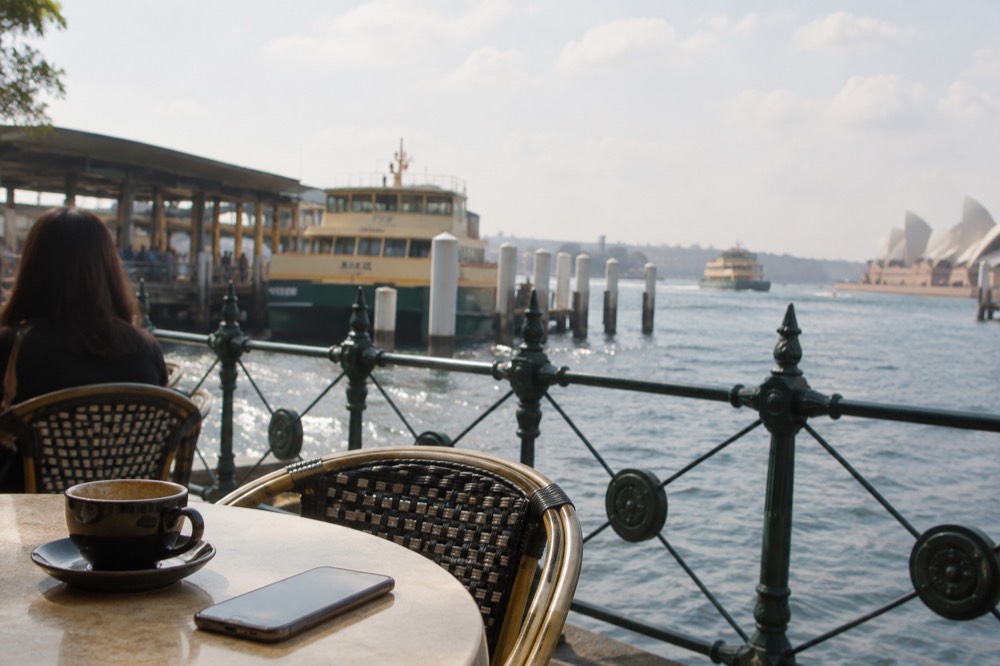
How Do You Stay Connected on a Sydney Itinerary Without a Car?
Easily: the entire visitor-facing transport network, trains, metro, ferries, buses and light rail, accepts the one contactless card in your phone, so a car-free itinerary needs no extra connectivity beyond your data plan and offline maps. The ferry network is the one part where route planning rewards a live connection, because wharves and timetables change with weather and events.
A car-free Sydney itinerary is genuinely the connected traveller's easiest scenario. You tap on, you tap off, and the trip planner in your phone handles the rest. The getting around Sydney guide covers the network shape, and the Opal card guide for visitors goes deeper on fares than this page does.
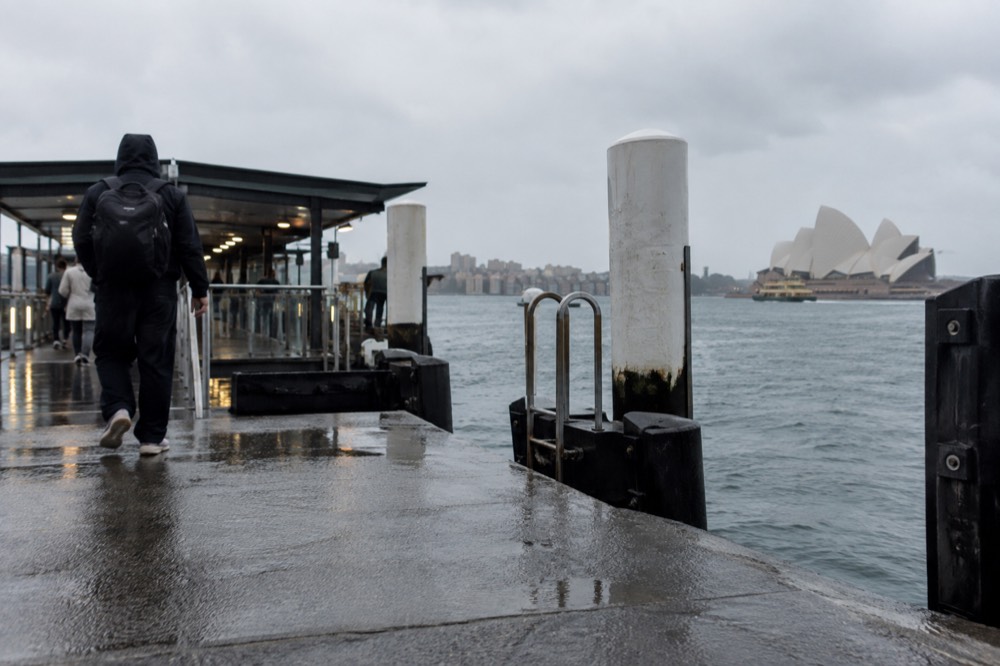
The one place a live connection earns its keep is disruption. Ferry services in particular can shift with harbour conditions, and trackwork on weekends replaces trains with buses on some lines. A trip planner fed live data, which the official transport tools provide, beats a printed plan on those days. Check the night before any early start, not on the platform at 7am.
For ideas on where a car-free day can actually take you, day trips from Sydney by train covers the reachable radius, from the Blue Mountains to Wollongong, all of it bookable and navigable from the phone in your pocket.
What About Phone Calls, Texts and Your Home Number?
Keep your home SIM active alongside your eSIM so it can receive SMS verification codes, and make calls over the internet rather than over your home plan's roaming. Your home number is mainly valuable in Sydney for bank codes and two-factor authentication; everything else, bookings, restaurants, tours, runs fine through apps, email and internet calls.
The dual-SIM setup is the standard travel pattern: your home SIM stays on for texts, your eSIM carries the data. If your bank sends a code to your home number while you are in Sydney, that code arrives as a normal SMS over your home carrier's network, no roaming data needed. Receiving texts is typically free even when roaming; making calls on the home plan is typically not, which is the distinction to hold onto.
Calls within Sydney are rarely necessary at all. Restaurants take bookings through apps and websites, tours confirm by email, and the few times a phone call helps, an internet call over your data plan handles it. If you expect to need a local number for a longer stay, that is the one scenario where a prepaid Australian SIM beats an eSIM, as covered earlier in this guide.

The Sydney Travel Guide library covers every corner of planning this page touches on, from airport transfers to [attraction passes](https://gocity.tpk.ro/rUvgw2vS), and all of it assumes the same setup you now have: a phone with data, one contactless card, and offline maps as a backstop.
Common Questions About Staying Connected in Sydney
Do you need an eSIM for Sydney?
If your home plan charges roaming fees, yes, a travel eSIM or data plan is the simplest option. If your home plan includes Australia, your phone works as normal and you do not need one.
Can you pay for Sydney transport with a credit card?
Yes. Contactless credit and debit cards, including phone and watch wallets, are accepted on trains, metro, ferries, buses and light rail, charged the same as an adult Opal card with the same caps and discounts.
Is free WiFi common in Sydney?
It is common inside attractions, hotels, libraries and shopping centres, and patchy on the street. Treat it as a supplement to a data plan, not a replacement for one.
Do you need to buy an Opal card as a visitor?
No. A contactless card does everything an adult Opal card does, at the same fares, caps and discounts. A physical Opal card only matters for concession holders or very long stays.
Does the Sydney Airport train cost extra?
Yes. Both airport stations charge a station access fee on top of the normal train fare, and that fee sits outside the daily and weekly caps. The 400 bus carries no access fee.
Will my phone handle Sydney's daylight saving change?
Yes, if date and time are set to automatic. Clocks move forward on the first Sunday of October and back on the first Sunday of April; a phone on manual time will be an hour out in that window.