Sydney Rooftop Bars: Where to Drink with a View
Sydney's rooftop bar scene runs on its harbour views, and the weather that makes them work is more complicated than most visitors expect. This guide covers where to drink, what to budget, when the skies are clearest, and how the sunset cruise option stacks up against a rooftop table.
Short answer
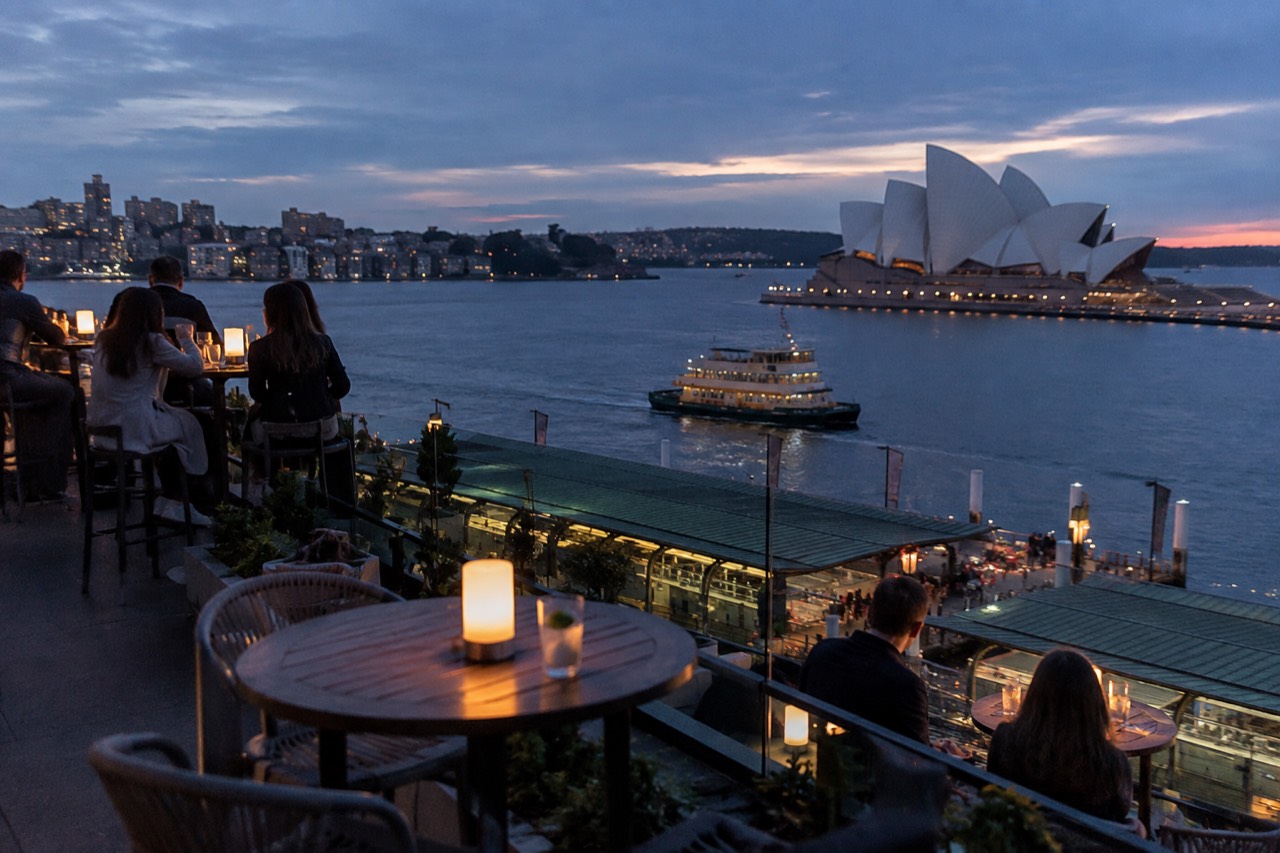
Sydney's best rooftop drinking is concentrated in the CBD, The Rocks, Darling Harbour and Surry Hills. Expect cocktails from around A$22-28 and beer from around A$12-16 at most rooftop venues, with harbour-view floors charging the steepest premiums. The clearest skies arrive in August, not summer, and daylight saving pushes sunset past 8pm from October to early April.
Sydney averages 103.9 clear days a year and has a harbour that looks engineered for drinking beside, which is why its rooftop bar scene has grown faster than almost any other nightlife category in the city. The Bureau of Meteorology's long-run record for Observatory Hill puts the annual mean maximum at 21.8 °C, and the clearest skies of the year arrive in August, not in the peak summer months most visitors assume are the golden window. That single fact changes when a rooftop is worth booking and when it is a windy disappointment.
This guide walks through the areas where the rooftops cluster, what a round actually costs, the seasonal reality of drinking outdoors in a city whose wettest month is June, and the honest comparison between a rooftop table and a sunset harbour cruise. Along the way it covers dress codes, booking etiquette and how to get home when the lifts stop running.
Which Areas of Sydney Have the Best Rooftop Bars?
The strongest concentration of rooftop bars sits in the Sydney CBD, The Rocks and Darling Harbour, with a second cluster in Surry Hills and Paddington. The CBD towers give the highest vantage points and direct harbour views, The Rocks trades height for heritage character and Opera House sightlines, and Darling Harbour wins on sunset colour over the western harbour. Surry Hills rooftops are lower, cheaper and more local, usually skipping the harbour entirely for street-level buzz.
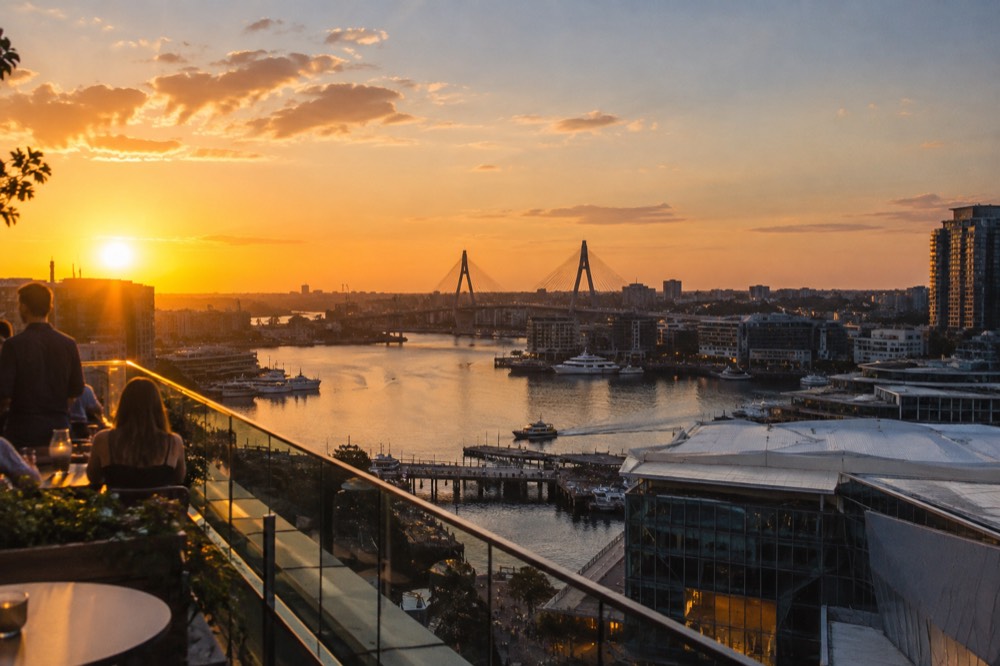
The geography matters more than most first-time visitors realise. Sydney's CBD sits on a ridge between Darling Harbour and Circular Quay, which means a bar on the eastern side of a tower looks straight at the Opera House and the Heads, while a bar on the western side looks over Darling Harbour and the Anzac Bridge. Both are genuine views, but they are different evenings: the east side catches morning light and cruise-ship traffic, the west side catches sunset.
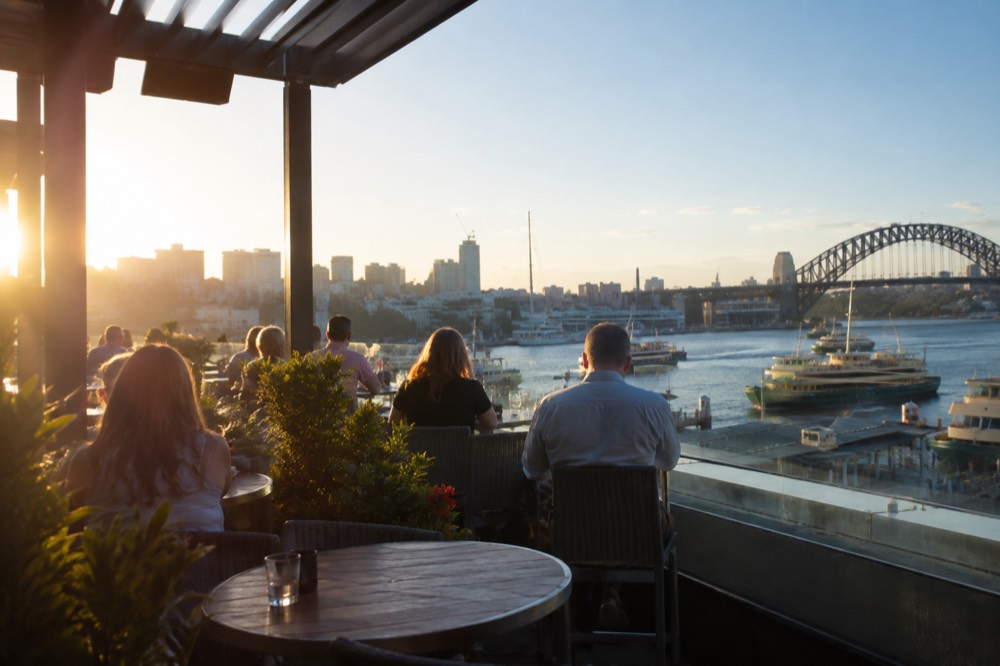
Start with the Sydney CBD if height is the priority. The tower rooftops there sit dozens of storeys up, and the taller the floor, the stricter the door policy tends to be. The Rocks is the better pick if you want a drink with history attached: its rooftops are lower, often perched on converted 19th-century buildings, and the sandstone lanes below are part of the atmosphere. Darling Harbour rooftops face west across the water, which makes them the city's most reliable sunset seats.
The inner-east cluster works differently. Surry Hills and Paddington rooftops are neighbourhood venues first and view venues second: they trade the harbour skyline for terrace streetscapes, cheaper drinks and a crowd that is local rather than visiting. If your night is about the company and the wine list rather than the postcard, this is where Sydneysiders actually go.
Here is how the main areas compare on the things that actually decide your night:
| Area | Typical height | View | Price level | Best for |
|---|---|---|---|---|
| Sydney CBD towers | 20-50 storeys | Harbour, Opera House, Heads | Highest | Postcard views, special occasions |
| The Rocks | 2-6 storeys | Opera House, harbour, bridge | High | Heritage atmosphere, pre-dinner drinks |
| Darling Harbour / Barangaroo | Mid-rise | Western harbour, sunsets | Mid to high | Sunset colour, groups |
| Surry Hills / Paddington | 1-3 storeys | Streetscapes, no harbour | Moderate | Local vibe, cheaper rounds |
| Potts Point / Kings Cross | Mid-rise | City skyline, partial harbour | Moderate | Late-night energy |
Which Rooftop Bars Have the Best Harbour Views in Sydney?
The best harbour views come from CBD tower rooftops on the eastern side of the city and from The Rocks venues facing Circular Quay, because both put the Opera House in the frame. Darling Harbour rooftops have the better sunset but a working-waterfront view rather than the postcard skyline. If the Opera House is the point of your evening, book east-facing; if sunset colour is the point, book west-facing and arrive an hour before the sun goes down.
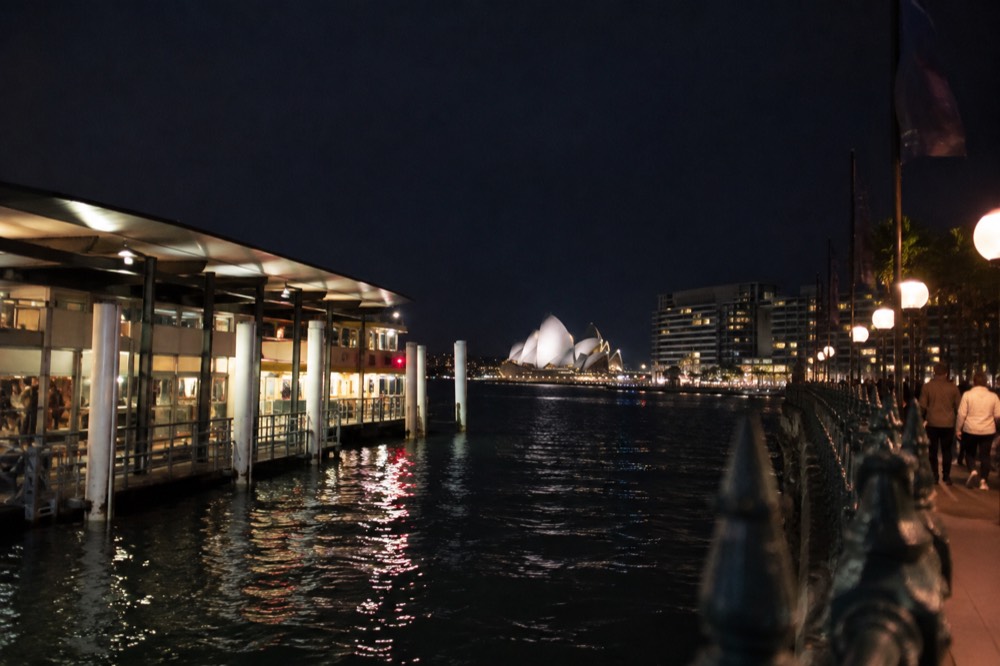
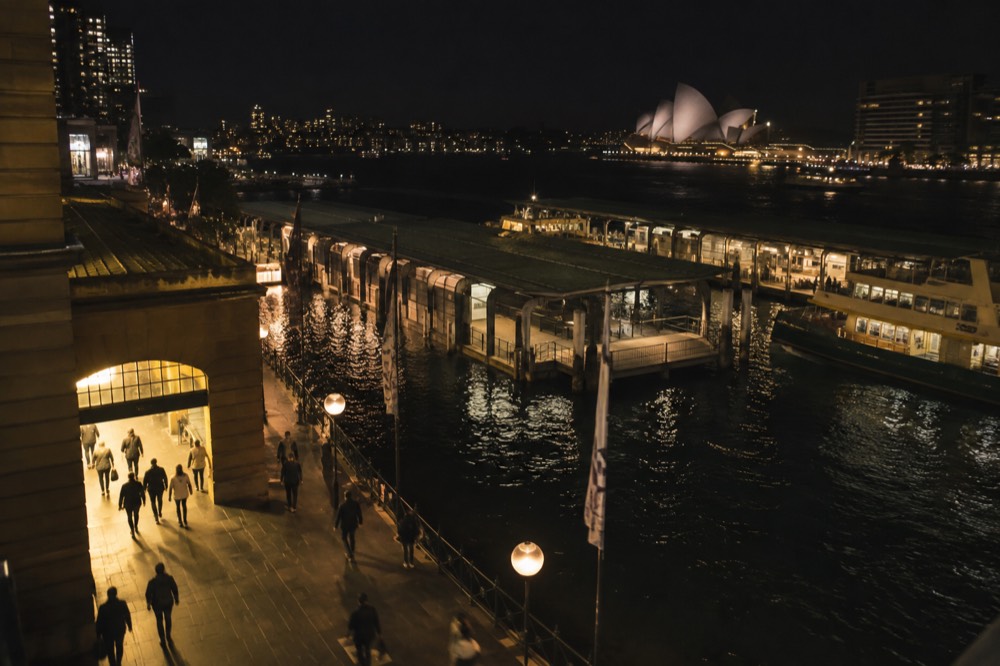
Height is not the whole story. A 40-storey rooftop facing south sees the harbour bridge from the side, which is dramatic, but a six-storey Rocks rooftop facing north-east can put you close enough to the Opera House sails that they dominate the view. The deciding factor is the angle, not the altitude, and it is worth checking a venue's own photos for which landmark actually sits in the frame before you book a table.
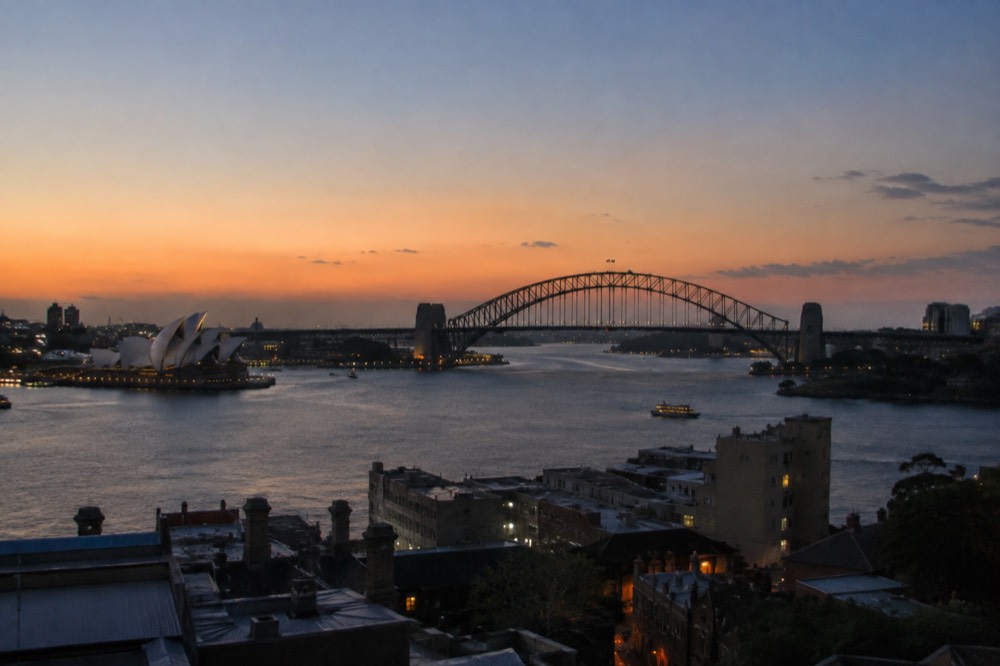
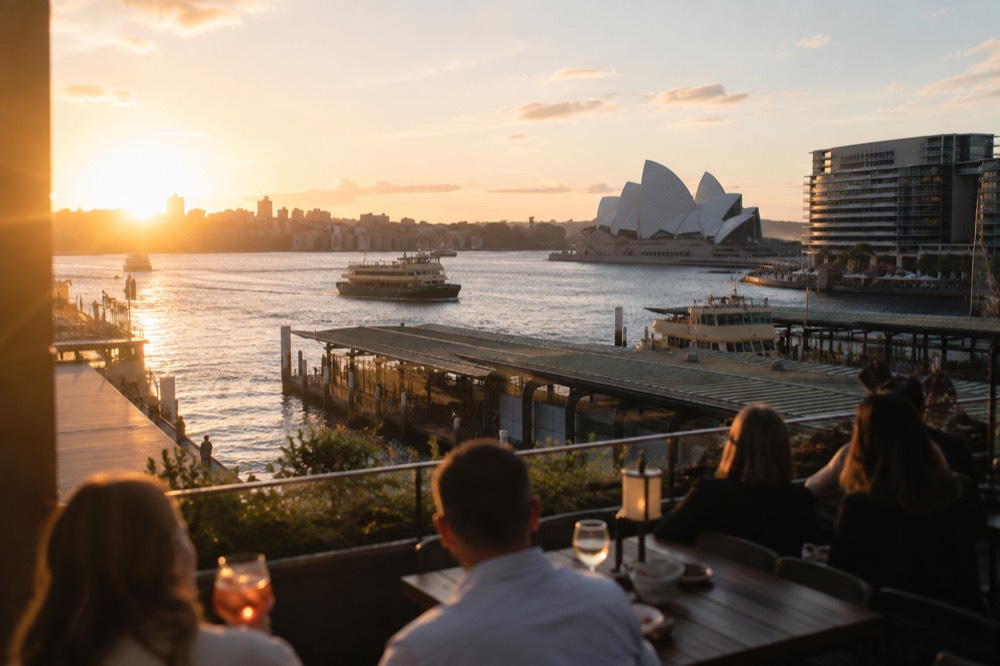
Timing changes the view as much as geography does. From the first Sunday of October, when daylight saving begins, Sydney's sunset slides past 7pm and keeps edging later into December, so an 8pm rooftop booking still gets golden light. In winter the sun goes down before 5:30pm, which means the harbour lights and the city skyline carry the evening instead. Both are good, but they are different nights, and a venue that is magical at 7:30pm in November can feel bleak at 5pm in July.
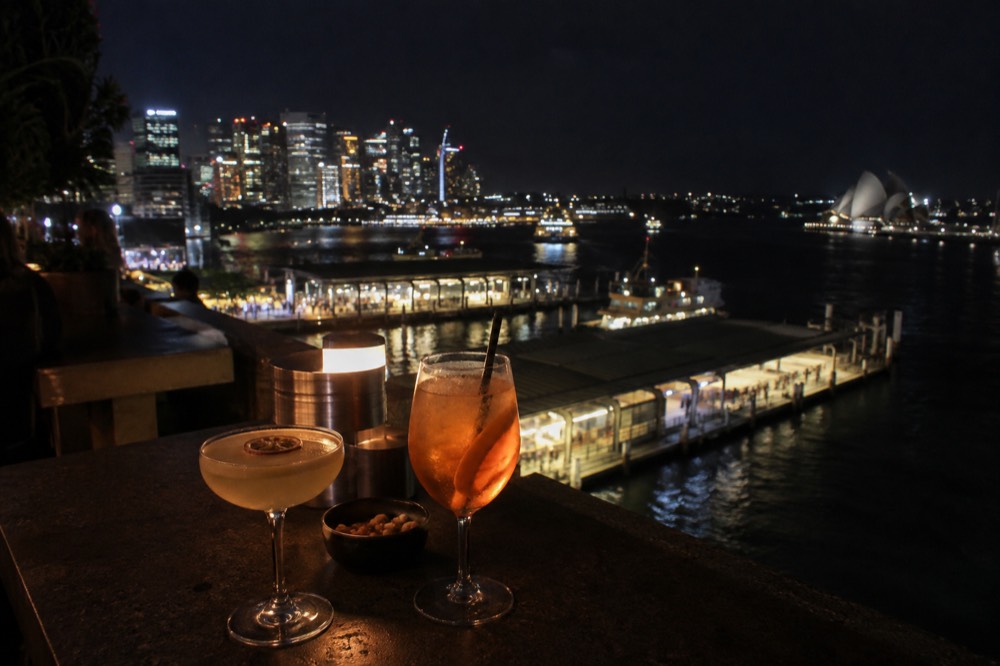
There is also a genuinely local trick worth knowing: the harbour looks best from many rooftops in the hour after sunset, not before it. The sky holds colour for 30-45 minutes after the sun drops, the city lights come on, and the water goes from blue to black. Venues that let you hold a table through that transition are worth more than the ones that turn tables at sunset sharp.
One alternative deserves a mention here. If what you actually want is the harbour itself rather than a window onto it, a sunset cruise puts you on the water with the skyline on all sides, and the one-hour Sunset Catamaran Cruise is the short, affordable version of that experience. It is a different product from a rooftop, and the comparison section below covers when each one wins.
What Do Drinks Cost at Sydney Rooftop Bars?
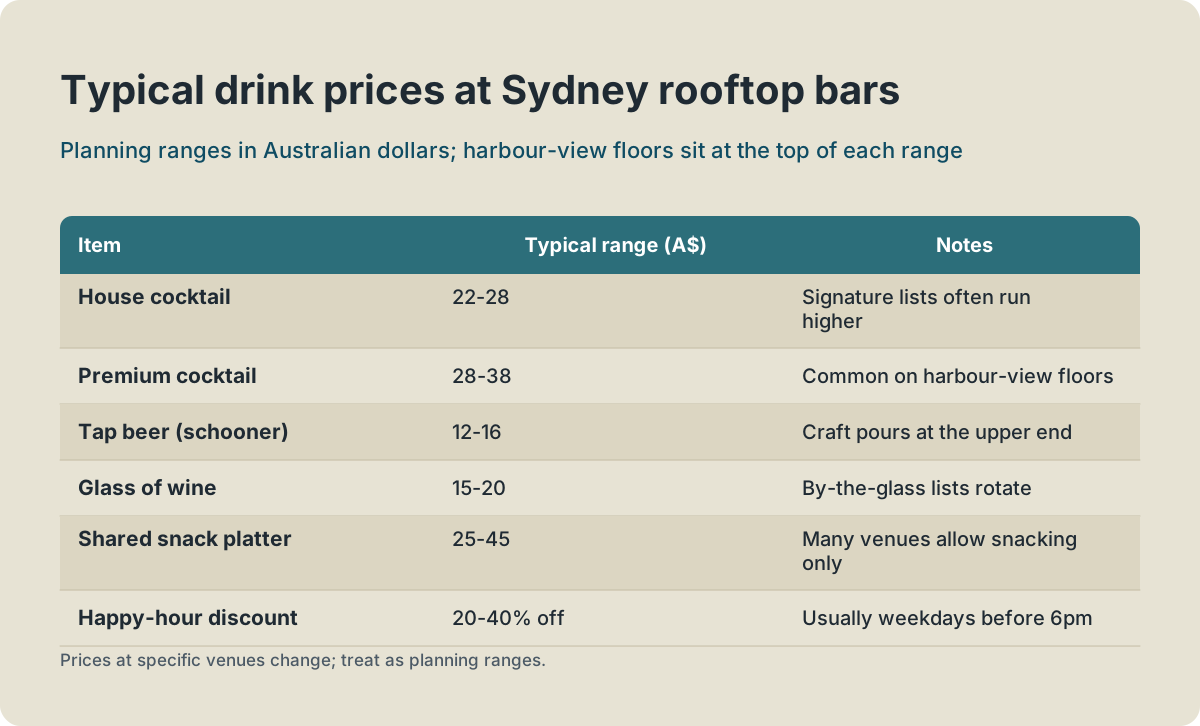
Budget roughly A$22-28 for a cocktail, A$12-16 for a beer and A$15-20 for a glass of wine at a typical Sydney rooftop bar, with harbour-view floors at the top of those ranges and inner-west or Surry Hills rooftops below them. Most venues run happy hours on weekdays before 6pm, and cover charges are rare outside New Year's Eve and major event nights. Prices at any specific venue change, so treat these as planning ranges rather than promises.
Sydney is an expensive drinking city by world standards, and rooftops are its most expensive category per square metre. The premium is partly the view and partly the real estate: outdoor space with a harbour outlook is among the scarcest commercial floorspace in the country. What softens the bill is that many rooftops do not require a food order, so a couple can share one cocktail each and enjoy the same view a dinner booking would cost four times as much for.
| Drink type | Typical rooftop range (A$) | Notes |
|---|---|---|
| House cocktail | 22-28 | Signature lists often run higher |
| Premium cocktail | 28-38 | Common on harbour-view floors |
| Tap beer (schooner) | 12-16 | Craft pours at the upper end |
| Glass of wine | 15-20 | By-the-glass lists rotate |
| Shared snack platter | 25-45 | Many venues allow snacking only |
| Happy-hour discount | 20-40% off | Usually weekdays before 6pm |
A few practical notes on how the ranges work in practice. Weekday happy hours are the single biggest saving available, and they are common because rooftop venues need to fill seats before the evening crowd arrives. Minimum spends apply mostly to booked tables on Friday and Saturday nights, and they are usually per table rather than per person. On New Year's Eve, expect ticketed events with set menus rather than a walk-in bar, and book weeks ahead; the harbour fireworks draw up to a million people to the foreshore, and every rooftop with a sightline sells out.
If the drinks budget is tight, the honest move is to do the rooftop for one round at sunset and finish the night somewhere cheaper. The city's broader bar and pub scene includes plenty of ground-level venues with the same licensing hours at two-thirds of the price, and the Sydney on a budget guide covers the wider money-saving playbook, from happy-hour timing to which areas price their views and which do not.
When Is the Best Time of Year for Rooftop Drinks in Sydney?
August is statistically Sydney's clearest month, with 13.4 mean clear days, ahead of July on 12.0, while February, in the middle of peak summer, is the cloudiest on 5.3. Summer, meaning December to February, gives you the warm nights and late sunsets, but June is the wettest month of the year with 133.1 mm of rain on average. For a rooftop specifically, the sweet spots are October to November and March to April, when warmth and clear skies overlap.
That climate picture comes from the Bureau of Meteorology's long-run normals for Observatory Hill, and it inverts what almost every visitor assumes. People plan rooftop evenings for high summer and end up under cloud: February averages fewer clear days than any other month, and the summer months also carry the highest UV readings of the year, regularly reaching extreme levels of 11 or more. The protection threshold is a UV index of 3, and Sydney exceeds that for most of the year, so even a late-afternoon rooftop in the warmer months deserves sunscreen if the seats are outdoors.
The full monthly picture, from the Bureau of Meteorology's published normals, looks like this:
| Month | Mean max °C | Mean rainfall mm | Mean clear days | Rooftop verdict |
|---|---|---|---|---|
| Jan | 26.0 | 101.2 | 6.8 | Warm but cloudy; book indoors-adjacent |
| Feb | 25.8 | 119.3 | 5.3 | Cloudiest month; risky |
| Mar | 24.8 | 131.6 | 7.1 | Warm, late sunsets, shoulder value |
| Apr | 22.5 | 126.5 | 9.1 | Excellent balance |
| May | 19.5 | 117.4 | 9.5 | Mild, quiet, fine mid-afternoons |
| Jun | 17.0 | 133.1 | 9.1 | Wettest month; plan a backup |
| Jul | 16.4 | 96.3 | 12.0 | Cold but very clear |
| Aug | 17.9 | 80.2 | 13.4 | Clearest month of the year |
| Sep | 20.1 | 68.1 | 10.9 | Driest month; great value |
| Oct | 22.2 | 76.7 | 8.1 | Daylight saving starts; prime season |
| Nov | 23.7 | 83.8 | 6.0 | Warm, long evenings |
| Dec | 25.3 | 77.1 | 6.6 | Festive, busy, book ahead |
The pattern worth internalising is that Sydney's rainfall peaks in autumn and early winter, not summer, and its clearest skies arrive in late winter when the days are shortest. A rooftop in August is a bright, brisk, jacket-on experience with the sharpest visibility of the year. A rooftop in February is a coin flip on cloud. The best time to visit Sydney guide unpacks the same data for the whole trip, and the Sydney in winter and Sydney in summer guides cover what each season does to the city beyond the bar scene.
One more seasonal note that matters for planning: NSW observes daylight saving from the first Sunday in October to the first Sunday in April, which pushes sunset past 8pm at the height of it. A 7pm rooftop booking in January is a daylight booking. The same 7pm booking in July is a night-sky booking with the sun long gone.
What Should You Wear to a Sydney Rooftop Bar?
Smart casual covers almost every rooftop in Sydney: a collared shirt or neat blouse, closed shoes for men, and no beachwear or thongs after dark. Harbour-view tower rooftops in the CBD enforce dress codes most strictly on Friday and Saturday nights, while Surry Hills and Paddington rooftops are genuinely relaxed. In winter, from June to August, bring a layer regardless of what you wear, because rooftop wind drops the felt temperature well below the forecast.
The dress-code gradient runs exactly along the price gradient. The high tower floors with harbour views are the venues most likely to turn away shorts and sneakers on a weekend night, and the door staff there are used to tourists arriving straight from the ferry in thongs and beach towels. Mid-rise Darling Harbour venues sit in the middle. The inner-east neighbourhood rooftops will seat you in jeans and trainers any night of the week, which is a large part of their appeal.
The wind point deserves emphasis because it is the most commonly ruined part of an otherwise well-planned evening. A rooftop at 40 storeys catches breeze that does not exist at street level, and Sydney's mean winter minimums of 8-9 °C feel considerably colder at height. Even in summer, an evening that starts at 25 °C can feel cool on an exposed deck two hours after sunset. Venues know this and most supply heaters and blankets in the cooler months, but a jacket is never a bad call.
Footwear is the one item that actually decides entry. Enclosed shoes for men is the rule at the stricter venues, and it is enforced more consistently than any other item. If your day involves the Bondi to Coogee coastal walk or a ferry to Manly, pack a change of shoes before you head up.
Rooftop Bar or Sunset Cruise: Which Is Better?
A rooftop wins on cost, flexibility and the length of your evening; a sunset cruise wins on the view itself, because it moves through the harbour rather than looking at it from one fixed angle. The one-hour Sunset Catamaran Cruise runs from US$43.38 with a 4.83 rating across 310 reviews, and the 3-course early dinner cruise from Darling Harbour runs from US$94.36. Do the cruise once for the occasion, and treat rooftops as the repeatable nightly option.
The honest comparison is that they are different products that happen to share a sunset. A rooftop table is yours for as long as you keep ordering, at a price you control, with the option to leave whenever the weather turns. A cruise is a fixed 60 minutes on the water with the skyline rotating around you, no windbreak issues beyond the rails, and a finish time that puts you back at the wharf with the whole night ahead. The catamaran is the short, cheap version of the water option, and it pairs neatly with a rooftop nightcap afterwards.
For a slower, food-led evening on the water, the 3-Course Early Dinner Cruise from Darling Harbour runs about 1 hour 45 minutes and turns the same sunset into a seated meal. It is the middle option between a rooftop dinner and a cruise-only ticket: more structured than a bar, less committed than a full evening charter.
A third night-time option rounds out the picture, and it is the one most visitors never hear about. The Rocks after dark has a ghost tour built on the precinct's convict-era lanes and crime history, running about two hours from US$40.23. It is a walking tour rather than a drinking one, but it starts and finishes in the heart of Sydney's oldest pub district, and a rooftop nightcap in The Rocks afterwards is the natural pairing. The tour is a small-operation product with a thin review base, so go on the strength of the subject matter rather than crowd opinion.
The practical decision rule is simple. If your group wants to talk, control the budget and stay as long as it feels right, book a rooftop. If the harbour itself is the reason you are in Sydney, spend the hour on the catamaran once and keep the rooftops for the other nights. Plenty of visitors do the cruise on their first evening and use it to learn the harbour's geography before choosing which rooftop view to pay for next.
How Do You Get Home After a Night on a Sydney Rooftop?
The Opal daily cap is $9.65 on Fridays, weekends and public holidays and $19.30 Monday to Thursday, and it covers metro, trains, buses, ferries and light rail together. Late-night trains from the CBD run through to around midnight on most lines, with night buses filling the gaps after that. A contactless credit card or phone taps exactly like an Opal card and earns the same caps, so most visitors never need to buy a physical card at all.
The cap structure is the single most useful thing to know, because it makes the last leg of the night effectively free if you have already been travelling that day. Tap the same card or device all day and once you hit the cap, every further trip that day costs nothing. Fridays, Saturdays, Sundays and public holidays cap at $9.65, which is less than many single taxi kilometres in the city centre, per Transport for NSW's published fares.
| Option | Typical late-night availability | Cost signal |
|---|---|---|
| Train / metro from CBD | Until around midnight, later on event nights | Within Opal daily cap |
| Night bus (N-routes) | After midnight, hourly on core corridors | Within Opal daily cap |
| Taxi from CBD | Always | Metered, surge on weekends |
| Rideshare | Always | Surges heavily after midnight |
| Ferry | Not a late-night option; daytime only | Within Opal daily cap |
Ferries stop running well before rooftop hours end, so plan the water for the sunset cruise, not the ride home. The Sydney ferries guide covers daytime routes, and the Opal card guide for visitors explains the caps, the off-peak discount and the airport station access fee, which sits outside the daily caps entirely at $18.61 for an adult.
One safety note worth ending on: Sydney is a safe city by night by global standards, and the Is Sydney safe at night question gets a broadly reassuring answer around the CBD and The Rocks entertainment precincts. The usual urban rules apply. Stay on lit streets between the bar and the station, and keep an eye on your card taps so a flat battery does not strand you at the gate.
Common Questions About Sydney Rooftop Bars
What do drinks cost at Sydney rooftop bars?
Plan on A$22-28 for a cocktail, A$12-16 for a beer and A$15-20 for a glass of wine at a typical rooftop, with harbour-view floors at the top of those ranges. Weekday happy hours before 6pm knock 20-40% off at many venues, and minimum spends apply mostly to booked weekend tables rather than walk-ins.
Which month is best for rooftop drinks in Sydney?
October to November and March to April are the sweet spots, combining warm evenings with reasonable clear-sky odds. August is statistically the clearest month of the year with 13.4 mean clear days, but it is cool, while February, in the middle of peak summer, is the cloudiest on 5.3. June is the wettest month with 133.1 mm of rain on average.
Do Sydney rooftop bars have dress codes?
Most operate smart casual: collared shirt or neat blouse, closed shoes for men, no beachwear or thongs after dark. CBD tower rooftops enforce this most strictly on Friday and Saturday nights. Surry Hills and Paddington rooftops are relaxed and will seat you in jeans and trainers any night.
Do I need to book a Sydney rooftop bar in advance?
Book for Friday and Saturday nights, sunset tables in the October-April season, and any night near a major event such as New Year's Eve, when rooftops sell out weeks ahead and run ticketed events. Midweek walk-ins are usually fine outside peak season, though a sunset table is always safer reserved.
Is a rooftop bar or a harbour cruise better for sunset?
A rooftop is cheaper and flexible, but a cruise puts you on the water with the skyline rotating around you. The one-hour Sunset Catamaran Cruise runs from US$43.38, and the 3-course early dinner cruise from Darling Harbour runs from US$94.36. Do the cruise once for the occasion and use rooftops for the repeatable nights.
What time is sunset in Sydney?
It depends heavily on the season and the clock. NSW observes daylight saving from the first Sunday in October to the first Sunday in April, pushing sunset past 8pm at its height in December and January. In winter, from June to August, the sun goes down before 5:30pm, so rooftop evenings shift earlier or become night-sky occasions.
The rooftop scene rewards a little planning: east-facing for the Opera House, west-facing for sunset, August for the clearest sky, and the $9.65 weekend Opal cap for the ride home. Whether the evening ends above the city or on the water is the only real decision, and Sydney Travel Guide covers both in detail. Pick the floor, check the forecast, and let the harbour do the rest.