Is Sydney Safe for Tourists? An Honest Answer for 2026
Sydney consistently ranks among the safest large cities a tourist can visit, but safety here is mostly about water, sun and a handful of late-night streets rather than violent crime.
Short answer
Yes. Sydney is a safe city for tourists by any reasonable measure, with low violent crime, a reliable public transport network and well-patrolled major beaches. The real risks are coastal ones: rip currents, UV that hits extreme levels in summer, and swimming too soon after heavy rain. Basic sun and surf awareness matters more here than any city-centre precaution.
Sydney welcomes 67.5 million visitors a year, and the overwhelming majority of them leave without a single safety incident. That figure comes from Destination NSW for the year ending March 2026, and it frames the honest answer to this question: this is a city where the practical risks are coastal and climatic far more than criminal. The dangers worth planning for here are rip currents, extreme summer UV, and swimming too soon after rain. Muggings barely register.
That does not mean you switch your brain off. Like any city of five million people, Sydney has areas where late-night care pays off, transport habits that protect your wallet as much as your safety, and a coastline that demands respect twelve months a year. This guide walks through each of those in turn, using verified figures from official sources rather than reassurance for its own sake. Where a number is seasonal or changes annually, it says so.
Is Sydney Safe for Tourists Overall?
Yes, Sydney is safe for tourists by any national or international comparison. It is regularly rated among the world's most liveable and safest large cities, violent crime against visitors is rare, and the incidents that do occur are overwhelmingly opportunistic theft rather than anything targeted. The risks that actually send people to hospital in Sydney are environmental: the surf, the sun and the road, in roughly that order.
The city's safety profile is the product of ordinary, unglamorous things: a well-funded police presence in tourist zones, a public transport network that runs late and is used by all kinds of people, and a culture where walking home through the central business district at 10pm is unremarkable. Female travellers, solo travellers and families all report the same baseline experience, which is that Sydney feels calmer than most cities its size.
That said, "safe" is not the same as "risk-free", and the biggest statistical dangers are the ones visitors underestimate. Surf Life Saving Australia's National Coastal Safety Report 2025 recorded 154 coastal drowning deaths across Australia in a single year, the highest on record, and every single one occurred outside the red and yellow flags, outside patrol times, or at unpatrolled locations. Not one happened between the flags. That is the single most useful safety statistic an Australian travel guide can print, and it has nothing to do with crime.
For planning purposes, treat Sydney the way you would treat any big city with a famous beach attached. Guard your phone on crowded trains, take normal precautions after dark in entertainment districts, and give the ocean more respect than the postcards suggest. The sections below cover each of those in the specific, local detail that generic safety advice never reaches.
What Crime and Scams Should Tourists Actually Watch For?
The crimes tourists experience in Sydney are almost entirely petty theft: pickpocketing on crowded ferries and trains, phones snatched from cafe tables, and items taken from unattended beach bags. Violent crime against visitors is rare enough that it makes the news when it happens. The scams worth knowing about are few, and the main financial traps are transport-related rather than criminal, such as paying the airport station access fee without realising it sits outside the daily fare caps.
Opportunistic theft follows the crowds, so it concentrates where visitors concentrate: Circular Quay, the Bondi to Coogee coastal walk during busy periods, Darling Harbour on event nights, and packed trains on New Year's Eve. The pattern is consistent across Australian cities: bags left on the sand while you swim, phones on table edges at outdoor cafes, and wallets in back pockets on the Manly ferry. None of this is violent, and none of it is common, but it is the shape that tourist crime takes here.
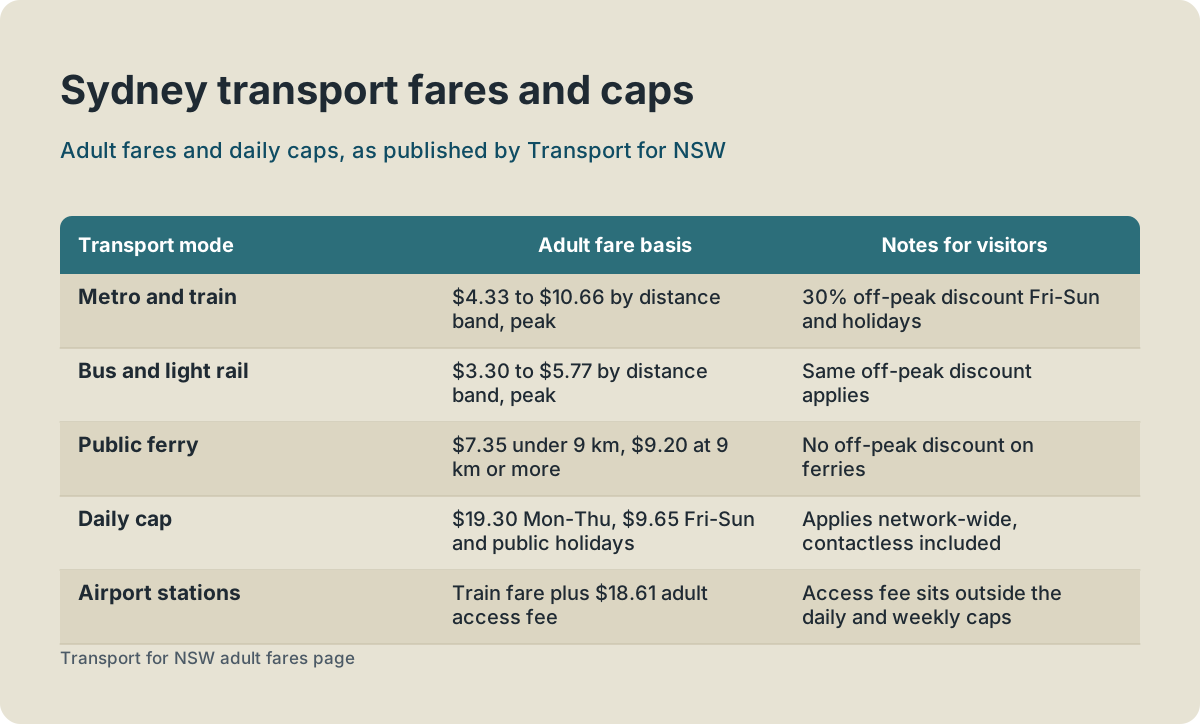
Scams, in the classic sense, are thin on the ground. Sydney does not have a significant ticket-touting industry, fake taxi meters are not a known problem, and the licensed taxi and rideshare networks are regulated. What catches visitors instead is legitimate-but-unexpected charges. The airport train stations charge a station access fee of $18.61 for an adult on top of the ordinary fare, and that fee sits outside both the daily and weekly Opal caps with its own separate weekly cap. A traveller who assumes their contactless card has capped out at the airport can be surprised by exactly that gap. Transport for NSW publishes the current fee on its airport fares page.
The other avoidable loss is the privately operated Manly Fast Ferry. It accepts the Opal card through OpalPay, but the fares differ from public ferries and the Opal caps and transfer discounts do not apply. A visitor who taps on expecting the $9.65 weekend daily cap to cover everything can end up paying more than they planned. The public F1 ferry takes the same trip and earns full Opal benefits.
If you want a structured, low-friction way to see the city without carrying valuables between stops, a small-group Sydney food tour keeps your bag with a guide and a group rather than on a beach towel, which is a small but real safety benefit.
Is Sydney's Public Transport Safe, Especially at Night?
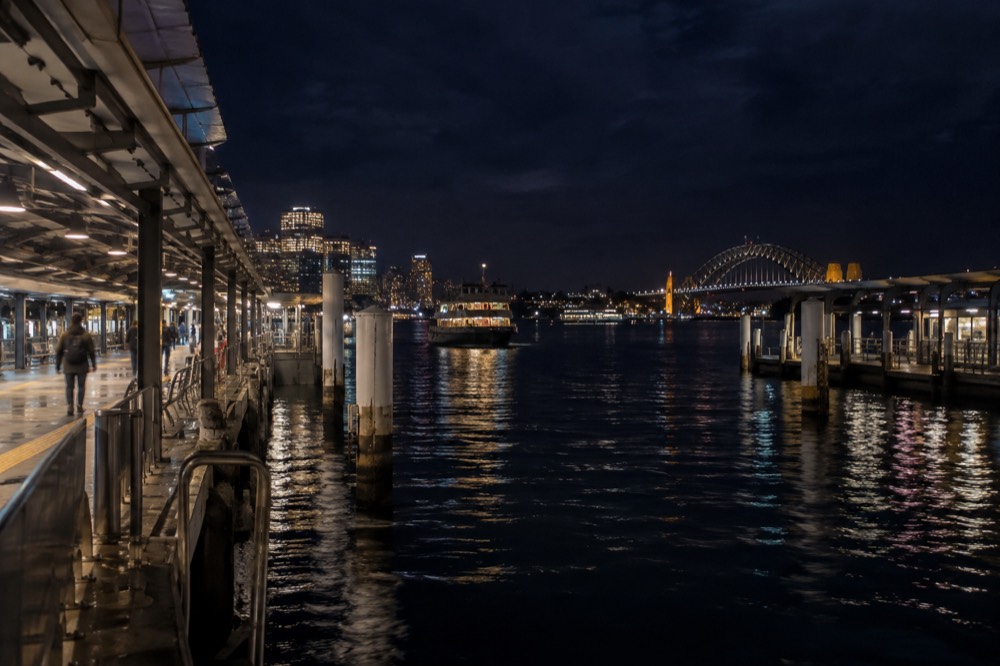
Yes. Sydney's trains, metro, ferries, light rail and buses are safe to use at night, and they are monitored by CCTV, staffed at major stations and used by ordinary commuters late into the evening. The old reputation of the night network is outdated. The practical safety move is not avoiding night transport but knowing the fare system, because the caps make late-night travel cheap and the contactless system makes it effortless.
Sydney's transport safety is largely a story of normalcy. Trains from the airport run until roughly midnight and start again early, the metro runs a modern, fully screened network on the M1, and ferries connect the harbour suburbs all day. Stations in the central city are well-lit and patrolled, and transport officers and police ride the network. Solo travellers of both genders use night buses and trains routinely, which is the strongest signal a visitor can read: the locals have voted with their feet.
The fare system rewards you for using it, and knowing the numbers removes the last excuse for an expensive late-night taxi you did not need. The adult Opal and contactless caps are $19.30 a day from Monday to Thursday and $9.65 a day on Fridays, weekends and public holidays, with a $50 weekly cap, as published by Transport for NSW on its adult fares page. A public holiday is genuinely the cheapest day to travel widely in Sydney because the $9.65 cap applies.
| Transport mode | Adult fare basis | Notes for visitors |
|---|---|---|
| Metro and train | $4.33 to $10.66 by distance band, peak | 30% off-peak discount on Fridays, weekends and public holidays |
| Bus and light rail | $3.30 to $5.77 by distance band, peak | Same off-peak discount applies |
| Public ferry | $7.35 under 9 km, $9.20 at 9 km or more | No off-peak discount on ferries |
| Daily cap | $19.30 Mon-Thu, $9.65 Fri-Sun and public holidays | Applies network-wide, contactless included |
| Airport stations | Train fare plus $18.61 adult access fee | Access fee sits outside the daily and weekly caps |
Two habits are worth forming early. Tap off when you leave, because failing to tap off charges you the maximum default fare. And treat contactless as the equal of an Opal card: a credit card, debit card or phone wallet is charged exactly the same and earns every cap and discount, so there is no need to queue for a card on arrival.
Are Sydney's Beaches Safe for Swimming?
Mostly yes, with one condition that matters more than everything else combined: swim between the red and yellow flags at a patrolled beach, during patrol hours. Australia's coastal drowning record shows no fatalities between the flags in recent seasons, while every coastal drowning in the 2025 national report occurred outside patrol areas or times. In Sydney, Bondi, Bronte, Tamarama, Coogee, Manly and Dee Why are patrolled year-round, which most visitors never realise.
The rip current is the hazard that kills on this coast, and it does not look dangerous. Rips appear as calm, darker channels of water between breaking waves, which is precisely why swimmers choose them. The official advice from Surf Life Saving's Beachsafe program is unambiguous: swim at a patrolled beach between the flags. If you are caught in a rip, stay calm and conserve energy, raise an arm and call for help, float with the current which may return you to a sandbank, or swim parallel to the beach toward breaking waves, as set out on the Beachsafe rip currents page.
Patrol coverage in Sydney is better than the national norm, and the year-round list is the detail worth planning around. Bondi, Bronte and Tamarama have professional council lifeguards all year, with hours of 6am to 7pm in the high season from October to April and 7am to 5:30pm in the low season. Coogee and Manly are likewise patrolled year-round, and Dee Why joined the year-round list from around May 2026. Most other Northern Beaches run patrols from late September to late April.
| Beach | Patrol season | Typical hours |
|---|---|---|
| Bondi, Bronte, Tamarama | Year-round, professional lifeguards | 6am-7pm Oct-Apr, 7am-5:30pm May-Sep |
| Coogee | Year-round, council lifeguards | Around 7am-7pm in daylight saving |
| Manly | Year-round, council lifeguards | Generally 9am-5pm, longer in peak summer |
| Dee Why | Year-round from around May 2026 | Generally 9am-5pm |
| Most other Northern Beaches | Late September to late April | Generally 9am-5pm, volunteers on weekends |
The second Sydney-specific rule is the post-rain rule, and it is the least-published piece of official advice on this whole coast. NSW Government's Beachwatch program advises staying out of the water while it is raining and for up to one day after heavy rain at ocean beaches, and for up to three days after heavy rain at harbour and estuarine swim sites. Harbour water quality moves more slowly than the open ocean, which is why the advice differs by location. Daily grades are published at beachwatch.nsw.gov.au.
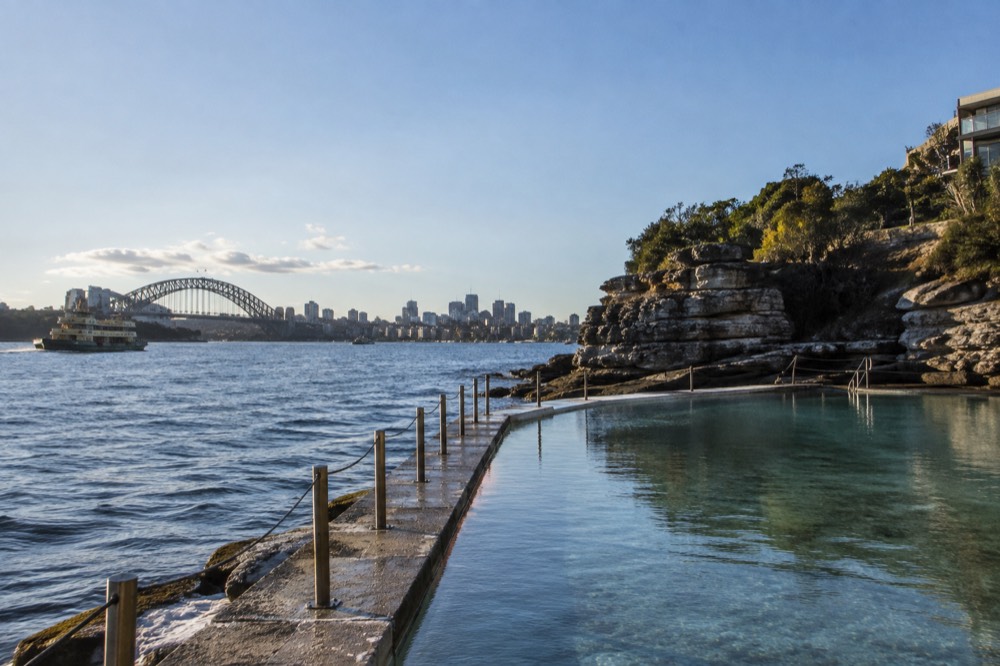
Ocean pools are the genuinely safer alternative on days when the surf looks doubtful, and Sydney has several historic ones. Bronte Ocean Pool and the North Bondi Children's Pool are free and council-maintained, while Bondi Icebergs is a separate club-managed 50m pool with its own access fees. Even ocean pools can close in big swell, so check signage on the day.
If your plan is to hop between the major attractions and the water in one day, the four-attraction combo pass keeps the itinerary simple, and the harbour sightseeing cruise puts you on the water with a crew rather than in it.
What About Sharks, Bluebottles and Other Wildlife?
Shark bites in Sydney are vanishingly rare, and the state government runs drone surveillance, SMART drumlines and a seasonal meshing program with 51 nets between Newcastle and Wollongong from 1 September to 31 March. The more common wildlife annoyance is the bluebottle, common in warmer months and after onshore winds, whose sting is painful but not typically dangerous. Land wildlife poses essentially no risk to tourists in the city.
The shark program deserves a plain description, because the facts are more reassuring than the folklore. NSW's SharkSmart program runs dawn-to-dusk drone monitoring at dozens of beaches, SMART drumlines that catch and tag target sharks offshore, and listening stations that track tagged animals. The meshing program's 51 nets are installed seasonally from 1 September to 31 March and are sometimes removed earlier for turtle activity. The official caveat matters: the nets reduce but do not eliminate risk and are not a barrier. In practice, Sydney's harbour and patrolled ocean beaches have an extremely low incident record, and swimming between the flags covers the drone-monitored zone. Other pages covering the same trip are gathered on Sydney Travel Guide.
Bluebottles are the sting you are actually likely to encounter, most often in the warmer months of December to February or after onshore winds. The official advice is to avoid touching them on the sand or in the water, and if stung, leave the water, remove any tentacles with seawater rather than bare hands, immerse the affected area in hot water of around 45 degrees Celsius for up to 20 minutes, and ask a lifeguard for help if the reaction is severe. They wash up in noticeable numbers some days and are absent most days, so a glance down the beach before swimming tells you a lot.
Snakes and spiders, the staples of overseas anxiety about Australia, are not a practical concern for a Sydney city visit. Funnel-web spiders exist in the Sydney region but an effective antivenom has long been available and bites are treatable. Snakes are present in bushland reserves but avoid people. The wildlife that will actually affect your day is the ibis eyeing your lunch in Hyde Park, and that is a picnic hazard, not a medical one.
Is the Sun a Bigger Risk Than Crime in Sydney?
Yes, unambiguously. Sydney's UV index reaches extreme levels of 11 or above in the summer months of December to February, and official advice is to use sun protection whenever the UV index reaches 3 or above, which in Sydney is most of the year. A visitor who takes no precautions on a February beach day is at far greater statistical risk of harm than one who walks through the city at midnight.
The numbers behind this are worth internalising. ARPANSA, the national radiation protection agency, operates a live UV monitoring station in Sydney, and even in early spring the measured peak UV index runs above the protection threshold of 3 by mid-morning. In summer the index regularly exceeds 11, which is classified as extreme and can burn unprotected skin in minutes. The official guidance is the five-part Slip, Slop, Slap, Seek, Slide: cover up, use sunscreen, wear a hat, find shade, and wear sunglasses.
The trap for northern-hemisphere visitors is that temperature and UV do not move together. A mild 22-degree spring day can carry a UV index high enough to burn, because UV depends on the sun's angle and the ozone layer, not on how hot the air feels. Sydney's climate normals show a mean daily maximum of 26.0 degrees in January, which feels pleasant to anyone from a tropical summer, but the UV at that latitude is fiercer than the temperature suggests.
Practical habits do the work here. Sunscreen applied before leaving the hotel and reapplied after swimming, a hat for the coastal walks, and shade breaks between 11am and 3pm in summer. If you are booked on an open-deck sightseeing bus or a harbour cruise, the sun exposure on the water is real even on overcast days, so the sunscreen goes on regardless of cloud.
Does Sydney's Weather Ever Create Real Danger?
Rarely. Sydney has no tropical cyclone risk, sits far south of cyclone tracks, and experiences no extreme heat of the kind that closes southern European cities. The genuine weather hazards are bushfire smoke on bad days during the statutory danger period of 1 October to 31 March, and heavy rain that temporarily affects water quality at swim sites. Neither is a reason to change travel dates, but both are worth checking daily.
The bush fire danger period runs from 1 October to 31 March each year and can be varied by local government area. For a city visitor this almost never means direct fire risk, but on bad days smoke can settle over the basin and affect air quality, which matters to visitors with asthma or other respiratory conditions. The practical response is to check the daily situation rather than to plan around it, since most of the danger period passes with no city impact at all.
Rain is the more common irritant, and Sydney's rainfall pattern surprises almost everyone. June is Sydney's wettest month on the long-run averages at 133.1 mm, wetter than any summer month, while August is the clearest month of the year with 13.4 mean clear days and February the cloudiest with 5.3. Peak tourist season in summer is statistically cloudier than mid-winter, a fact that runs against every assumption visitors bring from the northern hemisphere. These are long-term averages from the Bureau of Meteorology's Observatory Hill record, not forecasts, but they describe the shape of the year honestly.
| Month | Mean max temp | Mean rainfall | Mean clear days |
|---|---|---|---|
| January | 26.0 C | 101.2 mm | 6.8 |
| February | 25.8 C | 119.3 mm | 5.3 |
| June | 17.0 C | 133.1 mm | 9.1 |
| July | 16.4 C | 96.3 mm | 12.0 |
| August | 17.9 C | 80.2 mm | 13.4 |
| December | 25.3 C | 77.1 mm | 6.6 |
For a wet-day plan, the rainy day itinerary covers the indoor options, and it is worth a look before you travel in June. After heavy rain, remember the Beachwatch rule from the beach section above: one day out of the water at ocean beaches, up to three at harbour sites.
Are There Any Areas of Sydney Where Tourists Should Be More Careful?
No area of Sydney is genuinely off-limits, but a handful of places reward extra care late at night: the Kings Cross entertainment strip, the CBD's nightclub blocks on Darlinghurst Road and surrounding streets after midnight, and any quiet industrial or parkland area after dark. These are pickpocket-and-argument zones, not violent-crime zones, and the standard advice is simply to keep your phone secured and to use licensed transport rather than long late-night walks.
Kings Cross deserves its history lesson rather than its reputation. The strip was the subject of strict lockout laws in the 2010s, which pushed much of the late-night economy elsewhere, and the area today is calmer than its global image suggests. It remains a nightlife precinct where alcohol is the main risk factor, so the precautions are the ones you would take in any nightlife district anywhere: stay with your group, watch your drink, and order a rideshare rather than taking an unfamiliar route on foot at 3am.
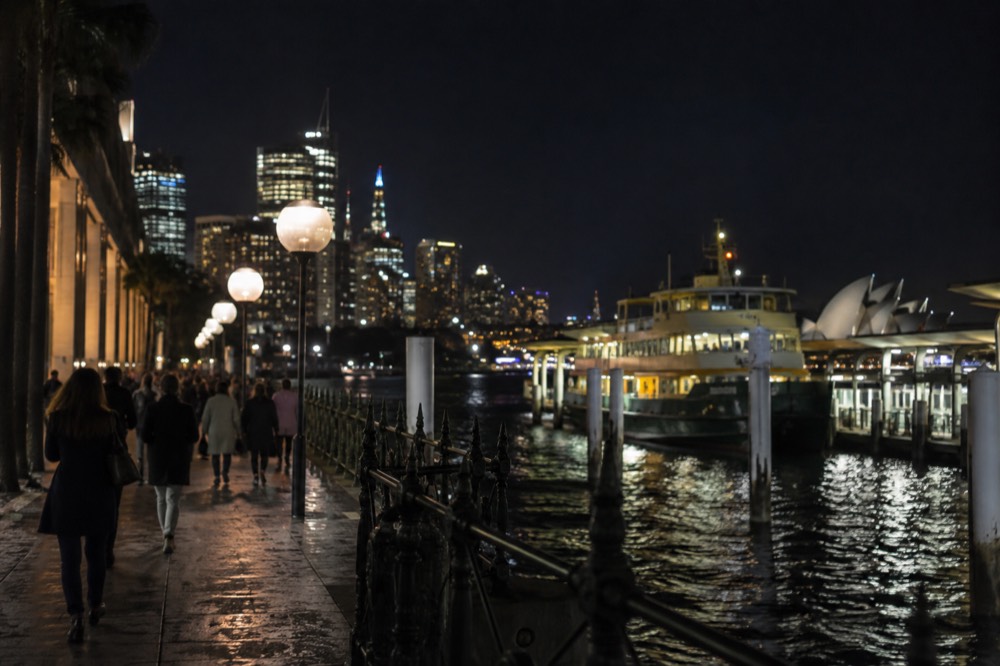
The central business district itself is safe at all hours relative to comparable city centres, partly because it never fully empties: late trains, airport buses and a resident population keep foot traffic going. The areas where a solo visitor might feel uncomfortable are the quieter edges, such as parts of Woolloomooloo's back streets or parkland like The Domain after dark, not because they are dangerous but because they are empty, and emptiness is where most urban discomfort actually comes from.
Daytime Sydney requires almost no area-specific caution at all. Newtown, Surry Hills, Paddington, Glebe, Chatswood, Parramatta and the Northern Beaches are all ordinary, well-trafficked neighbourhoods where the main risk is an expensive coffee. Even the areas with a rougher historical reputation, such as parts of Kings Cross and the western end of Darlinghurst, are unremarkable during the day and well worth visiting, as covered in the Kings Cross guide and the Darlinghurst guide.
Is Sydney Safe for Solo Travellers, Women and Families?
Yes across all three groups. Sydney is a standard destination for solo female travellers and is regarded locally as safe to walk in at night in the central and inner neighbourhoods, and family infrastructure, from patrolled beaches to stroller-friendly ferries, is among the best in the country. The precautions that matter are the universal ones, plus the sun and surf rules that apply to everyone.
Solo travellers get the benefit of a city where independence is normal. [Hostels](https://hostelworld.tpk.ro/nHxiH8zD) in the inner east and the CBD are well-reviewed and centrally located, public transport removes any need to walk long distances at night, and the cafe culture means a lone person at a table attracts no attention. The one structural thing to know is that the public transport network winds down in the small hours, so a very late night ends with a rideshare, which is a cost item rather than a safety item.
For families, the safety story is largely a water-safety story. The patrolled beaches listed above, the free council ocean pools, and the shallow, netted harbour swimming spots give you genuinely low-risk water options, and attractions like Taronga Zoo and the aquarium are organised, mainstream venues. The Sydney with kids itinerary covers the family logistics in detail, and the accessible Sydney guide addresses mobility needs, which is a safety question for some travellers too.
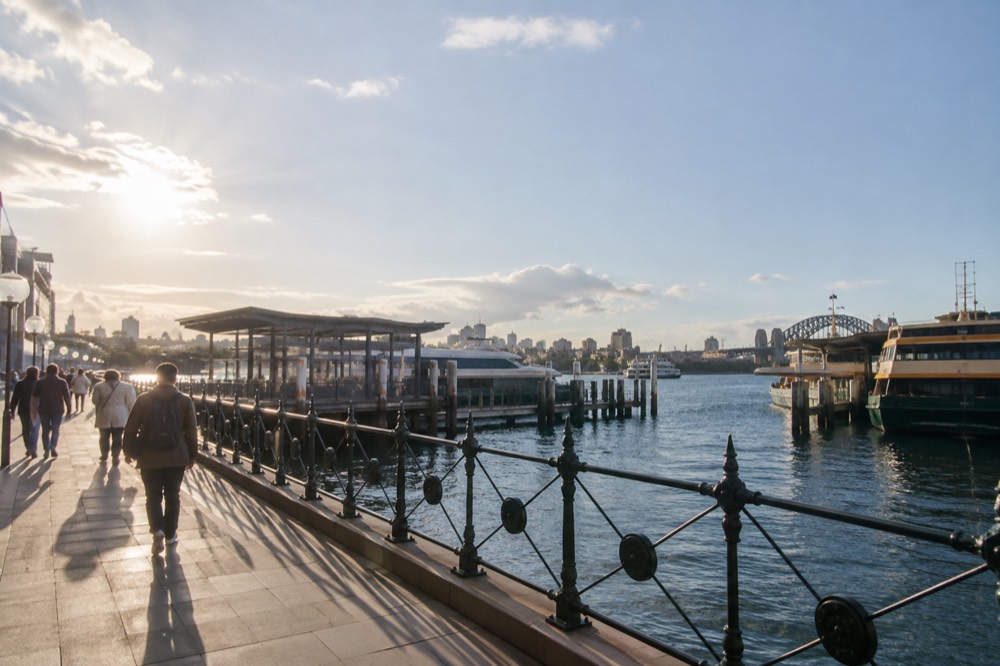
Health infrastructure is the quiet reassurance behind all of this. Tap water is safe to drink, pharmacies are ubiquitous and open long hours, and the public hospital system treats visitors without upfront payment in emergencies. Travel insurance remains essential, because non-emergency care and repatriation are not covered, but the baseline of a visitor falling ill in Sydney is a very manageable situation rather than a crisis.
What Should You Do in an Emergency in Sydney?
Know the national emergency number, keep your travel insurance details accessible, and for non-urgent police or medical matters use the public health and police assistance lines rather than the emergency line. Sydney's emergency services are fast, professional and accustomed to international visitors, and hospital emergency departments will treat you regardless of your insurance status when the matter is urgent.
The practical layer of emergency preparedness is short. Save your insurance policy number and the insurer's 24-hour line in your phone before you arrive, because that is the number you will actually call first in most non-life-threatening situations. Photograph your passport and keep a copy separate from the original. If you are travelling in the bushfire danger period or planning coastal walks, check the relevant official alerts that morning, since both fire and surf conditions change day to day.
For day-to-day reassurance rather than emergencies, the is Sydney safe at night question is covered separately, and the getting around Sydney guide handles the transport confidence that underpins most of a visitor's safety in practice.
If a first day that skips the logistics stress appeals to you, the attractions pass, the harbour sightseeing cruise and the food tour below are all bookable with free cancellation, so your plans stay flexible without costing you the good weather window.
Common Questions About Sydney Safety for Tourists
Is Sydney safe for tourists?
Yes. Sydney has low violent crime, safe and widely used public transport, and year-round patrolled major beaches. The risks that matter are environmental, mainly rip currents, extreme summer UV and swimming too soon after heavy rain, and all three are manageable with basic precautions.
Is Sydney safe at night?
Yes, in the central city and inner neighbourhoods. Trains, the metro and buses run late and are used by ordinary commuters, and walking through the CBD at 10pm is unremarkable. Take standard late-night care in entertainment districts like Kings Cross and use licensed transport rather than long walks after midnight.
Are Sydney beaches safe for swimming?
Yes, if you swim between the red and yellow flags during patrol hours. Bondi, Bronte, Tamarama, Coogee, Manly and Dee Why are patrolled year-round. Every coastal drowning in the 2025 national report occurred outside the flags or patrol times, and none occurred between them.
Is it safe to swim in Sydney after rain?
Wait one day after heavy rain at ocean beaches and up to three days at harbour and estuarine swim sites, per the NSW Government's Beachwatch advice. Daily water quality grades are published at beachwatch.nsw.gov.au.
Is Sydney's tap water safe to drink?
Yes. Sydney's tap water is treated to Australian drinking water standards and is safe throughout the city and suburbs. There is no need to buy bottled water on safety grounds.
Are there sharks at Sydney beaches?
Shark bites in Sydney are extremely rare. The NSW government runs drone surveillance, SMART drumlines and a seasonal meshing program with 51 nets between Newcastle and Wollongong from 1 September to 31 March. The nets reduce but do not eliminate risk, so swim at patrolled beaches.