Sydney Inner West: Local Neighbourhoods, Eats and Day-Out Guide
The Inner West is where Sydney stops performing for tourists and starts living: council-run markets, small theatres, cheap eats on King Street, and a light rail that stitches it all to the city.
Short answer
The Sydney Inner West is the belt of neighbourhoods immediately south-west of the CBD, roughly Glebe, Newtown, Enmore, Marrickville, Petersham, Balmain and Ashfield. You reach it by train, light rail, bus or ferry on a normal Opal fare, from US$3.03 off-peak, and its highlights are free or cheap: markets, waterfront parks, street life and some of the best-value food in the city.
The Inner West is the part of Sydney that locals mean when they say "the good stuff is just out of the city". It is a crescent of old suburbs hugging the harbour's southern and western shores, from Balmain's sandstone pubs to Marrickville's breweries, all of it stitched to the CBD by train, light rail and the Dulwich Hill tram line. The Bureau of Meteorology's long-run averages even back the plan: Sydney's clearest skies arrive in August, at 13.4 mean clear days, so an Inner West wander in late winter gets you the light without the February crowds.
This is walking-and-eating territory. You do not come here for a single ticketed landmark; you come for a Saturday that starts at Glebe Markets, runs down King Street in Newtown, and ends with a beer under the fig trees in a Marrickville brewery. Everything below is organised so you can build that day, with real fares and honest distances, and none of it needs a car. Private e-scooters are illegal on NSW roads, footpaths and bike lanes, so plan on feet, tram or train.
What Exactly Is the Sydney Inner West?
The Inner West is the cluster of suburbs immediately south-west of the Sydney CBD, sitting between the city centre and Parramatta, and its commonly agreed anchor neighbourhoods are Glebe, Newtown, Enmore, Marrickville, Petersham, Balmain, Rozelle and Ashfield. There is no official boundary line, and locals argue about the edges, but the core is unmistakable: terrace houses, corner pubs, and a food scene that punches far above its price point. It sits on Gadigal land of the Eora Nation, like the rest of central Sydney.
The name does administrative work in Sydney: it is a real local term, used by councils, real estate listings and the transport network alike. What holds the area together is geography and architecture. These are the suburbs the working city built for itself in the nineteenth century, workers' cottages and terrace rows within walking distance of the harbour industries, and that fabric survived the twentieth century better than most of Sydney. The result is dense, walkable, and noticeably more human-scaled than the CBD towers ten minutes away.
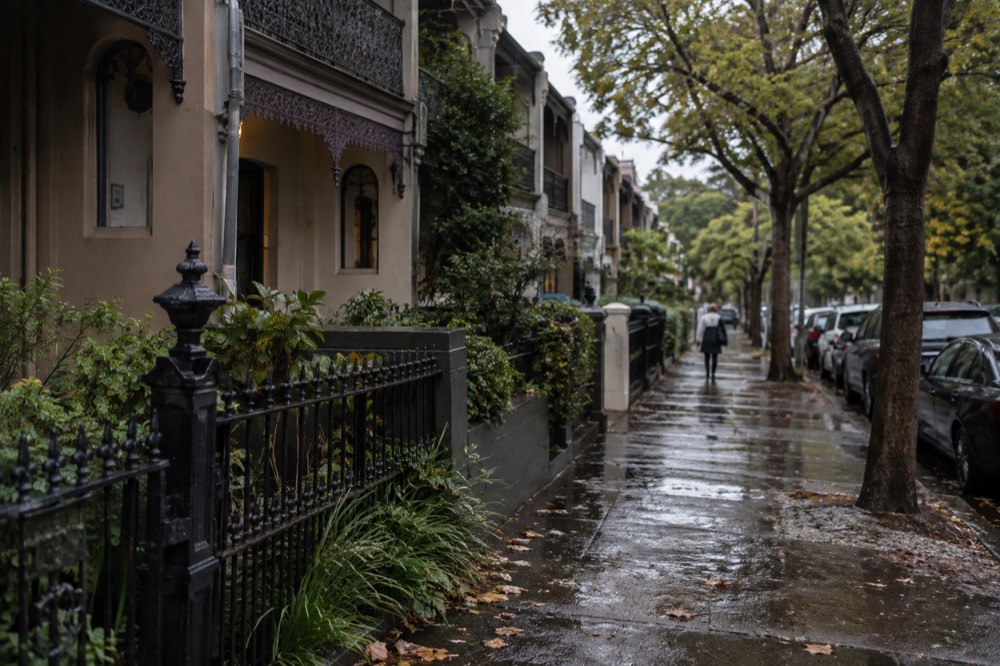
The character changes street by street. Balmain, on its own peninsula, is sandstone and sailcloth, a former dockworkers' village that is now among the city's most picturesque pub crawls. Glebe is bookshops and boarding houses turned share houses, with a waterfront park at Blackwattle Bay. Newtown is the loud one: tattoo shops, second-hand vinyl and a six-kilometre strip of Thai, Vietnamese and vegan kitchens. Marrickville, further out, is the brewery belt. Petersham is Sydney's little Portugal, and its bakeries justify the trip alone.
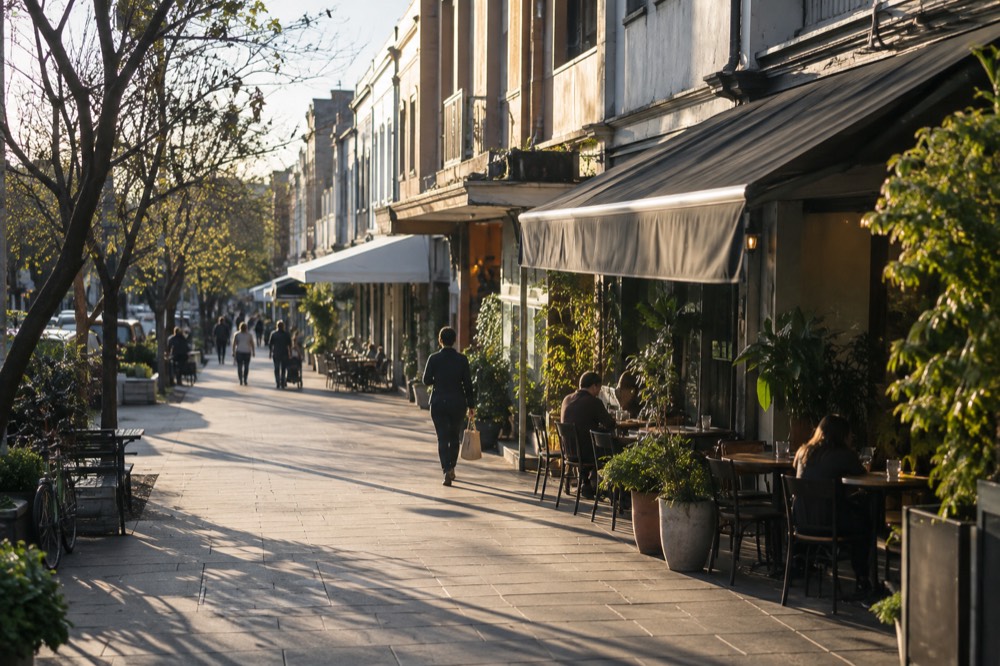
For a visitor, the practical frame is this: the Inner West is where Sydney's cost of living stops being punishing. A meal on King Street costs a fraction of a Circular Quay restaurant, the markets are free to enter, and the Opal fare to get there is the same as any cross-city trip. You can read more about how the whole visitor economy splits in our guide to Sydney trip costs, but the short version is that the Inner West is the value half of the city.
Which Inner West Neighbourhood Should You Spend Your Day In?
Pick Newtown for food and street life, Glebe for markets and the harbour park, Balmain for pubs and sandstone lanes, Petersham for Portuguese bakeries, and Marrickville for breweries and warehouse cafes. If you only have one afternoon, Glebe and Newtown sit on the same light rail and train corridor, so you can do both: Glebe in the morning, a long Newtown lunch, then a tram back. Families get more out of Balmain's calm lanes than Newtown's noise.
The honest answer is that the neighbourhoods overlap more than guidebooks admit. Glebe and Newtown are separated by a fifteen-minute walk, and Enmore is effectively Newtown's western continuation, with its own theatre and a slightly sleepier main street. The differences that matter are practical: where the station is, what the food specialises in, and how much of your day you want to spend indoors versus in parks.
| Neighbourhood | Known for | Nearest train or light rail | Best for |
|---|---|---|---|
| Glebe | Glebe Markets, bookshops, Blackwattle Bay park | Light rail, Jubilee Park or Glebe stops | Markets, waterfront walking |
| Newtown | King Street eateries, vintage shops, Enmore Theatre | Newtown station | Food, people-watching |
| Enmore | Live music, quieter cafes | Newtown station, short walk | A night out |
| Petersham | Portuguese bakeries and charcuterie | Petersham station | A long lunch |
| Marrickville | Craft breweries, warehouse cafes | Marrickville station or Sydenham | Beer, coffee |
| Balmain | Sandstone pubs, harbour views | Darling Street wharf ferry or bus | Pubs, weekend wandering |
Two things are worth planning around. Saturday is the day Glebe Markets runs, and the whole suburb's rhythm shifts around it. And the Enmore Theatre, one of Sydney's oldest surviving theatres, anchors Enmore's evenings; if there is a show on, book it and build dinner around King Street beforehand. Our Sydney nightlife guide covers how a Marrickville brewery evening compares with a CBD bar crawl, if you are deciding between them.
There is a case for a guide here, too. The Inner West looks like a row of shops until someone tells you the stories, and the same is true of the city's oldest streets. If a guided walk appeals, these are the three experiences that pair best with an Inner West day:
The Rocks walk covers the colonial end of the story, the food tour does for the palate what a walking guide does for the streets, and a harbour cruise shows you the shoreline these suburbs grew up against.
How Do You Get to the Inner West from the City?
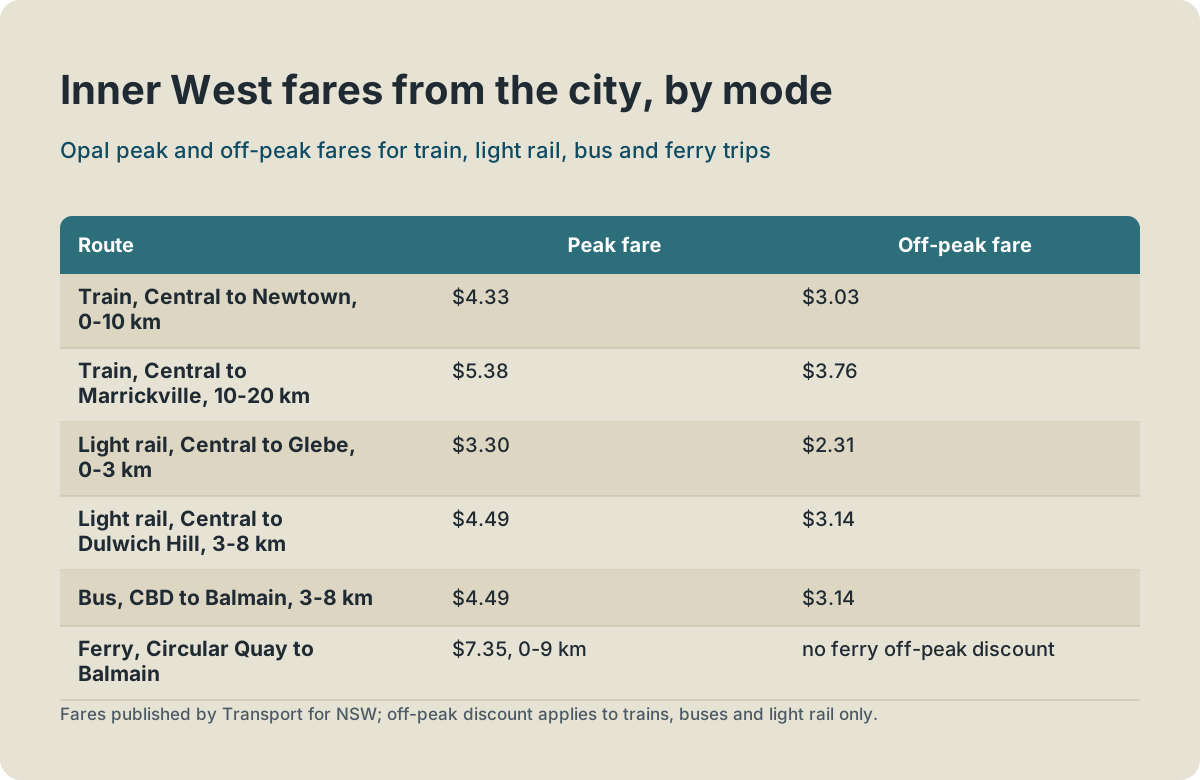
You take a train, a light rail tram, a bus or, for Balmain, a harbour ferry, and every one of them is a standard Opal trip with no special ticket. A train from Central to Newtown is a 0-10 km fare, $4.33 peak or $3.03 off-peak, and the light rail runs the same distance bands as buses. A contactless credit card is charged exactly what an Adult Opal card pays, including caps and the 30% off-peak discount. Taxis exist but are unnecessary here.
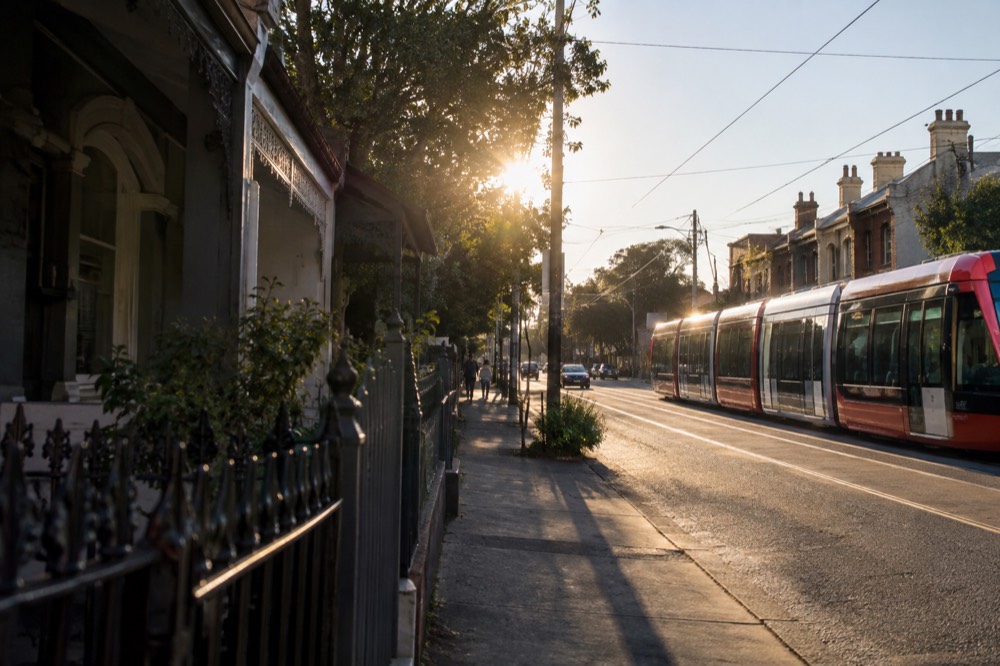
The transport facts are genuinely simple, which is unusual for Sydney. The T2 train line from Central runs through Newtown, Petersham and Marrickville, with services every few minutes in both directions. The L1 light rail runs from Central through Haymarket, Glebe and Forest Lodge to Dulwich Hill, and it is the pleasant way to arrive in Glebe: the tram runs along its own corridor, off the road, past parks and Victorian terraces. Buses fill the gaps, and the 433 and 434 run down Balmain's Darling Street.
| Mode | Route example | Peak fare | Off-peak fare |
|---|---|---|---|
| Train | Central to Newtown, 0-10 km | $4.33 | $3.03 |
| Train | Central to Marrickville, 10-20 km | $5.38 | $3.76 |
| Light rail | Central to Glebe, 0-3 km | $3.30 | $2.31 |
| Light rail | Central to Dulwich Hill, 3-8 km | $4.49 | $3.14 |
| Bus | CBD to Balmain, 3-8 km | $4.49 | $3.14 |
| Ferry | Circular Quay to Balmain (Darling St wharf) | $7.35, 0-9 km | no ferry off-peak discount |
The full fare tables are published by Transport for NSW, and the off-peak discount applies on trains, buses and light rail on Fridays, weekends, public holidays and outside peak times. It does not apply to ferries, which is why the ferry row in the table has one figure. One trap worth naming: the daily caps, $19.30 Monday to Thursday and $9.65 Friday to Sunday, apply network-wide, so an Inner West day that includes a ferry cannot exceed the cap no matter how you zig-zag. Our Opal card guide for visitors explains the caps in full.
What Are the Best Things to Do in the Inner West?
Walk the Glebe foreshore from Blackwattle Bay to Bicentennial Park, browse Glebe Markets on a Saturday, eat your way down King Street in Newtown, catch a show at the Enmore Theatre, and finish with a tasting at a Marrickville brewery. All of it is free to enter or pay-as-you-eat, and the whole chain is walkable or one tram apart. The one ticketed experience worth booking is the Enmore Theatre, and that sells by the show.
Start at the water. The Glebe foreshore parks run continuously from the fish market end of Blackwattle Bay out to Bicentennial and Federal parks at Rozelle Bay, a flat, paved corridor with the Anzac Bridge overhead and cockatoos in the fig trees. It is one of the city's best free half-days, and it ends within a short walk of the light rail, so the logistics solve themselves. Note that Sydney Fish Market moved to its new Blackwattle Bay building in January 2026, so the old Pyrmont site is no longer the one to visit; our Sydney Fish Market guide has the current detail.
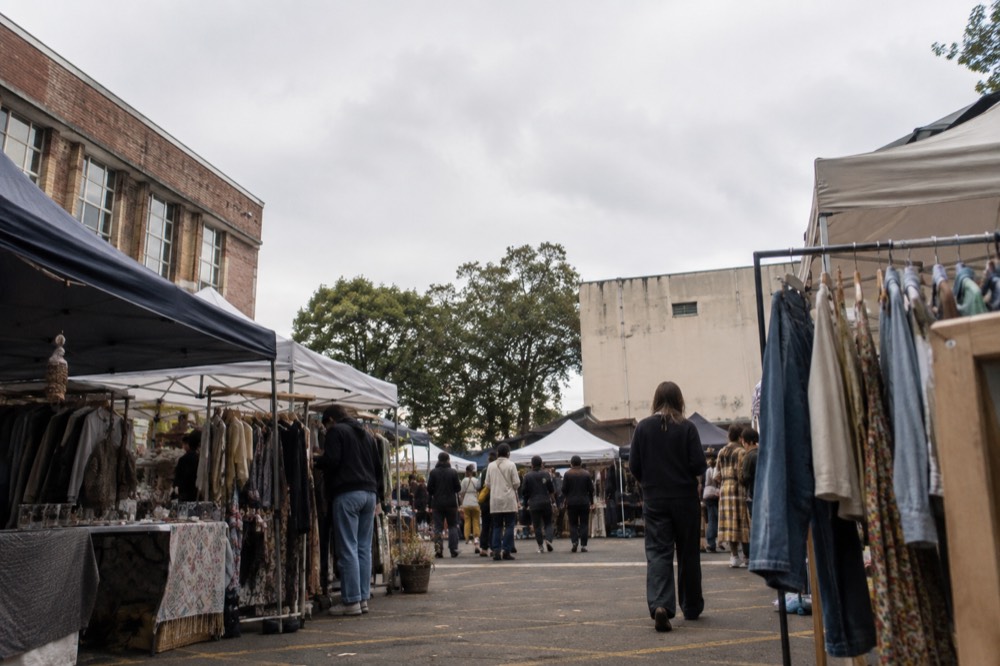
Glebe Markets, held Saturdays in the grounds of Glebe Public School, is the second anchor: second-hand clothes, records, and food stalls, free to enter, and dense enough to fill a morning. From there, the tram or a twenty-minute walk gets you to King Street, where the eating is the attraction. Newtown's strip runs long and cheap, and the choice is genuinely global: Thai, Vietnamese, Lebanese, Ethiopian, and a vegan scene that predates the trend by two decades.
If you want the Inner West's food culture explained rather than just sampled, a guided tasting walk does that job. The six-tasting Secret Food Tours walk, from US$123.62, runs three and a half hours and covers the city's eating streets with a local leading; it is a CBD-and-adjacent walk, so it works best on a different day from your Newtown crawl, as a way of calibrating what you are tasting.
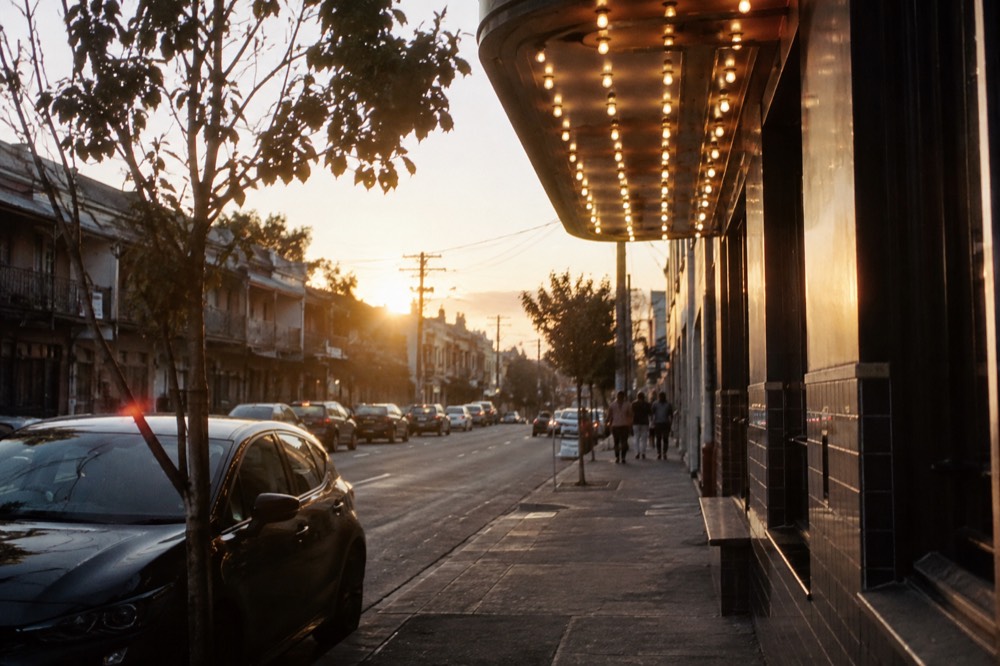
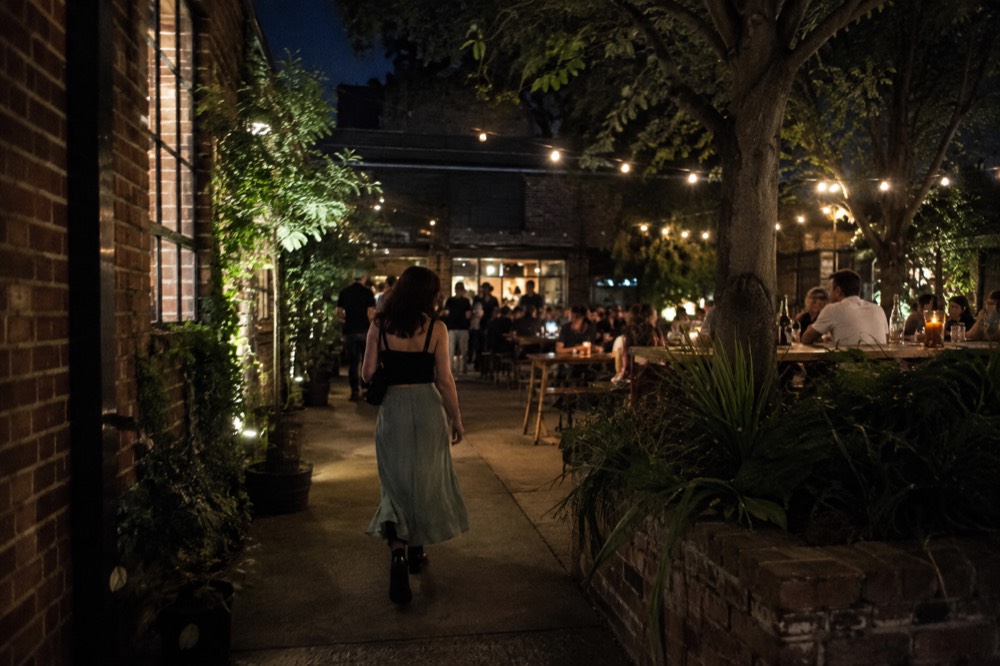
After dark, the options split by suburb. The Enmore Theatre hosts touring bands and comedians in a 1912 building that has survived every redevelopment wave around it. Marrickville's breweries are the other evening: a cluster of craft operations in converted warehouses, most with food trucks and open courtyards. And Balmain is the pub night, a peninsula of sandstone hotels where the ferry home is part of the fun. For how these compare with the city's other after-dark options, see things to do in Sydney at night.
What Should You Actually Eat in the Inner West?
Eat down King Street in Newtown, where a full meal costs a fraction of CBD prices and the range runs from Thai to Ethiopian; get Portuguese custard tarts and charcoal chicken on Petersham's New Canterbury Road; and finish with a brewery lunch in Marrickville. Glebe's cafe strip is the breakfast stop. This is the part of Sydney where the food is the reason you came, and the bill at the end is the surprise.
The Inner West's food reputation is not marketing; it is demography. Successive waves of migration settled these suburbs, and the restaurants that followed stayed at neighbourhood prices. Petersham's Portuguese community is the clearest single example: a couple of blocks of New Canterbury Road with bakeries, delis and charcoal chicken shops that draw people from across the city on weekends. Newtown's Thai scene grew the same way, from a small community into the densest strip of its kind in Sydney.
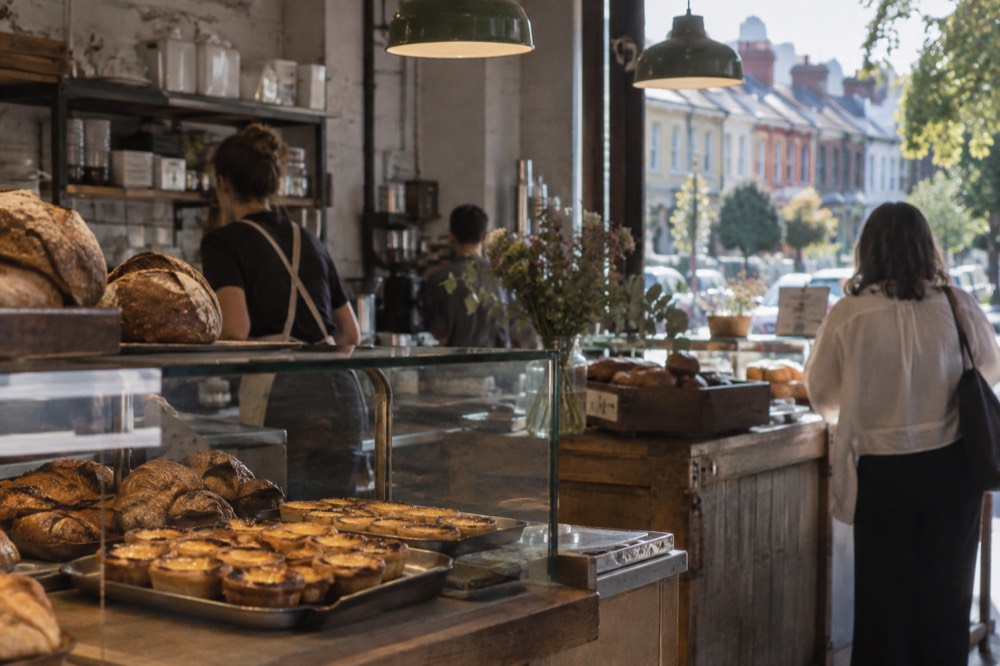
A rough day of eating, in order: breakfast in Glebe, where the cafe strip around Glebe Point Road does flat whites and sourdough; a market lunch on Saturday; an afternoon stop in Petersham for tarts; and dinner on King Street, where the hardest decision is which of a dozen cuisines. Marrickville's cafes are the third-wave coffee end of the spectrum, roasters and warehouse spaces, and worth the extra station if coffee is your priority. Our Sydney coffee guide maps the roasteries if that is your reason to travel.
One planning note: book nothing except the theatre. The Inner West runs on walk-ins, and the best meals here happen at places with no booking system at all. If you want a night where someone else has organised the food, the tasting tour above is the exception; otherwise, wander and follow the queues, which move fast.
How Much Does a Day in the Inner West Cost?
Transport is capped at $9.65 on a Friday, Saturday or Sunday and $19.30 Monday to Thursday, so your entire tram-train-bus day cannot exceed that. Food is the variable: a King Street dinner costs a fraction of the CBD equivalent, Glebe Markets is free to enter, and the breweries are pay-as-you-drink. A realistic budget is one capped Opal day plus meals, and the meals are the cheapest good eating in central Sydney.
The Opal caps are the load-bearing fact. Because the daily cap applies across trains, buses, light rail and ferries alike, you can do Glebe by tram, Newtown by train, Balmain by ferry and a bus home, and the day's transport bill stops at the cap regardless. Public holidays get the $9.65 cap too, which makes a long-weekend Saturday the cheapest possible day to do this. Tap on and tap off every time, or you are charged the default maximum fare for that trip.
| Item | Typical cost | Notes |
|---|---|---|
| Opal day, Fri-Sun | capped at $9.65 | all modes, ferries included |
| Opal day, Mon-Thu | capped at $19.30 | all modes, ferries included |
| Off-peak train, Central to Newtown | $3.03 | 30% discount applies |
| Glebe Markets entry | free | Saturdays |
| Enmore Theatre show | varies by event | book the specific show |
| King Street dinner | neighbourhood prices | well below CBD equivalents |
Beyond transport, the free layer is thick: the foreshore parks, the markets' browsing, the architecture itself, which costs nothing and is the equal of any ticketed attraction in the city. If you are stretching a budget across a whole trip, our Sydney on a budget guide stacks the free days, and the Inner West is the backbone of that list.
When Is the Best Time to Visit the Inner West?
Go between September and November or March and May, when the walking-and-eating weather is at its best and the crowds are thinner than the December-February peak. If winter is your only window, do not write it off: Sydney's long-run averages give August 13.4 mean clear days, the most of any month, while February, in the middle of peak season, is statistically the cloudiest at 5.3. June is the wettest month, at 133.1 mm on average, wetter than any summer month.
That climate detail is the least-known planning fact about Sydney, and it inverts the usual tourist instinct. The Bureau of Meteorology's 162-year record from Observatory Hill shows rainfall peaking in June and clear days peaking in August, which means the "bad" season delivers the best light for photographing terraces and harbour parks. Summer, December through February, is when the cloud rolls in, and it is also when the markets and King Street are at their most crowded. The numbers behind this sit in our Sydney weather month by month guide.
Event timing matters more than weather timing, honestly. Vivid Sydney, late May to mid-June, lights up the harbour side but leaves the Inner West quiet, which some travellers prefer. Sydney Festival in January pushes performances into small venues across the inner suburbs, Enmore Theatre included. And every Saturday of the year, Glebe Markets runs regardless of season, which is the one fixed point in the calendar.
Whatever month you come, the practical layers are the same: comfortable shoes, an Opal card or a contactless bank card, and no rigid bookings. The Inner West rewards the traveller who arrives with a loose plan and lets the suburb fill in the details. For the wider picture of how these neighbourhoods fit into a full Sydney stay, start with our Sydney for first-timers guide, and the rest of Sydney Travel Guide fills in the gaps.
Before the practical questions, here are the three experiences that pair best with an Inner West day, one more time:
The Rocks walk covers Sydney's oldest streets, the food tour covers its eating culture, and the sightseeing cruise shows you the harbour shoreline the Inner West grew up against, from US$28.53 for ninety minutes on the water.
Common Questions About the Sydney Inner West
What suburbs are in Sydney's Inner West?
The commonly agreed core is Glebe, Newtown, Enmore, Petersham, Marrickville, Balmain, Rozelle and Ashfield, with the edges debated. All sit immediately south-west of the CBD, all are on the train, light rail, bus or ferry network, and all are on the land of the Gadigal people of the Eora Nation.
Is the Inner West worth visiting for tourists?
Yes, if your interest is food, markets, live music and local street life rather than ticketed landmarks. Everything is free or cheap to enter, the Opal fare to get there is a standard cross-city trip, and the eating costs a fraction of the CBD. Travellers who only want icons should stay around Circular Quay.
How do I get to Newtown from the city?
Catch a T2 line train from Central or Town Hall to Newtown station; it is a 0-10 km trip, $4.33 peak or $3.03 off-peak, and a contactless credit card is charged exactly the same as an Opal card. The L1 light rail also runs from Central towards Glebe and Dulwich Hill if Glebe is your first stop.
What is the best day of the week for the Inner West?
Saturday, because Glebe Markets runs that day and the whole suburb's rhythm builds around it. A Saturday or Sunday also carries the $9.65 Opal daily cap instead of the $19.30 midweek cap, so a multi-suburb day of tram, train and ferry costs less on the weekend.
Can you walk between Inner West neighbourhoods?
Yes, and you should. Glebe to Newtown is roughly a fifteen-minute walk, Enmore continues directly off King Street, and the Glebe foreshore parks form a continuous waterside path out to Rozelle Bay. Balmain is the exception: it sits on its own peninsula, best reached by ferry or bus.
Are e-scooters a way to get around the Inner West?
No. Private e-scooters are illegal on NSW roads, footpaths, shared paths and bike lanes, and shared-scheme trials run only in limited designated areas with a 20 km/h cap. Trains, the light rail, buses, ferries and your own feet are the real options; Transport for NSW publishes the current rules.