How Much Does a Taxi Cost from Sydney Airport to the Central City?
A straight answer on taxi fares from Sydney Airport to the Sydney CBD, how they compare with the airport train and the 400 bus, and the charges that catch visitors out.
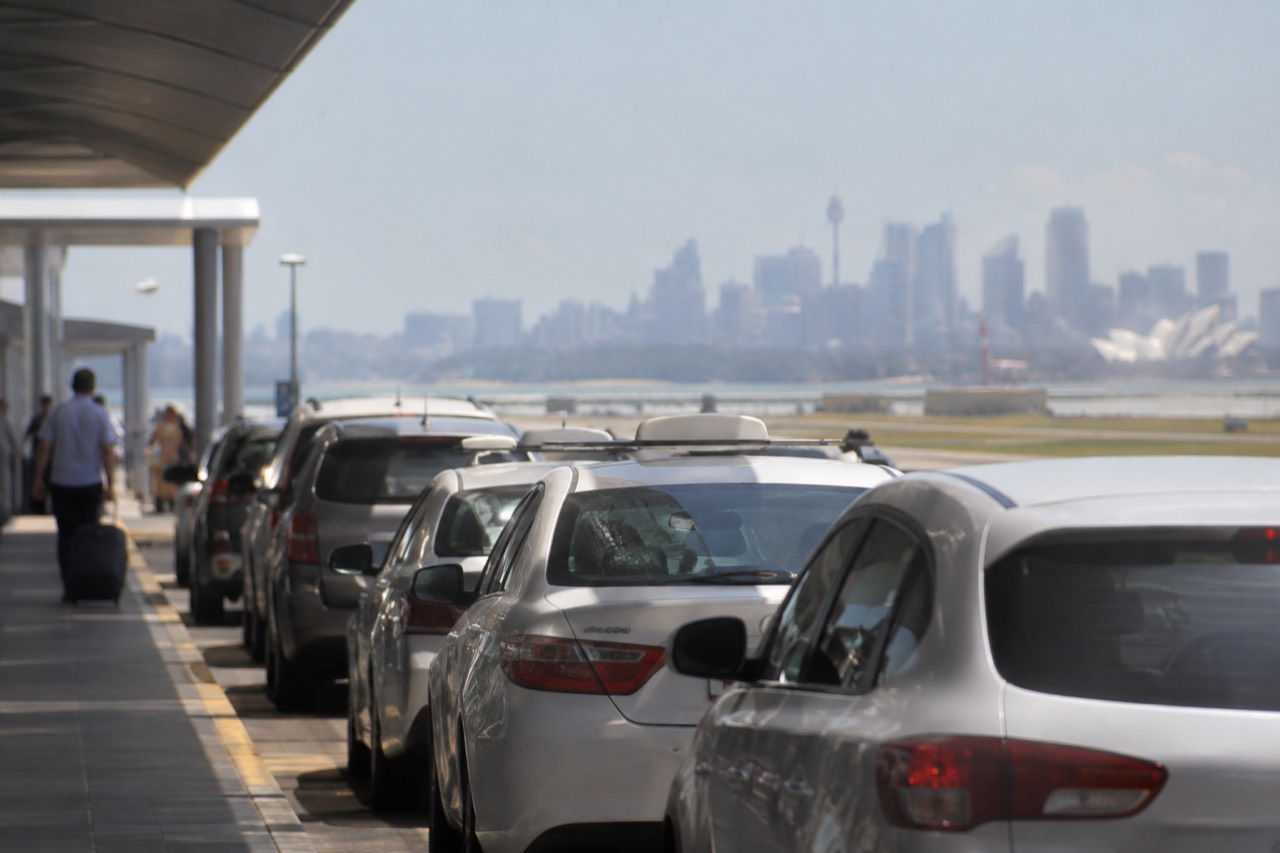
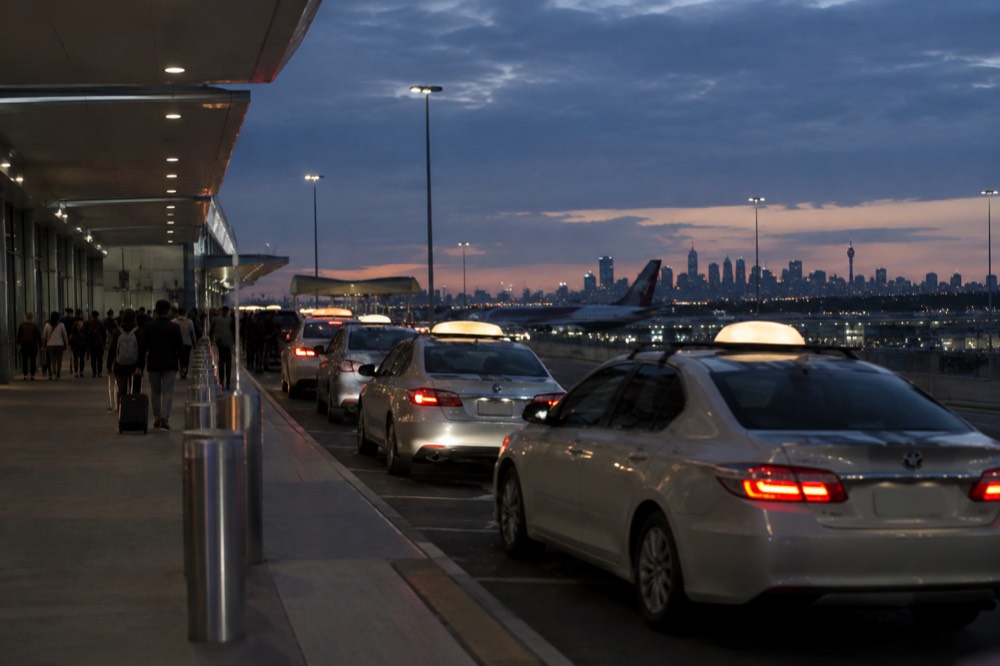
How Much Does a Taxi Cost from Sydney Airport to the Central City?
There is no single published taxi price, because Sydney Airport taxis run on fixed fares that change with the time of day, and the airport adds its own access charges on top. Transport for NSW publishes the current arrangements on its official airport page, and that is the number to check before you ride. As a working comparison, the airport train costs the standard Opal fare plus an $18.61 station access fee per adult, so the taxi premium over the train is real but bounded.
The honest answer starts with how the fare is built. A taxi from either the Domestic or International terminal to the Sydney CBD is not a metered city fare in the usual sense: the airport operates a fixed-fare arrangement for trips into the central business district, with the rate set by the time of day you travel, and separate airport access levies applied to the driver and passed through to you. Those levies and the fixed rates are reviewed periodically, which is why a guide that prints one hard number tends to be wrong within months. For the full picture of every transfer option, our guide to getting from the airport to the city covers trains, buses, shuttles and private transfers side by side.
What the verified official sources do give you is everything around the taxi. Transport for NSW's airport access page sets out the current taxi and rideshare arrangements alongside the train and bus options, and it is the page to check for the live fixed-fare figure on the day you fly. The page also confirms the detail most visitors miss: the train's airport station access fee, the bus route that avoids it entirely, and the taxi ranks at each terminal.
The distance itself is short. The airport sits about 8 kilometres south of the CBD, which in normal traffic is a ride of roughly 20 to 30 minutes. Peak hour on the Southern approaches can stretch that considerably, and a fixed fare does not change with traffic, which is the one point in the taxi's favour when the M5 or the Eastern Distributor is crawling.
How Does the Taxi Compare with the Airport Train?
The airport train is the cheapest fast option: an adult pays the standard Opal fare for the 8-kilometre trip, around $4.33 at peak times, plus the $18.61 airport station access fee, giving roughly $23 one way before any cap applies. The taxi's fixed fare will be comfortably above that for a solo traveller, but for three or four people sharing one cab the gap narrows to a few dollars each. The train runs from both airport stations straight to Central, Town Hall and Circular Quay.
That access fee is the number most guides get stale on. The live Transport for NSW page lists the adult airport station access fee at $18.61, charged on top of the normal train fare at both the Domestic and International stations, with its own separate weekly cap of $37.75. It is not included in the standard Opal daily or weekly caps. Some circulating guides still quote the older $17.92 figure from the 2025 fare determination; the fee rose after that determination, so treat anything lower with suspicion.
| Charge | Adult amount | Notes |
|---|---|---|
| Train fare, airport to Central (0-10 km band) | $4.33 peak / $3.03 off-peak | Standard Opal distance fare |
| Airport station access fee | $18.61 | Charged on top of the fare, both stations |
| Access fee weekly cap | $37.75 | Separate from the $50 Opal weekly cap |
| 400 bus | standard bus fare, no access fee | Slower, but skips the access fee entirely |
| Taxi to the CBD | fixed fare by time of day, plus levies | Current rate published on the official airport page |
The off-peak discount is worth knowing too. Metro and train fares drop 30% on Fridays, weekends, public holidays and outside peak times, and the airport stations are part of that system. The access fee does not discount, but the base fare does, so a Sunday arrival is a little cheaper by rail than a Monday morning one. If you are budgeting the whole trip rather than just the transfer, our Sydney trip cost breakdown puts the arrival fare in context alongside accommodation, food and sightseeing.
If you are weighing up what to do with the money you save on the transfer, the trio above is a fair snapshot of how visitors spend it: a hop-on hop-off bus that covers the city and Bondi, a [multi-attraction pass](https://gocity.tpk.ro/rUvgw2vS) for the rainy-day indoor sights, and an all-inclusive Blue Mountains day trip for the one big excursion. None of them needs a car, which is the theme of this whole comparison.
Is the Taxi Worth It, or Is the 400 Bus the Smarter Budget Play?
For a solo traveller or a couple with light luggage, the train wins on price almost every time, and the 400 bus beats both if you are heading somewhere the train does not reach, because it carries no station access fee at all. The taxi earns its fare in three situations: a group of three or four splitting the cost, a late-night arrival with a sleeping child, or an address in the CBD that is a long walk from a station. Outside those, it is comfort, not value.
The 400 bus is the option almost nobody mentions. It runs between the airport and the eastern suburbs, connecting with the light rail and other bus routes, and because it is a normal route rather than an airport service, there is no access fee, just the standard bus fare. It is slower and less glamorous, but for a traveller headed to Bondi Junction or Kensington it can be the most direct cheap option, and it is listed on the same official airport page as the train and taxi arrangements. If you are staying beachside rather than in the centre, our eastern suburbs area guide maps out which neighbourhoods suit which arrival.
Luggage is the honest tiebreaker in the taxi's favour. The airport train stations involve escalators and, at Central, a genuinely long walk between platforms and the main concourse. With two large suitcases and a jet-lagged family, the door-to-door case for the taxi stops being about money and starts being about the last hour of a 24-hour travel day. That is a reasonable thing to pay for; it is just not a bargain. Everything else covered here is indexed on Sydney Travel Guide.
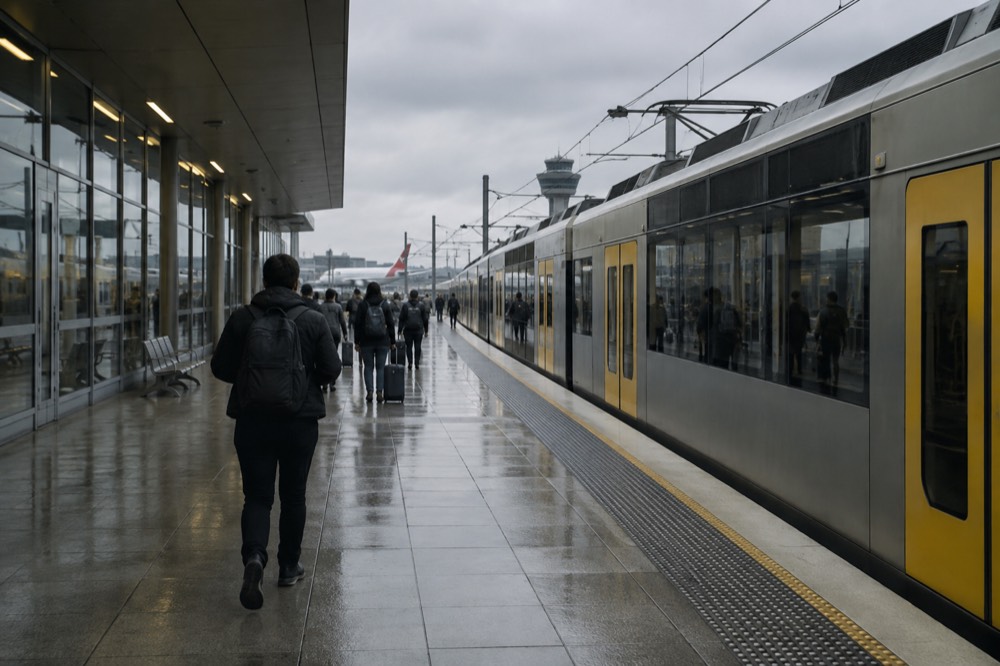
What About Rideshare, and What Happens Once You Are in the City?
Rideshare pickups from Sydney Airport use the same designated zones as part of the airport's managed arrangement, with the airport's pickup levy applied to the trip, so the apparent saving over a taxi is smaller than the app first shows. Inside the city itself you will rarely need either: the CBD is compact and walkable, the Opal daily cap of $9.65 on Friday to Sunday and public holidays makes multi-trip days cheap, and ferries, trains and light rail cover the rest.
The pickup zones matter more than the fare. Both terminals funnel rideshare passengers to specific areas, sometimes a walk from the terminal, and surge pricing on a Friday evening can erase the discount entirely. The taxi rank, by contrast, is kerbside at both terminals with a marshal, which at 11pm with a delayed flight counts for something the app cannot show. We compare the two door-to-door options in more detail in our article on whether a taxi or rideshare is cheaper from the airport.
Once you are in the city, the arithmetic flips again. The Opal caps are generous for visitors: $19.30 a day Monday to Thursday, dropping to $9.65 a day on Fridays, Saturdays, Sundays and public holidays, with a $50 weekly cap across metro, train, bus, ferry and light rail. A contactless credit card or phone wallet is charged exactly the same as an Adult Opal card and earns every cap and discount, so there is no need to queue for a card on arrival. The details are covered in our Opal card guide for visitors, and the wider picture of trains, ferries and light rail sits in our guide to getting around Sydney.
For sightseeing days, a hop-on hop-off ticket can do the work that a dozen short taxi rides would otherwise do. The Sydney and Bondi Big Bus loop covers the CBD and Bondi with commentary, with an optional harbour cruise, and it suits a first day when you want the geography explained rather than just traversed.
Paying, Timing and the Traps Worth Avoiding
Pay the taxi by card or cash as you normally would, but check the fixed-fare notice at the rank before you get in, confirm the levy is included in what the driver quotes, and expect the ride to take 20 to 30 minutes outside peak hour. The three traps are the stale access-fee figure in older guides, the assumption that the taxi rank is metered like a city fare, and forgetting that the train's access fee sits outside the Opal caps.
Timing changes the price twice over. The fixed taxi fare is set by time of day, so a 5am arrival and a 5pm arrival cost different amounts, and traffic adds minutes to the evening ride. The train has its own version of this: peak fares apply on weekday mornings, while the 30% off-peak discount applies on weekends, public holidays and outside peak windows. Neither mode is immune to the clock.
| Mode | Fare basis | Access fee or levy | Best for |
|---|---|---|---|
| Taxi | Fixed fare by time of day | Airport levies added | Groups, late arrivals, door-to-door |
| Train | Opal distance fare, about $4.33 peak | $18.61 station access fee | Solo and couple travellers to a CBD station |
| 400 bus | Standard bus fare | None | Budget arrivals, eastern suburbs destinations |
| Rideshare | App fare, surge varies | Airport pickup levy | Familiar apps, off-peak pickups |
One planning note for anyone connecting onward: the metro network is expanding, with the Sydenham to Bankstown extension due to open in late 2026, and Western Sydney International Airport begins passenger flights from 25 October 2026. Neither changes the taxi arithmetic from the existing airport, but a second commercial airport will eventually give the phrase "Sydney Airport taxi" two different answers, and fares there will be set fresh. Travellers watching every dollar on the rest of the stay will find more savings in our guide to Sydney on a budget.
Common Questions About Taxis from Sydney Airport
How much does a taxi cost from Sydney Airport to the central city?
A fixed fare that varies by time of day, plus airport access levies. There is no single permanent number, because the rates are reviewed periodically; the current figure is published on Transport for NSW's official airport page. As a benchmark, the train alternative costs roughly $23 one way for an adult including the $18.61 station access fee.
Is the taxi cheaper than the train from Sydney Airport?
Not for one or two people. The train costs the standard Opal fare plus the $18.61 access fee, while the taxi's fixed fare plus levies will be higher for a solo traveller. For three or four adults sharing one cab, the per-person gap narrows enough that the door-to-door convenience can justify it.
Does the airport station access fee count toward the Opal daily cap?
No. The $18.61 access fee sits outside both the daily caps of $19.30 and $9.65 and the $50 weekly cap. It has its own separate weekly cap of $37.75, which only matters if you fly in and out repeatedly in one week.
Is there a way to avoid the airport access fee entirely?
Yes. The 400 bus runs from the airport as a normal route with no station access fee, just the standard bus fare. It is slower and better suited to the eastern suburbs than the CBD, but it is the cheapest rail-free option and it is listed on the official airport page.
Do I need an Opal card to catch the train from the airport?
No. A contactless credit, debit card or phone wallet is charged exactly the same as an Adult Opal card and receives every cap, transfer discount and off-peak saving. Opal single trip tickets, by contrast, cost more and receive no benefits at all, so avoid the machines unless your card fails.
How long does a taxi take from Sydney Airport to the CBD?
About 20 to 30 minutes in normal traffic over the roughly 8-kilometre run. Weekday peak hour can stretch the trip considerably, and because the airport fare is fixed rather than metered, sitting in traffic does not add to the price the way a city meter would.