Where Should I Go Within 2 Hours in Sydney?
Day trips and escapes within two hours of Sydney: the Blue Mountains, the Royal National Park, Manly, the Hunter Valley and more, with fares, park fees and what suits each kind of traveller.
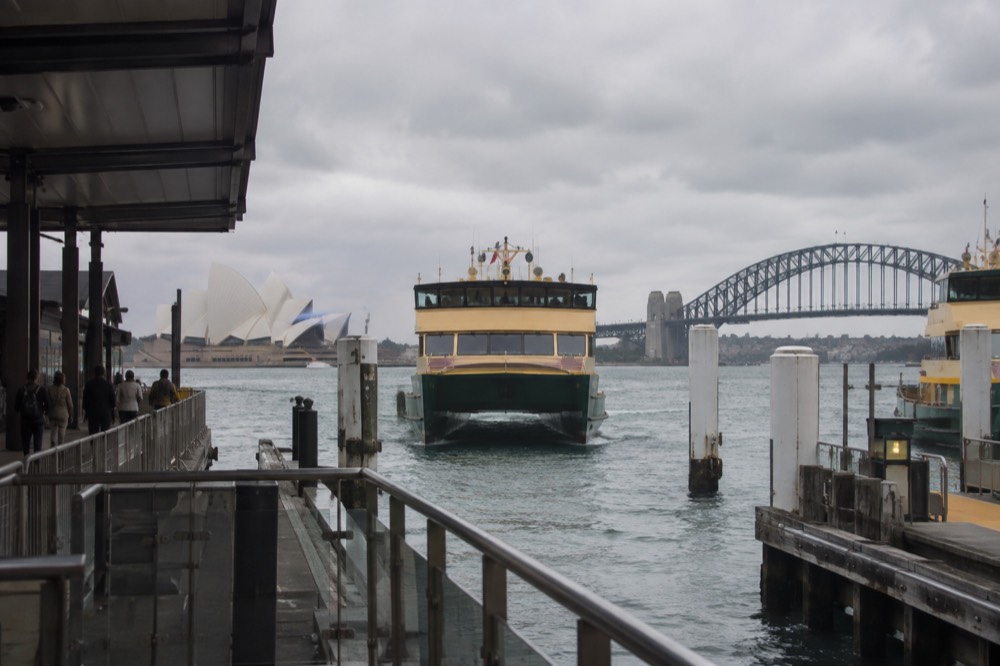
Sydney's visitors spent $34.7 billion in the year ending March 2026, and an awful lot of it inside a two-hour radius of the Opera House. That radius holds a world-heritage escarpment, a national park older than any in the world's older set, dolphin-packed bays, whale migration vantage points, and wine country. Almost none of it needs a car.
Where Should I Go Within 2 Hours in Sydney?
Go to the Blue Mountains for scenery, the Royal National Park for coastline, Manly for an easy half-day by ferry, and the Hunter Valley for wine. All four sit inside roughly two hours of the city centre, and three of the four are reachable by train or ferry with an Opal card or a contactless card, so none of them requires hiring a car or driving unfamiliar roads on the left-hand side.
The honest first question is not which place is best, because they do different jobs. Katoomba and the Three Sisters answer the "I want the big view" brief. The Royal answers the "I want water and cliffs without crowds" brief. Manly answers the "I have a morning and no plan" brief. The Hunter Valley answers the "I want someone else to drive" brief, and that one genuinely is better as an organised day trip, because tasting and driving do not mix on rural roads.
If the weather is ordinary, flip the plan. June is Sydney's wettest month on the long-run averages, at 133.1 mm, wetter than any summer month, while August is its clearest. A flexible traveller who checks the forecast and swaps a beach day for a museum day, or the reverse, gets more out of this city than one who locks an itinerary months ahead. Our day trips from Sydney guide runs through the full menu if you want the long list.
What Can You Reach in Under Two Hours by Train or Ferry?
Most of the classic escapes are on the Opal network, and a contactless credit or debit card charged straight at the gate does the whole job. A train to the Blue Mountains falls in the 65-plus-kilometre band at $10.66 peak or $7.46 off-peak each way, the Manly ferry is $9.20 one way, and the network caps at $19.30 a day Monday to Thursday and $9.65 from Friday to Sunday and on public holidays.
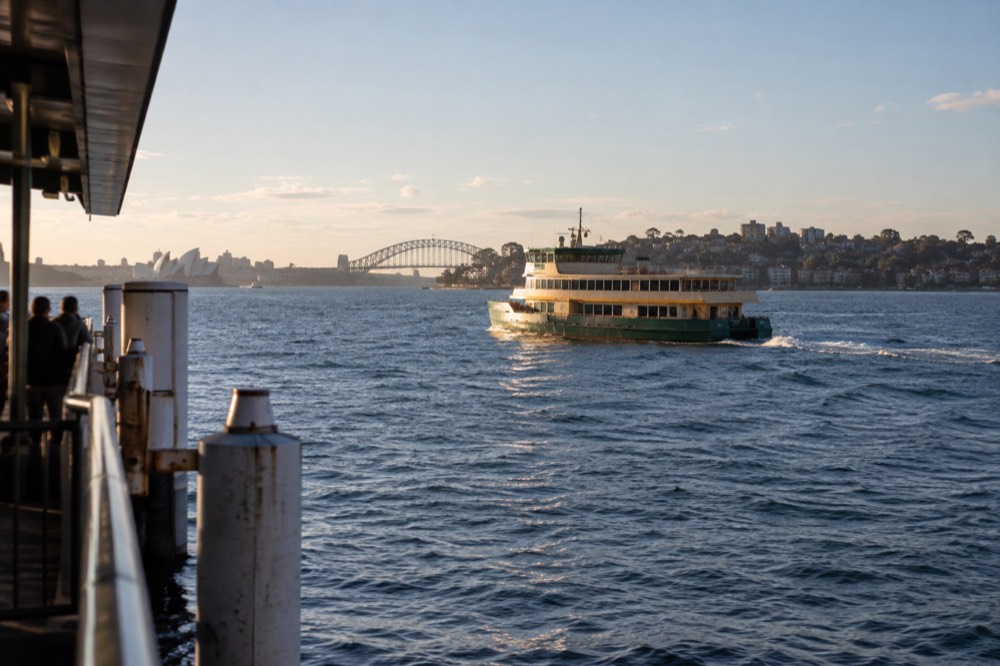
Transport for NSW publishes the full fare structure on its adult Opal fares page, and the bands matter more than the destinations. Distance, not direction, sets the price. Here is what the network charges :
| Network | Distance band | Peak fare | Off-peak fare |
|---|---|---|---|
| Metro and train | 0-10 km | $4.33 | $3.03 |
| Metro and train | 10-20 km | $5.38 | $3.76 |
| Metro and train | 20-35 km | $6.20 | $4.34 |
| Metro and train | 35-65 km | $8.28 | $5.79 |
| Metro and train | 65+ km | $10.66 | $7.46 |
| Bus and light rail | 0-3 km | $3.30 | $2.31 |
| Bus and light rail | 3-8 km | $4.49 | $3.14 |
| Bus and light rail | 8+ km | $5.77 | $4.03 |
| Ferry | 0-9 km | $7.35 | no off-peak discount |
| Ferry | 9+ km | $9.20 | no off-peak discount |
Two traps are worth naming. The privately operated Manly Fast Ferry accepts an Opal card through OpalPay but charges different fares, and the daily caps and transfer discounts do not apply, so a traveller who taps on believing they have hit the cap gets charged anyway. And the airport stations carry a separate station access fee of $18.61 on top of the train fare, outside both daily caps, which matters if your two-hour escape starts from a landing rather than a hotel.
One more option for the city itself: if your two hours are actually inside Sydney rather than beyond it, a guided ride is a surprisingly efficient way to cover the harbour foreshore, the Rocks, Darling Harbour and the Botanic Garden in a single loop. Sydney Bike Tours runs guided cycles of two to five hours with a 4.8 rating across 1,168 reviews, and the operator's listing carries the live price and departure times.
If you would rather sort a bigger outing while you are at it, these are the three products that best cover the two-hour radius: a city bike tour, the all-inclusive Blue Mountains day trip, and the Opera House tour for the day you stay in town.
Which Coastal and Beach Escapes Sit Within Two Hours?
Manly is the easiest, a ferry ride across the harbour with ocean beaches and a sheltered cove at Shelly Beach on the other side. Bondi and Coogee sit on the same eastern beaches peninsula the ferry does not reach, and the Royal National Park to the south holds the Figure Eight Pool, Wattamolla and a coastline that most visitors never see. All of these are inside two hours, and all of them carry the same safety rule: swim between the red and yellow flags at a patrolled beach.
The ferry itself is half the reason to go. The F1 Manly ferry falls in the 9-plus-kilometre band at $9.20 each way on Opal or contactless, and the crossing passes the heads, the harbour islands and the city skyline on the way back. Our Manly ferry guide covers timetables and the fast-ferry trap in detail.
Patrols are the detail most visitors get wrong. Bondi, Bronte, Tamarama, Coogee and Manly all have council lifeguards year-round, with Waverley's three beaches patrolled 6am to 7pm in the October-to-April high season and 7am to 5:30pm through winter. Most other Northern Beaches run patrols only from late September to late April. Surf Life Saving Australia's National Coastal Safety Report 2025 recorded 154 coastal drowning deaths nationally, the highest on record, and every single one occurred outside the flags, outside patrol hours, or at an unpatrolled location. The official rip advice from Beachsafe is to stay calm, raise an arm and call for help, float with the current which may return you to a sandbank, or swim parallel to the beach toward breaking waves. Never swim at an unpatrolled beach on the strength of being a strong swimmer.
Wondering whether to book anything at all before you leave? A guided ride around the harbour can be reserved with free cancellation on the operator's listing, so it costs nothing to lock in a morning and change your mind if the forecast turns.
Is the Blue Mountains Doable as a Two-hour Escape?
Yes, and it is the single most popular answer to this question for good reason. Katoomba and the Three Sisters sit on the train line, Blue Mountains National Park charges no vehicle entry fee anywhere except the Glenbrook area at $8 per day, and the escarpment views at Echo Point and Govetts Leap are free to stand at. The catch is that the region's walking tracks and access roads carry rolling closures, so check the live alerts before you commit to a specific track.
The National Parks and Wildlife Service lists current closures on its fees and alerts pages, and through late 2026 those closures include Mount Hay Road, the Blue Pool track and parts of Federal Pass. That is not a reason to skip the mountains; it is a reason to plan the walk the night before rather than on the train.
The fee surprise is genuine information gain: visitors widely assume a Blue Mountains day trip carries a park entry charge, and it does not, unless you drive into Glenbrook. Arriving by train sidesteps even that. Our Blue Mountains day trip guide has the full itinerary, and the Katoomba and Three Sisters guide covers the viewpoints in detail.
If you would rather not manage trains, lookouts and lunch logistics yourself, the all-inclusive small-group day trip is the strongest product in the region on this roster, with a 4.9 rating across 9,741 reviews over a 10-hour day. There is also a deluxe small-group version that adds Scenic World and Featherdale, and Featherdale is worth knowing about because it is the closest dependable place to see kangaroos and koalas on a day loop from the city.
What About Wine, Wildlife and the Southern Highlands?
The Hunter Valley is the wine answer and it is a poor drive for a visitor, so take a guided tour with lunch included. Port Stephens and Jervis Bay are the wildlife answers, with dolphin cruises and, from May to November, humpback whales migrating along the coast. The Southern Highlands is the quiet answer, with cool-climate villages and gardens. All sit at the outer edge of the two-hour radius, which is exactly why the organised day trips earn their keep on these routes.
Whale season is the fact that changes the calculus. Humpbacks migrate along the NSW coast from May to November, northbound roughly May to July and returning with calves from August to November, with peak numbers in late June and July. NSW National Parks puts the eastern Australian population at an estimated 40,000-plus animals. A dolphin cruise at Port Stephens runs year-round; a whale cruise does not, and no operator guarantees a sighting. Our whale watching in Sydney guide covers the season and the land-based vantage points if you would rather watch from a headland for free.
On the wine side, the Hunter Valley's semillon and shiraz country is genuinely rural, with cellar doors spread along back roads where a [self-drive](https://discovercars.tpk.ro/FvKIyzXW) day means one person tasting water all afternoon. The premium guided tour with a two-course lunch removes that problem entirely and runs about 11 hours door to door. There is also a wildlife, waterfalls and wine day tour that splits the difference, pairing native animals with a couple of cellar doors.
For the south, the Royal National Park is the cheapest headline of the whole radius: $12 per vehicle per day, and nothing at all if you arrive by train to Cronulla and take the ferry across to Bundeena, where the Coast Track starts. Our Royal National Park guide covers Figure Eight Pool's tide rules, which matter more than any other detail on that walk, and our Hunter Valley day trip guide does the same for the wine country.
If you are still weighing which of these fits your trip, the three products below cover the range: the city bike tour for a short stay, the Blue Mountains all-inclusive for the big day out, and the Opera House tour for the day you keep in town.
Common Questions About Two-hour Trips from Sydney
Where should I go within 2 hours in Sydney?
Go to the Blue Mountains for the escarpment views, the Royal National Park for the coastline, Manly for an easy ferry half-day, and the Hunter Valley for wine. All four sit inside roughly two hours of the city centre, and the Blue Mountains, Manly and the Royal are all reachable by train or ferry on a contactless card without hiring a car.
Do I need a car for day trips from Sydney?
No. Katoomba is on the train line, Bundeena is reachable by train to Cronulla plus a ferry to the Royal National Park, and Manly is a direct ferry from Circular Quay. The Hunter Valley is the main exception, where a guided tour is better than driving yourself, because cellar doors sit on rural back roads and the driver cannot taste.
What is the cheapest two-hour escape from Sydney?
Manly. The F1 ferry is $9.20 one way on a contactless card, the beach and Shelly Bay cove are free, and the network's daily cap of $9.65 from Friday to Sunday puts a hard ceiling on the whole day's transport. The Royal National Park by train and ferry costs less than most single attraction tickets in the city.
Is two hours enough for the Blue Mountains?
Two hours of travel each way leaves a comfortable half-day at the top: Echo Point, one short walk, and lunch in Katoomba or Leura. Check the NPWS alerts page before you go, because several tracks and access roads carry closures into late 2026, and book Scenic World ahead if you want the railway and cableway.
When can I see whales on a two-hour trip from Sydney?
From May to November, with peak numbers in late June and July as the humpbacks head north, and the return migration with calves from August to November bringing whales closer to shore. No cruise guarantees a sighting. Outside those months, Port Stephens runs dolphin cruises year-round instead.
Planning a trip around this city is mostly a question of matching the day to the radius, and Sydney Travel Guide exists to make that matching easier. Pick one escape per day of your stay, keep the ferry and train options for the days the forecast turns, and leave the wine country to someone else's steering wheel.