Where Are the Best Views of the Sydney Opera House?
A practical guide to the best viewpoints for the Sydney Opera House, from Mrs Macquarie's Chair to the harbour itself, with costs, transport and the best time of day.
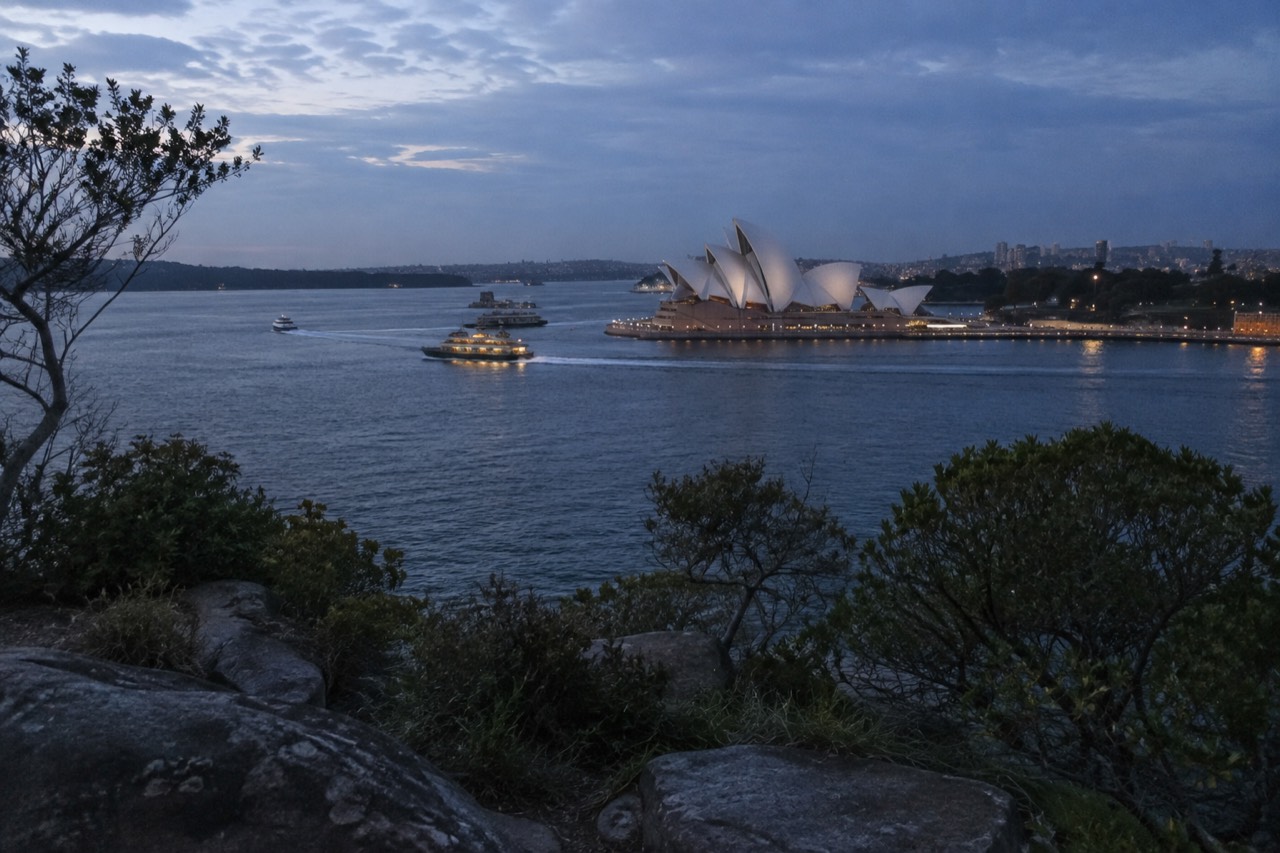
The Sydney Opera House is one of the most photographed buildings on earth, which is exactly why so many visitors photograph it badly. They walk up to the forecourt, point the camera up, and get a wall of white tile with no harbour, no scale and no composition. The building was designed to be seen from the water and from the shoreline around it, and the city has spent decades building the vantage points that prove it.
This page runs through the viewpoints that actually work, what each one costs, how to reach them on public transport, and the times of day that flatter the sails most. Most of the best ones are free, which surprises people who budget for a bridge climb and then discover the finest Opera House photograph of their trip came from a park bench.
Where Are the Best Views of the Sydney Opera House?
The best views of the Sydney Opera House are from Mrs Macquarie's Chair in the Royal Botanic Garden, from the Circular Quay foreshore around the Overseas Passenger Terminal, and from the water itself on a ferry heading east. Each of these frames the sails against the harbour and, from Mrs Macquarie's Chair, against the Sydney Harbour Bridge in the same shot. All three are free to reach, and the garden opens at 7am daily.
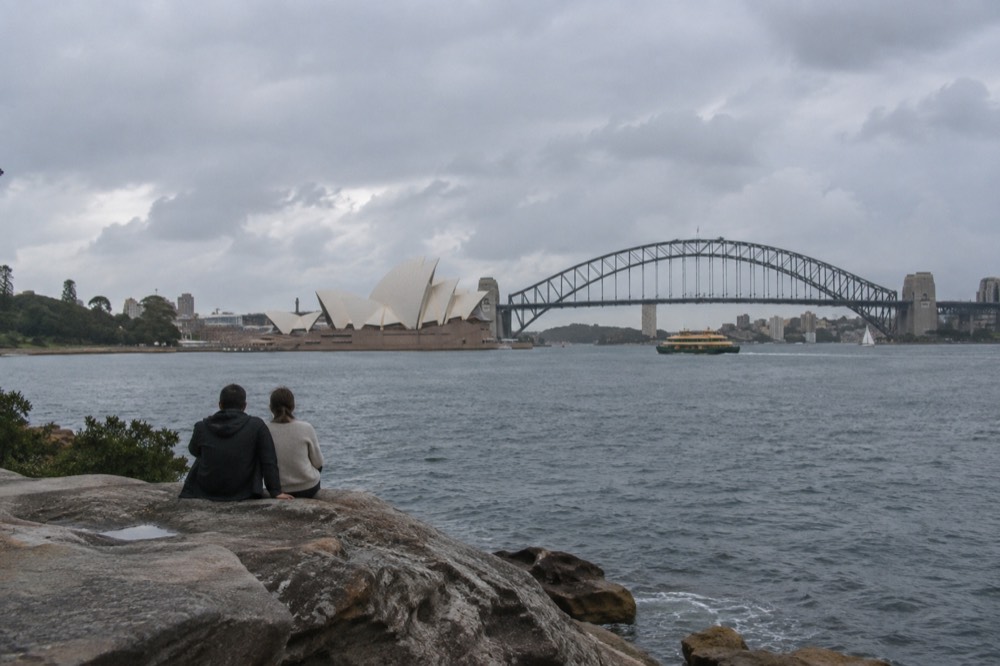
Mrs Macquarie's Chair is the classic answer for a reason. The sandstone ledge sits on the eastern edge of the Royal Botanic Garden Sydney, and from the point the Opera House sits centred in the frame with the Sydney Harbour Bridge directly behind it. It is the only major vantage point where both icons line up in a single composition without a lens wider than most people own. Garden entry is free, the gates open at 7am, and the walk from the Opera House forecourt to the Chair takes most people about 15 minutes at an easy pace.
The Overseas Passenger Terminal side of Circular Quay is the second essential stop. Standing at the western end of the quay, on the promenade in front of the terminal, you look straight down the cove at the northern sails with ferries crossing the foreground. This is the angle that gives your photograph a sense of the harbour as a working waterway rather than a backdrop.
The third view costs almost nothing but a tap of an Opal card. The public ferries leaving Circular Quay for the eastern suburbs swing east past the Opera House within the first minutes of the trip, and the northbound Manly ferry in particular presents the building from the water the way its architects intended. Transport for NSW publishes the fare bands and payment rules on its ferry payment page; the Manly ferry sits in the 9 km-plus band at $9.20 one way for an adult.
| Viewpoint | What you get | Cost | Best time |
|---|---|---|---|
| Mrs Macquarie's Chair | Opera House and Harbour Bridge in one frame | Free | Early morning, golden hour |
| Overseas Passenger Terminal, Circular Quay | Northern sails across the cove, ferries in foreground | Free | Mid morning to afternoon |
| Ferry heading east from Circular Quay | Water-level view of the whole building | Opal fare from $7.35 | Any departure, sit on the right side |
| Opera Bar and forecourt | Close-up of the tile surface and steps | Free | Late afternoon into evening |
| Kirribilli, across the harbour | Distant skyline view with sails at the centre | Free | Sunset, from the Kirribilli foreshore walk |
Which Viewpoints Are Free, and Which Ones Cost Money?
Nearly every classic Opera House view is free: Mrs Macquarie's Chair, the Circular Quay foreshore, the ferry approach from the water and the Kirribilli side of the harbour all cost nothing beyond a ferry fare if you choose to take one. The paid options are the ones that add height or access, the Pylon Lookout on the bridge, a BridgeClimb summit, a harbour cruise, or a guided tour inside the building itself.
The free list is generous enough that a visitor on a tight budget loses almost nothing by skipping the paid tier. The Opera House guide on this site covers the building's own surrounds in detail, including the forecourt steps and the western boardwalk, both of which cost nothing and both of which are at their best in the late afternoon when the low sun warms the tiles.
The paid tier divides into two kinds of experience. Height comes from the Pylon Lookout and the BridgeClimb, both covered in the Sydney Harbour Bridge guide; neither publishes a fixed ticket price on a public price list, so treat any figure you see quoted outside the operators' own channels with caution. Access comes from cruises and guided tours, which put you either on the water looking back at the sails or inside them.
For most travellers the honest ranking is this: do the free shoreline viewpoints first, spend a ferry fare on the water-level angle, and then decide whether the paid tier adds anything the free tier did not already give you.
Is the View from the Water the Best One?
Yes, for most people the water is the best place to see the Opera House, because the building was composed to be approached from the harbour and every ferry leaving Circular Quay eastbound delivers that approach for the price of a normal Opal fare. The building sits on Bennelong Point at the water's edge, and from a boat the sails rise directly out of the sea, which no land viewpoint quite reproduces.
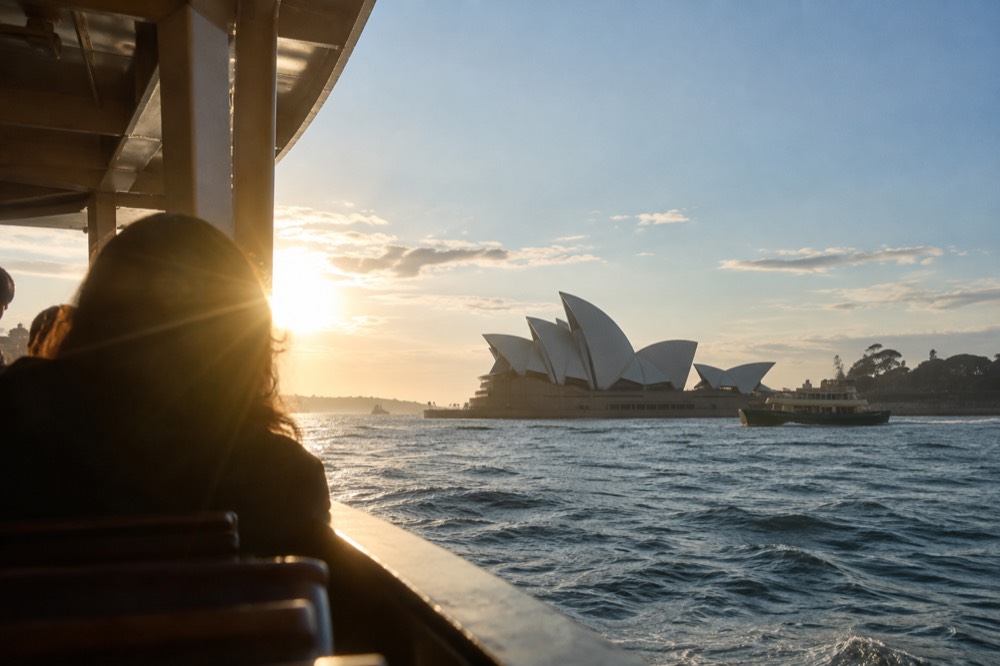
The cheapest version is a scheduled public ferry rather than a cruise. Sit on the eastern side of the vessel, which is the right side leaving Circular Quay on the southbound legs, and the building slides past your window within the first few minutes. The F1 Manly ferry is the longest and most scenic of these runs, and the Manly ferry guide on this site covers its timetable and the difference between the public ferry and the private fast ferry, which charges different fares and sits outside the Opal caps.
The deliberate version is a harbour cruise. The Sydney harbour cruises guide compares the sightseeing, sunset and dining options, and the sunset departures in particular circle Bennelong Point at the hour when the tiles go gold. A cruise is a paid experience, but it is the only way to hold the water-level angle steady for an hour rather than for the four minutes a commuter ferry gives you.
One planning note that matters more than people expect: the post-rain water quality advice applies to harbour swimming sites, not to viewing from a deck, so a cruise runs in almost any weather, and the covered vessels run all winter.
Can You See the Opera House from the Sydney Harbour Bridge?
Yes, the bridge gives you the highest Opera House views available to the public, from two very different products. The Pylon Lookout puts you at deck height on the south-east pylon with the sails directly below, while the BridgeClimb summit takes you to the top of the arch high above the water, from which the Opera House, Circular Quay and the eastern harbour all open up at once.
The Pylon Lookout is the quieter option and the one most visitors have never heard of. It sits inside the stone tower at the southern end of the bridge, reachable from the pedestrian walkway on the eastern side, and its viewing level looks straight down the cove at the Opera House. The bridge's pedestrian walkway itself is free and also delivers a good elevated angle, so even the walk up without the pylon rewards the effort.
The summit is the premium product. BridgeClimb runs roughly three hours in total, about two of them on the bridge itself, with departures through dawn, day, twilight and night slots, and the operator's rates are dynamic by date and demand. The climb is a commitment of money, time and a head for heights, and the BridgeClimb guide on this site works through who it suits and who should take the pylon instead.
For photography specifically, the pylon is arguably better than the summit: you are closer to the Opera House, you can use the bridge's own steelwork as a foreground frame, and you can shoot from behind glass-free openings rather than clipped to a rail in a jumpsuit.
Do You Need to Go Inside the Opera House for the Best View?
Strictly, no: every celebrated exterior view is free and outside. But the interior is the part of the building almost nobody photographs, and a guided tour is the only way to see the concert hall and the tile-shell interiors, which the Opera House says run about an hour with sessions broadly through the day. If your question is about photographs, stay outside; if it is about the building as a whole, the tour completes the picture.
The Opera House does not publish a fixed public price for its standard tour; pricing is dynamic and set at booking, and the official tours page lists the current sessions and languages. Tours run roughly 9am to 5pm daily, with some non-English sessions scheduled on set weekdays, and the building's own guidance puts the standard tour at about 60 minutes.
What the tour adds that no viewpoint can is context you can see. The interior reveals the tile shells from inside, the timber of the concert hall, and the engineering of the podium beneath the sails. Visitors who only walk the forecourt often leave thinking the building is smaller than expected; visitors who take the tour leave understanding why it is not.
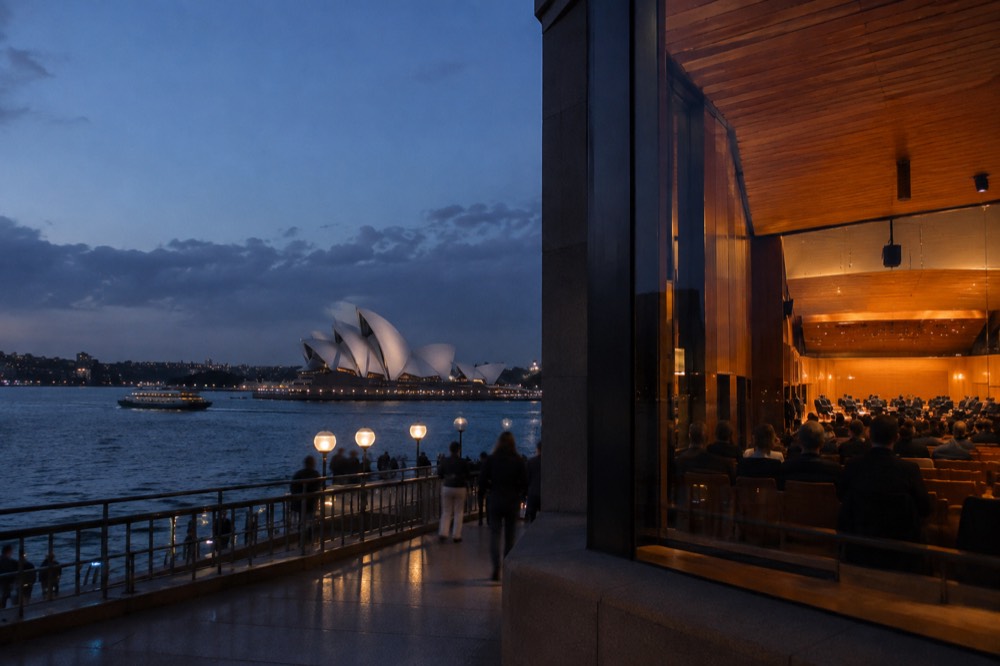
The practical pairing that works for most itineraries is a morning tour followed by an afternoon of the free viewpoints, finishing at Mrs Macquarie's Chair for golden hour. That sequence gives you the interior first and then lets you recognise what you are looking at from outside.
What Is the Best Time of Day for Opera House Photos?
Early morning and the hour before sunset are the best times for Opera House photos, because low sun rakes across the tile surface and gives the sails depth that flat midday light erases. Sunrise works from Mrs Macquarie's Chair with the sun coming up behind you over the garden, and night works from Circular Quay once the building's own lighting takes over, which makes the sails glow against the dark harbour.
The counterintuitive fact from the long-term climate record is that Sydney's clearest skies arrive in late winter, not summer. The Bureau of Meteorology's normals for Sydney show August averaging 13.4 clear days, the most of any month, while February, the middle of peak tourist season, averages the fewest at 5.3. A visitor chasing the classic blue-sky Opera House shot statistically has better odds in August than in February.
Night is its own genre. The building's lighting turns the sails into the brightest object on the dark harbour, and the western boardwalk and Opera Bar area are where most of the good night frames come from. During Vivid Sydney, the festival's light installations take over the whole Circular Quay precinct, and the light walk runs past the building itself; the 2026 edition ran 22 May to 13 June, and the festival schedules its next editions in the same late-autumn window.
One caution for the sunrise plan: Sydney observes daylight saving from the first Sunday in October to the first Sunday in April, so a 7am garden opening in summer means the sun has already been up for well over an hour. Check the sunrise time for your date before setting an alarm.
Common Questions About Opera House Viewpoints
Where are the best views of the Sydney Opera House?
Mrs Macquarie's Chair in the Royal Botanic Garden, the Overseas Passenger Terminal side of Circular Quay, and the water itself on a ferry heading east from Circular Quay. The Chair is the only spot that frames the Opera House and the Harbour Bridge together, the terminal gives you the sails across the cove, and the ferry gives you the water-level approach the building was designed for. All three are free apart from the ferry fare.
Can you see the Opera House and the Harbour Bridge in one photo?
Yes. Mrs Macquarie's Chair lines the two up from the eastern shore of the Royal Botanic Garden, with the Opera House in the foreground and the bridge behind it. It is a 15 minute walk from the Opera House forecourt, the garden is free, and early morning gives you the calmest water and the fewest people in the frame.
Is the ferry a good way to see the Opera House?
It is one of the best, and it costs a normal Opal fare rather than a tour price. Ferries leaving Circular Quay eastbound pass the building within minutes of departure, and the Manly ferry at $9.20 one way gives you the longest look. Sit on the eastern, right-hand side leaving the quay.
Do you have to pay for the Pylon Lookout to see the Opera House from the bridge?
No. The bridge's eastern pedestrian walkway is free and already gives you an elevated view over the Opera House and Circular Quay. The Pylon Lookout adds a higher, enclosed viewing level inside the south pylon, but its price is not published on a fixed public list, so check before you go.
What is the best season for clear skies over the Opera House?
Winter, surprisingly. The long-term Bureau of Meteorology averages show August as Sydney's clearest month and February, in midsummer, as its cloudiest. Peak season is not the best time to chase a blue-sky photograph; late winter is.
Planning the rest of the harbour day is easier with a route: the Sydney Travel Guide hub collects the itineraries, transport explainers and viewpoint walks in one place, and the 1 day in Sydney itinerary sequences several of these viewpoints into a single walkable loop.