What Is the Longest Coastal Walk in Sydney?
The longest coastal walk in Sydney is the Bondi to Manly Walk, a multi-day harbour and clifftop route linking the city's eastern beaches to the Northern Beaches, with shorter options if you want a single day.
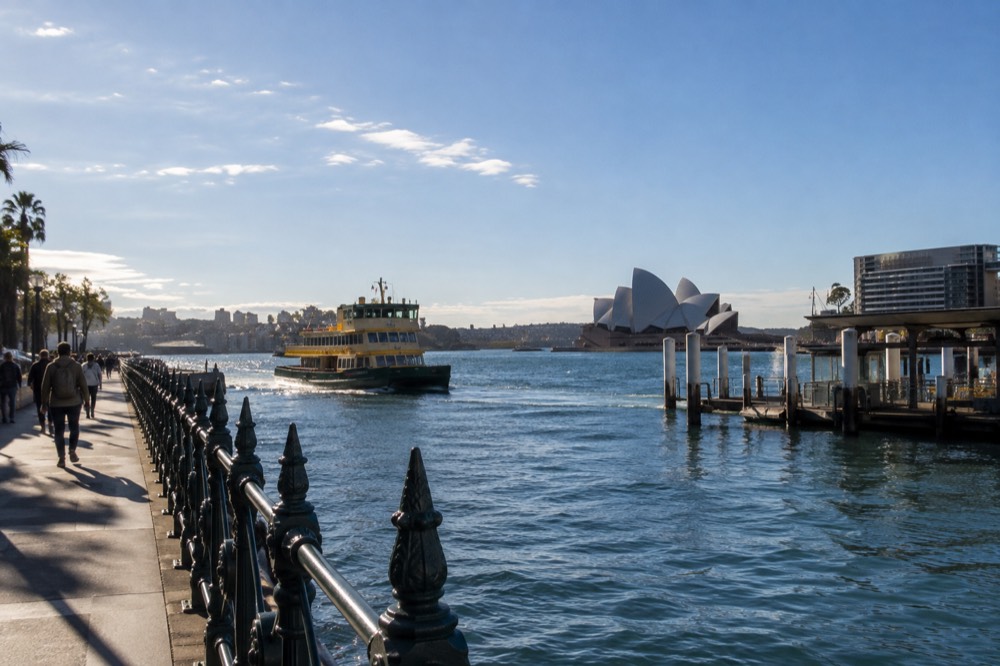
Sydney wraps its coast in walking tracks. Ocean cliffs on the east, harbour coves on the north, and a ferry network that turns one-way walks into loops. The question of which route is the longest has a clear answer, and it is bigger than most visitors expect: not a two-hour stroll but a multi-day project that stitches together nearly every famous shoreline in the city.
What Is the Longest Coastal Walk in Sydney?
The longest coastal walk in Sydney is the Bondi to Manly Walk, a signposted route commonly described as roughly 80 kilometres end to end. It links Bondi Beach in the east to Manly on the Northern Beaches, following the ocean cliffs, the harbour foreshore and the Sydney Harbour Bridge crossing along the way. Most walkers complete it over three to five days, using ferries and trains to shorten or loop individual stages.
The route exists because a set of existing tracks, footpaths and parkland trails were connected and marked into one continuous journey. It passes through places you already know the names of: Bondi, the gap at Watsons Bay, the South Head, the harbour's northern coves, and finally the ocean side of Manly. Because it uses public paths rather than remote bushland, you are never far from a bus stop, a ferry wharf or a place to buy water.
That length is flexible in practice. Nobody is required to walk all of it. The design of the route means you can take a single stage, walk it in one direction, and ride public transport back. That is how most Sydneysiders actually use it: the full route is a badge, the individual stages are the everyday asset. If you want the full experience, plan for three days at a comfortable pace or two if you are a strong walker who starts early.
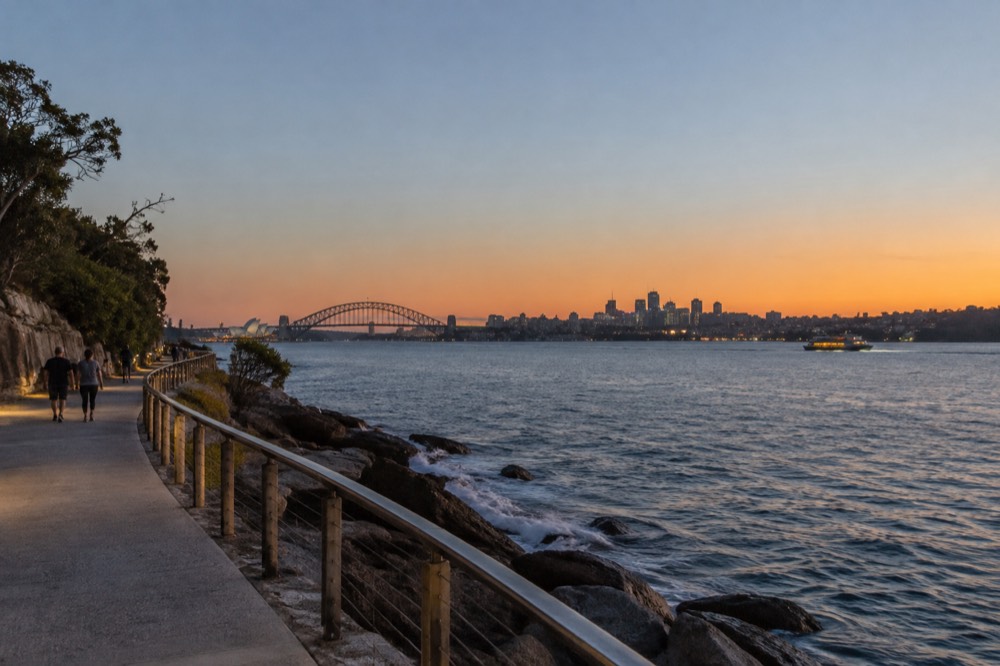
How Does the Bondi to Manly Walk Split Into Day Stages?
Most walkers split the route into three or four stages: Bondi to Watsons Bay along the ocean cliffs, Watsons Bay around South Head and along the harbour's southern shore to the city, the harbour crossing and the northern harbour coves, and finally the Northern Beaches stretch into Manly. Each stage is walkable in a day, and each ends near a ferry wharf or a train station, so you can stop anywhere without retracing your steps.
The eastern stage is the one most visitors have already tasted, because its opening section is the famous Bondi to Coogee stretch, a clifftop path commonly described as about 6 kilometres one way. It runs past Tamarama and Bronte, two smaller beaches between the bigger names, and past ocean pools cut into the sandstone. The sandstone is the visual signature of the whole walk: golden, weathered, and dropping sheer into the sea in places.
From Watsons Bay the character changes. The ocean exposure gives way to harbour calm, and the track turns inward around South Head before following the southern harbour shore toward the city. This middle harbour stretch is where the route stops feeling like a beach walk and starts feeling like a tour of Sydney's shoreline geography: coves, naval land, parkland, and the city skyline arriving slowly across the water.
The northern half, after crossing the harbour via the Harbour Bridge's eastern walkway, works through the lower North Shore and the northern harbour beaches before reaching Manly. Ferries matter here. The Manly ferry runs from Circular Quay, costs $9.20 one way on an Opal card or contactless payment, and turns the far end of the walk into a 30-minute ride home with the best harbour views in the city from the water. If you are weighing up the ferry as an experience in itself, our piece on whether the Manly ferry is worth it covers that question directly.
For walkers who want the scenery without the self-navigation, a guided option reframes the same shoreline as a story. The Rocks Guided Walking Tour covers the oldest part of the harbour city on foot, and it makes a sensible first day for anyone building a multi-day coastal itinerary, since the route passes right through the historic quarter near the harbour crossing. You can compare it against other options in our overview of Sydney's walking tours.
Which Shorter Coastal Walks Give You the Same Scenery in a Day?
The Bondi to Coogee walk, commonly described as about 6 kilometres, is the best single-day coastal walk in Sydney and forms the first stage of the long route. The Spit to Manly walk on the northern side is the other classic, a harbour-bush track of similar length. Both can be finished in two to three hours, both end near public transport, and neither requires any planning beyond water, sun protection and comfortable shoes.
These shorter options are not consolation prizes. The Bondi to Coogee stretch is, for many people, the best-per-kilometre walking in Australia: cliffs, four beaches, two ocean pools and a cafe culture at both ends. The Bondi to Coogee coastal walk guide has the full stage-by-stage detail, and our comparison of which direction to walk it settles the most common planning question.
On the northern side, the Spit to Manly track runs through Sydney Harbour National Park bushland, which gives it a different feel: shaded, quieter, with kangaroo-free but lizard-rich scrub down to tiny coves. It ends in Manly, where the ferry home completes a natural loop. If you are choosing between the two, our best coastal walks in Sydney roundup ranks them.
Here is how the main one-day options compare:
| Walk | Setting | Character | Loop option |
|---|---|---|---|
| Bondi to Coogee | Ocean cliffs, eastern beaches | Exposed, popular, cafe ends | Bus back along the same corridor |
| Spit to Manly | Harbour bush, Sydney Harbour National Park | Shaded, quieter, coves | Manly ferry back to Circular Quay |
| Manly to Shelly Beach | Ocean side, Northern Beaches | Short, easy, snorkelling spot | Walk back the way you came |
| Hermitage Foreshore, Vaucluse | Harbour coves, eastern suburbs | Gentle, picnic spots | Bus back to the city |
The Hermitage Foreshore walk is the sleeper pick on that list: a short harbour-side track with some of the best water views per step in Sydney, and almost none of the crowds of the eastern beaches.
If a full day of walking sounds better with a guide in front of you, The Rocks Guided Walking Tour is the strongest fit for the harbour-history end of the coast, running an hour and a half through sand-paved lanes and pub-fronted alleys.
One thing worth knowing before you book any guided walk: the good ones in Sydney can be booked close to the date, but the popular morning sessions fill first, and free-cancellation terms on the live listings mean you can lock a slot early and adjust later if the forecast turns. That flexibility matters more on a coastal itinerary than on most, because the whole point of these walks is the view, and the view depends entirely on the sky.
Is the Bondi to Manly Walk Hard?
No, the Bondi to Manly Walk is not technically hard, but it is long and it is urban. Almost the entire route is on formed footpaths, shared paths and beach promenades, so there is no bush navigation and no scrambling. The difficulty is cumulative distance and stair count: harbour coves mean long descents and climbs, and a full day of stages will tire legs that a flat 6 kilometre stroll would not. Reasonable fitness and broken-in shoes are enough.
Because it is a public-path route, the usual bushwalking precautions mostly do not apply. You are never far from help, water or transport. The things that actually catch walkers out are sun and heat rather than terrain. Sydney's UV index reaches extreme levels of 11 and above in summer, and protection is advised whenever the index reaches 3 or above, which in Sydney is most of the year: ARPANSA's Sydney station recorded a peak UV index of 4.4 in early September, before spring had even properly started. Hat, sunscreen and water are not optional on this walk in any season.
The other honest caveat is surface and traffic. Sections share paths with cyclists, and some road crossings sit on busy corridors. The eastern stages in particular are crowded on weekends and in summer, when the Bondi end of the route is at its busiest. Walking early in the morning solves most of this, and it delivers better light for photographs, which matters if you have read our guide to Sydney's best photography spots.
When Is the Best Time of Year to Walk Sydney's Coast?
Winter and early spring, roughly June to September, are statistically the best walking months, and that is counterintuitive. The Bureau of Meteorology's long-term records show June is Sydney's wettest month by total rainfall, at 133.1 mm on average, but August is its clearest month, with 13.4 mean clear days, against just 5.3 in February. Peak summer is actually the cloudiest, most crowded time on the coastal tracks.
That August figure deserves emphasis because almost every visitor gets Sydney's seasons backwards. February, the middle of summer, has the fewest clear days of any month on the long-term record. Winter days are shorter, with a June average of just 5.5 hours of daily sunshine, but the skies themselves are clearer than January's. For a long, view-dependent walk, clear and cool beats hot and hazy.
| Month | Mean max °C | Mean rainfall mm | Mean clear days | Walking verdict |
|---|---|---|---|---|
| January | 26.0 | 101.2 | 6.8 | Hot, crowded, extreme UV |
| February | 25.8 | 119.3 | 5.3 | Cloudiest month on record |
| June | 17.0 | 133.1 | 9.1 | Wettest, but clear-skied days |
| August | 17.9 | 80.2 | 13.4 | Clearest month, cool |
| September | 20.1 | 68.1 | 10.9 | Driest, mild, close to ideal |
September is the quiet champion of that table: the least rain of any month, mild daytime tops around 20 °C, and clear days still in double figures. Whale season adds a bonus, since humpbacks migrate along the NSW coast from May to November, with the southern return passing closer to shore from August to November. A September clifftop walk has a real chance of a whale sighting below the track, which our whale watching in Sydney guide covers in detail.
One timing note that matters for planning: Sydney observes daylight saving, beginning in early October and ending in early April, so winter walking days end early. A June stage that starts at 9am has daylight until around 5pm, and the Bureau of Meteorology's records show June averages just 5.5 hours of sunshine a day. Start early, and check sunset before committing to a long stage.
How Do You Stay Safe on Sydney's Coastal Walks?
Walk the coastal tracks in the cooler hours, carry more water than feels necessary, and if you swim along the way, swim only at a patrolled beach between the red and yellow flags. Rip currents are the number one hazard on the Australian coast, and Surf Life Saving Australia's National Coastal Safety Report 2025 recorded 154 coastal drowning deaths nationally, every one of them outside the flags, outside patrol hours, or at an unpatrolled location. The track itself is safe; the water is what needs respect.
The official advice on rips, published by Surf Life Saving's Beachsafe service, is worth knowing before you walk: if caught in a rip, stay calm, conserve energy, raise an arm and call for help, float with the current which may return you to a sandbank, or swim parallel to the beach toward breaking waves. Prevention beats all of it, and prevention means swimming between the flags during patrol hours. The full guidance is at Beachsafe's rip current page.
Patrol coverage is better than most visitors assume, and this is one of Sydney's genuine surprises: several major beaches are patrolled year-round, not just in summer. Bondi, Bronte and Tamarama have professional council lifeguards all year, with high-season hours of 6am to 7pm from October to April and 7am to 5:30pm from May to September. Coogee and Manly are also patrolled year-round, and Dee Why moved to year-round patrols in 2026.
| Beach | Patrol | High-season hours | Low-season hours |
|---|---|---|---|
| Bondi, Bronte, Tamarama | Year-round lifeguards | 6am-7pm, Oct-Apr | 7am-5:30pm, May-Sep |
| Coogee | Year-round lifeguards | Around 7am-7pm in daylight saving | Around 7am-5pm |
| Manly | Year-round lifeguards | Daily, extended in summer | Daily, shorter hours |
| Most other Northern Beaches | Seasonal, roughly late Sep to late Apr | Generally 9am-5pm | Not patrolled |
Two more cautions that the walk itself raises. Ocean pools along the route, including Bronte's free council pool, are a genuinely safer swimming alternative to the surf, but they still close in big swell. And after heavy rain, the official Beachwatch advice is to stay out of the water for up to one day at ocean beaches and up to three days at harbour swim sites, because stormwater runoff degrades water quality. That matters on this route specifically because its northern stages pass harbour coves that look swimmable but behave like estuaries after rain.
For the practicalities of getting to and from the stages, our getting around Sydney guide covers the Opal card, ferry network and fare caps, and the opal card guide for visitors explains the daily caps that make multi-stage walking cheap: $9.65 a day on Fridays, weekends and public holidays, and $50 a week across the whole network.
Common Questions About the Longest Coastal Walk in Sydney
What is the longest coastal walk in Sydney?
The Bondi to Manly Walk, commonly described as roughly 80 kilometres, is Sydney's longest coastal walking route. It links Bondi Beach to Manly via the ocean cliffs, the southern harbour shore, the Harbour Bridge crossing and the Northern Beaches, and most walkers complete it over three to five days.
Can you do the Bondi to Manly Walk in one day?
Not realistically. Even strong walkers rarely manage the full route in a single day. The standard approach is to split it into three or four day stages, each ending near a ferry wharf or station, and use public transport to return. Single stages, such as Bondi to Watsons Bay, are comfortable one-day walks.
Is the Bondi to Coogee walk part of the longer route?
Yes. The Bondi to Coogee stretch, commonly described as about 6 kilometres, forms the opening stage of the Bondi to Manly Walk. It is also the most popular standalone coastal walk in the city, passing Tamarama, Bronte and several ocean pools.
Do you need to book anything to walk Sydney's coastal tracks?
No. The coastal walking tracks are free and open to the public, with no bookings or permits required. You only pay for transport: ferries and trains charge Opal fares, capped at $9.65 a day on Fridays, weekends and public holidays. Guided tours are the exception, and those you book in advance.
When should I not walk Sydney's coastal tracks?
Avoid the middle of summer days, when UV reaches extreme levels of 11 and above and the eastern beaches tracks are at their most crowded. February is statistically Sydney's cloudiest month. Midwinter is fine but days are short, so start early. The best combination of clear skies, low rain and mild temperatures is August to October.
Can you swim along the way?
Yes, at patrolled beaches and only between the red and yellow flags. Bondi, Bronte, Tamarama, Coogee and Manly are patrolled year-round. Ocean pools such as Bronte's are a safer alternative in unsettled surf, and after heavy rain stay out of the water for up to one day at ocean beaches and up to three days at harbour coves.
Planning a coastal walking trip is one of the better ways to see the city properly, stage by stage, and the team at Sydney Travel Guide has route guides for each of the walks named here if you want to go deeper.