Is the Ferry to Manly Worth It?
The Manly ferry costs $9.20 one way on Opal or contactless and crosses Sydney Harbour past the Opera House and the Heads. Here is when it is worth it, what it costs, and how it compares to the fast ferry.
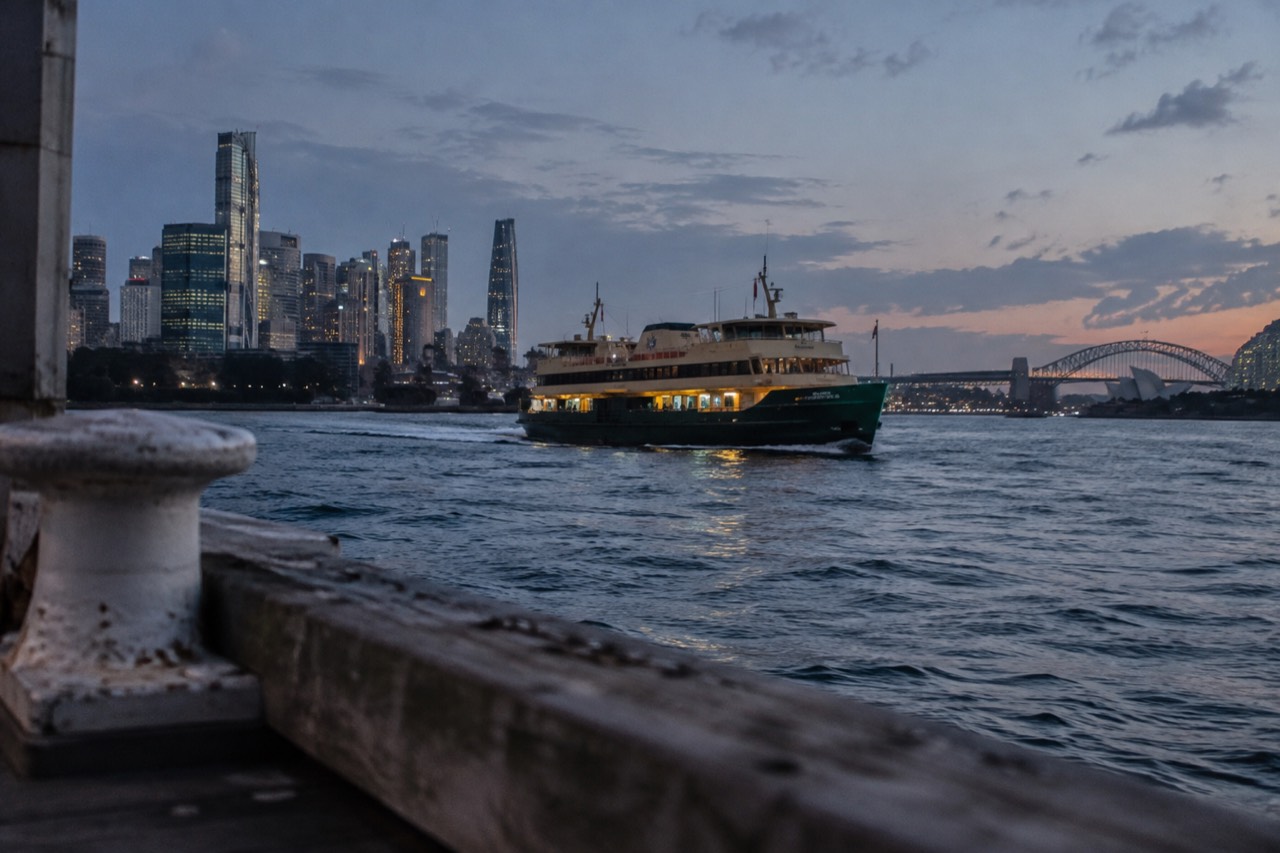
Is the ferry to Manly worth it?
Yes, and for most visitors it is the single best value transaction in Sydney. The F1 Manly ferry is a public commuter service, so it charges a transit fare, not a tour price: $9.20 one way for an adult on an Opal card or a contactless bank card, and it counts toward the same daily caps as every train and bus in the city. You get a working harbour cruise past the Opera House, the Harbour Bridge and the Heads, with an open top deck and no commentary, for the price of a train ride.
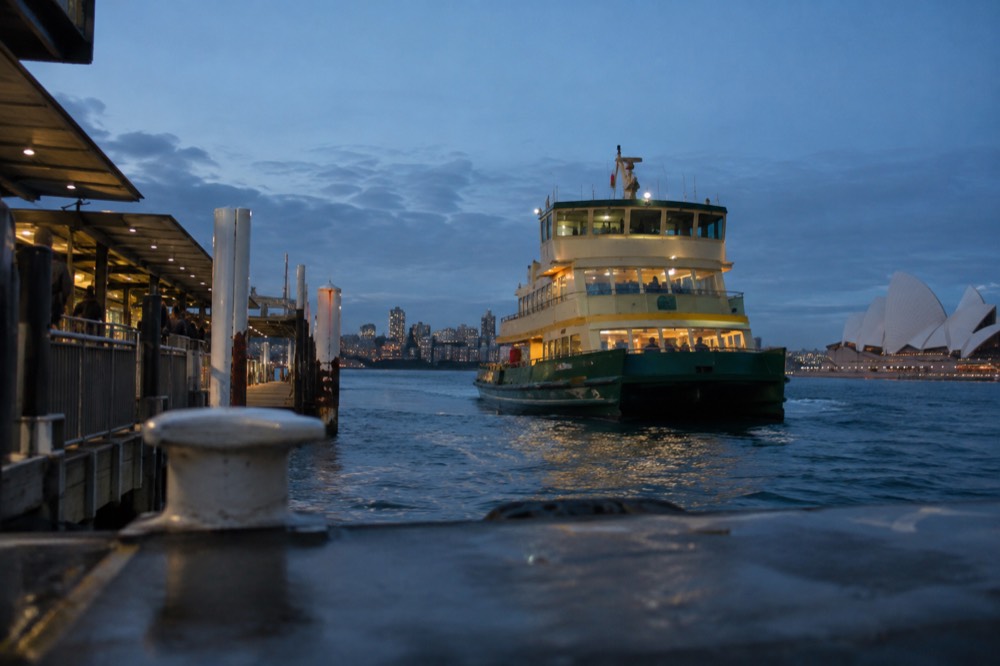
That is the honest framing: this is not a tour. There is no guide, no drinks, no reserved seat and no guarantee of a good photo, because the light and the weather decide those. What there is, every day of the week, is a big Freshwater-class ferry pushing out of Circular Quay, rounding the point at the Opera House and spending the middle of its crossing in open water between North Head and South Head. On a clear afternoon it is genuinely spectacular. On a wet July evening it is a commuter run with fogged windows, and it is still the fastest sensible way to reach Manly.
The comparison that matters is not ferry versus nothing, it is ferry versus the alternatives: the private fast ferry, a dedicated harbour cruise, or skipping Manly entirely. Each of those has a real answer, and the sections below work through them with actual fares. If you are planning a wider trip around the harbour, the Sydney Travel Guide homepage collects the transport and attraction pages in one place.
How Much Does the Manly Ferry Cost?
An adult pays $9.20 each way on the F1, which falls at the top of the ferry fare scale, charged to an Opal card or a tapped contactless bank card, and there is no off-peak discount because ferries do not get one. The $9.65 weekend daily cap can leave a return trip costing far less than two individual fares. The Manly route falls in the 9-plus-kilometre ferry band, which is the top of the ferry fare scale. That fare sits inside the Opal caps: $19.30 a day Monday to Thursday, $9.65 a day on Friday, Saturday, Sunday and public holidays, and $50 a week, so a return trip on a weekend can cost far less than two individual fares once your other travel is counted toward the same cap.
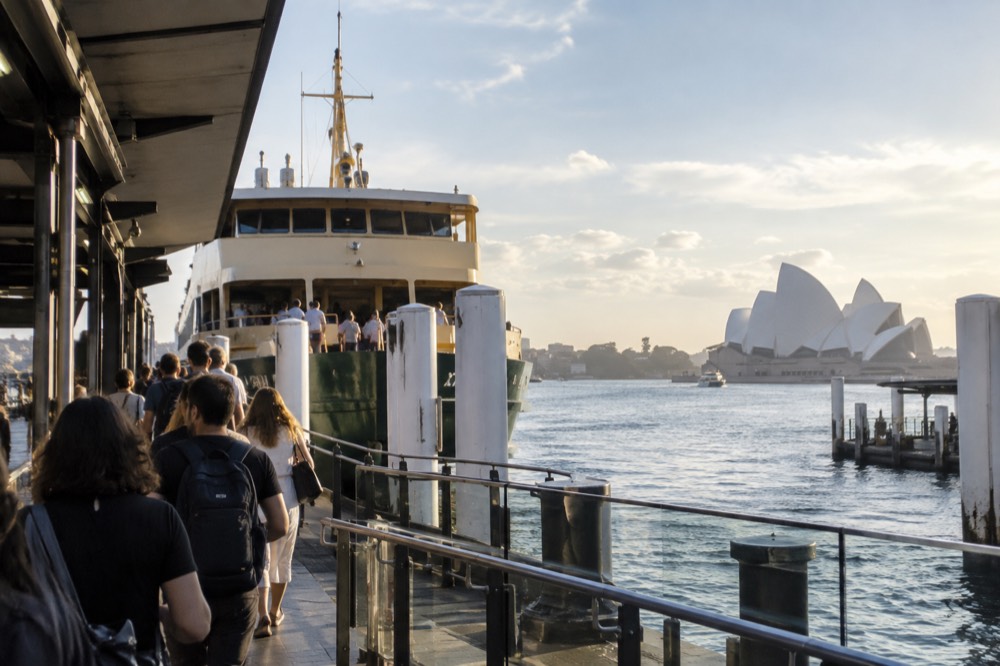
The fare structure is distance-based, and the full table is published by Transport for NSW on its adult fares page. Here is the ferry part, which is short enough to reproduce in full:
| Ferry distance band | Adult fare (Opal or contactless) |
|---|---|
| 0-9 km | $7.35 |
| 9+ km | $9.20 |
| Manly ferry (F1) | $9.20 one way |
Three practical notes. First, a contactless credit card, debit card or phone is charged exactly the same as an Adult Opal card and earns every benefit, including the caps, so you do not need to buy a card for one trip; the details are on the visitor payments page. Second, tap on and tap off, because failing to tap off triggers the default maximum fare. Third, children and concession holders pay less, and the same caps apply at their rates.
If you are weighing the ferry against the cost of the whole day out, the deeper numbers are in how much the ferry from Sydney to Manly costs and in the Manly ferry guide, which covers timetables and wharves in detail.
Ferry or Fast Ferry: Which Should You Take?
Take the public F1 ferry unless you are in a genuine hurry, catching a connection, or traveling after dark. The fast ferry costs more per minute saved, and its separate OpalPay scheme means the Opal caps and transfer discounts do not apply, so you can be charged again on the way home. The F1's open-decked Freshwater vessels are also the better ride. The privately operated Manly Fast Ferry accepts Opal cards through OpalPay, but that is a different payment scheme: fares differ from the public network, and the Opal caps and transfer discounts do not apply. A visitor who taps on believing they have hit the daily cap can be charged again on the way home, which is the single most common way people overspend on this crossing.
The trade-off is real in both directions. The fast ferry is a smaller, quicker catamaran, and if you are catching a connection or travelling in the dark it is the sensible choice. The F1 is the one worth riding for its own sake: the large Freshwater vessels have open upper decks, and the crossing spends most of its time in the open harbour rather than hugging the shore. The differences between the two services, including payment traps, are spelled out in fast ferry versus regular ferry.
One more distinction worth knowing before you tap: the F1 is not free, and it is not a tour, and both misconceptions circulate. The fare facts are settled in is the ferry to Manly free?, and the answer there is the same one given above.
When Is the Best Time to Ride the Ferry?
Ride on a clear afternoon, ideally a Tuesday or Wednesday departure after the morning rush, when the ride is quietest and the light at its best. An outbound ferry puts the Opera House and the Harbour Bridge behind you in golden light, so take the open upper deck for the whole crossing rather than the enclosed saloon below. The light in Sydney is at its warmest in the last two hours before sunset, and the harbour faces west, so an outbound afternoon ferry puts the city, the Opera House and the Harbour Bridge behind you in golden light. Weekends bring crowds and full top decks, while weekday mornings bring suits and laptops, so the quietest ride with the best light is a Tuesday or Wednesday departure after the morning rush.
The seasonal angle is less obvious and better documented than most visitors expect. The Bureau of Meteorology's long-run averages show August is Sydney's clearest month, with 13.4 mean clear days, while February, the middle of peak tourist season, is its cloudiest, with 5.3. A winter ferry ride is more likely to give you the postcard view than a summer one, and the fare is identical. The monthly detail sits in Sydney weather month by month.
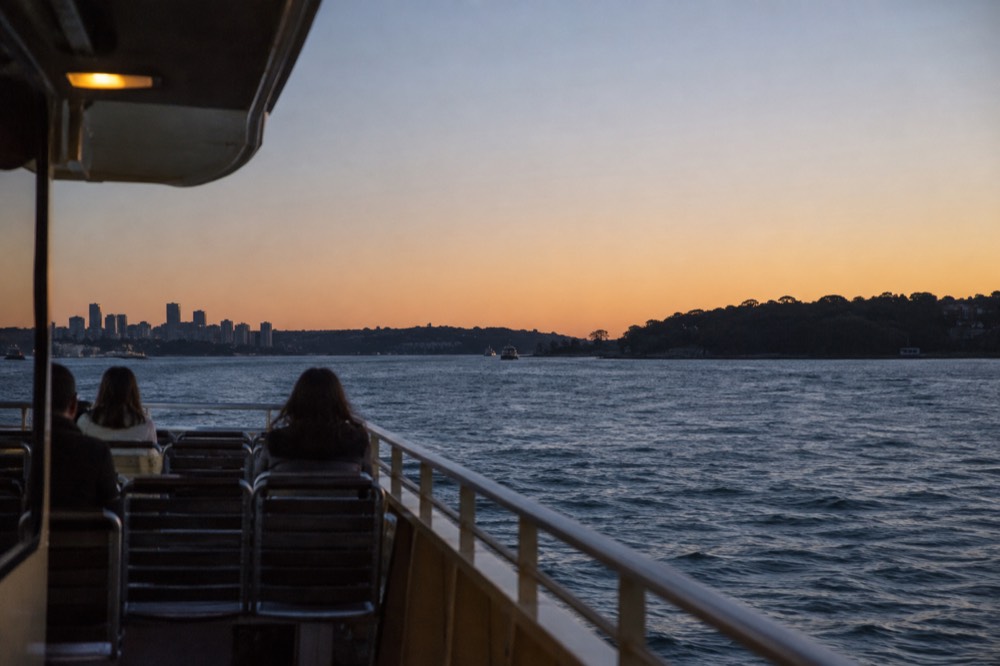
Timing also matters at the wharf. The F1 leaves from Circular Quay, and the queue for the top deck forms before boarding, not after. If the upper deck is full, the enclosed lower saloon still gives good views through large windows, but it is a different experience. For a fuller rundown on departure windows, see the best time to ride the Manly ferry.
If your real goal is the harbour rather than Manly itself, a dedicated cruise is the stronger product. The Sydney Harbour Sightseeing Cruise runs morning and afternoon departures from Circular Quay, stays on the water for the full experience rather than using the crossing as transport, and covers the Opera House and the bridge at a relaxed pace.
What Do You Actually See from the Ferry?
The crossing passes the Opera House, Fort Denison, the eastern Harbour Bridge shoreline and both Heads, and the last third of the trip runs through open water between North Head and South Head. Leaving Circular Quay, the ferry turns east past the Opera House on its left with the city skyline behind it. Fort Denison, the small sandstone island fort in the middle of the harbour, sits close off the starboard side. From there the harbour widens, the suburbs of the Lower North Shore and the Northern Beaches line both shores, and the twin sandstone headlands of the national park frame the exit to the Tasman Sea.
The direction you sit matters more than the side you choose. Outbound, the best views of the Opera House and the bridge come in the first five minutes, over the stern, before the ferry turns east. Inbound, they come at the end, over the bow, as the city reassembles itself around the Quay. Photographers plan around this, and the planning detail is collected in the site's guide to Sydney photography spots.
Whales add an occasional bonus. The NSW whale migration runs May to November along this coast, and the ferry route passes the mouths of the harbour where humpbacks travel on their southern migration with calves, roughly August to November. Sightings from a commuter ferry are luck, not a schedule, and the reliable way to see them is covered in the site's whale watching guide.
Is the Ferry Worth It If You Are Not Going to Manly?
Yes, if you treat it as a cheap harbor cruise and ride it back to back: a return trip on the F1 gives you roughly an hour on the harbor for under $20 at full adult fares, which is less than any commercial harbor cruise charges. If the water is the whole point of your day, a dedicated cruise is the better product. A return trip on the F1 gives you roughly an hour on the harbour for under $20 at full adult fares, less on a capped weekend day, which is less than any commercial harbour cruise charges. The catch is that you get no commentary, no drinks and no route choice: the ferry goes where the ferry goes, and you are sharing it with commuters.
Manly itself, though, is not a throwaway destination at the far end of the ride. The beach, the Corso and the sheltered water of Shelly Beach make a half day easy, and the full case for the suburb is made in is it worth going to Manly Beach?. Most visitors who question whether the ferry is worth it are really asking whether Manly is worth it, and the two answers are not the same.
The honest summary is this: if you have a clear afternoon and any interest at all in harbours, the ferry is close to unmissable at its price. If the sky is grey and your time is short, the crossing is still the most pleasant way to reach Manly, but it will not rescue the day, and you should not build an itinerary around it in February on the strength of summer postcards.
Common Questions About the Manly Ferry
Is the ferry to Manly worth it?
Yes. At $9.20 one way on Opal or contactless, with the fare counting toward the daily caps, the F1 is a public transport price for what is effectively a harbour cruise past the Opera House, the Harbour Bridge and the Heads. It is best on a clear afternoon from the open upper deck.
How long does the Sydney to Manly ferry take?
The F1 crossing is a scheduled commuter service and its running time varies with conditions and timetable, so check the current trip time on the Transport for NSW trip planner. The crossing is long enough to pass the Opera House, the middle harbour and both Heads, which is why the ride itself is the attraction.
Can you use contactless payment on the Manly ferry?
Yes. A contactless credit card, debit card or phone is charged exactly the same as an Adult Opal card on public Sydney Ferries, including the F1, and receives the same caps and benefits. The private fast ferry is different: it uses OpalPay, which accepts the card but applies different fares without the caps.
Is the Manly ferry the best value tour in Sydney?
For the view per dollar, it is very hard to beat, and many visitors treat it as exactly that. It is not a tour in the formal sense: no commentary, no stops and no amenities beyond a kiosk on some vessels. The fuller comparison, including where a dedicated cruise earns its higher price, is in the guide to the question.
Do you need to book the Manly ferry in advance?
No. The F1 is a turn-up-and-go public service; you tap on with Opal or contactless at the wharf. Seats on the open upper deck fill first on weekends and sunny afternoons, so arriving before boarding rather than at the whistle makes the difference.