What's the Best Time to Ride the Manly Ferry?
The best time to ride the Manly Ferry depends on light, crowds and whale season. Here is how to pick the right crossing, with fares, caps and the times to avoid.
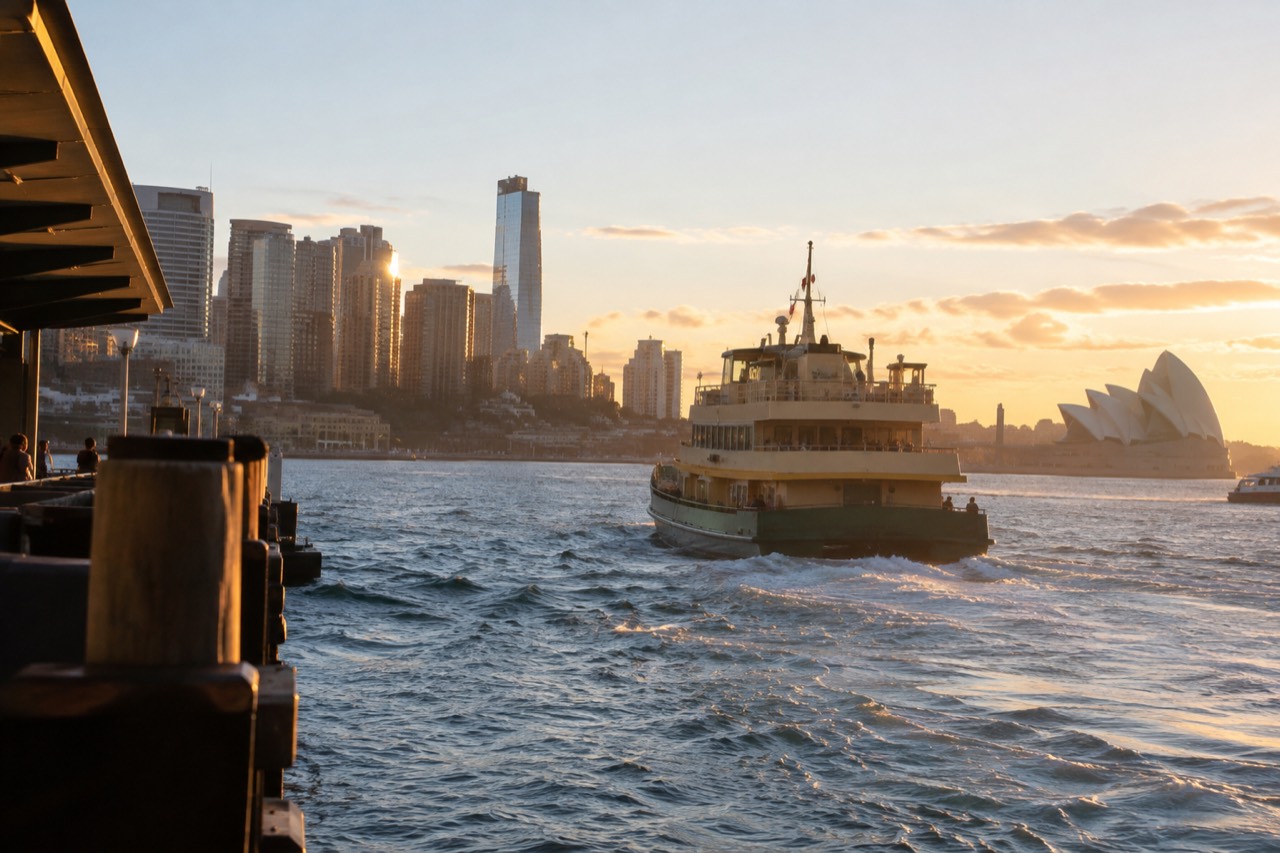
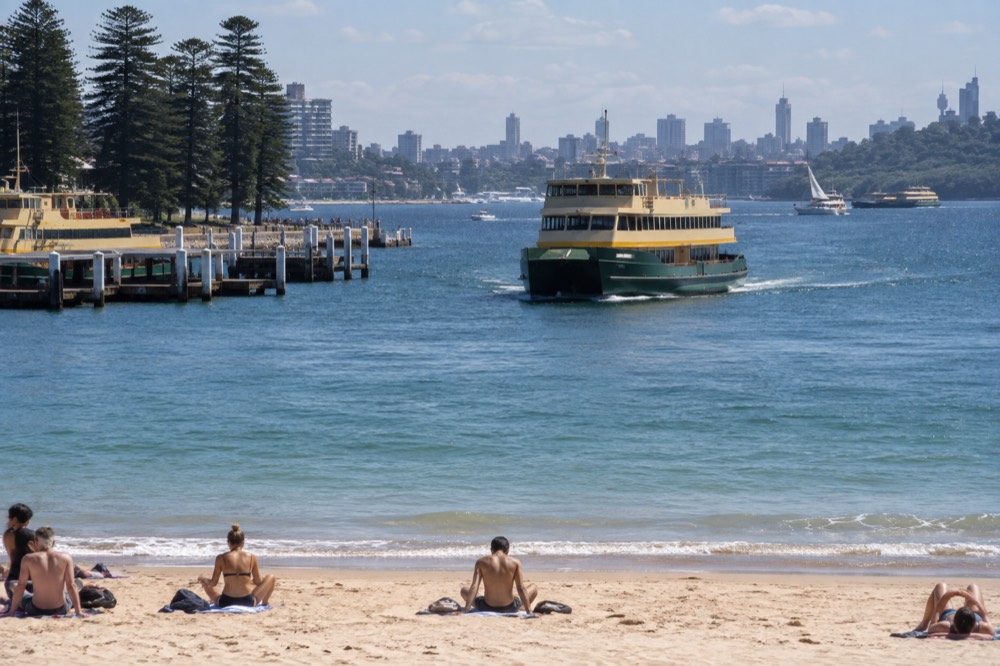
The Manly Ferry is the rare Sydney experience where the transport is the attraction. For the price of a single Opal fare you get a crossing that private cruise operators charge far more to replicate, passing the Opera House, the Harbour Bridge, the heads and a stretch of open water that behaves more like the ocean than a harbour. The only real decision is when to ride it, because a crossing at 8am on a weekday in June is a completely different experience to one at sunset in February.
What's the Best Time to Ride the Manly Ferry?
The best time to ride the Manly Ferry is the hour before sunset on a clear weekday afternoon, when the low sun lights the city skyline and the commuter crowds have thinned out. Midweek afternoons outside school holidays give you the emptiest decks, and between May and November you may also spot humpback whales near the heads. Avoid weekday peak hours, when the ferry is a packed commuter run rather than a sightseeing trip.
The reasoning behind that answer is mostly about light and load. The F1 route from Circular Quay to Manly is the longest regular ferry run on Sydney Harbour, and it passes through more varied scenery than any short harbour circuit: the built-up quay, the bays of the North Shore, the gap between North Head and South Head, and finally the surf beach on the ocean side. Low sun makes all of that read better, and a deck that is not shoulder-to-shoulder lets you move between the port and starboard sides as the views swap.
There is a second, less obvious answer for early risers. The first crossings of the day give you the cleanest air and glassiest water the harbour will have, and the city looks its sharpest before haze builds. The trade-off is that you will be travelling in the same direction as the light, so the skyline is behind you for much of the run. Photographers who want the classic shot of the ferry with the Opera House generally do better in the afternoon, riding from Manly back toward the city.
How Much Does the Ferry Cost, and Do the Opal Caps Apply?
The Manly Ferry is a public Sydney Ferries F1 service, so you pay a normal Opal or contactless fare rather than a tourist ticket. The crossing falls in the 9+ km ferry band, which is $9.20 one way for an adult. That fare counts toward the same daily and weekly caps as trains and buses, $9.65 on Fridays, weekends and public holidays and $19.30 Monday to Thursday, with a $50 weekly cap.
That fare detail matters more than most visitors realise. The ferry is not a cruise with a cruise price, and on a Friday, Saturday or Sunday your Manly return trip can effectively be free once you have spent $9.65 on other travel that day. Ferries do not get the off-peak discount that trains, metros, buses and light rail receive, so there is no fare penalty or reward for choosing a quiet midday crossing over a peak one. A contactless credit card or phone is charged exactly the same as an Adult Opal card and earns the same caps, so you do not need to buy a card for a single trip. Our opal card guide for visitors covers the full system if you are planning more than a day of travel.
One trap deserves its own sentence. The privately operated Manly Fast Ferry accepts Opal cards through OpalPay, but its fares differ and the Opal caps and transfer discounts do not apply on it. If your goal is the cheap, capped, scenic crossing, you want the public F1 ferry, not the fast one. The two leave from different berths at Circular Quay and Manly, so check the departure screen before you tap.
| What you pay | Amount | Notes |
|---|---|---|
| F1 Manly Ferry, adult one way | $9.20 | 9+ km ferry band |
| Ferry off-peak discount | None | Ferries are excluded from the off-peak 30% discount |
| Daily cap, Fri to Sun and public holidays | $9.65 | Applies across metro, train, bus, ferry and light rail |
| Daily cap, Mon to Thu | $19.30 | Same network-wide cap |
| Weekly cap | $50 | Opal week runs Monday to Sunday |
| Manly Fast Ferry (private) | Separate fares | OpalPay accepted, caps do NOT apply |
Fares are set by the annual NSW fare determination, so treat these as the current fare year's figures rather than permanent prices. Transport for NSW publishes the live fare tables and the ferry payment rules if you want to check before you travel, and the adult fare bands list every distance tier.
If you would rather have a commentary with your water time, the sightseeing options below are the natural upgrade from the ferry, at a higher price but with a guide pointing at the things you would otherwise sail past.
Which Time of Day Gives the Best Harbour Views?
Late afternoon gives the best views, because the sun sits low behind the western harbour and lights the skyline, the Opera House sails and the sandstone of the heads head-on as you approach Manly. Mid-morning is the runner-up: softer light, calm water and thinner crowds, but the city is behind you on the outbound run. Midday is the flattest light of the day and the busiest deck on weekends.
The geography explains the light. The F1 runs roughly east-north-east from Circular Quay toward the heads, so on an outbound afternoon trip the sun is astern and everything you are looking at is lit. Coming back toward the city in the late afternoon, the skyline can silhouette, which some photographers prefer and others dislike; if you want the sails glowing rather than in shadow, ride out in the afternoon and return after dark or the next morning. On the last part of the crossing the ferry turns into the swell past North Head, and in the golden hour that stretch is the best free boat ride in Australia.
Weather matters more than most itineraries admit, and Sydney's climate data has a genuinely counterintuitive pattern here. The long-run Bureau of Meteorology record for the city shows August is Sydney's clearest month, with an average of 13.4 clear days, while February, the middle of peak tourist season, is its cloudiest at 5.3. If a sparkling harbour crossing is the goal, late winter is statistically a better bet than high summer, and June, despite being the wettest month on average at 133.1 mm, still logs more clear days than January. Pack a layer, not an umbrella assumption.
Weekends in summer are the one combination to actively avoid if you dislike crowds: the ferry is a legitimate beach transport link for locals, and a hot Saturday afternoon fills the decks fast. The flip side is that a shoulder-season weekday, say a Tuesday in May or September, often gives you a choice of seats in every direction, which is when the crossing stops feeling like a commute and starts feeling like the best value tour in Sydney.
When Is the Manly Ferry Busiest?
The busiest Manly ferry runs are weekday commuter peaks, roughly the morning run into the city and the late afternoon run out to Manly, plus summer weekend middays when beach traffic stacks up. The quietest crossings are midweek mid-mornings and early afternoons outside school holidays, when you can often pick any seat on the deck.
Commuter peak deserves respect. The F1 is a working transport link for thousands of Northern Beaches residents, and a weekday 8am deck is not the place to spread a picnic across four seats. Locals will not say anything, but you will feel it, and you will enjoy the trip less. If you are staying in the city and want a day in Manly, the civilised move is to travel outside the peaks: go mid-morning, come back after the evening peak or before it starts. You will also be travelling off-peak on land connections, which is cheaper on trains and buses, though not on the ferry itself.
School holidays shift the whole pattern. Whenever NSW schools are off, weekend-level crowds appear on weekdays too, especially in summer and around the Christmas and New Year period. Our guide to Sydney public and school holidays has the date windows to check before you commit to a quiet-Tuesday plan.
| Time slot | Crowds | Views | Notes |
|---|---|---|---|
| Weekday early morning | Moderate, commuters inbound | Calm water, city behind you outbound | Clean air, glassy harbour |
| Weekday mid-morning to mid-afternoon | Low outside school holidays | Good, even light | Best overall pick for a relaxed ride |
| Weekday peak hours | High, standing room at times | Depends on direction | A commute, not a cruise |
| Weekend middle of the day | High in summer, moderate in winter | Bright, flatter light at noon | Beach traffic both ways |
| Hour before sunset | Moderate, thinning after peak | Best light of the day | Top pick for photographers |
Do the Seasons Change the Ride?
Yes, and more than visitors expect. Between May and November the crossing overlaps with the humpback whale migration along the NSW coast, with the southern migration from August to November bringing mothers and calves closer to shore. In late May and June, Vivid Sydney lights the harbour after dark. Winter brings the clearest skies of the year; summer brings the biggest crowds and the cloudiest weather.
The whale season is the most underrated reason to time your ferry trip. NSW National Parks records the migration as running May to November, with the northern leg roughly May to July and the southern, calf-bearing leg roughly August to November, and an estimated 40,000-plus humpbacks travelling along the NSW coast each year. From a ferry deck you are not on a whale-watching boat and a sighting is never guaranteed, but the crossing passes close to the heads, where whales do travel, and spring crossings have a real chance of a blow or a breach in the distance. If seeing whales is the actual goal, a dedicated seasonal cruise beats a hopeful commute; our whale watching in Sydney guide compares the options and the months.
Vivid Sydney is the other seasonal overlay. The 2026 festival ran 22 May to 13 June with the 6.5 km light walk along the harbour, and more than 80% of the program is free. A Manly ferry after dark during Vivid is one of the best free views of the installations, because the lit foreshore reads beautifully from the water. Check the festival's official site for current-year dates, since the window moves a little each year.
Winter, from June to August, is the season locals quietly rate highest for this crossing. The air is crisp, the sky is at its clearest on the long-run averages, the decks are uncrowded on weekdays, and the swell past the heads can be lively enough to make the final stretch genuinely dramatic. Summer, December to February, delivers the beach-and-ferry postcard image, but it also delivers February's cloud cover and the year's fullest decks. There is no bad month, only different trade-offs, which is roughly what our piece on the best time to visit Sydney argues for the city as a whole.
Common Questions About the Manly Ferry
What's the best time to ride the Manly Ferry?
The hour before sunset on a clear weekday gives the best combination of light and space. Midweek mid-mornings outside school holidays are the quietest crossings, and from August to November you may spot migrating humpbacks near the heads. Avoid weekday commuter peaks, when the ferry is a packed transport run.
How long does the Sydney to Manly ferry take?
The F1 is the longest regular ferry route on Sydney Harbour, crossing from Circular Quay to Manly Wharf via the heads. Allow roughly half an hour each way, and a little more when swell or traffic slows the approach to the wharf.
Is the ferry to Manly free with an Opal card?
No, but it is capped. The adult one-way fare is $9.20, and it counts toward the same daily and weekly Opal caps as the rest of the network, so on a Friday, weekend or public holiday the trip can effectively cost nothing extra once you have hit the $9.65 daily cap.
Is the Manly Fast Ferry the same thing?
No. The private fast ferry accepts Opal cards through OpalPay but charges separate fares, and the Opal caps and transfer discounts do not apply. The public F1 ferry is the scenic, capped crossing that this article is about.
Can you see whales from the Manly Ferry?
Occasionally, between May and November, when the humpback migration passes the NSW coast. A sighting is never guaranteed from a commuter ferry; if whales are the goal, book a dedicated seasonal whale-watching cruise instead.
Should I sit inside or on the deck?
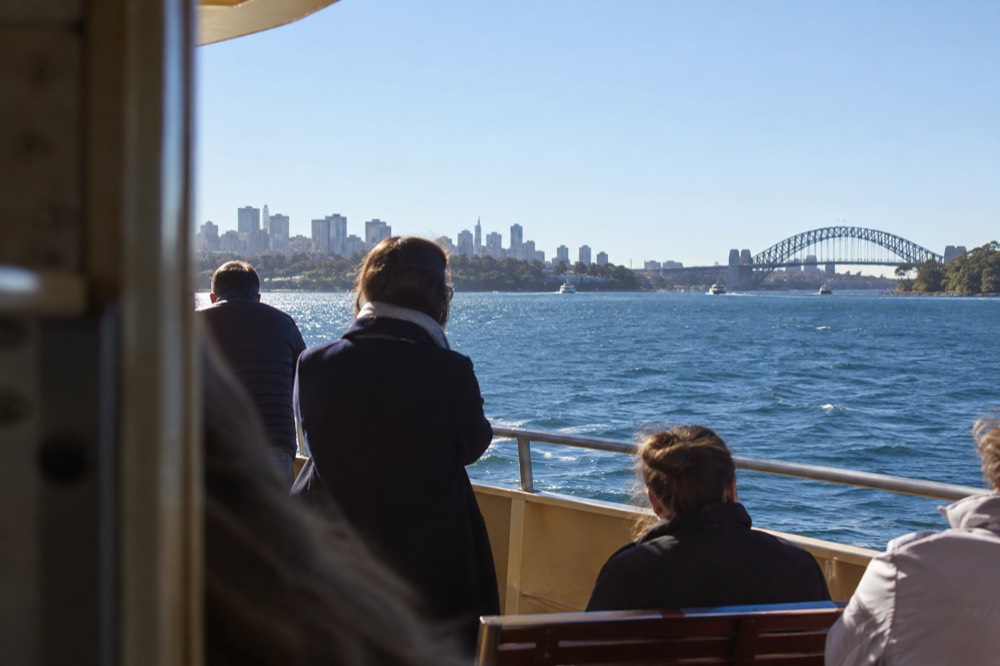
On deck, on any calm day, and move between sides as the scenery swaps: the city skyline on the outbound run, the heads in the middle, and the ocean beach on arrival. Inside seating is the winter option for the stretch past the heads, where the swell can throw spray.
If the ferry has convinced you that Sydney Harbour is best seen from the water, these are the three ways to extend the idea, from a short commentary cruise to a full-day hop-on hop-off loop.
For everything else on the crossing itself, from wharf locations to connecting walks around Manly, the Manly ferry guide on Sydney Travel Guide covers the practical details, and our piece on whether the ferry to Manly is worth it makes the case in full.