What Are the Directions for the Bondi to Coogee Coastal Walk?
Step-by-step directions for the Bondi to Coogee Coastal Walk, including which way to walk, the beaches and ocean pools on the way, and how to get back at the end.
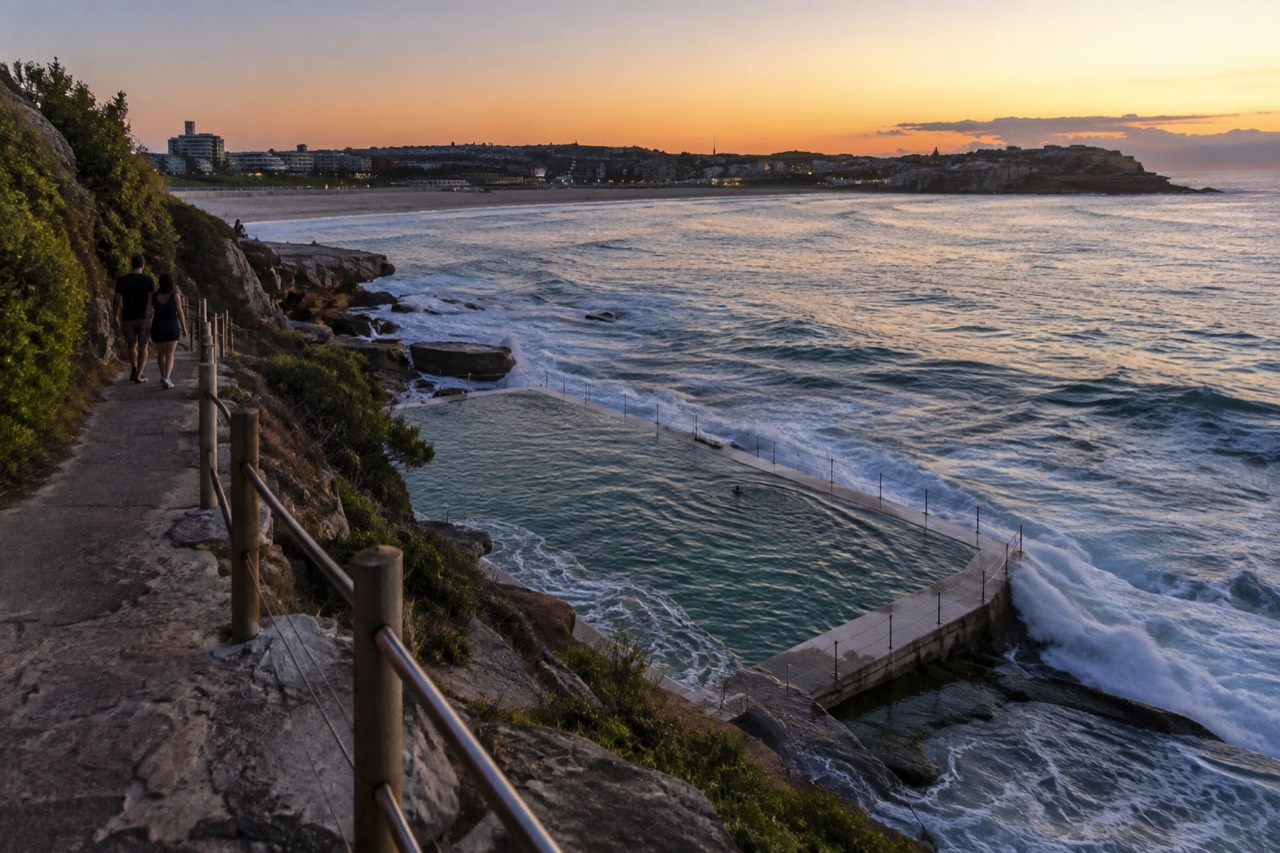
The Bondi to Coogee Coastal Walk is a signed, paved path that follows the cliff tops of Sydney's eastern suburbs from the south end of Bondi Beach to the northern end of Coogee Beach. It passes through Tamarama and Bronte, skirts the Waverley Cemetery headland, and can be extended through Clovelly if you want the longer version. The walk itself is free, needs no booking and no guide, and you can start at either end. This page gives the turn-by-turn directions, plus the swimming, safety and transport details that decide whether the day goes well.
For the full picture, including detours and where to eat, see our Bondi to Coogee coastal walk guide, and if you are weighing up the route in reverse, we also cover which direction to walk, Bondi or Coogee first.
What Are the Directions for the Bondi to Coogee Coastal Walk?
Start at the south end of Bondi Beach, at the Bondi Icebergs pool, and follow the paved path south along the cliff top. The route is signed and continuous: it drops to Tamarama Beach, climbs past Mackenzies Bay, descends to Bronte Beach, then runs behind Waverley Cemetery and down through Clovelly to finish at the northern end of Coogee Beach. There is no point where you need to double back or cross private land, and the whole thing is on a sealed or boardwalk surface.
In practice, the walk has four legs, and the table below is the sequence to follow.
| Leg | From | To | What you will see on the way |
|---|---|---|---|
| 1 | South end of Bondi Beach | Tamarama Beach | Bondi Icebergs pool, the Bondi headland lookout, the sandstone cliffs above Mackenzies Bay |
| 2 | Tamarama Beach | Bronte Beach | A short steep climb over the headland, views back to Bondi, then the descent into Bronte |
| 3 | Bronte Beach | Clovelly | Bronte's ocean pool, the Calga Reserve path behind Waverley Cemetery, the cemetery headland views |
| 4 | Clovelly | Coogee Beach | Clovelly's concrete channel pools, Gordons Bay stairs and track, then the long descent to Coogee |
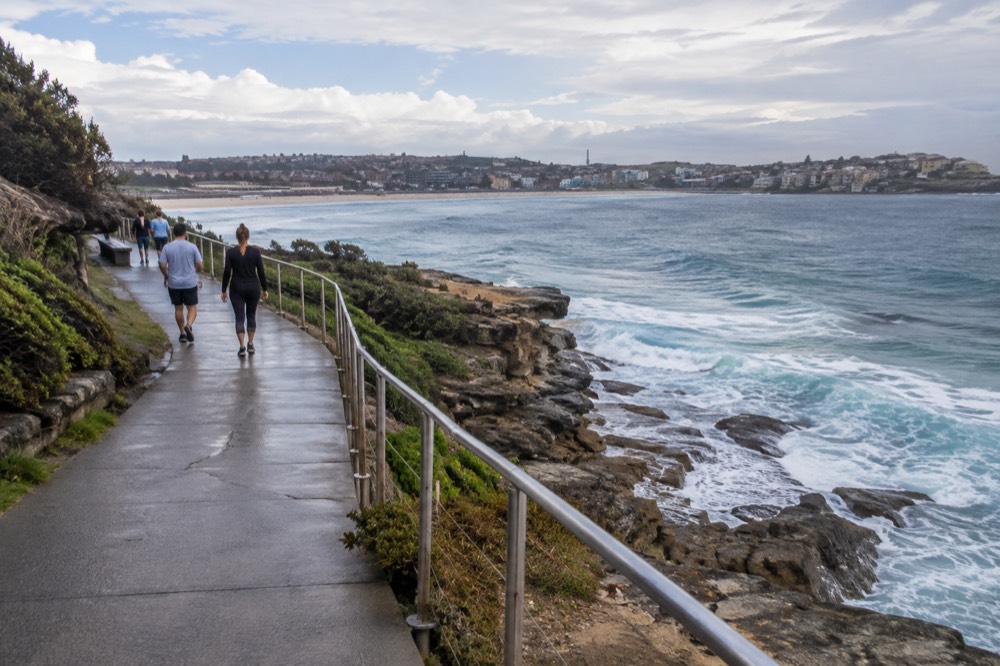
A few landmarks make the route hard to get wrong. Bondi Icebergs, the 50-metre ocean pool at the south end of Bondi, is your starting marker. Tamarama is a small, steep-sided beach, the most compact of the four. Bronte has its own ocean pool at the south end, plus a park and a playground behind the sand. The stretch behind Waverley Cemetery is the quietest part of the walk, with white headstones on one side and open ocean on the other. Clovelly's pool is a narrow concrete channel set between rock walls, and Gordons Bay, just before Coogee, is reached by a staircase from the path.
The walk is well covered in our overview of Sydney's coastal walks, which places it alongside longer and quieter alternatives such as the Spit to Manly track. If your question is not the directions but the timing, see our separate answer on how long the Bondi to Coogee walk takes.
Which Way Should You Walk It: Bondi to Coogee, or Coogee to Bondi?
Either direction works, because the path is the same and it is signed both ways. Most people walk Bondi to Coogee, and the practical reason is light and photography: walking south puts the sun and the harbour skyline behind you in the morning, and the famous first view back over Bondi Beach from the headland is the one most walkers want early. The reverse, Coogee to Bondi, finishes at the bigger beach with the better food and transport options, which suits a late start.
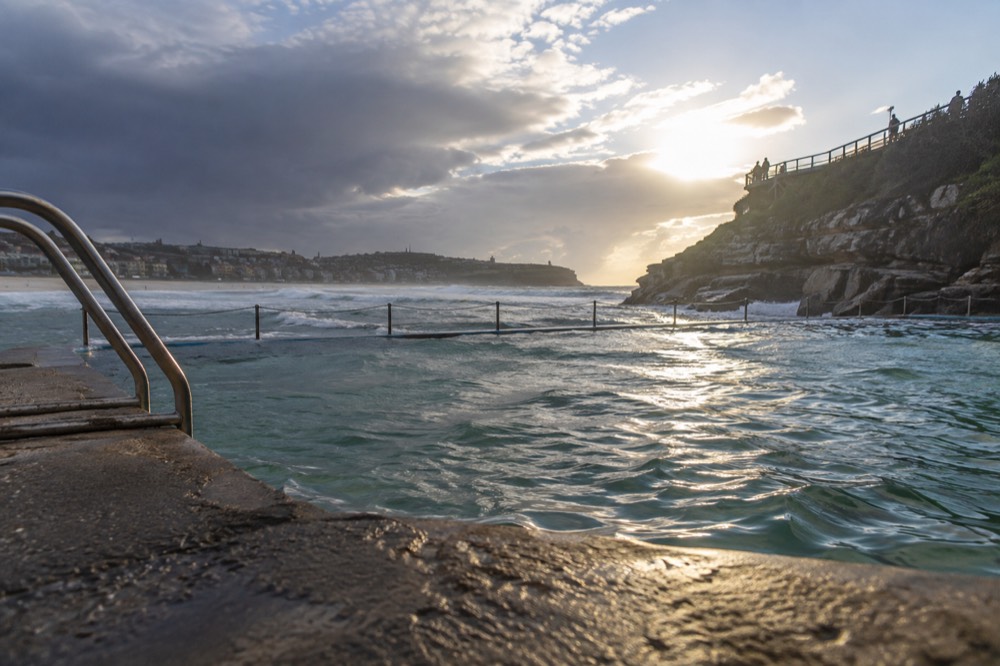
The honest answer is that the gradient is similar either way. The climbs are short and stepped rather than long, and none of them is sustained. What differs is the finish. Bondi has the denser strip of cafes, the Icebergs pool and more frequent buses; Coogee is calmer, with a wide beachfront reserve and its own ocean pool at the south end. If you are walking in the middle of a summer day, finishing at Coogee means a quieter place to collapse. If you are walking at sunrise, starting at Bondi means you get the best light on the best scenery first.
Two of the four beaches on this route, Bondi and Coogee, have their own full guides on this site: read up on Bondi Beach and Coogee Beach if you want to build the walk into a bigger day at either end.
If the cliff-top walk gives you a taste for Sydney's water, there are ways to get onto it. A sunrise kayak on the harbour is one, and a sightseeing cruise is the sit-down version. The Rocks guided walking tour, meanwhile, is the city-side counterpart to this coastal one: the same idea of a place explained on foot, applied to Sydney's oldest neighbourhood instead of its beaches.
Where Can You Swim Along the Walk?
All four beaches on the route are patrolled, and three of them, Bondi, Tamarama and Bronte, have professional council lifeguards year-round, the longest patrol hours in Australia. Always swim between the red and yellow flags, never outside them, and never at an unpatrolled stretch of coast. The ocean pools along the way, Bronte's pool and the Clovelly channel among them, are a genuinely safer alternative for weak swimmers, though they can close in big swell.
The patrol detail matters more than most visitors expect. Waverley Council, which covers Bondi, Bronte and Tamarama, runs professional lifeguards every day of the year: 6am to 7pm in the high season from October to April, and 7am to 5:30pm in the low season from May to September. Coogee is also patrolled year-round by Randwick council lifeguards. So the "swim between the flags" rule is available to you on this walk in any month, which is not true of most Sydney beaches. The wider set of guides lives on Sydney Travel Guide.
| Beach or pool | Patrolled? | Notes for walkers |
|---|---|---|
| Bondi Beach | Year-round, professional lifeguards | Flags move daily; check their position when you arrive, not from the clifftop |
| Tamarama Beach | Year-round, professional lifeguards | Small beach, strong rips; the flags are the only place to swim |
| Bronte Beach and Bronte Ocean Pool | Year-round lifeguards; pool is free and council-run | The pool sits at the south end, next to the walk's exit path |
| Clovelly channel pools | Not a flagged swimming beach | A calm, sheltered alternative popular with lap swimmers |
| Coogee Beach | Year-round, council lifeguards | Wylie's Pool at the south end is another ocean-pool option |
Two safety facts are worth carrying with you. Rip currents are the number one hazard on this coast, and the official advice from Beachsafe, Surf Life Saving Australia's public safety site, is blunt: swim at a patrolled beach between the flags, and if you are caught in a rip, stay calm, raise an arm and call for help, float with the current, or swim parallel to the beach toward breaking waves (beachsafe.org.au). Second, water quality: NSW's Beachwatch program advises staying out of the water while it is raining and for up to one day after heavy rain at ocean beaches, and up to three days at harbour and estuarine sites. Check the daily grades at beachwatch.nsw.gov.au before you swim, especially if there has been a storm in the previous 24 hours.
If a cliff-top walk whets your appetite rather than satisfies it, the harbour offers a different relationship with the same water. The sunrise kayak tour is the most memorable of the options: it puts you on Sydney Harbour in the still of the early morning, paddling past the Opera House and under the Harbour Bridge with a guide, before the ferries and the jet boats wake the water up. It is a small-group, guided paddle, and the calm conditions of dawn are the whole point of the timing.
What Should You Bring, and When Should You Go?
Bring water, a hat and sunscreen in every season, because UV in Sydney reaches the protection threshold of 3 or above for most of the year and extreme levels in summer, and much of the path has no shade. Wear shoes you can walk in comfortably on sealed path and stairs. Go early in the day in the warmer months, because the path is exposed and summer temperatures average around 26 degrees.
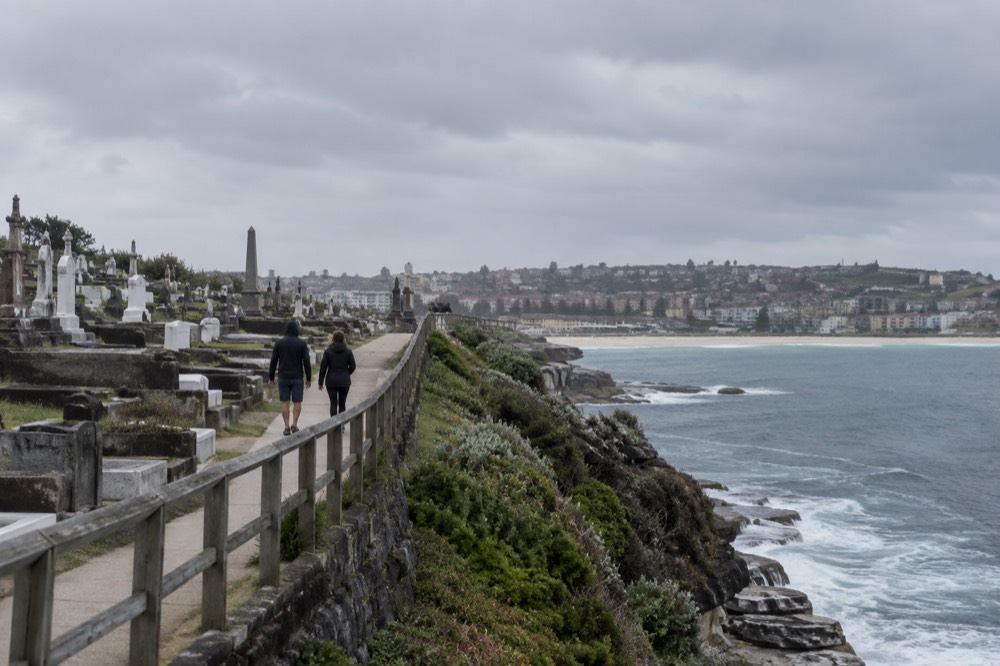
The midday stretch behind Waverley Cemetery is the hottest part of the route, so in December, January and February the early start is not a suggestion, it is the difference between a pleasant walk and a punishing one. There are public toilets and taps at each of the four beaches, so water refills are easy, but carry enough for the exposed legs between them.
Timing the walk against Sydney's climate is easier than most visitors assume. The counterintuitive fact from the Bureau of Meteorology's long-term records is that June is Sydney's wettest month, wetter than any summer month, while August is its clearest, with the most clear days of the year. February, in the middle of peak season, is statistically the cloudiest month. So a winter walk is a better bet than the summer crowds suggest: the skies are often clearer, the path is quieter, and the beaches are still patrolled. The trade-off is shorter days and a mean maximum of around 16 to 18 degrees from June to August, so bring a layer.
Bluebottles are the other seasonal note. They drift in during the warmer months and after onshore winds, and the official advice is not to touch them on the sand or in the water. If someone is stung, the treatment is to leave the water, remove tentacles with seawater rather than bare hands, immerse the sting in hot water around 45 degrees for up to 20 minutes, and find a lifeguard if the reaction is severe. Lifeguards are on every beach on this route, which is exactly why the flags matter.
How Do You Get to the Start, and Back from the End?
Both ends of the walk sit on bus routes rather than train lines, and neither has a station. Bondi Junction is the nearest train interchange, with buses continuing to Bondi Beach from there; Coogee is likewise served by buses connecting through the eastern suburbs to the city. Use the Transport for NSW Trip Planner for the live schedule on the day, and tap a contactless card or Opal card on and off every bus, because tap-off matters to what you are charged.
The transport pattern is the one thing walkers underestimate. Because the walk is one-way, you finish several kilometres from where you started, so decide before you leave whether you will bus back to Bondi, bus onward from Coogee toward the city, or walk the route twice. Our Opal card guide for visitors covers the fare mechanics, including the daily caps that make a day of buses and ferries cheap, and the off-peak discount that applies on Fridays, weekends and public holidays.
One trap worth naming: the privately operated Manly Fast Ferry accepts Opal but is not part of the Opal benefits system, so if you extend your Sydney day to the harbour, stick to the public F1 ferry or a cruise for the capped fares. Our Sydney ferries guide explains the difference in full.
If the coastal walk is one plank of a longer Sydney stay, the sightseeing cruise in our trio below is the natural companion: it covers the harbour from the water in 90 minutes, which pairs neatly with a morning on the clifftops. The Rocks walking tour is the third option, and it is the best choice if your Sydney days are short and the city's colonial history is higher on your list than another beach.
Common Questions About the Bondi to Coogee Coastal Walk
What are the directions for the Bondi to Coogee Coastal Walk?
Start at the south end of Bondi Beach by Bondi Icebergs and follow the signed cliff-top path south. It descends to Tamarama Beach, climbs over the headland past Mackenzies Bay, drops to Bronte Beach, then runs behind Waverley Cemetery, through Clovelly and past Gordons Bay, finishing at the northern end of Coogee Beach. The path is continuous and signed the whole way.
Can you get lost on the Bondi to Coogee walk?
Almost never. The route is a single continuous sealed path with signage at every beach and decision point, and the ocean is always on one side. The only place people hesitate is the Waverley Cemetery stretch, where the path runs behind the cemetery fence line; stay on the paved route and it rejoins the coast at Clovelly.
Is the walk suitable for children and prams?
The Bondi to Bronte legs include stepped sections that are awkward for prams, and the stairs at Gordons Bay rule out a fully wheeled route. Families with young children often walk just the Bondi to Tamarama leg, or start at Bronte, which has a playground and a free ocean pool right where the path passes. Every beach on the route is patrolled year-round.
Do you need to book anything to do the walk?
No. The Bondi to Coogee Coastal Walk is free, unguided and open every day. There is no ticket, no tour and no entry point. The only costs along the way are food, drink and the Bondi Icebergs pool if you choose to swim there rather than at a free pool.
Can you swim during the walk?
Yes, at all four beaches, but only between the red and yellow flags during patrol hours. Bondi, Tamarama, Bronte and Coogee are all patrolled year-round by council lifeguards. The ocean pools at Bronte and Clovelly are a calmer alternative for weaker swimmers, and the Beachwatch site publishes daily water-quality grades if there has been recent rain.
What happens if it rains?
The path stays open, but the official Beachwatch advice is to stay out of the ocean for up to a day after heavy rain at ocean beaches. If the forecast turns, our Sydney rainy day itinerary has indoor alternatives, and the walk itself is still pleasant in light rain with the right jacket.