Is Sydney Prettier Than Melbourne?
An honest comparison of Sydney and Melbourne on looks: harbour, coastline, architecture, parks and light, with sourced climate data and local vantage points.
Is Sydney Prettier Than Melbourne?
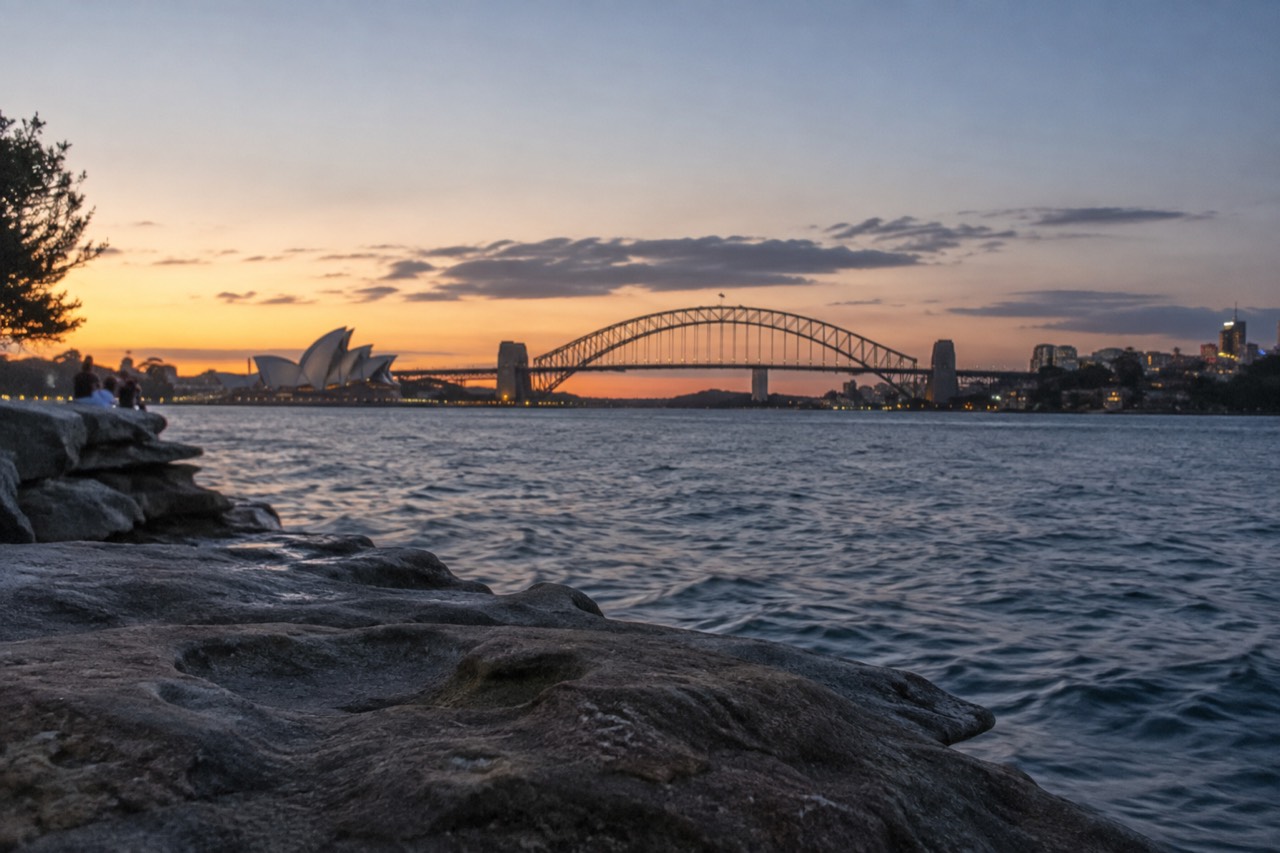
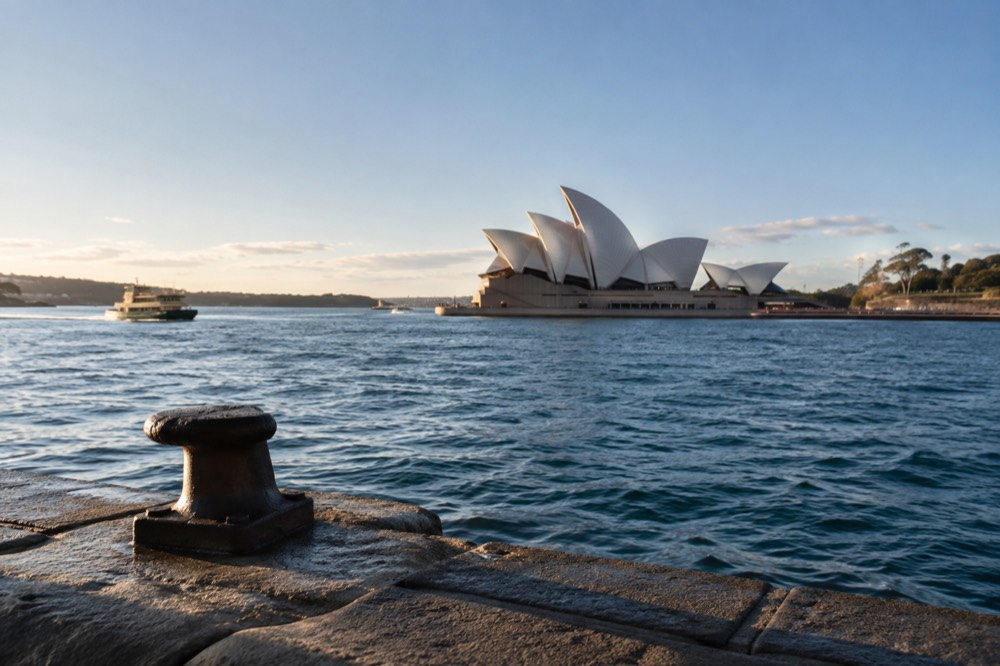
On natural setting alone, yes: most travellers and most rankings give Sydney the edge, because a drowned river valley, a national park harbour and more than a dozen ocean beaches within the metro area are simply hard to beat. Melbourne counters with laneways, street art, a denser café culture and grand Victorian architecture, which many visitors find more beautiful as a city experience. "Prettier" depends on whether you mean the view or the street.
Sydney's beauty is the kind you photograph from a distance. Melbourne's is the kind you walk through at street level. That distinction runs through almost every comparison worth making, and it is why the argument never settles: the two cities are beautiful in ways that barely overlap.
The harbour is the obvious starting point. Sydney Harbour is a drowned river valley with bushland headlands, and large parts of it sit inside Sydney Harbour National Park, which means the foreshore has been kept green in a way almost no other big-city waterfront has. Melbourne sits on Port Phillip Bay, a wide and shallow expanse that is pleasant but rarely dramatic; the nearest cliff scenery is a long drive down the Great Ocean Road, while Sydney's are a ferry ride away.
The sandstone helps. Sydney's headlands, sea cliffs and harbour coves are all cut from Hawkesbury sandstone, a warm golden rock that photographs well and erodes into the ledges and overhangs that make the coastal walks famous. Melbourne's geology under the city is basalt plains, flatter and greyer, and it shows in the horizon lines.
Then there is the water itself. Sydney has surf beaches, harbour beaches and ocean pools inside its suburban footprint. Melbourne has bay beaches that are calmer, cooler and, in the minds of most visitors, less striking. Even Melburnians concede this one, usually quickly and with a joke about the weather.
But "prettier" is not the same as "better", and Melbourne wins enough other categories that the rivalry survives. The rest of this article separates what each city genuinely does better, so you can decide which kind of beauty you are shopping for.
What Gives Sydney Its Natural Advantage?
Sydney's advantage is water and sandstone working together: a working harbour framed by national-park headlands, ocean beaches reachable by ferry or train, and coastal walks stitched between them. The Royal Botanic Garden meets the harbour at Farm Cove free of charge, and lookouts at Kirribilli, Mrs Macquarie's Chair and the North Head give three completely different postcards of the same skyline.
Start with the fact that keeps surprising first-time visitors: entry to the Royal Botanic Garden Sydney is free, and the garden's eastern edge runs straight down to the water at Farm Cove, with the Opera House at one end. Very few cities hand you a harbourside botanic garden at no cost, with the most famous building in the country sitting at the gate.
The Sydney Travel Guide desk's honest summary of the vantage points: each one frames a different city. From Kirribilli, across the water, the Opera House and the Harbour Bridge share a single frame, which is the shot most visitors come home with. From Mrs Macquarie's Chair, at the garden's far end, the two sit side by side on a skyline. From the Pylon Lookout at Sydney Harbour Bridge you are inside the icon looking out.
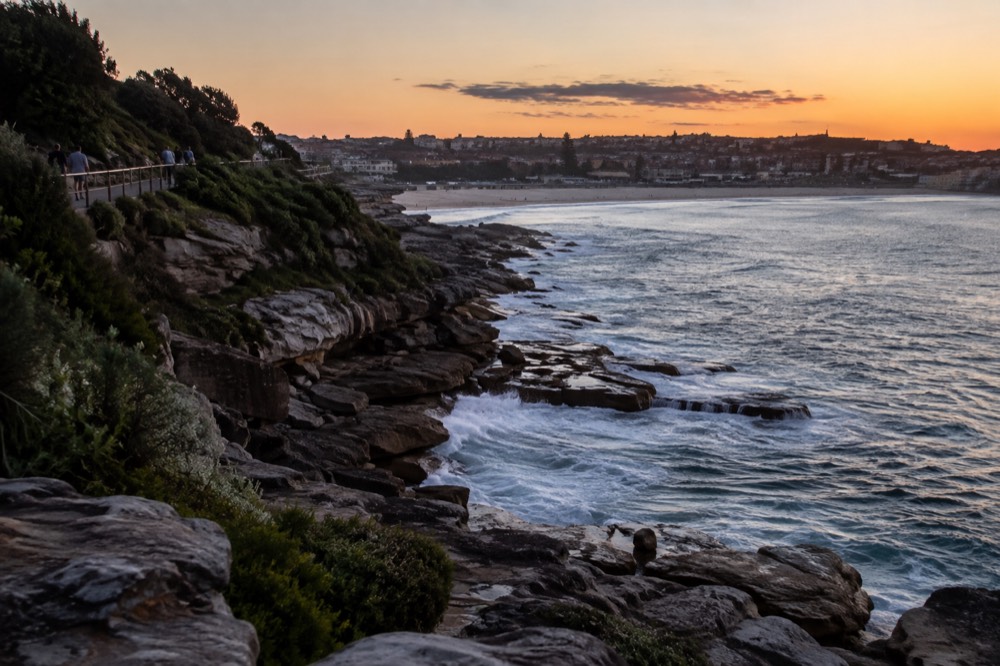
Then there is the coast. The Bondi to Coogee coastal walk runs along sandstone cliffs past four beaches and two ocean pools in about six kilometres, entirely on footpaths, and it costs nothing. Melbourne's closest equivalent, the coastal walk from Brighton to St Kilda past the bathing boxes, is a flatter, tamer affair along a bay.
| Sydney vantage point | What it shows | What it costs |
|---|---|---|
| Mrs Macquarie's Chair, Royal Botanic Garden | Opera House and bridge on one skyline | Free |
| Kirribilli foreshore | Opera House and bridge sharing one frame across the water | Free |
| Bondi to Coogee coastal walk | Sandstone cliffs, four beaches, ocean pools | Free |
| Manly ferry, F1 route | The harbour from the water, headland to headland | An Opal ferry fare |
| North Head, Manly | The harbour mouth and the city from a distance | Free, park entry fees may apply |
The ferry line in that table deserves its own paragraph. The Manly ferry is a public transport route that happens to be one of the world's great harbour crossings, and it charges a normal ferry fare, not a tour price. If you want to see whether Sydney really is prettier, spending a day moving between these vantage points by ferry is the cheapest possible test.
If you would rather have someone else do the framing, the sightseeing options cluster around the same water.
A harbour cruise shows you the city the way the postcards do, from the water looking up. The observation deck shows it the way the maps do, from 250 metres up. The Rocks walking tour shows the layer underneath: the sandstone warehouses and lanes at the harbour's edge that predate almost everything else in either city.
Where Does Melbourne Win?
Melbourne wins on city texture: laneways with street art, grand 19th-century arcades and banks, a denser concentration of café and bar interiors, and a river that runs through the middle of the shopping district. Where Sydney's beauty is spread across a huge harbour, Melbourne's is compressed into walkable blocks, which many visitors experience as more beautiful per hour on foot.
The Queen Victoria Building is Sydney's best answer to Melbourne's arcades, and it is a good one, but Melbourne simply has more of that grand Victorian commercial architecture per square kilometre. Its gold-rush boom funded banks, libraries and arcades that survived in clusters, and the city centre reads as one continuous 19th-century streetscape with modern towers behind it.
The laneways are the other half. Melbourne's grid is punched through with narrow service lanes that have become bars, coffee windows and painted walls, and the effect is a city that rewards wandering with no plan. Sydney's equivalent quarters, The Rocks and the inner-west streets around Newtown, are excellent but more scattered; you walk to them, rather than through them.
Street-level beauty matters. If your idea of a pretty city is one where every turn holds a painted wall, a hidden bar and a façade worth photographing, Melbourne will feel prettier on the day. If your idea is a headland view with a sail-shaped building in it, nothing in Melbourne comes close.
There is also a compactness argument. Melbourne's laneways, arcades, Chinatown, the river and two major art spaces all sit within about a 15-minute walk of each other. Sydney's equivalents are strung along 20 kilometres of harbour between the Northern Beaches and the eastern beaches, which makes the city feel bigger and, on a short visit, thinner.
The fair compromise is to test Sydney's compact core properly before ruling. A one-and-a-half-hour sightseeing cruise from Circular Quay or Darling Harbour covers the harbour's central reaches, the Opera House, the bridge and the headland mansions in a single loop, which is the fastest way to see what the fuss is about.
What Do the Numbers Say About Sydney's Skies?
Sydney's long-run climate record shows a genuinely useful pattern: August averages 13.4 clear days, the most of any month, while February averages just 5.3, the fewest. June is Sydney's wettest month at 133.1 mm on average, wetter than any summer month. In other words, Sydney's skies are statistically clearest in late winter and cloudiest at the height of peak tourist season.
That comes from the Bureau of Meteorology's long-term averages for Sydney's Observatory Hill station, a record of 162 years of observations, and it is the single most counterintuitive fact in this comparison. Visitors assume an Australian beach city is sunniest in summer. The averages say the clearest skies arrive in July and August, and that February, the middle of peak season, is the cloudiest month of the year.
| Month | Mean daily max | Mean rainfall | Mean clear days |
|---|---|---|---|
| February | 25.8 °C | 119.3 mm | 5.3 |
| June | 17.0 °C | 133.1 mm | 9.1 |
| August | 17.9 °C | 80.2 mm | 13.4 |
| December | 25.3 °C | 77.1 mm | 6.6 |
The Bureau of Meteorology's published normals back every figure in that table. Melbourne's equivalent record is not in our verified fact base, so we state it plainly: we are not going to invent Melbourne rainfall numbers to compare against, and any article that does so without a source should be treated with caution.
What the numbers mean for the rivalry is simple. Sydney in February is warm, crowded and statistically the greyest month of the year. Sydney in August is cool, quiet and the sunniest-skied month on the calendar. If prettiness is partly weather, the cheapest month and the prettiest-skied month are not the ones most visitors book.
There is a scale point too. Sydney welcomed 67.5 million visitors in the year ending March 2026, according to Destination NSW's official statistics, and the overwhelming majority were domestic travellers who know exactly which month to come. International visitors make up under 6% of the headcount but over 70% of the visitor nights, which tells you the people who stay longest are the ones who came furthest.
To see the harbour under those August skies rather than February's, the morning departure of the sightseeing cruise is the better pick: the light comes from the east across the water, and the westerly afternoon breeze that builds later in the day is calmer before noon.
The cruise runs morning or afternoon departures and spends its loop on the central harbour, which is exactly the stretch the clear-day statistics flatter most.
Which City Suits Your Trip Better?
Choose Sydney if your trip is about water, views and photographs: harbour ferries, coastal walks, surf beaches and icons you can see from a headland. Choose Melbourne if it is about food, laneways, galleries, sport and nightlife in a compact walkable grid. For a first visit to Australia, most travellers pick Sydney first for the icons and return to Melbourne for the living, which is a reasonable order, not a verdict.
A useful test is what you do on a free afternoon. In Sydney the answer is almost always outdoors: a ferry to Manly, the coastal walk, a swim between the flags at Bondi, or the free harbourside gardens. In Melbourne the answer is almost always indoors or semi-outdoors: a laneway bar, a gallery, a long lunch, the MCG. Neither answer is wrong, and the choice tells you which city's beauty you will actually use.
Time of year matters as much as the choice of city. Sydney's December to February peak is statistically its cloudiest stretch, while the clearest skies land in July and August, and whale watching along the coast runs May to November. Melbourne's reputation for four-seasons-in-a-day weather is fair, but its summer is genuinely warm and its laneways are at their best when it is cool enough to sit inside them.
First-timers with a week sometimes split the difference: Sydney for the harbour days, then the one-hour flight south to Melbourne for the laneway nights. It is a well-worn route and it works, because the two cities do not really compete; they alternate.
Whichever way you lean, the Sydney half of the trip is cheapest to judge from the water, from the tower, or on foot through The Rocks, and those three are the tours we would point people at first.
Common Questions About Sydney and Melbourne
Is Sydney prettier than Melbourne?
On natural setting, most people say yes: Sydney has a national-park harbour, surf beaches and sandstone coastal walks inside the metro area. Melbourne is often judged prettier at street level, for its laneways, arcades and Victorian architecture. It depends whether you mean the view or the street.
Is Sydney or Melbourne better for a first visit to Australia?
Most first-timers choose Sydney, because the Opera House, the Harbour Bridge and the coastal walks are the images that brought them to the country, and they are all reachable within a day or two. Melbourne rewards a second visit, when you have time for its food and laneway culture.
Which city has better beaches?
Sydney, and it is not close. Bondi, Manly, Coogee and more than a dozen other ocean beaches sit inside the suburban rail and ferry network. Melbourne's bay beaches are calmer and cooler, and its famous surf coast starts a long drive away at Bells Beach.
Is Melbourne cheaper than Sydney?
Generally slightly, on [accommodation](https://booking.tpk.ro/ndznHj9h) and eating out, though prices in both cities move with events and seasons. Neither is a budget destination. Sydney's biggest sightseeing items, including the Royal Botanic Garden and the coastal walks, are free, which narrows the gap for visitors.
Which city has better weather?
Sydney is warmer and sunnier on average, with an annual mean maximum of 21.8 °C. Its clearest skies arrive in August and its cloudiest month is February, so the peak season is not the sunniest. Melbourne is cooler and more changeable year-round.