How Do Tourists Get Around in Sydney?
The honest answer to how visitors move around Sydney: Opal cards, ferries, trains, buses, light rail and walking, with real fares and the traps that catch tourists.
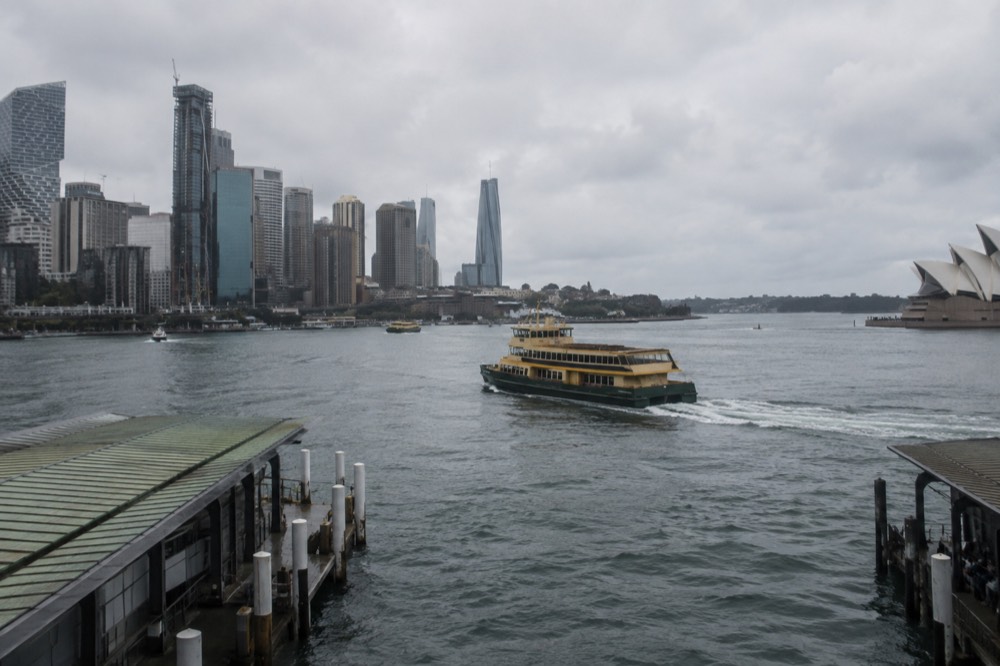
Sydney's transport system is built around one idea: a single card, or even a plain contactless credit card, that works on every train, metro, bus, light rail line and public ferry in the city. You do not buy a tourist pass, you do not queue for paper tickets, and you almost never need a taxi. The city is also far more walkable than its sprawl suggests, because the things most visitors come for are clustered around the harbour from Circular Quay to Darling Harbour, with The Rocks, the Royal Botanic Garden Sydney and Barangaroo all within a flat 30-minute walk of one another.
How Do Tourists Get Around in Sydney?
Most tourists get around Sydney with an Opal card or a contactless credit card, tapping on for trains, the metro, buses, light rail and public ferries, and walking between harbour-side attractions. Daily fares cap at $19.30 Monday to Thursday and $9.65 from Friday to Sunday, so a heavy day of sightseeing has a fixed ceiling. The ferries are part of the same system, and the Manly ferry costs $9.20 one way.
That is the short version. The longer version is that Sydney rewards a little planning, because a handful of traps catch visitors every week: the airport station access fee that sits outside the daily caps, the private fast ferry that looks public but is not, and the difference between the $19.30 weekday cap and the $9.65 weekend cap, which quietly makes Saturday the cheapest day to travel widely.
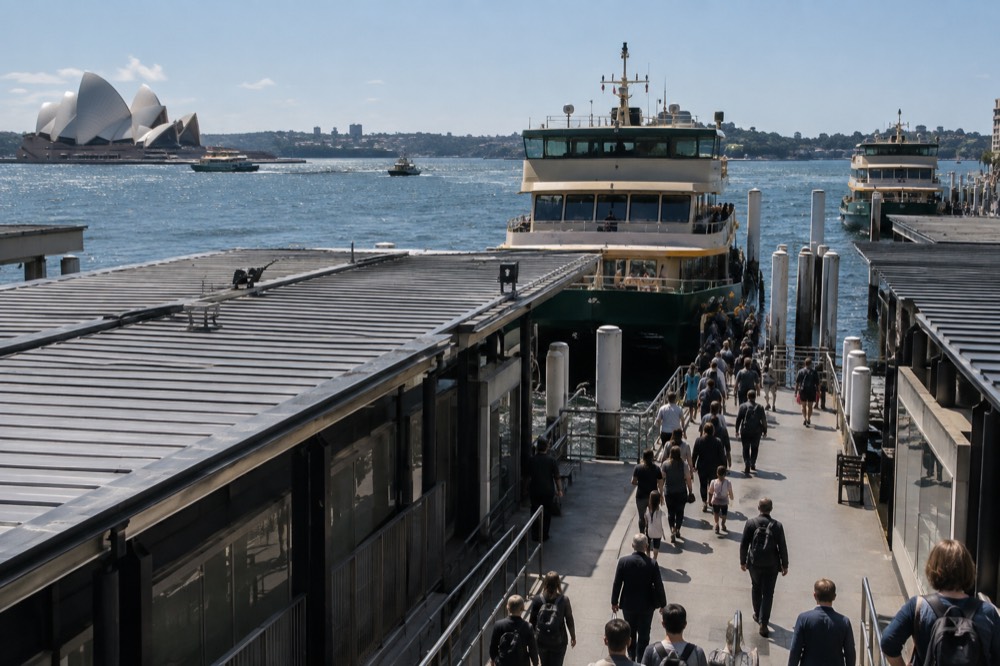
Transport for NSW publishes the full fare and cap structure on its adult Opal fares page, and it is worth a glance before your first tap, because the numbers below all come from it. A contactless card is charged exactly the same as an Adult Opal card and earns every benefit: the caps, the transfer discount and the 30% off-peak discount on metro, train, bus and light rail. Ferries do not get the off-peak discount, but they do count toward the caps.
Do You Need an Opal Card, or Will a Credit Card Do?
No, you do not need an Opal card. A contactless American Express, Mastercard or Visa card, or a phone or watch linked to one, is charged identically to an Adult Opal card and receives the same caps and discounts. The only reasons to buy an actual Opal card are convenience, if you would rather not hold your bank card against readers all day, or concession eligibility, which contactless cannot handle.
The one thing to avoid is the Opal single trip ticket sold at machines. It costs more than the card fare, earns no caps, no discounts and no transfer discount, and exists as a backup for people with no card at all. If you have any contactless payment method, you already have everything you need. Transport for NSW explains the visitor options on its best ways for visitors to pay page.
One card per person, always. Two travellers cannot share a single card on the same journey, because the system charges a default fare when it sees a card twice without a clean tap off in between. If you are travelling as a couple, make sure each of you carries your own card or device.
How Much Does It Cost to Get Around Sydney?
A typical tourist day of transport in Sydney costs between $10 and $19.30 per person, capped. The daily cap is $19.30 from Monday to Thursday and $9.65 on Fridays, Saturdays, Sundays and public holidays, with a $50 weekly cap across the whole network. Short train and bus trips in the city centre cost roughly $3 to $5 each, and the Manly ferry is $9.20 each way.
The caps are the thing to understand, because they change how you plan. Once you have spent $9.65 on a Sunday, every further trip that day is free, so a ferry to Manly, a train back and a light rail ride to Darling Harbour in one day costs exactly $9.65 in total. Public holidays get the cheaper cap too, which makes them the best days for ambitious multi-stop itineraries.
| Trip | Typical adult fare | Notes |
|---|---|---|
| City train or bus, short hop | $3.30-$4.49 | Off-peak saves about 30% on weekdays outside peak |
| Train to Bondi Beach area | about $4 | Bondi Junction station, then a bus to the beach |
| Manly ferry (F1) | $9.20 one way | Falls in the 9+ km ferry band |
| Taronga Zoo ferry (F2) | $7.35 one way | 0-9 km ferry band |
| Airport train to Central | train fare plus $18.61 access fee | The access fee sits outside the daily caps |
| Maximum spend, Mon-Thu | $19.30 | Network-wide daily cap |
| Maximum spend, Fri-Sun | $9.65 | Also applies on public holidays |
The airport row deserves its own paragraph, because it is the single most common surprise. The train from either Sydney Airport station to the city is fast and frequent, but both stations charge an access fee of $18.61 per adult on top of the normal fare, and that fee is excluded from the $19.30 daily cap, though it has its own separate weekly cap. The budget workaround is the 400 bus, which carries no access fee at all. We cover the full comparison in our guide to getting from Sydney [Airport to the city](https://kiwitaxi.tpk.ro/TtV4BOjc).
Should You Take the Ferries as Transport, or as Sightseeing?
Take them as both. Sydney's public ferries are ordinary Opal services, so the Manly ferry, the Taronga Zoo ferry and the Parramatta River ferry all count toward the same daily caps as the trains and buses. The Manly ferry in particular is a 30-minute harbour crossing past the Opera House and the Harbour Bridge that costs $9.20, which makes it one of the best-value sightseeing trips in the city, entirely by accident.
There is one trap. Two companies run to Manly: the public F1 ferry, which accepts Opal with full benefits, and a privately operated fast ferry, which accepts the Opal card through OpalPay but charges different fares and does not honour the caps or transfer discounts. If your plan for the day depends on hitting the daily cap, board the public F1 service, not the fast one. Our guide to the Manly ferry spells out the difference.
If you want the harbour experience with commentary rather than a commute, a sightseeing cruise is the upgrade. The Sydney Harbour Sightseeing Cruise runs a 90-minute loop from Circular Quay with morning and afternoon departures, and it covers the same water as the commuter ferries with a narrated running commentary instead of a timetable.
Booking it ahead of a harbour day is the one transport-adjacent purchase worth locking in early, because the morning departure fills fastest and the afternoon sailing suits a slower start. The rest of the network never needs a reservation at all.
Is Sydney Walkable for Tourists?
Yes, for the core sightseeing area, and no for the city beyond it. Circular Quay, The Rocks, the Royal Botanic Garden Sydney, Barangaroo, Darling Harbour and the CBD are all flat, connected and safely walkable, and a first-time visitor could fill two days without tapping on once. Bondi, Manly and the outer neighbourhoods are not walking distance from the centre, and each needs a bus, train or ferry trip of 20 to 40 minutes.
The walkable core is genuinely compact. From Circular Quay you can reach the Opera House forecourt in ten minutes on foot, the entrance of the Royal Botanic Garden in about fifteen, and the northern edge of The Rocks in five. The garden's entry is free, which surprises many visitors who assume the city's headline harbourside park is ticketed, and it connects through to the Art Gallery of New South Wales and Woolloomooloo if you want a longer loop.
Beyond the core, the geography changes. Sydney is a city of villages separated by water and ridge lines, and the distances that look short on a map often involve a hill, a harbour inlet or a motorway. Walking from the CBD to Bondi is not a realistic plan; the train to Bondi Junction plus a connecting bus is the standard route and takes under half an hour. Our guide to Sydney's coastal walks covers the stretches that are worth doing entirely on foot, including the Bondi to Coogee route.
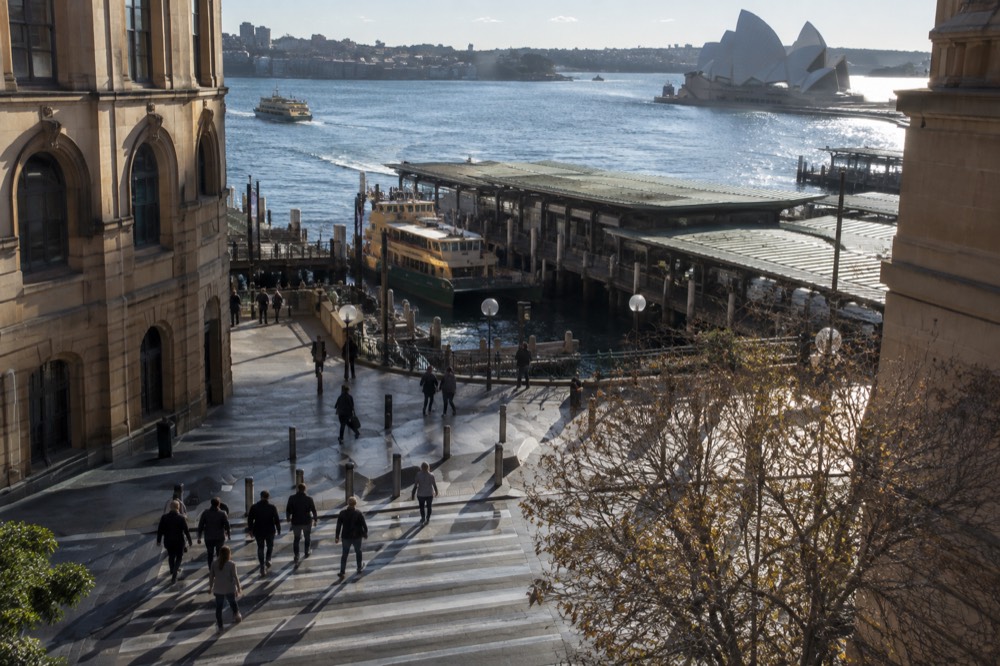
Do Tourists Need a Car in Sydney?
No. A car is a liability for almost every Sydney itinerary: parking in the CBD and the eastern beaches is expensive and scarce, several key destinations are faster by ferry or train, and the walkable harbour core makes one pointless for most of the day. A car only earns its keep for specific day trips, such as the Royal National Park, parts of the Northern Beaches, or a self-drive Hunter Valley route.
Even the Blue Mountains, the most popular day trip of all, is better without a car for most visitors. The train runs from Central to Katoomba, and the Blue Mountains National Park charges no entry fee outside the Glenbrook area, so arriving by rail costs nothing in park fees either. Our guide to day trips from Sydney without a car lists which destinations genuinely need wheels and which do not.
If you do drive, note that private e-scooters remain illegal on NSW roads, footpaths, shared paths and bike lanes, so those rental scooters you may have used in other cities are not an option here. Shared e-scooter trials exist only in a few designated areas with strict limits. The practical non-car choices are public transport, walking, and the hop-on hop-off services.
What About Hop-on Hop-off Buses and Guided Walks?
Hop-on hop-off buses suit visitors who want commentary and a fixed loop linking Bondi with the city centre, since no single public bus route joins those areas neatly. Guided walking tours suit the harbour core, where the density of history around Circular Quay and The Rocks is high enough that a guide changes what you see. Neither replaces the Opal network for general getting around; both are experiences layered on top of it.
The Big Bus loop is the classic first-day orientation: it links Darling Harbour, the CBD, Bondi Beach and key stops between, with commentary on board, and it saves you working out the bus routes that connect the beach to the city. For the historic quarter, The Rocks guided walking tour is the strongest of the walking options, a 90-minute walk through the oldest streets in the country with a guide who can point out what the sandstone facades are hiding.
The pattern worth noticing is that Sydney's paid transport-adjacent products are all sightseeing experiences, not necessities. The public network does the actual moving. The paid products add commentary, routes no public service runs, or access, such as the observation deck at the Sydney Tower Eye, which is a destination rather than a way of getting between destinations.
Common Questions About How Tourists Get Around in Sydney
How do tourists get around in Sydney?
Most use an Opal card or a contactless credit card on trains, the metro, buses, light rail and public ferries, and walk between the harbour-side attractions. Daily spending caps at $19.30 Monday to Thursday and $9.65 from Friday to Sunday, so a full sightseeing day has a known maximum cost.
Can I use my credit card instead of an Opal card?
Yes. A contactless American Express, Mastercard or Visa card, or a linked phone or watch, is charged exactly the same as an Adult Opal card and receives the same caps, discounts and transfer benefits. One card per person, and avoid the more expensive single trip tickets sold at machines.
Is the ferry to Manly included in the Opal cap?
Yes, the public F1 Manly ferry is a normal Opal service costing $9.20 one way, and it counts toward the daily caps. The privately operated fast ferry to Manly is not a full Opal service: it accepts the card through OpalPay but charges different fares and does not honour the caps.
How do I get from Sydney Airport to the city?
The airport train is direct and frequent, but both airport stations add a $18.61 adult access fee on top of the fare, and that fee sits outside the daily caps. The 400 bus avoids the access fee entirely, and taxis and rideshares are fixed-fare options. Compare them before you land.
Do I need a car in Sydney as a tourist?
No. Parking is scarce and expensive where tourists go, the ferries and trains reach nearly everything, and the walkable harbour core makes a car pointless for most itineraries. A car only helps for particular day trips such as the Royal National Park or a [self-drive](https://discovercars.tpk.ro/FvKIyzXW) wine region route.
Is Sydney walkable?
The core sightseeing area, from Circular Quay through The Rocks, the Royal Botanic Garden Sydney and Darling Harbour, is flat and comfortably walkable. Bondi, Manly and the outer neighbourhoods each need a 20 to 40 minute public transport trip from the centre.
The honest summary is that Sydney is one of the easiest cities in Australia to move around as a visitor: one card, one tap, a hard ceiling on daily spending, and a ferry network that doubles as the best sightseeing in the city. Plan around the caps, watch out for the airport access fee and the private fast ferry, and spend the money you save on the water. If you want the wider picture of what to do with your days once you have worked out the moving parts, Sydney Travel Guide has the full breakdown.