Do and Don'ts in Sydney, Australia?
The practical dos and don'ts for visiting Sydney: tap-on transport, swim between the flags, skip the tourist traps, and the local habits that make the city easy.
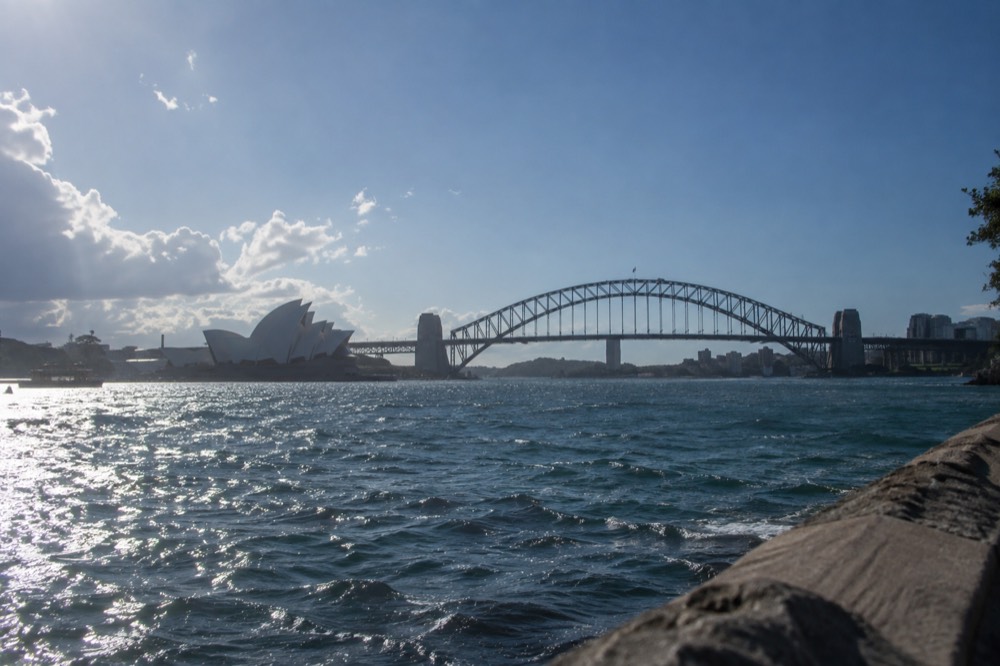
Sydney is one of the easiest big cities in the world to visit, and one of the easiest to visit badly. The city runs on a handful of habits locals never think about and visitors constantly get wrong: tapping on and off public transport, swimming only where lifeguards patrol, and assuming summer in December. Get those right and almost everything else takes care of itself. This page is the short list of the things to do, the things to avoid, and the small courtesies that mark you as a considerate guest rather than a walking cliché.
Do and Don'ts in Sydney, Australia?
Do tap on and tap off every train, bus, ferry and light rail service, carry a hat and sunscreen even in winter, and swim only between the red and yellow flags at patrolled beaches. Don't assume December is cold, don't expect to pay in US dollars, and don't treat the harbour as a photo stop when it is the city's best daily transport. Sydney observes daylight saving from October to April, so check which time zone your bookings use.
The list below is the practical version: what to actually do on the ground, in the order you will encounter it, from the airport train to the beach.
Do: Get an Opal Card or Just Tap Your Bank Card
You do not need to buy a special Opal card. A contactless credit card, debit card or phone wallet is charged exactly the same adult fare and earns the same daily caps and off-peak discounts as an Opal card. Tap on at the start of every trip and tap off at the end, on every mode: metro, train, bus, ferry and light rail. If you forget to tap off you are charged the maximum default fare for that trip.
The caps are the reason this matters. Adult travel is capped at $19.30 a day Monday to Thursday and $9.65 a day from Friday to Sunday and on public holidays, with a $50 weekly cap. That means a Saturday spent riding ferries and trains around the harbour costs you no more than $9.65 in fares, and a public holiday is the cheapest day to travel widely. The one trap is the airport: the train from either airport station carries a station access fee of $18.61 on top of the fare, and that fee sits outside the daily caps. The 400 bus from the airport carries no access fee at all, which is why budget travellers take it.
| Transport habit | Do | Don't |
|---|---|---|
| Paying | Tap the same contactless card or Opal every trip | Mix cards mid-journey; the system reads each card separately |
| Airport train | Budget for the $18.61 station access fee on top of the fare | Assume the airport fee is inside the daily cap |
| Manly ferry | Take the public F1 ferry, $9.20 one way | Board a private fast ferry expecting Opal caps to apply |
| Weekends | Travel Friday to Sunday when the cap drops to $9.65 | Assume fares rise on weekends |
Transport for NSW publishes the full fare and cap tables on its adult Opal fares page, and it is the only source worth trusting when the annual fare reset lands in July. If you are planning a wider itinerary, our getting around Sydney guide covers the ferry network in detail, and the Manly ferry guide explains the public-versus-fast-ferry trap in full.
Don't: Swim Outside the Flags, Ever
Swim only between the red and yellow flags, and only during patrol hours. Rip currents are the number one hazard on Sydney's coast, and Surf Life Saving Australia's National Coastal Safety Report 2025 recorded 154 coastal drowning deaths nationally, every single one of them outside the flags, outside patrol times, or at an unpatrolled beach. No recorded drowning has occurred between the flags in recent seasons.
The flags are not decoration. They mark where lifeguards have checked for rips and judged the safest water that day. Patrol hours are limited and vary by beach and season: Bondi, Bronte, Tamarama, Coogee, Manly and Dee Why are patrolled year-round by council lifeguards, but most other beaches run patrols only from late September to late April. If a beach has no flags, there is no patrol, and swimming there is a genuine risk, not a technicality. The official advice if caught in a rip is to stay calm, raise an arm and call for help, float with the current which may return you to a sandbank, or swim parallel to the beach toward breaking waves. Surf Life Saving's prevention framing is STOP, LOOK, PLAN, published at beachsafe.org.au.
There is a second, less-known rule that answers the question "can I swim today": the NSW Beachwatch program advises staying out of the water while it rains and for up to one day after heavy rain at ocean beaches, and for up to three days after heavy rain at harbour and estuarine swim sites. Check the daily grade at beachwatch.nsw.gov.au before you swim. Our best beaches in Sydney guide lists which beaches are patrolled year-round, and surfing lessons in Sydney covers where beginners should learn.
Do: Treat the Harbour as Transport, Not Just Scenery
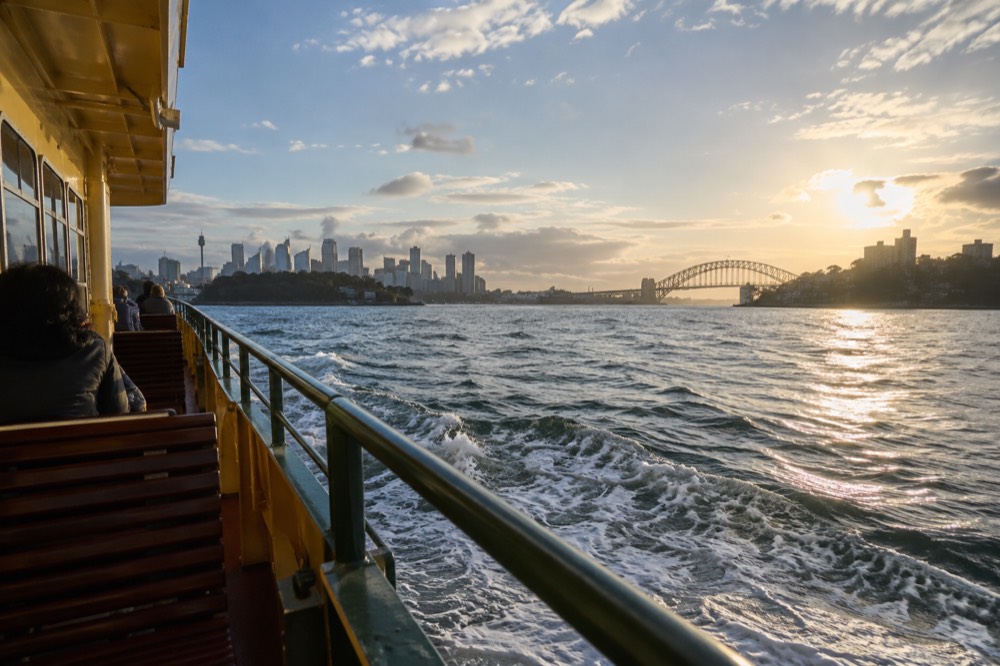
The ferries are the best-value sightseeing in Sydney and they are a normal part of the transit network. A Manly ferry ticket is a $9.20 one-way Opal fare inside your daily cap, not a tour ticket. Riding the F1 to Manly at golden hour gives you the Opera House, the Harbour Bridge and the skyline from the water for the price of a bus trip.
This is the single biggest don't-overspend item in the city. Visitors who take a dedicated harbour cruise on day one and then discover the public ferries on day three always say the same thing: the ferry was better. The honest version is that both earn their place. The public ferries get you from A to B with a view; a proper sightseeing cruise does a loop the ferries do not, with commentary, and the 90-minute morning or afternoon sightseeing cruise from Circular Quay is the least expensive way to do exactly that. If you want the full picture, including the dinner and sailing options, our Sydney harbour cruises guide compares them all.
Don't: Get the Seasons, the Sun and the Time Zone Wrong
Sydney's seasons are inverted: December, January and February are summer, and June, July and August are winter. Summer UV regularly reaches extreme levels of 11-plus, and protection is advised whenever the UV index hits 3, which Sydney exceeds for most of the year. Daylight saving runs from the first Sunday in October to the first Sunday in April, so the city shifts between AEST and AEDT and your tour confirmations may use either.
The sun is the one that catches northern-hemisphere visitors. Sydney's mean daily maximum in January is 26.0 °C, which sounds mild, but the UV index is what burns you, not the air temperature, and ARPANSA's Sydney station records the index passing the protection threshold by mid-morning even in early spring. Bring a hat, wear sunscreen on the ferry, and reapply at the beach. On the time zone, the practical rule is simple: check whether a booking says AEST or AEDT, because a tour listed for 9am in the wrong zone is an hour wrong. The Bureau of Meteorology's climate averages for Sydney are published at station 066062, and our Sydney weather month by month guide turns them into packing advice.
Do: Book the Big-ticket Items, Skip the Tourist Traps
Do book the Opera House tour, BridgeClimb and Blue Mountains day trips ahead of time, especially in the December-to-February peak. Don't buy a kangaroo souvenir on Circular Quay at three times the market price, don't eat at a restaurant with a host touting on the quay, and don't plan a Powerhouse Museum Ultimo visit, because it has been closed since February 2024.
The Opera House does not publish fixed tour prices; they are dynamic and booking-only, so a live listing price is the only honest number. BridgeClimb runs about three hours total and its 2026-27 rates start around $375 adult for the Summit Day climb, dynamic by date and demand, so booking ahead is not just convenience but often the difference between climbing and not. The Blue Mountains National Park charges no entry fee except in the Glenbrook area, $8 per vehicle, which surprises nearly everyone. And the stale-guide trap to avoid is real: the old Sydney Fish Market closed, the new Blackwattle Bay building opened in January 2026, and Powerhouse Ultimo will not reopen until around 2029. Powerhouse Parramatta is scheduled to open on 7 November 2026. More of these guides are collected on Sydney Travel Guide.
Don't: Be a Bad Guest on the Beach, the Road and the Pub
Don't take a private e-scooter anywhere in Sydney: they are illegal on roads, footpaths, shared paths and bike lanes in NSW. Don't jaywalk against a red signal near the CBD, police do fine pedestrians. Do wait to be seated at cafes, do tip only for genuinely good table service if you choose to tip at all, and do stand at the bar to order in most pubs rather than waiting at a table.
The etiquette list is short because Sydney is genuinely relaxed. Tipping is not expected: restaurant bills do not add a service charge, and tipping 10 percent for excellent service is a choice, not an obligation. Smoking and vaping are restricted well beyond what many visitors expect: enclosed public areas, outdoor dining areas, playgrounds and transport stops are all smoke-free, and nicotine vapes are pharmacy-only in Australia. On the water, the shark meshing program's 51 nets between Newcastle and Wollongong are installed seasonally from 1 September to 31 March, and they reduce but do not eliminate risk, which is one more reason the flags matter more than any net. Our tipping and etiquette in Sydney guide covers the money side, and is Sydney safe for tourists covers the rest.
Do: See the City from the Water and from the Street
Do take at least one proper harbour cruise, one guided walk through The Rocks, and one trip up a vantage point, in that order of value. The sightseeing cruise covers the harbour's eastern loop with commentary for less than most city tours charge. The Rocks walking tour explains the oldest streets in the country in 90 minutes. The Tower Eye observation deck is the fair-weather backup, and advance tickets start from $29.
The trio below is the sensible first-day package for a new arrival, and each one covers a different angle: the water, the ground and the sky. Book the cruise for your first morning, when the harbour is at its calmest and the light is best for photographs, and save the observation deck for a clear afternoon. August is statistically Sydney's clearest month, with 13.4 mean clear days against February's 5.3, so if you are visiting in peak summer, take your skyline views whenever the clouds break rather than waiting for a "better day" that the averages say will not come.
Common Questions About Sydney Dos and Don'ts
Do and don'ts in Sydney, Australia?
Do tap on and off public transport with a contactless card, swim only between the red and yellow flags at patrolled beaches, and book the Opera House tour and BridgeClimb ahead in summer. Don't assume December is winter, don't expect tipping to be required, and don't ride a private e-scooter, which is illegal in NSW.
Can you swim at Sydney beaches in winter?
Yes, at the year-round patrolled beaches: Bondi, Bronte, Tamarama, Coogee, Manly and Dee Why. Council lifeguards patrol these through winter, though with shorter hours than summer. Most other beaches stop patrolling from late April, and swimming outside patrol hours is the risk, not the water temperature alone.
Do you need to tip in Sydney?
No. Tipping is not expected in Australia and no service charge is added to restaurant bills. Tipping around 10 percent for genuinely excellent table service is appreciated but entirely optional, and nobody tips for counter service, taxis or a coffee.
Is it safe to drink Sydney tap water?
Yes, Sydney tap water is safe to drink and is routinely quality-tested. Bring a refillable bottle; there are public bubblers across the CBD, the Royal Botanic Garden and the coastal walk paths.
What should you not do at Sydney beaches?
Do not swim outside the red and yellow flags or outside patrol hours, do not swim during rain or for a day after heavy rain at ocean beaches, and do not touch bluebottles washed up on the sand. If stung, leave the water, remove tentacles with seawater, and immerse the area in hot water around 45 °C for up to 20 minutes.