What Is the Best Month to Visit Sydney, Australia?
The honest month-by-month answer for Sydney, backed by Bureau of Meteorology climate normals, festival dates and fare caps.
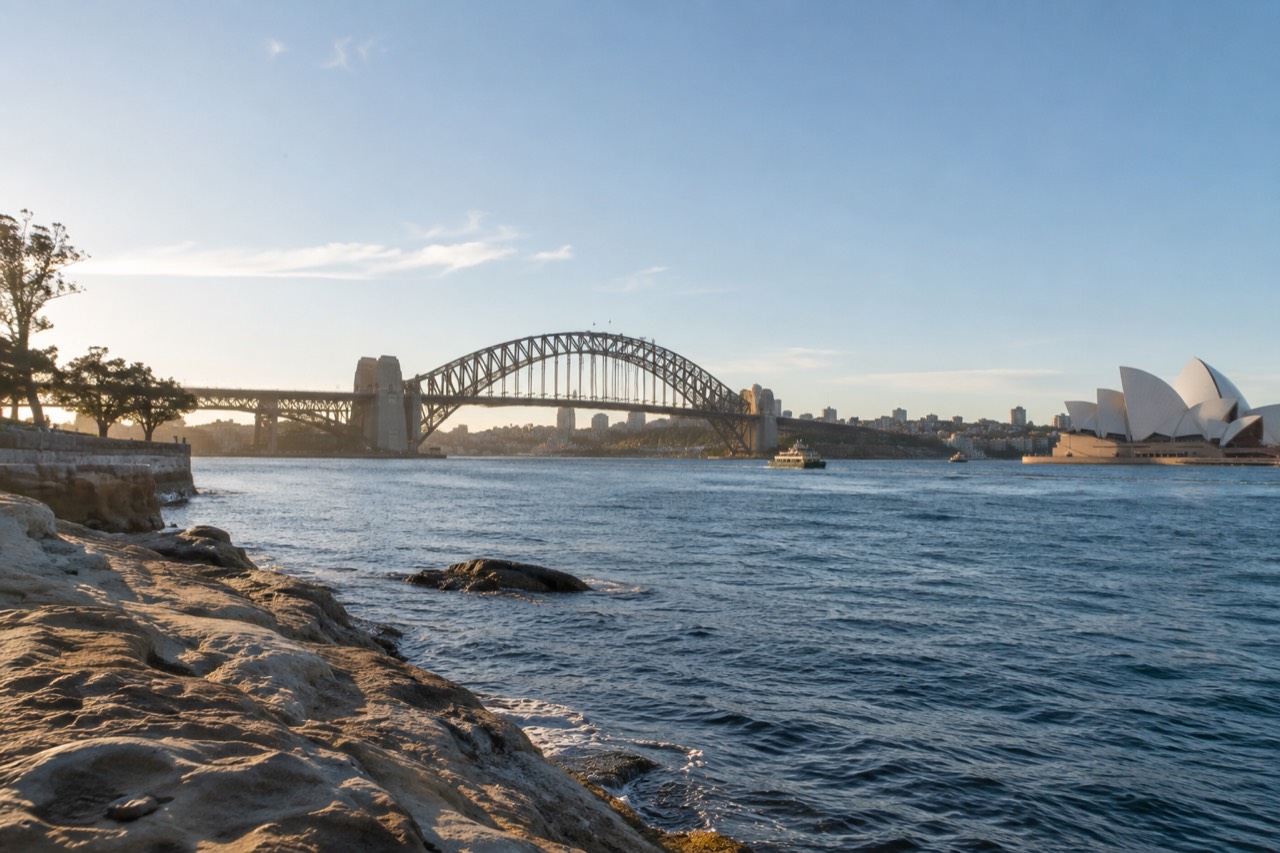
Sydney's peak tourist season is statistically its cloudiest. February, the middle of the southern-hemisphere summer that runs December through February, averages just 5.3 clear days across the long-term record, while August, deep in winter, averages 13.4. That single inversion dismantles most of the advice published about this city, and it comes straight from the Bureau of Meteorology's station record at Observatory Hill, which stretches back to 1858. The best month to visit is not the month with the most heat.
What Is the Best Month to Visit Sydney, Australia?
October is the best single month to visit Sydney for most travellers. The long-run average maximum sits at 22.2 °C, rainfall drops to 76.7 mm after the wetter autumn and winter, the daylight saving shift on the first Sunday of October extends usable evenings, and the whale migration is still running through November. October also sits outside the Christmas-to-January peak, so accommodation and flights cost less than they do six weeks later.
October also lands inside the high-season patrol window at the beaches, which runs October to April, so swimming between the red and yellow flags is properly supervised. The water is warming after winter without the February crowd crush. Sydney's school holidays matter here too: the October long weekend around Labour Day (Monday 5 October in 2026) briefly lifts domestic visitor numbers, but the rest of the month stays manageable compared with January.
The runner-up depends on what you want. May is the quiet sleeper: 19.5 °C on average, 9.5 clear days, cheaper [accommodation](https://booking.tpk.ro/ndznHj9h), and the first humpback whales of the season arriving along the coast. March has the warmest water of the shoulder months but also the year's second-highest rainfall at 131.6 mm. September is the driest month on record at 68.1 mm and the clearest spring month, but the ocean is at its coldest after winter.
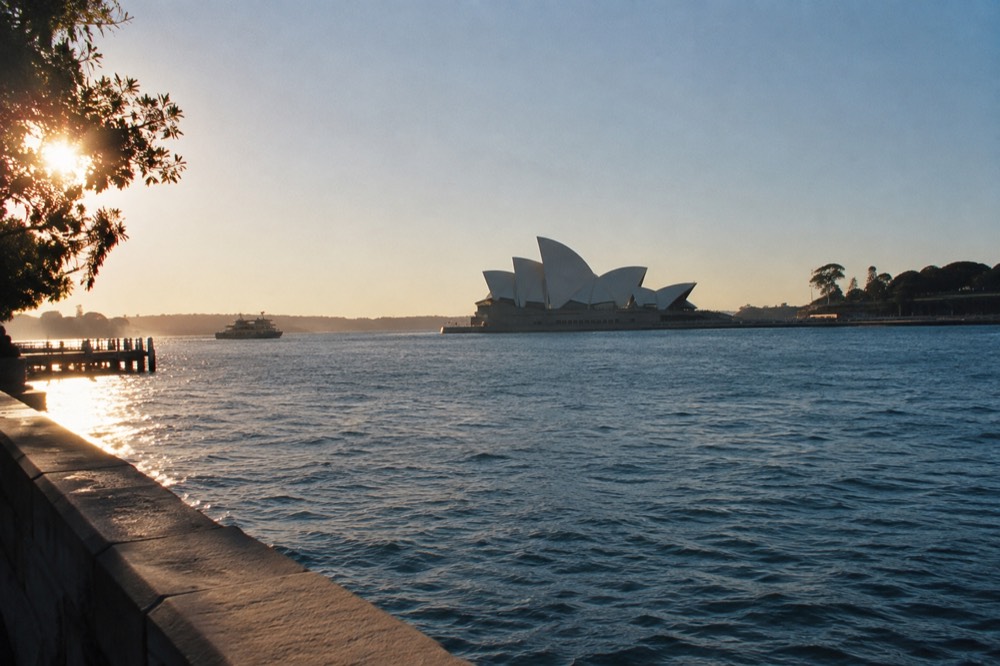
Which Sydney Months Have the Best Weather, According to the Actual Records?
The records contradict the postcard assumption. June is Sydney's wettest month at 133.1 mm on average, wetter than any summer month, while August is its clearest with 13.4 mean clear days and September its driest at 68.1 mm. February, the peak of the tourist summer, is the cloudiest month of the year at 5.3 clear days. The long-run annual average maximum is a mild 21.8 °C, which means no month is genuinely hostile.
The full picture from the Bureau of Meteorology's climate averages for station 066062, a record spanning 162 years, looks like this. These are long-term averages, not forecasts, and they are the most honest way to compare months.
| Month | Mean max °C | Mean min °C | Mean rainfall mm | Clear days |
|---|---|---|---|---|
| January | 26.0 | 18.8 | 101.2 | 6.8 |
| February | 25.8 | 18.9 | 119.3 | 5.3 |
| March | 24.8 | 17.6 | 131.6 | 7.1 |
| April | 22.5 | 14.8 | 126.5 | 9.1 |
| May | 19.5 | 11.6 | 117.4 | 9.5 |
| June | 17.0 | 9.3 | 133.1 | 9.1 |
| July | 16.4 | 8.1 | 96.3 | 12.0 |
| August | 17.9 | 9.0 | 80.2 | 13.4 |
| September | 20.1 | 11.1 | 68.1 | 10.9 |
| October | 22.2 | 13.6 | 76.7 | 8.1 |
| November | 23.7 | 15.7 | 83.8 | 6.0 |
| December | 25.3 | 17.6 | 77.1 | 6.6 |
Read that table again with fresh eyes. Sydney's rainfall peaks in autumn and early winter, not in summer, and its clearest skies arrive in July and August. Winter days are shorter, averaging 5.5 hours of sunshine in June against 7.6 in December, but the sky above them is more often blue than the sky above a February beach day. Anyone planning around "summer equals sun" is planning against the data. The Bureau publishes the full station record for anyone who wants to check the numbers behind these claims.
One more weather fact that changes plans: the UV index in Sydney reaches 3 or above for most of the year and hits extreme levels of 11+ in summer, so sun protection is a year-round habit here rather than a beach-day one. ARPANSA operates a live UV monitoring station for Sydney, and even in early September the daily peak can pass the protection threshold before lunchtime.
If you are weighing Sydney against its southern rival, the comparison is close enough that it deserves its own analysis, and we have written one: Sydney versus Melbourne for travellers. For a deeper dive on any single month, our Sydney weather month-by-month guide carries the full breakdown.
When Is Sydney Cheapest and Least Crowded?
The cheapest months are May, June and August, with June the quietest of all because it is also the wettest at 133.1 mm on average. Crowds thin after the Easter school holidays and stay thin until the September school break. Avoid the Christmas-to-Australia Day stretch, late December through 26 January, when domestic tourism peaks, and avoid Vivid Sydney in late May and early June if you want hotel prices at their floor.
The crowd logic is domestic, and that is the part overseas visitors usually miss. Sydney welcomed 63.6 million domestic visitors in the year ending March 2026 against 3.9 million international visitors, per Destination NSW. The waves that fill the city are Australian families on school holidays, not foreign tour groups. The four pressure points are the January summer holidays, the Easter weekend, the July school break and the late September-early October spring holidays. Outside those windows, even famous spots breathe.
June looks cheap until you check the rain gauge, and then it looks cheap for a reason. August is the smarter winter pick: nearly as quiet, noticeably clearer, and the cold is Sydney-mild rather than genuinely cold, with an average maximum of 17.9 °C. Winter in this city is a jumper-weather proposition, not a parka one, and our Sydney in winter guide covers what actually works in those months.
Vivid Sydney complicates the May-June value window. The 2026 festival ran 22 May to 13 June, the 2027 edition is scheduled for 28 May to 19 June, and it drew 2.53 million visitors in 2025. More than 80% of the festival is free, including the 6.5 km light walk, which makes it outstanding value for what you see and expensive for where you sleep. If Vivid is the reason you are coming, book early; if it is not, book around it. Our Vivid Sydney guide walks the decision in detail.
What Is the Worst Month to Visit Sydney?
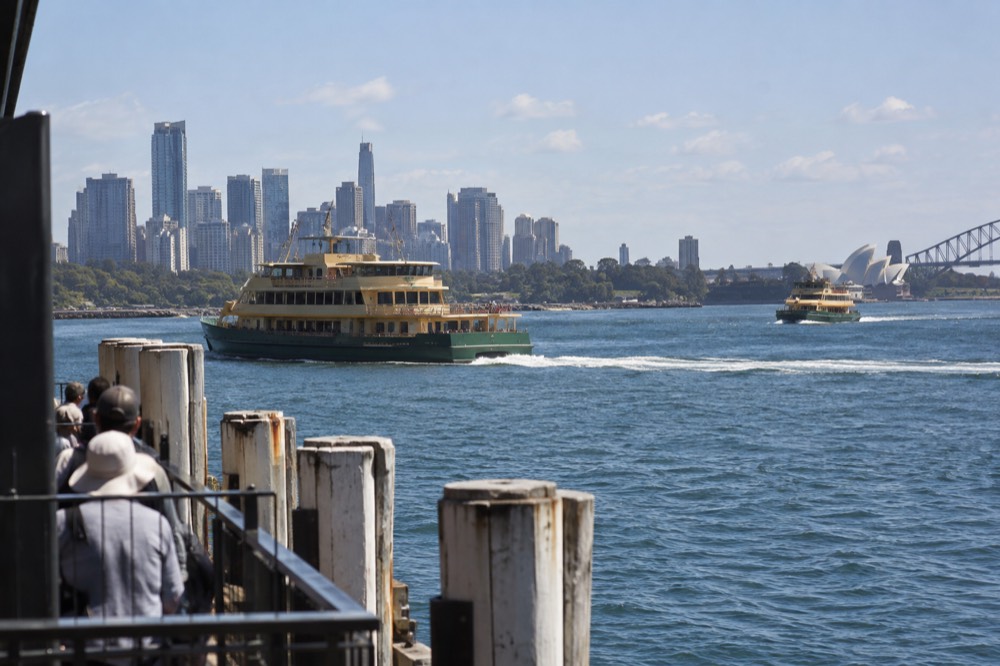
February is the weakest month for most visitors: it is statistically the cloudiest (5.3 mean clear days), it carries the second-highest rainfall of the year at 119.3 mm, it is humid, and it sits inside the peak-season pricing window that runs through the Australia Day crowds. June is the other candidate, purely on rain, with 133.1 mm on average, though June is at least quiet, cheap and whale-adjacent.
February's problem is compounding. The cloudiest skies of the year sit over the most crowded beaches and the highest accommodation prices. The humidity that builds through January does not break until March. And the things February is good for, warm water and long evenings, are equally available in November and March with better skies and thinner crowds.
June deserves a defence even as the "worst" runner-up. It is the wettest month, yes, but its rain comes as fewer heavy days rather than constant drizzle, and it averages more clear days than January. The humpback northern migration is peaking, with the best whale-watching window running late June through July. Hotel rates dip. If your plan is museums, galleries, food and a whale cruise rather than beach days, June is not a mistake.
Is There a Best Month for Specific Plans, Like Whales or the Beaches?
Yes, and they pull in opposite directions. Whales: May to November, peaking late June through July for numbers and August to November for the closer, calf-carrying southern migration. Beaches: November through March for water warmth, but swim only between the red and yellow flags during patrol hours, which at Bondi, Bronte and Tamarama run year-round, 6am to 7pm in the October-to-April high season.
The whale season is a genuine two-window event. Humpbacks head north to breeding grounds roughly May to July, then return south with calves roughly August to November, and NSW government sources estimate the eastern Australian population at 40,000-plus and growing. A whale-watching cruise in late June gives you the busiest water; one in September or October gives you calmer seas, fewer boats and whales travelling closer to the coastline. The full breakdown lives in our Sydney whale watching guide.
For the beaches, the patrol calendar matters more than the temperature chart. Waverley Council's professional lifeguards patrol Bondi, Bronte and Tamarama year-round, and Manly and Coogee are also patrolled every day, but most other Sydney beaches run patrols only from late September to late April. Swimming outside patrol hours or at an unpatrolled beach is where the coast's real danger lives: rip currents, and Surf Life Saving Australia's National Coastal Safety Report 2025 recorded 154 coastal drowning deaths nationally, every one of them outside the flags, outside patrol times, or at an unpatrolled location. Swim between the flags, and check the Beachwatch water-quality site after rain, staying out of ocean beaches for up to a day after heavy falls.
Ocean pools are the year-round alternative. Bronte Ocean Pool and the North Bondi Children's Pool are free and council-maintained, while Bondi Icebergs is a separate club-managed 50-metre pool with its own access fees. In the cooler months, the pools give you the ocean without the rip risk.
How Do Sydney's Events and Holidays Change the Best-month Answer?
Three calendar blocks move the needle: the Christmas and New Year period, when up to a million people gather around the harbour foreshore for the 9pm and midnight fireworks; Vivid Sydney from late May to mid-June; and the Mardi Gras festival, whose 2027 parade falls on Saturday 6 March. Public holidays also carry a transport quirk: Opal travel is capped at the cheaper $9.65 daily rate on public holidays, not the $19.30 weekday cap.
New Year's Eve is Sydney's single biggest night, and it reshapes the harbour for days around it. The free vantage points, from Birchgrove Park to Circular Quay West, fill hours before the 9pm family fireworks, and the official capacities are real: Birchgrove holds around 5,000 people, Circular Quay West around 16,000. If your best-month calculation includes NYE, you are planning a different trip, and our Sydney New Year's Eve guide covers the vantage points in full.
The events calendar has honest gaps worth knowing. Sydney Festival runs across January, but its full program is announced late in the preceding year. Sculpture by the Sea transforms the Bondi-to-Tamarama coastal walk in spring, and City2Surf fills the eastern suburbs one August Sunday, but you should check the organisers' own channels for current dates rather than trusting a guide's fixed month. Our Sydney events calendar keeps the confirmed ones in one place.
One public-holiday trap: the NSW list includes a Bank Holiday on the first Monday of August, but it is not a public holiday for most people. Banks and some financial institutions close; shops, attractions, ferries and trains run normally. Guides that list it alongside Australia Day are wrong, and the official NSW public holidays page makes the distinction explicitly.
The Verdict, Month by Month
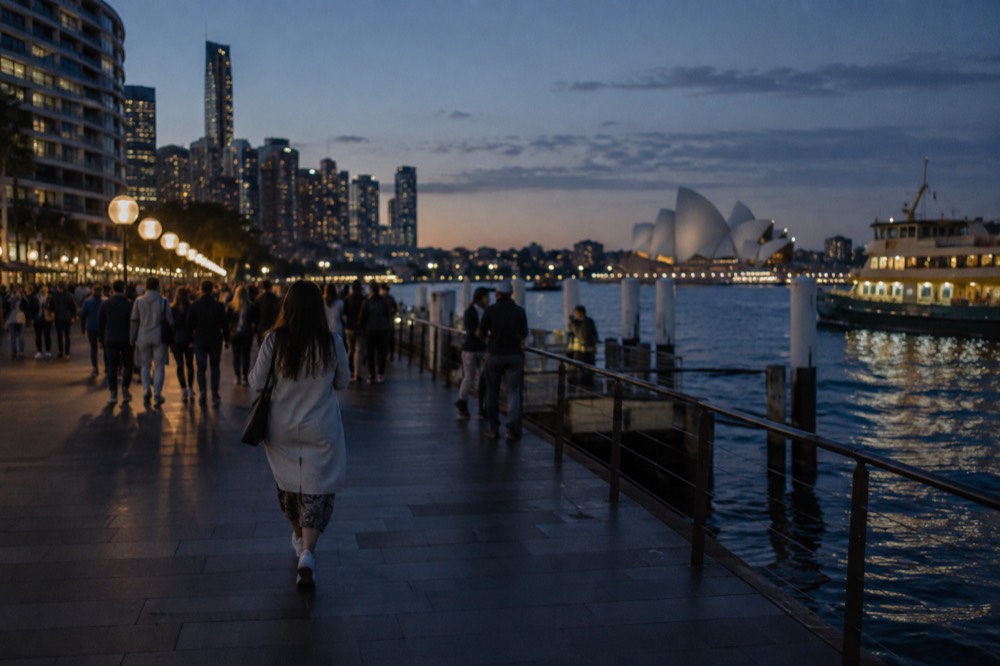
For a single answer: October, for the balance of mild 22.2 °C averages, post-winter clear skies, thinning crowds before the December surge, running whale season and the start of daylight saving. For beaches specifically: November. For budget: May or August. For whales: late June through July. For avoiding the worst: skip February, and treat June as a museum-and-whales month rather than a beach month.
Sydney rewards travellers who separate what they want from what the brochure shows them. The summer postcard is real in December and January, but it comes with the year's cloudiest skies, the biggest crowds and the highest prices, all at once. The shoulder months give you most of the warmth with far less of the queue. And winter, which most visitors never consider, is when this city is at its clearest, cheapest and, from August onward, accompanied by whales a few kilometres off the headlands.
Whatever month you settle on, the harbour is the constant, and the sightseeing cruise below is the simplest way to see it without committing half a day or a large budget. This Sydney Travel Guide article is one of a set that breaks the city down by season, by neighbourhood and by question, so the rest of the planning has somewhere to go.
Common Questions About the Best Month to Visit Sydney
What is the best month to visit Sydney, Australia?
October, for most travellers: mild long-run averages near 22 °C, clearer post-winter skies, lower pre-summer prices, daylight saving from the first Sunday of the month, and a whale season that runs to November. November is the pick for beach weather; May and August for budget.
What is the worst time of year to visit Sydney?
February, on the records: it is the cloudiest month of the year at 5.3 mean clear days, humid, and still inside peak-season pricing. June is the wettest month at 133.1 mm on average, though it is quiet, cheap and good for whales.
Is summer the best season in Sydney?
Not on the climate record. Summer, December through February in the southern hemisphere, brings the biggest crowds, the highest prices and, in February, the fewest clear days of any month. November and March deliver comparable warmth with better skies.
Is winter too cold to visit Sydney?
No. The average winter maximum is 16.4 to 17.9 °C, August is the clearest month of the year, and humpback whales pass the coast from August to November. Bring a jumper, not a parka, and swim at patrolled beaches or in the ocean pools.
When can you see whales in Sydney?
May to November. The northern migration runs roughly May to July and peaks late June through July; the southern migration, when mothers and calves pass closer to shore, runs roughly August to November. Sightings are never guaranteed.
What is the cheapest month to visit Sydney?
May, June and August, outside school-holiday windows and before the December surge. June's hotel savings come with the year's heaviest rainfall, so August is often the better cheap-month pick: nearly as quiet, noticeably clearer.