What Are Some Hidden Places to Visit in Sydney?
Quiet corners most visitors never reach: harbourside gardens, secret lookouts, inner-west lanes and island walks, with transport details for each.
What Are Some Hidden Places to Visit in Sydney?
The best hidden places in Sydney are Wendy's Secret Garden at Lavender Bay, Clark Island in Sydney Harbour National Park, Balls Head Reserve in Waverton, the Hermitage Foreshore walk in Vaucluse, and the back lanes of Glebe and Newtown. Every one of them is reachable by public transport, most are free, and none appears on the standard first-day itinerary of Opera House, Bridge and Bondi.
Sydney rewards the visitor who lingers. The headline attractions sit within a few hundred metres of each other around Circular Quay, which is exactly why the areas beyond them feel so quiet by comparison. Cross the harbour, walk twenty minutes inland, or catch a ferry to a mid-harbour wharf, and the city changes character completely: sandstone coves instead of cruise terminals, terrace streets instead of glass towers, bushland instead of boardwalks.
This page gathers the places that consistently surprise visitors who have already done the obvious sights. Some are genuinely obscure. Others are well known to locals and simply never make it onto tourist lists because no tour bus can reach them. All are verified, all are free or nearly free to enter, and all are described honestly, including the ones that close or need a ferry timetable checked first.
Which Harbourside Secrets Sit Closest to the City?
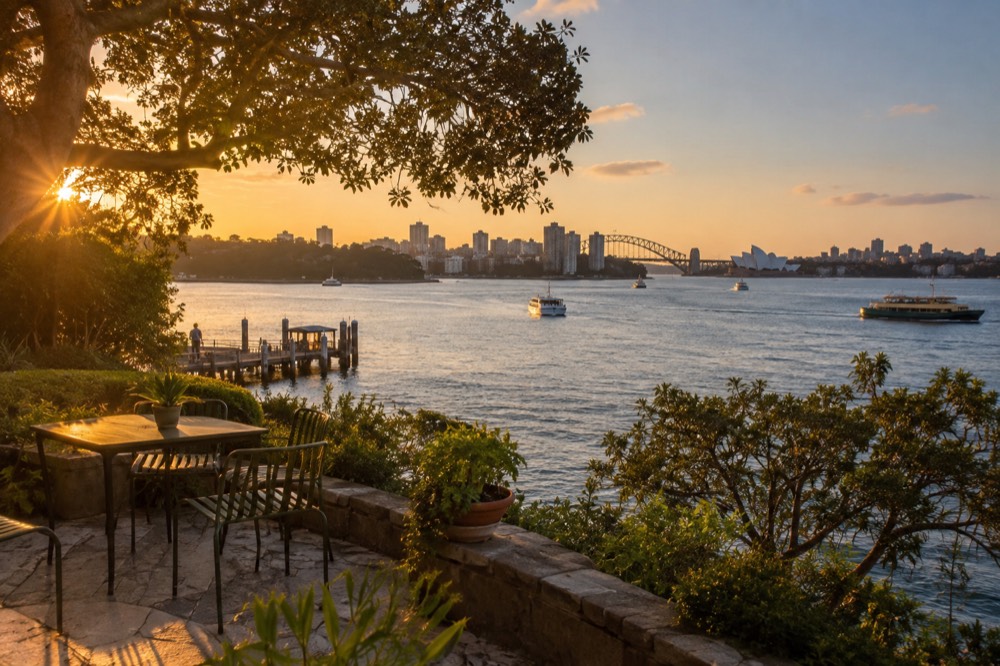
Wendy's Secret Garden at Lavender Bay is the standout, a planted hillside garden below the harbour bridge on the North Shore side, a ten-minute walk from Milsons Point or McMahons Point wharves. Clark Island, a small grassy island in the harbour, sits nearby and is reachable by private boat or kayak. Both give you the postcard view of the Opera House without another tourist in the frame.
Wendy's Secret Garden is the sort of place that makes first-time visitors suspicious of the name, then quietly convinced within five minutes. It is a garden, on a steep harbourside slope at Lavender Bay, that the artist Wendy Whiteley built on disused railway land over many years. The planting is loose and layered, the paths are informal, and the benches at the water's edge look straight across the harbour to the Opera House. It costs nothing, closes at dusk like any public park, and is a short downhill walk from Milsons Point station on the North Shore line.
Kirribilli, the neighbouring suburb, adds two more quiet stops on the same walk: Jeffrey Street, with some of the oldest harbour-side photographs taken anywhere in the city, and the viewpoint under the northern end of the Sydney Harbour Bridge, where the cyclists and joggers on the bridge deck are close enough to hear. The whole loop, from Milsons Point station through Kirribilli to Lavender Bay and back, is under three kilometres on flat to gently sloping ground.
Clark Island is a different kind of quiet. It is one of the islands of Sydney Harbour National Park, a small grassed island with shaded picnic areas and Aboriginal heritage significance, managed by the NSW National Parks and Wildlife Service, which publishes access details on its official park pages. There is no public ferry service, so most visitors arrive by kayak or chartered boat, which is why it stays quiet even on summer weekends. If you want to see the harbour islands without organising a boat, Cockatoo Island is the one with a regular public ferry, and its industrial ruins and harbour camping feel a world away from Circular Quay.
A harbour cruise is also a good way to scout these corners before you walk them. The sightseeing cruise from Circular Quay passes close to the harbour islands and the Lavender Bay shoreline, which helps you plan which cove to walk to the next morning.
Where Do Locals Go on the Lower North Shore?
Balls Head Reserve in Waverton is the locals' favourite: a bushland peninsula with sandstone cliffs, harbour views, an off-leash dog area and Aboriginal rock engravings, a five-minute walk from Waverton station. Cremorne Point, on the opposite side of the harbour, offers a quiet foreshore loop walk with a small harbour pool at its western end.
Balls Head is what the Blue Mountains would look like if you dropped them into the middle of Sydney harbour. It is a headland of remnant bushland, protected as public reserve land for a century, with walking tracks through angophora trees, lookouts over the harbour bridge and the city skyline, and clear evidence of long Aboriginal use of the headland, including shell middens. Entry is free, the reserve is open during daylight hours, and Waverton station on the North Shore line puts you at its doorstep. On a weekday you will share it with dog walkers, office workers on lunch runs and almost nobody else.
Cremorne Point works as the southern shore's answer. The foreshore walk around the point is about three kilometres of shaded path, passing private boatsheds, a small netted harbour pool at Cremorne, and views back toward the Opera House that most photographers shoot from the more famous Mrs Macquarie's Point on the other side of the water. You reach it by ferry to Cremorne Point wharf, which is itself one of the pleasantest short ferry rides in the city, and the walk ends at Mosman Bay wharf for the ferry home.
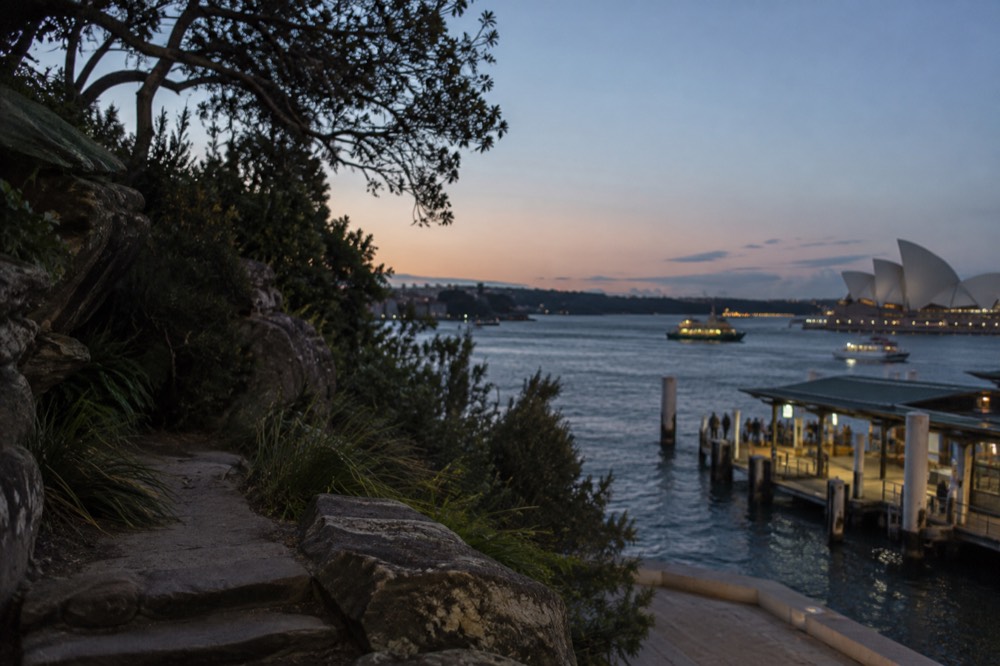
The sightseeing cruise that runs morning and afternoon departures from Circular Quay passes both of these shorelines, so it doubles as a preview of the walk you might do the following day.
What Quiet Corners Does the Eastern Side Hide?
The Hermitage Foreshore walk in Vaucluse is the east's best-kept path, roughly two kilometres of harbour-side track passing small beaches, a heritage-listed folly and views toward the city, with entry points at Nielsen Park and Shark Bay. Shelly Beach at Manly, a calm marine reserve cove a fifteen-minute walk from the Manly ferry terminal, is the other one worth seeking out.
The Hermitage Foreshore track is one of the finest short walks in Sydney, and almost no visitor has heard of it. It runs through remnant bushland along the harbour's southern shore in the eastern suburbs, passing Strickland House, a heritage estate with grounds open to the public, and several tiny sheltered beaches where you can swim in calm water. The walk is exposed in places, so carry water in summer, and the entry from Nielsen Park has parking and a kiosk. By public transport it is a bus ride from the city, which is the main reason it stays quiet: it is not on any train line. More of these guides are collected on Sydney Travel Guide.
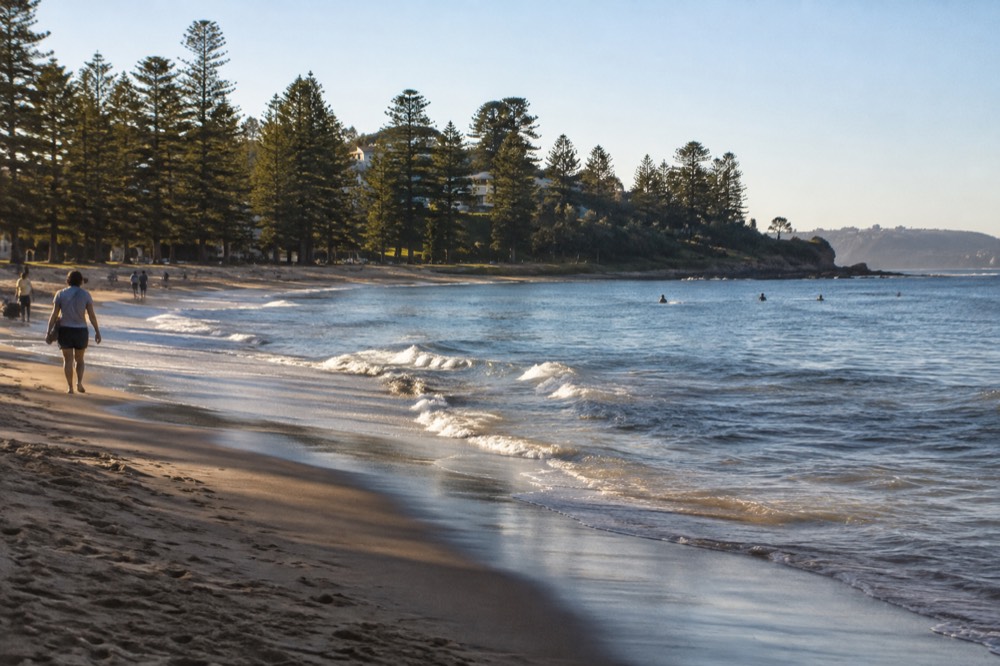
Shelly Beach in Manly is less secret than it once was, but it still surprises people who only walk the Manly Corso to the surf beach and turn back. Follow the ocean promenade fifteen minutes south past Fairy Bower and the beach opens out, a west-facing cove inside a protected marine reserve, which means calm water, seagrass beds and plenty of fish if you snorkel. Our Shelly Beach Manly guide covers the walk, the snorkelling and the ferry logistics in full. Swim between the red and yellow flags where a patrol is operating, and remember that patrol hours vary by season and beach, so check the signage on the day rather than assuming.
Swimming deserves one honest caveat here. The NSW Beachwatch program grades swim sites on water quality and advises staying out of the water while it rains and for up to a day after heavy rain at ocean beaches, and up to three days at harbour and estuarine sites. Its live grades are published at beachwatch.nsw.gov.au, and checking them takes less than a minute before any harbour swim.
Which inner-West Neighbourhoods Repay Wandering?
Glebe, Newtown and Balmain are the three inner-west areas that reward an unplanned afternoon, with Glebe Point Road's bookshops and Saturday market, Newtown's street art along King Street, and Balmain's working-class pub heritage in its terrace lanes. All three sit within a few kilometres of the CBD and each has its own distinct character rather than sharing one.
Glebe is the quietest of the three. Its main street, Glebe Point Road, runs from Broadway down to a park at the water's edge called Blackwattle Bay, and the walk changes from student cafes to heritage terraces to harbour mangroves in about twenty minutes. The Saturday markets at Glebe are a fixture for second-hand books, records and food stalls. Our Glebe guide maps the walk and the market details.
Newtown is louder and stranger, and better for it. King Street is one of the longest continuous shopping streets in the country, lined with Thai restaurants, vintage stores and a dense run of murals and paste-ups down the side streets. Enmore Road, the continuation past the theatre, has taken over as the neighbourhood's more interesting strip for live music and small bars. Start at our Newtown page for the street-art locations and the venue picks.
Balmain, on its own peninsula, is the heritage one: sandstone terraces, corner pubs and a ferry back to the city from Balmain East wharf. It is the best of the three for an evening, because the pub tradition here is genuine and the harbour views from the peninsula's edge are free. None of these areas needs a plan. Walk, eat, and catch the light rail or a ferry back.
How Do You Reach These Places Without a Car?
Every place on this list is reachable by train, bus, ferry or light rail using an Opal card or contactless bank card, with adult daily fare caps of A$19.30 Monday to Thursday and A$9.65 on Friday, Saturday, Sunday and public holidays. A public holiday is therefore the cheapest day to travel widely, and ferries count toward the same caps as trains and buses.
The transport details matter more here than on a standard itinerary, because the hidden places are hidden partly by geography. Transport for NSW publishes the full fare and cap structure on its adult fares page, and contactless cards are charged exactly the same as an Opal card, with every cap and discount applied.
| Hidden place | Nearest transport | Walk from stop | Entry cost |
|---|---|---|---|
| Wendy's Secret Garden, Lavender Bay | Milsons Point station or ferry | 10-12 minutes downhill | Free |
| Balls Head Reserve, Waverton | Waverton station | 5 minutes | Free |
| Cremorne Point loop | Ferry to Cremorne Point wharf | At the wharf | Ferry fare only |
| Hermitage Foreshore, Vaucluse | Bus to Vaucluse or Nielsen Park | 5-10 minutes | Free |
| Shelly Beach, Manly | Manly ferry from Circular Quay | 15 minutes | Ferry fare only |
| Glebe and Blackwattle Bay | Light rail to Glebe or Jubilee Park | 2-5 minutes | Free |
Two practical notes. First, the Manly ferry is the F1 public service and takes Opal with full benefits, while the privately operated fast ferry accepts the card but under different fare rules, so check which vessel you are boarding at the wharf. Second, several of these walks are on sandstone paths with steps, so wear proper shoes; the foreshore tracks are not wheelchair accessible in most sections, and our accessible Sydney guide lists the ones that are.
When Is the Best Time to Seek Out the Quiet Corners?
Midweek mornings outside the December-to-February peak are the quietest times for Sydney's hidden places, and August, the city's clearest month by long-run Bureau of Meteorology records with 13.4 mean clear days, is an underrated month for harbour walking. June is the wettest month on average, with 133.1 mm of mean rainfall, wetter than any summer month.
That last fact surprises almost everyone. Sydney's rainfall peaks in autumn and early winter, not in summer, and February, the middle of peak tourist season, is statistically the cloudiest month of the year. The long-run averages from the Bureau of Meteorology's Observatory Hill station also show that winter days are clearer than summer ones, just shorter, which makes a July or August morning one of the best times for photography on the harbour-side walks listed above.
For the places themselves, weekday mornings beat weekends everywhere on this list, and the harbour-side reserves fill with locals on Saturday and Sunday afternoons in fine weather. Summer weekends are the exception to the quiet rule at Shelly Beach and Nielsen Park, which get busy from late morning. If your trip falls in the June-to-July whale season, the same headland lookouts on the harbour's entrances double as land-based whale-watching points between May and November, which is a free bonus no itinerary plans for.
Common Questions About Hidden Places in Sydney
What are some hidden places to visit in Sydney?
Wendy's Secret Garden at Lavender Bay, Balls Head Reserve in Waverton, the Hermitage Foreshore walk in Vaucluse, Clark Island, Cremorne Point and the inner-west streets of Glebe and Newtown. All are free to enter and reachable by train, bus, ferry or light rail.
Is Wendy's Secret Garden free to visit?
Yes. The garden at Lavender Bay is a public open space with no entry charge. It is a ten to twelve minute downhill walk from Milsons Point station or the Milsons Point ferry wharf, and it closes at dusk like other Sydney parks.
Can you visit Clark Island in Sydney Harbour?
Yes, but there is no public ferry service to it. Clark Island is part of Sydney Harbour National Park and is usually reached by kayak, chartered boat or as part of a harbour cruise itinerary. Check the NSW National Parks pages for access conditions before planning a visit.
What is the best hidden walk in Sydney?
The Hermitage Foreshore track in Vaucluse is the strongest candidate: roughly two kilometres of harbour-side bush track with small beaches and city views, reachable by bus from the CBD. The Cremorne Point loop and the Balls Head tracks are close runner-ups on the North Shore.
Are these hidden places reachable by public transport?
All of them are. Opal cards and contactless bank cards work across trains, buses, ferries and light rail, with adult daily caps of A$19.30 Monday to Thursday and A$9.65 on Fridays, weekends and public holidays. A public holiday is the cheapest day to cover a lot of ground.
When is the quietest time to visit Sydney's secret spots?
Midweek mornings, and any time outside the December-to-February peak. August is the clearest month on Sydney's long-run climate record, while June is the wettest, so winter walking rewards a rain jacket and a flexible schedule rather than a rigid one.